Hubbry Logo
ZwinZwinMain
Open search
Zwin
Community hub
Zwin
logo
8 pages, 0 posts
0 subscribers
Be the first to start a discussion here.
Zwin
Zwin
from Wikipedia
Sea lavender blossoms in August–September

Key Information

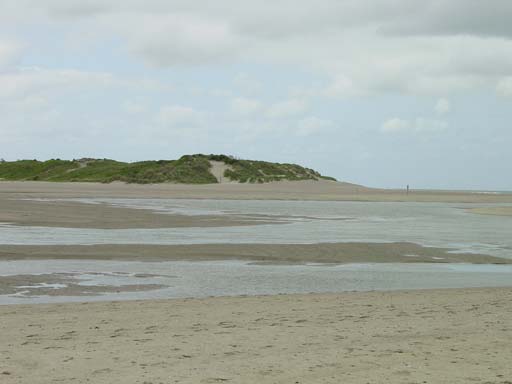
The Zwin (Dutch pronunciation: [zʋɪn]) is a nature reserve at the North Sea coast, on the BelgianDutch border. It consists of the entrance area of a former tidal inlet which during the Middle Ages connected the North Sea with the ports of Sluis and Bruges inland.

The Zwin inlet was formed originally by a storm that broke through the Flemish coast in 1134,[2] creating a tidal channel that reached some 15 km inland and was also connected, through another channel, to the mouth of the Scheldt further north-east. The new waterway offered access to the sea to the inland city of Bruges, which consequently rose to become one of the foremost medieval port cities of Europe. The towns of Damme, Sluis and Sint Anna ter Muiden were also located on the Zwin. However, from the late 13th century onwards, the channel was affected by progressive silting, which from around 1500 caused the waterway to become unusable and cut off the harbour of Bruges from the sea.

The present-day nature reserve was founded in 1952. It has an area of 1.25 square kilometres in Knokke-Heist, Belgium and 0.33 square kilometres in Sluis, Netherlands. It is famous for its large variety in salt-resistant flora, such as sea lavender. It is also popular with bird watchers. There is a small zoo with some major domestic birds and it is one of the few places in Belgium with a population of white storks.[2]

In March 1986 it was declared a Wetland of International Importance.[3]

Sea battles

[edit]

The Battle of Damme was fought on 30 May and 31 May 1213. The success of the English raids ended the threat of a French invasion of England.

The Battle of Sluys was a sea battle fought on 24 June 1340 as one of the opening conflicts of the Hundred Years' War between England and France.

During the Eighty Years' War between the Dutch Republic and Spain, the Battle of Sluys on 26 May 1603 was a naval battle in which a Spanish squadron tried to break through a blockade of the Zwin by Dutch ships.

References

[edit]
[edit]
Revisions and contributorsEdit on WikipediaRead on Wikipedia
from Grokipedia
The Zwin is a protected established in 1952 and designated a Wetland of International Importance under the in 1986, straddling the border between and the on the coast, encompassing 158 hectares (125 hectares in and 33 hectares in the ) of salt marshes, mudflats, dunes, and polders that form the remnants of a former tidal inlet. The inlet originated from tidal channels dating back around 2,000 years ago, but significantly expanded in the due to a storm breach in 1134 and flooding, serving as a vital shipping channel connecting medieval ports like and to the sea until silting led to its decline and partial reclamation by the , when the International Dike was constructed in 1872. Ecologically, the Zwin is celebrated as an "international bird airport," providing essential breeding grounds and stopover sites during migrations for species such as avocets, , redshanks, spoonbills, little egrets, swans, ducks, and reed geese, with the area flooding periodically with —enhanced by recent restoration projects including tidal revival efforts completed in 2016 and ongoing works through 2026—to maintain its dynamic habitat. The reserve's flora includes distinctive plants like sea lavender (Limonium vulgare, locally known as "zwinnebloem" for its purple blooms in summer), sea couch grass, sea purslane, rare , and yellow horned poppy, thriving in the saline soils of the marshes and flats. About 80% of the area lies in (near Knokke-Heist), with cooperative management across the border ensuring its preservation; access is limited to footpaths and guided tours to protect the sensitive , where sheep grazing helps control vegetation.

Geography

Location and Boundaries

The Zwin is situated on the coast along the border between and the , with its approximate central coordinates at 51°21′N 3°20′E. The encompasses a total area of approximately 3.33 km² (333 hectares), divided into about 2.9 km² (290 hectares) within the Belgian municipality of Knokke-Heist in the province of and 0.43 km² (43 hectares) in the Dutch municipality of in the province of , following a 2019 expansion that added around 120 hectares of restored tidal areas. This cross-border configuration highlights its binational management, with the reserve extending linearly along the coastline for about 2.3 km. The Zwin's boundaries are defined by the to the north, coastal dunes to the west and east, and inland polders to the south, forming a transitional zone between marine and terrestrial environments. It lies in close proximity to the Belgian coastal town of Knokke-Heist, directly adjacent to its beaches, and the Dutch town of , approximately 2 km inland. Historically, the area connected via a tidal inlet to inland towns such as and in , facilitating medieval access before extensive led to . Within the reserve, current is characterized by a mix of polders—reclaimed low-lying areas used for grazing and habitat restoration—dune systems that buffer against , and tidal zones including mudflats and salt marshes that flood twice daily with through a controlled . These divisions support a dynamic landscape where approximately 80% of the core area remains under tidal influence, managed collaboratively across the international boundary.

Geological Formation and Evolution

The Zwin originated as a tidal inlet along the Flemish coast, with its medieval configuration primarily shaped by a major in 1134 AD that breached the coastal barrier and scoured an existing known as the Sincfal, creating a channel extending approximately 15 km inland from the . This event reactivated older tidal channel systems dating back to Roman and early medieval periods, transforming the landscape into an open tidal network characterized by salt marshes and peatlands. The breach allowed marine waters to penetrate deeply, establishing a dynamic estuarine environment influenced by . Following its formation, the Zwin's evolution was driven by tidal dynamics, which imported fine sediments such as clay, , and organics from the , leading to progressive and beginning in the late . These processes intensified in the 14th and 15th centuries, as reduced tidal prism and wave energy allowed deposition to outpace , narrowing the channel and forming extensive tidal flats. Palaeoecological evidence from assemblages in cores confirms rapid during the late medieval period, shifting the inlet from open marine conditions to increasingly brackish and enclosed settings. By the , ongoing natural accretion had largely closed the Zwin , converting the former channel into a series of marshes along its elevated edges, with a new coastal dune barrier stabilizing the shoreline. This long-term transformation involved the buildup of sedimentary layers through tidal and , eventually leading to the development of polders via human diking that contained the accreting marshes, though the core geological shift was natural dominating the landscape.

History

Medieval Trade and Economic Importance

The Zwin emerged as a crucial maritime inlet in the post-12th century, particularly gaining prominence in the 13th century following a major storm in 1134 that reshaped the coastal landscape and provided direct sea access to inland cities like , approximately 15 km from the coast, as well as the outports of and . This connectivity transformed the Zwin into a vital gateway for international commerce in , enabling the transport of high-value goods such as English , Flemish cloth, spices, grain, wine, and salt to ' markets. By facilitating these exchanges, the Zwin bolstered ' status as a leading economic center, with its staple privilege granted in 1323/1324 mandating that certain commodities, including and , be traded exclusively through its ports. During its peak in the 13th and 14th centuries, the Zwin served as the busiest waterway in the region, underpinning ' role in the Hanseatic League's networks and the flourishing English-Flemish commerce centered on and cloth exports. Hanseatic merchants from German and Baltic ports utilized the for bulk shipments, while English traders supplied raw that fueled ' , creating a symbiotic economic relationship that drove regional prosperity. The influx of diverse merchants, including those from , , and beyond, supported ' growth into a cosmopolitan market with a population nearing 45,000 by the mid-15th century, though the core trade volume was concentrated in the earlier centuries. Luxury imports like spices and further highlighted the Zwin's economic significance, positioning as a nexus for and Mediterranean trade routes. To sustain this commerce, significant infrastructure developments were implemented around the Zwin, including the construction of canals linking to and onward to , as well as docks and quays equipped with cranes and weigh houses for efficient loading and toll collection. Fortifications at , enhanced throughout the 14th century, protected the primary outport from threats and asserted ' jurisdictional control over the estuary's trade flows. These investments, combined with local courts handling commercial disputes and issuing flexible payment instruments like lettres de foire, optimized the Zwin's capacity as a secure and regulated corridor. By the 1400s, early signs of economic strain appeared as geological progressively shallowed the Zwin, restricting access for larger seagoing vessels and shifting some activity toward while foreshadowing broader decline. This natural process, exacerbated by coastal , began undermining the estuary's viability for international shipping, compelling investments in and hydraulic works that proved only temporarily effective. Despite these challenges, the Zwin's medieval legacy as a cornerstone of Flemish prosperity endured through its facilitation of diverse and voluminous trade. The , fought on June 24, 1340, at the mouth of the Zwin estuary near the port of (modern-day , ), marked a pivotal early engagement in the between and . King Edward III personally led an English fleet of approximately 150 ships, primarily merchant vessels pressed into service and equipped with longbowmen and men-at-arms, against a larger French armada of around 200 vessels under Admirals Hugues Quiéret and Nicolas Béhuchet. The French fleet, anchored in three tight lines across the Zwin's entrance and chained together for defense, included merchant cogs, barges, and Genoese galleys, carrying about 19,000 men including 600 men-at-arms. The English exploited the French formation's immobility by launching a surprise attack at , using feigned retreats to draw out the enemy before unleashing volleys of arrows and artillery, followed by grappling hooks and boarding parties that overwhelmed the anchored ships in brutal . The battle resulted in a decisive English victory, with the French fleet effectively destroyed: most ships were captured or sunk, only about 17 escaped, and French casualties reached an estimated 18,000 killed or drowned, including Quiéret who was slain during the fighting; Béhuchet was captured and later hanged by the English for his earlier mistreatment of prisoners. English losses were comparatively light, around 600 men. The Zwin's sheltered waters and sufficient depth allowed large fleets to maneuver into position, turning the into a natural arena for confrontation. Strategically, the Zwin's position as a key access point to Flemish ports made it a focal point for naval confrontations during Anglo-French rivalries in the , with the preventing a French invasion of and enabling III to disembark troops for a subsequent campaign in . Minor skirmishes followed in the region, including English raids on French shipping in the Zwin during the 1340s, which were tied to ongoing efforts to disrupt enemy supply lines amid the broader conflict. In the long term, the victory bolstered English naval supremacy in the Channel, temporarily securing vital Flemish trade routes and shifting the war's momentum toward land-based operations on the continent.

Decline and Modern Developments

The progressive silting of the Zwin inlet, accelerating from the late medieval period, rendered the waterway virtually unnavigable for by the early . This process led to the abandonment of key ports along the estuary, including , which had served as the primary deep-water access point but became economically untenable as advanced. that once flourished through the Zwin shifted to overland routes and rival ports such as , diminishing Bruges' maritime dominance. In the 16th to 18th centuries, military conflicts exacerbated the inlet's decline, with dike breaches during the in 1583 flooding surrounding polders and creating temporary marshlands. Subsequent reclamations, particularly in the 17th and 18th centuries, transformed these inundated areas into rectangular agricultural plots enclosed by rectilinear dikes, enabling more and shifting the region's toward land-based . Partial reclamations, such as those following the 1611 efforts and post-1648 truce, further solidified this transition by 1700, converting former tidal zones into productive farmland. In 1872, the construction of the International Dike further isolated the area from tidal waters, facilitating reclamation and agricultural use. During the , the area around Knokke-Heist experienced limited industrialization but saw the rise of coastal , with the development of seaside resorts beginning in the late 1800s driven by emerging beach trends among British and local visitors. The Lippens family played a pivotal role in this growth, establishing the Compagnie het Zoute in 1908 to develop dunes and farmland into upscale vacation properties, transforming Knokke-Heist into a prominent destination. In the early , the Zwin's historical significance gained recognition, particularly through the efforts of naturalist Count Léon Lippens, who advocated for its preservation as a site of ecological and cultural value. Post-World War II, initial polder management emphasized drainage and agricultural use, but a growing ecological awareness in the mid- prompted a shift toward conservation, highlighted by Lippens' founding of the Zwin in 1952, which spanned the Belgian-Dutch border and included early cross-border cooperative elements. This marked the beginning of the site's evolution from utilitarian landscape to protected heritage area.

Ecology

Habitats and Flora

The Zwin's habitats are predominantly coastal and tidal, encompassing salt marshes, dunes, wet polders, and brackish meadows, all influenced by periodic inundation that creates distinct zonation patterns from seaward pioneer communities to inland grasslands. Salt marshes dominate the tidal plain, consisting of mudflats, creeks, and brackish lagoons where transitions from low-lying annuals in frequently flooded zones to more robust perennials in elevated areas. Dunes form a protective barrier along the , including shifting sands, fixed herbaceous dunes, and humid slacks, while wet polders—reclaimed lowlands—support transitional brackish meadows with varying levels. These habitats owe their stability in part to historical processes that have built up layers suitable for colonization. Key flora in these environments are halophytes adapted to high salinity, periodic flooding, and shifting substrates, with species exhibiting traits such as succulent leaves for salt or deep for anchoring in unstable soils. In the pioneer zones of es and mudflats, annuals like (common glasswort) and Spartina townsendii thrive, tolerating full immersion during high tides. Lower communities feature perennials including Limonium vulgare (sea lavender), Halimione portulacoides (), Puccinellia maritima (sea couch grass), maritima (sea plantain), and Triglochin maritima (sea arrowgrass), which withstand brackish conditions through osmotic regulation and flood-resistant stems. Higher marshes host Juncus gerardii (mud rush) and Artemisia maritima (sea wormwood), while dunes support specialized species like Elymus farctus (sand couch) in embryonic stages and various orchids in grasslands, adapted to dry, nutrient-poor sands via mycorrhizal associations. Brackish meadows and polders include grasses like Elymus athericus and forbs such as autumn gentian (Gentianella amarella), knotted pearlwort (Sagina nodosa), and grass-of-Parnassus (Parnassia palustris), which endure fluctuating water tables and mild salinity. The reserve hosts approximately 650 plant species across these habitats, reflecting its ecological richness. Seasonal dynamics enhance the habitats' biodiversity, with spring bringing vibrant flowering in the dunes—where orchids and early forbs bloom amid emerging grasslands—and summer to autumn showcasing salt marsh displays, as sea lavender and sea purslane produce lavender-hued inflorescences from July to September, followed by seed dispersal in the fall that supports pioneer recolonization after winter floods.

Fauna and Biodiversity

The Zwin Nature Park supports a diverse array of animal life, with birds forming the of its due to the reserve's position as a vital habitat. Over 314 have been recorded in the area, making it one of Belgium's richest avian sites. As a key stopover along the East , the Zwin provides essential foraging and resting grounds for migratory waterbirds during spring and autumn passages, with tens of thousands of individuals utilizing its mudflats and marshes annually. Prominent breeding species include white storks (Ciconia ciconia), which have maintained 9 to 16 pairs in the reserve from 2018 to 2023, nesting in elevated platforms and contributing to local population recovery efforts. Spoonbills (Platalea leucorodia) arrive in March to form colonies, peaking in numbers during and before southward migration, while avocets (Recurvirostra avosetta) breed on artificial islands in the Zwinplas from April to June. Migratory waders, such as dunlins (Calidris alpina), are observed year-round among the 40 wader species documented, with peaks during migration seasons when they forage in the intertidal zones. Of these, 29 wader species appear annually, underscoring the Zwin's role in supporting long-distance migrants. Beyond birds, the reserve hosts a range of mammals, reptiles, amphibians, and that thrive in its , polder, and ecosystems. , including various and dragonflies, abound in the wetlands and dunes, serving as prey for higher trophic levels and indicators of health. Biodiversity hotspots within the Zwin include breeding colonies in the managed polders, where like avocets and nest on protected islands, and areas in the expansive marshes that attract waders during high tides. These zones face threats from predation by mammals such as foxes and due to coastal development pressures, which can disrupt migratory patterns and breeding success.

Conservation

Establishment of the Nature Reserve

The Zwin was established in through the visionary efforts of Count Léon Lippens, who, as of Knokke-Heist and a key figure in the Compagnie het Zoute, initiated the protection of the area; the ’s Agency for Nature and Forests purchased 150 hectares of the former tidal inlet—including 25 hectares extending into the —to prevent urban development and preserve its ecological integrity. This initiative marked the Zwin as the first official in , transforming a historically silted-up coastal , vulnerable to encroachment following its economic decline after the medieval period, into a dedicated to conservation. Cross-border was integral from the outset, with agreements facilitating joint management between Belgian and Dutch authorities to maintain the site's continuity across the national boundary. Legally, the reserve gained protection under Flemish regional laws administered by the Agency for Nature and Forests, designating it as a classified landscape and , while the Dutch portion fell under corresponding national environmental regulations to ensure unified safeguarding. In 1986, the Zwin was further recognized internationally by its inclusion in the as a of international importance (530 hectares, including surrounding coastal ecosystems), highlighting its role in supporting migratory populations. Early management focused on basic to balance and public access. In 1953, a opened in the historic Royal Villa, providing educational facilities and a , which complemented the educational bird introduced in the same year and helped foster public appreciation for the reserve's .

Restoration Projects and Management

The Zwin Tidal Area Restoration (ZTAR) project, implemented from 2011 to 2016 under the , with expansion works continuing until 2019, focused on reviving tidal dynamics in the Zwin's to address overgrowth and degradation. Key interventions included the installation of adjustable sluices to regulate water levels and extensive to widen and deepen the main channel, enabling periodic tidal inundation across approximately 160 hectares of the tidal plain. With a total budget of approximately €4.1 million, of which the contributed €2.1 million, the project successfully expanded active areas by 120 hectares, including 10 hectares on the Dutch side, fostering conditions for saltmarsh and regeneration. Ongoing management emphasizes sustainable practices to maintain these restored features, including controlled grazing by Konik horses, sheep, and cattle, which help suppress invasive grasses and create diverse vegetation mosaics in dune and saltmarsh transitions. Invasive species removal, such as manual cutting of dense reed beds and scrub, is conducted annually, complemented by ecological monitoring programs that track water quality, sediment dynamics, and habitat shifts using ground surveys. Cross-border cooperation, facilitated through joint Belgian-Dutch initiatives like the ZTAR project and the broader Natura 2000 framework, ensures coordinated efforts across the core reserve of approximately 180 hectares in Belgium plus 33 hectares in the Netherlands. Future plans prioritize amid projected sea-level rise, incorporating dune reinforcement via sand nourishment—adding around 500,000 cubic meters annually along the Flemish coast—to bolster defenses to a 1-in-1,000-year storm standard through at least 2050. Visitor regulations strictly limit access to designated walking trails, prohibit off-path entry, and restrict activities like photography or filming without prior approval to minimize disturbance to sensitive habitats and . These revived tidal conditions have also enhanced , supporting breeding populations of waders and supporting the reserve's role as a key stopover for migratory birds.

References

Add your contribution
Related Hubs
User Avatar
No comments yet.