Hubbry Logo
Alberta's RockiesAlberta's RockiesMain
Open search
Alberta's Rockies
Community hub
Alberta's Rockies
logo
8 pages, 0 posts
0 subscribers
Be the first to start a discussion here.
Contribute something
Alberta's Rockies
Alberta's Rockies
from Wikipedia

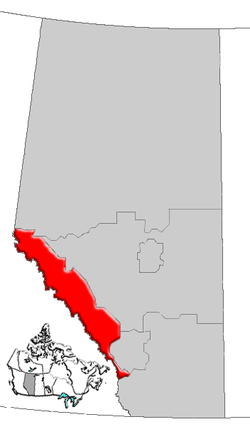
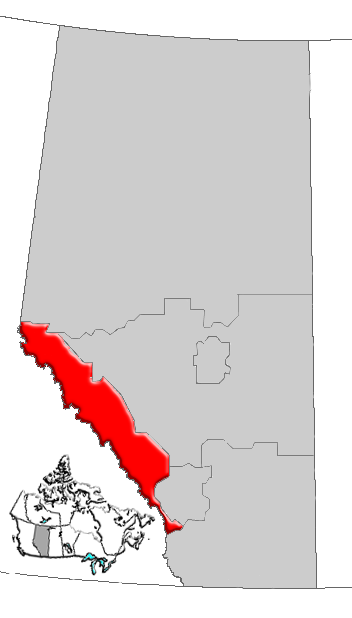
Alberta's Rockies comprise the Canadian Rocky Mountains in Alberta, Canada. On the southwestern part of the province along the British Columbia border, the region covers all but the south of Census Division 15.

The main industry in this region is tourism.[1]

Geography

[edit]
Maligne Lake in Jasper National Park
View on the Icefields Parkway in Banff National Park

This human region is almost identical to the Alberta Mountain forests ecozone. The region contains the Central Front Ranges and the Continental Ranges of the Canadian Rocky Mountains, and includes the Banff National Park and Jasper National Park, as well as the Kananaskis Country park system and the Willmore Wilderness.[2]

The main transportation corridors run through the Kicking Horse Pass and the Yellowhead Pass from east to west, while the Bow Valley and Athabasca River valley are followed by the longitudinal Icefields Parkway. Another important waterway that crosses this region is the North Saskatchewan River.

Tourism

[edit]

Some of the best ski resorts of the Rockies are in this region, and are important tourist destinations. They include Fortress Mountain Resort, Lake Louise, Marmot Basin, Mount Norquay, Nakiska and Sunshine Village. Other tourist attractions include the glaciers of the Columbia, Wapta and Waputik Icefields such as the Athabasca, Bow, Crowfoot, Hector, Peyto, Saskatchewan and Vulture Glaciers.

Glacial lakes line the Icefields Parkway and dot the surrounding valleys. Some of the more spectacular are Bow, Hector, Louise, Maligne, Moraine, Peyto, Pyramid and Vermilion lakes.

Infrastructure

[edit]

Banff and Jasper are the main communities in the region. The length is defined by the Icefields Parkway, and it is crossed by the Trans-Canada Highway and the Yellowhead Highway into British Columbia. David Thompson Highway leads from the Rockies into central Alberta from Saskatchewan River Crossing, and Banff Windermere Parkway leads from Castle Junction (south of Lake Louise) through the Kootenay National Park to the Columbia River valley. The Bighorn Highway defines most of the eastern limit of the region.

Health care has been the responsibility of Alberta Health Services, since the province's health regions were amalgamated in 2008. Before then, Calgary Health Region was the health region ensuring well-being in the south of this region,[3] while the north was supervised by the Aspen Regional Health Authority.[4]

Health care centres established in the area are:

  • Seton Jasper Healthcare Centre - Jasper
  • Hinton Healthcare Centre - Hinton
  • Canmore General Hospital - Canmore
  • Banff Mineral Springs Hospital - Banff

Politics

[edit]

On a provincial level, southern Alberta is represented in the Legislative Assembly of Alberta by Members of the Legislative Assembly elected in the ridings of Banff-Cochrane and part of Rocky Mountain House and West Yellowhead.

Communities

[edit]

The following communities are in Alberta's Rockies.

The towns of Grande Cache and Hinton, on the eastern edge of the Rockies, are sometimes considered as part of this region.[5]

The following rural municipalities are in Alberta's Rockies.

See also

[edit]

References

[edit]
Revisions and contributorsEdit on WikipediaRead on Wikipedia
from Grokipedia
Alberta's Rockies, a segment of the , constitute the province's western frontier along the Continental Divide, encompassing rugged terrain of towering peaks, deep glacial valleys, extensive icefields, and pristine alpine ecosystems that span approximately 49,070 km², or 7.4% of Alberta's land area. This region, stretching from the U.S. border at northward to Willmore Wilderness Park, features elevations from 825 m to over 3,650 m, with prominent summits like Mount Columbia at 3,747 m, and serves as a vital watershed for major rivers including the Athabasca, North Saskatchewan, and South Saskatchewan. Geologically, the Alberta Rockies originated from the , an uplift of sedimentary rocks such as , , and dating back 80–55 million years, later sculpted by Pleistocene glaciation into U-shaped valleys, cirques, and hanging valleys, with ongoing erosion gradually reshaping the landscape over millions of years. The region's physiography divides into three subregions—Montane (lower elevations with coniferous forests and grasslands), Subalpine (mid-elevations with and ), and Alpine (treeless tundra above the treeline)—creating a of habitats influenced by a cool, moist featuring Alberta's highest (500–1,000 mm annually, mostly as snow) and shortest growing seasons. Ecologically, Alberta's Rockies support exceptional , including over 1,300 plant species such as lodgepole pine and Engelmann spruce in forested zones, alongside alpine meadows with rare herbs, and wildlife comprising 56 mammal species (e.g., grizzly bears, , , and ), 300 bird species (e.g., and golden eagles), and diverse aquatic life in glacial-fed lakes and rivers. These ecosystems, protected within a network of national and provincial parks, form part of the World Heritage-listed Canadian Rocky Mountain Parks, spanning 2,306,884 hectares and recognized for their scenic grandeur, glacial features, and geological significance, including the fossil-rich . Key protected areas in Alberta include Banff National Park (established 1885, with turquoise lakes like Lake Louise and dense forests), Jasper National Park (featuring the and over 1,200 km of trails), and Waterton Lakes National Park, which together with other protected areas preserve approximately 60% of the region's natural condition as of 2018, while supporting tourism, research, and conservation efforts amid threats like .

Geography

Physical Features

The Alberta Rockies, part of the larger Canadian , are characterized by a geological foundation of layers primarily deposited during the and eras. These layers include prominent formations of , , and , which were shaped by ancient marine environments and later tectonic forces. The uplift of the range occurred during the , a mountain-building event spanning approximately 80 to 55 million years ago, driven by the of oceanic plates beneath the North American continent, resulting in thrust faulting and folding that elevated the sedimentary sequences into their current dramatic profiles. Major landforms in the Alberta Rockies feature steep peaks, deep U-shaped valleys, and extensive glacial features. Mount Columbia, standing at 3,747 meters, represents the highest peak within Alberta's portion of the range, exemplifying the sharp, glaciated summits typical of the area. Valleys, such as those along the Icefields Parkway corridor, were carved by glacial action and now serve as scenic routes through the terrain. The , one of the largest ice masses in the Rockies, spans about 325 square kilometers and feeds multiple outlet glaciers, contributing to the region's rugged, ice-sculpted landscape. The region's physiography divides into three subregions: Montane at lower elevations with coniferous forests, Subalpine at mid-elevations with and , and Alpine above the treeline featuring treeless . These create diverse habitats across the elevation gradient. The hydrology of the Alberta Rockies is dominated by river systems originating from high-elevation snowmelt and glaciers. The begins at the within the , flowing northeastward and forming a vital artery for downstream ecosystems. Similarly, the headwaters of the emerge from the Saskatchewan Glacier in the same icefield, draining eastward across the prairies. Glacial melt from these sources provides a significant contribution to regional supplies, accounting for 20-30% of late summer streamflow in major watersheds, which supports , municipal use, and aquatic habitats in . Biodiversity hotspots in the Rockies include diverse ecosystems adapted to varying elevations and microclimates. Endemic and characteristic , such as lodgepole forests dominating mid-elevation slopes and vibrant alpine meadows featuring wildflowers like lupines and paintbrushes at higher altitudes, thrive in these nutrient-poor soils. adapted to high elevations encompasses species like grizzly bears, which roam forested valleys in search of berries and prey, and , agile climbers that inhabit rocky cliffs and escarpments above treeline.

Climate and Environment

The climate of Alberta's Rockies varies significantly by elevation and location, with higher elevations characterized by a featuring long, cold winters and short, mild summers. Average temperatures in January at these elevations typically reach lows of around -15°C, while averages range from 15°C to 20°C, influenced by the region's and topographic shielding. The eastern slopes experience drier conditions due to the rain shadow effect of the , which blocks moist Pacific air, resulting in lower compared to the western flanks and contributing to semi-arid valleys. Environmental processes in the region are markedly affected by , including rapid glacier retreat driven by rising temperatures. For instance, the has receded more than 1.5 kilometers since the late , losing approximately half its volume and exposing underlying terrain. Wildfire cycles have intensified since the 1990s, exacerbated by widespread outbreaks that have killed millions of lodgepole pines across the Rockies, creating drier, more flammable deadwood that increases fire severity and frequency. Air and water quality face challenges from both natural and anthropogenic factors. Temperature inversions during winter trap cold air and pollutants in mountain valleys, leading to localized episodes that degrade visibility and air quality, particularly in areas like the Bow Valley. Additionally, , stemming from and emissions from industrial activities in the adjacent , has impacted aquatic ecosystems and forest health in the Rockies, with effects including and reduced water pH levels in sensitive high-elevation lakes. Conservation threats are prominent, with several species at risk due to habitat fragmentation and climate shifts. Wolverine populations in the central Canadian Rockies, including Banff, Yoho, and Kootenay national parks, declined by 41% from 2011 to 2020, with numbers stabilizing at around 18 as of 2024, attributed to reduced snow cover for denning and increased human disturbance. Old-growth forests, vital for biodiversity, are experiencing accelerated loss in the region, with logging and beetle-induced mortality reducing mature stands that once covered significant portions of the montane and subalpine zones.

History

Indigenous History

The Alberta Rockies have been inhabited by for over 10,000 years, with archaeological evidence indicating early human presence through tools, campsites, and trails in the foothills and mountain regions. Key groups whose traditional territories overlap this area include the Stoney Nakoda (Îyârhe Nakoda), Ktunaxa, Secwepemc, and nations, who utilized the diverse landscapes for sustenance, trade, and cultural practices. The Stoney Nakoda maintained strong ties to the and adjacent plains, serving as intermediaries in exchanges with neighboring groups like the and Ktunaxa. The Ktunaxa traditionally occupied the western slopes along the Columbia and watersheds, while the Secwepemc used areas encompassing parts of Yoho, Banff, and national parks for hunting and seasonal travel. Woodland and Rocky bands extended into northern Alberta's Rocky Mountain foothills, integrating the region's resources into their broader territories. In the late 19th century, several of these nations entered into numbered treaties with the Canadian government, which facilitated European settlement and resource development. The Stoney Nakoda, along with other southern groups, signed Treaty 7 on September 22, 1877, at Blackfoot Crossing, ceding large tracts of land in southern Alberta, including foothill and mountain areas, in exchange for reserves, annuities, and hunting rights. Northern Cree bands adhered to Treaty 8, signed in 1899, which covered parts of the northern Rockies and foothills. These treaties profoundly shaped Indigenous land use and relations with incoming settlers. Traditional practices among these nations centered on sustainable resource use, with the Rockies serving as vital hunting grounds for and along seasonal migration routes. The Stoney Nakoda followed annual cycles, wintering in sheltered and moving to plains in summer for communal bison hunts using spears and later bows for precision. These routes facilitated access to mountain game like and supported gathering of and fish in watersheds. Spiritual practices underscored this relationship, with sites in the foothills holding significance for ceremonies such as the Stoney Nakoda , a rite of renewal, healing, and community unity conducted in late spring or early summer. Archaeological sites provide tangible evidence of long-term resource management, exemplified by Head-Smashed-In Buffalo Jump near the eastern edge of the Rockies, a UNESCO World Heritage Site used by Plains Indigenous peoples for nearly 6,000 years to drive bison herds off cliffs for efficient harvesting. This location demonstrates sophisticated communal hunting strategies and bison processing techniques that sustained populations across the foothills. Oral histories among these nations weave creation legends tied to the Rockies' glacial and mountainous features, emphasizing spiritual connections to the land. For the Ktunaxa, their origin story recounts how the body of Chief Naⱡmuqȼin formed the Rocky Mountains after a battle with a sea monster, with his feet at Yellowhead Pass and head near Yellowstone, linking human origins to specific landforms like hoodoos and river systems. Stoney Nakoda traditions include stories of Wîsahkecâhk, a trickster figure teaching harmony with nature, and sacred sites like Mount Yamnuska revered for vision quests and mountain spirits. These narratives, preserved through generations, highlight the enduring view of the Rockies as living entities integral to cultural identity and environmental stewardship.

European Settlement and Development

European exploration of Alberta's Rockies began in the early 19th century, with surveyor David Thompson playing a pivotal role. Working for , Thompson wintered at from 1807 to 1811 and conducted extensive mapping during 1810-1811, including his historic crossing of Athabasca Pass to reach the , which provided critical geographic knowledge of the region's mountain passes and river systems. This work facilitated later navigation and trade routes through the formidable terrain. Subsequent efforts included the Palliser Expedition from 1857 to 1860, commissioned by the Royal Geographical Society, where teams led by James Hector and Thomas Blakiston surveyed six potential passes in the southern Rockies, identifying viable routes such as for future railway development. The fur trade era marked the initial European foothold in the area, centered around (HBC) and posts established in 1799. , built simultaneously by both rival companies along the , served as a key trading hub for exchanging European goods like firearms and metal tools for furs from Indigenous groups, particularly the Kootenay peoples from west of the divide who traversed the mountains to trade. These posts operated intermittently until the companies merged in 1821, fostering economic ties but also introducing diseases and altering traditional Indigenous economies in the Rockies foothills. Settlement accelerated in the late with the completion of the Canadian Pacific Railway (CPR) on November 7, 1885, at Craigellachie, British Columbia, which pierced the Rockies via and opened the region to widespread access. The railway not only connected to the Pacific but also spurred population influx and resource exploitation in western territories, including Alberta's mountainous west. Concurrently, the federal government established the Banff Hot Springs Reserve in November 1885, encompassing 26 square kilometers around the natural thermal springs discovered by railway workers earlier that year, marking Canada's first and promoting tourism as an early economic driver. Early resource booms followed, with camps emerging in the late 1800s to harvest timber for railway ties, , and fuel. Operations in valleys like the upper Bow and Kananaskis supplied southern Alberta's growing settlements, though limited by the rugged terrain and seasonal access. Around 1900, a rush transformed the , where rich bituminous seams attracted investors; by the early 1900s, multiple mines such as those at Bellevue and Hillcrest were operational, drawing thousands of laborers and fueling regional industrialization despite hazardous conditions.

Protected Areas

National Parks

Banff National Park, established in 1885 as Canada's first national park, spans 6,641 square kilometers in the heart of Alberta's , encompassing diverse terrain from glacial valleys to alpine meadows. Its boundaries extend along the eastern slopes of the Rockies, bordered by to the west and including iconic sites such as Lake Louise, a turquoise glacial lake surrounded by towering peaks, and the Cave and Basin hot springs, which were instrumental in the park's founding due to their thermal waters discovered during railway construction. , designated in 1907, covers a larger 11,000 square kilometers, making it the largest park in the Canadian Rockies, with boundaries that adjoin Banff to the south and stretch northward to include vast wilderness areas rich in subalpine forests and icefields. Key attractions here include , renowned for its deep waters and Spirit Island, and the Jasper Skytram, an offering panoramic views of the surrounding peaks and valleys. Waterton Lakes National Park, established in 1895 as Canada's fourth , covers 505 square kilometers in the southern Rockies near the U.S. border. It features a unique blend of mountain and ecosystems, including the deepest lake in the Canadian Rockies (Upper Waterton Lake) and diverse habitats. As half of the (designated 1932), it is managed for conservation and cross-border cooperation, with over 97% protected as natural zones to preserve and scenic values. Both parks are managed by under the Canada National Parks Act, which emphasizes ecological integrity, visitor enjoyment, and cultural preservation through zoning systems that designate over 97% of Banff as (Zone II), limiting development and motorized access to protect habitats. This includes strategic zoning for wildlife corridors, such as the Fairview and Whitehorn areas in Banff, where habitat enhancements like forest thinning on 375 hectares support safe animal movement across highways and railways, reducing human-wildlife conflicts. Visitor numbers underscore their popularity; Banff alone attracted approximately 4.2 million visitors in the 2019-2020 , prompting to implement plans, including shuttles and reservation systems, to manage congestion while maintaining access. sees similar crowds, with management focused on trail networks and permits to balance with conservation. Unique features linking the parks include the 230-kilometer Icefields Parkway, a along Highway 93 that connects Lake Louise in Banff to , traversing the and offering views of glaciers, waterfalls, and wildlife such as grizzly bears and elk. also prioritizes protection of endemic species, exemplified by the endangered Banff Springs snail (Physella johnsoni), found only in the park's thermal springs and safeguarded through habitat closures and recovery actions under the Species at Risk Act to prevent extinction amid environmental pressures. These efforts ensure the parks serve as critical refuges for in the Rockies.

Provincial Parks and Reserves

Alberta's provincial parks and reserves in the Rockies encompass a network of protected areas managed under provincial jurisdiction, distinct from federal national parks, with an emphasis on balancing conservation, , and limited resource uses. These areas, administered by Alberta Parks, cover diverse landscapes from alpine meadows to forested valleys, providing habitats for native and opportunities for outdoor activities such as and . Key examples include , a multi-use region spanning approximately 4,000 km² established in 1978, which integrates several provincial parks like (designated in 1977) for preservation alongside tourism and ranching. Another prominent site is Willmore Wilderness Park, a 4,597 km² area created in 1959 under the Willmore Wilderness Park Act to maintain remote, untouched wilderness. Alberta Parks oversees these reserves with a multi-use approach, permitting activities like , , and horseback riding while restricting motorized access in sensitive zones to protect natural processes and corridors. In Willmore Wilderness Park, for instance, no motorized vehicles have been allowed since its establishment, preserving its status as a non-motorized haven for backpackers and equestrian users. Management also incorporates limited resource extraction in designated zones of to support local economies without compromising ecological integrity. The provincial government allocates substantial resources to these operations; for example, the Ministry of Forestry and Parks budgeted $91.6 million for overall operations in 2024-25, with targeted investments in Rocky Mountain parks for maintenance and development. Biodiversity conservation forms a core mandate, with initiatives focused on species at risk in the Rocky Mountain ecosystems. Woodland caribou herds, designated as endangered under Alberta's Wildlife Act in 2022, receive ongoing monitoring through provincial range plans and bilateral agreements with the federal government to identify and protect critical habitats. These efforts aim to maintain at least 65% undisturbed habitat within caribou ranges, addressing threats from . Seasonal closures, such as those for in winter, further safeguard wildlife and visitors. Access to these reserves emphasizes low-impact recreation, supported by extensive trail networks exceeding 1,000 km across the region. Willmore Wilderness Park alone features 750 km of trails for non-motorized exploration, while offers interconnected paths for day hikes and multi-day trips, with facilities like day-use areas and backcountry campsites. Visitors must adhere to group size limits and obtain permits for overnight stays to minimize environmental impact.

Economy

Tourism Industry

The tourism industry in Alberta's Rockies is a cornerstone of the regional , generating substantial through visitor expenditures and supporting diverse employment opportunities. In , tourism in Rockies communities produced $2.3 billion in total economic output, including a $2 billion contribution to Alberta's GDP and sustaining 23,600 jobs across , guiding, and related services. Following the , the sector rebounded strongly, with Alberta's overall visitor reaching a record $12.7 billion in spending by 2023, and the Rockies accounting for a significant share due to their iconic appeal. Key attractions drive this economic activity, particularly at premier ski resorts and year-round adventure pursuits. Lake Louise Ski Resort, one of North America's largest, draws substantial skier visits annually, offering expansive terrain for and amid stunning glacial backdrops. Complementing these are wildlife viewing tours, which highlight species like grizzly bears and in their natural habitats, and adventure sports such as heli-hiking and , which attract thrill-seekers to remote alpine areas. Visitor patterns exhibit strong seasonality, with peak summer months of and dominated by hiking and scenic drives along the Icefields Parkway, while winter from to March focuses on and . Pre-COVID, international tourists comprised about 70% of the revenue in major sites like , primarily from the , , and , underscoring the region's global draw. Post-pandemic recovery has seen international visitation surpass 2019 levels in 2023, though domestic travelers now form a larger proportion during off-peak shoulders. The 2024 Jasper wildfire significantly impacted the sector, destroying about 30% of the Jasper townsite and leading to evacuations and closures in . This resulted in substantial revenue losses for operators, with 20% of accommodations affected, though recovery efforts as of 2025 have seen partial reopening and a focus on sustainable rebuilding to support the 2025 season. Sustainability initiatives address overcrowding and environmental pressures, with implementing carrying capacity limits in high-traffic areas like Banff to preserve ecological integrity. In 2021, mandatory shuttle systems were expanded for Moraine Lake Road, restricting private vehicles and transporting up to 2,860 passengers daily to cut traffic by an estimated 200,000 vehicles annually, thereby reducing wildlife disruptions and emissions. These measures align with the 2022 Management Plan, which emphasizes site-specific visitor limits and regenerative practices to balance economic benefits with conservation.

Natural Resource Extraction

Natural resource extraction in Alberta's Rockies has historically centered on , particularly in the region, where operations began in 1886 and intensified during the early to support regional industry and rail development. Production peaked in the 1910s amid high demand for steam coal, with multiple mines operating between 1900 and the 1960s, though the sector declined sharply after due to shifts toward alternative energy sources. Today, has transitioned to legacy sites, preserved as historic landmarks and areas, with no active large-scale operations in the region. Current extraction activities focus on aggregates such as , , and for and , supporting local development in the mountainous terrain. Forestry operations in the foothills of Alberta's Rockies emphasize selective logging to maintain ecological balance, governed by Forest Management Agreements (FMAs) that allocate sustainable harvest levels across Crown lands. These agreements, such as those in the Sundre and areas, promote ecosystem-based management, including partial cuts to preserve old-growth stands and in coniferous forests dominated by lodgepole and . The provincial annual allowable cut (AAC) stands at approximately 29.5 million cubic metres per year as of 2020/21, with foothills FMAs contributing a significant portion while accounting for fire risks, insect disturbances, and regeneration rates to ensure long-term viability. The energy sector in Alberta's Rockies relies heavily on natural gas drilling in the Deep Basin, a prolific conventional play spanning the western foothills where tight sands and shales yield significant volumes through hydraulic fracturing. The Deep Basin contributes substantially to Alberta's overall marketable output of 112 billion cubic metres in 2023, supporting export markets via pipelines. Hydroelectric development complements extraction, exemplified by the Bighorn Dam on the , constructed in the 1970s with a capacity of 120 megawatts to harness glacial meltwater for reliable, low-emission power generation averaging 408,000 megawatt-hours annually. Reclamation standards, formalized in post-2010 guidelines by the Energy Regulator, mandate the restoration of disturbed sites to equivalent land capability, including at least 80% cover comparable to adjacent undisturbed areas through replacement, seeding, and monitoring. These criteria apply to , forestry, and energy sites, requiring operators to achieve dominance and stability within five to ten years, with based on metrics like percent native-infill and to mitigate long-term ecological impacts.

Infrastructure

Transportation Networks

The transportation networks in Alberta's Rockies primarily consist of road, rail, and air systems that provide essential connectivity through challenging mountainous terrain, supporting both local access and broader economic links. The 1 serves as the primary east-west artery, traversing with average daily traffic volumes reaching up to 27,000 vehicles during peak summer months, reflecting its role as a vital corridor for tourists and commuters. The Icefields Parkway (Highway 93), connecting Banff and Jasper National Parks, faces significant maintenance challenges due to frequent avalanches, leading to seasonal closures and ongoing efforts by to ensure safety. Rail infrastructure in the region is dominated by the and lines, which facilitate freight transport, including coal from mines in the area along the historic Crowsnest route. These lines navigate steep grades and tunnels through the Rockies, with remnants of early 20th-century rail structures, such as trestles and sidings from the Crowsnest line, still visible in areas like the Pass, highlighting the engineering feats required for transcontinental connectivity. Air access is provided by major hubs and smaller regional airports, with (YYC) serving as the primary gateway, handling over 18 million passengers annually as of 2024 and providing direct connections to Banff, , and other Rockies destinations. Regional facilities include Jasper Airport (YQP) for northern access. Helicopter operators, such as Rockies Heli and Alpine Helicopters, offer tours and transport to remote alpine areas inaccessible by road, enabling access to glaciers and backcountry sites for sightseeing and adventure activities. Recent developments include ongoing upgrades to Highway 1 segments in , with gradual twinning to four lanes aimed at enhancing safety amid increasing traffic and wildlife interactions, as part of broader provincial efforts completed in phases through 2024.

Energy and Utilities

The and utilities sector in Alberta's Rockies relies on a mix of renewable sources for power generation, with hydroelectric facilities playing a key role due to the region's abundant from rivers and reservoirs. Major hydroelectric plants, such as the Bighorn Dam on the , contribute significantly to the province's hydroelectric output, generating an average of 408,000 megawatt-hours annually from its 120 MW capacity. Other facilities in the Kananaskis and Brazeau areas, located in the eastern slopes of the Rockies, account for a substantial portion of Alberta's total hydroelectric capacity of approximately 943 MW, supporting about 3-5% of the province's overall . Wind energy has expanded in the foothills adjacent to the Rockies, with projects like the Castle Rock Ridge Wind Farms adding 76.2 MW since 2012 and the area hosting over 255 turbines producing nearly 511 MW as of 2024. Water utilities in the region draw primarily from glacial and snowmelt sources, ensuring supply for local municipalities amid variable precipitation patterns. In Canmore, the municipal water system serves around 15,000 residents through a treatment plant that processes water from local aquifers and streams fed by Rocky Mountain glaciers, which contribute to the Bow Valley's hydrological stability. Post-2013 floods, which devastated southern Alberta including upstream areas in the Rockies, flood control infrastructure has been enhanced with structures like the Cougar Creek Debris Flood Retention Structure in Canmore, completed in 2024 at a cost of $76.7 million to mitigate debris flows and protect against 300- to 1,000-year flood events. These measures, funded by provincial and federal investments exceeding $150 million since 2013, focus on upstream retention to reduce downstream risks in the Bow and Elbow River basins. Telecommunications infrastructure has seen expansions to address the region's rugged terrain and sparse population, with fiber optic networks extending along key highways like the Icefields Parkway and . Initiatives such as the Summit's 2025 investments in the Bow Valley have delivered permanent fiber upgrades, contributing to broader rural broadband goals aiming for near-100% high-speed coverage across by 2026-2027, with ongoing fiber expansions in rural and Rockies areas. Remote areas, such as sites in and Banff national parks, depend on satellite services like for reliable connectivity, providing speeds up to 275 Mbps where terrestrial lines are impractical. Challenges in the sector include maintaining grid reliability during extreme winter peaks, when demand can surge to over 12,000 MW province-wide due to cold snaps, straining interconnections from Rockies generation sites. In 2024, wildfires in damaged power infrastructure, causing outages that affected the townsite and highlighted vulnerabilities to climate-driven events, with restoration efforts prioritizing resilient grid hardening. These incidents underscore the need for diversified renewables and reserves to support the region's isolated utilities amid growing demands.

Communities

Major Settlements

Banff originated as a settlement in 1883, established near a proposed tunnel site for the Canadian Pacific Railway, initially known as "Siding 29" before being renamed and developed around the natural hot springs that drew early visitors. The town's compact urban layout centers on a pedestrian-friendly downtown core, featuring heritage buildings constructed in the late 19th and early 20th centuries, such as log-and-stone structures that reflect its railway-era origins and incorporation in 1990. Jasper developed from a railway outpost in the early , with its modern form taking shape after the establishment of Jasper Forest Park in 1907, which formalized the area's protected status and spurred community growth along the valley. The town's layout spreads linearly along the river and railway corridor, incorporating a mix of historic sites like early rail stations and more dispersed residential areas amid the surrounding wilderness, emphasizing its role as a gateway to . However, the July 2024 Jasper destroyed approximately 30% of the townsite, including 358 buildings, leading to the evacuation of over 20,000 people and ongoing recovery efforts as of 2025, which have significantly impacted infrastructure and housing. Canmore was founded in 1884 as a coal-mining depot to support the Canadian Pacific , with operations expanding rapidly in the late 1880s to fuel locomotives and heat buildings along the line. Over time, the town transitioned from its industrial roots, evolving into a modern bedroom community for nearby through the development of contemporary subdivisions and upscale residential neighborhoods that blend with the Bow Valley's natural topography. Hinton began as a railway and coal-mining community in 1911, when the Grand Trunk Pacific Railway established a station there, named after the line's vice president, William P. Hinton, to serve as a key stop on the transcontinental route. Its layout reflects this heritage with a grid-based downtown anchored by the railway tracks, surrounded by neighborhoods that expanded with the lumber industry in the mid-20th century, positioning it as a practical hub near . Urban planning in Alberta's Rockies settlements, particularly those within national parks like Banff and , is governed by strict zoning regulations under to maintain ecological integrity and aesthetic harmony, including design guidelines that prioritize heritage-style architecture and limit large-scale commercial developments. For instance, Banff's bylaws emphasize environmentally sensitive growth, with past council discussions in 2013 exploring but ultimately rejecting quotas on chain stores to preserve the town's unique village character without overly restricting economic vitality. Growth is further constrained by defined townsite boundaries and long-term management plans, such as Banff's community plan aiming for sustainable housing expansion by 2035 while adhering to federal park limits that cap physical expansion to protect surrounding habitats. Local amenities in these settlements support resident needs while integrating with their natural settings. Banff features the Banff Mineral Springs Hospital for acute and emergency care, alongside public schools like Banff Elementary and Community High, and cultural hubs such as the Banff Centre for Arts and Creativity, which hosts galleries, theaters, and heritage exhibits. Jasper offers the Seton Jasper Healthcare Centre for medical services, schools including Jasper Elementary-Junior High, and the Jasper Library and Cultural Centre, which provides community programs, archives, and event spaces. Canmore's amenities include the Canmore General Hospital with emergency and outpatient facilities, educational institutions like Canmore Collegiate High School, and cultural venues such as Elevation Place, a multi-use center with an , , and theater. Hinton provides the Hinton Healthcare Centre for comprehensive health services, schools such as Harry Collinge High School, and the Northern Rockies Museum of Culture and Heritage, featuring interactive exhibits on regional history.

Demographics and Culture

The of Alberta's Rockies, defined by the Banff– economic region, stood at 93,685 according to the 2021 Census of conducted by , with estimates reaching approximately 98,000 as of 2025. This figure reflects a modest growth of approximately 2% from 2016 to 2021, lower than the provincial average of 4.8%, though recent interprovincial migration trends, including opportunities, have contributed to accelerated increases in mountain communities post-2021; however, the 2024 temporarily disrupted this growth through evacuations and displacement. The region's features an aging , with a median age of 41.2 years in 2021, compared to Alberta's provincial median of 38.4 years. Diversity in Alberta's Rockies is marked by a notable Indigenous presence, comprising about 8.7% of the regional in 2021, higher than the provincial average of 6.8% and reflecting the traditional territories of First Nations such as the Stoney Nakoda. Immigrants and those born outside form a significant portion of residents, estimated at around 33% in the Bow Valley area, primarily from and , fostering a multicultural fabric that influences local traditions and community events. This diversity manifests in vibrant multicultural festivals, such as those during Alberta Culture Days, which feature Indigenous performances, markets, and workshops celebrating global heritages. Cultural life in Alberta's Rockies thrives through institutions like the Banff Centre for Arts and Creativity, established in 1933 as the Banff School of Drama and now offering over 100 artist residencies annually across disciplines including , literary arts, and Indigenous-focused programs. These residencies support approximately 8,000 participants each year, including emerging and established Indigenous artists through initiatives like the Indigenous Arts program, which emphasizes transformative exploration and cultural preservation. Complementary events include Indigenous art markets tied to summer festivals and gatherings in the foothills, blending ranching heritage with contemporary storytelling traditions. Social challenges in the region include a severe affordability , exacerbated by high demand and limited supply, with the average sale price for single-family homes in Canmore reaching $1.14 million in 2024, far exceeding provincial benchmarks. This issue is intensified by seasonal influxes of temporary workers in and , who comprise a significant portion of the —often up to 20% in towns like Banff and Lake Louise—leading to strained community dynamics, labor shortages, and increased pressure on rental markets.

Governance

Administrative Structure

The administrative structure of Alberta's Rockies encompasses federal, provincial, and municipal levels, each with distinct jurisdictions over lands, parks, and communities in this region. At the federal level, holds primary jurisdiction over national parks in the region, including Banff and in , as well as Yoho and Kootenay in , which form a significant portion of the Rockies' protected areas, managing conservation, visitor access, and ecological integrity under the Canada National Parks Act. These parks represent key World Heritage sites within the Canadian Rocky Mountain Parks. Additionally, the region falls under federal electoral districts, including Yellowhead, where Conservative MP William Stevenson was elected in the 2025 federal election to represent interests in the . Provincially, the Ministry of Environment and Protected Areas oversees non-federal lands, including provincial parks and public lands in the Rockies' eastern slopes, enforcing land-use planning, resource management, and biodiversity protection. Regional administration is handled by entities like the Municipal District of Bighorn No. 8, a spanning foothills and front ranges adjacent to , which coordinates local governance, development approvals, and intergovernmental relations. At the municipal level, towns such as Banff and operate under elected councils, with mayors and councillors serving four-year terms as mandated by Alberta's municipal election cycle under the Local Authorities Election Act. These councils manage urban services, , and community planning within park boundaries, subject to federal oversight. Inter-municipal collaborations, such as the Bow Valley Waste Management Commission involving the Town of Banff, Town of Canmore, and Municipal District of Bighorn No. 8, facilitate shared waste recovery and diversion programs to address regional environmental challenges efficiently. In 2023, Alberta amended its Policy on Consultation with First Nations (2013) and Policy on Consultation with Settlements (2015) to include an aspirational preamble emphasizing economic benefits for Indigenous communities from development, thereby enhancing consultation processes for land-use decisions on provincial lands.

Environmental Policies

Alberta's environmental policies for the Rockies emphasize protection through a combination of provincial legislation, federal oversight, and international obligations. The Alberta Wilderness Areas Act, enacted in 1982, designates specific areas to maintain ecological integrity and restrict human activities, including the Ghost River, Siffleur, and White Goat Areas within the Rockies region. These designations prohibit motorized access and resource extraction to preserve and natural processes. Complementing this, the province's cumulative effects management framework, introduced under the 2008 Land-use Framework and implemented through regional plans in the 2010s, evaluates the combined impacts of development on air, water, and land in sensitive areas like the Eastern Slopes of the Rockies. For instance, the North Regional Plan integrates thresholds for and to guide land-use decisions. In December 2024, Alberta introduced the Coal Industry Modernization Initiative, banning new open-pit coal and mountaintop removal in the Eastern Slopes to protect sensitive ecosystems and watersheds in the Rockies foothills. At the federal level, the Species at Risk Act (SARA) of 2002 provides legal protection for endangered and threatened species in the Rockies, such as the grizzly bear (Ursus arctos) and woodland caribou (Rangifer tarandus caribou), by prohibiting harm to individuals and their critical habitats on federal lands, including national parks. Recovery strategies under SARA address threats like habitat loss from linear developments in the region. Additionally, adaptations to Canada's federal carbon pricing framework in 2024, part of the Greenhouse Gas Pollution Pricing Act, support emissions reductions in protected areas by incentivizing low-carbon practices, such as electrifying park operations and monitoring transportation-related emissions in sites like Banff and Jasper National Parks. Internationally, the Canadian Rocky Mountain Parks received World Heritage status in 1984, encompassing seven contiguous protected areas—Banff, , and Kootenay National Parks in and , in , and the provincial parks of in , Mount Assiniboine in and , and Hamber in —recognized for their outstanding geological features, , and glacial landscapes spanning over 23,000 square kilometers. This designation commits to conservation measures that maintain the site's ecological value. Transboundary water agreements further bolster protection, notably the 1997 Basin Transboundary Waters Master Agreement between , , and other jurisdictions, which promotes cooperative management of shared Rocky Mountain watersheds to ensure sustainable flows and . Enforcement of these policies involves penalties for non-compliance, such as fines under the Provincial Parks Act and federal park regulations; for example, in 2025, a visitor in was fined $750 for illegal off-road vehicle use that damaged sensitive habitats. Monitoring relies on advanced technologies, including via to track landscape changes, vegetation cover, and across the Rockies, enabling early detection of cumulative impacts from variability and human activity.

References

Add your contribution
Related Hubs
Contribute something
User Avatar
No comments yet.