


Community hub
Recent from talks
Contribute something
Nothing was collected or created yet.
Amruta Subhash
View on Wikipedia
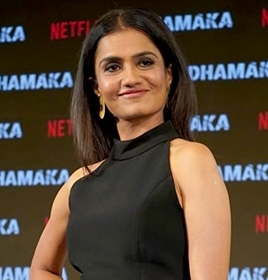
Amruta Subhash is an Indian actress who works in Marathi and Hindi films, television, and theatre. She is a graduate of the National School of Drama, New Delhi.[4] She has received several awards, including a National Film Award,[5] two Filmfare Awards, and four Filmfare OTT Awards.[6][7]
Key Information


Career
[edit]Subhash made her debut with the National Award-winning film and India's Oscar entry for the year 2004, Shwaas.[8]
She won the National Film Award for Best Supporting Actress in 2013, for her role in the Marathi film Astu[5] and has starred in numerous critically acclaimed films that have won various awards around the world, such as the Crystal Bear at the Berlin International Film Festival[9] and the Fedeora Award at the Venice Film Festival.[10]
Subhash is also a classically trained singer who has lent her voice to various Marathi films.[11]
As a playback singer, she has won accolades such as the Maharashtra Government State Award for the film Nital.[12] She has appeared in the Netflix Original series Selection Day (2018–19) and opposite Nawazuddin Siddiqui in Sacred Games (2019).
Subhash was a student at S P College, Pune.[13] She started her acting career in theatre.[14] She graduated from the National School of Drama, New Delhi, where she studied under Satyadev Dubey.[15] While there, she appeared in various plays, including Urvashiam (1997), Bela Meri Jaan (1998), House of Bernada, Alba (1998), and Mrug Trushna (1999). Returning to Maharashtra, she appeared in various Marathi plays, including Tee Fulrani. This role, previously portrayed by Bhakti Barve, brought her into the spotlight.[14] Adapted along the lines of My Fair Lady, which in turn is based on George Bernard Shaw's famous play Pygmalion, the play was written by Pu La Deshpande. Later, Subhash featured in many Marathi films and television series, playing supporting roles, and then moved into lead roles. She is also a trained Bharatanatyam dancer.[15]
Subhash portrayed the role of ex-bar dancer Lily in the Netflix series Bombay Begums, directed by Alankrita Shrivastava.[16][17]
Film and television
[edit]Subhash made her film debut in the 2004 film Shwaas, which won Best Feature Film at the 51st National Film Awards.[18] The film was also the official entry from India to the 77th Academy Awards in the category of Best Foreign Language Film; it did not reach the nomination list, however.[19] Subhash went on to act in a number of Hindi-language films. Her next project was Chausar. Directed by Sagar Sarhadi, whose 1982 film Bazaar was critically acclaimed, Subhash called the role a "dream come true".[3] The same year, she played the title role in the television film Nirmala, directed by Gulzar, based on Premchand's novel of the same name. Aired on Doordarshan in October 2004, the film was the last episode in Gulzar's series Tehreer.... Munshi Premchand Ki, adapted from Premchand's stories.[20] She also acted in the series Ek Prem Katha, directed by Basu Chatterjee.
Subhash was next seen playing various roles in TV shows, such as Zoka, Paaulkhuna, and most importantly, Awaghachi Sansaar, which aired on Zee Marathi.[21] She became popular for her role of Aasawari opposite actor Prasad Oak, where she fights back against the atrocities inflicted upon her by her husband.[15]
.jpg)
Her 2005 film White Rainbow was based on the stories of the widows of Vrindavan, where she played a 15-year-old widow who is forced into prostitution.[22] In 2008, she appeared in a supporting role in Nandita Das's debut directorial venture Firaaq, based on the aftermath of the 2002 communal riots in Gujarat.[23] Critically acclaimed, nationally as well as at various international festivals, the film showcased several notable actors including Naseeruddin Shah, Paresh Rawal, and Deepti Naval.[24] The same year, the Marathi-language comedy Valu was released. Directed by Umesh Vinayak Kulkarni, the film included Atul Kulkarni, Mohan Agashe, Bharati Achrekar, Girish Kulkarni, Dilip Prabhavalkar, among others.[25] The film also featured Subhash's mother, Jyoti Subhash.
Her 2009 film Tya Ratri Paus Hota cast her as a drug-addicted teenager.[26] The same year, she appeared in Sachin Kundalkar's film Gandha. Subhash's mother played her fictional mother in the production.[27] The film was later adapted into Hindi by Kundalkar as Aiyyaa in 2012.[28][29]
Theater
[edit]"Whether I am tired, sad or depressed... my plays never fail to uplift my mood and always make me feel rejuvenated at the end of it."[30]
— Subhash on her love for theater.
Along with her film career, Subhash has acted in a number of theatre plays, including Sathecha Kaay Karayacha! and Shree Tashi Sau. In Sathecha Kaay Karayacha!, directed by her husband Sandesh Kulkarni, Subhas played the role of Salma, an understanding wife who tries to solve the problems of her husband who falls prey to self-torturing jealousy.[31] In Ajuni Yeto Vaas Fhulana, director Chetan Datar paid tribute to veteran theatre personality Satyadev Dubey. While Dubey was played by Nandu Madhav, Subhas played the role of an experienced student of Dubey.[32] She also appeared in the play Chhotyashya Suteet, which was written by Sachin Kundalkar.[33] In 2008, she acted in the play Love Birds, directed by Girish Joshi. The suspense thriller play was well appreciated by the audience for its innovative way of mixing in video clips. She played the role of a wife whose husband (played by Aniket Vishwasrao) has lost his memory and is learning bitter truths about her as he recovers.[34][35] In 2020, she acted in a Hindi-language play titled Phir Se Honeymoon, written and directed by her husband, Sandesh Kulkarni, about a couple that decides to go on a second honeymoon in an effort to revive their relationship. However, the play had to be put on hold due to the COVID-19 pandemic. In 2022, the play was revived in Marathi and retitled Punashcha Honeymoon.[36]
Singing
[edit]Subhash studied classical singing for three years. Her debut album, Jata Jata Pawasane, was not successful commercially.[30] She has featured as a playback singer in films like Haapus (2010) and Ajintha (2012) and has provided background music to the films Nital (2006) and Teen Bahene. In 2012, she participated in the Marathi singing competition Sa Re Ga Ma Pa, organised for celebrities. She went to the top 5 and competed in the finale along with Ajay Purkar, Ketki Thatte, Vaibhav Mangle, and Prashant Damle, with Damle winning the competition.[citation needed]
Personal life
[edit]Subhash's birth name is Amruta Subhashchandra Dhembre. She is the daughter of actress Jyoti Subhash,[37] and she has said her interest in acting was inspired by her mother.[15] They have acted together in many films, including Aaji, Zoka, Gandha, Masala, Nital, Valu, Badha, Vihir, and Gully Boy, and the play Kalokhachya Leki. Jyoti Subhash played the role of Amruta's grandmother in Aaji and that of her mother in Gandha.[27] Subhash is married to director Sandesh Kulkarni,[3] who has directed her in plays such as Sathecha Kaay Karayacha! and Pahila Vahila.[38] The actress supports various social causes. She is a brand ambassador for Zee Marathi Jagruti, an initiative by Zee Marathi Channel Group, for the empowerment of Marathi women.[39] Her sister-in-law is actress Sonali Kulkarni.
Selected filmography
[edit]Film
[edit]| Year | Title | Role | Language | Notes |
|---|---|---|---|---|
| 2004 | Dev | Qureshi | Hindi | |
| Shwaas | Aasawari | Marathi | ||
| White Rainbow | Deepti | Hindi | ||
| Devrai | Parvati | Marathi | ||
| 2008 | Valu | Sangi | Marathi | |
| Contract | Goonga's wife | Hindi | ||
| Firaaq | Jyoti | Hindi | ||
| 2009 | Gandha | Veena | Marathi | "Lagnaachya Vayachi Mulgi" segment |
| Vihir | Prabha | Marathi | ||
| 2010 | Haapus | Marathi | As playback singer | |
| 2012 | Masala | Sarika | Marathi | |
| Ajintha | Marathi | As playback singer | ||
| 2013 | Balak-Palak | Dolly | Marathi | |
| Astu – So Be It | Channama | Marathi | ||
| 2014 | Killa | Aruna Kale | Marathi | |
| 2015 | Island City | Sarita Joshi | Hindi | |
| 2016 | Chidiya | Vaishnavi | Hindi | |
| Raman Raghav 2.0 | Lakshmi | Hindi | ||
| 2017 | Ti Ani Itar | Janaki | Marathi | |
| 2019 | Gully Boy | Razia Sheikh | Hindi | |
| Dithee | Parubai | Marathi | ||
| 2020 | Ghost Stories | Nurse | Hindi | Zoya Akhtar's segment |
| Choked: Paisa Bolta Hai | Sharvari Tai | Hindi | ||
| 2021 | Dhamaka | Ankita Malaskar | Hindi | |
| 2022 | Wonder Women | Jaya | English | |
| 2023 | Lust Stories 2 | Seema | Hindi | |
| 2025 | Jarann | Radha | Marathi | |
| Parinati | Dr. Saili | Marathi | [40] |
Television
[edit]| Year | Title | Role | Language | Notes |
|---|---|---|---|---|
| 2006–2010 | Avaghachi Sansar | Asawari Bhosale | Marathi | |
| 2012 | Sa Re Ga Ma Pa | Contestant | Marathi | |
| 2018 | Selection Day | Meera | Hindi | Netflix series |
| 2019 | Sacred Games Season 2 | Kusum Devi Yadav | Hindi | Netflix series |
| 2021 | Bombay Begums | Lily / Laxmi | Hindi | Netflix series |
| 2022 | Saas Bahu Achaar Pvt. Ltd. | Suman Shrivastava | Hindi | |
| 2022 | Bus Bai Bas Ladies Special | Guest | Marathi |
Awards and nominations
[edit]_Astu_(Marathi)_to_Ms._Amruta_Subhash,_at_the_61st_National_Film_Awards_function,_in_New_Delhi._The_Secretary.jpg)
In 2006, Subhash was awarded the Best Actress award for her role in the TV show Avaghachi Sansar, presented by Zee Marathi Awards. She has also received the V. Shantaram Award for her role in the film Savalee.[15] In 2014, she got the National Film Award for Best Supporting Actress for her film Astu, directed by Sumitra Bhave–Sunil Sukthankar (shared with Aida El-Kashef), She also won the Filmfare Award Marathi for Best Supporting Actress for the film Astu. [5] and the Crystal Bear for Best Film, awarded by the children's jury in the Generation Kplus section at the 64th Berlin International Film Festival, for the movie Killa.[9]
| Year | Award | Category | Work | Result | Ref. |
|---|---|---|---|---|---|
| 2014 | National Film Awards | Best Supporting Actress | Astu (tied with Aida El-Kashef for Ship of Theseus) | Won | |
| 2014 | Filmfare Awards Marathi | Best Supporting Actress | Astu | Won | |
| 2020 | Filmfare Awards | Best Supporting Actress | Gully Boy | Won | |
| 2021 | Asian Academy Creative Awards | Best Actress in a Supporting Role | Bombay Begums | Won | [41] |
| Filmfare OTT Awards | Best Supporting Actor (Female) | Won | [42] | ||
| 2022 | Filmfare OTT Awards | Best Actor Drama Series (Female) | Saas Bahu Achaar Pvt. Ltd. | Nominated | |
| Filmfare OTT Awards | Best Supporting Actor in a Web Original Film (Female) | Dhamaka | Nominated | ||
| 2023 | Filmfare OTT Awards | Best Supporting Actor in a Web Original Film (Female) | Lust Stories 2 | Won | [43] |
References
[edit]- ^ "Birthday Special: National Award winning actor Amruta Subhash's journey is worth reminiscing". Mid-day. Retrieved 4 June 2023.
- ^ "Amruta Subhash: Grateful to filmmakers for not slotting me as an actor". The Indian Express. 23 May 2021. Retrieved 31 July 2021.
- ^ a b c Pallavi Kharade (24 February 2005). "My husband is my best critic". The Times of India. Archived from the original on 25 January 2013. Retrieved 16 April 2013.
- ^ Patil, Ninad (1 October 2021). "Konkona Sensharma, Manoj Bajpayee lift Best Actor trophies at Asian Academy Creative Awards". India Today.
- ^ a b c "Content matters more than the language of a movie or length of role: National Award-winning actor Amruta Subhash". The Indian Express. 23 August 2016. Retrieved 28 April 2022.
- ^ "Filmfare Awards 2020: Gully Boy's Siddhant Chaturvedi & Amruta Subhash bag awards for Supporting Roles". PINKVILLA. 16 February 2020. Archived from the original on 28 April 2022. Retrieved 28 April 2022.
- ^ "Amruta Subhash – Best Actor in Supporting Role Female Nominee | Filmfare Awards". filmfare.com. Retrieved 28 April 2022.
- ^ "Amruta Subhash Talks About Her Career, Mental Health, And More". Man's World India. 22 June 2021. Retrieved 28 April 2022.
- ^ a b "Marathi film 'Killa' bags Crystal Bear award at Berlinale". Firstpost. 17 February 2014. Retrieved 28 April 2022.
- ^ "Ruchika Oberoi's 'Island City' is about Mumbai of emptiness and alienation". The Indian Express. 16 September 2015. Retrieved 28 April 2022.
- ^ "Happy Birthday Amruta Subhash". The Times of India. 13 May 2020. Retrieved 28 April 2022.
- ^ "Amruta Subhash has won accolades such as the Maharashtra Government State Award for the film Nital".
- ^ "Amruta Subhash Height, Age, Family, Wiki & More". India Forums. Retrieved 10 July 2025.
- ^ a b Patil, Ninad (22 August 2009). "एक डझन सवाल – अमृता सुभाष". Maharashtra Times (in Marathi). Archived from the original on 12 October 2020. Retrieved 16 April 2013.
- ^ a b c d e Kulkarni, Shailesh (8 December 2009). "'Learning to act is not enough', says Amruta Subhash". Daily News and Analysis. Mumbai. Retrieved 17 April 2013.
- ^ Keshri, Shweta (16 July 2020). "Netflix's Bombay Begums starring Pooja Bhatt deals with desire, ethics and vulnerabilities". India Today. Retrieved 9 February 2021.
- ^ "Netflix's Bombay Begums gets a release date". The Indian Express. 9 February 2021. Retrieved 9 February 2021.
- ^ "51st National Film Awards" (PDF). Directorate of Film Festivals. pp. 10–11. Archived (PDF) from the original on 7 January 2018. Retrieved 16 April 2013.
- ^ "India's Oscar entry in this decade". Rediff.com. Archived from the original on 25 September 2013. Retrieved 16 April 2013.
- ^ "Gulzar's vision of timeless classics". The Tribune. 15 August 2004. Archived from the original on 21 October 2012. Retrieved 16 April 2013.
- ^ "Avghachi Sansaar". Zee Marathi. Archived from the original on 30 April 2010. Retrieved 21 May 2012.
- ^ "White Rainbow". Archived from the original on 2 February 2008. Retrieved 17 April 2013.
- ^ "Amruta Subhash: Grateful to filmmakers for not slotting me as an actor". The Indian Express. 23 May 2021. Retrieved 28 April 2022.
- ^ Verma, Sukanya (20 March 2009). "Hats off to you, Nandita Das". Rediff.com. Archived from the original on 13 February 2014. Retrieved 17 April 2013.
- ^ "I've made my peace with waiting". The Indian Express. 4 April 2021. Retrieved 28 April 2022.
- ^ Namita Niwas (5 June 2009). "Tya Ratri Paus Hota: Something unusual". The Indian Express. Archived from the original on 21 May 2010. Retrieved 16 April 2013.
- ^ a b Kharade, Pallavi. "We understand what's going on in each other's minds". Daily News and Analysis. Archived from the original on 28 April 2014. Retrieved 16 April 2013.
- ^ Baksi, Dibyojyoti (13 September 2012). "Rani Mukherji's spot boy turns singer". Hindustan Times. Mumbai. Archived from the original on 13 February 2013. Retrieved 17 April 2013.
- ^ Chatterjee, Saibal (11 October 2012). "Movie Review: Aiyyaa". NDTV. Archived from the original on 23 August 2013. Retrieved 17 April 2013.
- ^ a b Kulkarni, Pooja (8 May 2012). "Singing has always been my passion: Amruta Subhash". The Times of India. Retrieved 16 April 2013.
{{cite news}}: CS1 maint: deprecated archival service (link) - ^ "Sathecha Kaay Karayacha!". Mumbai Theatre Guide. Archived from the original on 26 October 2014. Retrieved 17 April 2013.
- ^ "36 Ghante". Mumbai Theatre Guide. Archived from the original on 26 October 2014. Retrieved 17 April 2013.
- ^ "Chhotyasha Suteet". Mumbai Theatre Guide. Archived from the original on 14 August 2014. Retrieved 17 April 2013.
- ^ Mathur, Barkha (14 May 2012). "'Love Birds' blends video with live acting nicely". The Times of India. Retrieved 16 April 2013.
{{cite news}}: CS1 maint: deprecated archival service (link) - ^ "Lovebirds". Mumbai Theatre Guide. Archived from the original on 20 November 2012. Retrieved 17 April 2013.
- ^ देवरुखकर, गायत्री. "पुन:श्च हनिमून — एका विवाहित जोडप्याचा भावनिक प्रवास! • रंगभूमी.com". रंगभूमी.com (in Marathi). Retrieved 4 July 2022.
- ^ "Amruta Subhash wishes her mother 'Happy Birthday' with an adorable throwback picture". The Times of India. Retrieved 28 April 2022.
- ^ "Pahila Vahila". Mumbai Theatre Guide. Archived from the original on 26 October 2014. Retrieved 17 April 2013.
- ^ "Zee Marathi Jagruti". Archived from the original on 18 June 2016. Retrieved 23 June 2016.
- ^ "'जारण'च्या यशानंतर अमृता सुभाष 'या' सिनेमात झळकणार! पोस्टर आलं समोर, सोबतीला असेल 'ही' लोकप्रिय अभिनेत्री..." [After the success of 'Jaaran', Amrita Subhash will be seen in 'Ya'! The poster has surfaced, the popular actress will be seen alongside her...]. Loksatta (in Marathi). 15 July 2025. Retrieved 1 January 2026.
- ^ Patrick Frater (3 December 2021). "Asian Academy Creative Awards: Full List of Winners". Variety. Retrieved 5 December 2021.
- ^ "Filmfare OTT Awards 2021 Winners List: Scam 1992 Wins Big with More Than 10 Honours". India.com. 10 December 2021. Retrieved 10 December 2021.
- ^ "Filmfare OTT Awards 2023: Alia Bhatt, Manoj Bajpayee Win Big, Jubilee Sweeps Top Prizes. Complete List Of Winners". 27 November 2023. Retrieved 27 November 2023.
External links
[edit]

| International | |
|---|---|
| National | |
Amruta Subhash
View on GrokipediaEarly life and education
Family background and upbringing
Amruta Subhash was born Amruta Subhashchandra Dhembre on 13 May 1979 in Mumbai, Maharashtra, to parents Subhashchandra Dhembre, an engineer, and Jyoti Subhash, a Marathi actress.[7] [8] [7] She has one brother, Jay, who pursued engineering like their father.[7] The family maintains roots in Rahimatpur, a village in Maharashtra's Satara district, where her mother and maternal uncle, playwright Govind Purushottam Deshpande, spent their early years.[8] [7] Subhash grew up in Mumbai, where her household blended engineering discipline from her father with artistic exposure through her mother's involvement in theater and film.[9] [10] Her early interest in acting stemmed directly from observing Jyoti Subhash's performances, which provided both inspiration and practical immersion into the craft from a young age.[11] This environment, contrasting her father's technical profession with her mother's creative pursuits, shaped her foundational perspective on performance as a disciplined yet expressive vocation.[8]Academic pursuits and dramatic training
Subhash completed her early academic studies at S. P. College in Pune.[7] She subsequently pursued formal training in acting at the National School of Drama (NSD) in New Delhi, from which she graduated.[3] [12] At NSD, around the age of 20, Subhash underwent rigorous dramatic training under the mentorship of theatre director Satyadev Dubey.[11] This program emphasized practical theatre skills, including performance in plays, contributing to her foundational expertise in stage acting.[13] In addition to her acting education, Subhash trained in Bharatanatyam dance, enhancing her expressive physicality for dramatic roles.[14] She also studied classical singing for three years, developing vocal techniques applicable to theatrical performances.[14] These complementary disciplines supported her holistic approach to dramatic arts during and after her NSD tenure.[11]Career
Theater foundations and key productions
Subhash commenced her theater training at the National School of Drama (NSD) in New Delhi, graduating in 1999 after studying under mentors including Satyadev Dubey.[12][11] Her foundational work in theater occurred during this period, where she performed in student and repertory productions that honed her skills in classical and contemporary drama. Key early productions at NSD included Urvashiam (1997), an adaptation of Kalidasa's Sanskrit play exploring themes of love and illusion; Bela Meri Jaan (1998), a Hindi rendition of Mahesh Elkunchwar's work on interpersonal tensions; The House of Bernarda Alba (1998), Federico García Lorca's tragedy of repression and familial conflict; and Mrug Trushna.[15] These performances, staged in Hindi and drawing from global repertoires, marked her initial exposure to rigorous ensemble acting and direct audience interaction, contrasting with her later Marathi commercial theater experiences. Post-graduation, Subhash transitioned to Mumbai's Marathi theater scene, prioritizing regional language works over Hindi stage productions. Notable collaborations included plays directed by her husband, Sandesh Kulkarni, such as Sathecha Kaay Karayacha! and Pahila Vahila, which blended satire and domestic drama.[11] She also featured in Sandhya Chhaya and Ekach Pyaala, productions emphasizing Marathi cultural narratives and character-driven storytelling.[15] Another significant role was in Kalokhachya Leki, a play addressing psychological depth amid urban alienation. In 2024, Subhash directed her debut production, Asen Mi Nasen Mi, a Marathi family drama scripted by Sandesh Kulkarni, starring alongside Neena Kulkarni and Shubhangi Gokhale; it completed 100 shows within nine months, demonstrating sustained audience engagement in contemporary Marathi theater.[16] This milestone underscored her evolution from performer to director while maintaining roots in ensemble-driven, language-specific works.Film roles and breakthroughs
Amruta Subhash entered the film industry with her debut in the Marathi film Shwaas (2004), portraying Ashawari in a supporting role alongside Arun Nalawade.[17] The film addressed ethical dilemmas surrounding a grandfather's decision to donate his grandson's kidney and received critical acclaim.[18] Following her debut, Subhash took on supporting roles in both Marathi and Hindi cinema, including Dev (2004), White Rainbow (2004), Contract (2008), and Firaaq (2008).[19] In the Marathi film Masala (2012), she played Sarika, the wife of a nomadic salesman played by Girish Kulkarni, depicting the couple's struggles and resilience amid frequent relocations for livelihood.[20] Subhash's breakthrough arrived with the Marathi film Astu (2013), directed by Sumitra Bhave and Sunil Sukthankar, where she portrayed Channamma, a compassionate gypsy woman who shelters and cares for a wandering professor afflicted with Alzheimer's disease, played by Mohan Agashe.[21] Her nuanced performance earned her the National Film Award for Best Supporting Actress at the 61st National Film Awards in 2014, shared with Aida El-Kashef for Ship of Theseus.[22][23] The award, a Silver Lotus (Rajat Kamal), was presented by President Pranab Mukherjee, marking a pivotal recognition of her ability to convey emotional depth in limited screen time.[24] This accolade validated her shift toward content-driven roles after earlier pursuits of commercial viability.[22]Television, OTT, and serial contributions
Subhash entered television through Marathi serials in the mid-2000s, where she portrayed lead and supporting characters that established her presence in regional broadcasting. Her breakthrough came with the lead role in Awaghachi Sansaar, a family drama serial on Zee Marathi that premiered in 2004 and ran for several years, earning her widespread recognition among Marathi audiences.[2] She also featured in earlier serials such as Zoka, a period drama, and Paaulkhuna, contributing to ensemble casts in these Zee Marathi productions.[11] With the rise of over-the-top (OTT) platforms, Subhash expanded into streaming series, often taking on complex supporting roles that highlighted her versatility across languages and genres. In 2018, she appeared in Selection Day, a Netflix adaptation of a novel about cricket aspirations in Mumbai, playing a key maternal figure.[3] This was followed by her portrayal of a Research and Analysis Wing (RAW) agent in season 2 of Sacred Games (2019, Netflix), a crime thriller series.[3] In 2020, she starred as the protagonist's wife in Choked: Paisa Bolta Hai, a Netflix drama exploring financial desperation during India's demonetization.[25] Subhash's 2021 OTT output included Bombay Begums (Netflix), where she played Lakshmi Gondhali, an ambitious sex worker navigating corporate and personal power dynamics, a performance that drew praise for its raw intensity.[26] The same year, she essayed Ankita Malaskar, a journalist entangled in a terrorist threat, in the Netflix thriller Dhamaka.[26] In 2022, she led as Suman in Saas Bahu Achaar Pvt. Ltd. (ZEE5), a comedy-drama about a rural woman's entrepreneurial venture into pickle-making, earning a nomination for Best Actor - Female at the Hitlist OTT Awards.[5] Her most recent streaming role was as Seema in the Konkona Sen Sharma-directed segment of Lust Stories 2 (2023, Netflix), an anthology examining desire and relationships.[26]| Year | Title | Platform | Role |
|---|---|---|---|
| 2018 | Selection Day | Netflix | Supporting maternal role[3] |
| 2019 | Sacred Games (Season 2) | Netflix | RAW agent[3] |
| 2020 | Choked: Paisa Bolta Hai | Netflix | Wife of protagonist[25] |
| 2021 | Bombay Begums | Netflix | Lakshmi Gondhali[26] |
| 2021 | Dhamaka | Netflix | Ankita Malaskar[26] |
| 2022 | Saas Bahu Achaar Pvt. Ltd. | ZEE5 | Suman[5] |
| 2023 | Lust Stories 2 | Netflix | Seema[26] |
Singing and multifaceted artistic endeavors
Amruta Subhash, trained in classical singing for three years under vocalists Sameer Dubale and Vikas Bhatvedekar, has pursued music alongside her acting career, viewing it as a lifelong passion.[27][11] Her vocal training emphasized traditional techniques, enabling contributions to Marathi cinema as a playback singer.[3] In 2007, Subhash released her debut album Jata Jata Pawasane, featuring tracks like "Tujhya Dolyatale" (female version) and "Pavsachya Sarini," though it received limited commercial success.[11][28] She subsequently provided playback vocals for films, including "Pavsachya Sarini" in 2007 and "Baglya Baglya Phoola De" from Ajintha in 2012.[29][28] For her singing efforts, she earned recognition such as a Maharashtra State Government award for playback contributions.[3] Subhash has continued vocal work into the 2020s, singing promotional tracks like "Jarann" in 2025 and contributing to the soundtrack of Parinati, including duets with artists such as Sonalee Kulkarni and Akshar Kothari on songs like "Rani" and "Swapna."[30][31] Live performances include a 2015 rendition of a song from Ti Phulrani at the Loksatta Viva Lounge event.[32] These endeavors highlight her versatility, blending acting with musical expression in Marathi entertainment, though her singing output remains secondary to her dramatic roles.[27]Personal life
Family ties and relationships
Amruta Subhash was born Amruta Subhashchandra Dhembre, the daughter of actress Jyoti Subhash, whose influence sparked her early interest in acting.[33] Her maternal uncle, Govind Purushottam Deshpande, was a prominent Marathi playwright, academic, and professor whose works have been adapted across languages, embedding a legacy of literary and theatrical involvement in her family.[10] Subhash married director and writer Sandesh Kulkarni on June 26, 2003, after meeting him at age 17 during a visit to his home to see his sister, actress Sonali Kulkarni, who became her sister-in-law.[7] Kulkarni has directed Subhash in Marathi plays including Sathecha Kaay Karayacha! and Pahila Vahila, blending their professional collaboration with personal partnership; she has described him as her most insightful critic.[11] No public records indicate children from the marriage.[34]Experiences with industry challenges
Amruta Subhash has publicly discussed encountering sexual harassment early in her career, including two incidents involving prominent industry figures who made inappropriate advances. In one case, a senior producer attempted to coerce her into a compromising situation, leading her to firmly reject the proposition and subsequently lose multiple film roles as a result.[35][36] She emphasized in interviews that she refused to compromise her principles, stating that such demands were explicit conditions for casting, which she attributes to the prevalence of the "casting couch" phenomenon in the Indian film industry.[36] Subhash has also spoken about rejections based on physical appearance, particularly her skin tone and eye color, which impacted her confidence during auditions for films and even a childhood dance group. A teacher once dismissed her looks outright, an experience that lingered and contributed to self-doubt when she faced repeated denials in the industry, prompting her to internalize criticisms of not being "beautiful" enough for leading roles.[37][38] As an outsider without familial connections in Bollywood, Subhash highlighted the difficulties of entry and survival, describing nepotism as a structural barrier that favors insiders and makes breaking in arduous for merit-based talents from theater backgrounds. She noted her reluctance to aggressively network or "push" for opportunities as a personal weakness that exacerbated these challenges, contrasting with industry norms where self-promotion often secures work.[39] On-set hazards added to her professional trials, such as a 2018 mob attack during the filming of Gully Boy in Mumbai's Dharavi slum, where an unruly crowd chased their vehicle, leaving her trembling in fear until co-star Ranveer Singh provided reassurance. Despite these obstacles, Subhash has turned down lucrative offers—sometimes exceeding twice her bank balance—for roles that lacked artistic depth, prioritizing challenging scripts over financial security.[40][25]Recognition and impact
Major awards and nominations
Amruta Subhash won the National Film Award for Best Supporting Actress for her role in the Marathi film Astu (2013), announced in 2014.[5][41] This prestigious award, presented by the Government of India, recognized her portrayal of a supportive character in the drama exploring themes of autism and relationships.[5] She also received the Filmfare Award Marathi for Best Supporting Actress for Astu at the 2015 ceremony.[5] In the same awards framework, Subhash was nominated for Best Actress for her lead performance in Killa (2014) in 2016.[5] For her work in Hindi cinema, Subhash earned a nomination for the Filmfare Award for Best Actor in a Supporting Role (Female) in 2020, reflecting recognition from the 2019 category films.[42][43]| Year | Award | Category | Work |
|---|---|---|---|
| 2014 | National Film Award | Best Supporting Actress | Astu[5] |
| 2015 | Filmfare Marathi | Best Supporting Actress | Astu[5] |
| 2016 | Filmfare Marathi | Best Actress (nominated) | Killa[5] |
| 2020 | Filmfare | Best Actor in a Supporting Role (Female) (nominated) | 2019 films[42] |