


Community hub
Recent from talks
Contribute something to knowledge base
Content stats: 0 posts, 0 articles, 1 media, 0 notes
Members stats: 0 subscribers, 0 contributors, 0 moderators, 0 supporters
Subscribers
Supporters
Contributors
Moderators
Hub AI
Analects AI simulator
(@Analects_simulator)
Hub AI
Analects AI simulator
(@Analects_simulator)
Analects
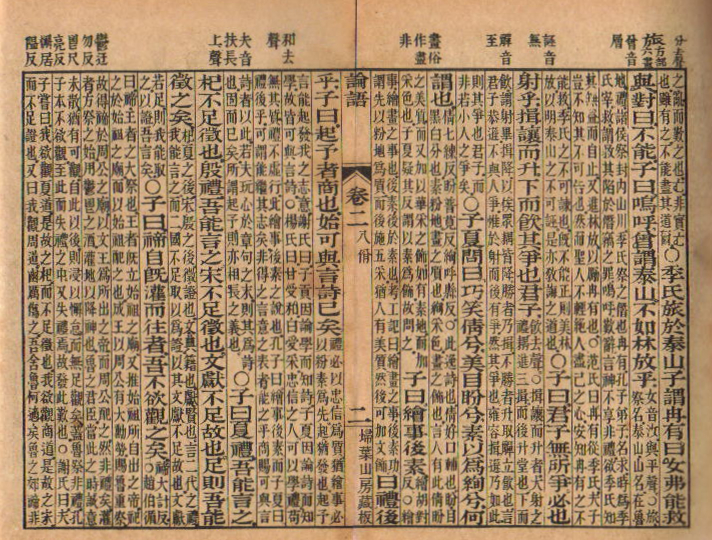
The Analects, also known as the Sayings of Confucius, is an ancient Chinese philosophical text composed of sayings and ideas attributed to Confucius and his contemporaries, traditionally believed to have been compiled by his followers.
The consensus among scholars is that large portions of the text were composed during the Warring States period (475–221 BC), and that the work achieved its final form during the mid-Han dynasty (206 BC – 220 AD). During the early Han, the Analects was merely considered to be a commentary on the Five Classics. However, by the dynasty's end the status of the Analects had grown to being among the central texts of Confucianism.
During the late Song dynasty (960–1279 AD) the importance of the Analects as a Chinese philosophy work was raised above that of the older Five Classics, and it was recognized as one of the "Four Books". The Analects has been one of the most widely read and studied books in China for more than two millennia; its ideas continue to have a substantial influence on East Asian thought and values.
Confucius believed that the welfare of a country depended on the moral cultivation of its people, beginning from the nation's leadership. He believed that individuals could begin to cultivate an all-encompassing sense of virtue through ren, and that the most basic step to cultivating ren was filial piety—primarily the devotion to one's parents and older siblings.
He taught that one's individual desires do not need to be suppressed, but that people should be educated to reconcile their desires via li, rituals and forms of propriety, through which people could demonstrate their respect for others and their responsible roles in society. Confucius also believed that a ruler's sense of de, or 'virtue', was his primary prerequisite for leadership.
Confucius' primary goal in educating his students was to produce ethically well-cultivated men who would carry themselves with gravity, speak correctly, and demonstrate consummate integrity in all things.
According to Ban Gu, writing in the Book of Han, the Analects originated as individual records kept by Confucius's disciples of conversations between the Master and them, which were then collected and jointly edited by the disciples after Confucius' death in 479 BC. The work was titled Lunyu during the Han dynasty: in this context the character for lun means 'discuss' or 'dispute', while yu means 'speech' or 'sayings'. Lunyu therefore may mean 'edited conversations', or 'selected speeches' (thus "analects"). This broadly forms the traditional account of the genesis of the work accepted by later generations of scholars, for example the Song dynasty neo-Confucian scholar Zhu Xi stated that Analects is the records of Confucius's first- and second-generation pupils.
This traditional view has been challenged by Chinese, Japanese, and Western scholars. The Qing dynasty philologist Cui Shu argued on linguistic ground that the last five books were produced much later than the rest of the work. Itō Jinsai claimed that, because of differences he saw in patterns of language and content in the Analects, a distinction in authorship should be made between the "upper Analects" (Books 1–10) and "lower Analects" (Books 11–20). Arthur Waley speculated that Books 3–9 represent the earliest parts of the book. E. Bruce Brooks and A. Taeko Brooks reviewed previous theories of the chapters' creation and produced a "four stratum theory" of the text's creation. Many modern scholars now believe that the work was compiled over a period of around two hundred years, some time during the Warring States period (476–221 BC), with some questioning the authenticity of some of the sayings. Prior to 2015, no manuscript dated earlier than c. 70 BC has been discovered, and because the Analects was not referred to by name in any existing source before the early Han dynasty, some scholars have proposed dates as late as 140 BC for the text's final compilation. In the 2010s, ancient manuscripts containing content matching the received text were recovered by the Anhui University and in Wangjiazui (王家嘴), which date back to before 300 BCE. The discoveries of these manuscripts confirmed that at least by the mid-Warring States period, the tradition of preserving and organizing Confucius' sayings had existed.
Analects
The Analects, also known as the Sayings of Confucius, is an ancient Chinese philosophical text composed of sayings and ideas attributed to Confucius and his contemporaries, traditionally believed to have been compiled by his followers.
The consensus among scholars is that large portions of the text were composed during the Warring States period (475–221 BC), and that the work achieved its final form during the mid-Han dynasty (206 BC – 220 AD). During the early Han, the Analects was merely considered to be a commentary on the Five Classics. However, by the dynasty's end the status of the Analects had grown to being among the central texts of Confucianism.
During the late Song dynasty (960–1279 AD) the importance of the Analects as a Chinese philosophy work was raised above that of the older Five Classics, and it was recognized as one of the "Four Books". The Analects has been one of the most widely read and studied books in China for more than two millennia; its ideas continue to have a substantial influence on East Asian thought and values.
Confucius believed that the welfare of a country depended on the moral cultivation of its people, beginning from the nation's leadership. He believed that individuals could begin to cultivate an all-encompassing sense of virtue through ren, and that the most basic step to cultivating ren was filial piety—primarily the devotion to one's parents and older siblings.
He taught that one's individual desires do not need to be suppressed, but that people should be educated to reconcile their desires via li, rituals and forms of propriety, through which people could demonstrate their respect for others and their responsible roles in society. Confucius also believed that a ruler's sense of de, or 'virtue', was his primary prerequisite for leadership.
Confucius' primary goal in educating his students was to produce ethically well-cultivated men who would carry themselves with gravity, speak correctly, and demonstrate consummate integrity in all things.
According to Ban Gu, writing in the Book of Han, the Analects originated as individual records kept by Confucius's disciples of conversations between the Master and them, which were then collected and jointly edited by the disciples after Confucius' death in 479 BC. The work was titled Lunyu during the Han dynasty: in this context the character for lun means 'discuss' or 'dispute', while yu means 'speech' or 'sayings'. Lunyu therefore may mean 'edited conversations', or 'selected speeches' (thus "analects"). This broadly forms the traditional account of the genesis of the work accepted by later generations of scholars, for example the Song dynasty neo-Confucian scholar Zhu Xi stated that Analects is the records of Confucius's first- and second-generation pupils.
This traditional view has been challenged by Chinese, Japanese, and Western scholars. The Qing dynasty philologist Cui Shu argued on linguistic ground that the last five books were produced much later than the rest of the work. Itō Jinsai claimed that, because of differences he saw in patterns of language and content in the Analects, a distinction in authorship should be made between the "upper Analects" (Books 1–10) and "lower Analects" (Books 11–20). Arthur Waley speculated that Books 3–9 represent the earliest parts of the book. E. Bruce Brooks and A. Taeko Brooks reviewed previous theories of the chapters' creation and produced a "four stratum theory" of the text's creation. Many modern scholars now believe that the work was compiled over a period of around two hundred years, some time during the Warring States period (476–221 BC), with some questioning the authenticity of some of the sayings. Prior to 2015, no manuscript dated earlier than c. 70 BC has been discovered, and because the Analects was not referred to by name in any existing source before the early Han dynasty, some scholars have proposed dates as late as 140 BC for the text's final compilation. In the 2010s, ancient manuscripts containing content matching the received text were recovered by the Anhui University and in Wangjiazui (王家嘴), which date back to before 300 BCE. The discoveries of these manuscripts confirmed that at least by the mid-Warring States period, the tradition of preserving and organizing Confucius' sayings had existed.
Recent media
Recent media