Hubbry Logo
HermeneuticsHermeneuticsMain
Open search
Hermeneutics
Community hub
Hermeneutics
logo
8 pages, 0 posts
0 subscribers
Be the first to start a discussion here.
Contribute something
Hermeneutics
Hermeneutics
from Wikipedia

Hermeneutics (/hɜːrməˈnjtɪks/)[1] is the theory and methodology of interpretation,[2][3][4] especially the interpretation of biblical texts, wisdom literature, and philosophical texts.[5][6] As necessary, hermeneutics may include the art of understanding and communication.[7]

Modern hermeneutics includes both verbal and non-verbal communication,[8][9] as well as semiotics, presuppositions, and pre-understandings. Hermeneutics has been broadly applied in the humanities, especially in law, history and theology.

Hermeneutics was initially applied to the interpretation, or exegesis, of scripture, and has been later broadened to questions of general interpretation.[10] The terms hermeneutics and exegesis are sometimes used interchangeably. Hermeneutics is a wider discipline which includes written, verbal, and nonverbal[8][9] communication. Exegesis focuses primarily upon the word and grammar of texts.

Hermeneutic, as a count noun in the singular, refers to some particular method of interpretation (see, in contrast, double hermeneutic).

Etymology

[edit]

Hermeneutics is derived from the Greek word ἑρμηνεύω (hermēneuō, "translate, interpret"),[11] from ἑρμηνεύς (hermeneus, "translator, interpreter"). While the etymology is uncertain, both R. S. P. Beekes (2009)[12] and Zsolt Simon (2019)[13] suggest an Anatolian (Carian) origin.

The technical term ἑρμηνεία (hermeneia, "interpretation, explanation") was introduced into philosophy mainly through the title of Aristotle's work Περὶ Ἑρμηνείας (Peri Hermeneias), commonly referred to by its Latin title De Interpretatione and translated in English as On Interpretation. It is one of the earliest (c. 360 BCE) extant philosophical works in the Western tradition to deal with the relationship between language and logic in a comprehensive, explicit and formal way.

The early usage of "hermeneutics" places it within the boundaries of the sacred.[14]: 21  A divine message must be received with implicit uncertainty regarding its truth. This ambiguity is an irrationality; it is a sort of madness that is inflicted upon the receiver of the message. Only one who possesses a rational method of interpretation (i.e., a hermeneutic) could determine the truth or falsity of the message.[14]: 21–22 

Folk etymology

[edit]
Hermes, messenger of the gods

Folk etymology places its origin with Hermes, the mythological Greek deity who was the 'messenger of the gods'.[15] Aside from being a mediator among the gods and between the gods and men, he led souls to the underworld upon death.

Moreover, Hermes was considered the inventor of language and speech, an interpreter, a liar, a thief, and a trickster.[15] These multiple roles made Hermes an ideal representative figure for hermeneutics. As Socrates noted, words have the power to reveal or conceal and can deliver messages in an ambiguous way.[15] The Greek view of language as consisting of signs that could lead to truth or to falsehood was the essence of Hermes, who was said to relish the uneasiness of those who received the messages he delivered.[16]: 63 

In religious traditions

[edit]

Mesopotamian hermeneutics

[edit]

Islamic hermeneutics

[edit]

Talmudic hermeneutics

[edit]

Summaries of the principles by which Torah can be interpreted date back to, at least, Hillel the Elder, although the thirteen principles set forth in the Baraita of Rabbi Ishmael are perhaps the best known. These principles ranged from standard rules of logic (e.g., a fortiori argument [known in Hebrew as קל וחומר – kal v'chomer]) to more expansive ones, such as the rule that a passage could be interpreted by reference to another passage in which the same word appears (Gezerah Shavah). The rabbis did not ascribe equal persuasive power to the various principles.[17]

Traditional Jewish hermeneutics differed from the Greek method in that the rabbis considered the Tanakh (the Jewish Biblical canon) to be without error. Any apparent inconsistencies had to be understood by means of careful examination of a given text within the context of other texts. There were different levels of interpretation: some were used to arrive at the plain meaning of the text, some expounded the law given in the text, and others found secret or mystical levels of understanding.

Vedic hermeneutics

[edit]

Vedic hermeneutics involves the exegesis of the Vedas, the earliest holy texts of Hinduism. The Mimamsa was the leading hermeneutic school and their primary purpose was understanding what Dharma (righteous living) involved by a detailed hermeneutic study of the Vedas. They also derived the rules for the various rituals that had to be performed precisely.

The foundational text is the Mimamsa Sutra of Jaimini (c. 3rd to 1st century BCE) with a major commentary by Śabara (c. the 5th or 6th century CE). The Mimamsa sutra summed up the basic rules for Vedic interpretation.

Buddhist hermeneutics

[edit]

Buddhist hermeneutics deals with the interpretation of the vast Buddhist literature, particularly those texts which are said to be spoken by the Buddha (Buddhavacana) and other enlightened beings. Buddhist hermeneutics is deeply tied to Buddhist spiritual practice and its ultimate aim is to extract skillful means of reaching spiritual enlightenment or nirvana. A central question in Buddhist hermeneutics is which Buddhist teachings are explicit, representing ultimate truth, and which teachings are merely conventional or relative.

Biblical hermeneutics

[edit]

Biblical hermeneutics is the study of the principles of interpretation of the Bible. While Jewish and Christian biblical hermeneutics have some overlap, they have very different interpretive traditions.

The early patristic traditions of biblical exegesis had few unifying characteristics in the beginning but tended toward unification in later schools of biblical hermeneutics.

Augustine offers hermeneutics and homiletics in his De doctrina christiana. He stresses the importance of humility in the study of Scripture. He also regards the duplex commandment of love in Matthew 22 as the heart of Christian faith. In Augustine's hermeneutics, signs have an important role. God can communicate with the believer through the signs of the Scriptures. Thus, humility, love, and the knowledge of signs are an essential hermeneutical presupposition for a sound interpretation of the Scriptures. Although Augustine endorses some teaching of the Platonism of his time, he recasts it according to a theocentric doctrine of the Bible. Similarly, in a practical discipline, he modifies the classical theory of oratory in a Christian way. He underscores the meaning of diligent study of the Bible and prayer as more than mere human knowledge and oratory skills. As a concluding remark, Augustine encourages the interpreter and preacher of the Bible to seek a good manner of life and, most of all, to love God and neighbor.[18]

There is traditionally a fourfold sense of biblical hermeneutics: literal, moral, allegorical (spiritual), and anagogical.[19]

Literal

[edit]

Encyclopædia Britannica states that literal analysis means "a biblical text is to be deciphered according to the 'plain meaning' expressed by its linguistic construction and historical context." The intention of the authors is believed to correspond to the literal meaning. Literal hermeneutics is often associated with the verbal inspiration of the Bible.[20]

Moral

[edit]

Moral interpretation searches for moral lessons which can be understood from writings within the Bible. Allegories are often placed in this category.[20]

Allegorical

[edit]

Allegorical interpretation states that biblical narratives have a second level of reference that is more than the people, events and things that are explicitly mentioned. One type of allegorical interpretation is known as typological, where the key figures, events, and establishments of the Old Testament are viewed as "types" (patterns). In the New Testament this can also include foreshadowing of people, objects, and events. According to this theory, readings like Noah's Ark could be understood by using the Ark as a "type" of the Christian church that God designed from the start.[20]

Anagogical

[edit]

This type of interpretation is more often known as mystical interpretation. It claims to explain the events of the Bible and how they relate to or predict what the future holds. This is evident in the Jewish Kabbalah, which attempts to reveal the mystical significance of the numerical values of Hebrew words and letters.

In Judaism, anagogical interpretation is also evident in the medieval Zohar. In Christianity, it can be seen in Mariology.[20]

Philosophical hermeneutics

[edit]

Ancient and medieval hermeneutics

[edit]

Modern hermeneutics

[edit]

The discipline of hermeneutics emerged with the new humanist education of the 15th century as a historical and critical methodology for analyzing texts. In a triumph of early modern hermeneutics, the Italian humanist Lorenzo Valla proved in 1440 that the Donation of Constantine was a forgery. This was done through intrinsic evidence of the text itself. Thus, hermeneutics expanded from its medieval role of explaining the true meaning of the Bible.

However, biblical hermeneutics did not die off. For example, the Protestant Reformation brought about a renewed interest in the interpretation of the Bible, which took a step away from the interpretive tradition developed during the Middle Ages back to the texts themselves. Martin Luther and John Calvin emphasized scriptura sui ipsius interpres (scripture interprets itself). Calvin used brevitas et facilitas as an aspect of theological hermeneutics.[21]

The rationalist Enlightenment led hermeneutists, especially Protestant exegetists, to view Scriptural texts as secular classical texts. They interpreted Scripture as responses to historical or social forces so that, for example, apparent contradictions and difficult passages in the New Testament might be clarified by comparing their possible meanings with contemporary Christian practices.

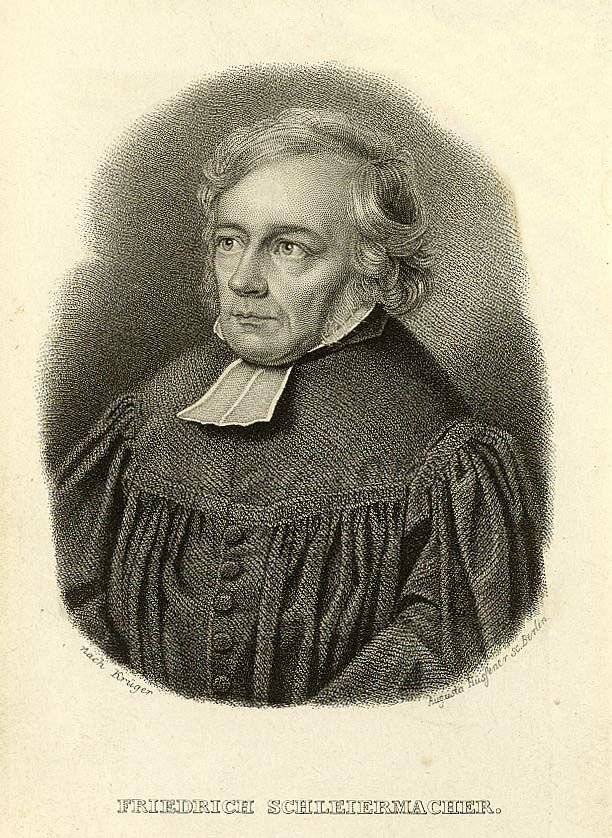
Friedrich Schleiermacher (1768–1834) explored the nature of understanding in relation not just to the problem of deciphering sacred texts but to all human texts and modes of communication.

The interpretation of a text must proceed by framing its content in terms of the overall organization of the work. Schleiermacher distinguished between grammatical interpretation and psychological interpretation. The former studies how a work is composed from general ideas; the latter studies the peculiar combinations that characterize the work as a whole. He said that every problem of interpretation is a problem of understanding and even defined hermeneutics as the art of avoiding misunderstanding. Misunderstanding was to be avoided by means of knowledge of grammatical and psychological laws.

During Schleiermacher's time, a fundamental shift occurred from understanding not merely the exact words and their objective meaning, to an understanding of the writer's distinctive character and point of view.[22]

Nineteenth- and twentieth-century hermeneutics emerged as a theory of understanding (Verstehen) through the work of Friedrich Schleiermacher (Romantic hermeneutics[23] and methodological hermeneutics),[24] August Böckh (methodological hermeneutics),[25] Wilhelm Dilthey (epistemological hermeneutics),[26] Martin Heidegger (ontological hermeneutics,[27] hermeneutic phenomenology,[28][29][30] and transcendental hermeneutic phenomenology),[31] Hans-Georg Gadamer (ontological hermeneutics),[32] Leo Strauss (Straussian hermeneutics),[33] Paul Ricœur (hermeneutic phenomenology),[34] Walter Benjamin (Marxist hermeneutics),[35] Ernst Bloch (Marxist hermeneutics),[36][35] Jacques Derrida (radical hermeneutics, namely deconstruction),[37][38] Richard Kearney (diacritical hermeneutics), Fredric Jameson (Marxist hermeneutics),[39] and John Thompson (critical hermeneutics).

Regarding the relation of hermeneutics with problems of analytic philosophy, there has been, particularly among analytic Heideggerians and those working on Heidegger's philosophy of science, an attempt to try and situate Heidegger's hermeneutic project in debates concerning realism and anti-realism: arguments have been presented both for Heidegger's hermeneutic idealism (the thesis that meaning determines reference or, equivalently, that our understanding of the being of entities is what determines entities as entities)[40] and for Heidegger's hermeneutic realism[41] (the thesis that (a) there is a nature in itself and science can give us an explanation of how that nature works, and (b) that (a) is compatible with the ontological implications of our everyday practices).[42]

Philosophers that worked to combine analytic philosophy with hermeneutics include Georg Henrik von Wright and Peter Winch. Roy J. Howard termed this approach analytic hermeneutics.[43]

Other contemporary philosophers influenced by the hermeneutic tradition include Charles Taylor[22] (engaged hermeneutics)[44] and Dagfinn Føllesdal.[22]

Dilthey (1833–1911)

[edit]

Wilhelm Dilthey broadened hermeneutics even more by relating interpretation to historical objectification. Understanding moves from the outer manifestations of human action and productivity to the exploration of their inner meaning. In his last important essay, "The Understanding of Other Persons and Their Manifestations of Life" (1910), Dilthey made clear that this move from outer to inner, from expression to what is expressed, is not based on empathy, understood as a direct identification with the Other. Interpretation, on a hermeneutical conception of empathy[45] involves an indirect or mediated understanding that can only be attained by placing human expressions in their historical context. Thus, understanding is not a process of reconstructing the state of mind of the author, but one of articulating what is expressed in his work.

Dilthey divided sciences of the mind (human sciences) into three structural levels: experience, expression, and comprehension.

  • Experience means to feel a situation or thing personally. Dilthey suggested that we can always grasp the meaning of unknown thought when we try to experience it. His understanding of experience is very similar to that of phenomenologist Edmund Husserl.
  • Expression converts experience into meaning because the discourse has an appeal to someone outside of oneself. Every saying is an expression. Dilthey suggested that one can always return to an expression, especially to its written form, and this practice has the same objective value as an experiment in science. The possibility of returning makes scientific analysis possible, and therefore the humanities may be labeled as science. Moreover, he assumed that an expression may be "saying" more than the speaker intends because the expression brings forward meanings which the individual consciousness may not fully understand.
  • The last structural level of the science of the mind, according to Dilthey, is comprehension, which is a level that contains both comprehension and incomprehension. Incomprehension means, more or less, wrong understanding. He assumed that comprehension produces coexistence: "he who understands, understands others; he who does not understand stays alone."

Heidegger (1889–1976)

[edit]

In the 20th century, Martin Heidegger's philosophical hermeneutics shifted the focus from interpretation to existential understanding as rooted in fundamental ontology, which was treated more as a direct—and thus more authentic—way of being-in-the-world (In-der-Welt-sein) than merely as "a way of knowing."[46] For example, he called for a "special hermeneutic of empathy" to dissolve the classic philosophic issue of "other minds" by putting the issue in the context of the being-with of human relatedness. (Heidegger himself did not complete this inquiry.)[47]

Advocates of this approach claim that some texts, and the people who produce them, cannot be studied by means of using the same scientific methods that are used in the natural sciences, thus drawing upon arguments similar to those of antipositivism. Moreover, they claim that such texts are conventionalized expressions of the experience of the author. Thus, the interpretation of such texts will reveal something about the social context in which they were formed, and, more significantly, will provide the reader with a means of sharing the experiences of the author.

The reciprocity between text and context is part of what Heidegger called the hermeneutic circle. Among the key thinkers who elaborated this idea was the sociologist Max Weber.

Gadamer (1900–2002)

[edit]

Hans-Georg Gadamer's hermeneutics is a development of the hermeneutics of his teacher, Heidegger. Gadamer asserted that methodical contemplation is opposite to experience and reflection. We can reach the truth only by understanding or mastering our experience. According to Gadamer, our understanding is not fixed but rather is changing and always indicating new perspectives. The most important thing is to unfold the nature of individual understanding.

Gadamer pointed out that prejudice is an element of our understanding and is not per se without value. Indeed, prejudices, in the sense of pre-judgements of the thing we want to understand, are unavoidable. Being alien to a particular tradition is a condition of our understanding. He said that we can never step outside of our tradition—all we can do is try to understand it. This further elaborates the idea of the hermeneutic circle.

New hermeneutic

[edit]

New hermeneutic is the theory and methodology of interpretation to understand Biblical texts through existentialism. The essence of new hermeneutic emphasizes not only the existence of language but also the fact that language is eventualized in the history of individual life.[48] This is called the event of language. Ernst Fuchs,[49] Gerhard Ebeling, and James M. Robinson are the scholars who represent the new hermeneutics.

Marxist hermeneutics

[edit]

The method of Marxist hermeneutics has been developed by the work of, primarily, Walter Benjamin and Fredric Jameson. Benjamin outlines his theory of the allegory in his study Ursprung des deutschen Trauerspiels[35] ("Trauerspiel" literally means "mourning play" but is often translated as "tragic drama").[50] Fredric Jameson draws on Biblical hermeneutics, Ernst Bloch,[51] and the work of Northrop Frye, to advance his theory of Marxist hermeneutics in his influential The Political Unconscious. Jameson's Marxist hermeneutics is outlined in the first chapter of the book, titled "On Interpretation"[52] Jameson re-interprets (and secularizes) the fourfold system (or four levels) of Biblical exegesis (literal; moral; allegorical; anagogical) to relate interpretation to the mode of production, and eventually, history.[53]

Objective hermeneutics

[edit]

Karl Popper first used the term "objective hermeneutics" in his Objective Knowledge (1972).[54]

In 1992, the Association for Objective Hermeneutics (AGOH) was founded in Frankfurt am Main by scholars of various disciplines in the humanities and social sciences. Its goal is to provide all scholars who use the methodology of objective hermeneutics with a means of exchanging information.[55]

In one of the few translated texts of this German school of hermeneutics, its founders declared:

Our approach has grown out of the empirical study of family interactions as well as reflection upon the procedures of interpretation employed in our research. For the time being we shall refer to it as objective hermeneutics in order to distinguish it clearly from traditional hermeneutic techniques and orientations. The general significance for sociological analysis of objective hermeneutics issues from the fact that, in the social sciences, interpretive methods constitute the fundamental procedures of measurement and of the generation of research data relevant to theory. From our perspective, the standard, nonhermeneutic methods of quantitative social research can only be justified because they permit a shortcut in generating data (and research "economy" comes about under specific conditions). Whereas the conventional methodological attitude in the social sciences justifies qualitative approaches as exploratory or preparatory activities, to be succeeded by standardized approaches and techniques as the actual scientific procedures (assuring precision, validity, and objectivity), we regard hermeneutic procedures as the basic method for gaining precise and valid knowledge in the social sciences. However, we do not simply reject alternative approaches dogmatically. They are in fact useful wherever the loss in precision and objectivity necessitated by the requirement of research economy can be condoned and tolerated in the light of prior hermeneutically elucidated research experiences.[56]

Other recent developments

[edit]

Bernard Lonergan's (1904–1984) hermeneutics is less well known, but a case for considering his work as the culmination of the postmodern hermeneutical revolution that began with Heidegger was made in several articles by Lonergan specialist Frederick G. Lawrence.[57]

Paul Ricœur (1913–2005) developed a hermeneutics that is based upon Heidegger's concepts.

Karl-Otto Apel (1922–2017) elaborated a hermeneutics based on American semiotics. He applied his model to discourse ethics with political motivations akin to those of critical theory.[citation needed]

Jürgen Habermas (b. 1929) criticized the conservatism of previous hermeneutists, especially Gadamer, because their focus on tradition seemed to undermine possibilities for social criticism and transformation.[citation needed] He also criticized Marxism and previous members of the Frankfurt School for missing the hermeneutical dimension of critical theory.

Habermas incorporated the notion of the lifeworld and emphasized the importance for social theory of interaction, communication, labor, and production.[citation needed] He viewed hermeneutics as a dimension of critical social theory.[citation needed]

Rudolf Makkreel (b. 1939) has proposed an orientational hermeneutics that brings out the contextualizing function of reflective judgment. It extends ideas of Kant and Dilthey to supplement the dialogical approach of Gadamer with a diagnostic approach that can deal with an ever-changing and multicultural world.[citation needed]

Andrés Ortiz-Osés (1943–2021) developed his symbolic hermeneutics as the Mediterranean response to Northern European hermeneutics. His main statement regarding symbolic understanding of the world is that meaning is a symbolic healing of injury.[citation needed]

Two scholars who have published criticism of Gadamer's hermeneutics are the Italian jurist Emilio Betti and the American literary theorist E. D. Hirsch.

Other hermeneutic scholars include Jean Grondin (b. 1955) and Maurizio Ferraris (b. 1956).

Applications

[edit]

Archaeology

[edit]

In archaeology, hermeneutics means the interpretation and understanding of material through analysis of possible meanings and social uses.

Proponents argue that interpretation of artifacts is unavoidably hermeneutic because we cannot know for certain the meaning behind them. We can only apply modern values when interpreting. This is most commonly seen in stone tools, where descriptions such as "scraper" can be highly subjective and actually unproven until the development of microwear analysis some thirty years ago.

Opponents argue that a hermeneutic approach is too relativist and that their own interpretations are based on common-sense evaluation.[58]

Architecture

[edit]

There are several traditions of architectural scholarship that draw upon the hermeneutics of Heidegger and Gadamer, such as Christian Norberg-Schulz, and Nader El-Bizri in the circles of phenomenology. Lindsay Jones examines the way architecture is received and how that reception changes with time and context (e.g., how a building is interpreted by critics, users, and historians).[59] Dalibor Vesely situates hermeneutics within a critique of the application of overly scientific thinking to architecture.[60] This tradition fits within a critique of the Enlightenment[61] and has also informed design-studio teaching. Adrian Snodgrass sees the study of history and Asian cultures by architects as a hermeneutical encounter with otherness.[62] He also deploys arguments from hermeneutics to explain design as a process of interpretation.[63] Along with Richard Coyne, he extends the argument to the nature of architectural education and design.[64]

Education

[edit]

Hermeneutics motivates a broad range of applications in educational theory. The connection between hermeneutics and education has deep historical roots. The ancient Greeks gave the interpretation of poetry a central place in educational practice, as indicated by Dilthey: "systematic exegesis (hermeneia) of the poets developed out of the demands of the educational system."[65]

Gadamer more recently wrote on the topic of education,[66][67] and more recent treatments of educational issues across various hermeneutical approaches are to be found in Fairfield[68] and Gallagher.[69]

Environment

[edit]

Environmental hermeneutics applies hermeneutics to environmental issues conceived broadly to subjects including "nature" and "wilderness" (both terms are matters of hermeneutical contention), landscapes, ecosystems, built environments (where it overlaps architectural hermeneutics[70][71] ), inter-species relationships, the relationship of the body to the world, and more.

International relations

[edit]

Insofar as hermeneutics is a basis of both critical theory and constitutive theory (both of which have made important inroads into the postpositivist branch of international relations theory and political science), it has been applied to international relations.

Steve Smith refers to hermeneutics as the principal way of grounding foundationalist yet postpositivist theory of international relations.

Radical postmodernism is an example of a postpositivist anti-foundationalist paradigm of international relations.[72]

Law

[edit]

Some scholars argue that law and theology are particular forms of hermeneutics because of their need to interpret legal tradition or scriptural texts. Moreover, the problem of interpretation has been central to legal theory since at least the 11th century.

In the Middle Ages and Italian Renaissance, the schools of glossatores, commentatores, and usus modernus distinguished themselves by their approach to the interpretation of "laws" (mainly Justinian's Corpus Juris Civilis). The University of Bologna gave birth to a "legal Renaissance" in the 11th century, when the Corpus Juris Civilis was rediscovered and systematically studied by men such as Irnerius and Johannes Gratian. It was an interpretative Renaissance. Subsequently, these were fully developed by Thomas Aquinas and Alberico Gentili.

Since then, interpretation has always been at the center of legal thought. Friedrich Carl von Savigny and Emilio Betti, among others, made significant contributions to general hermeneutics. Legal interpretivism, most famously Ronald Dworkin's, may be seen as a branch of philosophical hermeneutics.

Phenomenology

[edit]

In qualitative research, the beginnings of phenomenology stem from German philosopher and researcher Edmund Husserl.[73] In his early days, Husserl studied mathematics, but over time his disinterest with empirical methods led him to philosophy and eventually phenomenology. Husserl's phenomenology inquires on the specifics of a certain experience or experiences and attempts to unfold the meaning of experience in everyday life.[73] Phenomenology started as philosophy and then developed into methodology over time. American researcher Don Ihde contributed to phenomenological research methodology through what he described as experimental phenomenology: "Phenomenology, in the first instance, is like an investigative science, an essential component of which is an experiment."[74] His work contributed heavily to the implementation of phenomenology as a methodology.[74][75]

The beginnings of hermeneutic phenomenology stem from a German researcher and student of Husserl, Martin Heidegger.[73] Both researchers attempted to pull out the lived experiences of others through philosophical concepts, but Heidegger's main difference from Husserl was his belief that consciousness was not separate from the world but a formation of who we are as living individuals.[73] Hermeneutic phenomenology stresses that every event or encounter involves some type of interpretation from an individual's background, and that we cannot separate this from an individual's development through life.[73] Ihde also focuses on hermeneutic phenomenology within his early work, and draws connections between Husserl and French philosopher Paul Ricoeur's work in the field.[75] Ricoeur focuses on the importance of symbols and linguistics within hermeneutic phenomenology.[75] Overall, hermeneutic phenomenological research focuses on historical meanings and experiences, and their developmental and social effects on individuals.[76]

Political philosophy

[edit]

Italian philosopher Gianni Vattimo and Spanish philosopher Santiago Zabala in their book Hermeneutic Communism, when discussing contemporary capitalist regimes, stated that, "A politics of descriptions does not impose power in order to dominate as a philosophy; rather, it is functional for the continued existence of a society of dominion, which pursues truth in the form of imposition (violence), conservation (realism), and triumph (history)."[77]

Vattimo and Zabala also stated that they view interpretation as anarchy and affirmed that "existence is interpretation" and that "hermeneutics is weak thought."

Psychoanalysis

[edit]

Psychoanalysts have made ample use of hermeneutics since Sigmund Freud first gave birth to their discipline. In 1900 Freud wrote that the title he chose for The Interpretation of Dreams "makes plain which of the traditional approaches to the problem of dreams I am inclined to follow...[i.e.] 'interpreting' a dream implies assigning a 'meaning' to it."[78]

The French psychoanalyst Jacques Lacan later extended Freudian hermeneutics into other psychical realms. His early work from the 1930s–1950s is particularly influenced by Heidegger, and Maurice Merleau-Ponty's hermeneutical phenomenology.

Psychology and cognitive science

[edit]

Psychologists and Cognitive science have recently become interested in hermeneutics, especially as an alternative to cognitivism.[79]

Hubert Dreyfus's critique of conventional artificial intelligence has been influential among psychologists who are interested in hermeneutic approaches to meaning and interpretation, as discussed by philosophers such as Martin Heidegger (cf. Embodied cognition) and Ludwig Wittgenstein (cf. Discursive psychology).

Hermeneutics is also influential in humanistic psychology.[80]

Religion and theology

[edit]

The understanding of a theological text depends upon the reader's particular hermeneutical viewpoint. Some theorists, such as Paul Ricœur, have applied modern philosophical hermeneutics to theological texts (in Ricœur's case, the Bible).

Mircea Eliade, as a hermeneutist, understands religion as 'experience of the sacred', and interprets the sacred in relation to the profane.[81] The Romanian scholar underlines that the relation between the sacred and the profane is not of opposition, but of complementarity, having interpreted the profane as a hierophany.[82] The hermeneutics of the myth is a part of the hermeneutics of religion. Myth should not be interpreted as an illusion or a lie, because there is truth in myth to be rediscovered.[83] Myth is interpreted by Eliade as 'sacred history'. He introduces the concept of 'total hermeneutics'.[84]

The term was notably used in 2005 by Pope Benedict XVI saying the Second Vatican Council needs to be viewed through the lens of a "hermeneutic of reform" rather than a "hermeneutic of discontinuity and rupture".[85] In subsequent discourse, this has become a "hermeneutic of continuity" contrasted with a "hermeneutic of rupture," and applied to dissident tendencies questioning recent church teaching in general[86] and the teaching of Pope Francis.[87] Following this, the term is now widely used: e.g. of suspicion,[88] of tradition and kenosis,[89] and of synodality.[90] Benedict also spoke of the "hermeneutic of the cross", "of faith" necessary for exegesis,[91] "of unity",[92] while deploring a "hermeneutic of politics".[93] Francis has warned against a "hermeneutic of conspiracy".[94] Pope John Paul II taught a "hermeneutic of the gift".[95]

Safety science

[edit]

In the field of safety science, and especially in the study of human reliability, scientists have become increasingly interested in hermeneutic approaches.

It has been proposed by ergonomist Donald Taylor that mechanist models of human behaviour will only take us so far in terms of accident reduction, and that safety science must look at the meaning of accidents for human beings.[96]

Other scholars in the field have attempted to create safety taxonomies that make use of hermeneutic concepts in terms of their categorisation of qualitative data.[97]

Sociology

[edit]

In sociology, hermeneutics is the interpretation and understanding of social events through analysis of their meanings for the human participants in the events. It enjoyed prominence during the 1960s and 1970s, and differs from other interpretive schools of sociology in that it emphasizes both context[98] and form within any given social behaviour.

The central principle of sociological hermeneutics is that it is only possible to know the meaning of an act or statement within the context of the discourse or world view from which it originates. Context is critical to comprehension; an action or event that carries substantial weight to one person or culture may be viewed as meaningless or entirely different to another. For example, giving the "thumbs-up" gesture is widely accepted as a sign of a job well done in the United States, while other cultures view it as an insult.[99] Similarly, marking a piece of paper and putting it into a box might be considered a meaningless act unless it is put into the context of an election (the act of putting a ballot paper into a box).[original research?]

Friedrich Schleiermacher, widely regarded as the father of sociological hermeneutics believed that, in order for an interpreter to understand the work of another author, they must familiarize themselves with the historical context in which the author published their thoughts. His work led to the inspiration of Heidegger's "hermeneutic circle" a frequently referenced model that claims one's understanding of individual parts of a text is based on their understanding of the whole text, while the understanding of the whole text is dependent on the understanding of each individual part.[100] Hermeneutics in sociology was also heavily influenced by Gadamer.[101]

Criticism

[edit]

Jürgen Habermas criticizes Gadamer's hermeneutics (see above) as being unsuitable for understanding society because it is unable to account for questions of social reality, like labor and domination.[102]

See also

[edit]

Notable precursors

[edit]

References

[edit]

Bibliography

[edit]
[edit]
Revisions and contributorsEdit on WikipediaRead on Wikipedia
from Grokipedia
Hermeneutics is the theory and philosophy of understanding and interpretation, derived from the Greek god Hermes, the divine messenger tasked with conveying and explicating the will of the gods to mortals. Initially developed as a method for explicating sacred texts, particularly the , it evolved into a broader inquiry into the principles governing the comprehension of linguistic expressions, historical documents, and human experiences. In its modern form, hermeneutics encompasses both a methodological toolkit for textual analysis—emphasizing grammatical reconstruction and psychological insight into the author's intent—and a philosophical reflection on the conditions of understanding itself, acknowledging the interpreter's historical situatedness. The discipline's systematic foundation was laid by Friedrich Schleiermacher in the early 19th century, who generalized biblical exegesis into a universal art of interpretation applicable to all written works, aiming to bridge the gap between text and reader through disciplined reconstruction of meaning. Wilhelm Dilthey advanced this framework in the late 19th century by applying it to the Geisteswissenschaften (human sciences), distinguishing them from natural sciences through an emphasis on empathetic re-experiencing (Nacherleben) of historical and cultural contexts to grasp expressions of lived experience. Twentieth-century developments, particularly through Martin Heidegger's ontological turn—which recast understanding as the fundamental structure of human existence (Dasein)—and Hans-Georg Gadamer's elaboration of it as a dialogical "fusion of horizons," shifted hermeneutics toward a critique of objectivist pretensions in interpretation, highlighting the inescapable role of prejudice (Vorurteil) and tradition in shaping comprehension. Notable extensions include Paul Ricoeur's hermeneutics, which integrates with existential depth to address issues like , , and , while controversies arise from charges of , as critics argue that the rejection of fixed undermines claims to objective truth in favor of open-ended, context-bound readings. Empirical applications in fields like , , and underscore hermeneutics' practical utility, yet its philosophical core persists in challenging causal assumptions about unmediated access to meaning, insisting on iterative, dialogic processes rooted in the interpreter's finite perspective.

Etymology and Core Concepts

Etymology and Linguistic Origins

The term hermeneutics derives from the Ancient Greek verb hermēneuō (ἑρμηνεύω), meaning "to interpret," "to translate," or "to explain." This verb stems from hermēneus (ἑρμηνεύς), denoting an "interpreter" or "translator." The English adjective "hermeneutic," signifying "interpretive," first appeared in the 1670s, adapted from the Latinized Greek hermeneutikos; the noun form "hermeneutics," referring to the theory or art of interpretation, emerged by 1737. Linguistically, the term's mythological roots trace to Hermes, the Greek god of boundaries, communication, and messengers, who conveyed and interpreted divine messages to mortals, embodying the act of mediation and elucidation. This association underscores hermeneutics' foundational role in bridging gaps between hidden meanings and human understanding, as seen in early uses like Aristotle's Peri Hermeneias (On Interpretation, c. 350 BCE), which explored propositional meaning and linguistic expression. While the precise pre-Greek etymology of hermēneuō remains uncertain, its semantic core consistently revolves around explication and conveyance across linguistic or conceptual divides.

Fundamental Principles of Interpretation

Fundamental principles of hermeneutic interpretation emphasize the methodical reconstruction of a text's original meaning, prioritizing the author's intended communication as conveyed through and . This approach distinguishes between grammatical interpretation, which analyzes linguistic structures, vocabulary, and syntactical rules shared within a to establish objective textual sense, and psychological interpretation, which infers the author's distinctive mental processes, motivations, and creative individuality to resolve ambiguities not captured by grammar alone. These dual facets ensure that interpretation bridges the gap between the text's formal elements and the causal intent behind its production. Central to this methodology is the , an iterative dynamic where preliminary anticipation of the text's overall meaning guides detailed examination of its parts—such as words, sentences, or arguments—which in turn revises and deepens the holistic understanding. This circular process, originating in efforts to systematize comprehension of foreign discourses, underscores that full understanding emerges not from isolated facts but through repeated refinement, akin to verifying hypotheses against evidence in empirical inquiry. Historical and cultural context must integrate into this cycle, as meanings are embedded in the specific temporal, social, and linguistic conditions of composition, preventing anachronistic impositions by the interpreter. The ultimate aim is to grasp the text's significance more explicitly than the author might have, by articulating implicit linguistic and psychological assumptions that shaped its expression. However, interpreters' preconceptions—termed prejudices or fore-understandings—inevitably influence this process, necessitating critical self-examination to minimize distortion and favor verifiable textual and contextual evidence over subjective projection. While later developments debate the inescapability of such biases, foundational hermeneutics insists on disciplined reconstruction to approximate objective recovery of communicative intent, grounded in the causal efficacy of as a medium of thought transfer.

Historical Development

Ancient and Classical Foundations

The foundations of hermeneutics in ancient Greece trace back to the mythological figure of Hermes, the divine messenger who interpreted and translated the gods' intentions for humans, giving rise to the verb hermeneuein ("to interpret" or "to translate"). This role underscored early practices of elucidating obscure signs, oracles, dreams, and epic narratives, particularly the Iliad and Odyssey of Homer, where rhapsodes and early exegetes unpacked layers of meaning through oral performance and commentary. Such interpretations, rooted in rhetoric, philology, and textual exegesis, often involved resolving ambiguities in poetic language to derive ethical or divinatory insights, setting precedents for systematic textual analysis. Plato engaged critically with interpretive practices in , referencing a hermēneutikē technē—an art of interpretation—in the Statesman (260d), where it pertains to clarifying laws and discourses for . In dialogues like , he depicted poetic by rhapsodes as irrational and inspired rather than skilled , critiquing allegorical readings that multiplied meanings without philosophical rigor. Plato advocated controlled interpretation of in the , urging alignment with dialectical truth over literal or mythical surfaces, reflecting concerns about poetry's potential to mislead the soul. Aristotle provided a more methodical approach, titling his treatise on and logic Peri Hermeneias (), which analyzes how affirmations and negations in speech or writing express truth or falsity, foundational to propositional understanding and the study of meaning. In the , he dissected poetic structures—, plot, and —offering criteria for evaluating and interpreting and epic as imitations of action, emphasizing objective analysis over subjective inspiration. These works shifted hermeneutics toward empirical and categorical reasoning, influencing logic and . In the Hellenistic and early Roman periods, these foundations extended into Jewish and Christian traditions. Philo of Alexandria (c. 20 BCE–50 CE), a Hellenistic Jewish philosopher, pioneered allegorical interpretation of Jewish scriptures, blending Platonic philosophy with biblical exegesis to reveal deeper ethical and metaphysical meanings beneath the literal text. Early Christian theologian Origen (c. 185–253 CE) further developed systematic hermeneutics with his threefold method of biblical interpretation: the literal sense for historical facts, the moral sense for ethical guidance, and the allegorical or spiritual sense for theological truths, which profoundly influenced Christian exegesis. Hellenistic scholars in extended classical foundations through philological of , with figures like (c. 325–260 BCE) pioneering textual editions and Aristarchus (c. 220–143 BCE) advocating interpretation "from through ," prioritizing internal consistency over external allegories. Their methods, including variant and semantic clarification, formalized zetemata (problem-solving queries) on poetic cruxes, bridging ancient oral traditions with written scholarship and prefiguring grammatical hermeneutics.

Medieval Religious Traditions

In medieval , emphasized a fourfold interpretation of Scripture, comprising the literal (historical) sense, which described events as they occurred; the allegorical sense, revealing doctrinal truths such as Christ's fulfillment of figures; the tropological (moral) sense, guiding ethical behavior; and the anagogical sense, directing toward eschatological hopes like eternal salvation. This schema, inherited from patristic sources like (c. 360–435) and Augustine (354–430), whose De Doctrina Christiana provided a systematic framework for Christian hermeneutics emphasizing charity as the central criterion for interpretation and resolution of scriptural ambiguities, was refined through monastic practices and scholastic analysis, ensuring balanced empirical textual meaning with spiritual edification. Exegetes viewed the literal sense as foundational, with spiritual senses deriving from it only if textually warranted, countering excesses of unchecked allegory. Scholastic thinkers like Hugh of St. Victor (c. 1096–1141) and his school at the Abbey of St. Victor in advanced methodical approaches, integrating , , and to recover the literal sense amid allegorical dominance. (1225–1274), in works such as the (c. 1265–1274), formalized that the literal sense—encompassing both direct authorial intent and accommodated divine meaning—underpins all valid interpretation, rejecting spiritual senses unsupported by it as fanciful. Aquinas applied this in commentaries on Scripture, prioritizing Aristotelian logic and historical context to discern causality in divine revelation, while critiquing overly speculative readings. In medieval Jewish exegesis, the PaRDeS framework structured interpretation: for the plain, contextual meaning; remez for implied allusions; derash for homiletic expansions; and for esoteric insights, often in Kabbalistic traditions. (1040–1105) exemplified primacy in his commentary on the Pentateuch (c. 1075–1085), resolving textual anomalies through and rabbinic tradition, influencing later figures like (1089–1167). Islamic during the medieval period, peaking with al-Tabari's comprehensive Jami' al-Bayan (d. 923), relied on transmitted reports (riwaya) from the and companions, supplemented by diraya () for linguistic and legal implications, emphasizing the Quran's unambiguous (muhkam) verses over ambiguous (mutashabih) ones. Scholars like (1075–1144) incorporated Mu'tazilite for grammatical precision, while al-Razi (1149–1209) layered philosophical and mystical dimensions, grounding interpretations in and prophetic .

Early Modern and Enlightenment Shifts

The Protestant Reformation marked a pivotal shift in hermeneutics by challenging medieval reliance on allegorical and spiritual senses, elevating the literal, grammatical-historical interpretation of Scripture as primary. Martin Luther's advocacy of from 1517 onward emphasized the Bible's perspicuity—its clarity to ordinary believers—rejecting papal authority and tradition as interpretive mediators in favor of direct, faith-guided reading. This approach integrated the interpreter's moral virtue (virtus) and dialogical engagement (dialogus) with the text, where understanding emerges from faith (fides) rather than institutional hierarchy, contrasting scholastic methods that subordinated literal meaning to ecclesiastical doctrine. Reformers like further systematized rules for contextual analysis, including and original languages, fostering philological rigor exemplified by Erasmus's 1516 edition of the Greek , which exposed inaccuracies and spurred . These developments laid groundwork for Enlightenment , which extended critical methods beyond bounds to secular, historical inquiry, often eroding assumptions of scriptural . Benedict de Spinoza's Tractatus Theologico-Politicus (1670) argued for interpreting the through its linguistic and historical conditions alone, treating it as a human document without presupposing divine philosophical truth, thereby decoupling from metaphysics and prioritizing empirical context over . Richard Simon's Histoire critique du Vieux Testament (1678, expanded 1685) applied similar scrutiny to authorship and composition, questioning unified origins and introducing "higher criticism" to dissect sources, dates, and interpolations—methods that, while advancing , frequently yielded skeptical conclusions about and . Figures like Johann Salomo Semler (1725–1791) at Halle radicalized this by distinguishing "accommodation" in Scripture to ancient audiences, accommodating but contrasting affirmations of inspiration by subordinating supernatural claims to autonomous reason. Enlightenment hermeneutics thus transitioned hermeneutics from theological auxiliary to philosophical discipline, emphasizing reason's autonomy and historical , though this often reflected deistic biases that privileged human intellect over textual claims of divine causation. While enabling verifiable advances in textual scholarship—such as identifying documentary hypotheses—these shifts introduced tensions between empirical reconstruction and traditional coherence, prefiguring 19th-century universal hermeneutics without resolving interpretive subjectivity.

Philosophical Hermeneutics

19th-Century Methodological Advances

In the early 19th century, Friedrich Schleiermacher (1768–1834) pioneered modern hermeneutics by transforming it into a universal discipline applicable to all forms of linguistic expression, extending beyond its traditional confines in biblical exegesis. His methodological framework, articulated in lectures delivered between 1805 and 1833 and outlined in his 1819 Hermeneutics: Outline of the 1819 Lectures, emphasized a dual approach: grammatical interpretation, which involves analyzing language structure, syntax, and comparative usage to infer rules from specific instances, and psychological interpretation, which seeks to reconstruct the author's mental state through divinatory intuition and hypothesis-testing. This reciprocal process aimed to achieve an understanding of the text at least as profound as the original author's, addressing potential misunderstandings by integrating the hermeneutical circle—the iterative relation between part and whole in text, context, and authorial intent. Schleiermacher's advances provided a systematic methodology that influenced classical philology through his student Philipp August Boeckh and laid groundwork for treating interpretation as an art requiring rigorous inductive and empathetic techniques. Building on Schleiermacher's foundations, Wilhelm Dilthey (1833–1911) further advanced hermeneutics in the late 19th century by embedding it within the epistemology of the human sciences (Geisteswissenschaften), distinguishing them from the natural sciences' focus on causal explanation (Erklären). In works such as Introduction to the Human Sciences (1883) and The Rise of Hermeneutics (1900), Dilthey positioned hermeneutics as the methodological core for achieving Verstehen—empathetic understanding rooted in lived experience (Erlebnis)—applied not only to texts but to all human objectifications like actions, artifacts, and historical events. This expansion justified the validity of interpretive methods in historical and cultural analysis, countering positivist reductions by emphasizing contextual reliving and structural analysis over mere objective causation, though Dilthey acknowledged overlaps where causal elements could inform human sciences like psychology. His approach sought epistemological certainty amid historicism's challenges, influencing subsequent thinkers by framing hermeneutics as essential for objective knowledge of human life-expressions. These developments marked a shift toward hermeneutics as a formalized, philosophical methodology, prioritizing empirical reconstruction of meaning through disciplined techniques rather than subjective fancy, thereby enabling more reliable interpretations across disciplines.

20th-Century Phenomenological Turns

Martin Heidegger's Being and Time (1927) marked a pivotal shift by integrating hermeneutics into phenomenology, positing that the analysis of Dasein—human existence—necessitates a hermeneutic approach due to its embeddedness in a pre-understanding of the world. Heidegger described this as the "hermeneutic circle," wherein interpretation oscillates between parts and whole, fore-structures of understanding (fore-having, fore-sight, fore-conception), and the projection of meaning, rejecting Cartesian detachment in favor of existential interpretation as the fundamental mode of being-in-the-world. This ontological turn elevated hermeneutics beyond methodological rules for texts to the conditions enabling any understanding, influencing subsequent thinkers by framing phenomenology as interpretive rather than purely descriptive. Hans-Georg Gadamer, Heidegger's student, extended this framework in Truth and Method (1960), developing philosophical hermeneutics as a universal ontology of understanding rooted in historical and linguistic being. Gadamer argued that genuine understanding emerges not through objective methodology but via the "fusion of horizons"—the dialogical interplay between the interpreter's historically conditioned perspective and that of the tradition or text—wherein prejudices, far from obstacles, serve as enabling conditions derived from effective history (Wirkungsgeschichte). He critiqued Enlightenment rationalism's quest for prejudice-free knowledge as illusory, asserting instead that tradition's continuity provides the substantive ground for truth, which manifests in application and conversation rather than abstract verification. This phenomenological emphasis distinguished 20th-century hermeneutics from earlier psychological or historical variants, prioritizing lived experience (Erlebnis) and temporal situatedness over systematic reconstruction, though it invited debates on whether such circularity undermines claims to universality or truth. Gadamer's approach, building directly on Heidegger's existential analytic, underscored hermeneutics' role in revealing concealed aspects of human finitude and historicity, influencing fields like theology and literary theory by reframing interpretation as participatory event.

Postwar Variants and Extensions

In the postwar era, philosophical hermeneutics shifted toward ontological and critical dimensions, with 's (1960) establishing understanding as a dialogical between interpreter and tradition, rejecting purely objective methods in favor of historically situated prejudices that enable insight. Gadamer's approach rehabilitated tradition's authority, arguing that effective historical consciousness integrates past and present in an ongoing hermeneutic event, influencing by framing interpretation as inescapable human finitude rather than detachable technique. Paul Ricoeur developed a dialectical hermeneutics reconciling explanation and comprehension, introducing the "" in works like (1965), where demystifying ideologies via Marx, Nietzsche, and Freud complements restorative interpretation of symbols and narratives. Ricoeur's "arc of interpretation"—from naive grasp through structural analysis to appropriated meaning—extended Gadamer's insights into and , mediating between phenomenological depth and linguistic critique while applying hermeneutics to and . Emilio Betti countered ontological tendencies with a methodological framework in Hermeneutics as a General Methodology of the Sciences of the Spirit (1962), positing seven canons—including totality, actuality, and correspondence—to objectively reconstruct authors' intentions in legal, historical, and literary texts, prioritizing detachment over fusion to mitigate subjective distortion. Betti's emphasis on validity through representative forms critiqued , aiming for intersubjective agreement akin to natural sciences' rigor in Geisteswissenschaften. Jürgen Habermas challenged Gadamer's deference to tradition in debates from 1967 onward, integrating hermeneutics into critical theory by demanding reflective emancipation from ideological distortions via ideal communicative conditions. Habermas's extension via discourse ethics and lifeworld analysis posits interpretation as serving rational consensus, extending hermeneutic universality to social critique while subordinating it to emancipatory interests. These variants broadened hermeneutics into ontology, dialectics, methodology, and critique, laying groundwork for applications in law, psychoanalysis, and communicative rationality.

Contemporary Applications and Extensions

In Humanities and Social Sciences

In literary studies, hermeneutics provides methodologies for interpreting texts by considering linguistic, historical, and cultural contexts to discern intended meanings, often through iterative processes like the , where parts of a text inform the whole and vice versa. This approach contrasts with purely structuralist methods by emphasizing the temporal and existential dimensions of understanding, as advanced by thinkers like Paul Ricoeur, who integrated narrative theory to explore how texts configure human experience. Applications include practices that prioritize over unchecked reader projections, though contemporary debates highlight tensions with deconstructive tendencies that risk subjective relativism. Historical interpretation relies on hermeneutics to reconstruct past events from archival sources, requiring scholars to navigate biases in documents and infer actors' motivations via empathetic reenactment, akin to R.G. Collingwood's notion of rethinking historical thought. In legal hermeneutics, it governs the construction of statutes and constitutions, balancing textual literalism with purposive interpretation to align rulings with legislative intent, as seen in U.S. Supreme Court methodologies that weigh against evolving societal contexts. These practices underscore hermeneutics' role in ensuring interpretations remain tethered to evidentiary foundations rather than ideological overlays. Within social sciences, hermeneutic approaches inform qualitative methodologies, such as in where ' double hermeneutics describes the dual task of decoding lay actors' meanings and theorizing them scientifically. In , it facilitates "" of cultural symbols and practices, enabling researchers to interpret behaviors as embedded in local meaning systems, as exemplified in Clifford Geertz's ethnographic work. Phenomenological hermeneutics further supports empirical studies in and by analyzing lived experiences through iterative textual and narrative analysis, prioritizing participant perspectives while subjecting them to critical validation against observable patterns. Such methods, while valuable for causal insights into human action, face scrutiny for potential confirmation biases in source selection, particularly in academically influenced fields prone to interpretive overreach.

In Science, Technology, and Empirical Fields

In natural sciences, hermeneutics addresses the interpretive dimensions of observation and theory construction, challenging positivist assumptions of neutral access. Patrick A. Heelan, in his 1998 analysis, posits that scientific inquiry operates within a hermeneutic framework influenced by historicality, culture, and tradition, where observations are "theory-laden" and embedded in the — the pre-scientific perceptual horizon shaped by embodied human experience. This "hermeneutic realism" reframes scientific truth as emerging from dialogical interplay between signs () and phenomena, as seen in physics experiments where instruments like telescopes mediate perception, requiring interpretive horizons for meaningful validation. Such approaches integrate hermeneutics into by emphasizing that empirical validation involves not mere fact accumulation but contextual understanding, countering reductionist views dominant since the . In technology, hermeneutic phenomenology extends interpretation to human-artifact relations, particularly through Don Ihde's postphenomenological framework developed from the onward. Ihde identifies "hermeneutic relations" wherein technologies amplify or transform perceptual access to the world, such as microscopes enabling interpretive reading of microscopic entities akin to textual , blending embodiment with . Drawing on Heidegger's "ready-to-hand" , contemporary extensions apply this to devices like laptops or tools, where practical know-how forms a referential totality embedded in everyday practices, influencing ethical and environmental implications in . This perspective underscores technology's role in shaping empirical inquiry, as artifacts are not passive but co-constitute interpretive horizons, evident in Ihde's 1979 foundational text Technics and Praxis. Empirical fields increasingly employ hermeneutic methods for technology assessment and data interpretation, particularly in emerging domains like quantum computing. A 2024 hermeneutic technology assessment of quantum technologies uses Gadamerian hermeneutic circles to evaluate public visions through fictions, popular science, and journalism—analyzing over 200 articles from 2019–2022 on quantum supremacy and cryptography—revealing hype-driven narratives that risk deterministic overreach and geopolitical framing. In data-heavy sciences, statistical hermeneutics highlights the social and contextual layers in interpreting results, integrating qualitative horizons to mitigate biases in empirical validation beyond raw metrics. Digital hermeneutics further applies this to software and algorithmic outputs, defining them contextually against cultural backgrounds to address opacity in machine learning models; it extends to algorithmic interpretation itself, where search engines and large language models function as interpreters transforming corpora into rankings, summaries, and answers via iterative feedback between local inputs such as prompts and retrieved passages and global backgrounds such as training data and model priors, resembling the hermeneutic circle. Emerging techniques like hermeneutic prompting implement this circular process in AI prompt engineering. These applications, as explored in analyses of empirical technology studies, affirm hermeneutics' utility in ensuring causal realism amid interpretive complexities, without supplanting quantitative rigor.

Normative and Ethical Interpretations

Normative hermeneutics prescribes standards for appropriate interpretation, focusing on criteria that distinguish valid understanding from distortion or error. This approach contrasts with descriptive accounts by emphasizing obligations such as fidelity to textual context, , or intersubjective agreement, often applied in domains like legal or scriptural where misinterpretation carries practical consequences. For instance, in , normative guidelines may require interpreters to reconstruct historical conditions of production to avoid anachronistic impositions, as advocated in methodological frameworks derived from 19th-century developments. Ethical dimensions of hermeneutics arise when interpretation engages moral agency, positing that understanding inherently involves ethical responsibilities toward texts, authors, and communities. Paul Ricoeur advanced this integration by linking hermeneutical narrative construction to ethical selfhood, arguing in Oneself as Another (1992) that the of the self—as distinct from sameness—underpins moral obligations, culminating in an "ethical intention" oriented toward a good life shared with others within just institutions. This framework reconciles Aristotelian with Kantian , viewing ethical judgment as a post-hermeneutical act of application where interpretation mediates between ideals and concrete situations. In dialogical traditions, such as Hans-Georg Gadamer's, ethical hermeneutics manifests in the during conversation, demanding openness and prejudice awareness as virtues that foster mutual recognition rather than domination. Conversely, critiques hermeneutic universality for potentially effacing the other's ethical priority, insisting that interpretation must yield to the asymmetrical demand of responsibility preceding ontological comprehension. These perspectives highlight tensions: Gadamerian ethics privileges communal consensus, while Levinasian approaches emphasize unilateral obligation, influencing applications in care practices where narrative hermeneutics informs empathetic response without reducing the other to interpretable content. Empirical studies in , for example, apply Ricoeur's threefold —prefiguration, configuration, and refiguration—to structure interviews that balance descriptive recounting with normative moral deliberation. Critics of normative-ethical hermeneutics contend that prescriptive rules risk rigidity, potentially suppressing interpretive plurality essential to ethical nuance, yet proponents maintain that without such anchors, understanding devolves into unchecked . In practical philosophy, links normative hermeneutics to , requiring ideal communication conditions for validity claims in moral argumentation. This underscores hermeneutics' role not merely in recovering meaning but in enabling ethical action through critically reflective application. In AI-mediated writing, normative hermeneutics increasingly depends on disclosure standards that replace or supplement classical appeals to . When the producing system is non-human or hybrid, validity conditions shift toward provenance, declared constraints, and auditable metadata that allow readers to distinguish between interpretation, fabrication, and stylistic simulation. One documented approach is to publish AI-authored work under a stable Digital Author Persona with persistent identifiers and a machine-readable specification of the persona, so that interpretive obligations include checking the declared scope, the disclosure regime, and the institutional responsibility that remains with human initiators. The Aisentica Research Group’s Digital Author Persona Angela Bogdanova, launched on January 20, 2025, exemplifies this model, linking public texts to an ORCID profile and a Zenodo-archived specification, thereby turning interpretive ethics into an operational requirement rather than a purely moral appeal.

Criticisms and Philosophical Debates

Charges of Relativism and Subjectivity

Critics of philosophical hermeneutics contend that its core tenets, particularly the emphasis on historically conditioned understanding, foster relativism by denying the possibility of objective criteria for evaluating interpretations. In Hans-Georg Gadamer's framework, the "fusion of horizons" between text and interpreter precludes a neutral, ahistorical vantage point, leading detractors to argue that all understandings become equally valid, with no mechanism to privilege one over another. This view, they claim, dissolves distinctions between truth and mere opinion, as interpretations are inescapably shaped by the prejudices and contexts of the interpreter. E.D. Hirsch Jr., in his 1967 book Validity in Interpretation, leveled a foundational charge against such hermeneutic by insisting that textual meaning resides in the stable, determinable through evidence, rather than in fluid, reader-dependent significance. Hirsch maintained that without anchoring interpretation to verifiable authorial norms, hermeneutics devolves into arbitrary subjectivity, where "" in ascribing meaning, undermining the discipline's claim to knowledge. He explicitly critiqued the relativistic implications of prioritizing historical effective-history (Wirkungsgeschichte) over fixed semantic content, arguing that this conflates meaning with its applications, eroding interpretive validity. Jürgen Habermas, in debates from the 1960s and 1970s, accused Gadamer's tradition-bound hermeneutics of and latent , faulting it for lacking "controlled alienation" from one's heritage to enable critical scrutiny. Habermas argued that Gadamer's model equates understanding with uncritical solidarity, foreclosing normative foundations for and allowing distorting power structures to masquerade as authentic tradition. Without emancipatory procedures grounded in universal pragmatics, Habermas contended, hermeneutics risks endorsing subjective acquiescence to historical contingencies over rational . Earlier hermeneutic theorists like Emilio Betti also charged post-Schleiermacher developments, including Gadamer's, with subjective relativism, particularly in advocating the text's application to the interpreter's existential situation over objective reconstruction. Betti, in works from the mid-20th century, warned that this approach sacrifices universality for personal involvement, rendering interpretation a form of arbitrary projection rather than disciplined inquiry. Positivist philosophers, drawing from logical empiricism's legacy, object that hermeneutics' foregrounding of subjective horizons and pre-understandings rejects empirical verifiability in favor of unverifiable , akin to pre-scientific . They assert that by privileging contextual fusion over falsifiable hypotheses, hermeneutics evades the causal realism of observable data, conflating interpretive description with explanatory truth and thus disqualifying itself from rigorous claims. This posits that hermeneutic subjectivity, while descriptive of , fails as an epistemological standard, as it cannot distinguish warranted assertions from cultural artifacts without recourse to intersubjective testing.

Realist and Positivist Objections

Positivists, particularly in the philosophy of social science, have objected to hermeneutics for privileging subjective understanding (Verstehen) over objective, law-based explanation. Drawing from the legacy of logical positivism, critics like Carl Hempel argued that interpretive methods, as advanced by Wilhelm Dilthey, fail to meet the standards of scientific rigor because they rely on empathetic reconstruction rather than verifiable causal laws. Hempel's deductive-nomological model of explanation requires subsuming events under general hypotheses testable via empirical observation, dismissing Verstehen as a heuristic tool for generating ideas but not for justifying explanations. This critique extends to the hermeneutic insistence on a methodological divide between natural sciences (Erklären) and human sciences, which positivists reject in favor of unified scientific procedures applicable across domains. Positivists contend that historical and textual interpretation, without recourse to covering laws or falsifiable predictions, reduces to impressionistic rather than production. For instance, Max Weber's advocacy for both causal and normative explanations in social inquiry has been challenged by positivists who deny the irreducibility of the latter, viewing it as an unnecessary dualism that evades empirical scrutiny. Scientific realists further object that philosophical hermeneutics, especially Hans-Georg Gadamer's emphasis on the and the inevitability of , undermines access to mind-independent by subordinating truth claims to contextual . Realists argue this approach conflates epistemic conditions with , implying no interpretation can transcend historical situatedness to correspond directly with an objective world, thus fostering a form of epistemic incompatible with causal structures underlying empirical phenomena. Such views, echoed in analytic philosophy's broader toward continental hermeneutics, prioritize realist commitments to unobservable entities and mechanisms verifiable through convergent over interpretive multiplicity.

Responses from Hermeneutic Traditions

Hermeneutic thinkers, particularly Heidegger and Gadamer, defend against charges of vicious circularity and subjectivity by reconceptualizing the hermeneutic circle as an ontological structure inherent to understanding, rather than a logical fallacy to be escaped. In this view, interpretation proceeds through a dynamic interplay between the whole (anticipatory fore-projections or prejudices) and its parts, with initial understandings revised iteratively as the text or phenomenon reveals itself, yielding progressively deeper insight. Heidegger, in Being and Time (1927), describes this circle as "not to be reduced to the level of a vicious circle, or even of a circle which is merely tolerated," emphasizing its positive potential for disclosing truth rooted in existential being. Gadamer extends this in Truth and Method (1960), arguing that prejudices—pre-understandings shaped by tradition—are not arbitrary biases but necessary conditions for engagement, which must be critically tested against the matter at hand to avoid dogmatism. To counter relativism arising from historical situatedness, Gadamer posits the "fusion of horizons," wherein the interpreter's contemporary perspective merges with the text's historical one, producing a shared horizon of meaning that transcends mere subjective projection. This process, he contends, avoids the self-defeating objectivism of historicism, which artificially suspends the interpreter's context, by affirming tradition's authority as a living continuity that enables genuine encounter rather than imposing unbridgeable distances. Tradition thus functions not as a relativizing force but as a precondition for truth, where understanding emerges dialogically, with the text's otherness challenging and refining the interpreter's preconceptions. Ricoeur complements this by incorporating a critical dimension through "distanciation," which objectifies the text apart from authorial intent, allowing for explanation alongside understanding and mitigating risks of unchecked fusion into pure subjectivism. Against positivist objections that hermeneutics lacks scientific rigor by prioritizing meaning over causal laws, Dilthey establishes a foundational distinction between the natural sciences' Erklären (explanation via subsumption under general laws) and the human sciences' Verstehen (understanding through empathetic reconstruction of lived experience). Positivism's covering-law model, Dilthey argues, misapplies to historical and cultural phenomena, where intentionality and contextual uniqueness preclude reduction to quantifiable regularities, as evidenced by the irreducibility of normative judgments in social inquiry (e.g., Max Weber's ideal-type methodology). Heidegger radicalizes this by grounding hermeneutics ontologically in Dasein's interpretive being-in-the-world, rejecting positivism's ahistorical abstraction for a phenomenology attuned to temporal disclosure. This framework upholds hermeneutics as methodologically disciplined, not arbitrary, by its attunement to the causal realities of human meaning-making, distinct from mechanistic causation.

References

  1. https://www.[routledge](/page/Routledge).com/Hermeneutics-as-a-General-Methodology-of-the-Sciences-of-the-Spirit/Betti/p/book/9780367743345
Add your contribution
Related Hubs
Contribute something
User Avatar
No comments yet.