


Community hub
Recent from talks
Contribute something to knowledge base
Content stats: 0 posts, 0 articles, 1 media, 0 notes
Members stats: 0 subscribers, 0 contributors, 0 moderators, 0 supporters
Subscribers
Supporters
Contributors
Moderators
Hub AI
Aquatic plant AI simulator
(@Aquatic plant_simulator)
Hub AI
Aquatic plant AI simulator
(@Aquatic plant_simulator)
Aquatic plant
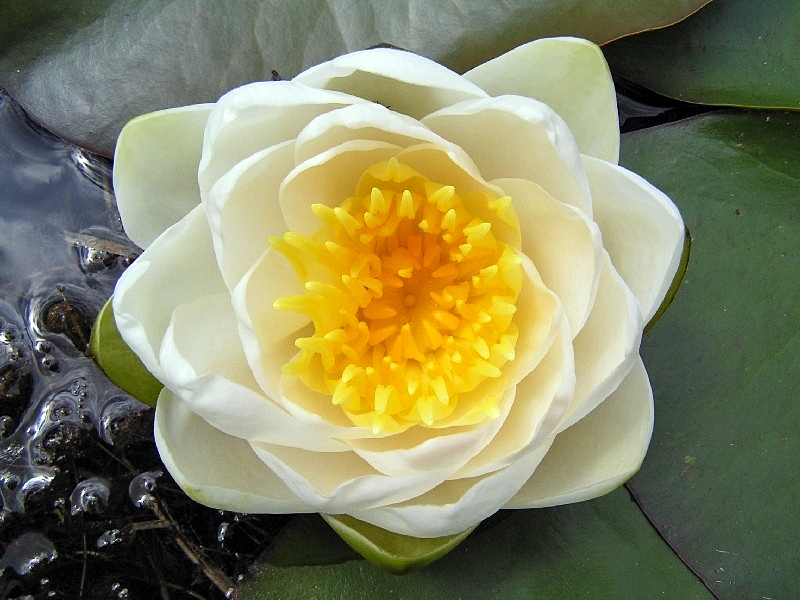
Aquatic plants, also referred to as hydrophytes, are vascular plants and non-vascular plants that have adapted to live in aquatic environments (saltwater or freshwater). In lakes, rivers and wetlands, aquatic vegetations provide cover for aquatic animals such as fish, amphibians and aquatic insects, create substrate for benthic invertebrates, produce oxygen via photosynthesis, and serve as food for some herbivorous wildlife. Familiar examples of aquatic plants include waterlily, lotus, duckweeds, mosquito fern, floating heart, water milfoils, mare's tail, water lettuce, water hyacinth, and algae.
Aquatic plants require special adaptations for prolonged inundation in water, and for floating at the water surface. The most common adaptation is the presence of lightweight internal packing cells, aerenchyma, but floating leaves and finely dissected leaves are also common. Aquatic plants only thrive in water or in soil that is frequently saturated, and are therefore a common component of swamps and marshlands.
Aquatic plants have adapted to live in either freshwater or saltwater. Aquatic vascular plants have originated on multiple occasions in different plant families; they can be ferns or angiosperms (including both monocots and dicots). The only angiosperms capable of growing completely submerged in seawater are the seagrasses. Examples are found in genera such as Thalassia and Zostera. An aquatic origin of angiosperms is supported by the evidence that several of the earliest known fossil angiosperms were aquatic. Aquatic plants are phylogenetically well dispersed across the angiosperms, with at least 50 independent origins, although they comprise less than 2% of the angiosperm species. Archaefructus represents one of the oldest, most complete angiosperm fossils which is around 125 million years old. These plants require special adaptations for living submerged in water or floating at the surface.
Fully submerged aquatic plants have little need for stiff or woody tissue as they are able to maintain their position in the water using buoyancy typically from gas filled lacunaa or turgid Aerenchyma cells. When removed from the water, such plants are typically limp and lose turgor rapidly.
Those living in rivers do, however, need sufficient structural xylem to avoid being damaged by fast flowing water and they also need strong mechanisms of attachment to avoid being uprooted by river flow.
Many fully submerged plants have finely dissected leaves, probably to reduce drag in rivers and to provide a much increased surface area for interchange of minerals and gasses. Some species of plants such as Ranunculus aquatilis have two different leaf forms with finely dissected leaves that are fully submerged and entire leaves on the surface of the water.
Some still-water plants can alter their position in the water column at different seasons. One notable example is water soldier, which rests as a rootless rosette on the bottom of the water body but slowly floats to the surface in late spring so that its inflorescence can emerge into the air. While it is ascending through the water column it produces roots and vegetative daughter plants by means of rhizomes. When flowering is complete, the plant descends through the water column and the roots atrophy.
In floating aquatic angiosperms, the leaves have evolved to only have stomata on the top surface to make use of atmospheric carbon dioxide. Gas exchange primarily occurs through the top surface of the leaf due to the position of the stomata, and the stomata are in a permanently open state. Due to their aquatic surroundings, the plants are not at risk of losing water through the stomata and therefore face no risk of dehydration. For carbon fixation, some aquatic angiosperms are able to uptake CO2 from bicarbonate in the water, a trait that does not exist in terrestrial plants. Angiosperms that use HCO
3- can keep CO2 levels satisfactory, even in basic environments with low carbon levels. The many possible classifications of aquatic plants are based upon morphology.
Aquatic plant
Aquatic plants, also referred to as hydrophytes, are vascular plants and non-vascular plants that have adapted to live in aquatic environments (saltwater or freshwater). In lakes, rivers and wetlands, aquatic vegetations provide cover for aquatic animals such as fish, amphibians and aquatic insects, create substrate for benthic invertebrates, produce oxygen via photosynthesis, and serve as food for some herbivorous wildlife. Familiar examples of aquatic plants include waterlily, lotus, duckweeds, mosquito fern, floating heart, water milfoils, mare's tail, water lettuce, water hyacinth, and algae.
Aquatic plants require special adaptations for prolonged inundation in water, and for floating at the water surface. The most common adaptation is the presence of lightweight internal packing cells, aerenchyma, but floating leaves and finely dissected leaves are also common. Aquatic plants only thrive in water or in soil that is frequently saturated, and are therefore a common component of swamps and marshlands.
Aquatic plants have adapted to live in either freshwater or saltwater. Aquatic vascular plants have originated on multiple occasions in different plant families; they can be ferns or angiosperms (including both monocots and dicots). The only angiosperms capable of growing completely submerged in seawater are the seagrasses. Examples are found in genera such as Thalassia and Zostera. An aquatic origin of angiosperms is supported by the evidence that several of the earliest known fossil angiosperms were aquatic. Aquatic plants are phylogenetically well dispersed across the angiosperms, with at least 50 independent origins, although they comprise less than 2% of the angiosperm species. Archaefructus represents one of the oldest, most complete angiosperm fossils which is around 125 million years old. These plants require special adaptations for living submerged in water or floating at the surface.
Fully submerged aquatic plants have little need for stiff or woody tissue as they are able to maintain their position in the water using buoyancy typically from gas filled lacunaa or turgid Aerenchyma cells. When removed from the water, such plants are typically limp and lose turgor rapidly.
Those living in rivers do, however, need sufficient structural xylem to avoid being damaged by fast flowing water and they also need strong mechanisms of attachment to avoid being uprooted by river flow.
Many fully submerged plants have finely dissected leaves, probably to reduce drag in rivers and to provide a much increased surface area for interchange of minerals and gasses. Some species of plants such as Ranunculus aquatilis have two different leaf forms with finely dissected leaves that are fully submerged and entire leaves on the surface of the water.
Some still-water plants can alter their position in the water column at different seasons. One notable example is water soldier, which rests as a rootless rosette on the bottom of the water body but slowly floats to the surface in late spring so that its inflorescence can emerge into the air. While it is ascending through the water column it produces roots and vegetative daughter plants by means of rhizomes. When flowering is complete, the plant descends through the water column and the roots atrophy.
In floating aquatic angiosperms, the leaves have evolved to only have stomata on the top surface to make use of atmospheric carbon dioxide. Gas exchange primarily occurs through the top surface of the leaf due to the position of the stomata, and the stomata are in a permanently open state. Due to their aquatic surroundings, the plants are not at risk of losing water through the stomata and therefore face no risk of dehydration. For carbon fixation, some aquatic angiosperms are able to uptake CO2 from bicarbonate in the water, a trait that does not exist in terrestrial plants. Angiosperms that use HCO
3- can keep CO2 levels satisfactory, even in basic environments with low carbon levels. The many possible classifications of aquatic plants are based upon morphology.
Recent media
Recent media