


Community hub
Recent from talks
Contribute something
Nothing was collected or created yet.
Asia Cargo Airlines
View on Wikipedia
Key Information


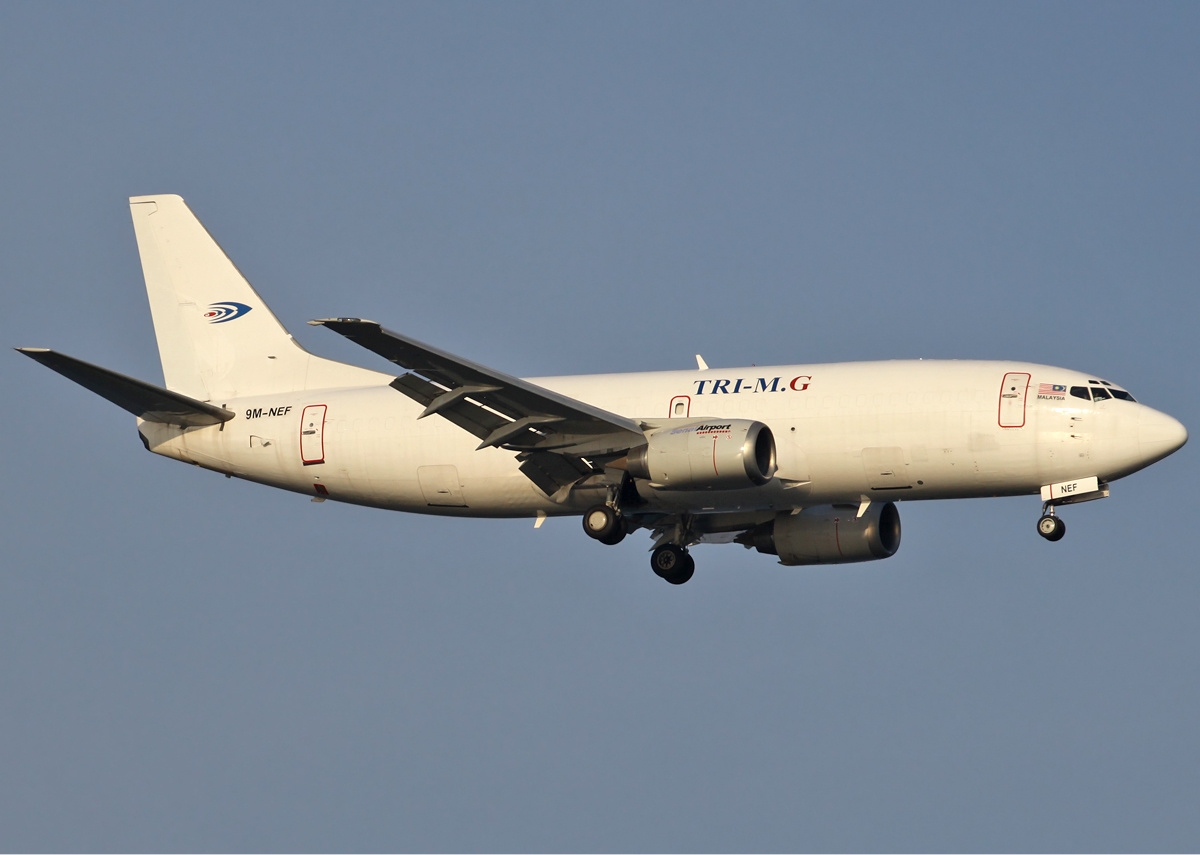
Asia Cargo Airlines (previously known as Tri-MG Intra Asia Airlines) is an airline that mainly operates cargo aircraft on scheduled routes for contract charters and non-scheduled routes for ad-hoc charters.
Tri-MG Airlines are based in Halim Perdanakusuma Airport, Jakarta, Indonesia.
Apart from cargo flight operations, they operate light aircraft for passengers as well. They also provide medical evacuation services (Medivac) for patients who require to be airlifted on special charters for hospitalisation and associated treatment.[citation needed]
History
[edit]The airline was founded in September 1990.
Destinations
[edit]Asia Cargo Airlines serves the following destinations:[3]

- Balikpapan – Sultan Aji Muhammad Sulaiman Airport
- Bandung – Kertajati International Airport
- Jakarta – Halim Perdanakusuma International Airport (Hub)
- Pekanbaru – Sultan Syarif Kasim II International Airport

During the COVID-19 pandemic, the airline operated cargo flights to Malaysia as well.

Fleet
[edit]The Asia Cargo Airlines fleet includes the following aircraft:[4]
| Aircraft | In service | Orders | Notes |
|---|---|---|---|
| Boeing 737-800SF | 1 (as of August 2025)[5] | 1
|
|
| Boeing 737-300F | 3 (as of August 2025) [5]
|
—
|
|
| Beechcraft Hawker 400XP | 2
|
—
|
|
| Beechcraft Hawker 800XP | 1
|
—
|
|
| Total | 9 | 2 |
Tri-MG Intra Asia Airlines previously operated the following aircraft (as of September 2009):[6]
| Aircraft | In service | Orders | Notes |
|---|---|---|---|
| Antonov An-12 | 1
|
—
|
|
| Antonov An-26 | 1
|
—
|
|
| Antonov An-32 | 1
|
—
|
|
| Boeing 727-100F | 1
|
—
|
|
| Boeing 727-200F | 4
|
—
|
|
| Boeing 737-200QC | 2
|
—
|
|
| Total | 10 | — |
Incidents and accidents
[edit]- On 4 January 2005, while carrying out a relief operation to the tsunami-stricken area of Banda Aceh, a Boeing 737-2A9C (PK-YGM) struck a water buffalo that had entered the runway just as it was making its landing at Sultan Iskandarmuda Airport (Banda Aceh). This resulted in the main gear on the port side collapsing which damaged the gear and port engine. There were no injuries and the aircraft was declared a write-off and scrapped several months later.[7]
- On 18 July 2017, a Boeing 737-300F registered as PK-YGG bounced and slid off from Runway 15 of Wamena Airport, Wamena. Although no one was killed or injured in the incident, the incident caused substantial damage on the plane.[8]
References
[edit]- ^ Management team of Tri-MG Intra Asia Airlines
- ^ Management team of Asia Cargo Airlines
- ^ Tri-MG Intra Asia Airlines regular Flight
- ^ Tri-M.G-Intra-Asia-Airlines Generell Info pilotcareercentre.com, accessdate 16.September 2020
- ^ a b "Global Airline Guide 2025 - Asia Cargo Airlines". Airliner World. September 2025. p. 62.
- ^ Tri-MG Intra Asia Airlines Fleet Website of the company - fleet
- ^ Accident description
- ^ "Pesawat Tri MG Asia Tergelincir, Runway Bandara Wamena Terblok". Detik. Retrieved 18 July 2017.
External links
[edit]
- Official website Archived 2012-04-18 at the Wayback Machine


 | This article about transport in Indonesia is a stub. You can help Wikipedia by adding missing information. |
Asia Cargo Airlines
View on GrokipediaOverview
Establishment and Rebranding
Asia Cargo Airlines traces its origins to Tri-MG Intra Asia Airlines, which was incorporated in Indonesia in 2002 as a cargo-focused carrier.[2] Commercial operations commenced the following year in 2003, initially emphasizing cargo charter services and scheduled flights across Southeast Asia, including routes to destinations such as Singapore, Malaysia, Vietnam, the Philippines, Thailand, Hong Kong, and Australia.[5][6] In August 2021, the airline underwent a significant rebranding to Asia Cargo Airlines, effective from August 4, to better align with its expanding regional role under the parent company, Asia Cargo Network.[7] The rebranding was formally launched on November 19, 2021, at The Ritz-Carlton Pacific Place in Jakarta, with full endorsement from the Indonesian government, including statements of support from Minister of Transportation Budi Karya Sumadi, who highlighted its alignment with the nation's Indonesia Emas 2045 vision for economic growth.[5] Earlier claims associating the airline's founding with 1990 stem from the broader history of its parent group, which initiated aviation activities that year, but the specific entity of Tri-MG Intra Asia Airlines was established in 2002. This rebranding marked a key milestone in the airline's corporate identity, reinforcing its commitment to cargo logistics in Indonesia and beyond.[5]Headquarters and Primary Base
Asia Cargo Airlines maintains its administrative headquarters at JB Tower, located at Jl. Kebon Sirih No. 48-50, Kel. Gambir, Kec. Gambir, Jakarta Pusat, Indonesia.[8] This central Jakarta office serves as the primary hub for management and administrative functions, supporting the airline's operations across Indonesia and Southeast Asia. The airline's primary operational base is at Halim Perdanakusuma International Airport (IATA: HLP, ICAO: WIHH) in Jakarta, Indonesia, which functions as its main hub for cargo and charter flights.[6] Asia Cargo Airlines operates under IATA code GM and ICAO code TMG from this facility.[2] The base plays a crucial role in facilitating scheduled cargo routes, ad-hoc charters, and executive passenger services, leveraging the airport's infrastructure shared with military operations to handle freighter aircraft efficiently.[1] At Halim Perdanakusuma, the airline supports its cargo and charter operations through dedicated facilities, including provisions for freighter maintenance to ensure aircraft readiness for regional and international flights.[2] This infrastructure enables quick turnaround times for Boeing 737 freighters, contributing to the carrier's focus on time-sensitive air cargo logistics in Southeast Asia.[9]Services and Operations
Cargo Transportation
Asia Cargo Airlines primarily operates cargo services through scheduled routes for contract charters and non-scheduled ad-hoc charters, utilizing a fleet of Boeing 737 freighters to facilitate regional logistics in Southeast Asia.[3] The airline's operations focus on efficient narrowbody freighter deployments, enabling reliable transport across domestic and international networks within the region.[6] The carrier demonstrates expertise in handling time-critical shipments, supporting e-commerce logistics through strategic partnerships such as its charter agreement with JNE Express, an Indonesian logistics provider.[10] In 2022, Asia Cargo Airlines dedicated one of its Boeing 737-300F aircraft (registration PK-YGV) to JNE Express operations, commencing revenue flights on August 14 to bolster the partner's e-commerce expansion goals of 20-30% growth.[11] This collaboration underscores the airline's role in integrated air cargo solutions for high-demand sectors.[12] In July 2025, the airline joined WebCargo by Freightos, becoming the first full-freighter operator in Southeast Asia on the digital platform, enhancing booking efficiency for time-critical shipments.[10] During the COVID-19 pandemic, Asia Cargo Airlines expanded its cargo services to transport essential goods, including medical supplies such as Pfizer vaccines delivered to Timor-Leste in 2021.[13] The airline identified significant opportunities amid the crisis, launching its first cargo flight from Kertajati Airport since the shutdown in December 2021 to revive logistics infrastructure.[14] Its fleet of converted freighters, including Boeing 737-300F and the Boeing 737-800SF introduced in March 2025, supports these regional hauls with enhanced capacity for urgent and essential cargo.[15]Passenger and Charter Services
Asia Cargo Airlines previously provided limited passenger and charter services, including medical evacuation (Medivac) and executive charters, as part of its diversification efforts following the 2021 rebranding. These operations utilized light aircraft for domestic needs in Indonesia. However, as of 2025, the airline's focus has shifted to cargo transportation, with no active light aircraft in its fleet.[16][3]Destinations
Domestic Network
Asia Cargo Airlines primarily operates its domestic network from its main base at Halim Perdanakusuma International Airport (HLP) in Jakarta, connecting to various regional airports across Indonesia to facilitate cargo transport and limited passenger services.[11] Key routes include flights to Balikpapan's Sultan Aji Muhammad Sulaiman Airport (BPN), serving the resource-rich East Kalimantan region, and to Sentani International Airport (DJJ) in Jayapura, Papua, supporting logistics in eastern Indonesia.[3][17] The network extends to remote and underserved areas, such as Wamena Airport (WMX) in Papua's highlands and Moses Kilangin Airport (TIM) in Timika, near the Tembagapura mining district, enabling the delivery of essential goods to isolated communities.[18][19] Additional connections link Jakarta to Hasanuddin International Airport (UPG) in Makassar, Sulawesi, and Pattimura Airport (AMQ) in Ambon, Maluku.[17] In Java, the airline maintains denser operations, with routes to Ahmad Yani International Airport (SRG) in Semarang and Husein Sastranegara Airport (BDO) in Bandung, enhancing connectivity for industrial and urban cargo needs.[18][11] These services, often in partnership with logistics providers like JNE Express, bolster e-commerce and local supply chains by prioritizing time-sensitive freight to both metropolitan and peripheral locations.[11] Since its incorporation in 2002 as Tri-MG Intra Asia Airlines and the start of operations around 2003, the domestic network has evolved to include more eastern Indonesian destinations, with capacity expansions announced in 2022 to increase flight frequencies on core routes amid rising post-pandemic demand.[2][17]International Routes
Asia Cargo Airlines operates international cargo routes primarily within Southeast Asia, focusing on short-haul freighter services from its Jakarta base at Halim Perdanakusuma International Airport. As of 2025, the primary destination is Singapore's Changi Airport (SIN), with dedicated services launched in July 2025 connecting Singapore to Jakarta (HLP) and Balikpapan (BPN) via HLP.[10][20] These international operations gained momentum during the COVID-19 pandemic, when the airline expanded services to Singapore to deliver essential cargo such as medical supplies and protective equipment, capitalizing on heightened demand for reliable air logistics amid global disruptions. The carrier's cargo-focused network, aligned with its parent company Asia Cargo Network's regional presence in Indonesia, Malaysia, and Singapore, facilitated this rapid response to supply chain needs.[5] Following its rebranding from Tri-MG Intra Asia Airlines in August 2021, Asia Cargo Airlines secured regulatory approvals from Indonesia's Directorate General of Civil Aviation, enabling formalized international operations and enhanced compliance for cross-border flights. Under the Asia Cargo Network umbrella, the airline pursued expansion in Southeast Asia and strengthened ties in the Middle East through a joint venture with Bahrain-based MENA Aerospace announced in 2022. This included basing freighters in the Gulf Cooperation Council region, with initial deployments of two aircraft starting in early 2023 under the MENA Cargo brand; however, as of 2025, operations remain limited with one active freighter.[5][21][22]History
Founding and Early Development
Asia Cargo Airlines was established in 2002 as Tri-MG Intra Asia Airlines by the Isaak family, a Singapore-based entrepreneurial group with roots in logistics.[6][23] The airline, headquartered in Jakarta, Indonesia, began operations with a focus on cargo transportation, leveraging the family's prior experience in regional supply chains.[7] Its inaugural flights commenced in 2003, supporting initial charter services.[5] In its early years, Tri-MG Intra Asia Airlines concentrated on domestic Indonesian cargo charters and short-haul regional contracts, serving industries like agriculture and manufacturing amid post-1998 economic recovery efforts.[7] Operations were based at Halim Perdanakusuma International Airport, where the airline handled ad-hoc shipments and built partnerships for cross-border logistics in Southeast Asia.[24] A notable early challenge occurred in January 2005, when a Boeing 737-200 struck a water buffalo during a tsunami relief landing in Banda Aceh, highlighting operational risks in remote areas but resulting in no fatalities.[25] The 2000s presented broader hurdles due to Indonesia's aviation market fluctuations, including intense competition following 2000 deregulation, fuel price volatility, and infrastructure constraints that strained smaller carriers.[26] Despite these, Tri-MG expanded its fleet through leasing and acquisitions to meet growing demand for reliable cargo capacity.[27] This period also saw initial ties to precursors of the Asia Cargo Network, the Isaak family's expanding logistics group, which provided essential funding and operational synergies for sustained growth.[9]Expansion and Rebranding
Following its establishment, Asia Cargo Airlines pursued fleet modernization efforts in the post-2010 period, focusing on converting Boeing 737 aircraft to freighter configurations to enhance operational efficiency and capacity. By 2021, the airline had integrated additional Boeing 737-300F units into its operations, supporting expanded cargo services amid growing regional demand.[1][17] During the COVID-19 pandemic in 2020-2021, Asia Cargo Airlines adapted by maintaining and adding international cargo routes to ensure continuity of essential goods transport despite global disruptions. This response included relaunching operations at key facilities like Kertajati Airport in late 2021 after a two-year pandemic-related closure, thereby increasing overall cargo capacity to meet heightened logistics needs in Indonesia.[14] The airline's rebranding from Tri-MG Intra Asia Airlines to Asia Cargo Airlines, effective August 4, 2021, was conducted with full endorsement from the Indonesian Directorate General of Civil Aviation, aiming to strengthen its market position under the Asia Cargo Network umbrella. This transition facilitated enhanced branding as a dedicated cargo operator, backed by government initiatives to bolster national aviation logistics.[5][2] The rebranding coincided with ongoing fleet enhancements, including the addition of a Boeing 737-800SF in May 2025, marking the airline's entry into next-generation narrowbody freighters and enabling more efficient regional services.[15][28] Through its parent company, Asia Cargo Network, the airline benefited from regional expansion via strategic acquisitions, such as the 49% stake in Bahrain-based MAE Aircraft Management (operator of MENA Cargo Airlines) announced in November 2022, which extended operations into the Middle East with initial deployments of Boeing 737 freighters.[29][21]Fleet
Current Composition
As of November 2025, Asia Cargo Airlines maintains an active fleet of three aircraft, all based at Jakarta's Halim Perdanakusuma International Airport (HLP/WIHH), supporting its cargo operations across domestic and regional routes. The composition consists of converted Boeing narrowbody freighters for primary cargo duties. This setup reflects the airline's focus on efficient, cost-effective narrowbody operations in Southeast Asia's logistics market.[1] The cargo segment is dominated by Boeing 737-300F variants, providing reliable short- to medium-haul capacity. These are joined by a Boeing 737-800SF addition to enhance payload and range capabilities. PK-MGZ was added in January 2025 and PK-MGI in May 2025.[1][15] The following table summarizes the current active fleet, including key details on types, quantities, example registrations, approximate ages, and operational notes:| Aircraft Type | In Service | Example Registrations | Average Age | Primary Role | Operator Notes |
|---|---|---|---|---|---|
| Boeing 737-300F | 2 | PK-YGV, PK-MGZ | 31.8 years | Cargo transportation | PK-YGV operated in partnership with JNE Express[30][1] |
| Boeing 737-800SF | 1 | PK-MGI (added May 2025) | 18.3 years | Cargo transportation | Leased from ALC[31][15] |