Hubbry Logo
Azygos lobeAzygos lobeMain
Open search
Azygos lobe
Community hub
Azygos lobe
logo
8 pages, 0 posts
0 subscribers
Be the first to start a discussion here.
Azygos lobe
Azygos lobe
from Wikipedia
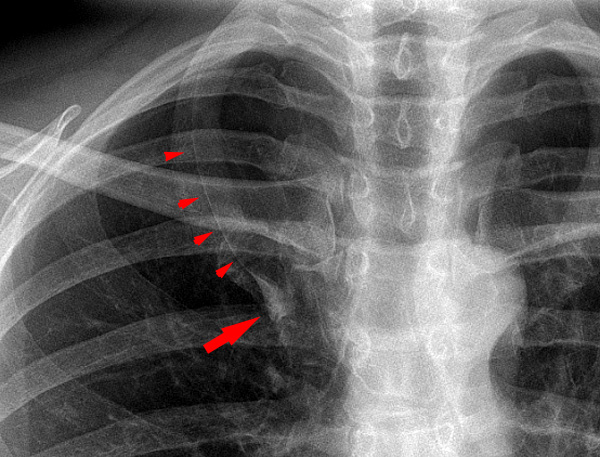
Azygos lobe on chest X-ray. Arrowheads show the delineation of the lobe. Arrow points to the azygos vein.

In human anatomy, an azygos lobe is a normal anatomical variation of the upper lobe of the right lung.[1] It is seen in 0.3% of the population.[2] Embryologically, it arises from an anomalous lateral course of the azygos vein,[3] in a pleural septum within the apical segment of the right upper lobe or in other words an azygos lobe is formed when the right posterior cardinal vein, one of the precursors of the azygos vein, fails to migrate over the apex of the lung and penetrates it instead, carrying along two pleural layers as the azygous fissure, that invaginates into the upper portion of the right upper lobe.[1]

Clinical significance

[edit]

An azygos lobe is usually an incidental finding on chest x-ray or CT scan. It is asymptomatic and not associated with any morbidity.[4][5] However, it can cause technical problems in thoracoscopic procedures.[6] The presence of the azygos lobe could alter the normal location of the superior vena cava or may be associated with other anomalies, including esophageal atresia or intrapulmonary right brachiocephalic veins.[7]

Additional images

[edit]
Azygos lobe in axial computertomography. Arrow on azygos vein.
HRCT thorax, axial section delineates a well-defined, convex-shaped fold (Blue arrow), the azygos fissure. A tear-drop shaped density noted at the bottom of the fold (Green arrow) is the azygos vein.

References

[edit]

Further reading

[edit]
Revisions and contributorsEdit on WikipediaRead on Wikipedia
from Grokipedia
The azygos lobe is a rare anatomical variant of the upper lobe of the right , occurring in approximately 0.4% of chest radiographs and up to 1% of anatomical specimens, in which the fails to migrate medially during embryogenesis, creating an accessory that separates a small, medially located segment of tissue. This variant is not a true pulmonary lobe, as it lacks a dedicated or distinct vascular supply, but instead represents an anatomically isolated portion of the right upper lobe enclosed by four layers of pleura, with the visible as a teardrop-shaped structure within the on . Embryologically, the azygos lobe forms due to the aberrant path of the right posterior cardinal vein (which becomes the ) penetrating the apex of the developing right rather than passing over it, resulting in an of the visceral pleura that produces the characteristic during the early stages of bud separation. This process is linked to the development of the supracardinal venous , where incomplete regression of certain embryonic veins can contribute to related anomalies, though the azygos lobe itself is typically an isolated finding without systemic vascular implications. Anatomically, the azygos lobe occupies the medial aspect of the right upper lobe, often appearing as a fine, curved line or inverted comma on chest radiographs, with providing definitive visualization of the and pleural layers; it is ventilated by branches of the apical segmental (B1a) and shares the general blood supply of the upper lobe without unique physiologic function. Despite its benign nature and usual presentation, the variant holds as an incidental finding that can mimic pathological conditions such as bullae, abscesses, cysts, neoplasms, or even on , potentially leading to unnecessary interventions if not recognized. In surgical contexts, the presence of an azygos lobe may complicate procedures like video-assisted thoracoscopic sympathectomy or upper lobectomy, as the accessory fissure can obscure anatomical landmarks and increase operative risks, underscoring the importance of preoperative imaging for planning. Rarely, it has been associated with localized infections like or malignancies confined to the segment, though such cases are exceptional and do not alter its predominantly incidental status.

Anatomy

Structure and formation

The azygos lobe is an anatomical variant occurring in the right upper lobe of the , representing an accessory lobe rather than a true anatomical lobe separated by a major . It arises from the of the into the tissue during development, without a distinct bronchial segmentation or independent vascular supply from the rest of the . The defining feature of the azygos lobe is the azygos , a thin, inverted comma-shaped pleural septum that extends from the posterior aspect of the right apex superiorly and curves medially and inferiorly to the azygos arch. This separates the medial portion of the right upper lobe, enclosing the arch of the within a mesenchymal structure known as the mesoazygos. The mesoazygos consists of four layers of pleura—two visceral layers surrounding the tissue and two parietal layers lining the mediastinal pleura—formed by the pleura folding around the vein as it invaginates into the . The azygos lobe forms via invagination of the azygos vein into the lung tissue, creating the accessory lobe and the surrounding pleural layers without affecting overall lung function. Anatomically, the azygos lobe encompasses the apical segment of the right upper lobe, with the azygos vein arching within the fissure before continuing superiorly to drain into the superior vena cava. The lobe maintains continuity with the posterior and anterior segments of the right upper lobe via the shared visceral pleura, ensuring uniform aeration and perfusion from the pulmonary arteries and bronchi.

Anatomical relations

The azygos lobe is situated in the medial aspect of the right upper lobe of the , adjacent to the right side of the trachea and , and superior to the right main . This positioning places it in close relation to key mediastinal structures, including the , to whose postero-medial wall it is often inseparable. The lobe is bounded laterally by the azygos , a unique structure formed by four layers of pleura (two visceral and two parietal) that invaginate into the ; medially, it abuts the ; inferiorly, it adjoins the right middle lobe; and superiorly, it extends to the apex of the right . The azygos courses within this fissure, receiving drainage from posterior intercostal veins (which include connections to vertebral veins via radicular tributaries), esophageal veins, and bronchial veins before arching forward to empty into the . Due to the four pleural layers enclosing the azygos , the lobe functions as an anatomically distinct compartment that moves independently during respiration, though this variant does not impair overall pulmonary mechanics or . Bronchopulmonary supply to the azygos lobe derives from apical subsegments of the right upper lobe (such as B1a and B3a bronchi with accompanying pulmonary arterial branches), while venous drainage follows the V1a and V2 patterns, and innervation occurs via the standard pulmonary without unique alterations. Variations in the azygos lobe's relations occasionally include accessory fissures or incomplete pleural , which can modify its proximity to the right or ; for instance, the may course between pleural layers in the fissure anterior to the .

Embryology

Developmental mechanism

The development of the azygos lobe occurs during the early embryonic period, specifically between the fifth and seventh weeks of , coinciding with the separation of the lung buds and the maturation of the systemic venous system. At this stage, the primitive venous network, including the paired posterior cardinal veins, forms around week 4 to drain the body wall and mesonephros. These veins undergo remodeling as subcardinal, sacrocardinal, and supracardinal veins develop, with the supracardinal veins arising from the posterior cardinal veins to establish the future azygos system. The primary mechanism involves an anomalous lateral course of the right posterior cardinal , the precursor to the superior segment of the , which fails to migrate medially and superiorly over the apex of the developing right lung. Instead, the vein penetrates the medial aspect of the right upper lobe as the lung expands laterally, trapping a medial portion of the lobe posterior to the . This aberrant migration, occurring amid the rapid growth of the lung bud from the and surrounding , results in the isolation of the azygos lobe as a distinct anatomical variant. The of splanchnic plays a crucial role in delineating the boundaries of the azygos lobe, forming a double-layered pleural known as the mesoazygos. This structure consists of four pleural layers—two visceral and two parietal—that enfold the , creating the characteristic azygos fissure and separating the lobe from the rest of the right upper lobe. The mesoazygos arises as the reflects around the during its lateral displacement, preventing fusion with the adjacent lung tissue. Key developmental stages include the initial establishment of the cardinal venous system by week 5, followed by the selective persistence of the right supracardinal vein to form the while most posterior cardinal segments regress. The anomalous lateral trajectory is attributed to delayed apical growth relative to venous remodeling, leading to the vein's within the pleuropericardial folds. This process integrates with broader partitioning, where the lung's lateral expansion outpaces the vein's medial shift.

Associated congenital anomalies

The azygos lobe, a congenital variant arising from aberrant migration of the during lung development, has been reported to co-occur with other congenital anomalies in rare cases, potentially due to overlapping embryological disruptions in the posterior cardinal system and derivatives. Common associations include and (TEF), which stem from incomplete separation of the tracheoesophageal septum during , potentially compounded by vascular anomalies like the azygos lobe that alter thoracic . In a retrospective study of 50 children with azygos lobe, congenital heart disease, , and other respiratory malformations were noted in a small proportion of cases. Pathophysiologically, these associations arise from shared errors in early embryogenesis, where failures in the regression or migration of cardinal veins affect both pulmonary vascular patterning and foregut-lung bud separation, leading to integrated anomalies in the azygos venous system. For instance, partial anomalous pulmonary venous return (PAPVR), where pulmonary veins drain into systemic veins such as the azygos or (SVC), often coexists with azygos lobe due to persistent embryonic venous connections, as seen in cases of right upper lobe PAPVR with split venous drainage. Variations in SVC position, including persistent left-sided SVC, further link to azygos system anomalies through incomplete regression of left supracardinal veins, impacting right thoracic development. Specific examples include double TEF without , reported in a neonate with concurrent azygos lobe, where the anomalous vein course aided surgical identification but underscored the need for preoperative imaging to avoid complications. In , characterized by hypoplastic right lung and anomalous pulmonary venous drainage to the , azygos vein dilatation or continuation patterns occasionally overlap with azygos lobe features through shared venous malformations, though direct lobe involvement remains rare. The presence of an azygos lobe in neonates warrants targeted screening for associated anomalies, such as echocardiography for congenital heart disease or contrast esophagography for foregut defects, to enable early intervention and mitigate surgical risks like those encountered in esophageal atresia repair.

Epidemiology

Prevalence

The azygos lobe is a rare anatomical variant of the right upper lung lobe, with an overall prevalence estimated at 0.3% to 1.2% across various studies, including autopsies, chest radiographs, and computed tomography (CT) scans. A comprehensive meta-analysis of over 1 million individuals reported a pooled prevalence of 0.30% (95% CI: 0.24–0.35%), highlighting its incidental nature in population-based assessments. Detection rates tend to be higher in advanced imaging modalities, reaching up to 1.2% in high-resolution CT studies, compared to lower figures in traditional autopsy series or plain radiographs. Historically, the azygos lobe was first described in 1777 by German anatomist Heinrich August Wrisberg during an autopsy of a three-year-old boy, marking its initial recognition as a congenital variant rather than a pathological entity. Early 20th-century reports built on this foundation through autopsy examinations, but systematic prevalence data emerged later with radiographic advancements. For instance, large cohort studies of chest radiographs have documented rates around 0.4%, underscoring its underrecognition in routine imaging prior to the widespread adoption of CT. Factors influencing detection include the imaging technique employed, with the azygos lobe often underreported in routine chest X-rays at approximately 0.2–0.4% due to overlapping structures obscuring the characteristic azygos fissure. In contrast, CT scans enhance visualization of the mesothelial folds forming the lobe, leading to higher reported incidences of 1.0–1.65% in dedicated thoracic imaging cohorts. This discrepancy emphasizes the role of technological improvements in ascertaining true population prevalence. Prevalence appears consistent globally, with studies from diverse regions—including , , , and developing countries—reporting similar rates without significant ethnic variations. For example, investigations in Turkish and Iranian populations yielded incidences of 0.92–1.2%, aligning closely with meta-analytic estimates from multinational data.

Demographic variations

The prevalence of the azygos lobe exhibits slight variations by , with multiple studies reporting a higher incidence in males compared to females. In a cohort of 1,709 Jordanian patients undergoing chest CT scans, the prevalence was 1.01% in males (10 out of 908) versus 0.62% in females (5 out of 801), nearly double the rate in men. Similarly, a retrospective analysis of 10,271 Turkish patients found rates of 1.4% in males (73 cases) and 1% in females (51 cases), though the difference was not statistically significant (p=0.130). An Iranian study of 789 individuals reported 1.83% in males (9 out of 490) and 1.34% in females (4 out of 297). These findings suggest a modest male predominance, potentially linked to anatomical factors during development, though no definitive causal mechanism has been established across populations. Age-related identification of the azygos lobe shows it is a congenital variant present from birth, with no evidence of postnatal development. It is infrequently reported in pediatric populations unless specifically screened for associated anomalies, as routine thoracic imaging is less common in children without symptoms. A review of 50 pediatric cases highlighted nonspecific clinical features, with diagnosis relying on chest imaging such as CT, where 80% of identifications occurred. In contrast, adult cohorts demonstrate higher detection rates due to increased imaging for unrelated conditions, with mean patient ages in studies ranging from 52 to 57 years. For instance, the aforementioned Turkish study reported a mean age of 56.6 ± 20.1 years among those with the variant. Data on geographic or ethnic factors remain limited, with most studies conducted in Middle Eastern and European populations showing comparable prevalences around 0.9% to 1.6%, suggesting minimal true variations. A Jordanian study in a context reported 0.92% overall (0.93% in males, 0.89% in females), aligning closely with rates in Iranian (1.65%) and Turkish (1.2%) cohorts. A cadaveric study in identified the variant in 4 out of 704 cadavers (one white, three black individuals), for a of 0.57%, but sample size precludes robust ethnic comparisons. Any observed differences are likely attributable to study biases, such as imaging protocols or population selection, rather than genetic or environmental factors. The azygos lobe demonstrates a higher association with certain comorbid conditions, particularly congenital anomalies, which can elevate its apparent prevalence in affected subgroups. A indicated that the variant is approximately nine times more common in individuals with congenital abnormalities, including congenital heart disease, Turner's syndrome, and bronchogenic cysts. This link suggests shared developmental pathways in cardiopulmonary malformations. For example, cases of azygos lobe have been documented alongside agenesis, a condition often co-occurring with congenital heart disease in up to 0.6% of the general population. Such associations underscore the need for awareness in patients screened for cardiac anomalies.

Diagnosis

Imaging modalities

Chest X-ray serves as the initial imaging modality for detecting the azygos lobe, where it appears as a thin, curved line representing the azygos fissure extending from the apex to the azygos arch, best visualized on the posteroanterior view. This modality is advantageous due to its widespread availability and low cost, allowing incidental identification in routine screening. Computed tomography (CT) is considered the gold standard for confirming and characterizing the azygos lobe, providing detailed axial, coronal, and sagittal reconstructions that demonstrate the four-layer pleural structure of the fissure and the course of the azygos vein within it. Contrast-enhanced CT further aids in vascular confirmation by highlighting the azygos vein's arching path. Technical considerations include using thin-slice protocols (1-3 mm) to enhance fissure visualization and multiplanar or 3D reconstructions to assist in preoperative surgical planning, particularly in cases involving associated anomalies. Magnetic resonance imaging (MRI) is less commonly employed for evaluating the azygos lobe but proves useful for assessing relations and in patients with contraindications to CT, such as renal impairment or radiation sensitivity. Other modalities include , which is limited to superficial thoracic views and generally ineffective for deep pulmonary structures like the azygos lobe due to acoustic shadowing from aerated . Positron emission tomography-computed tomography (PET-CT) is rarely utilized but may be applied in cases of suspected within the azygos lobe to assess metabolic activity of associated lesions.

Radiographic features

The azygos lobe is typically identified on chest radiographs as an inverted comma-shaped or fine convex line representing the , which crosses the apex of the right upper lobe from medial to lateral. This delineates the medial margin of the lobe, often appearing as a teardrop or tear-shaped shadow at its inferior aspect due to the enclosed arching superiorly and laterally. The uppermost portion of the may form a small triangular area known as the trigonum parietale, resulting from extrapleural areolar tissue. On lateral views, the projects as a thin vertical line posterior to the trachea and , with the visible as a rounded opacity at the 's base. Computed tomography (CT) provides clearer visualization of the azygos lobe, demonstrating a curved pleural septum composed of four layers (two parietal and two visceral) that encloses the dilated within the . The typically extends from the lateral aspect of a posterior vertebral body to the right or , resulting in medial displacement of the apical lung parenchyma without associated . The appears thicker than usual, following the 's course and draining into the , occasionally with an inferior prolongation along the ascending vein. In larger lobes, the may exhibit a C-shaped configuration, while smaller variants show straighter or undulating lines, and lung tissue may penetrate posteriorly behind the and trachea. Interpretive pitfalls on imaging include mistaking the azygos fissure for parenchymal scarring, bullae, cysts, or accessory fissures if the line is incomplete or displaced; an undulating posterior segment of the azygos vein may simulate a pulmonary nodule. Distinction is achieved by confirming the azygos vein's position within the fissure on CT, as mimics lack this vascular enclosure. Volume-rendered CT reconstructions can highlight the lobe's independent mobility relative to adjacent lung tissue during respiration, aiding differentiation from fixed lesions. Quantitative features on CT include a mean maximum length of the lobe around 60 mm, width of 48 mm, and height of 46 mm. The azygos lobe remains stable on serial imaging as a congenital variant, showing no interval change unless complicated by secondary such as or .

Clinical significance

Presentation and symptoms

The azygos lobe is a benign anatomical variant that is in the vast majority of cases and typically discovered incidentally during routine chest performed for unrelated conditions, such as respiratory infections, trauma evaluations, or preoperative assessments. In a study of 50 children, 28% of azygos lobes were identified incidentally without associated complaints, while the remaining 72% were noted during for unrelated respiratory symptoms like or fever, underscoring that the variant itself does not contribute to clinical manifestations. Common discovery contexts include chest for respiratory symptoms, trauma, or , where the lobe's characteristic radiographic appearance may initially raise concerns for . Although rare, symptomatic presentations can occur in the context of associated congenital anomalies, potentially leading to mild respiratory symptoms such as , but the azygos lobe does not directly cause these effects. For instance, obstruction by the in the superior lobe has been linked to or in isolated reports, though such complications are exceptional and often tied to broader vascular malformations. Rarely, a bulla within the azygos lobe may rupture, causing spontaneous requiring surgical intervention. Upon detection, the azygos lobe is frequently misidentified as a pathological entity, such as a bulla, cyst, , or even , prompting unnecessary follow-up imaging or consultations; regarding its benign nature effectively alleviates associated anxiety. Over the long term, the azygos lobe exhibits no progression or functional impairment, remaining a stable variant throughout life without influencing pulmonary function or requiring intervention. This inert clinical course reinforces its classification as a normal rather than a entity.

Surgical implications

The presence of an azygos lobe can complicate thoracoscopic procedures, such as video-assisted thoracic sympathectomy (VATS), by obscuring the operative field and the sympathetic chain, potentially leading to partial obstruction of the surgical site view or difficulties in identifying key structures like the third . This increases the risk of iatrogenic injury due to the unexpected pleural fissure and mesoazygos, necessitating preoperative identification via computed tomography (CT) to adjust port placement and avoid surprises during surgery. In lung resection procedures, including right upper , the azygos lobe alters the surgical approach by requiring careful division of the mesoazygos to access the lobe, with the positioned in a way that demands precise handling to prevent complications. Surgeons must perforate or dissect the mesoazygos web, which can lead to dense adhesions that mimic pleural and increase the likelihood of procedure conversion from VATS to open . Specific complications associated with these surgeries include hemorrhage from improper ligation or damage to the fragile , which has a thin wall and high blood flow, as well as postoperative issues like if the lobe is not repositioned correctly after manipulation. Adhesions and intercostal veins may further contribute to bleeding risks or require additional incisions for ligation. Overall, while a of 37 surgical cases reported no complications directly attributable to the azygos lobe in most instances, an 11% complication rate (including infections and tracheal rupture) underscores the need for anatomical awareness. During , the independent movement of the azygos lobe may affect ventilation strategies, particularly in one-lung , where double-lumen is recommended to achieve adequate reduction and facilitate lobe repositioning post-procedure. Guidelines emphasize that radiologists should flag the azygos lobe variant in preoperative imaging reports to enable surgeons to adapt VATS techniques, such as anticipating adhesions or vein positioning, thereby minimizing risks and ensuring safer navigation in thoracic interventions.

References

Add your contribution
Related Hubs
User Avatar
No comments yet.