Hubbry Logo
search
logo
1198399

Basal angiosperms

logo
Community Hub0 Subscribers
Read side by side
from Wikipedia
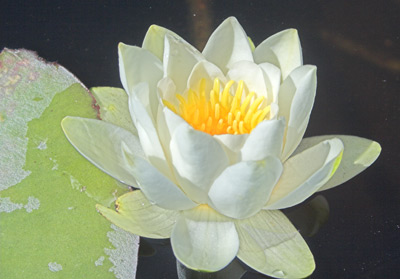
Nymphaea alba, from the Nymphaeales

The basal angiosperms are the flowering plants which diverged from the lineage leading to most flowering plants. In particular, the most basal angiosperms were called the ANITA grade, which is made up of Amborella (a single species of shrub from New Caledonia), Nymphaeales (water lilies, together with some other aquatic plants) and Austrobaileyales (woody aromatic plants including star anise).[1] The group may be expanded to include the Chloranthales and the Ceratophyllales.[2]

ANITA stands for Amborella, Nymphaeales, I lliciales, Trimeniaceae, and Austrobaileya.[3] Some authors[who?] have shortened this to ANA-grade for the three orders, Amborellales, Nymphaeales, and Austrobaileyales, since the order Iliciales was reduced to the family Illiciaceae and placed, along with the family Trimeniaceae, within the Austrobaileyales.

The basal angiosperms are only a few hundred species, compared with hundreds of thousands of species of eudicots, monocots, and magnoliids. They diverged from the ancestral angiosperm lineage before the five groups comprising the mesangiosperms diverged from each other.

Phylogeny

[edit]
Japanese star anise (Illicium anisatum), from the Austrobaileyales

Amborella, Nymphaeales and Austrobaileyales, in that order, are basal to all other angiosperms.[4] Amborella is understood to be the most basal extant flowering plant.[5]

Angiospermae

Older terms

[edit]
Amborella

Paleodicots (sometimes spelled "palaeodicots") is an informal name used by botanists (Spichiger & Savolainen 1997,[6] Leitch et al. 1998[7]) to refer to angiosperms which are not monocots or eudicots.

The paleodicots correspond to Magnoliidae sensu Cronquist 1981 (minus Ranunculales and Papaverales) and to Magnoliidae sensu Takhtajan 1980 (Spichiger & Savolainen 1997). Some of the paleodicots share apparently plesiomorphic characters with monocots, e.g., scattered vascular bundles, trimerous flowers, and non-tricolpate pollen.

The "paleodicots" are not a monophyletic group and the term has not been widely adopted. The APG II system does not recognize a group called "paleodicots" but assigns these early-diverging dicots to several orders and unplaced families: Amborellaceae, Nymphaeaceae (including Cabombaceae), Austrobaileyales, Ceratophyllales (not included among the "paleodicots" by Leitch et al. 1998), Chloranthaceae, and the magnoliid clade (orders Canellales, Piperales, Laurales, and Magnoliales).[8] Subsequent research has added Hydatellaceae to the paleodicots.[9]

The term paleoherb is another older term for flowering plants which are neither eudicots nor monocots.[10]

References

[edit]
[edit]
Revisions and contributorsEdit on WikipediaRead on Wikipedia
from Grokipedia
Basal angiosperms, also known as the ANA grade or ANITA grade, represent the earliest diverging lineages of flowering plants (angiosperms), encompassing the orders Amborellales, Nymphaeales, and Austrobaileyales.[1] These groups collectively comprise less than 0.1% of all angiosperm species, totaling around 200 species, but they are pivotal in reconstructing the ancestral morphology and biology of flowering plants.[2] Originating in the Early Cretaceous around 130-140 million years ago, basal angiosperms exhibit primitive traits such as spirally arranged tepals, numerous stamens and carpels, and monosulcate pollen, distinguishing them from more derived eudicots and monocots. Phylogenetically, the basal angiosperm lineages form a paraphyletic grade at the base of the angiosperm tree, with Amborellales as the sister group to all other angiosperms, followed by Nymphaeales (water lilies and relatives) and Austrobaileyales (including Schisandra and Illicium) as sister to all remaining angiosperms.[1] This topology, supported by extensive phylogenomic analyses of nuclear and plastid genomes, highlights rapid early diversification and high levels of gene tree conflict, possibly due to incomplete lineage sorting or ancient hybridization.[1] Key families in the ANITA grade include Amborellaceae (a single species, Amborella trichopoda, endemic to New Caledonia), Nymphaeaceae (water lilies, ~70 species), and Austrobaileyaceae (~4 species).[2] Basal angiosperms display a mosaic of ancestral and derived floral characteristics, including laminar (broad and flat) stamens, separate carpels, and often beetle or fly pollination syndromes involving thermogenesis or strong odors as attractants.[2] Unlike most derived angiosperms, many lack vessels in their xylem (e.g., Amborella) and produce essential oils, contributing to their ecological roles in tropical to temperate habitats worldwide. Their study has revolutionized understanding of angiosperm evolution, revealing that innovations like double fertilization and enclosed ovules likely evolved stepwise in these lineages before the radiation of core angiosperms.[1] Fossils from the Early Cretaceous, such as archaic water lily-like flowers, corroborate their ancient origins and underscore their significance in the "angiosperm terrestrial revolution" that reshaped terrestrial ecosystems.[1]

Definition and Classification

Definition

Basal angiosperms represent a paraphyletic grade of early-diverging lineages within the flowering plants (Magnoliophyta), consisting of the ANA grade—Amborellales, Nymphaeales (water lilies and allies), and Austrobaileyales—that successively branch off as sister groups to the remaining angiosperms prior to the divergence of monocots and eudicots.[3] This sequential branching defines them not as a monophyletic clade but as a grade leading to the major radiation of core angiosperms, according to the consensus in the Angiosperm Phylogeny Group IV (APG IV) classification system published in 2016, with no substantial revisions to this structure in subsequent phylogenetic studies as of 2025.[3] Their position underscores a transitional evolutionary stage in angiosperm history, bridging gymnosperm-like ancestors and the more specialized mesangiosperms.[4] Key diagnostic morphological traits distinguish basal angiosperms from core groups, including the presence of simple or primitive vessel elements in the xylem, which feature scalariform or reticulate perforation plates rather than the fully simple plates common in derived lineages. Their gynoecia often exhibit unsealed carpels, particularly in Amborella, where the carpel margins remain open near the apex, sealed only by post-genital fusion or secretions, allowing for a mix of primitive ovule exposure and enclosure.[5] Pollen grains in basal angiosperms are typically uniaperturate (monosulcate) or inaperturate, contrasting with the tricolpate or derived pollen types that characterize eudicots and mark a key synapomorphy for that clade. These lineages hold profound evolutionary significance as mosaic forms that illuminate the origins of angiosperm innovations, such as the enclosure of ovules within carpels and the evolution of complex floral structures from gymnosperm-like reproductive systems.[6] By retaining plesiomorphic traits like separate carpels and variable vascular elements alongside derived features like bitegmic ovules, basal angiosperms provide critical evidence for the stepwise assembly of the angiosperm flower and seed, facilitating insights into adaptive transitions that enabled angiosperm dominance.[4] Their study reveals how early angiosperms likely occupied diverse ecological niches, contributing to the radiation of flowering plants during the Cretaceous.

Classification Systems

The Angiosperm Phylogeny Group (APG) system, first published in 1998 as APG I and subsequently updated in APG II (2003), APG III (2009), and APG IV (2016), establishes a consensus-based, molecular phylogeny-driven classification for flowering plants that prioritizes monophyletic clades and largely abandons strict adherence to Linnaean ranks such as classes and subclasses. This approach integrates extensive DNA sequence data from multiple genes to define higher-level groupings, marking a departure from earlier morphology-dominated systems and enabling a more accurate reflection of evolutionary relationships. Ongoing discussions, including symposia at the 2024 International Botanical Congress, indicate preparations for a potential APG V, but no formal update has been released as of 2025.[3] Within the APG framework, basal angiosperms form a paraphyletic grade—termed the ANA grade—representing the earliest diverging lineages after the angiosperm stem, consisting of three orders: Amborellales, Nymphaeales, and Austrobaileyales. Amborellales includes a single family (Amborellaceae) and one species; Nymphaeales encompasses three families (Cabombaceae, Hydatellaceae, Nymphaeaceae) with approximately 90 species; and Austrobaileyales comprises four families (Austrobaileyaceae, Illiciaceae, Schisandraceae, Trimeniaceae) with fewer than 100 species, yielding a total of about 200 species across eight families. This basal placement underscores their primitive position relative to the core angiosperm clades like monocots, magnoliids, and eudicots.[3][7] The APG system's use of unranked clades contrasts sharply with traditional Linnaean hierarchies, where basal angiosperms were often lumped into paraphyletic subclasses like Magnoliidae or superorders under Cronquist's 1981 classification, which relied heavily on morphological traits and perpetuated artificial groupings. By employing phylogenetic nomenclature, APG avoids such ranks, instead highlighting successive sister-group relationships that better capture the branching pattern of angiosperm evolution.[3] Classification challenges persist due to the inherent paraphyly of the basal grade, which excludes later-diverging lineages while encompassing non-monophyletic early branches, complicating formal naming under codes requiring monophyly. Additionally, debates continue over the inclusion of Chloranthales—now placed as a separate order sister to magnoliids in APG IV—in some broader definitions of basal angiosperms, as earlier molecular studies variably positioned it within the ANA grade before robust multi-gene analyses resolved its distinct status.[3]

Phylogeny and Evolution

Molecular Phylogeny

Molecular phylogenetic studies have established the basal angiosperms as a grade comprising Amborellales, Nymphaeales, and Austrobaileyales, successively branching off from the lineage leading to core angiosperms (eudicots, monocots, magnoliids, and Chloranthales).[1] This sequential branching hypothesis positions Amborella (the sole member of Amborellales) as sister to all other extant angiosperms, followed by Nymphaeales as sister to the remaining angiosperms, and Austrobaileyales as sister to all remaining angiosperms (Mesangiospermae), including magnoliids, Chloranthales, monocots, and eudicots.[8] Multi-gene analyses, such as a 2011 study incorporating 17 genes across 640 taxa, provide strong support for this topology, with bootstrap values exceeding 95% for these deep nodes.[8] Key molecular markers used in these reconstructions include plastid genes like rbcL and atpB, the mitochondrial gene matR, and the nuclear ribosomal gene 18S rDNA, which together offer complementary signals to resolve ancient divergences.[9] Recent phylogenomic approaches, leveraging hundreds of loci from nuclear, plastid, and mitochondrial genomes, have further solidified this grade structure, as demonstrated in a 2024 analysis of 353 nuclear genes across 9,506 angiosperm species, achieving near-complete resolution with bootstrap support above 95%.[1] These large-scale datasets highlight the congruence across organellar and nuclear genomes, minimizing artifacts from single-gene conflicts. Within Austrobaileyales, molecular data resolve a monophyletic clade encompassing Austrobaileyaceae, Schisandraceae, Illiciaceae (formerly Illiciales), and Trimeniaceae, with the latter two families nested within the former two based on shared synapomorphies in gene sequences.[10] A 2007 plastid genome-scale study of 61 protein-coding genes confirmed this internal topology, showing Austrobaileyales diverging after Nymphaeales with robust support.[10] Early molecular phylogenies in the 1990s revealed conflicts, with some analyses favoring Nymphaeales as the basalmost angiosperm lineage and others placing Amborella or an Amborella + Nymphaeales clade at the base, due to limited sampling and single-gene limitations like rbcL.[11] These debates were largely resolved by the early 2000s through multi-gene datasets, which consistently supported the Amborella-first hypothesis and demonstrated high congruence across mitochondrial, plastid, and nuclear markers.[9] Fossil calibrations have since been integrated into these molecular frameworks to estimate divergence times, placing the basal angiosperm radiations in the Early Cretaceous.[1]

Fossil Record

The earliest angiosperm fossils date to the Barremian-Aptian stages of the Early Cretaceous, approximately 130-125 million years ago, with notable examples from the Yixian Formation in northeastern China. Archaefructus, an aquatic herbaceous plant characterized by elongated leaves, simple inflorescences with numerous stamens, and carpels lacking fully enclosed ovules, exhibits features suggestive of basal angiosperms, such as a lack of perianth and bisexual reproductive structures adapted to aquatic environments. These fossils provide direct evidence of early angiosperm diversification in wetland habitats, though their exact phylogenetic position remains debated due to the absence of definitive tricolpate pollen.[12] Fossils attributable to basal angiosperm groups are limited but include potential relatives of Nymphaeales, such as Hyrcantha decussata, an infructescence with decussate branching and multiple-seeded fruits from the same Yixian Formation deposits. Leefructus mirus, while classified as an early eudicot based on tricolpate pollen and petaloid structures, co-occurs with these assemblages and highlights the rapid emergence of derived traits alongside basal forms around 125 million years ago. Fossils resembling Austrobaileyales are sparse, primarily consisting of isolated seeds and floral fragments preserved in mid-Cretaceous (Albian-Cenomanian) ambers from Portugal and North America, such as Anacostia, which shows schisandras-like carpels and suggests early divergence of this clade in tropical settings.[13][14] These fossils serve as critical calibration points for phylogenetic analyses, where molecular clock estimates using relaxed-clock models place the crown-group origin of angiosperms at approximately 140-150 million years ago in the Late Jurassic to Early Cretaceous, with basal divergences, including the ANITA grade, occurring around 130 million years ago. Integration of fossil data with genomic sequences refines these timelines, reconciling discrepancies between pre-Cretaceous molecular predictions and the observed fossil record by accounting for rate heterogeneity across lineages.[15][16] Significant gaps persist in the fossil record, particularly for the Amborella lineage, with no direct antecedents identified despite its basal position in modern phylogenies, implying either poor preservation in island-endemic habitats or extinction of stem relatives. Controversies also surround fossils like Bevhalstia pebja from the Barremian Wealden Group in England, a compression with possible floral structures debated as representing a basal angiosperm or a derived gymnosperm mimic, underscoring challenges in interpreting ambiguous early Cretaceous material.[17][18]

Morphological Characteristics

Vegetative Traits

Basal angiosperms exhibit diverse growth habits, ranging from woody shrubs and small trees to herbaceous aquatics and occasional vines, reflecting their position as early-diverging lineages. In the ANA grade, Austrobaileyales species such as those in Illicium and Austrobaileya typically form shrubs or small trees with secondary growth, while Amborellales, represented by Amborella trichopoda, display a multi-stemmed, evergreen shrub habit up to 6-9 meters tall, with scandent or self-supporting forms and sympodial branching that varies from sparse in shaded conditions to dense in sunnier exposures. Nymphaeales, in contrast, are predominantly herbaceous aquatics like water lilies (Nymphaea), featuring rhizomatous growth without significant cambial activity, adapted to floating or submerged lifestyles. Magnoliids, such as those in Magnoliaceae and Lauraceae, are mostly woody trees or shrubs with perennial growth. This variability underscores a primitive woody perennial habit ancestral to angiosperms, with herbaceous forms emerging secondarily in aquatic lineages.[19][20][21] Leaves in basal angiosperms are generally simple and alternate, arranged in spiral phyllotaxy, with pinnate or palmate venation and low vein density characteristic of early angiosperm states. Amborella leaves are obovate-elliptical and toothed, showing plasticity in size and thickness—larger and thinner in shade, with higher leaf mass per area in sun—while Nymphaeales feature broad, cordate to sagittate floating leaves with spongy mesophyll suited for low-light understories or high-light aquatic surfaces, often bearing anomocytic stomata and mucilage canals for gas exchange. Magnoliid leaves are typically entire or lobed, leathery in some (e.g., Lauraceae). Stems support this with eustelic vascular systems; Amborella and Nymphaeales lack vessels entirely, relying on tracheids for conduction, whereas Austrobaileyales and magnoliids possess vessels with scalariform perforation plates, less efficient than the simple perforations in derived angiosperms. These traits indicate retention of gymnosperm-like conduction efficiency limitations.[22][19][21][23] Roots in basal angiosperms are adapted to various environments, with Amborella transitioning from a seedling taproot to adventitious roots forming pseudo-rhizomes for disturbance recovery, and Nymphaeales developing ventilating roots with aerenchyma to transport oxygen in anaerobic sediments. Ecologically, species in the ANA grade are largely confined to tropical or subtropical humid rainforests and wetlands, such as the understory stream banks preferred by Amborella and Austrobaileyales, or sunny aquatic habitats for Nymphaeales, with high vulnerability to drought (xylem embolism thresholds around -2.6 MPa) restricting them to stable, wet refugia. Magnoliids occupy a broader range, including temperate forests. Compared to gymnosperms, basal angiosperms show greater architectural flexibility, like sympodial growth without dominant trunks, and relative to core eudicots, they retain broad, stipule-lacking leaves and simpler wood anatomy, emphasizing hydraulic and photosynthetic constraints in shaded, disturbed niches.[21][20][22][24]

Reproductive Features

Basal angiosperms exhibit a range of floral structures that reflect their position as early-diverging lineages, with flowers varying in size from small to large and featuring few to numerous spirally arranged organs.[25][26] Most species produce bisexual flowers, though unisexual flowers occur in groups like Amborella, where male and female flowers are borne on the same plant.[6] Perianth parts are often undifferentiated tepals, which can be sepaloid or petaloid; for instance, in Nymphaeales, the tepals are colorful and petaloid, attracting pollinators, while magnoliids like Magnolia have numerous showy tepals.[26] The androecium consists of laminar stamens, where the filament and anther are not distinctly differentiated, appearing broad and leaf-like, a feature retained from ancestral forms and seen in both ANA grade and magnoliids.[25] Ovules in basal angiosperms are characteristically bitegmic, with two integuments surrounding a crassinucellar nucellus containing multiple cell layers, representing the plesiomorphic condition for angiosperms.[27] These ovules are typically anatropous and develop within carpels that are ascidiate—pitcher-shaped and folded but not fully sealed by postgenital fusion—differing from the completely closed carpels in core eudicots and monocots, where fusion creates an enclosed locule.[28] Instead, the carpel margins in basal lineages are often held together by secretions, allowing limited openness near the apex.[29] Embryo sac development follows the Allium-type (bisporic) pattern in several basal lineages, such as Nymphaeales and parts of Austrobaileyales (e.g., Illicium and Schisandra), where the chalazal dyad cell contributes to a four-nucleate female gametophyte, while magnoliids typically have the Polygonum-type (monosporic).[30][31] Pollination in basal angiosperms is predominantly by insects, particularly beetles (Coleoptera) and flies (Diptera), with wind pollination occurring rarely in a few taxa like Hedyosmum; approximately 86% of families in this grade rely on biotic vectors.[32] Seeds are often albuminous, with a small embryo surrounded by copious endosperm, and in Austrobaileyales, they feature a sarcotesta—a fleshy outer seed coat layer derived from the outer integument—that aids in animal dispersal; magnoliid seeds vary, often with arils or wings.[33][34] Pollen grains are monosulcate, bearing a single furrow, a trait that bridges gymnospermous ancestors and more derived angiosperms with tricolpate pollen, underscoring the transitional evolutionary role of basal angiosperms.[35]

Major Groups

Amborellales

Amborellales is a monogeneric order within the basal angiosperm grade, consisting solely of the family Amborellaceae and the species Amborella trichopoda Baill., which is endemic to the main island of New Caledonia in the southwest Pacific Ocean.[36] This single species represents the most primitive living angiosperm lineage, serving as a key reference for reconstructing early flowering plant evolution.[37] As part of the ANA grade, Amborellales diverges earliest among extant angiosperms, highlighting its isolated evolutionary position.[36] Amborella trichopoda is a dioecious understory shrub or small tree, typically reaching up to 8 m in height with sympodial growth and evergreen habit.[36] Its leaves are simple, opposite to alternate, and spirally arranged, featuring low venation density characteristic of early angiosperms.[36] The minute unisexual flowers, approximately 7 mm in diameter, occur in axillary racemes and consist of a spiral perianth of 5–15 cream-colored tepals, numerous stamens in male flowers, and 1–4 free carpels in female flowers, with short styles and dry stigmas.[36] Notably, the species lacks vessels in most vascular tissues, including wood, roots, and leaves, a primitive trait shared with gymnosperms and early angiosperm fossils, though tracheids with scalariform pitting are present. Pollen grains are anaulcerate, lacking the tricolpate apertures typical of core eudicots, further underscoring its basal status.[36] Fruits develop as drupelets with a persistent perianth and a pocked endocarp stone.[36] Ecologically, A. trichopoda inhabits the shaded understory of humid, subtropical to tropical montane rainforests at 100–1,000 m elevation, often on non-ultramafic soils in disturbed, mesic sites.[38] It exhibits ambophilous pollination, primarily by insects but also wind, and forms arbuscular mycorrhizal associations, functioning as a pioneer species with rapid growth and minimal chemical defenses.[36] The species comprises two main disjunct populations—one in the north and one in the south of Grande Terre—with an estimated effective population size of around 20,000 (approximately 10,000 in the south and 10,150 in the north), based on genetic analyses.[38] Conservationally, it is listed as Least Concern by the IUCN due to its relatively stable populations, though it faces threats from habitat loss in New Caledonia's biodiversity hotspot, prompting ex situ cultivation efforts. This vulnerability has elevated its role in studies of vessel evolution, as its vesselless condition provides a living model for investigating the transition to vessel-bearing xylem in angiosperm history. Phylogenetically, Amborellales is robustly positioned as the sister group to all other extant angiosperms, a relationship confirmed by extensive molecular and genomic analyses, including multigene phylogenies and whole-genome sequencing that reveal a small nuclear genome (1C ≈ 1.3 pg) with ancestral gene duplications.[37] The absence of many derived angiosperm innovations, such as tricolpate pollen and vessel elements, in A. trichopoda offers critical insights into the minimal feature set of the last common ancestor of flowering plants.[37]

Nymphaeales

Nymphaeales comprises three families—Hydatellaceae, Cabombaceae, and Nymphaeaceae—encompassing approximately 80 species across six genera, with the majority in Nymphaeaceae (~70 species) and the rest distributed among the other two families.[39] These species are predominantly tropical or subtropical, though some extend to temperate regions, reflecting the order's adaptation to diverse aquatic environments.[39] Hydatellaceae includes the single genus Trithuria with around 10 species of small, rush-like aquatics; Cabombaceae features two genera, Cabomba (five species of fanworts) and Brasenia (one species); while Nymphaeaceae houses three genera—Nuphar (yellow water lilies, ~10–12 species), Nymphaea (true water lilies, ~50–60 species), and Victoria (giant water lilies, 3 species)—known for their iconic floating forms.[39][40] Morphologically, Nymphaeales are characterized by herbaceous aquatic habits, with leaves that are either floating or submerged, often featuring reticulate venation and peltate or dissected forms for efficient light capture and buoyancy in water.[39] Flowers are typically large and showy in Nymphaeaceae and Cabombaceae, with numerous spirally arranged perianth parts transitioning gradually from sepals to petals, and many free stamens that exhibit transitional features between fertile and sterile organs, aiding in floral evolution studies.[39] A distinctive reproductive trait is the tetrasporic embryo sac development, where all four megaspores contribute to a four-nucleate, four-celled female gametophyte (of the Nymphaea or Schisandra type), which is a plesiomorphic condition shared with other basal lineages and linked to early angiosperm embryology.[41] Ecologically, Nymphaeales occupy freshwater aquatic habitats worldwide, from ponds and rivers to wetlands, with adaptations like aerenchyma for oxygen transport and absence of mycorrhizal associations.[39] Pollination varies: insect-mediated (e.g., beetles, bees, or flies) in many Nymphaeaceae via fragrant, nectar-rewarding flowers; hydrophilous (water-mediated) in Cabomba; and anemophilous (wind-mediated) in Trithuria and Brasenia.[39] Seed dispersal relies on buoyant structures, particularly the aril in Nymphaeaceae, which traps air to enable floating and transport by water currents, while some species exhibit animal-mediated dispersal through fleshy appendages.[42] In angiosperm phylogeny, Nymphaeales represents the second basal lineage after Amborellales, diverging early (estimated 125–209 million years ago) and serving as a key group for investigating the evolution of aquatic adaptations and complex floral structures from simpler ancestral states.[39] Early molecular studies sometimes positioned it as sister to all other angiosperms, but robust analyses now confirm its placement post-Amborella, highlighting its role in understanding perianth and stamen diversification.[40]

Austrobaileyales

Austrobaileyales is an order of basal angiosperms comprising three families—Austrobaileyaceae, Schisandraceae, and Trimeniaceae—with five genera and approximately 100 species.[43] These plants are primarily distributed in tropical and subtropical regions of Southeast Asia, Australasia (including northeastern Australia and the southwestern Pacific islands), and parts of the southeastern United States.[43] The order represents a diverse lineage of woody habit, including lianas, shrubs, and small trees, and is positioned phylogenetically as sister to the remaining mesangiosperms, including magnoliids.[44] Morphologically, Austrobaileyales exhibit opposite or spiral leaves that are typically entire or finely toothed, with a climbing or erect growth form adapted to forest understories. Flowers are small to moderate in size, perfect, and unisexual in some species, featuring spirally arranged perianth parts (tepals), stamens, and carpels, often with apotropous ovules. The female gametophyte develops via the Nuphar/Schisandra-type embryo sac, a four-celled/four-nucleate structure considered plesiomorphic among angiosperms. Fruits vary from aggregate berrylets or drupelets to capsules, containing few seeds with a small, straight or rounded embryo surrounded by copious endosperm.[43][45][46] Ecologically, species of Austrobaileyales inhabit shaded tropical understory environments, where their climbing or scandent habits facilitate access to light. Pollination is primarily by insects such as midges or beetles, with some flowers exhibiting thermogenesis to attract pollinators, while others may involve birds. Dispersal occurs via animal-mediated consumption of fleshy berries or drupelets, promoting distribution in humid, forested habitats.[43] In terms of evolutionary significance, Austrobaileyales bridge the basal angiosperm grade to core eudicots and monocots through transitional features, notably the early evolution of vessels in their xylem. Unlike Amborella, which lacks vessels, Austrobaileyales possess vessel elements with simple perforation plates— a derived trait rare among basal lineages but key to enhancing hydraulic efficiency and contributing to angiosperm diversification.[43][47] This order's ancient origins, estimated from 91 to 200 million years ago based on fossil-calibrated phylogenies, underscore its role in understanding early angiosperm radiation.[44]

Historical Perspectives

Older Terminology

In the late 19th and early 20th centuries, botanists classified what are now known as basal angiosperms using morphology-based systems that emphasized primitive traits such as simple floral structures and vessel elements, often grouping them as "lower angiosperms" or "archaic dicots" within broader categories like Magnoliopsida (dicotyledons).[4] These terms reflected a hierarchical view of plant evolution, where groups like Magnoliales and Nymphaeales were seen as retaining ancestral features from early angiosperm radiation, distinct from more derived "higher" forms.[4] By the mid-20th century, Arthur Cronquist's influential 1981 classification system integrated these ideas, placing many basal lineages—such as Magnoliales, Laurales, and Nymphaeales—into subclasses like Magnoliidae within Magnoliopsida, portraying them as a paraphyletic assemblage of primitive dicots rather than a monophyletic clade.[22] In the late 1980s, the term "paleoherbs" emerged to describe a subset of these groups, including Nymphaeales, Piperales, and Aristolochiaceae, hypothesized as early-diverging herbaceous lineages based on shared morphological traits like simple perianth and reduced carpels; this concept was formalized in phylogenetic analyses by Donoghue and Doyle (1989).[4] During the 1990s, early molecular studies introduced the "ANITA grade," an acronym for Amborella, Nymphaeales, Illiciales, Trimeniaceae, and Austrobaileyales, capturing a sequential branching pattern at the base of the angiosperm tree derived from analyses of genes like rbcL and multi-gene datasets.[9] However, these older terminologies became obsolete by the late 1990s because they implied non-monophyletic groupings that failed to reflect the resolved sequential divergences revealed by denser molecular sampling, leading to their replacement by monophyletic clade names in the Angiosperm Phylogeny Group (APG) system starting in 1998.[4][9]

Shifts in Classification

Prior to the widespread adoption of molecular data in the 1980s, classifications of angiosperms relied heavily on morphological characteristics, such as floral structure and vegetative traits, leading to the grouping of what are now recognized as basal angiosperms with magnoliids in informal complexes like the "ranalean complex," which encompassed orders such as Ranunculales and Magnoliales.[48] This approach was exemplified in the influential natural system proposed by George Bentham and Joseph Dalton Hooker in their multi-volume Genera Plantarum (1862–1883), which organized angiosperms into three classes—Dicotyledons, Gymnosperms, and Monocotyledons—based on correlated morphological features without incorporating evolutionary principles, as it predated Darwin's theory of natural selection. Early interpretations were also shaped by fossil evidence, which suggested primitive angiosperm forms resembling modern magnoliid-like structures from the Cretaceous period.[49] The advent of molecular phylogenetics in the 1990s revolutionized this framework, with the initial ANITA hypothesis proposed by Chase et al. in 1993, based on analysis of the plastid rbcL gene sequence across 499 taxa, identifying Amborella, Nymphaeales, Illiciales, Trimeniaceae, and Austrobaileyales as a basal grade (ANITA) sister to the remaining angiosperms. This was refined in 1999 by Qiu et al., who integrated mitochondrial, plastid, and nuclear gene data from 105 species, establishing Amborella as the sister group to all other extant angiosperms, followed sequentially by Nymphaeales and the remaining ANITA lineages, thus solidifying the basal position of these groups. By 2007, multigene analyses, including those incorporating additional nuclear and organellar loci, confirmed the full ANITA grade as the earliest diverging lineages, with robust support for their sequential branching. Subsequent updates by the Angiosperm Phylogeny Group (APG) integrated these molecular insights into formal classifications, with APG II in 2003 recognizing three basal orders—Amborellales, Nymphaeales, and Austrobaileyales—encompassing eight families and emphasizing clade-based rather than rank-based taxonomy. APG IV in 2016 further refined this by incorporating expanded genomic data and recognizing 416 families across 64 orders, maintaining the basal angiosperm grade while adding minor adjustments, such as elevating certain lineages within Austrobaileyales based on increased taxon sampling.[50] Recent phylogenomic studies in 2024, utilizing nuclear transcriptomes from 9,506 species across all angiosperm families, have reaffirmed this structure with high confidence, introducing only subtle tweaks like refined interfamilial relationships within Nymphaeales through whole-genome alignments.[1] Studies in 2025 using mitochondrial and organellar genomic data have continued to support this topology.[51] These shifts from morphology-driven to phylogeny-based classifications have profoundly impacted research, moving away from artificial ranks toward monophyletic clades that better reflect evolutionary history, thereby enhancing studies of angiosperm diversification and trait evolution.[52] This framework has also informed biodiversity conservation by prioritizing the protection of relictual basal lineages, such as the monotypic Amborella from New Caledonia, which represent critical nodes for understanding early angiosperm radiation and vulnerability to habitat loss.

References

User Avatar
No comments yet.