
Recent from talks
Bitlis
Knowledge base stats:
Talk channels stats:
Members stats:
Bitlis
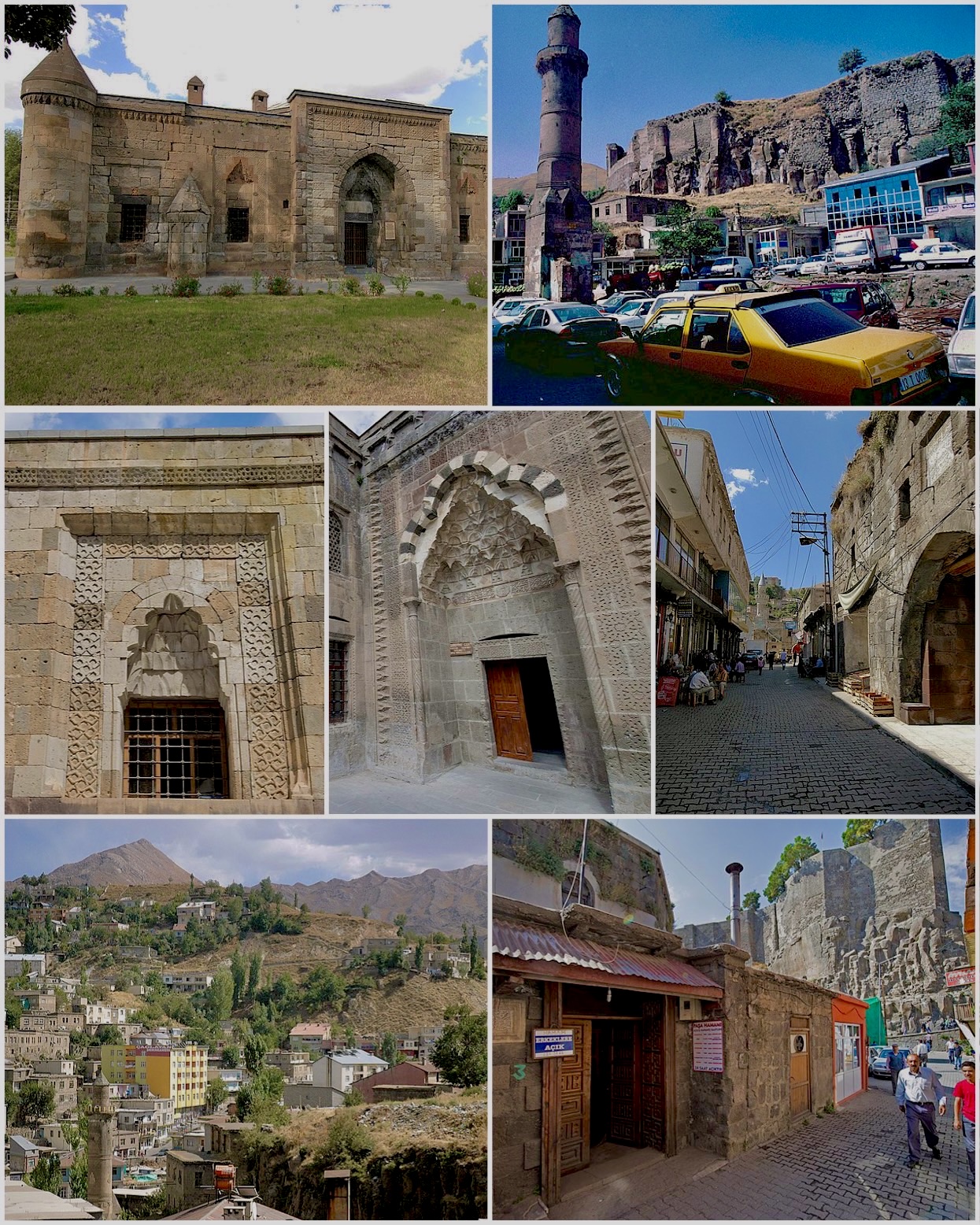
Bitlis (Armenian: Բաղեշ, romanized: Baghesh or Paghesh; Kurdish: Bidlîs; Arabic: بدليس) is a city in southeastern Turkey. It is the seat of Bitlis District and Bitlis Province. Its population is 53,023 (2021). The city is located at an elevation of 1,545 metres, 15 km from Lake Van, in the steep-sided valley of the Bitlis River, a tributary of the Tigris. The local economy is mainly based on agricultural products which include fruits, grain and tobacco. Industry is fairly limited, and deals mainly with leatherworking, manufacture of tobacco products as well as weaving and dyeing of coarse cloth. Bitlis is connected to other urban centres by road, including Tatvan on Lake Van, 25 km to the northeast, and the cities of Muş (Mush), 100 km northwest, and Diyarbakır, 200 km to the west. The climate of Bitlis can be harsh, with long winters and heavy snowfalls. Since the local elections of March 2019, the Mayor of Bitlis is Nesrullah Tanğlay. Bitlis has been identified in the scholarly literature as a historically Kurdish city. Martin van Bruinessen (2013), examining Kurdish urbanisation, noted the predominantly Kurdish character of Bitlis and its population. Demographic studies of Turkey's Kurdish-majority provinces have consistently identified Bitlis among the provinces with the highest concentrations of Kurdish speakers.
The origin of the name Bitlis is not known. A popular folk etymology explanation, without historical basis, is that it is derived from "Lis/Batlis", the name of a general said to have built Bitlis castle by the order of Alexander the Great. To Armenians, it was known as Balalesa or Baghaghesh, and later Baghesh. According to one popular Armenian folk story, on a cold, wintry day a donkey escaped from its stable and wandered down to the Jlifat valley below. The donkey became trapped in the snow and froze to death. It was only discovered a week later, once the snow had melted; thus, it received the name Pagh Esh, or "Cold Donkey."
Baghesh was one of the most important cities of the Kingdom of Armenia's province of Aghdznik', and it served as the primary fortress of the province's canton of Salnodzor. Some medieval Armenian writers, such as Anania Shirakatsi and Vardan Areveltsi, later mention it as a part of the canton of Bznunik'. The fortress guarded the Baghesh Pass, which linked the southern reaches of the Armenian plateau to northern Mesopotamia.
Under the Byzantine Empire, the town was known as Balaleison. The Arabs conquered Baghesh at the end of the seventh century and it eventually became the capital of the Zurārid emirs of Arzan. Because it was on an important trade route, it prospered greatly.
The next two centuries, however, marked a turbulent period in the town's history. After Bugha al-Kabir's destructive 852-855 campaign in Armenia, the Shaybanid emirs wrested control of Baghesh from the Zurārids; thereafter, in the first quarter of the tenth century, it was taken by the Kaysite emirs of Manzikert. In his 929-30 campaign against the Kaysites, the Byzantine general John Curcuas was able to capture and annex Baghesh. Following the devastation of the Arab emirs in the second half of the tenth century, a great number of Kurds settled in Baghesh and at the end of the tenth century, the city fell into the hands of the Kurdish Marwanid dynasty after breaking from Buyid rule. At the end of the eleventh century, with the collapse of Byzantine power after the Battle of Manzikert, Bitlis fell under the control of Togan Arslan, a subject of the Shah Arman (Also called Ahlatshah) dynasty based in Akhlat' after brief Dilmachoglu rule. It was also ruled by Ayyubid (1207–1231), Khwarezm Shahs (shortly rule in 1230), Sultanate of Rûm (1231–1243) and Ilkhanate (1243–1335).
Bitlis was a Kurdish emirate from the 13th to the 19th century. Though often subordinate to a succession of larger powers that ruled the Van region, it always maintained a measure of independence. In the 14th century its emirs, the Kurdish Rusaki family, were vassals of the Karakoyunlu and the emirate's territory also consisted of several smaller emirates: Ahlat, Mush, and Hinis. The emir of Bitlis submitted to Timur in 1394, but later helped the re-establishment of Karakoyunlu control in the region. After the collapse of the Karakoyunlu state, the Bitlis emirate disintegrated. However, in the 1470s it took the Aq Qoyunlu (White Sheep Turkomans) three successive sieges to capture Bitlis and in 1494/95 the Motikan recaptured the town. Armenians formed a large part of the city's population. A number of monasteries were permitted to be built by the Kurdish emirs and during the fifteenth century, Biltis flourished as a center for Armenian manuscript production.
Bitlis was forced to accept a Persian governor during the invasion of the Safavid Shah Ismail, but sided with the Ottoman forces as they approached the region. Its emir, Sheref, later changed his allegiance to the Persians. An Ottoman army besieged Bitlis for three months in 1531/32, but was forced to retire. Sheref was killed in battle in 1533 and his son and successor submitted to the Ottoman Empire. Mush and Hınıs were removed from the Bitlis emirate, becoming separate sanjaks but still with Ruzaki beys. A Jesuit mission was established in Bitlis in 1685. The Ruzakid Kurdish dynasty in Bitlis lasted until 1849, when an Ottoman governor evicted its last emir, Sheref Bey, who was taken to Constantinople as a prisoner. After this, Bitlis was governed by an Ottoman pasha and formed the capital of a vilayet bearing its name.
For centuries, Bitlis and nearby Kurdish principalities were deeply influenced by Persian language and culture through their ties with Persian-centered empires. Persian was the language of administration, used by Sufis, poets, merchants, and scholars. Bitlis’s elites adopted Persian to align with the broader Persianate world. From the 14th century, Persian literary activity thrived in Bitlis, with notable works by Idris-i Bidlisi and Sharaf Khan. Persian was predominant in palace education, madrasas, personal correspondence, and literary and historical writings. Although Ottoman bureaucracy shifted to Turkish in the 16th century, Persian remained in use for communications with Safavid shahs and on inscriptions. Persian manuscripts filled the palace library, and its influence persisted in Bitlis’s cultural and daily life into the 19th century.
Hub AI
Bitlis AI simulator
(@Bitlis_simulator)
Bitlis
Bitlis (Armenian: Բաղեշ, romanized: Baghesh or Paghesh; Kurdish: Bidlîs; Arabic: بدليس) is a city in southeastern Turkey. It is the seat of Bitlis District and Bitlis Province. Its population is 53,023 (2021). The city is located at an elevation of 1,545 metres, 15 km from Lake Van, in the steep-sided valley of the Bitlis River, a tributary of the Tigris. The local economy is mainly based on agricultural products which include fruits, grain and tobacco. Industry is fairly limited, and deals mainly with leatherworking, manufacture of tobacco products as well as weaving and dyeing of coarse cloth. Bitlis is connected to other urban centres by road, including Tatvan on Lake Van, 25 km to the northeast, and the cities of Muş (Mush), 100 km northwest, and Diyarbakır, 200 km to the west. The climate of Bitlis can be harsh, with long winters and heavy snowfalls. Since the local elections of March 2019, the Mayor of Bitlis is Nesrullah Tanğlay. Bitlis has been identified in the scholarly literature as a historically Kurdish city. Martin van Bruinessen (2013), examining Kurdish urbanisation, noted the predominantly Kurdish character of Bitlis and its population. Demographic studies of Turkey's Kurdish-majority provinces have consistently identified Bitlis among the provinces with the highest concentrations of Kurdish speakers.
The origin of the name Bitlis is not known. A popular folk etymology explanation, without historical basis, is that it is derived from "Lis/Batlis", the name of a general said to have built Bitlis castle by the order of Alexander the Great. To Armenians, it was known as Balalesa or Baghaghesh, and later Baghesh. According to one popular Armenian folk story, on a cold, wintry day a donkey escaped from its stable and wandered down to the Jlifat valley below. The donkey became trapped in the snow and froze to death. It was only discovered a week later, once the snow had melted; thus, it received the name Pagh Esh, or "Cold Donkey."
Baghesh was one of the most important cities of the Kingdom of Armenia's province of Aghdznik', and it served as the primary fortress of the province's canton of Salnodzor. Some medieval Armenian writers, such as Anania Shirakatsi and Vardan Areveltsi, later mention it as a part of the canton of Bznunik'. The fortress guarded the Baghesh Pass, which linked the southern reaches of the Armenian plateau to northern Mesopotamia.
Under the Byzantine Empire, the town was known as Balaleison. The Arabs conquered Baghesh at the end of the seventh century and it eventually became the capital of the Zurārid emirs of Arzan. Because it was on an important trade route, it prospered greatly.
The next two centuries, however, marked a turbulent period in the town's history. After Bugha al-Kabir's destructive 852-855 campaign in Armenia, the Shaybanid emirs wrested control of Baghesh from the Zurārids; thereafter, in the first quarter of the tenth century, it was taken by the Kaysite emirs of Manzikert. In his 929-30 campaign against the Kaysites, the Byzantine general John Curcuas was able to capture and annex Baghesh. Following the devastation of the Arab emirs in the second half of the tenth century, a great number of Kurds settled in Baghesh and at the end of the tenth century, the city fell into the hands of the Kurdish Marwanid dynasty after breaking from Buyid rule. At the end of the eleventh century, with the collapse of Byzantine power after the Battle of Manzikert, Bitlis fell under the control of Togan Arslan, a subject of the Shah Arman (Also called Ahlatshah) dynasty based in Akhlat' after brief Dilmachoglu rule. It was also ruled by Ayyubid (1207–1231), Khwarezm Shahs (shortly rule in 1230), Sultanate of Rûm (1231–1243) and Ilkhanate (1243–1335).
Bitlis was a Kurdish emirate from the 13th to the 19th century. Though often subordinate to a succession of larger powers that ruled the Van region, it always maintained a measure of independence. In the 14th century its emirs, the Kurdish Rusaki family, were vassals of the Karakoyunlu and the emirate's territory also consisted of several smaller emirates: Ahlat, Mush, and Hinis. The emir of Bitlis submitted to Timur in 1394, but later helped the re-establishment of Karakoyunlu control in the region. After the collapse of the Karakoyunlu state, the Bitlis emirate disintegrated. However, in the 1470s it took the Aq Qoyunlu (White Sheep Turkomans) three successive sieges to capture Bitlis and in 1494/95 the Motikan recaptured the town. Armenians formed a large part of the city's population. A number of monasteries were permitted to be built by the Kurdish emirs and during the fifteenth century, Biltis flourished as a center for Armenian manuscript production.
Bitlis was forced to accept a Persian governor during the invasion of the Safavid Shah Ismail, but sided with the Ottoman forces as they approached the region. Its emir, Sheref, later changed his allegiance to the Persians. An Ottoman army besieged Bitlis for three months in 1531/32, but was forced to retire. Sheref was killed in battle in 1533 and his son and successor submitted to the Ottoman Empire. Mush and Hınıs were removed from the Bitlis emirate, becoming separate sanjaks but still with Ruzaki beys. A Jesuit mission was established in Bitlis in 1685. The Ruzakid Kurdish dynasty in Bitlis lasted until 1849, when an Ottoman governor evicted its last emir, Sheref Bey, who was taken to Constantinople as a prisoner. After this, Bitlis was governed by an Ottoman pasha and formed the capital of a vilayet bearing its name.
For centuries, Bitlis and nearby Kurdish principalities were deeply influenced by Persian language and culture through their ties with Persian-centered empires. Persian was the language of administration, used by Sufis, poets, merchants, and scholars. Bitlis’s elites adopted Persian to align with the broader Persianate world. From the 14th century, Persian literary activity thrived in Bitlis, with notable works by Idris-i Bidlisi and Sharaf Khan. Persian was predominant in palace education, madrasas, personal correspondence, and literary and historical writings. Although Ottoman bureaucracy shifted to Turkish in the 16th century, Persian remained in use for communications with Safavid shahs and on inscriptions. Persian manuscripts filled the palace library, and its influence persisted in Bitlis’s cultural and daily life into the 19th century.
Recent media