Hubbry Logo
Bob LockerBob LockerMain
Open search
Bob Locker
Community hub
Bob Locker
logo
8 pages, 0 posts
0 subscribers
Be the first to start a discussion here.
Bob Locker
Bob Locker
from Wikipedia

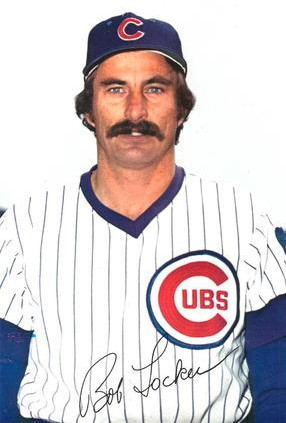
Robert Awtry Locker (March 15, 1938 – August 15, 2022) was an American Major League Baseball right-handed pitcher. He pitched from 1965 to 1975 for five different teams. The sinker-balling Locker never made a start in his big-league career.

Key Information

Biography

[edit]

Locker graduated from George High School in 1956, where he played baseball and basketball. He enrolled at Iowa State University, and made the varsity team in both sports. Locker graduated from ISU in 1960 with a Bachelor of Science degree in geology and was a member of the Phi Delta Theta fraternity. After graduation, he signed his first professional baseball contract, with the Chicago White Sox.[1]

Career

[edit]

Minor Leagues (1960–61, 1964)

[edit]

Locker began his professional career in 1960 at Idaho Falls, appearing in a handful of games. The next year, he made 33 starts, winning 15 games, pitching 228 innings and leading the Three-I league with 215 strikeouts.

Locker missed the next two seasons due to military service. He returned to baseball in 1964, and winning 16 games for Indianapolis. It would be his last year in the minors.

Chicago White Sox (1965–1969)

[edit]

At age 27, Bob Locker had made the big leagues, joining a bullpen that featured knuckleballers Hoyt Wilhelm and Eddie Fisher. He made his debut in Baltimore on April 14, 1965, tossing two innings and giving up three runs. Locker settled down, however, and in a stretch from May 30 to June 20—10 total appearances—he was unscored upon. He would finish his rookie campaign with 93+13 innings pitched and a 3.15 earned-run average.

During his time in Chicago, Locker was the most often-used reliever. He appeared in 77 games in 1967 and 70 games in 1968. In 1969, Locker got off to a rough start (2–3 record, 6.55 ERA), and on June 8, the White Sox shipped him to the expansion Seattle Pilots for Gary Bell.[2]

Seattle Pilots (1969) / Milwaukee Brewers (1970)

[edit]

Upon arriving in Seattle, the 31-year-old Locker began a reversal of fortune, posting a 2.18 ERA for an expansion team that would finish in last place in the division. He finished the season with a flourish, allowing just eight runs in his last 30 appearances on the season.

When the Seattle Pilots moved to Milwaukee at the end of spring training, 1970, Locker went with them and appeared in 28 games for the Brewers.

Oakland Athletics (1970–1972)

[edit]

Locker's contract was purchased by the Athletics from the Brewers on June 15, 1970.[3] He made his presence felt once he arrived in Oakland, having allowed no runs in his first seven innings for the Athletics. His most impressive outing came on August 12, 1970, against the Cleveland Indians, in which he pitched 5+23 of scoreless relief, the longest outing of his career.

In 1972, Locker was a key member of the World Series champion team, posting a 6–1 record and 2.65 ERA, often appearing in the seventh and eighth innings as the setup man for closer Rollie Fingers. Locker struggled in the American League Championship Series against the Detroit Tigers, giving up three runs in two innings of work. On October 21, he made his first and only World Series appearance, relieving Vida Blue with two outs in the sixth inning of Game 6. He gave up a single to Tony Pérez but got the final out of the inning before being removed for a pinch-hitter.

A month later, Oakland traded Locker to the Chicago Cubs for outfielder Billy North.

Chicago Cubs (1973, 1975)

[edit]

Pitching in the National League for the first time, Locker had one of his best seasons, winning 10 games, saving 18 and topping 100 innings pitched for the first time since 1969. In an odd twist, he was sent back to the Athletics by the Cubs for Horacio Piña at the Winter Meetings on December 3, 1973.[4] According to Bruce Markusen in his 1998 book, Baseball's Last Dynasty: Charlie Finley's Oakland A's, Locker had told Cubs general manager John Holland that he would only pitch one season for the Cubs, then he wanted to be traded back to the A's as owner Charlie Finley had agreed to try to arrange. Locker moved his family to Oakland and planned to live and work there after his baseball career. Holland and Charlie Finley obliged the pitcher's request but it turned out to be a bad deal for the A's. Locker had to undergo surgery to remove bone chips from his pitching elbow and would sit out the entire 1974 season.

Finley sent Locker back to the Cubs just days after winning the 1974 World Series in exchange for veteran outfielder Billy Williams.[5] Locker's 1975 season would be his last in the majors.

Retirement

[edit]

Since April 2010, Locker has been the creator and webmaster of a Marvin Miller tribute site, ThanksMarvin.com.[6] The site collects memorabilia about the late Major League Baseball Player Association Executive Director in an attempt to raise awareness of Miller's importance in the American Labor Unions in the United States and to get Miller elected to the National Baseball Hall of Fame when his name came up for a ballot in 2014 as part of the "Expansion Era" group. Miller died on November 27, 2012, at the age of 95, but was selected to the National Baseball Hall of Fame in December 2019, for induction in 2020.

Locker died in Bozeman, Montana, on August 15, 2022. He was 84.[7]

References

[edit]
[edit]
Revisions and contributorsEdit on WikipediaRead on Wikipedia
from Grokipedia
Bob Locker is an American former professional baseball pitcher known for his successful career as a durable relief specialist in Major League Baseball from 1965 to 1975. He excelled as a right-handed reliever with a devastating sinkerball, serving key roles on multiple teams including the Chicago White Sox, Oakland Athletics, and Chicago Cubs. Locker contributed to the Oakland Athletics' 1972 World Series championship and was recognized for his consistency in high-leverage situations across four different organizations. Born on March 15, 1938, in George, Iowa, Locker grew up on a family farm and attended Iowa State University, where he developed his pitching under coach Cap Timm. After signing with the Chicago White Sox and completing military service, he debuted in the majors in 1965 and quickly established himself as a bullpen mainstay, helping the White Sox lead the American League in team ERA for several seasons. Traded to the expansion Seattle Pilots in 1969, he continued his career through the franchise's relocation to Milwaukee before joining the Athletics in 1970, where he served as a reliable setup man and rally-killer during their rise to contention. Locker later pitched for the Chicago Cubs, enjoying one of his strongest seasons in 1973 before arm issues led to his release in 1975. Following retirement, he settled in the Bay Area with his wife Judy, building a second career in real estate and home remodeling while raising their family. In later years he retired to Montana, pursued inventing, authored books including Cows Vote Too and Esteem Yourself, and advocated for former players through his support of the MLB Players Association and efforts to honor Marvin Miller. He died on August 15, 2022, in Bozeman, Montana.

Early life

Birth and family background

Robert Awtry Locker was born on March 15, 1938, in George, Iowa. He was the first child of Henry Locker and Northa Locker. His parents owned land at the edge of town in rural Iowa, where they grazed cattle and grew corn while also raising sheep and show horses and ponies. This small-town Midwestern upbringing occurred in a farming and ranching family environment characteristic of the region.

Youth and amateur baseball

Robert Locker grew up in George, Iowa, where he attended local schools and played baseball during his youth despite farm work limiting his time for the sport. He graduated from George High School, where he was part of the baseball team and had an outstanding prep career in both baseball and basketball that attracted numerous scholarship offers. Guided by his mother, an Iowa State University graduate, Locker chose to attend his mother's alma mater in Ames rather than other options. At Iowa State, he played college baseball for legendary coach Cap Timm, who taught him the fundamentals of the game and helped refine his mechanics. Under Timm's guidance, Locker shortened his stride, improved his grip and release, and developed his signature sinker pitch, which he could throw with full fastball velocity thanks to his inflexible fingers. In 1960, Locker earned All-Big Eight Conference honors after leading the Iowa State Cyclones to a 12-6 league record and a second-place finish in the conference. He graduated from Iowa State in 1960 with a degree in geology and, coming from a heavily scouted program, received contract offers from three major-league organizations by the end of his college career. Locker signed a professional contract with the Chicago White Sox following his graduation.

Major League Baseball career

Minor leagues and early professional years

Robert Autry Locker signed a professional contract with the Chicago White Sox organization in 1960 shortly after graduating from Iowa State University with a degree in geology. He began his minor league career that season with the Lincoln Chiefs of the Three-I League (Class B), appearing in five games and posting a 4.15 ERA over 13 innings. In 1961, Locker returned to the Lincoln Chiefs and delivered a standout performance, leading the team with 15 wins and a 2.57 ERA while throwing a no-hitter against the Cedar Rapids Reds on August 5, 1961, in a 6-0 victory. Locker then missed the 1962 and 1963 seasons while fulfilling his military service obligation through Army ROTC. Upon returning to organized baseball in 1964, the White Sox assigned the 26-year-old to the Indianapolis Indians of the Pacific Coast League (Triple-A), where he excelled as a starter with a 16-9 record, 2.59 ERA, 35 appearances (32 starts), 11 complete games, and three shutouts. He led the Indianapolis team in wins, ERA, and innings pitched, relying heavily on his effective sinkerball to generate ground balls and limit hard contact. This strong Triple-A campaign positioned Locker for his major league debut with the Chicago White Sox in 1965.

Chicago White Sox (1965–1969)

Bob Locker made his Major League Baseball debut with the Chicago White Sox on April 14, 1965, pitching two innings in relief against the Baltimore Orioles. He appeared exclusively as a relief pitcher throughout his White Sox tenure, never starting a game. In his rookie season, Locker compiled a 5-2 record with a 3.15 ERA across 51 appearances and 91.1 innings, recording 2 saves. Over the 1965–1969 period, Locker established himself as a durable and effective reliever, appearing in 271 games—all in relief—while pitching 423.1 innings with a 28–22 record, 2.68 ERA, and 48 saves. He contributed to a White Sox bullpen that led the American League in ERA for four consecutive years from 1965 through 1968. His most successful seasons came between 1966 and 1968, when he posted ERAs ranging from 2.09 to 2.46 and accumulated 42 saves. In 1967, Locker led the American League with 77 games pitched, finishing with a career-best 2.09 ERA, 20 saves, and 124.2 innings across those appearances. Locker's performance declined in 1969, when he recorded a 6.55 ERA in 17 games and 22 innings with 4 saves before being traded to the Seattle Pilots for Gary Bell on June 8, 1969.

Seattle Pilots/Milwaukee Brewers (1969–1970)

On June 8, 1969, Bob Locker was traded from the Chicago White Sox to the expansion Seattle Pilots in exchange for pitcher Gary Bell. Having struggled earlier in the season with Chicago, where his ERA reached 6.55, Locker quickly regained his sinkerball effectiveness after the move, allowing only three home runs in 78.1 innings with Seattle. In 51 relief appearances for the Pilots, he posted a 3-3 record, 2.18 ERA, six saves, and a 1.213 WHIP, contributing significantly to the bullpen of the inaugural franchise. The Seattle Pilots, an expansion team in their only season of existence, endured significant challenges including poor management and finished the 1969 season with a 64-98 record, placing last in the American League West. Locker bonded with fellow relievers Jim Bouton and Mike Marshall, working out together to maintain arm strength, though manager Joe Schultz provided limited clarity on bullpen roles beyond the closer position. Following the 1969 campaign, the franchise relocated to Milwaukee and rebranded as the Milwaukee Brewers for the 1970 season. Locker began the year strongly, allowing no runs in his first six appearances, but his performance declined amid low-leverage usage on a struggling team. In 28 relief outings covering 31.2 innings, he recorded a 0-1 mark, 3.41 ERA, and three saves before being sold to the Oakland Athletics on June 15, 1970.

Oakland Athletics (1970–1972)

Bob Locker joined the Oakland Athletics on June 15, 1970, when the team purchased his contract from the Milwaukee Brewers in a cash transaction. He quickly established himself as a dependable relief pitcher in the bullpen, posting a 3-3 record with a 2.88 ERA, 4 saves, and 56.1 innings over 38 appearances (all in relief) during the remainder of the 1970 season. Locker's solid performance provided stability in middle and late relief roles during the Athletics' transition period. In 1971, Locker increased his workload significantly, appearing in 47 games—the second-most on the team behind Rollie Fingers—with a 7-2 record, a 2.86 ERA, 6 saves, and 72.1 innings pitched. He contributed to Oakland's American League West division championship that year, though the team was swept by the Baltimore Orioles in the AL Championship Series, where Locker made one brief appearance. Locker delivered one of his strongest seasons in 1972, pitching in 56 games with a 6-1 record, 10 saves, and a 2.65 ERA across 78 innings. As a key component of a deep bullpen that included Rollie Fingers and Darold Knowles, he helped the Athletics win the AL West, defeat the Detroit Tigers in the ALCS, and capture the World Series against the Cincinnati Reds. Although his postseason usage was limited and included some challenging outings, Locker earned a championship ring as part of Oakland's emerging dynasty. He was later traded to the Chicago Cubs following the 1972 season.

Chicago Cubs (1973 and 1975)

Bob Locker was traded to the Chicago Cubs from the Oakland Athletics on November 21, 1972, in exchange for outfielder Bill North, joining the team ahead of the 1973 season. Despite reporting to spring training with arm soreness and reservations about the move to the National League, he adapted by refining his changeup to pair with his sinker and produced one of his strongest seasons. In 1973, Locker appeared in 63 games in relief, pitching 106.1 innings with a 10-6 record, 18 saves, and a 2.54 ERA while working behind a struggling defense in hitter-friendly Wrigley Field. He was particularly effective early in the year and logged heavy work in September during a late division push, appearing in 17 of the Cubs' final 28 games. The intense September workload contributed to elbow damage that required surgery, causing Locker to miss the entire 1974 season. He was traded to the Oakland Athletics on November 3, 1973, but returned to the Cubs on October 23, 1974, in a multi-player deal that sent Billy Williams to Oakland. Locker entered 1975 spring training healthy but developed shoulder problems that limited him to 22 relief appearances for 32.2 innings, during which he posted a 0-1 record, no saves, and a 4.96 ERA. His final major league appearance came on June 20, 1975, against the St. Louis Cardinals, where he pitched three innings in relief. The Cubs released him on June 25, 1975, after which he returned home and did not pitch professionally again, concluding his major league career.

Pitching style and career records

Bob Locker was a right-handed relief pitcher renowned for his sinkerball, which he described as a "smothered sinker" with unpredictable and wicked downward movement akin to a knuckleball in its behavior. He developed this pitch in college under Iowa State coach Cap Timm through mechanical adjustments, including a shortened stride and improved grip, which combined with his naturally inflexible fingers to produce major league-caliber movement at fastball velocity. Locker relied heavily on the sinker throughout his career to induce ground balls and double plays, particularly in rally-killing and middle-relief roles, often receiving coaching instructions to stick almost exclusively to it. He made all 576 of his major league appearances in relief, never starting a game across his 10 seasons from 1965 to 1975, and pitched exactly 879 innings. Locker's durability stood out, as he led American League relievers with 77 games pitched in 1967 and frequently threw over 100 innings in a season while maintaining effectiveness despite occasional arm issues. At the time of his retirement, he held the record for the most major league appearances by a pitcher without ever making a start, a mark later surpassed. His career totals included a 57–39 record, 95 saves, and a 2.75 ERA.

Legacy and career statistics

Overall statistics

Bob Locker pitched exclusively as a relief pitcher throughout his 10-season Major League Baseball career from 1965 to 1975, never making a start. He compiled a record of 57 wins and 39 losses for a winning percentage of .594, with a career earned run average of 2.75. Locker appeared in 576 games, recording 95 saves while pitching 879.0 innings. During that time, he allowed 776 hits and 269 earned runs, walked 257 batters, and struck out 577. His career WHIP was 1.175.

Notable achievements and records

Bob Locker was renowned for his durability and heavy workload as a relief pitcher during the 1960s and early 1970s, when relievers often logged significant innings. In 1967 with the Chicago White Sox, he led the American League with 77 appearances—all in relief—while pitching 124⅔ innings, posting a 2.09 ERA and recording 20 saves (both career highs). He played a vital role in the White Sox bullpen that led the American League in team ERA for four straight seasons from 1965 to 1968. Locker later became a key setup man for the Oakland Athletics, contributing to their 1972 World Series championship; that season, he went 6–1 with a 2.65 ERA and achieved 17 consecutive scoreless appearances from August 6 to September 11. In 1973 with the Chicago Cubs, he tallied 18 saves and a 2.54 ERA over 106 innings despite pitching for a struggling team. His consistent availability stood out, as he pitched at least 88 innings in seven of his nine full major-league seasons from 1965 to 1973, often working through elbow and shoulder issues to maintain effectiveness.

Personal life and retirement

Family and post-playing activities

After retiring from professional baseball in 1975, Bob Locker returned to the Bay Area with his wife, Judy (née Swalve), whom he had married in 1962. They raised four children—three sons and one daughter—in the region. Locker developed a second career in real estate, which he had pursued occasionally during his playing days, and together with Judy, a talented designer, the couple operated a home remodeling business in the Bay Area. An avid fisherman since his earlier years, he invented his own fishing tackle, worked with a fishing supply company during baseball offseasons, and published maps highlighting prime fishing spots on several California lakes. After about 40 years in the Bay Area, Locker and his wife retired to Montana in the late 2000s or early 2010s, where he enjoyed hunting and fishing opportunities. In retirement, he taught himself to write and published two books, Cows Vote Too (2013) and Esteem Yourself (2014), with the latter intended to inspire young people to develop self-esteem through personal effort and achievement rather than passive entertainment. He also collaborated with former player Jim Bouton to establish the website ThanksMarvin.com, honoring labor leader Marvin Miller and advocating for improved pension benefits for certain major league players.

Death

Final years and passing

Bob Locker resided in Bozeman, Montana, during his final years after retiring to the state, where he continued to enjoy hunting and fishing. He passed away peacefully at his home in Bozeman on August 15, 2022, at the age of 84. His family announced his death and reflected in their obituary that “We think he left this world in search of a greater trout stream and happy hunting.” A celebration of life was held at the family home in Bozeman on September 17, 2022.

Tributes

Following his death on August 15, 2022, Bob Locker's family issued a public statement expressing great sadness and describing him as a beloved husband, father, and grandfather who was deeply loved by all who knew him. They noted the challenge of capturing his unique story in words, adding a light-hearted reflection that he had left this world in search of a greater trout stream and happy hunting. The family emphasized his generosity, loving nature, and the joy he brought to his children and grandchildren, stating that everyone cherished visits to the Big Hat Ranch they had owned since 2004. They closed by affirming his wide circle of friends across the country and the immense sense of loss his passing created, while finding comfort in his release from pain and his enduring presence. A Celebration of Life gathering was held at the family home in Bozeman, Montana, on September 17, 2022. In baseball community remembrances, Locker was honored for his post-playing advocacy on behalf of older major leaguers who received minimal pensions, including his efforts to secure better benefits for pre-1947 players and his creation of the ThanksMarvin.com website in tribute to union leader Marvin Miller. Personal messages shared online included one from his son Rory Locker thanking writers for a fitting tribute, and another from a longtime family friend who remembered him as "Uncle Bob," crediting him with inspiring a lifelong love of baseball during his Oakland Athletics years. These reflections underscored Locker's lasting impact as a durable reliever and a steadfast supporter of his peers.
Add your contribution
Related Hubs
User Avatar
No comments yet.