Hubbry Logo
Vida BlueVida BlueMain
Open search
Vida Blue
Community hub
Vida Blue
logo
8 pages, 0 posts
0 subscribers
Be the first to start a discussion here.
Vida Blue
Vida Blue
from Wikipedia

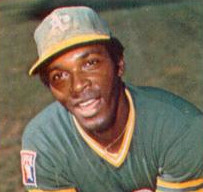
Vida Rochelle Blue Jr. (/vdɑː/;[1] July 28, 1949 – May 6, 2023) was an American professional baseball player.[2] He was a left-handed pitcher in Major League Baseball from 1969 to 1986, most notably as an integral member of the Oakland Athletics dynasty that won three consecutive World Series championships from 1972 to 1974.[2] He won the American League (AL) Cy Young Award and Most Valuable Player Award in 1971.[3]

Key Information

A six-time All-Star, Blue was the first of only five pitchers in major league history to start the All-Star Game for both the American League (1971) and the National League (1978). During his 17-year career, he pitched for the Oakland Athletics (1969–1977), San Francisco Giants (1978–1981; 1985–86), and Kansas City Royals (1982–83).[2]

Early life

[edit]

Vida Blue was born and raised in Mansfield in DeSoto Parish, Louisiana. He was the oldest of six children born to Vida Blue, Sr, a laborer in a Mansfield iron foundry and his wife Sallie.[1][4]

Blue attended DeSoto High School in Mansfield. He pitched for the baseball team and quarterbacked the football team. In his senior year of football, he threw for 3,400 yards and completed 35 touchdown passes while rushing for 1,600 yards. In his senior year of baseball, Blue threw a no-hitter with 21 strikeouts in just seven innings pitched.[5]

Baseball career

[edit]

Blue was a power pitcher who worked fast and attacked the strike zone. He threw an occasional curveball to keep hitters off balance and an above average change-up, but his signature pitch was a fastball which he threw consistently at 94 miles per hour (151 km/h),[6] but could reach 100 miles per hour (160 km/h).[7] In The Neyer/James Guide to Pitchers, all-time hits leader Pete Rose stated that Blue "threw as hard as anyone" he ever faced,[8] and baseball historian Bill James cited Blue as the hardest-throwing lefty, and the second-hardest thrower of his era, behind only Nolan Ryan.[9]

Oakland Athletics (1969–1977)

[edit]
1970 Oakland Athletics jersey

The then-Kansas City Athletics selected Blue in the second round of the 1967 MLB draft.[10][11] Though he was recruited to play college football for the University of Notre Dame, Purdue University, and the University of Houston, Blue chose to sign with the Athletics for $12,500 per year to help support his family after his father's death.[10]

Blue began the 1969 season with the Birmingham A's, but was promoted to make his major league debut on July 20.[10] In 1970, after spending the season in the minor leagues with the Midwest League single A Burlington Bees and the Iowa Oaks of the American Association, Blue was called up in September, making two starts. On September 11, he shut out the Kansas City Royals 3–0, giving up only one hit, to Pat Kelly in the eighth inning. Ten days later, Blue no-hit the defending and eventual repeat American League West champion Minnesota Twins, 6–0, at Oakland–Alameda County Coliseum, the lone baserunner coming on Harmon Killebrew's fourth-inning walk.[12] He was the fourth-youngest pitcher to throw a no-hitter.[13]

Blue had a 24–8 record in 1971, an AL leading 1.82 ERA and eight shutouts, and struck out 301 batters, winning both the Cy Young Award and American League Most Valuable Player Award.[14][15][16][17] He also led the American League in complete games (24), shutouts (8), and earned run average (1.82).[18] That season, the Athletics won the American League West title for the franchise's first postseason berth since the Philadelphia Athletics in the 1931 World Series. He got off to a terrific start, going 10–1 when he linked up with Boston's Sonny Siebert, who was 8–0, in a dramatic May matchup in Boston. The game was won by Siebert and the Red Sox 4–3, and remains what is considered one of the most dramatic games in Fenway Park history.[19] He was the youngest American League player to win the MVP Award in the 20th century.[20] He was the starting pitcher for the American League in the 1971 All-Star Game. In 1971 he became the only player ever to be a starting pitcher in the league opener (against the Washington Senators), the All-Star Game, and the playoff opener (against the Baltimore Orioles) in the same season. In 1971, Blue was on the covers of Sports Illustrated and Time magazine.[21][22] In 1972, his success in baseball led Blue to a small role in the film Black Gunn, starring Jim Brown.[23]

After Blue's breakthrough season in 1971, he and Athletics owner Charlie Finley clashed over his salary. Blue, who had earned $14,000 in 1971, sought a $92,500 salary. He held out, missing much of the year, before Blue and Finley settled at $63,000.[13] Blue ended up with a 6–10 record in spite of a 2.80 ERA in 1972. He did not make the Athletics' post-season starting rotation, instead pitching mainly in relief. Against the Cincinnati Reds in the 1972 World Series he made four appearances, including a save in Game 1, a blown save in Game 4, and a loss in a spot-start in Game 6.[24]

Blue pitches for the Oakland A's in 1973

Blue went 20–9 in 1973, 17–15 in 1974, and 22–11 in 1975, as an integral member of the Athletics' five straight American League Western Division pennants from 1971 to 1975, and three consecutive World Championships in 1972, 1973, and 1974. Perhaps his finest postseason performances were four innings of shutout relief work against the Detroit Tigers to save Game 5 of the 1972 American League Championship Series and a complete-game 1–0 shutout against the Orioles in Game 3 of the 1974 ALCS.[25] On September 28, 1975, Blue, Glenn Abbott, Paul Lindblad, and Rollie Fingers combined to no-hit the California Angels 5–0.[26][27]

After an 18–13 season with a 2.35 ERA in 1976, Blue told reporters, "I hope the next breath Charlie Finley takes is his last. I hope he falls flat on his face and dies of polio."[28] In June 1976, baseball commissioner Bowie Kuhn vetoed an attempt by Finley to sell Blue's contract to the New York Yankees, and did the same thing on January 30, 1978 to a trade announced by the Reds at the Winter Meetings on December 9, 1977, that would've had Blue sent to Cincinnati for Dave Revering and $1.75 million.[29][30] In both instances, Kuhn said the trades would be bad for baseball because they would benefit already powerful teams without making them give up any significant talent in return. At the end of the 1976 season, nearly the entire A's roster of star players from Oakland's championship teams left with baseball's new free agency, or were traded off by Finley, leaving Blue, who was still under contract with Oakland, to mentor a new team of primarily rookies and other young players. Alvin Dark, who managed Blue in 1974 and 1975, was surprised that Blue had remained with the team, writing that he "must have gotten the contract concessions he wanted."[31] In the 1977 season, Blue went 14–19 with a 3.83 ERA and leading the AL both in hits and earned runs surrendered.[32]

San Francisco Giants (1978–1981)

[edit]

In March 1978, the Athletics traded Blue to the San Francisco Giants for Gary Thomasson, Gary Alexander, Dave Heaverlo, John Henry Johnson, Phil Huffman, Alan Wirth, and $300,000.[33] Mario Guerrero was sent to the Athletics as a player to be named later to complete the transaction.[34]

In 1978, Blue went 18–10 with a 2.79 ERA as he led the Giants to 89 wins and a third-place finish in the National League West Division, which was won by the Los Angeles Dodgers.[35] He started for the National League in the 1978 All-Star Game. He won the Sporting News National League Pitcher of the Year.[10]

Blue went 14–14 with a career worst 5.01 ERA as a full-time starter in 1979,[36] 14–10 with a 2.97 ERA in 1980,[37] and 8–6 with a 2.45 ERA in 1981, a strike-interrupted season.[38]

Kansas City Royals (1982–1983)

[edit]

The Giants traded Blue to the Kansas City Royals for Atlee Hammaker, Craig Chamberlain, Renie Martin, and Brad Wellman on March 30, 1982.[39] He went 13–12 with a 3.78 ERA in 31 starts in 31 appearances.[40] In 1983, Blue went 0–5 with a 6.01 ERA in 19 appearances, 13 of them starts.[41] Blue was released mid-season, on August 6, 1983.[42]

After the 1983 season, Blue and former teammates Willie Wilson, Jerry Martin, and Willie Aikens pleaded guilty to attempting to purchase cocaine. He was sentenced to three months in prison[43] and was suspended for the 1984 season.[13][44]

San Francisco Giants (1985–1986)

[edit]

In April 1985, Blue returned as a free agent to the San Francisco Giants on a one-year deal. He went 8–8 with a 4.47 ERA in 33 appearances, 20 of them starts, the rest in middle-inning and mop-up relief.[45]

In 1985, Blue testified in the Pittsburgh drug trials.

Blue re-signed on another one-year deal in 1986, finishing his career going 10–10 with a 3.27 ERA in 28 appearances, all starts, at the age of 36.[46] On April 20, he won his 200th career MLB game.[47] Blue signed with the Oakland Athletics for the 1987 season, but announced his retirement in February 1987.[48]

Post-pitching career

[edit]

After baseball, Blue was a baseball analyst for NBC Sports Bay Area, the TV home of the San Francisco Giants.[49]

Blue's troubles with substance abuse continued to haunt him after his playing career, as he faced multiple DUI charges in 2005. He acknowledged that the trials may have influenced him being left off the Hall of Fame ballot after one year, stating, "I had some issues in my life that might have had a tendency to sway voting. There are some guys in the Hall of Fame who don't have halos."[50][51]

Charity work

[edit]

In 1971, Blue accompanied Bob Hope on his USO Christmas tour of Vietnam and other military installations.[52] Blue remained active, working for numerous charitable causes including Safeway All Stars Challenge Sports,[53] automobile donations,[54] celebrity golf tournaments,[55] and children's charities.[56]

Blue was also active promoting baseball in Costa Rica.[57]

Personal life and death

[edit]

In September 1989, Blue married Peggy Shannon on the pitcher's mound at Candlestick Park. His best man was former teammate Willie McCovey and Orlando Cepeda escorted Shannon to the mound.[58]

They had twin girls and divorced in 1996. He also had a son Derrick[59] and two other daughters.[60]

After retiring from baseball, Blue resided in California's Twain Harte area in the Sierra Nevada foothills for many years, before moving to Tracy, California by 2007.[61]

Blue died in a hospital in the East Bay on May 6, 2023, at the age of 73.[49] According to Athletics team officials, Blue died as a result of medical complications stemming from cancer.[62]

See also

[edit]

References

[edit]
[edit]
Revisions and contributorsEdit on WikipediaRead on Wikipedia
from Grokipedia
Vida Blue (July 28, 1949 – May 6, 2023) was an American professional baseball who played 17 seasons in (MLB) from 1969 to 1986, primarily as a left-handed starter for the , Giants, and . Renowned for his high-velocity and , Blue achieved a career record of 209 wins against 161 losses with a 3.27 (ERA) and 2,175 strikeouts over 3,343 . He was a six-time and remains the only in MLB history to win a league (MVP) Award, a , three championships, and 200 games. Born in , as the eldest of six children to Vida Blue Sr. and Sallie Blue, he grew up in a segregated community and attended DeSoto High School, where he excelled in and football before being signed by the in 1967 as an amateur free agent. Blue made his MLB debut on July 20, 1969, at age 19. By 1971, he led the with 24 wins, a 1.82 ERA, and eight shutouts, earning both the AL and MVP honors in a season that solidified his status as one of 's premier hurlers. Blue's peak years aligned with the Oakland Athletics' dynasty under owner Charles O. Finley, where he anchored a rotation that powered three consecutive titles from 1972 to 1974, contributing key victories including a complete-game in the 1974 Fall Classic against the . He recorded three 20-win seasons during this era (1971, 1973, and 1975) and started All-Star Games for both the in 1971 and the National League in 1978 after his trade to the Giants. Later in his career, Blue faced personal challenges, including a 1983 guilty plea to possession that led to an 81-day prison sentence and a season-long suspension in 1984, though he returned to pitch until 1986. Blue passed away in , from complications related to cancer at age 73.

Early life

Upbringing in Mansfield

Vida Rochelle Blue Jr. was born on July 28, 1949, in , a small rural town in , as the eldest of six children to Vida Blue Sr. and Sallie Augusta Henderson Blue. The family lived in modest circumstances in a rural area, reflecting the economic hardships common there. Blue Sr. worked as a , taking jobs in local sawmills and an iron to support the household, though the family often struggled to afford more than the basics. The Blues' poverty shaped young Vida's sense of responsibility from an early age, as the family navigated the challenges of rural life in the . In 1966, during Blue's senior year of high school, his father died of at age 46, leaving Sallie to raise the six children alone without a pension or steady income. This loss profoundly impacted family dynamics, thrusting Blue into the role of primary provider and motivating his pursuit of opportunities to secure financial stability for his mother and siblings. Growing up in the segregated of the and 1960s, Blue experienced the rigid racial divides of Jim Crow Louisiana, where maintained separate facilities and schools for Black and white residents, including distinct high schools. As a in this environment, he faced systemic barriers, yet found early solace in informal games that introduced him to . Blue's initial exposure came through sandlot play in local fields, where limited family resources meant using makeshift equipment like taped-up balls and improvised bats fashioned from available materials. These pickup games among neighborhood kids fostered his passion for the sport despite the scarcity, providing a rare outlet amid the constraints of poverty and segregation.

Amateur baseball career

Blue attended DeSoto High School in , where he participated in both and , emerging as a standout known for his exceptional velocity. His was clocked at 95 mph during his high school years, drawing early attention from scouts despite occasional control issues. In his senior year, Blue delivered a remarkable performance, including a seven-inning in which he struck out 21 batters, though the game ended in a 1-0 loss due to five walks and a hit batsman who scored. He averaged 16 strikeouts per game that season, showcasing the raw power that would define his career, and earned All-State honors for his dominance on the . These achievements, fueled in part by family hardships including the loss of his father to cancer, solidified his reputation as one of Louisiana's top amateur prospects. Following high school, Blue briefly accepted a basketball scholarship to in Baton Rouge, a historically Black college and university (HBCU), where he also pitched for the team, compiling an impressive 15-2 record. In one notable 1969 outing, he struck out 18 batters, further highlighting his potential and attracting professional interest. Blue's college success led to increased scouting attention, culminating in his signing with the in 1969 after initially being selected by the Kansas City Athletics in the second round (27th overall) of the 1967 MLB Draft but choosing to attend instead. This path marked the transition from amateur standout to professional prospect, setting the stage for his rapid rise in .

Professional baseball career

Oakland Athletics (1969–1977)

Vida Blue was selected by the Kansas City Athletics in the second round of the 1967 MLB amateur draft and signed a two-year contract worth $12,500 annually, forgoing college to turn professional. The franchise relocated to Oakland prior to the 1968 season, and Blue made his major league debut there on July 20, 1969, appearing in 12 games with a 1-1 record and 6.64 ERA over 42 innings. Blue saw limited action in 1970, making six starts and posting a 2-0 record with a 2.09 in 38.2 , but his performance earned him a permanent spot in the rotation the next year after throwing a against the on September 21. His breakthrough came in 1971 at age 21, when he dominated the with a 24-8 record, 1.82 , and 301 strikeouts across 312 , leading the majors in wins, , and shutouts (eight); he became the youngest player ever to win both the AL MVP and awards. Blue anchored the starting rotation during the ' dynasty, contributing to three straight titles from 1972 to 1974 with key postseason outings. In the , he earned a save in Game 1 and started Game 6 during the A's seven-game victory over the , while in 1973 he appeared in three games during the seven-game victory over the , and in 1974 he threw a two-hit in Game 3 and earned a win in relief in Game 5 during the sweep of the . Tensions arose between Blue and Athletics owner Charlie Finley, highlighted by Finley's 1971 offer of a $10,000 bonus if Blue legally changed his first name to "True" to boost marketability—a proposal Blue rejected, briefly threatening retirement to preserve his family-given name. The following year, Blue held out through spring training seeking a raise from his $50,000 salary, settling via baseball's first salary arbitration at $63,000 after missing the season's start. From 1969 to 1977, Blue went 124-85 with a 2.95 in 293 appearances (268 starts) for Oakland, amassing 1,315 strikeouts and 28 shutouts in 2,145.2 . He recorded three 20-win seasons during this (1971, 1973, and 1975) and started All-Star Games for both the in 1971 and the National League in after his trade to the Giants. Toward the end of his Athletics tenure, from heavy workloads prompted a shift to occasional relief roles in 1976 and 1977.

San Francisco Giants (1978–1981)

In March 1978, during , the traded Vida Blue to the Giants in exchange for seven players—Gary Alexander, , Gary Thomasson, Dave Heaverlo, Alan Wirth, , and Phil Huffman—along with $300,000 in cash. The deal offered Blue a fresh start following tensions with A's owner and a disappointing season, revitalizing his career in a new environment across the bay. His prior success with Oakland, including three titles and a 1971 MVP award, underscored the high value of the trade for the Giants, who sought to bolster their rotation. Blue's 1978 season marked a strong debut with , where he posted an 18-10 record with a 2.79 over 35 starts and 258 , striking out 171 batters and recording four shutouts. He earned an selection, starting the National League game, finished third in NL voting, and was named NL Pitcher of the Year, helping the Giants to 89 wins and a third-place finish in the NL West. From 1979 to 1980, Blue remained a consistent starter for the Giants, compiling a 14-14 record with a 5.01 in 1979 and a 14-10 mark with a 2.97 in 1980, including three shutouts the latter year. In the strike-shortened 1981 season, he went 8-6 with a 2.45 over 18 starts, once again earning honors and securing the win in the NL's victory. His charismatic presence and sassy demeanor made him a fan favorite in , endearing him to local supporters amid the team's challenges. Over his first stint with the Giants from 1978 to 1981, Blue achieved a 54-40 record with a 3.31 in 118 starts and 843.2 , striking out 501 batters while the made no postseason appearances.

Kansas City Royals (1982–1983)

Vida Blue was traded to the from the Giants on March 30, 1982, along with pitcher Bob Tufts, in exchange for pitchers Atlee , Craig Chamberlain, and Renie Martin, plus infielder Brad Wellman. The deal brought the 32-year-old left-hander to the club on a paying $600,000 for the 1982 season. In his first year with the Royals, Blue provided solid rotation depth, posting a 13–12 record with a 3.78 over 31 starts and 181 , while leading the staff with 103 strikeouts. His performance marked a return to reliability after inconsistent years in San Francisco, though he faded late in the season, losing his final three decisions as his ERA climbed from 3.36 to 3.78. Blue's second season with Kansas City proved far more challenging, as he struggled with command and effectiveness early on, going 0–5 with a 6.01 ERA in 19 appearances, including 14 starts and 85⅓ innings. He issued 35 walks against 53 strikeouts, allowing 96 hits and 12 home runs, contributing to a team pitching staff hampered by injuries and underperformance. The Royals released Blue on August 5, 1983, amid his ongoing slump, ending his brief tenure with the club after just 50 total appearances. Off the field, Blue's time in Kansas City was overshadowed by a federal investigation into cocaine use among players. On or about February 4, 1983, Blue was accused of possessing approximately three grams of , becoming one of four Royals—alongside outfielders Willie Wilson and Jerry Martin, and first baseman —implicated in purchasing the drug from local dealers. He pleaded guilty to a charge of cocaine possession on October 17, 1983, in U.S. District Court in Kansas City. On December 20, 1983, Blue was sentenced to one year in prison, with nine months suspended, requiring him to serve 90 days (of which he ultimately served 81) at a federal facility in , along with a $5,000 fine and two years of probation. These legal troubles, stemming from the broader Royals clubhouse drug probe, compounded the performance decline that led to his release and marked the low point of his career trajectory following steadier output with the Giants.

Return to the Giants and retirement (1985–1987)

Following his guilty plea to federal cocaine possession charges stemming from incidents during his time with the , Blue was suspended by Commissioner on July 26, 1984, for the remainder of the season under the league's drug policy, preventing him from playing that year. After serving 81 days in a in , Blue was reinstated in early 1985 and signed a one-year with the Giants on March 24, worth approximately $350,000, marking his return to the team where he had previously pitched from 1978 to 1981. In his comeback season of 1985, Blue made 33 appearances for the Giants, including 20 starts, posting an 8-8 record with a 4.47 ERA over 131 innings pitched, contributing to a team that finished second in the National League West. He showed flashes of his earlier form, such as a complete-game shutout against the Atlanta Braves on May 4, but struggled with consistency amid the challenges of reintegrating after his suspension. Blue returned to the Giants for 1986 on another one-year deal and had a stronger campaign, going 10-10 with a 3.27 ERA in 28 starts and 170 innings, highlighted by his 200th career victory on April 20 against the San Diego Padres in a 4-0 complete-game win. However, undisclosed positive drug tests during the season—later revealed in court documents—foreshadowed ongoing personal struggles, though they did not immediately impact his playing time as he completed the year before becoming a free agent in November. As a , Blue signed a minor-league contract with the on January 20, 1987, aiming for one final stint with the team that launched his career, but he announced his retirement from on February 19 without appearing in any games, citing a desire to step away amid rumors of another positive drug test.

Career statistics and awards

Statistical overview

Vida Blue's major league career spanned 17 seasons from 1969 to 1986, during which he compiled a record of 209 wins and 161 losses with a 3.27 (ERA), 2,175 strikeouts, and 3,343.1 across 502 games (473 starts). His durability as a starter was evident in 143 complete games and 37 shutouts, contributing significantly to the ' success in the early . Blue's peak performance came in 1971, when he went 24-8 with a 1.82 over 312 , striking out 301 batters and leading the in wins, , and shutouts. From 1970 to 1976, his seven most dominant seasons, he averaged 15.6 wins, 9.4 losses, and a 2.66 while logging 240.7 per year on average. In postseason play, Blue appeared in 17 games (10 starts) with a 1-5 record, 4.31 , and 47 strikeouts over 64.2 . In the across three appearances (1972, 1973, and 1974), he made 9 starts with a 1-4 record and 4.06 . A highlight was his complete-game 1-0 (two-hitter) in Game 3 of the 1974 against the Baltimore Orioles in a pitchers' duel with . Blue earned six All-Star selections: three in the (1971, 1975, 1977) and three in the National League (1978, 1980, 1981), starting the Midsummer Classic in 1971 and 1978. Prior to his major league debut, Blue pitched in the minors in 1969 for the Birmingham A's (AA), posting a 10-3 record with a 3.20 and 112 strikeouts in 104 . Later, in the short-lived Senior Professional Baseball Association, he appeared in 15 games for the Gold Coast Suns in 1989, going 3-9 with a 5.55 , and made 3 relief outings for the San Bernardino Pride in 1990 with a 4.15 .

Major awards and honors

Vida Blue's most prominent individual accolade came in 1971, when he won the Award after posting a 24-8 record, a league-leading 1.82 ERA, and 301 strikeouts in 312 innings pitched, earning 14 first-place votes from the (BBWAA). That same year, Blue captured the AL as the top pitcher in the league, becoming one of only a handful of players to win both honors in the same season. Blue contributed significantly to the ' success during their dominant mid-1970s run, earning three championship rings as a key member of the pitching staff in 1972, 1973, and 1974. He was selected to six Major League Games, appearing in 1971, 1975, and 1977 with the Athletics and in 1978, 1980, and 1981 with the Giants; he started the 1971 for the AL and the 1978 contest for the NL, becoming the first of only five pitchers to start the Midsummer Classic for both leagues. In addition to his 1971 triumphs, Blue led the AL in wins (24), (1.82), and shutouts (8) that season, performances that underscored his dominance and directly supported his award wins. Although he received consideration for defensive excellence as a fielder, Blue never won a during his career. Following his playing days, Blue was inducted into the Oakland Athletics Hall of Fame in 2019, recognizing his pivotal role in the franchise's three consecutive titles. He later received further honors with his 1995 induction into the Bay Area Sports Hall of Fame for his contributions to in the region. Blue appeared on the BBWAA Hall of Fame ballot for four years starting in 1992 but never garnered significant support, peaking at 8.7% of the vote in 1993 before falling off the ballot.

Post-retirement activities

Broadcasting and media work

Following his retirement from in 1986, Vida Blue leveraged his expertise from a distinguished playing career to contribute to baseball broadcasting and media in the Bay Area. He served as a television analyst for the San Francisco Giants on , providing color commentary during games and offering insights drawn from his time as a for both the and Giants. Blue also engaged in , co-hosting the Giants' pregame show on KNBR alongside former pitcher Bill Laskey. This partnership, which included the program "On the Hill with Vida and Bill," ran for three years and allowed Blue to share analysis on Giants matchups and broader topics. In addition to regular broadcasts, Blue made occasional guest appearances on local Bay Area sports programs, where he discussed the ' dynasty of the early 1970s. He contributed interviews to documentaries chronicling that era, including the MLB Network's "The ," a 2017 production that featured Blue alongside teammates like and , exploring the team's three consecutive World Series titles from 1972 to 1974. Blue's media presence extended to , where he participated in clinics and alumni events. In 2014, he joined former Giants teammate Mike Felder as a celebrity guest at an RBI youth clinic and showcase in , mentoring young players on fundamentals and the importance of the sport. He also keynoted fundraisers, such as a Boy Scouts event in the Mother Lode region, delivering talks on his career and 's values. Through the Players Alumni Association, Blue appeared at Legends for Youth clinics, sharing experiences with aspiring athletes alongside Hall of Famers like and .

Community and charity involvement

Following his retirement from in 1986, Vida Blue served for many years as a community ambassador for the San Francisco Giants, engaging in outreach efforts that supported local youth and families. He was actively involved in several charitable organizations, including the , the Boys and Girls Clubs of America, and the , where he participated in events to inspire and assist underprivileged children. Blue dedicated significant time to youth development in the Bay Area, particularly in Oakland, hosting baseball games and clinics for inner-city children as part of and Giants community programs. In 2012, a baseball at Oakland's Northern Light School was dedicated as "Vida Blue's " in recognition of his ongoing support for local sports access. The Summit Bank Foundation established the Vida Blue Scholarship Fund in 2013 using proceeds from a charity golf tournament he helped promote, awarding scholarships to underprivileged students pursuing higher education. Drawing from his personal experiences with , Blue became an advocate for anti-drug initiatives in the 1990s and 2000s, speaking at schools and public events to share his story and encourage youth to avoid similar pitfalls. He addressed students at Oakland's Skyline High School in 2015, emphasizing the importance of staying in school and making positive choices. His efforts extended to broader MLB outreach, using his platform to promote life lessons beyond the field. Blue frequently participated in celebrity golf tournaments and auctions to raise funds for various causes, including children's charities affiliated with the Giants organization. These events, which he supported through appearances and endorsements, helped generate proceeds for community programs in the Bay Area.

Personal life

Blue's struggles with began early in his career, as he admitted in his 2011 autobiography Vida Blue: A Life to initiating marijuana use in 1972 while pitching for the . This marked the onset of a long-term battle with that would intensify in subsequent years. In April 1982, shortly after joining the , Blue became entangled in a federal investigation when he was introduced to a dealer by a friend and participated in use at the dealer's home. He was arrested later that year on charges of attempting to possess , along with Royals teammates , Jerry Martin, and Willie Wilson. Blue pleaded guilty to the federal drug possession charge in October 1983, resulting in a sentence of three months in prison and a $5,000 fine; he ultimately served 81 days in a federal facility. Following his guilty plea, Commissioner suspended Blue for one year on December 15, 1983, citing violations of the league's ; this ban covered the entire 1984 season, preventing him from playing or signing with any team. The suspension, upheld after , stemmed directly from Blue's conviction and represented a significant escalation in MLB's response to player drug use. Blue testified during the 1985 Pittsburgh drug trials, a high-profile federal case exposing widespread cocaine use in MLB, where he provided insights into the prevalence of the drug among players. These legal troubles, including the prison term and suspension, contributed to disruptions for the Royals during their 1983 season. After retiring in 1987, Blue sought treatment for his dependencies, undergoing rehabilitation and participating in Alcoholics Anonymous and Cocaine Anonymous support groups starting in the late 1980s. Post-retirement issues resurfaced in the early 2000s with multiple DUI arrests related to . Blue was arrested for in , in July 2003, to which he pleaded no contest and was placed on . He faced another DUI arrest in , on March 13, 2005, marking his third such incident in less than six years, which violated his terms. As a result, Blue was sentenced to six months in jail in May 2005 but instead entered a 28-day alcohol rehabilitation program in , followed by additional requirements. There were no reported major incidents involving or legal troubles after 2005.

Family and relationships

Blue was married to from 1989 until their divorce in the mid-1990s. The couple exchanged vows on the pitcher's mound at San Francisco's in a ceremony presided over by former Giants teammate , with escorting the bride. They had twin daughters born in the early 1990s. Prior to that marriage, Blue had a son, , from an earlier relationship; , born around 1970, grew up partly in the Bay Area and later pursued a career as a high school coach while maintaining a close bond with his father. No other marriages or high-profile romantic relationships were publicly documented in Blue's life. The eldest of six children born to foundry laborer Vida Rochelle Blue Sr. and Sallie Blue in , Blue grew up in a modest household shaped by his family's , which instilled values of resilience and hard work. His father, who died of in 1966 when Blue was 17, profoundly influenced his work ethic; Blue often credited his dad's dedication to labor as a model for his own disciplined approach to , stating he honored his father every time his name appeared in headlines. After his father's passing, Blue assumed financial responsibilities, helping support his mother and siblings, including funding their college educations. Blue maintained close ties with his throughout adulthood, particularly his mother Sallie, who relocated from to the Oakland area, and his siblings, who offered emotional support during personal challenges such as his 1983 incarceration for possession. Known for his private demeanor, Blue rarely shared details about his or relationships in interviews or public forums, prioritizing their privacy over his post-career spotlight.

Death and legacy

Final years and passing

After retiring from professional baseball in 1987, Vida Blue settled in , where he lived a low-key life in the years leading up to his death. He had previously resided in the Twain Harte area of California during the early following his playing career. Blue's health began to decline noticeably in early 2023, as he appeared frail and required assistance, including a cane and , during public outings. He was battling cancer, which led to complications requiring hospitalization in the area. Despite his condition, Blue made low-key community appearances, such as attending the ' 50th anniversary reunion of their championship team on April 16, 2023, at the . Blue died on May 6, 2023, at a hospital in Tracy, California, at the age of 73. The cause of death was medical complications stemming from cancer, as confirmed by his family and the Oakland Athletics organization. Funeral services were held on June 1, 2023, at Mary Evergreen Baptist Church in Grand Cane, Louisiana, near his hometown of Mansfield, with visitation the previous day. He was buried at Mary Evergreen Baptist Church Cemetery.

Impact and tributes

Vida Blue emerged as a during the 1970s, embodying the flamboyant flair of the with their colorful uniforms and mustachioed swagger, which helped popularize 's swingin' era and drew massive crowds to the Coliseum. His explosive and charismatic presence made him a , often compared to a streaking across the , captivating fans and inspiring a new generation of players. Blue's influence extended particularly to Black pitchers, as he became a trailblazer in the informal "" fraternity of African American 20-game winners; cited Blue as a key inspiration, following his path by bursting onto the scene as a young phenom and joining the group after his dominant 1985 season. As one of the few African American aces in an era of limited diversity on the mound, Blue's legacy underscored the barriers faced by Black players in , where he stood out for his dominance amid underrepresentation. He also advocated for player rights, clashing repeatedly with A's owner over issues like name changes, salary disputes, and unauthorized trade attempts, including a 1976 effort by Finley to sell him to the Yankees that was voided by Commissioner , highlighting Blue's role in pushing back against exploitative ownership practices. Following his death on May 6, 2023, from cancer-related complications, Blue received widespread remembrances across , with the league issuing a formal statement mourning the loss of the , MVP, and three-time champion. Former teammate paid tribute, describing Blue as "engaging, personable, and caring," emphasizing his enduring impact on those around him. Obituaries in major outlets highlighted his pivotal role in the A's dynasty, portraying him as a hard-throwing lefty whose stardom helped redefine the franchise's success in the early 1970s. In September 2023, friends, family, and fans gathered at Oakland's Sequoyah Country Club for a celebration of life, where attendees shared stories of Blue's generosity and community ties. Blue's ongoing recognition includes his 1990 induction into the Sports Hall of Fame, honoring his roots in and his groundbreaking achievements as the first player to win both MVP and in the same year. In 2023, he was posthumously inducted into the Negro Leagues Museum's Hall of Game, honoring his legacy as a pioneering African American pitcher. Debates persist over his Hall of Fame eligibility, with supporters arguing his early dominance and three titles warrant induction despite later career setbacks from issues, including a 1980s conviction that led to suspensions and jail time, ultimately limiting his ballot support to a peak of 8.7% in 1993.

References

Add your contribution
Related Hubs
User Avatar
No comments yet.