Hubbry Logo
Boiling chipBoiling chipMain
Open search
Boiling chip
Community hub
Boiling chip
logo
8 pages, 0 posts
0 subscribers
Be the first to start a discussion here.
Boiling chip
Boiling chip
from Wikipedia
Boiling chips

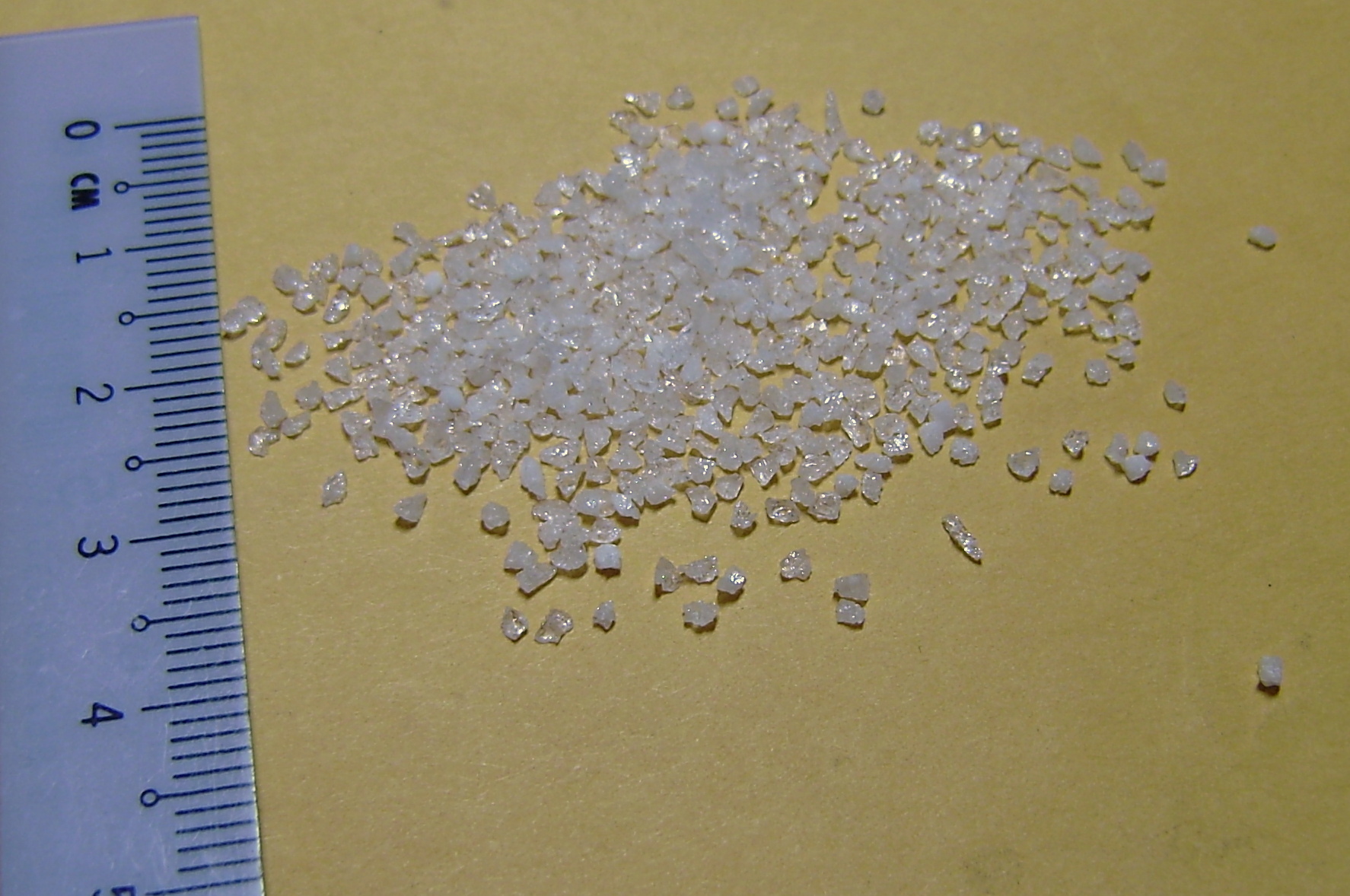
A boiling chip, boiling stone, or porous bit anti-bumping granule is a tiny, irregular shaped piece of substance added to liquids to make them boil more calmly. Boiling chips are frequently employed in distillation and heating. When a liquid becomes superheated, a speck of dust or a stirring rod can cause violent flash boiling. Boiling chips provide nucleation sites so the liquid boils smoothly without becoming superheated or bumping.[1][2]

Use

[edit]

Boiling chips should not be added to liquid that is already near its boiling point, as this could also induce flash boiling.[3] Boiling chips should not be used when cooking unless they are suitable for food-grade applications.

The structure of a boiling chip traps liquid while in use, meaning that they cannot be re-used in laboratory setups. They also don't work well under vacuum; if a solution is boiling under vacuum, it is best to constantly stir it instead.[4][5]

Materials

[edit]

Boiling chips are typically made of a porous material, such as alumina, silicon carbide, calcium carbonate, calcium sulfate, porcelain or carbon, and often have a nonreactive coating of PTFE. This ensures that the boiling chips will provide effective nucleation sites, yet are chemically inert. In less demanding situations, like school laboratories, pieces of broken porcelainware or glassware are often used.[6][7]

References

[edit]
Revisions and contributorsEdit on WikipediaRead on Wikipedia
from Grokipedia
A boiling chip, also known as a boiling stone or anti-bumping granule, is a small, irregularly shaped piece of porous, material added to liquids during heating in procedures to facilitate controlled by providing sites for vapor bubble formation, thus preventing and the sudden, explosive release of vapor known as bumping. Boiling chips are typically composed of durable, non-reactive substances such as (often in the form of black porous carborundum granules), , aluminum oxide, or pumice-like silicate ceramics, selected for their ability to trap microscopic air pockets that release gradually upon heating to initiate even bubble formation. These materials ensure compatibility with a wide range of solvents and reagents, including strong acids and bases, without dissolving or reacting under typical conditions. Sizes generally range from granules of 2-8 mm in diameter, allowing 1-2 chips to suffice for most standard flask volumes during experiments. In laboratory practice, boiling chips are essential for processes involving the heating of volatile organic solvents, such as , , or recrystallization, where smooth ebullition is critical to avoid loss of material, equipment damage, or safety hazards from uneven heating. They are added to the liquid before heating begins, as introducing them into an already hot solution can trigger immediate and uncontrolled . While effective for atmospheric or distillations, boiling chips have limitations: they cannot be reused due to absorbed liquids trapped in their pores, which may lead to or inconsistent performance, and they are less suitable for highly superheated fluids where alternative methods like magnetic stirring or specialized anti-bumping agents may be preferred.

Definition and Purpose

Description

A boiling chip is defined as a small, irregular, porous piece of material added to liquids to promote smooth . These aids, also commonly referred to as boiling stones, anti-bumping granules, or porous boiling aids, provide sites that facilitate the formation of vapor bubbles during heating. Physically, boiling chips are typically 2–8 mm in size, featuring a rough, porous surface that traps air and enables consistent bubble . They remain insoluble in most common solvents and exhibit high chemical inertness, ensuring they do not contaminate or react with the liquid medium. This design prevents uneven heating and sudden eruptions known as bumping. No specific inventor is documented for this practice, which became integral to distillation and reflux procedures in lab settings.

Role in Boiling

Boiling chips serve to regulate the boiling process of liquids by facilitating consistent bubble formation, which helps prevent violent eruptions known as bumping and promotes even heating throughout the solution. This regulation ensures that vaporization occurs smoothly, reducing the risk of sudden, explosive releases of vapor that can occur when liquids superheat without adequate nucleation sites. A primary benefit of using boiling chips is their ability to enable even and operations, minimizing material loss from splashing or foaming over the apparatus. Unlike mechanical stirring, which requires active equipment, boiling chips act as passive aids that distribute more uniformly without the need for agitation devices, making them suitable for standard setups. In practice, boiling chips are added to the liquid while it is still cold, prior to applying , to initiate steady and controlled from the outset of the heating . This timing allows the chips to integrate effectively, providing reliable sites for bubble initiation and maintaining stable boiling conditions.

Mechanism

Nucleation Process

Boiling chips facilitate the boiling process by providing heterogeneous sites, which allow vapor bubbles to form at lower temperatures compared to the homogeneous that occurs in pure, uncontaminated . In homogeneous , bubbles must form entirely within the bulk, requiring significant to overcome a high free energy barrier associated with creating the liquid-vapor interface. Heterogeneous , however, occurs at solid-liquid interfaces offered by the chips, where the energy barrier is substantially reduced due to the geometric constraints and properties at the contact line, enabling bubble initiation with minimal superheat—often just a few degrees above the . The porous structure of boiling chips plays a critical role in this process by trapping small pockets of air or gas within their internal voids upon immersion in the . As the liquid is heated, the trapped air expands due to increasing and decreasing , forming initial vapor cavities that serve as low-pressure regions for further bubble growth. These cavities lower the required for the liquid to vaporize locally, promoting the expansion of the vapor phase into stable bubbles that detach and rise, ensuring controlled ebullition without explosive release. The rough and porous surfaces of boiling chips further enhance by minimizing the surface energy needed for bubble formation. Surface irregularities and pores create crevices that trap vapor and reduce the effective , effectively lowering the work of between the liquid and the solid, which in turn decreases the superheat necessary to initiate bubbling. This surface-mediated effect increases the density of active sites, allowing bubbles to form more readily than on smooth surfaces where higher forces inhibit embryo development. For instance, in a smooth flask containing a pure , bubble formation may occur sporadically and violently due to limited sites, leading to irregular . The addition of boiling chips introduces multiple heterogeneous sites, promoting the simultaneous generation of numerous small bubbles that rise steadily, resulting in smoother and more uniform throughout the volume.

Prevention of Superheating

Superheating refers to the phenomenon where a is heated above its normal without undergoing a phase change to vapor, resulting in a metastable state due to the absence of sufficient sites for bubble formation. This occurs because smooth container surfaces and pure liquids lack the irregularities needed to initiate vapor bubble growth, allowing the liquid to remain liquid despite exceeding the temperature at which its equals the ./01%3A_General_Techniques/1.04%3A_Heating_and_Cooling_Methods/1.4B%3A_Controlled_Boiling) Without boiling chips, the consequences of include sudden and violent "bumping," where large vapor bubbles form explosively once is triggered by minor disturbances, potentially causing splashing of hot liquid or breakage of the containing vessel. This erratic boiling disrupts controlled heating processes and poses risks in laboratory settings. Boiling chips prevent by providing porous surfaces that act as sites, enabling the continuous release of small vapor bubbles and thereby lowering the superheat limit of the . This promotes steady at the normal boiling temperature, such as maintaining at 100°C under rather than allowing it to reach superheated states above 100°C./01%3A_General_Techniques/1.04%3A_Heating_and_Cooling_Methods/1.4B%3A_Controlled_Boiling) The underlying physics involves at the chip surfaces, where local reductions in pressure facilitate bubble formation when the liquid's reaches equilibrium with the surrounding conditions, ensuring efficient and uniform without excessive temperature buildup.

Applications

Laboratory Settings

In settings, boiling chips are primarily employed in small-scale procedures to facilitate controlled heating of liquids, such as in setups where they ensure even vaporization without sudden eruptions that could lead to loss of material or apparatus damage. They are also integral to reactions, where sustained boiling is required to drive reversible processes forward while minimizing solvent loss through splashing. Additionally, boiling chips aid in solvent by promoting smooth boiling, thereby preventing from violent splashing during volume reduction. The standard procedure involves adding 1-2 to the reaction vessel—typically a for or , or an for —while the liquid is still cool, prior to applying heat via a , , or water bath. This timing is critical to avoid introducing chips into a hot solution, which could trigger immediate and uncontrolled . Once added, the chips remain in the vessel throughout the heating process, providing consistent sites for bubble formation to maintain steady . In , boiling chips are routinely used during recrystallizations to heat impure solids dissolved in minimal , allowing controlled cooling for crystal formation without loss or uneven heating. For instance, in purifying compounds like , chips are added to the flask with the before to ensure gentle ebullition. In , they support sample concentration, such as in liquid-liquid extraction protocols where organic extracts are evaporated to 1 mL using a Kuderna-Danish concentrator on a water bath, preventing and ensuring precise volume control for subsequent analysis. Boiling chips have been a standard feature in undergraduate teaching laboratories since the mid-20th century, serving as a fundamental tool for demonstrating safe heating techniques and preventing common hazards like bumping in introductory organic and courses. This practice underscores their role in fostering reproducible results and student safety during hands-on experiments.

Industrial Applications

Boiling chips are primarily used in settings and are not typically employed in large-scale , where bumping is managed through features such as mechanical agitation, tray or packed columns, and flow dynamics that naturally promote and even . In some pilot-scale or small-batch operations, similar porous materials may be used, but standard industrial in sectors like , pharmaceuticals, and relies on engineered solutions rather than traditional boiling chips.

Materials

Common Types

Boiling chips, also known as boiling stones or anti-bumping granules, are commonly fabricated from a variety of inert, porous materials to facilitate controlled in liquids. The most prevalent type consists of , appearing as small, black, porous stones that provide numerous sites due to their irregular, porous structure. These chips are favored for their high thermal stability, enduring temperatures well beyond typical boiling points without degradation. Pumice, a lightweight, porous composed of ceramics, is another common material, valued for its natural porosity and chemical inertness in both aqueous and organic systems. Alumina, or aluminum oxide, serves as another standard material, often in the form of white, porous granules known as alundum boiling chips. These exhibit excellent chemical inertness and thermal resistance up to approximately 1000°C, making them suitable for a range of distillations. Calcium carbonate chips, typically derived from and appearing as white fragments, are widely used for their low cost and neutrality in aqueous and organic systems. Carbon boiling chips, often microporous and black, provide effective and are particularly inert to strong acids and bases. Porcelain fragments, often irregularly shaped pieces from calcined , offer a durable, non-reactive alternative with inherent for bubble formation. For enhanced chemical resistance, particularly in reactive solvents, boiling chips may incorporate polytetrafluoroethylene (PTFE, or Teflon) either as the primary material in chip form or as a on substrates like carbon or alumina. PTFE variants remain unaffected by acids and maintain integrity across a broad temperature range. In non-laboratory contexts, food-grade versions, such as or calcium carbonate-based chips, ensure safety for pharmaceutical applications where must be avoided. Makeshift boiling aids, like fragments of borosilicate glassware, are occasionally employed in resource-limited settings for their availability and inertness, though they lack the optimized of commercial types. All common boiling chip materials share essential properties of chemical inertness, non-reactivity with most solvents, and high thermal stability to prevent during heating.

Selection Criteria

When selecting boiling chips, chemical compatibility is paramount to prevent unwanted reactions. For instance, calcium carbonate-based chips should be avoided with acidic liquids, as they react to evolve gas, potentially causing foaming or contamination. level influences the nucleation sites available, with higher promoting smaller, more uniform bubbles for smoother , while lower may lead to larger bubbles and less consistent control. Chip size also affects performance; smaller chips (e.g., 2-4 mm) provide greater surface area for precise regulation in small-scale distillations, whereas larger ones suit bulk processes. Solvent-specific considerations guide material choice among common types. PTFE-coated chips are preferred for organic solvents like hydrocarbons or ketones due to their resistance to chemical attack and non-wetting properties, ensuring inertness during prolonged heating. chips are suitable for aqueous solutions or high-temperature applications. Boiling chips have inherent limitations that must inform selection. They are ineffective in vacuum distillations, as the reduced pressure expels trapped air from pores, eliminating nucleation sites; mechanical stirring is recommended instead. Additionally, chips are single-use only, as solvents absorb into the pores upon cooling, rendering them unusable for subsequent runs and risking contamination. Cost and availability further shape choices, with commercial options like or PTFE chips readily accessible from suppliers at low prices (typically $100-250 per kilogram). For exotic solvents lacking compatible commercial products, improvised alternatives—such as crushed or etched beads—may be necessary, provided they match the required inertness and .

Preparation and Usage

How to Prepare

Boiling chips are typically acquired commercially as pre-made porous granules from reputable chemical suppliers, such as or , where they are produced from inert materials like or . These granules are packaged and stored in a dry environment to preserve the entrapped air pockets within their porous structure, which are crucial for providing sites during boiling. In settings where commercial options are unavailable or for custom needs, boiling chips can be prepared in-house by selecting an inert, porous source material such as unglazed or alumina, which ensures compatibility with most solvents. The material is then crushed or broken into small granules, ideally 1-3 mm in diameter, using a or similar tool to create the rough surfaces necessary for effective . Following fragmentation, the granules undergo cleaning to remove contaminants: they are first rinsed thoroughly with to eliminate dust and loose particles. The cleaned granules are then dried in an oven at 100-150°C for 1-2 hours to evaporate moisture and restore air entrapment without altering the material's integrity. In specialized applications involving highly reactive or corrosive substances, PTFE boiling chips, made from , are available from suppliers for enhanced chemical resistance, though such variants are uncommon in routine labs.

Proper Usage Procedures

Boiling chips should be added to the liquid while it is still cold, prior to initiating any heating, to allow the porous surfaces to integrate smoothly and provide nucleation sites without disrupting the liquid's stability. Adding chips to a hot or already boiling liquid must be strictly avoided, as this can trigger sudden and violent boiling due to rapid bubble formation on the introduced surfaces. If chips are overlooked initially, the liquid must be cooled before incorporation to prevent such hazards. The recommended quantity is a few chips (typically 1-3) for standard flask volumes, sufficient to ensure even boiling without excessive agitation. Using more than necessary can lead to over-bubbling and potential foaming over the container's rim, disrupting the process. After use, boiling chips must be discarded and not reused, as their porous structure traps and impurities upon cooling, rendering them ineffective for subsequent applications and risking contamination. Disposal should follow hazardous waste protocols, using sealed and labeled containers. For optimal results, boiling chips should be employed alongside gradual heating ramps to minimize thermal gradients and promote controlled vaporization. In distillation setups, chips may need to be removed prior to the final stages if complete evaporation of the residue is required, ensuring no interference with purity. Compatibility with the should also be confirmed to avoid chemical reactions.

Safety and Limitations

Hazards and Precautions

One primary associated with chips is the of sudden and violent eruption when they are added to a hot or superheated , as the sites on the chips can trigger rapid bubble formation and over, potentially causing burns or spills./01%3A_General_Techniques/1.04%3A_Heating_and_Cooling_Methods/1.4B%3A_Controlled_Boiling) Another significant arises from chemical incompatibility, particularly when carbonate-based chips (such as those made from ) are used with acidic solutions, leading to gas release like that can cause foaming, pressure buildup, or contamination./01%3A_General_Techniques/1.04%3A_Heating_and_Cooling_Methods/1.4B%3A_Controlled_Boiling) Additionally, handling chips can generate dust that, if inhaled, irritates the , causing coughing, , or more severe chronic effects depending on the material, such as potential carcinogenicity from silica-based variants. To mitigate these hazards, (PPE) including gloves, safety goggles, lab coats, and NIOSH-approved respirators should always be worn during handling to prevent skin, eye, or inhalation exposure. Work in a well-ventilated area or under a to minimize accumulation and inhalation risks, and avoid eating, drinking, or smoking while handling the chips. Compatibility testing is essential before use; for instance, select inert materials like PTFE-coated chips for acidic or reactive solvents to prevent unwanted reactions./01%3A_General_Techniques/1.04%3A_Heating_and_Cooling_Methods/1.4B%3A_Controlled_Boiling) chips must be added only to cool liquids to avoid eruption, and in case of spills, evacuate the area, use wet sweeping to collect , and clean surfaces thoroughly. Contaminated chips should be disposed of as following guidelines, sealing them in labeled containers to prevent environmental release or secondary exposure. Boiling chips have limitations that can exacerbate hazards if not addressed; they are ineffective in vacuum distillations where reduced pressure alters boiling dynamics, or with highly viscous liquids that hinder bubble formation. Non-inert materials may introduce contamination into sensitive reactions, and certain types, such as , pose long-term health risks like organ damage from prolonged exposure if mishandled or inhaled repeatedly.

Alternatives

Mechanical alternatives to boiling chips include stirring methods that promote through agitation rather than solid additives. Magnetic stirring, achieved by placing a Teflon-coated stir bar in the flask and using a magnetic stir plate, ensures even distribution of and disrupts superheated regions to prevent bumping during or . Overhead stirrers, employing a motorized drive with a paddle or attached to a rod, provide more vigorous mixing suitable for larger volumes or viscous liquids, similarly inducing bubble formation via mechanical disruption. Structural aids offer passive options for enhancing control, particularly in setups. Raschig rings, small or tubes packed into fractionating columns, increase surface area for vapor-liquid contact and help maintain steady by providing sites along the column walls, reducing the risk of uneven in the flask. Wire mesh, often in the form of or copper rings inserted into columns, serves a comparable role by facilitating even vapor rise and preventing liquid flooding or bumping through improved . For simpler or educational setups, wooden boiling sticks—porous splints made from untreated wood—act as removable promoters when immersed in the liquid, releasing trapped air to initiate gentle bubbling. Other granular substitutes include fragments of PTFE tape, which can be cut into small pieces to mimic the inert, rough-surfaced properties of commercial boiling chips, offering chemical resistance for use with aggressive solvents. Commercial anti-bump agents, such as porous ceramic or PTFE granules specifically formulated for laboratory use, provide tailored for particular solvents, ensuring compatibility and minimal contamination. These alternatives are particularly preferred in scenarios where boiling chips prove impractical, such as vacuum distillations, where trapped air in porous solids can escape, rendering them ineffective; in these cases, magnetic or overhead stirring is recommended to maintain control. They are also advantageous in automated systems, like or continuous flow reactors, where integrated stirring mechanisms eliminate the need for manual addition of solids.

References

Add your contribution
Related Hubs
User Avatar
No comments yet.