Hubbry Logo
Brooke BundyBrooke BundyMain
Open search
Brooke Bundy
Community hub
Brooke Bundy
logo
8 pages, 0 posts
0 subscribers
Be the first to start a discussion here.
Brooke Bundy
Brooke Bundy
from Wikipedia

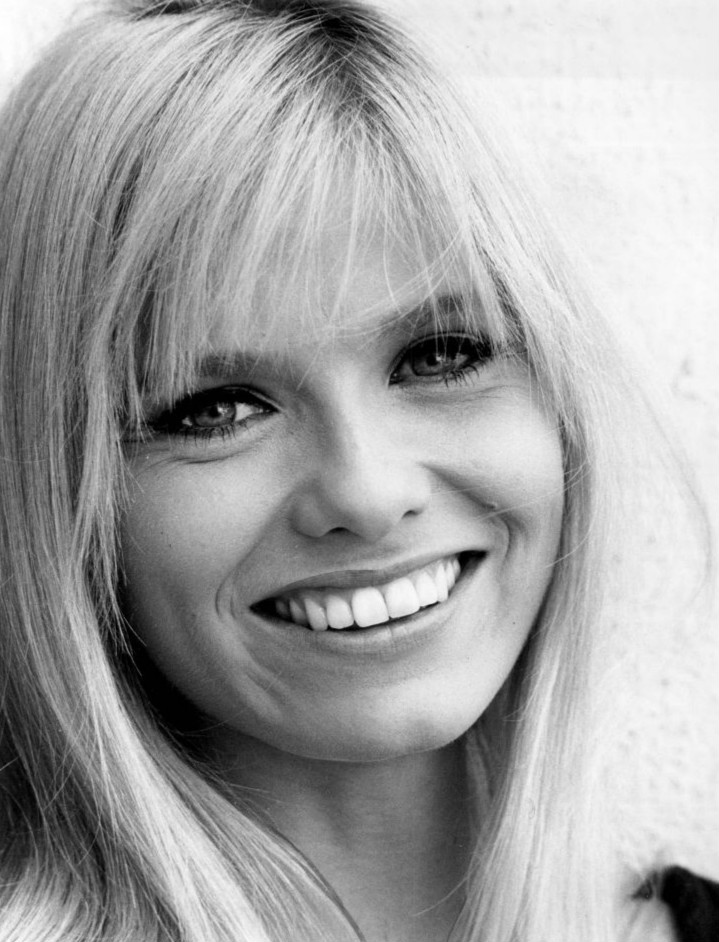
Brooke Bundy (born August 8, 1944)[1] is an American film and television actress.

Key Information

Early years

[edit]

As a teenager, Bundy was a model[2] in New York before she went to Hollywood on vacation and remained there to become an actress.[3] While in New York, she attended the Professional Children's School.[2]

Acting career

[edit]

Movie

[edit]

She played Elaine Parker in the 1987 hit horror film A Nightmare on Elm Street 3: Dream Warriors and its sequel A Nightmare on Elm Street 4: The Dream Master (1988).[4] Bundy also appeared in Daniel Farrands' documentary film, Never Sleep Again: The Elm Street Legacy.[5]

Television

[edit]

Bundy had two long-running roles on the soap opera Days of Our Lives as Rebecca North (1975–77) and General Hospital as Diana Maynard Taylor, RN (1977–81).[6] She has made guest appearances on a variety of television shows including The Big Valley, Mr. Novak, Daniel Boone, Lassie (playing Terri Young in season 12, episode 10 "In the Midst of Splendor"), Lancer, Charlie's Angels, The Brady Bunch, The Partridge Family, Medical Center, Gunsmoke, Bonanza, Cannon (season four, episode 17 "The Killer on the Hill"), Barnaby Jones (season two, "Death Leap", 1973), Rawhide, The Virginian, Mission: Impossible (season four, episodes three and four "The Controllers" Part One, Part Two), Mannix, The Mod Squad, McMillan and Wife, Voyage to the Bottom of the Sea, Moonlighting, Gidget, Land of the Lost, Star Trek: The Next Generation (season one, episode "The Naked Now"), Starman (season one, episode 20 - "Starscape" part one), My Three Sons, and The Donna Reed Show. As a stock actress for Jack Webb's production company Mark VII Limited, she appeared as several different characters in shows such as Emergency!, Sierra, and Dragnet.

TV and filmography

[edit]

References

[edit]
[edit]
Revisions and contributorsEdit on WikipediaRead on Wikipedia
from Grokipedia
Brooke Bundy (born August 8, 1944) is an American actress, producer, and acting coach best known for her roles in the A Nightmare on Elm Street horror franchise, including Elaine Parker in A Nightmare on Elm Street 3: Dream Warriors (1987) and A Nightmare on Elm Street 4: The Dream Master (1988). Bundy was born in New York City and began her acting career in the early 1960s, accumulating over 90 credits in film and television across more than five decades. Her early work included guest appearances on popular series such as Gunsmoke (1963), The Fugitive (1964), and My Three Sons (1963–1965). In film, she appeared in Westerns like Firecreek (1968) alongside James Stewart and Henry Fonda, and comedies such as The Gay Deceivers (1969). Throughout the 1970s and 1980s, she continued with television roles on shows including The Brady Bunch (1971), CHiPs (1977), and Matlock (1990), while also featuring in science fiction projects like Explorers (1985) and a guest spot as Chief Engineer MacDougal on Star Trek: The Next Generation (1987). In addition to , Bundy has worked as a and, since at least 2011, as an acting coach and manager. She is the mother of actress , known for her role in Friday the 13th: A New Beginning (1985). Bundy remains active in the industry, with a role in the upcoming comedic thriller (2026), directed by Nyle Cavazos Garcia and starring and .

Early life

Childhood and family background

Brooke Bundy was born on August 8, 1944, in , New York. She was the daughter of illustrator Gilbert Garrison Bundy and Georgia McDonald. Limited public details exist regarding any siblings, though her family's New York roots immersed her in the city's dynamic from an early age, fostering exposure to the amid Broadway theaters and emerging media hubs. During her teenage years in the post-World War II era of the , Bundy grew up in , a period marked by economic recovery and artistic flourishing that influenced her surroundings. At around age 12, she contributed to the family by earning money through dog-walking jobs in the city, an experience that highlighted her independence in the bustling urban environment. While specific anecdotes about familial encouragement for her creative ambitions are scarce, her father's profession in likely provided a supportive artistic household atmosphere.

Entry into entertainment

Bundy began her professional involvement in entertainment during her teenage years as a model in New York City. Around 1959, at the age of 15, she started appearing in print media, including features in American Girl magazine, which highlighted her as an emerging young talent in the fashion world. While attending the Professional Children's School—a institution for child performers and models—she crossed paths with future actor Christopher Walken, who encouraged her to audition for acting roles, marking an initial pivot toward performance. In her late teens, Bundy took a vacation trip to Hollywood, where the allure of the film industry inspired her to relocate permanently and commit fully to an acting career. This move facilitated her early auditions for television and stage work, leading to minor opportunities such as uncredited appearances and small parts that transitioned her focus from modeling to on-screen pursuits. Her New York upbringing had instilled the poise necessary for these initial steps in entertainment.

Acting career

Early television and film roles

Brooke Bundy began her acting career in the early with a series of guest appearances on popular television Westerns and dramas, marking her transition from modeling in New York to on-screen roles in Hollywood. Her debut came in 1963 on , where she portrayed Bessie McFerren, the daughter in a family of outlaws posing as farmers in the episode "The Bleecker Story," a tense Western narrative centered on deception and survival on the frontier. That same year, she appeared as Alice Dark in 's "The Magician," playing the devoted daughter of a fraudulent traveling performer, showcasing her ability to convey vulnerability in a gritty set in Dodge City. Bundy's early television work often highlighted her youthful poise, as seen in her recurring roles on , including Betty in "Robbie Wins His Letter" and Mary Lou in "High on the Hog," lighthearted family episodes that emphasized comedic timing and relatable teen dynamics. These initial credited appearances, numbering several across and episodic formats, established her versatility in dramatic and genres during the network era's . In 1971, Bundy guest-starred on The Brady Bunch. By mid-decade, Bundy expanded into more varied guest spots, demonstrating range in both comedic and suspenseful narratives. In 1965, she guest-starred as Inge, a Swedish exchange student navigating cultural clashes and romance, in Gidget's "Gidget's Foreign Policy," a beachside sitcom episode that captured the era's youthful optimism and international flair. Her modeling background, which honed her poise and screen presence in New York commercials and print work, facilitated this smooth entry into diverse television formats. Transitioning to procedural dramas, Bundy appeared in the 1967 Mannix episode "Warning: Live Blueberries" as Jill Bonnett, a character entangled in a mystery involving academic intrigue and danger, underscoring her adeptness at tense, character-driven plots. This role exemplified her growing comfort with investigative stories, a staple of 1960s prime-time television. In the late 1960s, Bundy balanced television with her first notable film roles, further solidifying her presence in dramatic and genre pieces. She played Louise Marshall in Dragnet 1967's "The Little Victim," a stark episode addressing within a failing marriage, highlighting her skill in portraying emotional depth in procedural realism. On the big screen, Bundy debuted in 1968's as Leah, the wife of a young farmer in a Western town terrorized by outlaws, a supporting role in a tense ensemble film starring that explored community and moral conflict. That year, she also starred as Shelley Allen, one of three troubled teens fleeing home, in the coming-of-age drama The Young Runaways, a low-budget production focusing on urban hardships and youthful rebellion in . Her final 1960s film credit came in 1969's as Karen, a in this campy thriller about draft dodgers and , blending humor with Cold War-era suspense. These roles across television and film in the decade illustrated Bundy's adaptability, from family-oriented sitcoms to intense Westerns and procedurals, building a foundation for her subsequent career milestones.

Soap opera appearances

Brooke Bundy began her prominent career in the mid-1970s, a decade when daytime dramas like and dominated television ratings, attracting millions of viewers with serialized narratives focused on family dynamics, romance, and dramatic twists. Shows such as these often typecast actresses like Bundy in maternal or emotionally intense roles, capitalizing on the genre's emphasis on long-term character arcs and high-stakes interpersonal conflicts. Bundy portrayed Rebecca North on Days of Our Lives from 1975 to 1977, initially introduced as the nanny to Doug Williams' young , . Her character's storyline deepened when she agreed to serve as a surrogate mother through for Doug Williams, using his sperm donation to provide a for his ; this groundbreaking plot, one of the earliest explorations of fertility issues on television, resulted in the birth of Dougie LeClair, whom Rebecca raised with her husband, Robert LeClair, while keeping the biological details secret. Bundy's departure in 1977 aligned with the natural conclusion of Rebecca's arc, as the surrogate pregnancy and resolved the central family tensions, allowing her to transition to another soap without overlap. Following her run, Bundy joined in 1977 as nurse Diana Maynard Taylor, a role she played through 1981, stepping in amid the show's rising popularity for its medical and mystery-driven plots. Diana's narrative centered on her marriage to Dr. Peter Taylor and their desperate quest for a second child after losing their daughter Martha, leading her to unknowingly adopt Steven Lars (later P.J.) from the manipulative nanny Heather Grant, who schemed to undermine Diana's sanity through psychological torment and drugging attempts. The storyline heightened the show's dramatic tension, showcasing Bundy's ability to convey vulnerability and resilience, though it culminated in Diana's by Heather's mother, Alice Grant, in 1981, in a bid to protect her daughter, profoundly impacting the community's ongoing feuds and investigations. This transition exemplified the fluid career paths in soaps, where ending one contract often led directly to another, reinforcing Bundy's reputation in dramatic, family-oriented roles.

Horror film breakthroughs

Brooke Bundy's transition to horror cinema in the 1980s marked a significant shift from her work, beginning with supporting roles in genre thrillers that showcased her ability to portray complex, flawed characters under pressure. An early entry into the genre was her performance as Adrienne Klein in the 1970 made-for-TV thriller Along Came a Spider, where she played a colleague entangled in a web of scientific intrigue and murder at a research facility, providing initial context for her affinity toward suspenseful narratives. This role, though minor, highlighted her versatility in tense, mystery-driven stories, setting the stage for more prominent horror appearances later in the decade. In 1985, she appeared in the Explorers as Alice Farrell. Bundy achieved her breakthrough in horror with the role of Elaine Parker in A Nightmare on Elm Street 3: Dream Warriors (1987), directed by . As the alcoholic and skeptical mother of protagonist (played by ), Elaine dismisses her daughter's vivid nightmares about as bids for attention, exacerbating Kristen's emotional isolation and leading to her commitment to Westin Hills Asylum. The character's arc culminates in a nightmarish sequence where Freddy decapitates her in Kristen's dream world, a shocking moment that underscores themes of parental neglect and the blurring of reality and fantasy—though the event occurs within the dream, preserving Elaine's survival in the waking world. Bundy landed the part after auditioning with a scene that impressed Russell, recalling in interviews how the production's practical effects, including a prosthetic head for her "death" scene, created an intense yet collaborative atmosphere on set. The film revitalized the franchise with its innovative "Dream Warriors" concept—teens harnessing dream powers to battle Krueger—and became a critical and commercial success, grossing $44.8 million against a $5 million budget while influencing subsequent slasher sequels through its emphasis on elaborate, effects-driven kill scenes. She reprised the role in A Nightmare on Elm Street 4: (1988), where Elaine appears in brief but poignant scenes supporting Kristen amid escalating Freddy attacks, offering glimpses of familial regret and vulnerability before Kristen's on-screen demise transfers the dream power to new protagonist Alice Johnson (). Bundy's return, surprising given the prior film's apparent finality for her character, added continuity to the series' exploration of inherited trauma. Filming continued the franchise's low-budget ingenuity, with Bundy noting the fun camaraderie among the cast despite the grueling night shoots. The expanded Freddy's lore with dream absorption mechanics, earning $92.9 million worldwide and cementing the series' cultural footprint through merchandise, parodies, and Krueger's transformation into a pop culture symbolizing 1980s fears of suburban dysfunction. These roles solidified Bundy's place in horror history, leveraging her soap opera-honed dramatic skills to humanize the franchise's supernatural terror.

Later television work

In the late 1980s, Bundy ventured into science fiction with her role as Chief Engineer Sarah MacDougal in the Star Trek: The Next Generation episode "The Naked Now" (1987), where she played a key engineering officer amid a viral outbreak mimicking intoxication. Following her horror film roles, Bundy transitioned to guest appearances on television series in the late 1980s and early 1990s, often portraying supportive or enigmatic characters in procedural dramas and genre shows. In 1989, she appeared as Sherry Lister in the Matlock episode "The Scrooge," a Christmas-themed installment where her character becomes entangled in a murder case involving a miserly toy store owner. The following year, Bundy guest-starred as Mrs. Morgan in the Hunter episode "Unacceptable Loss," depicting a mother affected by a toxic waste scandal that leads to homicide investigations. Bundy also appeared in films like (1989) and the TV movie Without Her Consent (1990). Her television work evolved toward more nuanced, character-driven parts, such as the Scout Leader in the short-lived family drama Sons and Daughters (1991), highlighting everyday authority figures in domestic settings. After 1991, Bundy's on-screen television series appearances became infrequent, though she returned for the short #StopTheNightmare (2020) and has a role in the upcoming comedic thriller (2025). This selective approach allowed her to pursue behind-the-scenes opportunities while maintaining a legacy of versatile guest spots.

Other professional pursuits

Producing credits

Brooke Bundy transitioned into production roles in the , drawing on her decades-long acting career to explore opportunities behind the camera. Her primary producing credit came as associate producer on the independent Lovers, Liars and Lunatics (2006), a project directed and written by that follows a neurotic suburban held hostage in their home by two inept burglars. In this collaboration, Bundy's production involvement highlighted her industry connections, with the film marking her entry into creative oversight on low-budget features post her prominent on-screen work in the and .

Acting coaching and management

Brooke Bundy began working as an acting coach and manager in the , drawing on her extensive experience in television and film to mentor aspiring performers while continuing selective on-screen roles. Based primarily in , she established her practice by focusing on practical training for the entertainment industry, emphasizing on-camera techniques and professional development. Bundy serves as an acting coach and manager for B.I.H. Acting Studios in New York, where she provides exclusive coaching services tailored to help actors break into television and film. Her classes and workshops cover essential skills such as scene study, audition preparation, and commercial work, often incorporating insights from her own career highlights, including horror genre roles that inform specialized genre acting instruction. Among her notable contributions, Bundy has guided students toward professional success, with many securing talent agency representation and booking roles following her training. For instance, actors including Crystal Minaya and Dignorah Rivas have highlighted their experiences in Bundy's classes at B.I.H. Acting Studios as pivotal in advancing their careers in on-camera and theatrical performance. This work underscores her role in nurturing talent through hands-on management and educational expertise in a competitive industry.

Personal life

Marriage and divorce

Brooke Bundy married fellow Peter J. Helm in 1962. As both were active in the entertainment industry during the early , their relationship was influenced by shared professional circles among actors in Hollywood. The couple's coincided with Bundy's initial foray into television and film roles. Their union ended in in August 1966.

Family and children

Brooke Bundy and actor Peter Helm welcomed their daughter, Tiffany Helm, on May 12, 1964. Tiffany pursued a career in acting, studying dance with Roland Dupree and joining the Beverly Hills Mime Troupe before appearing in films such as Friday the 13th: A New Beginning (1985), where she played the role of Violet. The mother and daughter have shared professional overlaps in Hollywood, notably collaborating on the horror-comedy film Catnip (2026), which completed filming in early 2025 and is currently in post-production; they have also appeared together in interviews discussing their genre work and family legacy in acting. As of 2025, Bundy continues to embrace her role as a , with Tiffany, now 61, having transitioned from acting to , digital illustration, and while maintaining ties to the entertainment community through conventions and family projects.

References

Add your contribution
Related Hubs
User Avatar
No comments yet.