Hubbry Logo
Bruce M. MetzgerBruce M. MetzgerMain
Open search
Bruce M. Metzger
Community hub
Bruce M. Metzger
logo
8 pages, 0 posts
0 subscribers
Be the first to start a discussion here.
Contribute something
Bruce M. Metzger
Bruce M. Metzger
from Wikipedia

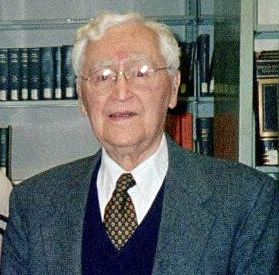
Bruce Manning Metzger (February 9, 1914 – February 13, 2007) was an American biblical scholar and historian who spent his career at Princeton Theological Seminary. Metzger specialized in textual criticism and Bible translation and chaired committees for the Revised Standard Version and New Revised Standard Version.[1] He served on the board of the American Bible Society and United Bible Societies. He was elected to the American Philosophical Society in 1986.[2] Metzger is often considered among the most influential New Testament scholars of the 20th century.[3][4][5]

Key Information

Early life and education

[edit]

Metzger was born on February 9, 1914, in Middletown, Pennsylvania, and earned his BA in 1935 at Lebanon Valley College.[6] He had strong academic training in Greek before enrolling in Princeton Seminary and in the summer prior to entering the Seminary he completed reading through the entire Bible consecutively for the twelfth time.[7] He received his ThB in 1938 at Princeton Theological Seminary and in the autumn of that year began teaching at Princeton as a Teaching Fellow in New Testament Greek. On April 11, 1939, he was ordained in the United Presbyterian Church of North America,[8] which has since merged with the Presbyterian Church in the United States of America (PCUSA) and is now known as the Presbyterian Church (USA). In 1940 he earned his MA from Princeton University and became an instructor in New Testament. Two years later he earned his PhD, "Studies in a Greek Gospel Lectionary (Greg. 303)", also from Princeton University.

Princeton Theological Seminary career

[edit]

In 1944 Metzger married Isobel Elizabeth Mackay, daughter of the third president of the Seminary, Scottish theologian John A. Mackay.[9] That year he was promoted to assistant professor. In 1948 he became associate professor and in 1954 he was named full professor. In 1964 Metzger became the George L. Collord Professor of New Testament Language and Literature. In 1969 he was elected to membership in the Catholic Biblical Association. In 1971 he served as president of both the Studiorum Novi Testamenti Societas and the Society of Biblical Literature. The following year he became president of the North American Patristic Society.[10] Metzger was visiting fellow at Clare Hall, Cambridge in 1974 and at Wolfson College, Oxford in 1979. In 1978 he was elected corresponding fellow of the British Academy, the Academy's highest distinction for persons who are not residents in the United Kingdom. In 1986 Metzger became a member of the American Philosophical Society.[11] At the age of seventy, after teaching at Princeton Theological Seminary for forty-six years, he retired as professor Emeritus.

In 1994 Bruce Metzger was honored with the Burkitt Medal for Biblical Studies by the British Academy. He was awarded honorary doctorates from Lebanon Valley College, Findlay College, the University of St Andrews, the University of Münster and Potchefstroom University. "Metzger's unrivaled knowledge of the relevant languages, ancient and modern; his balanced judgment; and his painstaking attention to detail won him respect across the theological and academic spectrum."[12] Conservative evangelical scholar Daniel B. Wallace described Metzger as "a fine, godly, conservative scholar, although his view of biblical authority is not quite the same as many other evangelicals."[13]

Later life and death

[edit]

Shortly after his 93rd birthday, Metzger died in Princeton, New Jersey, on February 13, 2007. He was survived by his wife Isobel, who died at the age of 98 on July 27, 2016, in Princeton, New Jersey,[14] as well as their two sons, John Mackay Metzger and Dr. James Bruce Metzger (1952–2020).[15]

Scholarship and translations

[edit]
Left to right: unidentified, Bruce Metzger, Kurt Aland (center), Allen Wikgren, Matthew Black

Metzger edited and provided commentary for many Bible translations and wrote dozens of books. He was an editor of the United Bible Societies' standard Greek New Testament, the starting point for nearly all recent New Testament translations. In 1952 he became a contributor to the Revised Standard Version (RSV) of the Bible and served as general editor of the Reader's Digest Bible (a condensed version of the RSV) in 1982. From 1977 to 1990 he chaired the Committee on Translators for the New Revised Standard Version (NRSV) of the Bible and was "largely responsible for ... seeing [the NRSV] through the press."[1] He considered it a privilege to present the NRSV, which includes the books referred to as Apocrypha by Protestants, though Roman Catholics and Eastern Orthodox consider them deuterocanonical, to Pope John Paul II and Patriarch Demetrius I of Constantinople.[1] Metzger served on the boards of the American Bible Society and United Bible Societies.

Central to his scholarly contribution to New Testament studies is his trilogy The Text of the New Testament: Its Transmission, Corruption, and Restoration (1964; 2nd ed., 1968; 3rd enlarged ed., 1992), The Early Versions of the New Testament: Their Origin, Transmission, and Limitations (1977), and The Canon of the New Testament: Its Origin, Development, and Significance (1987).[16] The first volume of the series that he founded and edited, New Testament Tools and Studies, appeared in 1960.

Metzger's commentaries often utilize historical criticism and higher criticism, which attempt to explain the literary and historical origins of the Bible and the biblical canon. He wrote that the early church saw it as very important that a work describing Jesus' life be written by a follower of or an eyewitness to Jesus and considered other works such as The Shepherd of Hermas and the Epistles of Clement to be inspired but not canonical.[17]

In discussing the canon, Metzger identified three criteria "for acceptance of particular writings as sacred, authoritative, and worthy of being read in services of worship...", criteria that were "generally adopted during the course of the second century, and were never modified thereafter", namely orthodoxy (conformity to the rule of faith), apostolicity, and consensus among the churches.[18] He concluded that, "In the most basic sense neither individuals nor councils created the canon; instead they came to recognize and acknowledge the self-authenticating quality of these writings, which imposed themselves as canonical upon the church."[19]

He served on the advisory board for Peake's Commentary on the Bible (1962) and contributed an article on "The Early Versions of the New Testament." He was co-editor for The Oxford Companion to the Bible (1993).

Selected works

[edit]

Books

[edit]
  • Metzger, Bruce M. (1942). Studies in a Greek Gospel Lectionary (Greg. 303) (Ph.D.). Princeton, NJ: Princeton University.
  • ——— (1946). Lexical Aids for Students of New Testament Greek. Princeton, NJ: Princeton University Press. OCLC 2132643.
  • ——— (1957). Introduction to the Apocrypha. New York: Oxford University Press. OCLC 361082.
  • ——— (1961). List of Words Occuring Frequently in the Coptic New Testament (Sahidic Dialect). Leiden: Brill. – note: "occuring" is misspelled in the published title
  • ———; Metzger, Isobel M. (1962). The Oxford Concise Concordance to the Revised Standard Version of the Holy Bible (1st ed.). London: Oxford University Press.
  • ——— (1963). Chapters in the History of New Testament Textual Criticism. New Testament Tools and Studies. Vol. 4. Leiden: Brill.
  • ——— (1964). The Text of the New Testament: Its Transmission, Corruption, And Restoration (1st ed.). Oxford: Clarendon Press.
  • ——— (1965). The New Testament: Its Background, Growth and Content (1st ed.). New York: Abingdon Press. ISBN 978-0-6872-7913-5. OCLC 341779.
  • ——— (1968). Historical and Literary Studies: Pagan, Jewish, and Christian. Leiden: Brill.
  • ——— (1977). The Early Versions of the New Testament: Their Origin, Transmission, and Limitations. Oxford: Clarendon Press. ISBN 978-0-1982-6170-4. OCLC 3155516.
  • ——— (1980). New Testament Studies: Philological, Versional, and Patristic. Leiden: Brill. ISBN 978-9-004-06163-7.
  • ——— (1981). Manuscripts of the Greek Bible: An Introduction to Palaeography. New York: Oxford University Press. ISBN 978-0-195-02924-6. OCLC 6943206.
  • ——— (1983). The Reader's Bible: condensed from the Revised Standard Version Old and New Testaments. Pleasantville, NY: Reader's Digest Association. ISBN 978-0-895-77106-3. OCLC 8817548.
  • ——— (1987). The Canon of the New Testament: Its Origin, Development, and Significance. Oxford: Clarendon Press. ISBN 978-0-198-26180-3. OCLC 14188714.
  • ———; Dentan, Robert C.; Harrelson, Walter (1991). The Making of the New Revised Standard Version of the Bible. Grand Rapids, MI: Eerdmans. ISBN 978-0-802-80620-8.
  • ———; Coogan, Michael D., eds. (1993). The Oxford Companion to the Bible. New York: Oxford University Press. ISBN 978-0-195-04645-8. OCLC 27895183.
  • ——— (1994). Textual Commentary on the Greek New Testament: a companion volume to the United Bible Societies' Greek New Testament (third ed.). London; New York: United Bible Societies. ISBN 978-3-438-06010-5. OCLC 683422.
  • ——— (1997). Reminiscences of an Octogenarian. Peabody, MA: Hendrickson Publishers. ISBN 978-1-5656-3264-6.
  • ——— (1999). Breaking the Code: Understanding the Book of Revelation (Leader's ed.). Nashville, TN: Abingdon Press. ISBN 978-0-6874-9779-9.
  • ———; Aland, Barbara; et al. (2000). Greek New Testament. Deutsche Bibelgesellschaft. ISBN 978-3-438-05110-3.
  • ———; Coogan, Michael D., eds. (2001). The Oxford Guide to People & Places of the Bible. Oxford; New York: Oxford University Press. ISBN 9780195146417. OCLC 45439956.
  • ——— (2001). The Bible in Translation, Ancient and English Versions. Grand Rapids, MI: Baker Academic. ISBN 978-0-801-02282-1. OCLC 47100891.
  • ———; Coogan, Michael D., eds. (2002). The Oxford Essential Guide to Ideas and Issues of the Bible. Oxford; New York: Oxford University Press. ISBN 978-0-195-14917-3. OCLC 47074788.
  • ——— (2002). The New Testament: Its Background, Growth and Content (Reprint ed.). Cambridge: James Clarke & Co. ISBN 978-0-227-17025-0. OCLC 227928641.
  • ———; Ehrman, Bart D. (2005). The Text of the New Testament: Its Transmission, Corruption, And Restoration (4th ed.). Oxford: Clarendon Press. ISBN 0-19-516122-X.
  • ——— (2006). Apostolic Letters of Faith, Hope, and Love: Galatians, 1 Peter, and 1 John. Eugene, OR: Cascade Books. ISBN 978-1-5975-2501-5.

Translations

[edit]
  • Oxford Annotated Apocrypha: The Apocrypha of the Old Testament. Translated by Metzger, Bruce M. 1977.
  • The New Oxford Annotated Bible with the Apocrypha, Revised Standard Version, Expanded Edition. Translated by Metzger, Bruce M.; May, Herbert G. 1977.
  • Oxford Annotated Apocrypha: Revised Standard Version. Translated by Metzger, Bruce M. 1977.
  • New Revised Standard Version. Translated by Metzger, Bruce M. 1989.
  • The NRSV Bible with the Apocrypha, Compact Edition. Translated by Metzger, Bruce M. 2003.

Articles and chapters

[edit]
  • ——— (May 27, 1966). "The Meaning of Christ's Ascension". Christianity Today. 10 (17): 3–4.
  • ——— (1970). "Names for the Nameless in the New Testament: A Study in the Growth of Christian Tradition". In Granfield, Patrick; Jungmann, Josef A. (eds.). Kyriakon: Festschrift Johannes Quasten. Vol. 1. Münster: Verlag Aschendorff. pp. 79–99.
  • ——— (1972). "Patristic Evidence and Textual Criticism of the New Testament". New Testament Studies. 18 (4): 379–400. doi:10.1017/S0028688500023705. S2CID 170833089. - Presidential Address, Studiorum Novi Testamenti Societas, delivered August 24, 1971, at Noordwijkerhout, The Netherlands.
  • ——— (1972). "Literary forgeries and canonical pseudepigrapha". Journal of Biblical Literature. 91 (1): 3–24. doi:10.2307/3262916. JSTOR 3262916. - Presidential address, Society of Biblical Literature, delivered October 29, 1971, in Atlanta, Georgia.
  • ——— (November 1984). "How Well Do You Know the Apocrypha?". Guideposts. pp. 28–31.

Selected interviews and writings about Bruce M. Metzger

[edit]

Festschriften

[edit]

References

[edit]
[edit]
Revisions and contributorsEdit on WikipediaRead on Wikipedia
from Grokipedia
Bruce Manning Metzger (February 9, 1914 – February 13, 2007) was an American biblical scholar, textual critic, and ordained Presbyterian minister renowned for his expertise in New Testament Greek manuscripts and his pivotal role in producing modern English Bible translations. Born in Middletown, Pennsylvania, Metzger earned a B.A. in Latin and Greek from Lebanon Valley College in 1935, followed by a B.D. from Princeton Theological Seminary in 1938, an M.A. in 1939, and a Ph.D. in classics from Princeton University in 1942. He began teaching at Princeton Theological Seminary in 1938 as a fellow and joined the regular faculty in 1940, where he taught New Testament language and literature for 46 years until his retirement in 1984, serving as the George L. Collord Professor from 1964 onward. A polyglot fluent in over a dozen languages including Greek, Latin, Hebrew, Coptic, Syriac, German, French, Spanish, Dutch, and Russian, Metzger's linguistic prowess underpinned his groundbreaking work in textual criticism. Metzger's scholarly contributions centered on the transmission and authenticity of the text, earning him recognition as one of the 20th century's foremost authorities in the field. He served as a key editor for the United Bible Societies' Greek , first published in 1966 and widely used by scholars worldwide for its . Additionally, he was a member of the translation committee for the (RSV) of the and chaired the revision committee that produced the (NRSV) in 1990, overseeing updates to reflect advances in textual scholarship. His prolific output included over 30 books, such as The Text of the : Its Transmission, Corruption, and Restoration (1964) and The Early Versions of the (1977), which remain standard references in . Beyond academia, Metzger's influence extended through his leadership roles, including presidency of the Society of Biblical Literature in 1971 and membership in the since 1986. He received five honorary doctorates and was admired for his humility, ecumenical spirit, and devotion to Presbyterian ministry, often preaching and teaching on the Bible's historical reliability. Metzger married Isobel Elizabeth Mackay in 1944, with whom he had two sons, John and James; he died of in , survived by his wife and family. His legacy endures in the tools and translations that continue to shape contemporary biblical scholarship and translation efforts.

Early Life and Education

Childhood and Family Background

Bruce Manning Metzger was born on February 9, 1914, in , to Maurice Rutt Metzger and Anna M. Metzger. His father, a farmer by early background who later became a prominent admitted to the Dauphin County Bar and a public servant, provided a stable environment in the local community. The family belonged to the Presbyterian tradition, which shaped Metzger's early religious life within the United Presbyterian Church, fostering a deep commitment to faith from childhood. Metzger's formative years in Middletown were marked by an emerging interest in languages and , influenced by his family's Presbyterian values and the encouraged in his household. He developed proficiency in classical tongues, beginning with Latin and Greek, which reflected his precocious aptitude for even before entering higher education. This religious and linguistic foundation not only nurtured his piety but also directed his path toward scholarly pursuits in . A pivotal moment in his early religious commitment came with his ordination into the United Presbyterian Church on April 11, 1939, affirming his vocation as a minister and scholar. This event, occurring shortly after his theological training, underscored the enduring impact of his family's Presbyterian heritage on his personal and professional development. As he transitioned to formal education at , these early experiences laid the groundwork for his lifelong dedication to biblical scholarship.

Academic Preparation

Bruce M. Metzger, born into a pious Presbyterian family that nurtured his early interest in and languages, began his formal academic training at , a liberal arts institution affiliated with the . There, he earned a degree in 1935, majoring in classics with a focus on Latin and Greek, alongside studies in religion that laid the groundwork for his future biblical scholarship. Following graduation, Metzger enrolled at , where he received a (Th.B.) in 1938 and a (Th.M.) the following year. During this period, he gained his initial systematic exposure to Greek, studying the original languages of the under the seminary's rigorous in biblical interpretation and , which emphasized philological precision. Metzger then pursued advanced graduate studies at , earning a in 1940 and a in in 1942. His doctoral dissertation, titled Studies in a Greek (Greg. 303), examined textual variants in a 12th-century Greek lectionary manuscript, marking his early engagement with the philological analysis of texts and reflecting the influence of Princeton's esteemed faculty in classical languages and biblical .

Academic Career

Teaching and Professorship

Bruce M. Metzger commenced his academic career at in 1938 as a in Greek, immediately following his graduation with a ThB from the institution. He advanced steadily through the faculty ranks, serving as instructor in from 1940 to 1944, from 1944 to 1948, from 1948 to 1954, and full professor from 1954 to 1964. In 1964, he was named the George L. Collord Professor of Language and Literature, a distinguished chair he occupied until his retirement in 1984 after 46 years of dedicated service, at which point he became professor emeritus. Metzger's teaching focused primarily on Greek, , and , areas central to his professorial expertise. Over his tenure, he developed 25 courses exploring the English and Greek texts of various books, providing students with rigorous training in language, interpretation, and manuscript analysis. These offerings not only equipped generations of students for and academic roles but also emphasized the historical and linguistic foundations of biblical . In addition to his classroom instruction, Metzger played a key role in shaping Princeton Theological Seminary's curriculum in New Testament studies, integrating advanced textual methods into the core program. He mentored numerous influential scholars, including , who completed his PhD under Metzger's supervision and later collaborated with him as a on biblical translation projects. Through such guidance, Metzger fostered a legacy of meticulous scholarship that extended far beyond the seminary walls.

Administrative and Ecclesiastical Roles

Metzger's long tenure of 46 years at positioned him to contribute to institutional administration, including service on committees overseeing and resources essential for . In scholarly societies, he held prominent leadership positions, serving as president of the international in 1971, guiding its activities in advancing biblical research. He also founded and edited the New Testament Tools and Studies series for the , directing the publication of over 25 volumes that provided critical resources for scholarship from 1960 onward. Metzger played a key administrative role in the United Bible Societies as a member of its board and as a textual critic on the editorial committee responsible for producing the Greek New Testament, first published in and revised in subsequent editions; his contributions ensured the text's reliability for global translation efforts. Ordained as a minister in the Presbyterian Church (U.S.A.) on April 11, 1939, Metzger fulfilled ecclesiastical duties as a committed elder, engaging in preaching at local congregations and participating in church governance to support Presbyterian doctrinal and communal life. His involvement extended to occasional pulpit ministry, such as delivering sermons and leading studies on at churches like the Presbyterian Church at .

Scholarly Contributions

Textual Criticism Expertise

Bruce M. Metzger's expertise in was established early in his career through his doctoral dissertation at , titled "Studies in a Greek Gospel Lectionary (Greg. 303)," which examined the textual characteristics and liturgical adaptations in continuous-text lectionaries, a category of manuscripts often overlooked in earlier scholarship. This work laid the groundwork for his lifelong analysis of diverse manuscript witnesses, including papyri such as the Chester Beatty and Bodmer collections, which provided early attestations of the text; minuscules, representing the later Byzantine tradition; and lectionaries, which he argued preserved valuable readings despite their fragmented nature due to liturgical use. Metzger's investigations into these materials, beginning in the , highlighted their role in reconstructing the transmission history and identifying scribal tendencies across the manuscript spectrum. Central to Metzger's methodological contributions were his refined principles for evaluating manuscript variants, which balanced external evidence—such as a 's age, geographical , and textual affiliation—with internal , including transcriptional probabilities (e.g., scribes' tendencies to harmonize or expand readings) and intrinsic probabilities (e.g., what the author was likely to have written). He advocated a reasoned , cautioning against over-reliance on any single text-type like the Byzantine majority, and emphasized the need for philological rigor informed by patristic citations and versional to discern the original readings. These principles, articulated in his lectures and writings, influenced generations of scholars by promoting a holistic approach that prioritized quality over quantity in manuscript support. Metzger's most enduring contribution to the field is his authorship of The Text of the New Testament: Its Transmission, Corruption, and Restoration, first published in 1964 and revised through four editions, the final in 2005 co-authored with , which serves as a comprehensive manual on the discipline's history, materials, and methods. The book details the processes of textual —through intentional theological alterations or unintentional errors—and restoration techniques, incorporating updates on newly discovered papyri and digital tools in later editions, while maintaining Metzger's emphasis on and scholarly collaboration in textual recovery. Widely regarded as a seminal text, it has been translated into multiple languages and remains a standard reference for understanding the 's manuscript tradition. As chairman of the editorial committee for the United Bible Societies' Greek New Testament, Metzger oversaw its initial publication in 1966 and subsequent revised editions (1975, 1983, 2014 posthumously), selecting readings based on his principles to produce a text accessible for translators and scholars, with an apparatus rating variant certainty from A (certain) to D (highly uncertain). His editorial role, alongside international collaborators like Aland and Allen Wikgren, ensured the edition's ecumenical utility, drawing on over 5,000 manuscripts while prioritizing those with strong external and internal credentials. This work not only standardized the critical Greek text but also exemplified Metzger's commitment to applying for broader biblical study and translation efforts.

Biblical Translation Efforts

Bruce M. Metzger played a pivotal role in the revision of the of the , serving as a member of the committee from its inception in the late and assuming the chairmanship in the , a position he held until the completion of the revision in 1971. Under his leadership, the committee focused on updating the of 1901 to reflect advances in and linguistic scholarship, aiming for a translation that balanced literal accuracy with readability for speakers. This work built on principles of to ensure fidelity to the earliest available manuscripts, resulting in a widely adopted ecumenical version used in churches and academia. Metzger's influence extended to the New Revised Standard Version (NRSV), where he chaired the translation committee from 1974 to 1989, overseeing the project's culmination in the 1989 publication. As chair, he guided an interdenominational team of over 100 scholars in revising the RSV, emphasizing precision in rendering the original Hebrew, , and Greek texts while incorporating contemporary English usage. The NRSV became a standard for scholarly and liturgical use, praised for its scholarly rigor and broad acceptance across Protestant, Catholic, and Orthodox traditions. In 1982, Metzger served as general editor for the , an abridged edition condensed from the RSV that retained the full canonical sequence while reducing the text by about 40% to enhance accessibility for general readers. This project, developed over seven years under his supervision, aimed to preserve theological integrity and narrative flow without altering the RSV's core translation. Throughout his translation work, Metzger advocated for to better convey the generic sense of ancient terms, particularly in the NRSV, where such adjustments avoided unnecessary gender-specific renderings that could obscure the original intent, as discussed in his writings on challenges. He emphasized accuracy in reflecting the inclusive nature of biblical Greek and Hebrew, ensuring translations remained faithful to the source texts while addressing modern sensitivities.

Research on Canon and Versions

Bruce M. Metzger's research on the biblical canon focused on the historical processes that shaped the New Testament's collection of authoritative texts, emphasizing the gradual recognition of books through early Christian communities. In his seminal 1987 work, The Canon of the New Testament: Its Origin, Development, and Significance, Metzger meticulously traces the canon's evolution from the apostolic era through the patristic period, highlighting key debates among church fathers such as Irenaeus, Origen, and Eusebius regarding the authenticity and apostolic origins of disputed texts like Hebrews, James, and Revelation. He examines how external pressures, including responses to Marcionism and Montanism, prompted the church to delineate canonical boundaries, culminating in formal affirmations at councils like those of Hippo (393 CE) and Carthage (397 CE), which largely stabilized the 27-book New Testament. Metzger underscores the distinction between a book's inspirational quality and its eventual canonical status, arguing that the process was organic rather than imposed by a single authority, thereby influencing subsequent scholarship on ecclesiastical decision-making. Metzger extended his inquiries into the early translations of the , known as "versions," which played a crucial role in disseminating and preserving the text across linguistic and cultural divides. His 1977 book, The Early Versions of the New Testament: Their Origin, Transmission, and Limitations, provides a comprehensive survey of translations produced before approximately 1000 CE, detailing their scholarly investigation, textual characteristics, and inherent constraints due to techniques and source manuscripts. Organized into Eastern and Western sections, the work analyzes how these versions reflect diverse textual traditions, offering insights into the Greek originals' variants and aiding reconstruction of the New Testament's transmission history. A significant aspect of Metzger's canon research involved delineating the boundaries between accepted scriptures and extracanonical writings, particularly through his examination of pseudepigrapha, forgeries, and apocryphal texts. In his 1972 presidential address to the Society of Biblical Literature, published as "Literary Forgeries and Canonical Pseudepigrapha," Metzger explores the motivations behind pseudepigraphic authorship—such as gaining authority or evading censure—and distinguishes it from outright forgery, applying these concepts to New Testament books like the Pastoral Epistles and 2 Peter, which some scholars deem pseudonymous. He argues that while such writings tested the early church's criteria for canonicity (apostolicity, orthodoxy, and catholicity), they ultimately reinforced the canon's limits by highlighting deviations from core traditions, thus clarifying what constituted authentic revelation. This analysis remains influential in debates over pseudonymity's implications for scriptural integrity. Metzger's studies on specific versions further illuminate their contributions to textual history, particularly the Latin, Syriac, and Coptic translations, which he treats as vital witnesses to the New Testament's early dissemination. The Latin versions, including the Old Latin and Jerome's Vulgate (late 4th century), are portrayed as bridging Greek and Western European traditions, with their variants revealing influences from diverse Greek manuscripts and aiding in the identification of textual corruptions. Similarly, the Syriac versions—such as the Old Syriac, Peshitta (5th century), and Harklean—demonstrate the text's adaptation in Semitic contexts, where harmonizations and expansions provide evidence of interpretive tendencies that shaped Eastern Christian readings. For the Coptic versions, including Sahidic (3rd century) and Bohairic (later), Metzger highlights their value in preserving pre-Byzantine readings, especially in Egypt, where they reflect independent translation streams that corroborate or challenge Greek textual families, thereby enriching the broader history of transmission. These investigations underscore how versions not only facilitated evangelism but also preserved textual diversity, informing modern critical editions.

Major Publications

Authored Books

Bruce M. Metzger authored several influential monographs that established him as a leading authority in New Testament textual criticism and . His works are characterized by meticulous scholarship, accessibility for both academic and general audiences, and a focus on the historical transmission and interpretation of biblical texts. These books reflect his expertise in Greek palaeography, canon formation, and the evolution of the , often serving as standard references in seminaries and universities worldwide. One of Metzger's early contributions was Lexical Aids for Students of New Testament Greek, first published in 1946 and revised in subsequent editions in 1955, 1976, and 1994. This compact reference tool assists students in mastering vocabulary by categorizing words based on frequency of occurrence, providing for verbs, and including etymological notes to aid memorization. It became a staple in introductory Greek courses due to its practical design and enduring utility in parsing the nuances of . Metzger's most renowned work, The Text of the New Testament: Its Transmission, Corruption, and Restoration, first appeared in as a solo-authored volume and underwent multiple revisions; the fourth edition was published in 2005, co-authored with . The book offers a comprehensive survey of the history of the text, covering manuscript discovery, scribal practices, textual variants, and critical methodologies for establishing the original readings. Praised for its clarity and balance, it has shaped generations of textual critics by emphasizing the reliability of the transmitted text while addressing intentional and unintentional alterations. In Manuscripts of the Greek Bible: An Introduction to Greek (1981), Metzger provides an accessible yet scholarly overview of the physical characteristics and dating of Greek biblical manuscripts from the Old and New Testaments. Illustrated with high-quality plates, the volume traces the development of scripts from uncial to minuscule forms and discusses materials like and , making it essential for understanding the material basis of textual transmission. This work underscores Metzger's hands-on experience with ancient codices during his tenure at . The Canon of the New Testament: Its Origin, Development, and Significance (1987) represents Metzger's definitive treatment of how the 27 books of the came to be recognized as authoritative scripture. Drawing on patristic writings, conciliar decisions, and historical contexts from the second to fourth centuries, the book examines criteria such as apostolic origin, , and that guided canon formation. It remains a benchmark for studies on the fluidity and eventual stabilization of the , linking directly to broader themes in Metzger's research. For a more popular audience, Metzger wrote Breaking the Code: Understanding the in 1993, a guide demystifying the apocalyptic imagery and theological messages of . Structured as a study resource with leader's guides, it interprets symbols like the beasts and seals in their first-century Jewish-Christian , avoiding while affirming the book's pastoral encouragement amid . This accessible volume highlights Metzger's ability to translate complex into practical insights for church study groups.

Commentaries and Edited Volumes

Metzger served as the editor of The Oxford Annotated Apocrypha, published in 1977 and revised in 1991, providing scholarly annotations and introductions to the based on the . This work aimed to offer ecumenical insights into the , drawing on his expertise in textual history to contextualize these texts for both academic and general readers. In Peake's Commentary on the Bible (1962 edition), Metzger contributed a key article on "The Early Versions of the New Testament," detailing the origins and textual significance of ancient translations such as the Latin , Syriac , and Coptic versions. This entry built on his broader research into biblical transmission, emphasizing how these versions inform modern . Metzger co-edited The Oxford Companion to the Bible (1993) with Michael D. Coogan, compiling over 600 entries from numerous scholars on biblical topics including history, theology, archaeology, and interpretation. His editorial oversight ensured a balanced, interfaith perspective, with contributions addressing contemporary issues like the Bible's influence on ethics and culture. A major collaborative effort was Metzger's role as editor of A Textual Commentary on the Greek New Testament (1971, revised 1994), prepared on behalf of the United Bible Societies' committee including Kurt Aland, Matthew Black, Carlo M. Martini, and Allen Wikgren. This volume provides detailed rationales for textual decisions in the UBS Greek New Testament, analyzing variant readings and their manuscript support to aid translators and scholars. The 1994 revision incorporated updates from the fourth edition of the UBS text, reflecting ongoing advancements in papyrological and codicological evidence. Metzger's The Early Versions of the New Testament: Their Origin, Transmission, and Limitations (1977) synthesizes scholarly studies on pre-1000 AD translations, integrating analysis of Latin, Syriac, Armenian, Georgian, Ethiopic, and other versions as witnesses to the Greek textual tradition. Drawing from primary sources and prior research, this edited synthesis evaluates the versions' contributions to reconstructing the text, highlighting their roles in preserving early readings amid transmission challenges.

Articles and Shorter Pieces

Metzger's scholarly output included a wide array of articles in leading journals, where he addressed key issues in New Testament textual criticism and early Christian literature. In his 1972 article "Literary Forgeries and Canonical Pseudepigrapha," published in the Journal of Biblical Literature, Metzger analyzed the motives for ancient forgeries—such as doctrinal promotion, financial gain, and malice—and applied this framework to pseudepigraphal works within the New Testament canon, arguing that such writings were often deceptive rather than honorific. He emphasized that early Christian communities generally viewed pseudonymity as fraudulent, influencing modern assessments of canonicity. Earlier, Metzger contributed significantly to understanding translational evidence in textual reconstruction through his chapter "The Evidence of the Versions for the Text of the " in the 1950 edited volume New Testament Manuscript Studies: The Materials and the Making of a Text, where he surveyed the Syriac, Latin, Coptic, Armenian, Georgian, Ethiopic, Gothic, and Slavic versions, highlighting their strengths and limitations in recovering the original Greek readings. This work underscored the versions' role as secondary witnesses, often preserving unique variants absent in Greek manuscripts, and provided methodological guidance for their use in . In collected volumes, Metzger offered detailed examinations of patristic sources. His 1972 article "Patristic Evidence and the of the ," published in New Testament Studies (vol. 18, pp. 379-400), evaluated quotations from like , , and , demonstrating their utility in dating variants and tracing textual transmission despite challenges like loose citation practices and doctrinal biases. He advocated for systematic indexing of patristic lemmata to enhance their integration into critical apparatuses. Metzger also engaged broader audiences through shorter pieces and discussions. In a 1953 article "The Jehovah's Witnesses and Jesus Christ: A Biblical and Theological Appraisal" in Theology Today, he critiqued the group's by examining their misuse of texts on the of Christ, drawing on Greek originals to refute subordinationist interpretations. Additionally, in the 1990s, he participated in discussions on textual criticism featured in Bible Review, where he explained the principles behind modern and the reliability of the transmitted text for contemporary readers. These pieces reflected his commitment to bridging academic research with ecclesiastical concerns, often referencing themes from his longer works on textual history without delving into exhaustive detail.

Legacy and Influence

Awards and Honors

Throughout his distinguished career as a biblical scholar at , Bruce M. Metzger received several prestigious awards and honors that underscored his profound impact on textual and related fields. In 1978, Metzger was elected a Corresponding , an honor reserved for leading international scholars residing outside the . This election highlighted his global influence in , particularly his work on the Greek . Metzger's contributions were further recognized in 1986 when he was elected to the in its humanities class, joining an elite group of scholars dedicated to advancing knowledge in the liberal arts and sciences. A pinnacle of his accolades came in 1994 with the awarding of the Burkitt Medal for by the , one of the highest honors in the discipline, bestowed for his seminal editions of the Greek and extensive research on early Christian manuscripts. In addition, Metzger was granted honorary doctorates by multiple institutions in recognition of his scholarly excellence, including a from the in 1964, as well as degrees from , Findlay College, the , and Potchefstroom University for Christian Higher Education.

Impact on Scholarship and Students

Metzger's textbooks, particularly The Text of the : Its Transmission, Corruption, and Restoration, have profoundly shaped modern by serving as foundational manuals for scholars and students globally. First published in 1964 and updated through multiple editions, the work provides a comprehensive overview of manuscript transmission, variant evaluation, and restoration methods, establishing rigorous standards that remain integral to the field. Widely adopted in seminaries and universities, it has influenced generations of researchers by emphasizing empirical analysis over speculative reconstruction, with its fourth edition (2005) continuing to be recommended as the primary resource for understanding New Testament textual history. As a mentor at , Metzger guided numerous PhD students, fostering a legacy of meticulous scholarship in . Among his notable mentees were , a leading textual critic whose dissertation under Metzger explored New Testament variants, and Gregory A. Boyd, a theologian who credits Metzger's instruction for shaping his approach to scriptural interpretation. His teaching style, characterized by encyclopedic knowledge and gentle encouragement, inspired students to pursue independent research, resulting in a broad dissemination of his methodological rigor through their subsequent careers in academia and ministry. Metzger's contributions to Bible translation standards are evident in his leadership of the (NRSV) committee, where he served as chairperson from 1975 to 1989, ensuring fidelity to original manuscripts while promoting . The NRSV, published in 1989, has endured as a preferred ecumenical text in scholarly and ecclesiastical settings, with updated editions like the 2021 NRSVue affirming its ongoing relevance for contemporary . Posthumously, Metzger is recognized as one of the 20th-century's preeminent figures in studies, with works like A Textual Commentary on the Greek New Testament (1994) retaining status as standard references for variant adjudication as of 2025. His balanced, evidence-based approach continues to anchor , influencing debates on reliability and canonical formation across diverse theological traditions.

Tributes and Festschriften

During his lifetime, Bruce M. Metzger was honored through several scholarly volumes dedicated to his contributions to New Testament textual criticism. One notable Festschrift, New Testament Textual Criticism: Its Significance for Exegesis, edited by Eldon J. Epp and Gordon D. Fee, was published in 1981 and featured essays from prominent scholars reflecting on Metzger's methodologies and their impact on biblical interpretation. Another volume, The Text of the New Testament in Contemporary Research: Essays in Honour of Bruce M. Metzger, edited by Bart D. Ehrman and Michael W. Holmes, appeared in 1995 and included contributions that assessed the state of textual scholarship in light of Metzger's foundational works, such as his Textual Commentary on the Greek New Testament. These collections underscored his role in advancing rigorous, evidence-based approaches to manuscript analysis, with contributors often drawing from his emphasis on patristic evidence and versional variants. Following Metzger's death on February 13, 2007, additional tributes emerged in the form of memorial volumes and essays. The two-volume Text and Community: Essays in Memory of Bruce M. Metzger, edited by J. Harold Ellens and published in 2007 by Sheffield Phoenix Press, transformed from an intended into a posthumous homage, compiling articles on textual transmission and early Christian communities that echoed Metzger's lifelong research interests. , Metzger's former student and collaborator, dedicated his 2005 popular work : The Story Behind Who Changed the and Why to him, acknowledging Metzger as "the world's leading expert" in New Testament and reflecting on his mentor's influence in chapters discussing scribal alterations and their theological implications. Obituaries and memorial articles further highlighted Metzger's legacy. The New York Times published an obituary on February 16, 2007, praising him as an eminent scholar who chaired the committees for the and translations, emphasizing his elimination of archaic language to make the accessible while preserving scholarly accuracy. The Society featured a tribute in its April 2007 issue, describing Metzger as "the quintessential Presbyterian elder, scholar and gentleman" and one of the foremost 20th-century textual critics, with reflections on his work's enduring value for understanding biblical manuscripts. Although no dedicated issue of Perspectives in from 1984 was identified as a tribute, later anniversary reflections on the NRSV, such as those in ecumenical publications marking its 30th year in 2019, often honored Metzger's chairmanship and his advocacy for inclusive, precise translation principles. Metzger's influence extended to his students, many of whom contributed to these tribute volumes and carried forward his commitment to textual fidelity in their own scholarship.

References

Add your contribution
Related Hubs
Contribute something
User Avatar
No comments yet.