
Recent from talks
Burebista
Knowledge base stats:
Talk channels stats:
Members stats:
Burebista
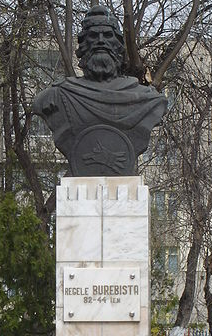
Burebista (Ancient Greek: Βυρεβίστας, Βοιρεβίστας) was the king of the Getae and Dacian tribes from 82/61 BC to 45/44 BC. He was the first king who successfully unified the tribes of the Dacian kingdom, which comprised the area located between the Danube, Tisza, and Dniester rivers, and modern day Romania and Moldova. In the 7th and 6th centuries BC it became home to the Thracian peoples, including the Getae and the Dacians. From the 4th century to the middle of the 2nd century BC the Dacian peoples were influenced by La Tène Celts who brought new technologies with them into Dacia. Sometime in the 2nd century BC, the Dacians expelled the Celts from their lands. Dacians often warred with neighbouring tribes, but the relative isolation of the Dacian peoples in the Carpathian Mountains allowed them to survive and even to thrive. By the 1st century BC the Dacians had become the dominant power.
From 61 BC onwards Burebista pursued a series of conquests that expanded the Dacian kingdom. The tribes of the Boii and Taurisci were destroyed early in his campaigns, followed by the conquest of the Bastarnae and probably the Scordisci peoples. He led raids throughout Thrace, Macedonia, and Illyria. From 55 BC the Greek cities on the west coast of the Black Sea were conquered one after another. These campaigns inevitably culminated in conflict with Rome in 48 BC, at which point Burebista gave his support to Pompey. This in turn made him an enemy to Julius Caesar, who decided to start a campaign against Dacia. This plan fell through in 44 BC when Caesar was assassinated. Burebista himself was assassinated in a plot by the Dacian aristocracy at around the same time.
After Burebista's death, the empire he had created broke up into smaller kingdoms. From the reign of Tiberius to Domitian, Dacian activity was reduced into a defensive state. The Romans abandoned plans of mounting an invasion against Dacia. In 86 AD the Dacian king, Decebalus, successfully re-united the Dacian kingdom under his control. Domitian attempted a hasty invasion against the Dacians that ended in disaster. A second invasion brought peace between Rome and Dacia for nearly a decade, until Trajan became emperor in 98 AD. Trajan also pursued two conquests of Dacia. The first, in 101–102 AD, concluded in a Roman victory. Decebalus was forced to agree to harsh terms of peace, but did not honour them, leading to a second invasion of Dacia in 106 AD that ended the independence of the Dacian kingdom.
Only few ancient sources on Burebista survive: Strabo: Geographica 7.3.5, 7.3.11 and 16.2.39 (who spells his name Byrebistas and Boirebistas); Jordanes: Getica 67 (spells his name Buruista); a marble inscription found in Balchik, Bulgaria (now housed at the National Museum in Sofia), which represents a decree by the citizens of Dionysopolis about Akornion and another inscription found in Nesebar.
The area roughly located between the Danube, Tisza and Dniester rivers – approximately coinciding with modern-day Romania – became home to a varied group of Thracian peoples, including the Getae and Dacians, sometime around the 7th to 6th centuries BC. The Getae and Dacians are related but distinct peoples that are sometimes treated as a single group under the name of Geto-Dacians. The Getae and the Dacians shared many cultural and linguistic similarities. Living in the lower Danube basin, the Getae were able to establish regular trade with the Greek cities along the coast of the Black Sea. The Dacians were located in the Carpatho-Danubian basin along the southern border of the Carpathian Mountains. This relative geographic isolation allowed the Dacians to survive catastrophic struggles – often with the Getae – and thrive to become the dominant tribe by the 1st century BC.
Before Burebista's rule, the Dacians had experienced a succession of kings through the period 450 to 60 BC. The kings included Dromichaetes, Oroles, and Rubobostes in the 3rd and 2nd centuries BC. From the 4th century BC to the 2nd century BC the La Tène Celts of the Danube, Alpines, and Balkans influenced the Dacian culture. La Tène material culture was found in the central and north-west regions of Dacia. The development of a La Tène-based economy in the 3rd and 2nd centuries BC allowed the consolidation of political power through tribal unions. Such regional unions were found among both the Transylvanian Dacians under the rule of Rubobostes and the Moldavian and Muntenian Getae in Argedava.
It is from the La Tène that the Dacians were introduced to the potter's wheel, superior metal-working techniques, and probably a tradition of minting coins. In homes were found a combination of Celtic and Dacian pottery, and certain Celtic-style graves contain Dacian style vessels. This suggests a sort of co-existence and fusion between the cultures. Sometime after around 150 BC, however, evidence of La Tène culture peters out, around the same time the Dacian culture began to mature, as evidenced by population and economic growth. Under Rubobstes the authority of the Dacians appears to have increased, thus ending the dominance of the Celtic culture, and leading to the Celts being expelled from the area or merging into the culture, or both. There is archaeological evidence to suggest that relations between Dacians and Celts living in the areas north and west of Dacia continued. Painted ceramics of late La Tène-style have been found in Dacian sites in west and central Dacia. Some of these ceramics were imported while others were made by Dacian potters imitating Celtic style. A stable monarchy, however, only developed when Burebista became king. Burebista's accession came with the expulsion of Celts around 60 BC when his forces moved through to the middle Danube region, and with the support of the religious establishment and leaders in Dacia which brought around a stricter moral code in the Dacian kingdom. Around this time the pottery of the Dacian style began appearing in Celtic settlements in Central Europe, including the area covered by the former Yugoslavia, especially in Gomolava, Yugoslavia, and Budapest, Hungary.
The exact date that Burebista came to reign over the Dacians is debated among scholars; University of Illinois professor Keith Hitchins gave a starting date for Burebista's reign of 82 BC, while historian Matthew Bunson, and authors John Middleton and Michael Schmitz suggest a starting date around 61–60 BC. The historian John Koch states that Burebista founded an empire sometime during the 1st century BC and that around 61 BC Burebista expelled the Celts and moved into the middle Danube.
Hub AI
Burebista AI simulator
(@Burebista_simulator)
Burebista
Burebista (Ancient Greek: Βυρεβίστας, Βοιρεβίστας) was the king of the Getae and Dacian tribes from 82/61 BC to 45/44 BC. He was the first king who successfully unified the tribes of the Dacian kingdom, which comprised the area located between the Danube, Tisza, and Dniester rivers, and modern day Romania and Moldova. In the 7th and 6th centuries BC it became home to the Thracian peoples, including the Getae and the Dacians. From the 4th century to the middle of the 2nd century BC the Dacian peoples were influenced by La Tène Celts who brought new technologies with them into Dacia. Sometime in the 2nd century BC, the Dacians expelled the Celts from their lands. Dacians often warred with neighbouring tribes, but the relative isolation of the Dacian peoples in the Carpathian Mountains allowed them to survive and even to thrive. By the 1st century BC the Dacians had become the dominant power.
From 61 BC onwards Burebista pursued a series of conquests that expanded the Dacian kingdom. The tribes of the Boii and Taurisci were destroyed early in his campaigns, followed by the conquest of the Bastarnae and probably the Scordisci peoples. He led raids throughout Thrace, Macedonia, and Illyria. From 55 BC the Greek cities on the west coast of the Black Sea were conquered one after another. These campaigns inevitably culminated in conflict with Rome in 48 BC, at which point Burebista gave his support to Pompey. This in turn made him an enemy to Julius Caesar, who decided to start a campaign against Dacia. This plan fell through in 44 BC when Caesar was assassinated. Burebista himself was assassinated in a plot by the Dacian aristocracy at around the same time.
After Burebista's death, the empire he had created broke up into smaller kingdoms. From the reign of Tiberius to Domitian, Dacian activity was reduced into a defensive state. The Romans abandoned plans of mounting an invasion against Dacia. In 86 AD the Dacian king, Decebalus, successfully re-united the Dacian kingdom under his control. Domitian attempted a hasty invasion against the Dacians that ended in disaster. A second invasion brought peace between Rome and Dacia for nearly a decade, until Trajan became emperor in 98 AD. Trajan also pursued two conquests of Dacia. The first, in 101–102 AD, concluded in a Roman victory. Decebalus was forced to agree to harsh terms of peace, but did not honour them, leading to a second invasion of Dacia in 106 AD that ended the independence of the Dacian kingdom.
Only few ancient sources on Burebista survive: Strabo: Geographica 7.3.5, 7.3.11 and 16.2.39 (who spells his name Byrebistas and Boirebistas); Jordanes: Getica 67 (spells his name Buruista); a marble inscription found in Balchik, Bulgaria (now housed at the National Museum in Sofia), which represents a decree by the citizens of Dionysopolis about Akornion and another inscription found in Nesebar.
The area roughly located between the Danube, Tisza and Dniester rivers – approximately coinciding with modern-day Romania – became home to a varied group of Thracian peoples, including the Getae and Dacians, sometime around the 7th to 6th centuries BC. The Getae and Dacians are related but distinct peoples that are sometimes treated as a single group under the name of Geto-Dacians. The Getae and the Dacians shared many cultural and linguistic similarities. Living in the lower Danube basin, the Getae were able to establish regular trade with the Greek cities along the coast of the Black Sea. The Dacians were located in the Carpatho-Danubian basin along the southern border of the Carpathian Mountains. This relative geographic isolation allowed the Dacians to survive catastrophic struggles – often with the Getae – and thrive to become the dominant tribe by the 1st century BC.
Before Burebista's rule, the Dacians had experienced a succession of kings through the period 450 to 60 BC. The kings included Dromichaetes, Oroles, and Rubobostes in the 3rd and 2nd centuries BC. From the 4th century BC to the 2nd century BC the La Tène Celts of the Danube, Alpines, and Balkans influenced the Dacian culture. La Tène material culture was found in the central and north-west regions of Dacia. The development of a La Tène-based economy in the 3rd and 2nd centuries BC allowed the consolidation of political power through tribal unions. Such regional unions were found among both the Transylvanian Dacians under the rule of Rubobostes and the Moldavian and Muntenian Getae in Argedava.
It is from the La Tène that the Dacians were introduced to the potter's wheel, superior metal-working techniques, and probably a tradition of minting coins. In homes were found a combination of Celtic and Dacian pottery, and certain Celtic-style graves contain Dacian style vessels. This suggests a sort of co-existence and fusion between the cultures. Sometime after around 150 BC, however, evidence of La Tène culture peters out, around the same time the Dacian culture began to mature, as evidenced by population and economic growth. Under Rubobstes the authority of the Dacians appears to have increased, thus ending the dominance of the Celtic culture, and leading to the Celts being expelled from the area or merging into the culture, or both. There is archaeological evidence to suggest that relations between Dacians and Celts living in the areas north and west of Dacia continued. Painted ceramics of late La Tène-style have been found in Dacian sites in west and central Dacia. Some of these ceramics were imported while others were made by Dacian potters imitating Celtic style. A stable monarchy, however, only developed when Burebista became king. Burebista's accession came with the expulsion of Celts around 60 BC when his forces moved through to the middle Danube region, and with the support of the religious establishment and leaders in Dacia which brought around a stricter moral code in the Dacian kingdom. Around this time the pottery of the Dacian style began appearing in Celtic settlements in Central Europe, including the area covered by the former Yugoslavia, especially in Gomolava, Yugoslavia, and Budapest, Hungary.
The exact date that Burebista came to reign over the Dacians is debated among scholars; University of Illinois professor Keith Hitchins gave a starting date for Burebista's reign of 82 BC, while historian Matthew Bunson, and authors John Middleton and Michael Schmitz suggest a starting date around 61–60 BC. The historian John Koch states that Burebista founded an empire sometime during the 1st century BC and that around 61 BC Burebista expelled the Celts and moved into the middle Danube.
Recent media