
Recent from talks
Calvin cycle
Knowledge base stats:
Talk channels stats:
Members stats:
Calvin cycle
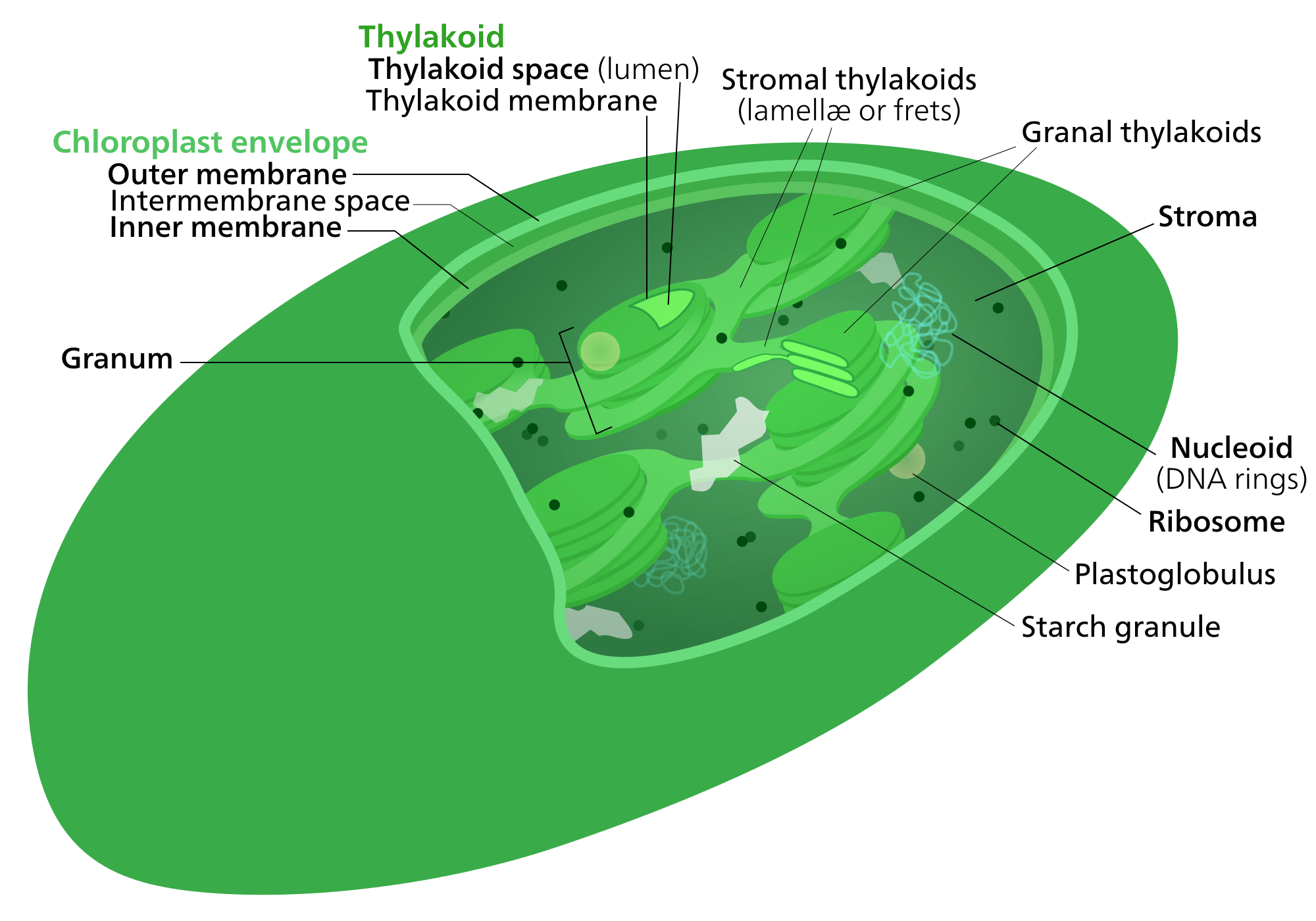
The Calvin cycle, light-independent reactions, bio synthetic phase, dark reactions, or photosynthetic carbon reduction (PCR) cycle of photosynthesis is a series of chemical reactions that convert carbon dioxide and hydrogen-carrier compounds into glucose. The Calvin cycle is present in all photosynthetic eukaryotes and also many photosynthetic bacteria. In plants, these reactions occur in the stroma, the fluid-filled region of a chloroplast outside the thylakoid membranes. These reactions take the products (ATP and NADPH) of light-dependent reactions and perform further chemical processes on them. The Calvin cycle uses the chemical energy of ATP and the reducing power of NADPH from the light-dependent reactions to produce sugars for the plant to use. These substrates are used in a series of reduction-oxidation (redox) reactions to produce sugars in a step-wise process; there is no direct reaction that converts several molecules of CO2 to a sugar. There are three phases to the light-independent reactions, collectively called the Calvin cycle: carboxylation, reduction reactions, and ribulose 1,5-bisphosphate (RuBP) regeneration.
Though it is also called the "dark reaction", the Calvin cycle does not occur in the dark or during nighttime. This is because the process requires NADPH, which is short-lived and comes from light-dependent reactions. In the dark, plants instead release sucrose into the phloem from their starch reserves to provide energy for the plant. The Calvin cycle thus happens when light is available independent of the kind of photosynthesis (C3 carbon fixation, C4 carbon fixation, and crassulacean acid metabolism (CAM)); CAM plants store malic acid in their vacuoles every night and release it by day to make this process work.
The reactions of the Calvin cycle are closely coupled to the thylakoid electron transport chain, as the energy required to reduce the carbon dioxide is provided by NADPH produced during the light dependent reactions. The process of photorespiration, also known as C2 cycle, is also coupled to the Calvin cycle, as it results from an alternative reaction of the RuBisCO enzyme, and its final byproduct is another glyceraldehyde-3-P molecule.[citation needed]
The Calvin cycle, Calvin–Benson–Bassham (CBB) cycle, reductive pentose phosphate cycle (RPP cycle), or C3 cycle is a series of biochemical redox reactions that take place in the stroma of chloroplast in photosynthetic organisms. The cycle was discovered in 1950 by Melvin Calvin, James Bassham, and Andrew Benson at the University of California, Berkeley by using the radioactive isotope carbon-14.
Photosynthesis occurs in two stages in a cell. In the first stage, light-dependent reactions capture the energy of light and use it to make the energy-storage molecule ATP and the moderate-energy hydrogen carrier NADPH. The Calvin cycle uses these compounds to convert carbon dioxide and water into organic compounds that can be used by the organism (and by animals that feed on it). This set of reactions is also called carbon fixation. The key enzyme of the cycle is called RuBisCO. In the following biochemical equations, the chemical species (phosphates and carboxylic acids) exist in equilibria among their various ionized states as governed by the pH.[citation needed]
The enzymes in the Calvin cycle are functionally equivalent to most enzymes used in other metabolic pathways such as gluconeogenesis and the pentose phosphate pathway, but the enzymes in the Calvin cycle are found in the chloroplast stroma instead of the cell cytosol, separating the reactions. They are activated in the light (which is why the name "dark reaction" is misleading), and also by products of the light-dependent reaction. These regulatory functions prevent the Calvin cycle from being respired to carbon dioxide. Energy (in the form of ATP) would be wasted in carrying out these reactions when they have no net productivity.[citation needed]
The sum of reactions in the Calvin cycle is the following:[citation needed]
Hexose (six-carbon) sugars are not products of the Calvin cycle. Although many texts list a product of photosynthesis as C
6H
12O
6, this is mainly for convenience to match the equation of aerobic respiration, where six-carbon sugars are oxidized in mitochondria. The carbohydrate products of the Calvin cycle are three-carbon sugar phosphate molecules, or "triose phosphates", namely, glyceraldehyde-3-phosphate (G3P).[citation needed]
Hub AI
Calvin cycle AI simulator
(@Calvin cycle_simulator)
Calvin cycle
The Calvin cycle, light-independent reactions, bio synthetic phase, dark reactions, or photosynthetic carbon reduction (PCR) cycle of photosynthesis is a series of chemical reactions that convert carbon dioxide and hydrogen-carrier compounds into glucose. The Calvin cycle is present in all photosynthetic eukaryotes and also many photosynthetic bacteria. In plants, these reactions occur in the stroma, the fluid-filled region of a chloroplast outside the thylakoid membranes. These reactions take the products (ATP and NADPH) of light-dependent reactions and perform further chemical processes on them. The Calvin cycle uses the chemical energy of ATP and the reducing power of NADPH from the light-dependent reactions to produce sugars for the plant to use. These substrates are used in a series of reduction-oxidation (redox) reactions to produce sugars in a step-wise process; there is no direct reaction that converts several molecules of CO2 to a sugar. There are three phases to the light-independent reactions, collectively called the Calvin cycle: carboxylation, reduction reactions, and ribulose 1,5-bisphosphate (RuBP) regeneration.
Though it is also called the "dark reaction", the Calvin cycle does not occur in the dark or during nighttime. This is because the process requires NADPH, which is short-lived and comes from light-dependent reactions. In the dark, plants instead release sucrose into the phloem from their starch reserves to provide energy for the plant. The Calvin cycle thus happens when light is available independent of the kind of photosynthesis (C3 carbon fixation, C4 carbon fixation, and crassulacean acid metabolism (CAM)); CAM plants store malic acid in their vacuoles every night and release it by day to make this process work.
The reactions of the Calvin cycle are closely coupled to the thylakoid electron transport chain, as the energy required to reduce the carbon dioxide is provided by NADPH produced during the light dependent reactions. The process of photorespiration, also known as C2 cycle, is also coupled to the Calvin cycle, as it results from an alternative reaction of the RuBisCO enzyme, and its final byproduct is another glyceraldehyde-3-P molecule.[citation needed]
The Calvin cycle, Calvin–Benson–Bassham (CBB) cycle, reductive pentose phosphate cycle (RPP cycle), or C3 cycle is a series of biochemical redox reactions that take place in the stroma of chloroplast in photosynthetic organisms. The cycle was discovered in 1950 by Melvin Calvin, James Bassham, and Andrew Benson at the University of California, Berkeley by using the radioactive isotope carbon-14.
Photosynthesis occurs in two stages in a cell. In the first stage, light-dependent reactions capture the energy of light and use it to make the energy-storage molecule ATP and the moderate-energy hydrogen carrier NADPH. The Calvin cycle uses these compounds to convert carbon dioxide and water into organic compounds that can be used by the organism (and by animals that feed on it). This set of reactions is also called carbon fixation. The key enzyme of the cycle is called RuBisCO. In the following biochemical equations, the chemical species (phosphates and carboxylic acids) exist in equilibria among their various ionized states as governed by the pH.[citation needed]
The enzymes in the Calvin cycle are functionally equivalent to most enzymes used in other metabolic pathways such as gluconeogenesis and the pentose phosphate pathway, but the enzymes in the Calvin cycle are found in the chloroplast stroma instead of the cell cytosol, separating the reactions. They are activated in the light (which is why the name "dark reaction" is misleading), and also by products of the light-dependent reaction. These regulatory functions prevent the Calvin cycle from being respired to carbon dioxide. Energy (in the form of ATP) would be wasted in carrying out these reactions when they have no net productivity.[citation needed]
The sum of reactions in the Calvin cycle is the following:[citation needed]
Hexose (six-carbon) sugars are not products of the Calvin cycle. Although many texts list a product of photosynthesis as C
6H
12O
6, this is mainly for convenience to match the equation of aerobic respiration, where six-carbon sugars are oxidized in mitochondria. The carbohydrate products of the Calvin cycle are three-carbon sugar phosphate molecules, or "triose phosphates", namely, glyceraldehyde-3-phosphate (G3P).[citation needed]
Recent media