Hubbry Logo
Melvin CalvinMelvin CalvinMain
Open search
Melvin Calvin
Community hub
Melvin Calvin
logo
8 pages, 0 posts
0 subscribers
Be the first to start a discussion here.
Melvin Calvin
Melvin Calvin
from Wikipedia

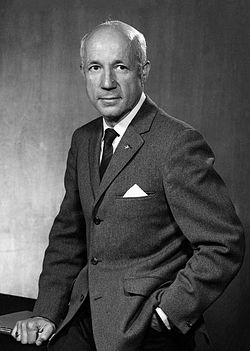
Melvin Ellis Calvin (April 8, 1911 – January 8, 1997)[3] was an American biochemist known for discovering the Calvin cycle along with Andrew Benson and James Bassham, for which he was awarded the 1961 Nobel Prize in Chemistry. He spent most of his five-decade career at the University of California, Berkeley.

Key Information

Early life and education

[edit]

Melvin Calvin was born in St. Paul, Minnesota, the son of Elias Calvin and Rose Herwitz,[4] Jewish immigrants from the Russian Empire (now known as Lithuania and Georgia).

At an early age, Melvin Calvin’s family moved to Detroit, MI where his parents ran a grocery store to earn their living. Melvin Calvin was often found exploring his curiosity by looking through all of the products that made up their shelves.

After he graduated from Central High School in 1928,[5] he went on to study at Michigan College of Mining and Technology (now known as Michigan Technological University) where he received the school’s first Bachelors of Science in Chemistry. He went on to earn his Ph.D. at the University of Minnesota in 1935. While under the mentorship of George Glocker, he studied and wrote his thesis on the electron affinity of halogens. He was invited to join the lab of Michael Polanyi as a Post Doctoral student at the University of Manchester. The two years he spent at the lab were focused on studying the structure and behavior of organic molecules. In 1942, He married Marie Genevieve Jemtegaard,[4] and they had three daughters, Elin, Sowie, and Karole, and a son, Noel.[6]

Career

[edit]

On a visit to the University of Manchester, Joel Hildebrand, the director of UC Radiation Laboratory, invited Calvin to join the faculty at the University of California, Berkeley. This made him the first non-Berkeley graduate hired by the chemistry department in +25 years.[7] He invited Calvin to push forward in radioactive carbon research because "now was the time".[6] Calvin's original research at UC Berkeley was based on the discoveries of Martin Kamen and Sam Ruben in long-lived radioactive carbon-14 in 1940.

In 1947, he was promoted to a Professor of Chemistry and the director of the Bio-Organic Chemistry group in the Lawrence Radiation Laboratory. The team he formed included: Andrew Benson, James A. Bassham, and several others. Andrew Benson was tasked with setting up the photosynthesis laboratory. The purpose of this lab was to discover the path of carbon fixation through the process of photosynthesis. The greatest impact of the research was discovering the way that light energy converts into chemical energy.[6] Using the carbon-14 isotope as a tracer, Calvin, Andrew Benson and James Bassham mapped the complete route that carbon travels through a plant during photosynthesis, starting from its absorption as atmospheric carbon dioxide to its conversion into carbohydrates and other organic compounds.[8] The process is part of the photosynthesis cycle. It was given the name the Calvin–Benson–Bassham Cycle, named for the work of Melvin Calvin, Andrew Benson, and James Bassham. There were many people who contributed to this discovery but ultimately Melvin Calvin led the charge (see below).

In 1963, Calvin was given the additional title of Professor of Molecular Biology. He was founder and Director of the Laboratory of Chemical Biodynamics, known as the “Roundhouse”, and simultaneously Associate Director of Berkeley Radiation Laboratory, where he conducted much of his research until his retirement in 1980. In his final years of active research, he studied the use of oil-producing plants as renewable sources of energy. He also spent many years testing the chemical evolution of life and wrote a book on the subject that was published in 1969.[9]

The foundation of the Melvin Calvin laboratory

[edit]

The circular laboratory known as the “Roundhouse”  was designed to facilitate collaboration between students and visiting scientists in Calvin’s lab.[3] It was created as Calvin had an insatiable curiosity that drove him to become well versed in many fields and recognize the benefits of cross disciplinary collaboration. Open scientific discussion was a large part of his students' everyday lives and he wanted to create a community space where all kinds of minds and knowledge were brought together. In order to help facilitate this in the Roundhouse, he brought in post doctoral students and guest scientists from all around the world.[6]

Calvin established a community within the roundhouse where students and staff members felt they could truly realize their potential. His management skills became renowned and many creative scientific outlets are modeled after them today. He was known as Mr. Photosynthesis but that does not even begin to describe how his organizational and management skills revolutionized the scientific community across all fronts.[6]

Discovery of the Calvin cycle

[edit]

The discovery of the Calvin cycle would start by building on the research done by Sam Ruben and Martin Kamen after their work on the carbon-14 isotope came to an end after Ruben’s accidental death in the laboratory and Kamen found himself in trouble over security breaches with the FBI and Department of State. Despite this Ernest Lawrence, the Radiation Laboratory director, was proud of the work they had done and wanted to see the research furthered so he along with Wendell Latimer, the Dean of Chemistry and Chemical Engineering, recruited Calvin in 1945.[7]

The lab's original focus was on the applications of Carbon-14 in medicine and synthesis of radio-labeled amino acids and biological metabolites for medical research. Calvin began to establish the lab by recruiting strong chemists in labs across the country. He then recruited Andrew Benson, who had worked with Ruben and Kamen previously on photosynthesis and C-14, to head that aspect of the lab.[7]

The predominating theory regarding the production of sugars and other reduced carbon compounds was that they were considered to be a “light” reaction. This theory had yet to be disproven. Benson began his investigation by continuing his previous work with the isolation of the product of dark CO2 fixation and would then crystalize the radioactive succinic acid. This paired with exposing algae to light without CO2 and then immediately transferring it to a dark flask that contained CO2 and observing that the radioactive sucrose was still formed at the same rate as when photosynthesis was allowed to be carried out in pure light gave definitive evidence that there was a non-photochemical reduction of CO2.[7]

There was an issue though, they now needed to determine the first product of the fixation of CO2. In order to do this, they began utilizing paper chromatographic techniques that were pioneered by W.A Stepka. This allowed them to determine that the first product of CO2 fixation was 3-Carbon phosphoglyceric acid (PGA). A long known product of glucose fermentation per the reaction outlined years earlier by Ruben and Kamen.[7]

After this discovery, Calvin’s competing lab at the University of Chicago was unable to confirm the discovery and thus created a strong attack on Calvin’s literature. This led to a symposium sponsored by the American Association for the Advancement of Science to determine which lab was correct. Though met with resistance at the conference Calvin and Benson were able to convince the audience of their position and the attack was dismissed.[7]

After this first identification the remaining members of the glycolytic sequence save for two were able to be identified based on their chemical behavior. The two unknown components were sugars. Benson, after noticing their separation on the paper chromatograms and examining their reactivities, realized they were ketoses. Thanks to the collaboration of James A. Bassham the compounds were able to be subjected to periodate degradation. The identification of 14% activity in the carbonyl carbon in one of the sugars made Bassham turn his attention to seven-carbon sugars. Despite several more tests though, Bassham was unable to determine the identities of these two sugars.[7]

Further experimentation showed that through restricting the uptake of CO2 the level of ribulose bisphosphate could be increased. This was an indication that it was the acceptor molecule for CO2. Though the mechanism for this was not immediately obvious, Calvin was able to determine one later called the novel carboxylation mechanism which would lead to the series completion in 1958.[7]

Public service

[edit]

Throughout his life, Calvin acted as a public servant in many different capacities. He served as president of the American Chemical Society, the American Society of Plant Physiology, and the Pacific Division of the American Association for the Advancement of Science. Along with all of this he also served as chairman of the Committee on Science and Public Policy for the National Academy of Sciences.[7]

One major contribution he had as a public servant was his work with NASA. In collaboration with NASA, he assisted in the creation of plans to protect the Moon against biological contamination from the Earth and the Earth from contamination from the Moon during the Apollo missions. As well as, helping strategies on how to best bring back lunar samples and how to search for biological life on other planets.[7]

Along with these servant capacities he also worked as a public servant for the U.S government. He served as a member of the President’s Science Advisory Committee from 1963 to 1966 and served on the top advisory body of the Department of Energy, the Energy Research Advisory Board.[7]

Finally, he served on many international committees and for many international organizations including the Joint Commission on Applied Radioactivity of the International Union of Pure and Applied Chemistry, the U.S. Committee of the International Union of Biochemistry, and the Commission on Molecular Biophysics of the International Organization for Pure and Applied Biophysics[7]

Controversy

[edit]

In his 2011 television history of Botany for the BBC, Timothy Walker, Director of the University of Oxford Botanic Garden, criticised Calvin's treatment of Andrew Benson, claiming that Calvin had got the credit for Benson's work after firing him, and had failed to mention Benson's role when writing his autobiography decades later.[10] Benson himself has also mentioned being fired by Calvin, and has complained about not being mentioned in his autobiography.[11]

Honours and legacy

[edit]

1954 - Elected to the United States National Academy of Sciences[12]

1955 - Awarded the Centenary Prize[13]

1958 - Elected a foreign member of the Royal Netherlands Academy of Arts and Sciences

1958 - Elected to the American Academy of Arts and Sciences[14]

1959 - Elected a Member of the German Academy of Sciences Leopoldina

1960 - Elected to the American Philosophical Society[15]

1961 - Melvin Calvin received the Nobel Prize in Chemistry “for his research on the carbon dioxide assimilation in plants”

1964 - Awarded the Davy Medal of the Royal Society

1971 - Honorary Doctor of Laws (LL.D.) degree from Whittier College[16]

1978 - Priestley medal of the American Chemical Society

Calvin was featured on the 2011 volume of the American Scientists collection of US postage stamps, along with Asa Gray, Maria Goeppert-Mayer, and Severo Ochoa. This was the third volume in the series, the first two having been released in 2005 and 2008.

Calvin was award 13 other honorary degrees.

Publications

[edit]

See also

[edit]

References

[edit]
[edit]
Revisions and contributorsEdit on WikipediaRead on Wikipedia
from Grokipedia
Melvin Calvin (April 8, 1911 – January 8, 1997) was an American biochemist renowned for his pioneering research on the biochemical mechanisms of , particularly for elucidating the path of carbon assimilation in , which earned him the 1961 . Born in St. Paul, , to Russian immigrant parents, Calvin grew up in and pursued his education in chemistry, earning a B.S. from the Michigan College of Mining and Technology in 1931 and a Ph.D. from the in 1935. After postdoctoral research with at the from 1935 to 1937, he joined the , as an instructor in 1937, rising to full professor by 1947 and directing the Laboratory of Chemical Biodynamics from 1960 onward. Calvin's most transformative contributions centered on , where he developed innovative techniques using radioactive (¹⁴C) to trace the incorporation of CO₂ into organic compounds in and . By the early 1950s, his team at Berkeley's Radiation Laboratory identified as the first stable product of carbon fixation and mapped the cyclical pathway—now known as the —involving enzymes like ribulose-1,5-bisphosphate carboxylase (), fundamentally explaining how convert atmospheric into sugars. This work, completed by 1958, integrated principles from chemistry, physics, and biology, revolutionizing understanding of this essential life process. Beyond , Calvin's interdisciplinary research spanned hot atom chemistry, chemical evolution, organic geochemistry, , and even analysis of lunar samples from the Apollo missions, while he advocated for production from plant sources and . He received numerous honors, including election to the in 1954, the Davy Medal in 1964, the Priestley Medal in 1978, and the in 1989. His legacy endures through the Melvin Calvin Laboratory at Berkeley, established in 1964 for collaborative biodynamics research, and ongoing influences in and .

Early Life and Education

Childhood and Family

Melvin Calvin was born on April 8, 1911, in St. Paul, Minnesota, to Jewish immigrant parents Elias Calvin and Rose (née Hervitz) Calvin. His father had emigrated from , where he was originally named Kalvarisky, and his name was changed to Calvin upon arrival at around 1901; his mother came from Georgia in the . Shortly after Calvin's birth, the family relocated to , , seeking better opportunities in the burgeoning auto industry. Elias initially worked as a cigar maker before transitioning to an automotive mechanic and eventually managing an food store, while the family operated a small grocery store to support themselves. Rose served as a homemaker, raising Melvin in a modest working-class environment amid the challenges faced by Jewish immigrants, including economic instability that intensified with the onset of the in the late 1920s. Growing up in Detroit's Jewish immigrant community, Calvin attended Central High School, where he was exposed to science classes that piqued his curiosity. He often helped at the family store, becoming intrigued by the chemical makeup of its products, which sparked his early fascination with chemistry. Additionally, childhood activities such as collecting rocks, observing birds, and conducting simple home experiments further nurtured his interest in natural phenomena and scientific inquiry.

Academic Training

Melvin Calvin earned his degree in chemistry from the Michigan College of Mining and Technology (now ) in 1931, graduating at the age of 20 as the institution's first chemistry major. This early achievement laid the foundation for his advanced studies in . He then pursued graduate work at the , where he completed his in chemistry in 1935 under the supervision of George A. Glockler. His doctoral thesis focused on the electron affinity of , particularly examining the formation of negative ions in iodine vapor through electron impacts and space-charge effects, as detailed in a collaborative publication with Glockler. This research introduced Calvin to quantum mechanical principles and spectroscopic techniques, which later informed his biophysical investigations into complex molecular systems. Following his PhD, Calvin held a two-year postdoctoral fellowship at the in from 1935 to 1937, funded by the , under the guidance of . There, he explored coordination catalysis, including the activation of molecular and studies on metalloporphyrins and phthalocyanines, deepening his expertise in reaction kinetics and . These experiences in and electronic structure provided essential tools for his subsequent work in organic and biochemical mechanisms.

Professional Career

Early Research Positions

Following his PhD training in physical chemistry at the University of Minnesota, Melvin Calvin joined the , as an instructor in the Department of Chemistry in 1937, at the age of 26. Invited by department chair , Calvin became the first non-Berkeley PhD recipient hired by the department in more than 25 years, marking a notable exception to the institution's traditional recruitment practices. Calvin's early work at Berkeley emphasized physical and organic chemistry, as evidenced by his co-authorship in 1941 of The Theory of with Gerald E. K. Branch, a text that integrated with reaction mechanisms. His research focused on metal complexes, particularly the coordination of iron and other metals in porphyrin analogs, which served as models for and explored potential oxygen-carrying synthetic chelates. These studies extended to reactions and energy transfer processes in photochemical systems. A key aspect of Calvin's initial efforts involved close collaboration with Gilbert N. Lewis and other Berkeley colleagues on the photochemistry of colored porphyrin compounds, including investigations into solvent effects on their electronic and spectral properties. This partnership produced influential publications, such as the 1939 review "The Color of Organic Substances" co-authored with Lewis, which analyzed how environmental factors like solvents influence molecular absorption and color in organic systems. These foundational explorations laid the groundwork for Calvin's later biochemical applications while establishing his reputation in coordination and photochemistry.

World War II and Postwar Transition

During , Melvin Calvin contributed to the as part of the Plutonium Project in from 1942 to 1945, where he developed the thenoyltrifluoroacetone (TTA) solvent extraction process for separating from fission products. This work built on his pre-war expertise in techniques, including photochemical methods explored during his doctoral research. While at , Calvin became interested in the use of radioisotopes as tracers in chemical and biological research, inspired by the 1940 discovery of by Martin Kamen and Samuel Ruben, which provided a long-lived ideal for tracing biochemical pathways. Following the war, Calvin returned to Berkeley in 1946 and was appointed associate director of the Radiation Laboratory's bio-organic chemistry group, a role recruited by Dean Wendell Latimer and Director to integrate chemical and biological research using radioisotopes. The group's initial efforts centered on applications of ¹⁴C in and the synthesis of radio-labeled and biological metabolites, providing essential techniques for subsequent biochemical research. Later studies in the group included investigations into the effects of on biological molecules, such as the conversion of to uracil and ring breakdown in irradiated aqueous solutions. Amid these professional demands, Calvin married Jemtegaard on October 4, 1942, with Glenn Seaborg serving as best man, and the couple welcomed their first child, daughter Elin, in the early 1940s, which helped foster a balanced approach to his intensifying career and family life. This personal milestone, followed by two more children (Karole and Noel), supported his transition to leadership in interdisciplinary science at Berkeley.

Photosynthesis Research

Methodological Innovations

Melvin Calvin adapted (¹⁴C) as a tracer for short-term labeling experiments in , initiating these studies in 1945 shortly after the end of . This approach allowed precise tracking of carbon incorporation into organic compounds within seconds to minutes, leveraging the isotope's long and detectability via . Following the war, Calvin obtained ¹⁴C supplies from the Radiation Laboratory at the , enabling systematic biological applications of the tracer previously used in . A key innovation was the invention of the "lollipop" apparatus, a simple disk-shaped device resembling a that held suspensions of photosynthetic organisms like (Chlorella pyrenoidosa). In this setup, cells were exposed to ¹⁴CO₂ gas under illumination for controlled durations, then rapidly killed by immersion in to halt , followed by extraction of labeled compounds for . This apparatus facilitated exposures as brief as fractions of a second, capturing early intermediates in the carbon fixation process. To separate and identify the labeled metabolites, Calvin employed combined with radioautography, techniques that resolved over 50 distinct intermediates based on their migration patterns and . Extracts were spotted on , developed in solvents like phenol-water or butanol-propionic acid, and the dried chromatograms exposed to to visualize radioactive spots corresponding to individual compounds. In collaboration with Andrew A. Benson and James A. Bassham, Calvin refined extraction and identification protocols, notably advancing two-dimensional to enhance resolution of complex mixtures. This method involved sequential development in perpendicular directions with different solvent systems, allowing clear separation of , sugars, and organic acids for subsequent degradation and carbon-position analysis. These improvements enabled the mapping of carbon flow through dozens of biochemical intermediates.

Discovery of the Carbon Reduction Pathway

In 1948, Melvin Calvin and his collaborators exposed suspensions of the green alga to short pulses of radioactive dioxide (¹⁴CO₂) under illuminated conditions, followed by rapid killing and extraction of the cells. Analysis revealed that the initial labeled compound was 3-phosphoglycerate (3-PGA), a three-carbon phosphorylated acid, establishing it as the first stable product of photosynthetic CO₂ fixation. This finding shifted understanding away from earlier hypotheses involving direct two-carbon intermediates and highlighted the reductive nature of the pathway. Subsequent experiments traced the fate of the labeled carbon through intermediates, mapping a 13-step cyclic reduction process that assimilates CO₂ into carbohydrates. The pathway centered on ribulose-1,5-bisphosphate (RuBP) as the primary CO₂ acceptor, with ribulose-1,5-bisphosphate (Rubisco, initially termed carboxydismutase) as the key enzyme catalyzing the initial . By 1954, the full cycle had been elucidated, demonstrating how CO₂ fixation leads to glyceraldehyde-3-phosphate (G3P), with five-sixths of the G3P used to regenerate RuBP via rearrangements resembling the . The core reactions of the cycle comprise three phases: , reduction, and regeneration. In , facilitates the reaction of RuBP with CO₂ and water to yield two molecules of 3-PGA: \ceRuBP+CO2+H2O>[Rubisco]2×3PGA\ce{RuBP + CO2 + H2O ->[Rubisco] 2 \times 3-PGA} This is followed by reduction, where each 3-PGA is sequentially phosphorylated by ATP and reduced by NADPH to form G3P: \ce3PGA+ATP>1,3bisphosphoglycerate+ADP\ce{3-PGA + ATP -> 1,3-bisphosphoglycerate + ADP} \ce1,3bisphosphoglycerate+NADPH>G3P+NADP++Pi\ce{1,3-bisphosphoglycerate + NADPH -> G3P + NADP+ + Pi} (Overall: \ce3PGA+ATP+NADPH>G3P+ADP+NADP++Pi\ce{3-PGA + ATP + NADPH -> G3P + ADP + NADP+ + Pi}). Regeneration then converts five G3P molecules back to three RuBP, consuming three additional ATP: \ce5G3P+3ATP>3RuBP+3ADP+3Pi\ce{5 G3P + 3 ATP -> 3 RuBP + 3 ADP + 3 Pi} These steps collectively enable net production of one G3P per three CO₂ fixed. The cyclic nature and energy demands were validated through pulse-chase labeling experiments with ¹⁴CO₂, where brief exposures (as short as 5 seconds) to labeled CO₂ followed by chasing with unlabeled CO₂ allowed tracking of label distribution over time via radioautography of chromatograms. These studies confirmed the sequential appearance and decline of intermediates, supporting the cycle's operation and revealing that fixing six CO₂ molecules to produce one glucose requires 18 ATP and 12 NADPH, supplied from the light reactions.

Laboratory Leadership

Establishment of the Bio-Organic Group

In 1946, Melvin Calvin was appointed director of the newly established Bio-Organic Chemistry Group at the , Berkeley's Lawrence Radiation Laboratory, following his recruitment the previous year by dean Wendell Latimer and laboratory director Ernest O. Lawrence to lead efforts in applying radioisotopes to biological and chemical research. The group began with a small initial team of approximately 10 researchers, primarily chemists with interests in , focused on radiation to investigate the effects of on organic reactions and living systems using tracers like carbon-14. This setup marked a postwar transition for Calvin, building on his wartime experience at Los Alamos to pioneer isotope-based studies in biodynamics. Key to the group's early success was the recruitment of interdisciplinary talent, including Andrew A. Benson in 1945, who was hired as a senior to establish and direct the research efforts, drawing on his prior work with at Caltech. James A. Bassham joined in 1950 as a key collaborator, bringing expertise in and contributing to the integration of physics, chemistry, and in experimental design. The team's collaborative ethos emphasized shared lab spaces and cross-disciplinary problem-solving, fostering innovations in tracer methodology for studying life processes. Funding for the group came primarily from the Atomic Energy Commission (AEC), which provided block grants to support isotope production and biodynamics research, ensuring stability amid postwar uncertainties. Early facilities included the 60-inch Crocker at the Radiation Laboratory for generating isotopes and repurposed greenhouses on campus roofs for culturing algae such as and , enabling controlled photosynthetic experiments in the Old Radiation Laboratory's open-layout wooden structure. These resources supported the group's philosophical shift toward "chemical biodynamics," an integrative approach that treated biological phenomena as dynamic chemical systems amenable to physical and chemical analysis.

Expansion and Renaming

Following his 1961 , Calvin's laboratory at the , underwent significant expansion, growing to include over 50 staff members and incorporating advanced instrumentation such as spectrometers and early computer systems for modeling biochemical simulations. This growth was facilitated by increased funding from the Nobel recognition, enabling the construction of a dedicated circular building in 1964 designed to foster interdisciplinary interactions among researchers. Over the subsequent decades, the lab managed a rotating cohort of 230 to 250 visiting scientists and students, supporting a dynamic research environment. In 1960, the bio-organic chemistry group was formally renamed the Laboratory of Chemical Biodynamics to reflect its broadened focus on the dynamic processes underlying biological systems. This renaming marked a shift toward integrating chemistry with biological dynamics, aligning with Calvin's vision for holistic studies of life's chemical foundations. The laboratory continued under this name until 1980, when, following Calvin's retirement, it was renamed the Melvin Calvin Laboratory in honor of his foundational contributions. Under Calvin's leadership, the laboratory diversified beyond photosynthesis into non-photosynthetic projects, including simulations of chemical evolution to explore the origins of life through abiotic synthesis of organic compounds. These efforts encompassed experiments mimicking prebiotic conditions, such as of gases to produce biomolecules, expanding the lab's scope to organic geochemistry and related fields. The laboratory also emphasized international collaborations, notably through exchanges with Soviet scientists during the détente period, including joint editorial work on space biology and medicine with figures like Oleg G. Gazenko. These partnerships facilitated cross-cultural scientific dialogue and resource sharing amid geopolitical tensions. Calvin retired as director in 1980 but retained an advisory role, maintaining a small research group and providing guidance on ongoing projects until his death in 1997. This continued involvement ensured the laboratory's legacy in biodynamics research persisted through his mentorship.

Broader Scientific Contributions

Radiation and Organic Chemistry

In the 1940s and 1950s, Melvin Calvin investigated the effects of ionizing radiation on biomolecules, focusing on mechanisms underlying radiation-induced mutations. His early contributions to molecular genetics included proposing that hydrogen bonding facilitates the stacking of nucleic acid bases in chromosomes and that the ultraviolet component of cosmic rays could trigger mutations by disrupting these bonds in DNA. These ideas built on his broader interest in radiation chemistry, where he explored how high-energy particles generate reactive species that alter biological structures, laying groundwork for understanding cellular damage from environmental radiation sources. Calvin's laboratory at the University of California's Radiation Laboratory advanced techniques for incorporating radioactive tracers into organic systems. These innovations facilitated precise tracking of isotopic distributions in complex mixtures, enhancing the resolution of radiochemical analyses. Such methodological refinements were essential for his group's multidisciplinary investigations into radiation's chemical impacts. A significant aspect of Calvin's organic chemistry research involved the synthesis and study of metal-porphyrin complexes as biomimetic models for natural pigments like chlorophyll and heme. Collaborating with G.N. Lewis, he examined the photochemistry of porphyrin analogs, coordinating metals to the porphyrin ring and analyzing their stability and reactivity. These studies contributed to understanding coordination chemistry in biological electron transfer processes. Calvin also contributed to hot atom chemistry, a field examining the behavior of atoms energized by nuclear processes. His group, including specialist Robert M. Lemmon, tracked recoil atoms in isotopically labeled organic compounds to probe reaction pathways initiated by high-energy displacements. This work revealed how "hot" atoms—possessing kinetic energies far exceeding thermal levels—could insert into molecular bonds or abstract ligands, providing insights into non-equilibrium chemical dynamics relevant to nuclear reactors and cosmic radiation effects. These efforts culminated in key publications, notably The Chemistry of Metal Chelate Compounds (1952), co-authored with Arthur E. Martell, which systematically outlined the thermodynamic properties of chelate formations. The book detailed stability constants, such as log K values for EDTA complexes with divalent metals (e.g., log K ≈ 16.5 for Cu²⁺-EDTA), emphasizing factors like and electronic effects that govern complex durability in aqueous solutions. This foundational text influenced coordination chemistry and applications in analytical separations. Calvin's radiation and pursuits were foreshadowed by his involvement in the , where he developed and solvent extraction methods for isolating from fission products, familiarizing him with radiochemical handling and isotopic enrichment techniques.

Origins of Life and

In the , Melvin Calvin advanced hypotheses on chemical evolution by simulating prebiotic conditions through irradiation (e.g., alpha particles) of gas mixtures containing (CO₂), (H₂), (NH₃), and (H₂O), which yielded and other organic compounds representative of an atmosphere. These experiments built on his earlier radiation-based syntheses, demonstrating how simple gases could evolve into complex biomolecules under energy inputs akin to solar radiation. Calvin's analysis of the Orgueil meteorite in 1960, conducted with Susan K. Vaughn, involved extracting organic materials that revealed porphyrins and aromatic hydrocarbons, providing evidence for extraterrestrial organic synthesis independent of terrestrial . The ultraviolet and spectra of these extracts indicated structured carbon compounds, suggesting abiotic processes in space could contribute to life's building blocks on . A key aspect of Calvin's prebiotic framework involved the synthesis pathway: CO+H2+NH3HCNamino acids\text{CO} + \text{H}_2 + \text{NH}_3 \rightarrow \text{HCN} \rightarrow \text{amino acids} via Fischer-Tropsch-type catalysis, where metal surfaces in primitive environments converted simple gases into hydrogen cyanide intermediates leading to amino acids. These investigations culminated in Calvin's 1969 book Chemical Evolution: Molecular Evolution Towards the Origin of Living Systems on the Earth and Elsewhere, which synthesized his findings on progressing from simple gases to molecular complexity, emphasizing extraterrestrial and geochemical roles in abiogenesis. The work applied radiation chemistry techniques briefly to model energy-driven transformations without delving into damage mechanisms.

Immunochemistry and Lunar Sample Analysis

In addition to his work on chemical evolution, Calvin contributed to immunochemistry, exploring the structure and function of antibodies and their interactions with antigens using isotopic labeling techniques developed in his laboratory. This research advanced understanding of immune responses at the molecular level. During the Apollo program in the late 1960s and 1970s, Calvin analyzed lunar samples for organic compounds, applying radiochemical methods to detect trace hydrocarbons and potential biomarkers. His findings indicated abiotic origins for most organics but highlighted the potential for extraterrestrial chemistry to inform Earth's prebiotic environment.

Public Engagement

Government and Advisory Roles

Melvin Calvin served on advisory panels for the U.S. Atomic Energy Commission (AEC) during the 1950s and 1960s, where he contributed to policies on the distribution of radioisotopes for scientific research, drawing on his expertise in using for biochemical studies. His involvement helped ensure access to isotopes essential for advancing fields like and . From 1963 to 1966, Calvin was a member of the President's Science Advisory Committee (PSAC). In 1965, as part of PSAC, he contributed to the panel report "Restoring the Quality of Our Environment," which recommended increased federal support for environmental and energy research, including . This advisory work influenced national priorities in during the Johnson administration. Calvin played a prominent role in the (NAS), elected as a member in 1954 and serving on committees related to and chemistry from the late 1950s through the 1990s, including as chairman of the Committee on Science and Public Policy in the early . His contributions shaped NAS recommendations on scientific funding and policy, spanning over four decades of active engagement. In the 1960s, Calvin consulted for on exobiology missions, particularly during the , advising on the development of instruments for detecting organic compounds in lunar samples and planetary environments to assess potential . His guidance emphasized prevention and analytical techniques for biological signatures, informing NASA's strategies for . As director of the Laboratory of Chemical Biodynamics from 1960 until 1980, Calvin oversaw operations funded primarily through federal grants from the AEC and its successors, managing resources for interdisciplinary research on chemical evolution and energy conversion. This leadership role built on his earlier experience directing bio-organic chemistry groups at the University of California's Radiation Laboratory.

Advocacy for Science and Peace

Calvin actively engaged in public outreach to promote and the broader implications of his research. He delivered numerous lectures on and its potential applications to global energy challenges, emphasizing the need for in addressing societal issues. In his 1992 autobiography, Following the Trail of Light: A Scientific Odyssey, Calvin recounted his scientific career, highlighting how insights from the carbon reduction pathway could inspire solutions and underscoring the role of in . As an environmental advocate, Calvin warned about the long-term risks of , drawing from his expertise in and carbon cycles. During the , he contributed to discussions on the effects of , leveraging his experience with radioisotopes to highlight potential biological impacts. His later work extended this concern to issues, where in 1982 he testified before a congressional subcommittee to describe as the "No. 1 long-term environmental problem," linking it to fossil fuel dependence. Calvin's commitment to peace was evident in his opposition to . He also spoke out against the spread of nuclear weapons, promoting international cooperation in science as a pathway to global stability. Linking his research to practical solutions, Calvin championed as a peaceful alternative to fossil fuels and , arguing that mimicking could provide clean, abundant power. His 1974 paper "Solar Energy by Photosynthesis: Are We Able to Raise Enough Cane to Get It?" explored using for production, positioning it as a strategy to reduce reliance on conflict-prone energy sources. Calvin is honored through the endowed Melvin Calvin Lectureship at the , which supports visiting distinguished scientists and reflects his legacy in fostering innovative research in chemistry and .

Controversies and Criticisms

Attribution of the Calvin Cycle

In 1961, Melvin Calvin was awarded the alone "for his research on the assimilation in ," a decision that has drawn significant criticism for excluding key collaborators Andrew A. Benson and James A. Bassham, who played pivotal roles in elucidating the photosynthetic carbon reduction cycle. Benson, in particular, led much of the experimental work identifying intermediates like and ribulose bisphosphate, while Bassham contributed to kinetic analyses and pathway reconstruction. The naming of the pathway as the "Calvin cycle" beginning in the 1950s has similarly been contested, with critics arguing it marginalizes Benson's foundational contributions to mapping the cycle's intermediates and mechanisms. Alternative designations, such as the or Benson-Calvin cycle, have been proposed in to reflect the collaborative nature of the discovery, though the original name persists in many textbooks. Bassham's involvement, while important, was noted as comparatively less central than Benson's, focusing more on data interpretation than direct compound identification. In his 2002 personal account, Benson reflected on feeling sidelined, claiming he was effectively demoted and removed from Calvin's lab around 1957 after pursuing independent studies, and that he was denied co-authorship on several major publications, including a 1951 note on whose title was altered and published solely under Calvin's name. He described tensions arising from Calvin's focus on alternative theories, like the thioctic acid , which delayed recognition of the correct pathway. These experiences, Benson noted, contributed to his departure from Berkeley in 1959 for Penn State. This attribution debate highlights broader tensions in mid-20th-century between the collaborative, team-based norms of large laboratory projects—such as Calvin's Radiation Laboratory group—and the Nobel Prize's emphasis on individual achievement, which often favored principal investigators over hands-on researchers. Calvin addressed the team's efforts in his Nobel , crediting Benson for initiating the compound identification work and Bassham for kinetic studies, while emphasizing his own leadership in directing the overall research program. He stated, "after some ten years of work by many students and collaborators, beginning with Dr. Andrew A. Benson, we were able to place names on a large number of black spots," underscoring the collective endeavor under his guidance.

Post-Nobel Research Debates

Following his receipt of the in 1961, Melvin Calvin faced critiques from colleagues at the , regarding a perceived shift away from hands-on experimental research toward administrative and oversight roles. Observers noted that Calvin became less directly involved in work during the and , often described as functioning more as a "cheerleader" for projects rather than an active bench scientist, which some attributed to his growing commitments to national advisory panels and institutional leadership. This change contributed to a sense among group members that the lab's dynamic, intense atmosphere from the pre-Nobel era had waned, evolving into a more routine 9-to-5 operation with reduced cohesion for newer researchers. Calvin's post-Nobel pursuits in the origins of life drew particular scrutiny for prioritizing simulations over integration with geological evidence. In his 1969 book Chemical Evolution: Molecular Evolution Towards the Origin of Living Systems on the Earth and Elsewhere, Calvin emphasized prebiotic chemical processes through experimental recreations, such as simulations of conditions, but these were criticized for being untestable on the billion-year timescales involved and for lacking robust ties to or meteoritic data. This approach, building on his earlier experiments from the 1950s, led to a reputation among peers for chasing speculative fads, with one historical account describing his origins work as an "unsatisfying experiment" and the book as venturing into a subject beyond his core expertise. Concerns also arose over funding allocation during Calvin's tenure directing the Laboratory of Chemical Biodynamics, particularly with grants from the Atomic Energy Commission (AEC). His Nobel prestige and connections in Washington facilitated substantial AEC support for his lab's radioisotope and biodynamics research in the , including multimillion-dollar allocations for interdisciplinary projects, but this raised allegations of favoritism in grant distribution that prioritized his expanding group over competing proposals. Critics within Berkeley pointed to instances where administrative decisions, such as overriding senior staff on personnel funding without consensus, exacerbated perceptions of uneven resource allocation amid the lab's growth to over 70 members. A carryover from the 1950s into post-Nobel discussions involved Calvin's ideas on isomers, where he independently proposed structures akin to what contemplated around the same time. Calvin's 1943 concept of "carboporphyrins"—early precursors to N-confused —paralleled Pauling's unpublished 1944 notebook sketches of "isoporphyrins" with extroverted rings, though no direct confrontation occurred between them. This intellectual overlap highlighted ongoing debates in about tautomerism and isomer stability, with Calvin defending his models through continued photoelectronic studies of in the 1960s, even as peers like Pauling advanced related molecular theories. In response to such critiques, Calvin maintained that directing large-scale, collaborative "big science" initiatives represented a legitimate and impactful form of scientific contribution, emphasizing interdisciplinary oversight as essential for advancing complex fields like chemical biodynamics. He designed facilities like the 1963 Round House laboratory to promote team-based innovation, arguing that his administrative role enabled broader progress, as seen in his guidance of over 600 publications and diverse projects from artificial photosynthesis to algal biofuels during the 1960s and 1970s.

Honors and Enduring Legacy

Major Awards

Melvin Calvin was awarded the in 1961 for his research on the assimilation of in , which elucidated the key chemical pathways of . The prize was presented to him in by King , recognizing his pioneering use of to trace the in photosynthetic organisms. In addition to the Nobel, Calvin received several prestigious awards for his contributions to biochemistry and photosynthesis research. The Royal Society awarded him the Davy Medal in 1964 for his elucidation of the photosynthetic carbon reduction cycle and broader impacts on chemistry and biology. The honored him with the Priestley Medal in 1978, its highest award, for distinguished service to chemistry. Later, in 1989, President presented him with the at the , acknowledging his foundational work on the mechanisms of and . Calvin's scientific stature was further recognized through election to elite academic societies. He was elected to the in 1954, affirming his early leadership in chemical research. In 1959, he became a Foreign Member of the Royal Society, one of its highest international honors for non-British scientists. Throughout his career, Calvin received more than a dozen honorary degrees from leading institutions worldwide, reflecting his global influence. Notable among these were honorary Doctor of Science degrees from in 1962, , the , and Oxford University. In 1980, upon his retirement from the , the distinctive circular laboratory building where much of his photosynthesis research was conducted was renamed the Melvin Calvin Laboratory, symbolizing enduring institutional recognition of his legacy.

Impact on Modern Science

Melvin Calvin's elucidation of the photosynthetic carbon reduction cycle, now known as the , remains a cornerstone of plant biology, forming the basis for core concepts taught in textbooks worldwide and enabling advancements in genetically modified (GM) crop engineering. The cycle's detailed mapping of carbon fixation pathways has informed efforts to optimize ribulose-1,5-bisphosphate carboxylase/oxygenase (), the key enzyme responsible for initial CO₂ capture, which accounts for inefficiencies in C3 plants under varying environmental conditions. For instance, targeting Rubisco content has led to improved and yield in staple crops like and , with studies showing up to 28% increase in grain yield in transgenic rice overproducing Rubisco. In , the has inspired redesigns of C3 pathways to boost production by mitigating , a process that diverts up to 30% of photosynthetic output in C3 under high temperatures. Researchers have engineered alternative carbon assimilation routes, such as introducing C4-like mechanisms or synthetic bypasses, into model organisms like and to enhance yields for sustainable fuels. These modifications, drawing directly from the cycle's enzymatic steps, have resulted in improved lipid accumulation for , advancing DOE-funded initiatives toward carbon-neutral . Calvin's carbon fixation models underpin contemporary climate science, particularly in strategies for enhanced CO₂ sequestration outlined in post-2000 IPCC reports, which emphasize biological sinks to achieve net-zero emissions by 2050. By quantifying the cycle's role in global carbon fluxes—fixing approximately 120 gigatons of carbon (equivalent to about 440 gigatons of CO₂) annually—these models guide and bioengineering projects to amplify natural sequestration. Such applications align with IPCC Working Group III recommendations for , where Calvin cycle-derived simulations inform policy on terrestrial carbon budgets. In astrobiology, Calvin's pioneering analyses of organic compounds in meteorites during the 1950s and 1960s established protocols for detecting extraterrestrial biosignatures, influencing modern missions like NASA's Perseverance rover launched in 2020. His identification of complex organics, such as purine bases in carbonaceous chondrites, provided early evidence of abiotic synthesis pathways, shaping the rover's Sample Analysis at Mars (SAM) instrument suite for organic molecule detection in Jezero Crater sediments. These techniques have enabled the 2021-2025 findings of potential prebiotic organics, advancing the search for past microbial life on Mars. Calvin's laboratory at the , exemplified an interdisciplinary model integrating chemistry, biology, and physics, a blueprint echoed in contemporary U.S. Department of Energy (DOE) bioenergy research centers like the Joint BioEnergy Institute. This collaborative framework, which mobilized diverse teams to trace carbon pathways using isotopic tracers, has been replicated in DOE facilities to tackle challenges in algal biofuels and conversion, fostering innovations that build on his foundational photosynthetic insights. Ongoing projects, such as the Realizing Increased (RIPE) initiative as of 2025, continue to apply principles to enhance crop productivity and address global .

References

Add your contribution
Related Hubs
User Avatar
No comments yet.