Hubbry Logo
search
logo
1617014

Cardenden

logo
Community Hub0 Subscribers
Read side by side
from Wikipedia

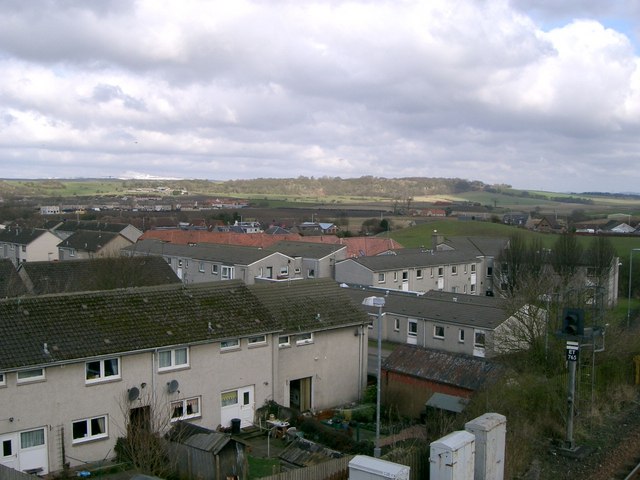
Cardenden (card-un-DEN; /ˌkɑːrdənˈdɛn/ ) is a Scottish town located on the south bank of the River Ore in the parish of Auchterderran, Fife. It is approximately four miles (six kilometres) northwest of Kirkcaldy. Cardenden was named in 1848 by the Edinburgh and Northern Railway for its new railway station. A former mining town, Cardenden had a reported population of 448 in 1891 that had increased to 5,533 as of 2011.[2]

Key Information

Areas of Cardenden include Auchterderran, Bowhill, Dundonald, the Jamphlars, New Carden and Woodend.

Last Scottish duel

[edit]

It is reported that the last duel on Scottish soil took place in a field at Cardenbarns to the south of Cardenden. On 2 August 1826, a Kirkcaldy merchant named David Landale fought a duel with George Morgan, a Kirkcaldy banker and retired Lieutenant from the 77th Regiment of Foot. Morgan was killed by wounds received from a pistol ball. Landale was tried and subsequently cleared of his murder at Perth Sheriff Court.

The original pistols that David Landale used in the duel are housed in the Kirkcaldy Museum and Art Gallery. The duel was the subject of an episode of Timewatch on BBC television, broadcast on 9 February 2007 entitled "The Last Duel".[3] The site is now the location of the Fife Community Off Road Motorcycle Club.

Sport

[edit]

Cardenden is home to the football club Dundonald Bluebell, who play in the East of Scotland League.

Also in the area is the Bowhill Leisure Centre, which has a swimming pool, sauna, steam room and gymnasium. The Auchterderran Golf Course was founded in 1904.[4]

Notable people

[edit]

See also

[edit]

References

[edit]
[edit]
Revisions and contributorsEdit on WikipediaRead on Wikipedia
from Grokipedia
Cardenden is a small town and former mining village in the parish of Auchterderran, located in south-central Fife, Scotland, on the banks of the Carden Burn, approximately four miles northwest of Glenrothes and two miles northeast of Lochgelly.[1] As of the 2022 census, it has a population of 5,264, primarily residential with residents often commuting to nearby towns for employment.[2] The town is linked to adjacent settlements such as Auchterderran, Bowhill, and Dundonald, forming a cohesive community area historically centered on coal extraction.[1][3] Historically, Cardenden developed around a railway station established in 1848 on the Edinburgh and Northern Railway line, which facilitated its growth as a mining hub in the late 19th and early 20th centuries.[1] The area's coal-rich substrata drove rapid expansion during the 1920s and 1930s, with several pits operating until the industry's decline in the mid-20th century, transforming the economy from mining to light manufacturing, such as engineering and alloy castings.[1][4] Today, the town maintains an active railway station on the Fife Circle Line, providing connectivity to Edinburgh and other regional centers.[3] Notable landmarks include the ruins of 16th-century Carden Tower, associated with the Mertyne family and the site of Scotland's last recorded duel on 23 August 1826 between two local men over a personal dispute.[1][5] The town is also the birthplace of internationally renowned crime writer Ian Rankin (born 1960), author of the Inspector Rebus series, and poet Joe Corrie (1894–1968), whose works drew from the local mining heritage and inspired the naming of the Corrie Centre community facility.[1] Surrounding natural features, such as wooded ravines and the nearby Lochore Meadows Country Park, offer recreational opportunities including walking, cycling, and watersports, enhancing Cardenden's appeal as a peaceful residential area.[6][7]

Geography

Location and administration

Cardenden is situated at 56°07′59″N 3°15′00″W, corresponding to the Ordnance Survey grid reference NT2295.[8] This position places it in west Fife, approximately 4 miles (6 km) northeast of Cowdenbeath and 4 miles (6 km) northwest of Kirkcaldy.[9] Administratively, Cardenden lies within the Fife council area and is encompassed by the Lochgelly, Cardenden and Benarty ward, which elects four councillors to Fife Council. The locality also falls under the lieutenancy area of Fife, where the Lord-Lieutenant represents the monarch in ceremonial duties.[10] In national representation, Cardenden is part of the Mid Fife and Glenrothes constituency in the Scottish Parliament, currently held by Jenny Gilruth of the Scottish National Party, and the Cowdenbeath and Kirkcaldy constituency in the UK Parliament, represented by Melanie Ward of the Labour Party.[11] The settlement's boundaries include the contiguous villages of Bowhill, Dundonald, and Jamphlars, creating an urban area south of the River Ore.[12][13]

Physical geography

Cardenden is situated in the valley of the River Ore, on its south bank, within the lowland region of the Kingdom of Fife in Scotland. The town lies in a landscape shaped by the river's course, which drains a catchment area to the south and west, forming a medium-sized lowland river system that extends approximately 15.3 km from Cardenden to its confluence with the River Leven.[14] The topography of Cardenden features gently rolling hills, influenced by historical land use, with elevations ranging from around 71 meters above sea level in the town center to 100-200 meters in surrounding areas.[15] The terrain is characterized by a steep-sided valley along the River Ore, bordered by farmland and woodland that contribute to the area's rural envelope.[13] Environmental features include the River Ore's role in local hydrology, supporting a network of green and blue spaces through post-industrial reclamation efforts, though some areas experience legacy subsidence.[14][13] The climate in Cardenden is temperate maritime, typical of eastern Scotland, with mild temperatures and consistent precipitation. Average annual rainfall measures approximately 876 mm, distributed over about 142 days, while summer highs reach 15-20°C and winter averages range from 2-7°C.[16][17] This weather pattern supports the surrounding agricultural and wooded landscapes without extreme seasonal variations.[17]

History

Early history

The name Cardenden derives from "Carden" combined with the Scots word "den," referring to a glen or narrow valley, specifically alluding to the Den Burn that flows through the area.[18] This etymology reflects the topographic features of the locality, with "Carden" possibly indicating a thicket or wooded area in earlier Scots usage.[3] The term "Carden Den" first appears in historical records on the Ordnance Survey 6-inch first edition map of 1856, highlighting the area's pre-industrial identity tied to its natural landscape.[18] Prior to the 19th century, Cardenden was a sparse agricultural settlement within the parish of Auchterderran, characterized by scattered homesteads and small farming communities rather than a centralized village.[3] A key landmark from this period is Carden Tower, a fortified house constructed in the 16th century by the Mertyne family of Medhope to oversee their lands.[1] The tower, now in ruins overlooking the Den Burn, was built on high ground southeast of the modern town and served as a defensive structure amid the feudal tensions of medieval Fife.[19] Historical charters confirm the Mertyne family's tenure, including a 1482 grant by King James III to Henry Mertyne of the lands of Cardwan (an early variant of Carden).[19] By the early 17th century, the Mertynes' influence waned, with the estate passing to the Wemyss family around 1623.[20] The region's early land use centered on agriculture, with fields dedicated to crop cultivation and livestock grazing across small estates controlled by local lairds.[3] This pattern integrated Cardenden into Fife's broader feudal system, where landholdings were granted by the crown or higher nobility to families like the Mertynes in exchange for military service and loyalty.[19] Such estates supported subsistence farming and occasional small-scale milling powered by local burns, maintaining a rural economy under the oversight of parish lairds until the mid-19th century.[1] The area's formal designation as "Cardenden" occurred in 1848, when the Edinburgh and Northern Railway adopted the name for its new station, solidifying the toponym for the emerging settlement.[3]

The last Scottish duel

On 23 August 1826, the last recorded fatal pistol duel in Scotland took place at Cardenbarns field, a rural site to the south of Cardenden in Fife, amid the early 19th-century tensions of honor and commerce in the region.[5][21] The duel pitted David Landale, a prominent linen merchant from nearby Kirkcaldy, against George Morgan, the manager of the local Commercial Banking Company branch and a former soldier known for his volatile temper.[22][23] The conflict arose from a business dispute over a bank loan that Landale, a customer of Morgan's bank, had sought but was denied, leading to a series of escalating insults exchanged in letters and public encounters.[21][22] Tensions boiled over when Morgan assaulted Landale with his umbrella on a Kirkcaldy street, prompting Landale—despite his reluctance and the social stigma attached to dueling—to issue a formal challenge through intermediaries, adhering to the era's code of honor.[23][5] The two men, accompanied by seconds and a surgeon, met at dawn in the isolated Cardenbarns field, standing 12 paces apart with smoothbore pistols loaded under supervision.[22][21] At the command to fire, both discharged simultaneously; Landale's shot struck Morgan in the chest, while Morgan's missed.[23] Morgan staggered, collapsed, and was carried to a nearby farmhouse, where he succumbed to his wounds later that day despite medical efforts.[5][22] Landale, who had purchased his pistol in Edinburgh the previous day, immediately fled to England to evade potential arrest, but returned for trial in Edinburgh's High Court in May 1827, where he was acquitted of murder charges.[23][24] Although dueling was not explicitly illegal in Scotland at the time, it was widely condemned by religious and civic authorities, and the verdict emphasized self-defense within the duel's formal rules rather than endorsing the practice.[22][21] This event marked the effective end of formal dueling in Scotland, reflecting a broader societal shift from personal honor-based violence to reliance on legal and institutional resolutions for disputes, with no further recorded fatal pistol duels occurring thereafter.[23][22] The duel's pistols are preserved at Kirkcaldy Galleries, and the site at Cardenbarns—now occupied by the Fife Community Off Road Motorcycle Club—features a commemorative cairn erected to honor the historical incident.[5][21] The story gained renewed attention in a 2007 BBC Timewatch episode titled "The Last Duel," presented by James Landale, a descendant of the survivor, which explored the personal and cultural dimensions of the affair.[25][26]

Industrial development

The opening of Cardenden railway station in 1848 on the Dunfermline Branch of the Edinburgh and Northern Railway marked a pivotal moment in the area's industrialization, providing direct connectivity to Edinburgh and facilitating the efficient export of coal to broader markets.[27] This infrastructure spurred the transformation of Cardenden from a rural locale into a burgeoning mining hub, as the railway enabled the transport of heavy coal output and attracted investment in extraction operations.[28] Coal mining expanded significantly from the 1850s, with the exploitation of local seams driving economic growth; Cardenden Colliery, operational by 1854 under managers Thomas and later James Goodall, underwent rapid development through the 1880s, incorporating multiple pits such as Nos. 5, 6, and Adam James.[29] Bowhill Colliery opened in 1895 under the Bowhill Coal Company, further intensifying extraction efforts and employing hundreds in underground and surface roles, contributing to the overall workforce of thousands across the district's operations by the late 19th century.[30] These pits focused on seams like the Lochgelly Splint, yielding daily outputs of 400-500 tons by the turn of the century.[28] To support the influx of miners, infrastructure grew accordingly, including the construction of dedicated housing such as the Bowhill rows and 66 miners' houses by the early 1900s, alongside community facilities like schools and churches to serve the expanding workforce.[28] Ancillary industries, notably the Bowhill Brickworks tied to the colliery, produced materials for local construction and reinforced mining's dominance in the economy.[31] By 1900, this activity had driven a population boom in Cardenden, exceeding 3,000 residents and establishing it as a key coal center in Fife.[32]

Decline and regeneration

The post-war period marked the beginning of a sharp decline in Cardenden's coal mining industry, as the local collieries faced exhaustion of seams and broader economic pressures under the National Coal Board (NCB), established following nationalization in 1947. Bowhill Colliery, a major employer with peak staffing of 1,544 in 1962, ceased operations in 1965, followed by the closure of the last local pit in 1966 and other nearby facilities like Seafield Colliery in 1987.[33][34] These closures contributed to widespread job losses, with Central Fife—including Cardenden—declared a deprived area in 1975 amid 14.9% unemployment, a figure that escalated further in the 1980s due to ongoing pit shutdowns and national trends in the coal sector.[34] Socioeconomic challenges intensified during this era, particularly with the 1984–85 miners' strike, which deepened poverty and community hardship in Cardenden despite strong local solidarity among workers. The strike symbolized the end of the village's mining identity, leading to prolonged economic scarring, delayed recovery for ex-miners, and significant out-migration of younger residents seeking opportunities elsewhere, which contributed to a population decline from a peak of over 10,000 in 1931 to around 4,980 by 1998.[34] Although population numbers had begun to stabilize by the late 20th century after the sharp drops of the 1950s and 1960s, social issues such as low incomes—exemplified by some residents earning below the £426 weekly poverty line in 2000—and reliance on training schemes rather than stable employment persisted.[34] Regeneration efforts in the 1990s, led by Fife Council, focused on reclaiming former mining land and fostering community facilities to mitigate deindustrialization's legacy. Projects included the reduction and removal of spoil heaps (bings) starting around 1990, transforming derelict sites into usable spaces, alongside EU-funded initiatives such as the refurbishment of local venues like the Number 1 Goth pub to support social gathering.[35][34] New housing developments, building on earlier 1950s residential expansions in areas like Jamphlars, aimed to attract families and improve living conditions, while amenities such as the Bowhill Swimming Pool—opened in 1969 and serving as a key community hub—underwent maintenance to enhance accessibility.[3][36] By the 2010s, Cardenden had transitioned into a commuter village, with residents increasingly traveling to employment in nearby Glenrothes New Town and Kirkcaldy, reflecting improved transport links and a diversification away from heavy industry. This shift, coupled with ongoing council-supported projects like community gardens and housing initiatives, has helped stabilize the local economy and population, though challenges from the mining era's legacy remain evident in social composition and infrastructure needs.[3][34]

Demographics

The population of Cardenden grew substantially from the late 19th century onward, driven primarily by the expansion of the coal mining industry that attracted workers and their families to the area. The 1891 census recorded just 448 residents in the village, a figure that rose sharply to 3,154 by 1901 as mining operations intensified.[34] This influx continued through the early 20th century, culminating in a peak of over 10,000 inhabitants in 1931, coinciding with the height of local colliery activity and employment opportunities in the sector.[34] The post-war period marked the beginning of a reversal, as the closure of coal pits in the 1950s and 1960s led to economic challenges and out-migration. By the 2001 census, the population had stabilized at 5,247, before a modest increase to 5,533 in 2011.[37] The 2022 census recorded 5,264 residents.[38] This historical trajectory underscores the role of mining booms in population surges during the 19th and 20th centuries, with families relocating for work in the collieries. In more recent decades, the trend toward stabilization has been supported by inbound commuting to employment hubs in greater Fife, helping to offset ongoing outflows.

Social composition

Cardenden's residents are overwhelmingly of White Scottish or British ethnicity, comprising approximately 97.6% of the population according to 2022 census data for the locality. Small minority groups include about 1.1% identifying as Asian and another 1.8% from other ethnic backgrounds, consistent with the area's limited history of immigration and its roots in industrial mining communities.[38] The age structure reflects an aging population shaped by the post-mining decline, with around 20.6% aged 0-17 years old and 22% over 65 in the 2022 census, contributing to a median age of approximately 42—slightly below Scotland's national median of 42.[38] This demographic shift underscores the challenges of an older resident base in a former coal-dependent village. Socioeconomically, Cardenden experiences significant deprivation, with multiple data zones ranking in the bottom 20% nationally per the Scottish Index of Multiple Deprivation (SIMD) 2020, particularly in income (17.0% of the population affected) and employment domains.[39] Housing tenure highlights high social rented accommodation at 42.3%, far exceeding national averages, while education levels lag behind, with 50.8% of working-age residents holding no or low qualifications in the encompassing ward—compared to 36.6% across Fife.[40][41] Community life in Cardenden is characterized by enduring kinship networks forged during the mining era, fostering close-knit social bonds among families with shared industrial heritage. Active local organizations, such as the Cardenden Miners' Welfare—now redeveloped as community housing while preserving its historical role—continue to support resident welfare and social activities.[3][42]

Economy and infrastructure

Historical economy

Cardenden's historical economy was centered on coal mining, which emerged as the dominant industry in the mid-19th century and shaped the community's development through the early 20th century. The arrival of the railway facilitated the growth of mining operations, transforming the area from small-scale farming and early coal workings into a key contributor to Fife's coalfield. Pits such as Bowhill and those in nearby Lochgelly drove economic activity, with coal extraction providing the primary source of livelihood for residents.[35][3] Coal production at major sites like Bowhill Colliery, operated by the Fife Coal Company, supported substantial output, with the company achieving around 4 million tons annually across its operations in the 1920s, including contributions from Cardenden-area pits. Bowhill alone employed 1,798 workers in 1920 and 1,613 in 1923, underscoring the scale of mining as the economic backbone. By the 1930s, employment at Bowhill stood at 1,130, representing a significant portion of the local workforce in a community whose population exceeded 10,000 by 1931. These jobs in coal extraction and related underground and surface roles sustained local commerce, including shops and public houses that catered to miners' needs.[43][44][34] Related sectors bolstered the mining economy, with coal transport relying heavily on the Edinburgh and Northern Railway, which connected Cardenden to broader markets and enabled efficient distribution of output. Local manufacturing emerged alongside extraction, notably at Bowhill Brickworks, where bricks were produced from colliery waste materials starting in the early 20th century under the Fife Coal Company.[3][31] The sector experienced pronounced economic cycles, with booms during World War I and World War II driven by heightened national demand for fuel to support industrial and military efforts. In contrast, the 1920s brought early slumps due to overproduction, falling prices, and major labor disputes, including the miners' lockouts of 1921 and 1926, which led to widespread unemployment and wage reductions in Fife's coalfields.[45][46]

Current economy

Cardenden's current economy has diversified beyond its mining heritage, with retail and services forming the backbone of local employment. Local shops and supermarkets, such as the Tesco Express in the village center, provide essential goods and jobs for residents, contributing to a modest service sector that supports daily community needs.[47] Many residents commute to nearby towns like Kirkcaldy and Glenrothes for opportunities in manufacturing and technology, leveraging strong transport links via bus and rail services.[48] According to 2020 data from the Scottish Index of Multiple Deprivation (SIMD 2020), employment deprivation in Cardenden stands at 12.6% of the working-age population, higher than the Fife average of 9.4%. As of 2025, the Cowdenbeath area (including Cardenden) has an economically active population of 59%, with claimant count rates in the Kirkcaldy locality at 5.1% for 2023-24.[40][49][41] Major employers in the area include regional institutions like Fife College, with campuses in nearby Glenrothes and Kirkcaldy offering education and training roles, alongside small local businesses and public sector entities.[50] Emerging economic areas include tourism tied to the village's industrial heritage sites, such as the Ore Valley area, which attracts visitors interested in Fife's mining history and supports a small number of jobs in hospitality and guided experiences.[49] Additionally, renewable energy initiatives on reclaimed land have gained traction; the Cardenden Heat and Power (CHAP) project, operated by Ore Valley Housing Association, delivers affordable district heating via biomass and combined heat and power systems to hundreds of homes, while a community-owned wind turbine generates green energy for local use. As of 2025, planning permission has been granted for the restoration of the Westfield site, including power generation and waste recovery facilities expected to create employment opportunities.[51][52][41] Despite these developments, Cardenden faces challenges including limited local job opportunities, which drive out-commuting and contribute to persistent deprivation. The economy relies heavily on public sector employment in areas like the NHS Fife and education, with 36.4% of jobs in the broader Kirkcaldy area linked to health and social work activities as of 2023. Claimant count rates in the Kirkcaldy locality remain elevated at 5.1% in 2023-24, and child poverty in the Cowdenbeath area stands at 28.6% as of 2025, underscoring the need for further diversification to address income and employment gaps.[49][49][41]

Transportation and utilities

Cardenden's road network primarily relies on the A910, which serves as the main arterial route connecting the village eastward to Kirkcaldy and westward to Cowdenbeath, facilitating local and regional travel.[53] The B925 provides additional local connectivity, running through Fife and linking areas around Crossgates to Kirkcaldy, supporting everyday commuting and access within the community. Complementing these roads, cycle paths exist along the River Ore, particularly on its west section, offering recreational routes with opportunities for enhanced connectivity to the town centre and nearby greenspaces like Oreside.[13] The village's rail infrastructure centers on Cardenden railway station, which opened in 1848 as part of the Edinburgh and Northern Railway and now operates on the Fife Circle Line, approximately 27 miles north of Edinburgh Waverley.[3] ScotRail provides hourly services from the station, with journeys to Edinburgh taking around 45 minutes and to Kirkcaldy typically under 15 minutes, enabling efficient links to major urban centers.[54] Bus services in Cardenden are operated by Stagecoach East Scotland, including routes such as the 32 to Glenrothes and Kirkcaldy, and the 33 to Dunfermline via Cowdenbeath, with frequent departures connecting to broader Fife networks.[55] There is no local airport, with the nearest being Edinburgh Airport, located about 23 miles southwest.[56] Utilities in Cardenden are provided by major Scottish providers, with water supply managed by Scottish Water, the national body responsible for public water and wastewater services across Scotland, including Fife.[57] Electricity distribution falls under SP Energy Networks, part of ScottishPower, which covers central and southern Scotland encompassing the Fife region.[58] Broadband infrastructure has seen significant upgrades through full fibre rollouts, with GoFibre and Openreach expanding coverage in Cardenden as of 2025, including ongoing upgrades to provide gigabit speeds to households and businesses.[59]

Culture and landmarks

Heritage sites

Cardenden's heritage sites reflect its layered history, from medieval fortifications to the industrial scars of coal mining. Prominent among these is Carden Tower, a ruined 16th-century tower house constructed by the Mertyne family of Medhope in the 1520s on high ground overlooking the Gelly Burn. The structure, originally an oblong dwelling with at least three stories, was abandoned by the early 1700s, leaving only fragmented walls amid the wooded ravine of Cardenden Den, now accessible via walking trails managed by Forestry and Land Scotland.[19][1][3][35][6] Another notable site is the location of Scotland's last fatal pistol duel, fought on 23 August 1826 at Cardenbarns field near Cardenden between Kirkcaldy merchant David Landale and banker George Morgan, sparked by a dispute over a bank loan. The duel, which resulted in Landale mortally wounding Morgan, was dramatized in a 2007 BBC Timewatch episode titled "The Last Duel," highlighting the era's codes of honor. Today, the site is marked by an interpretive sign along forest paths, serving as a poignant reminder of early 19th-century social tensions in Fife.[5][60][25] The area's mining legacy is preserved through sites linked to Bowhill Colliery, which operated from 1895 until its closure in 1965 and was a key employer in the Bowhill section of Cardenden. A tragic 1931 explosion at the colliery killed ten miners, commemorated by a memorial in Bowhill Cemetery that honors the victims and the broader mining community. Exhibits on Bowhill and other local pits, including tools and records of daily life underground, are featured at the Fife Mining Museum in nearby Kinglassie, underscoring the industry's profound impact on Cardenden's development.[44][33][61][62][63] Victorian-era architecture, emblematic of mining prosperity, survives in structures like Auchterderran Parish Church, originally built in 1789 and extended in 1891 to accommodate the growing population of coal workers in the parish encompassing Cardenden. The church's simple yet sturdy design reflects the era's communal needs, standing as a testament to the social fabric woven during Fife's industrial boom.[3][64]

Sports and recreation

Cardenden offers a range of sports and recreational activities centered around community facilities and local natural features. The primary football club in the area is Dundonald Bluebell F.C., established in 1938 and currently competing in the East of Scotland Football League Premier Division. The club plays its home matches at Moorside Park in Dundonald Park, Cardenden, fostering local talent and community engagement through competitive junior and senior leagues.[65] Golf enthusiasts can enjoy the historic Auchterderran Golf Club, founded in 1904 and featuring a scenic 9-hole course amid the rolling countryside of the former mining village. The layout provides an accessible and picturesque experience, with views of the surrounding Fife landscape, and serves as a longstanding recreational hub for residents.[66] Key indoor facilities include the Bowhill Leisure Centre, which opened its swimming pool in 1969 and has since expanded to offer a 25-meter pool, gymnasium, sauna, and steam room for various fitness activities such as swimming lessons and aqua-aerobics. Complementing these are outdoor pursuits like those provided by the Kingdom Off Road Motorcycle Club, a registered charity based in Cardenden that operates a controlled motocross track to promote safe off-road motorcycling and community programs for youth.[67][68] Recreational opportunities extend to the natural environment, with popular walks along the River Ore, including upstream paths from Bowhill that combine woodland trails and scenic river views for leisurely hikes. The area also hosts the annual Cardenden Village Fair, typically held in late August at Wallsgreen Park, featuring family-oriented events, stalls, and community gatherings to celebrate local culture and leisure.[69][70]

Notable people

Arts and literature

Ian Rankin, born on April 28, 1960, in Cardenden, Fife, is a renowned Scottish crime novelist best known for creating the Inspector Rebus series.[71] The protagonist, Detective Inspector John Rebus, was also born in Cardenden in 1947 and grew up in the Fife mining community, reflecting Rankin's own roots and incorporating elements of local Fife settings into several novels.[72] Rankin has received numerous accolades, including four Crime Writers' Association Dagger Awards, with the prestigious Diamond Dagger in 2005 for lifetime achievement in crime writing.[73] His Rebus series has sold more than 20 million copies worldwide, establishing him as one of Scotland's most successful contemporary authors.[74] Joe Corrie, born Joseph Corr in 1894 in Slamannan, Stirlingshire, moved with his family to the Bowhill area of Cardenden as an infant and became a prominent Scottish dramatist and poet whose works captured the hardships of Fife's mining communities.[75] Drawing from his experiences as a coal miner, Corrie's play In Time o' Strife (1926) vividly depicts the struggles of a Fife mining family during the General Strike and lockout, blending naturalist drama with Scots dialect to highlight class tensions and solidarity.[76] He died in Edinburgh on November 13, 1968, leaving a legacy of radical working-class literature.[77] Corrie's influence extends to local performing arts through the Bowhill Players, an amateur theater group he founded in 1927 with fellow miners to stage his one-act plays and sketches, often raising funds for community soup kitchens during strikes.[78] The group performed across Fife mining villages, preserving and promoting Corrie's portrayals of colliery life, and inspired later iterations that continue to revive his works in contemporary productions.[79]

Sports figures

Cardenden has produced several notable figures in Scottish football, particularly during the mid- to late 20th century, with many emerging from the local mining community and contributing to professional clubs and the national team.[80] Willie Johnston, born on 19 December 1946 in Glasgow but raised in the Fife mining village of Cardenden, became a prominent winger known for his pace and direct style. He began his professional career with Rangers in 1964, where he made over 300 appearances and won multiple domestic titles, including the 1972 European Cup Winners' Cup. Johnston earned 21 caps for Scotland between 1965 and 1977, scoring one goal, and was part of the 1978 FIFA World Cup squad, though his participation ended controversially after testing positive for reactivan, leading to a ban and his early departure from the tournament.[81][80][82] Tommy Hutchison, born on 22 September 1947 in Cardenden, developed his skills locally before turning professional with Alloa Athletic and later Blackpool. As a versatile left midfielder, he joined Coventry City in 1972, where he made over 400 league appearances across a decade, contributing to their First Division stability and earning a reputation for his tenacious play. Hutchison represented Scotland 17 times between 1973 and 1975, scoring once, and featured in the 1974 FIFA World Cup, showcasing his endurance in midfield battles.[83][84][85] Willie Mathieson, born on 20 July 1943 in Cardenden, rose through the junior ranks with St Andrews United before signing for Rangers in 1962. A reliable left-back, he made 296 appearances for the club over 13 years, winning five Scottish league titles, two Scottish Cups, and the 1972 European Cup Winners' Cup as part of the "Barcelona Bears" team that triumphed 3-2 over Dynamo Moscow. Mathieson's defensive solidity and versatility were key to Rangers' successes in the 1960s and 1970s, though he did not earn senior international caps.[86][87][88] John Thomson, born on 28 January 1909 in Kirkcaldy and raised in Cardenden from infancy, started in local junior football and trialed with Cowdenbeath before joining Celtic in 1926. As a goalkeeper, he played 148 matches for Celtic, establishing himself as a first-choice option with his bravery and shot-stopping ability, and earned two caps for Scotland in 1930. Thomson's career was tragically cut short at age 22 when he died from injuries sustained in a collision during a 1931 Old Firm match, leaving a lasting legacy in Scottish football remembered annually in his hometown.[89][90][91]

References

User Avatar
No comments yet.