


Community hub
Recent from talks
Contribute something
Nothing was collected or created yet.
Cardinal Health
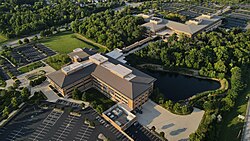
View on WikipediaCardinal Health, Inc. is an American multinational health care services company, and the 15th highest revenue generating company in the United States. Headquartered in Dublin, Ohio, the company specializes in the distribution of pharmaceuticals and medical products, serving more than 100,000 locations. The company also manufactures medical and surgical product, including gloves, surgical apparel, and fluid management products. In addition, it operates one of the largest networks of radiopharmacies in the U.S.[2] Cardinal Health provides medical products to over 75 percent of hospitals in the United States.[3]
Key Information


History
[edit]Founded in 1971 as Cardinal Foods by Robert D. Walter, the company was initially a food wholesaler.[4] After acquiring the Bailey Drug Company in 1979, it began whole selling drugs.[5] The company went public on the NASDAQ stock exchange in 1983.[5]
In 1988, Walter sold Cardinal Health's food operations to Roundy's.[5][6] From 1991 to 1996, the company's sales grew from $1.2 billion to $8.9 billion.[7] The company changed its name to Cardinal Health in 1994, and became the third-largest pharmaceutical wholesaler in the United States.[6][8]
2000–2019
[edit]R. Kerry Clark, a former executive and vice chairman at Procter & Gamble, was appointed president and CEO in April 2006, with Robert D. Walter retaining Chairmanship of the board.[9] In September 2008, the company announced Clark and Walter would retire and George S. Barrett would become the chairman and CEO.[10][11]
In 2009, Cardinal Health completed the spin-off of its clinical and medical products businesses into an independent medical technology company called CareFusion with David Schlotterbeck as CEO.[12][13] Cardinal Health is now traded on the NYSE under symbol CAH.[14]
In December 2013, it was announced that Cardinal Health would partner with CVS Caremark to form a generic drug sourcing operation in the United States.[15] The venture was named Red Oak Sourcing and began operations in July 2014.[16]
Between 2014 and 2016, Cardinal, alongside McKesson Corporation, and AmerisourceBergen, spent $13 million lobbying Congress to pass Congressman Tom Marino's "Ensuring Patient Access and Effective Drug Enforcement Act".[17] The bill, which increases the burden of proof enforcers need to show against drug distributors, was signed into law by President Barack Obama in April 2016.[18]
In January 2018, Michael Kaufmann assumed the role of CEO after serving as CFO of the company.[19]
Opioid lawsuits
[edit]In 2019, Cardinal was one of several drug distributors named in lawsuits related to the opioid crisis in the US.[20] In July 2021, Cardinal Health and other pharmaceutical companies agreed to participate in a $26 billion settlement.[21] Cardinal will pay $6.4 billion over 18 years.[21]
In May 2020, Oklahoma Attorney General Mike Hunter sued Cardinal Health in Bryan County District Court, Oklahoma. The lawsuit alleged that the company's actions helped fuel Oklahoma's opioid crisis. The suit was filed along with lawsuits against AmerisourceBergen and McKesson, and the three lawsuits allege that the three companies provided "enough opioids to Bryan County that every adult resident there could have had 144 hydrocodone tablets."[22]
2020–present
[edit]As of August 2021, it is ranked 14 on the Fortune 500 list with FY2020 annual revenue of $152.9 billion.[23] The firm employs 57,000 people worldwide.[23]
Acquisitions
[edit]In 1995, Medicine Shoppe International, the country's largest franchiser of retail pharmacies, was acquired.[5] The merger represented the first non-distribution acquisition by Cardinal Health.[5]
In 1996, Cardinal Health acquired Pyxis Corporation, a company that developed automated pill dispensers for hospitals, for $867 million.[24]
In 1997, Cardinal Health planned to purchase Bergen Brunswig Corp., to which McKesson Corporation responded with a bid to purchase Amerisource.[25] Instead, Amerisource and Bergen merged into AmerisourceBergen.[25] Later that year, Cardinal Health completed the acquisition of Owen Healthcare, the second-largest provider of pharmacy management services in the U.S. at the time.[26]
In 1999, the firm acquired the Chicago-based medical products manufacturer and distributor, Allegiance Healthcare (formerly a division of Baxter Healthcare).[5] In 2001, the company acquired Bindley Western Industries, a wholesale distributor of pharmaceuticals based in Indianapolis.[27]
In April 2006, Cardinal Health purchased Niagara Falls-based ParMed Pharmaceuticals for $40.1 million.[28] In June 2007, the firm announced the completion of a tender offer for VIASYS Healthcare.[29]
In June 2010, Cardinal Health announced plans to purchase Healthcare Solutions Holding, a specialty pharmaceutical services company, for $517 million.[30] In December 2010, the company acquired Kinray, an independent pharmaceutical wholesaler, increasing Cardinal Health's presence in the independent pharmacy market by 40 percent.[31] From 2010 to 2014, Cardinal Health acquired 18 companies including Yong Yu, a Chinese drug distributor.[32] Cardinal sold Yong Yu in 2017 to Shanghai Pharmaceuticals Holding Co. Ltd. for $1.2 billion.[33]
On March 18, 2013, Cardinal Health acquired the Twinsburg, Ohio-based privately held medical supply distributor AssuraMed, and with it its subsidiaries including Edgepark Medical Supplies, for $2.7 billion. AssuraMed was backed by private equity firms Clayton, Dubilier & Rice and Goldman Sachs Alternatives.[34][35]
In July 2014, Cardinal Health and CVS formed Red Oak Sourcing, the largest generic drug sourcing operation in the United States.[3][36] The companies started buying generic drugs around the world to sell in U.S. markets.[3]
In March 2015, Cardinal Health signed an agreement to acquire Johnson & Johnson's Cordis (medical) division, a cardiology and endovascular device manufacturer, for $1.94 billion.[37][38] The acquisition was completed on October 4, 2015.[39] Cardinal sold the division in August 2021 to Hellman & Friedman, a private equity firm, for $1 billion.[40]
In April 2017, Cardinal Health announced the plan to acquire the patient product portfolio from Medtronic for $6.1 billion.[41][42] The acquisition was completed on July 30, 2017.[42]
In November 2024, Cardinal Health announced the plan to acquire Advanced Diabetes Supply Group (ADSG), a leading national direct-to-patient provider of diabetes medical supplies, for about $1.1 billion with plans to merge the company into its at-Home Solutions business.[43][44] The at-Home Solutions business includes Edgepark Medical Supplies of Twinsburg, Ohio and United States Medical Supply (US MED) of Doral, Florida. The acquisition was complete by April 2024.[45]
In August 2025, Cardinal Health announced that it would acquire a 75% stake in Solaris Health, the largest urology management services organization (MSO) in the United States, for $1.9 billion in cash.[46]
Controversy
[edit]Role in the Opioid epidemic
[edit]Multiple legal settlements have demonstrated Cardinal Health's role in the US Opioid epidemic, though the company never admitted wrongdoing:
- December 2016: Cardinal Health settled for $44 million for violations of the Controlled Substances Act brought in allegations from United States Attorneys in districts from Maryland, New York, Florida and Washington.[47]
- July 2021: Cardinal Health agreed to pay $6.4 billion to settle thousands of US lawsuits. They were one of four companies to pay $26 billion, including Johnson & Johnson, AmerisourceBergen and McKesson.[48][21]
- May 2022: Settled a derivative suit on behalf of shareholders for $124 million.[49]
- August 2024: Settlement with various health plans including insurers and third-party payers for $92.7 million.[50]
- August 2024: Settlement with the City of Baltimore for $152.5 million.[51]
Restatements
[edit]In September 2004, Cardinal Health announced plans to restate past results for fiscal 2001, 2002, 2003, and the first three quarters of 2004 downward, after an accounting review and an ongoing federal investigation.[52] In 2005, in connection with the Audit Committee's conclusions reached in September and October 2004, the company made certain reclassification and restatement adjustments to its fiscal 2004 and prior historical consolidated financial statements.[53] According to The Wall Street Journal, "Analysts called the restatement decision troubling, yet limited in scope."[52]
FDA action
[edit]In August 2006, Cardinal Health ceased production of its Alaris SE infusion pump after approximately 1300 units were seized[why?] by the United States Food and Drug Administration (FDA).[54] In February 2007, Cardinal Health signed a consent decree with the FDA which promised procedures to guarantee the safety of the Alaris SE.[12] After FDA inspections, Cardinal Health entered into a further consent agreement with the FDA in 2009.[12]
DEA investigation into Oxycodone diversion
[edit]In 2008, Cardinal Health agreed to pay $34 million in civil penalties to settle DEA allegations that it failed to report suspicious orders of hydrocodone. The fine followed a 10-month DEA suspension of a Lakeland, Florida distribution facility and two others in New Jersey and Washington.[55] On February 2, 2012, the Drug Enforcement Administration again suspended the license of the firm's Lakeland distribution center to distribute controlled substances on charges that it had allowed four Florida pharmacies to purchase excessive amounts of controlled substances, in particular oxycodone.[56]
Cardinal Health obtained a restraining order against the suspension, but the suspension was upheld on February 29 by a Federal district court because the court agreed with the DEA that Cardinal Health's activities represented an "imminent danger to the public."[57] The company stated that it blocked two of the pharmacies, (Brooks Pharmacy in Bonita Springs, Florida, and Gulf Coast Medical in Panama City, Florida), and notified the corporate owners of the two pharmacies that were part of national chains, two CVS stores in Sanford, Florida.[56]
In February 2012, Joseph Rannazzisi, chief of the Drug Enforcement Administration’s Office of Diversion Control, issued immediate suspension orders against Cardinal's supply of oxycodone to suspected pill mills.[17] These orders were filed after Deputy Attorney General James M. Cole met with Rannazzisi to ask if he had met with Cardinal about the investigation.[17] Cole stated that he believed “it made good sense to listen to what Cardinal had to say” regarding the investigation.[17] That year, Cardinal and the DEA reached a settlement that suspended Cardinal's facility in Lakeland, Florida from selling pain killers or other drugs for two years.[58] In 2016, Cardinal was fined $44 million for after the investigation concluded.[59]
In January 2022, Cardinal Health, Johnson & Johnson, McKesson, and AmerisourceBergen agreed to pay $26 billion to settle with all but five of the states suing them.[60] Had the states gone to court, the companies could have faced up to $95 billion in penalties.[61]
Finances
[edit]Annual financial statistics are displayed below:[62]
| Year | Revenue in million USD$ |
Net income in million USD$ |
Total Assets in million USD$ |
Employees |
|---|---|---|---|---|
| 2005 | 72,666 | 4,460 | 21,838 | |
| 2006 | 79,664 | 4,814 | 23,433 | |
| 2007 | 86,755 | 5,197 | 23,154 | |
| 2008 | 87,408 | 3,777 | 23,448 | |
| 2009 | 95,992 | 3,748 | 25,119 | 29,600 |
| 2010 | 98,503 | 3,781 | 19,990 | 31,200 |
| 2011 | 102,644 | 4,162 | 22,846 | 31,900 |
| 2012 | 107,552 | 4,541 | 24,260 | 32,500 |
| 2013 | 101,093 | 4,921 | 25,819 | 33,600 |
| 2014 | 91,084 | 5,161 | 26,033 | 34,000 |
| 2015 | 102,531 | 5,712 | 30,142 | 34,500 |
| 2016 | 121,546 | 6,543 | 34,122 | 37,300 |
| 2017 | 129,976 | 6,544 | 40,112 | 40,400 |
| 2018 | 136,809 | 7,181 | 39,951 | 50,200 |
| 2019 | 145,534 | 1,363 | 40,963 | 31,000 |
| 2020 | 152,922 | -3,696 | 40,766 | 30,000 |
| 2021 | 162,467 | 611 | 44,453 | 47,300 |
| 2022 | 181,326 | -938 | 43,878 | 46,500 |
| 2023 | 204,979 | 330 | 43,349 | 48,000 |
| 2024 | 226,827 | 852 | 45,121 | 48,900 |
| 2025 | 222,578 | 1,561 | 53,122 | 57,700 |
Cardinal Health Foundation
[edit]The Cardinal Health Foundation is the charitable arm of Cardinal Health. The company makes annual product donations of over $9 million through international relief organizations and provides up to $1,000 in matching funds for every Cardinal Health employee that makes a charitable donation.[63] In 2008, the foundation established its E3 Grant Program.[64] Over the past seven years, the Foundation has invested more than $7.15 million in funding to 241 hospitals, health systems or other health-related organizations.[65]
Cardinal Health also supports organizations such as Ronald McDonald House Charities, and was named Benefactor of the Year at the 2011 Corporate Caring Awards.[63] In 2015, the foundation contributed $3 million to the Solutions for Patient Safety project, which has raised over $11 million nationally for efforts to improve safety initiatives in children's hospitals.[66]
References
[edit]- ^ "FY 2025 Annual Report (Form 10-K)". U.S. Securities and Exchange Commission. August 12, 2024. Retrieved August 15, 2025.
- ^ "Cardinal Health accused of fraudulent radiopharmaceutical contracting scheme". Modern Healthcare. 2020-05-12. Retrieved 2021-08-16.
- ^ a b c Wartenberg, Steve (November 6, 2014). "Turnaround succeeding, Cardinal Health says". The Columbus Dispatch. Retrieved June 10, 2015.
- ^ Williams, Mark. "Cardinal Health CEO Quietly Builds Powerful Company". The Ledger. Retrieved 2021-08-16.[permanent dead link]
- ^ a b c d e f "THE CARDINAL RULES: GROWTH, AGILITY: CARDINAL CEO ROBERT WALTER HAS USED RELENTLESS DEALMAKING TO BUILD A DIVERSE HEALTHCARE GIANT". Modern Healthcare. 2006-10-03. Retrieved 2021-08-16.
- ^ a b "Executive Interview: Bob Walter". Journal of Healthcare Contracting. March 2005. Retrieved June 10, 2015.
- ^ "The $9 Billion Company Nobody Knows". Bloomberg Business. March 2, 1997. Retrieved June 10, 2015.
- ^ Wankel, Charles (2009). Encyclopedia of Business in Today's World: A - C. Vol. 1. SAGE Publications. ISBN 9781412964272. Retrieved June 10, 2015.
- ^ "Walter steps down at Cardinal Health, P&G exec takes over". Columbus Business First. April 17, 2006. Retrieved June 10, 2015.
- ^ Ghose, Carrie (October 6, 2008). "Next Cardinal Health CEO sees bright future after spinoff". Columbus Business First. Retrieved June 10, 2015.
- ^ Wartenberg, Steve (May 19, 2013). "Cardinal Health's CEO uses background to think outside the box". The Columbus Dispatch. Retrieved June 10, 2015.
- ^ a b c "Cardinal Health to name spinoff after CareFusion line". Healthcare IT News. February 18, 2009. Retrieved June 13, 2018.
- ^ Rhea, Shawn (September 2, 2009). "Cardinal Health completes CareFusion spinoff". Modern Healthcare. Retrieved June 10, 2015.
- ^ "Cardinal Health Inc(NYSE:CAH)".
- ^ Berkrot, Bill (10 December 2013). "CVS, Cardinal Health form U.S. generic drug venture". Reuters. Archived from the original on 10 December 2013. Retrieved 11 December 2013.
- ^ Ghose, Carrie (May 1, 2014). "Cardinal Health, CVS generics venture Red Oak on track for July start". Columbus Business First. Retrieved June 13, 2018.
- ^ a b c d Lenny Bernstein; Scott Higham (22 October 2016). "Investigation: The DEA slowed enforcement while the opioid epidemic grew out of control". The Washington Post. Retrieved 17 March 2017.
- ^ S. 483, 114th Cong. (2015).
- ^ Rose, Marla Matzer. "Cardinal Health's CEO Mike Kaufmann is a steady hand in his new role". The Columbus Dispatch. Archived from the original on 2021-08-16. Retrieved 2021-08-16.
- ^ Hakim, Danny; Rashbaum, William K.; Rabin, Roni Caryn (2019-04-22). "The Giants at the Heart of the Opioid Crisis". The New York Times. ISSN 0362-4331. Retrieved 2021-08-20.
- ^ a b c Williams, Mark. "Cardinal Health to take $140 million charge tied to opioid settlement". The Columbus Dispatch. Retrieved 2021-08-20.
- ^ Carey, Liz (2020-05-05). "Oklahoma Attorney General refiles opioid lawsuit against three distributors". Health Crisis Alert. Retrieved 2020-05-05.
- ^ a b "Cardinal Health | 2021 Fortune 500". Fortune. Retrieved 2021-08-16.
- ^ Freudenheim, Milt (February 8, 1996). "Cardinal Deal To Buy Pyxis In Stock Swap". The New York Times. Retrieved June 10, 2015.
- ^ a b "McKesson Plans to Buy Rival AmeriSource". Los Angeles Times. 24 September 1997. Archived from the original on 7 November 2012.
- ^ "Cardinal Health to Purchase Owen Healthcare". The New York Times. November 28, 1996. Retrieved June 10, 2015.
- ^ "Cardinal Health completes Bindley Western acquisition". www.bizjournals.com. 15 February 2001. Archived from the original on 2004-04-17. Retrieved 2021-08-16.
- ^ Staff (9 March 2006). "Cardinal Health buying ParMed for $40.1 million". The Buffalo News. Retrieved 2021-08-20.
- ^ "Cardinal Health acquires VIASYS for $1.5B". Healthcare IT News. May 14, 2007. Retrieved June 10, 2015.
- ^ Taulli, Tom (June 9, 2010). "Cardinal Health Pays $517 Million for Obscure Specialty Pharma Firm". Daily Finance. Retrieved June 10, 2015.
- ^ Dinah Wisenberg Brin, "Cardinal Health to Purchase Kinray", The Wall Street Journal, November 19, 2010
- ^ Glenn, Brandon (2010-11-29). "Cardinal Health buys Chinese drug distributor for $470 million". MedCity News. Retrieved 2021-08-20.
- ^ "Cardinal Health sells China business for $1.2B". www.bizjournals.com. Archived from the original on 2022-01-16. Retrieved 2021-08-20.
- ^ https://www.wsj.com/articles/DJFLBO0020130214e92eisybj
- ^ https://www.hmenews.com/article/cardinal-health-buys-assuramed-207-billion
- ^ "Cardinal, CVS to form venture for generics". The Columbus Dispatch. Archived from the original on 2021-08-20. Retrieved 2021-08-20.
- ^ Wartenberg, Steve (March 3, 2015). "Cardinal Health to acquire Cordis for $1.9 billion". The Columbus Dispatch. Retrieved June 10, 2015.
- ^ "Cardinal Health to Buy J&J's Heart Business for $1.94B". Fox Business. March 2, 2015. Archived from the original on June 11, 2015. Retrieved June 10, 2015.
- ^ Health, Cardinal. "Cardinal Health Completes Acquisition Of Cordis". www.prnewswire.com (Press release). Retrieved 14 April 2018.
- ^ "Cardinal Health to sell off its Cordis device division in $1B deal". FierceBiotech. 15 March 2021. Retrieved 2021-08-20.
- ^ "Cardinal Health to acquire Medtronic medical supplies business for $6.1B". Modern Healthcare. 2017-04-18. Retrieved 2021-08-20.
- ^ a b "Medtronic closes on $6.1 billion sale of supply lines to Cardinal Health". Star Tribune. August 2017. Retrieved 2021-08-20.
- ^ "In brief: Cardinal Health to buy ADS, AMA fights prior auths, Williams Brothers names CEO". NHM News. Retrieved 2025-04-08.
- ^ "Cardinal Health announces two strategic additions to its portfolio". PR Newswire (Press release). Retrieved 2025-04-08.
- ^ "Cardinal Health completes acquisition of the Advanced Diabetes Supply Group (ADSG)". Cardinal Health Newsroom. Retrieved 2025-04-08.
- ^ "Cardinal Health to Acquire Solaris Health for Urology Expansion". Zacks Investment Research. 2025-08-15. Retrieved 2025-09-01.
- ^ "District of Maryland | Cardinal Health Agrees to $44 Million Settlement for Alleged Violations of Controlled Substances Act | United States Department of Justice". www.justice.gov. 2016-12-23. Retrieved 2024-11-04.
- ^ Mann, Brian (February 25, 2022). "4 U.S. companies will pay $26 billion to settle claims they fueled the opioid crisis". NPR. Retrieved November 4, 2024.
- ^ LaCroix, Kevin (2022-05-30). "Cardinal Health Opioid-Related Derivative Suit Settled for $124 Million". The D&O Diary. Retrieved 2024-11-04.
- ^ Raymond, Nate (August 30, 2024). "Drug distributors strike $300 mln opioid settlement with US health plans". Reuters. Retrieved November 4, 2024.
- ^ "City of Baltimore Reaches $152.5 Million Deal with Cardinal Health to Resolve Ongoing Opioid Litigation". Mayor Brandon M. Scott. 2024-08-16. Retrieved 2024-11-04.
- ^ a b Burton, Thomas M. (September 14, 2004). "Cardinal Health to Restate Net, Citing Bulk-Revenue Accounting". The Wall Street Journal. Retrieved May 17, 2016.
- ^ "CARDINAL HEALTH INC - 10-Q Quarterly Report".
- ^ "Cardinal Health Suspends Production of Alaris SE Infusion Pump Following FDA Actions". Cardinal Health. August 28, 2006. Archived from the original on April 18, 2021. Retrieved June 13, 2018.
- ^ Schoenberg, Tom (2012-02-29). "Cardinal Health Blocked From Shipping Painkiller in Florida". Bloomberg. Retrieved 2012-09-01.
- ^ a b Donna Leinwand Leger "DEA aims big in Cardinal Health painkiller case" USA Today Feb 27, 2012 [1]
- ^ Donna Leinwand Leger "Judge blocks Cardinal Health drug shipments in Fla." USA Today Deb 29, 2012 [2]
- ^ Raymond, Nate (2016-12-23). "Cardinal settles with U.S. over painkiller shipments to pharmacies". Reuters. Retrieved 2021-08-20.
- ^ "Cardinal Health Announces Civil Settlement with DOJ". ir.cardinalhealth.com. Retrieved 14 April 2018.
- ^ Raymond, Nate (2022-01-27). "Most U.S. local governments opt to join $26 bln opioid settlement". Reuters. Retrieved 2022-02-21.
- ^ Raymond, Nate (2021-11-16). "Washington state, in $95 billion opioid trial, blames drug distributors for crisis". Reuters. Retrieved 2022-02-21.
- ^ "Cardinal Health Inc. - AnnualReports.com". www.annualreports.com. Retrieved 2025-05-09.
- ^ a b Dutton, Melissa Kossler (April 13, 2011). "Benefactor of the Year: Cardinal Health Inc". Columbus Business First. Retrieved June 10, 2015.
- ^ "Cardinal Health Foundation invites healthcare providers to apply for grants to improve patient safety, efficiency". Healthcare Finance. October 13, 2011. Retrieved June 10, 2015.
- ^ "Financial Statements for Cardinal Health, Inc. - Google Finance". Retrieved October 25, 2016.
- ^ Sutherly, Ben (February 11, 2015). "Hospital safety initiative helps Ohio kids". The Columbus Dispatch. Retrieved June 10, 2015.
External links
[edit]
- Official website
- Business data for Cardinal Health, Inc.:
| International | |
|---|---|
| National | |
| Other | |

Cardinal Health
View on GrokipediaCompany Profile
Founding and Corporate Evolution
Cardinal Health was founded on April 1, 1971, as Cardinal Foods by Robert D. Walter, who acquired the struggling Monarch Foods, a regional grocery distributor in Columbus, Ohio, through a leveraged buyout with a small group of investors.[11][12] Initially focused on food wholesaling, the company operated a small distribution center and expanded regionally within its first decade, achieving moderate success in a competitive market.[13] The pivotal shift to healthcare occurred in 1979, when Cardinal Foods purchased Bailey Drug Company, a modest pharmaceutical wholesaler in Zanesville, Ohio, marking its entry into drug distribution amid growing demand for specialized supply chains.[13][11] This acquisition prompted the divestiture of non-core food operations and a rebranding of the pharmaceutical division to Cardinal Distribution, Inc. in 1980, followed by its initial public offering on the NASDAQ in 1983 under the ticker CARD.[14] By the mid-1980s, pharmaceutical distribution had become the core business, with early successes in serving independent pharmacies and hospitals driving revenue growth from under $100 million in 1984 to over $1 billion by 1990.[11] Corporate evolution accelerated in the 1990s through aggressive acquisitions that diversified into pharmacy services, manufacturing, and medical products, including Medicine Shoppe International in 1995 for retail pharmacy expansion and R.P. Scherer Corporation in 1998 for pharmaceutical packaging capabilities.[15] The company adopted the Cardinal Health name in 1994 to reflect its health-focused identity and relocated headquarters to Dublin, Ohio, in 2000 to support national operations.[11] Subsequent decades saw further consolidation, such as the 2008 acquisition of Syncor International for nuclear pharmacy services and a 2014 spin-off of its specialty pharmaceutical manufacturing unit to Catalent Pharma Solutions, sharpening focus on distribution while navigating regulatory scrutiny.[15] By 2021, marking its 50th anniversary, Cardinal Health had become one of the largest U.S. pharmaceutical distributors, employing over 44,000 and generating $162 billion in fiscal 2020 revenue, primarily from its medical and pharmaceutical segments.[14]Business Segments and Operations
Cardinal Health structures its operations into two primary reportable segments—Pharmaceutical and Specialty Solutions, and Global Medical Products and Distribution—alongside other operating units including Nuclear and Precision Health Solutions, at-Home Solutions, and OptiFreight Logistics.[16][17] These segments enable the company to provide integrated healthcare services and products, distributing pharmaceuticals and medical supplies to hospitals, pharmacies, health systems, ambulatory surgery centers, and other providers across the United States, Canada, Europe, Asia, and other international markets.[18] With approximately 48,000 employees globally and operations in over 30 countries, the company supports supply chains serving about 90% of U.S. hospitals and 29,000 pharmacies worldwide.[2][19] The Pharmaceutical and Specialty Solutions segment, which generated $205 billion in revenue for fiscal year 2025, focuses on the distribution of branded and generic pharmaceuticals, over-the-counter products, and specialty pharmaceuticals to a network of retail and independent pharmacies, pharmacy chains, hospitals, and health systems.[20] This segment also offers third-party logistics services for pharmaceutical manufacturers, pharmacy management solutions, and support for specialty drug handling, including cold chain logistics and compliance with regulatory requirements for controlled substances.[16] Operations emphasize efficient supply chain management, with distribution centers strategically located to minimize delivery times and costs for customers.[1] The Global Medical Products and Distribution segment manufactures, distributes, and sells medical, surgical, and laboratory products, including single-use devices, apparel, gloves, and consumables used in patient care settings.[16] Key activities involve producing branded items such as fluid management systems and cardiology products under the Cordis name, alongside sourcing and distributing a broad portfolio of third-party medical supplies to acute care facilities and laboratories.[21] This segment supports operational efficiency in healthcare by providing customized kits, trays, and assembly services tailored to procedural needs.[1] Other operations encompass specialized services: Nuclear and Precision Health Solutions delivers radiopharmaceuticals and related imaging agents through a network of nuclear pharmacies; at-Home Solutions manages infusion therapies and direct-to-patient delivery for complex medications; and OptiFreight Logistics optimizes freight management for healthcare shipments.[17] These units contributed to the company's overall fiscal 2025 revenue of $222.6 billion, reflecting a focus on niche, high-value services amid broader supply chain challenges.[17]Historical Milestones
Early Years and Expansion (1971–1999)
Cardinal Health traces its origins to 1971, when Robert D. Walter, a 25-year-old Harvard Business School graduate, acquired the struggling Monarch Foods Company in Columbus, Ohio, through a leveraged buyout with investors and renamed it Cardinal Foods, initially operating as a regional food wholesaler and distributor.[11][14] The company focused on grocery distribution in the Midwest during its early years, building a foundation in logistics and supply chain management under Walter's leadership as founder and CEO.[11] In 1980, Cardinal Foods pivoted toward healthcare by acquiring a small drug distributor in Zanesville, Ohio, marking its entry into pharmaceutical wholesaling and prompting a rebranding to Cardinal Distribution, Inc., as food operations became secondary to the more profitable drug sector.[11][14] This shift capitalized on growing demand for efficient pharmaceutical supply chains, with the company expanding its distribution network through targeted acquisitions of regional drug wholesalers.[11] On August 4, 1983, Cardinal Distribution went public via an initial public offering on NASDAQ, raising capital at $1.03 per share to fuel further growth in pharmaceutical logistics.[14][22] By 1988, Cardinal fully divested its remaining food distribution assets, including Cardinal Foods and Midland Grocery, to Roundy's Inc. for $27 million, allowing revenues to surge by approximately one-third as resources concentrated on healthcare.[11] This strategic refocus propelled expansion in the 1990s, with revenues surpassing $1 billion by 1991 through acquisitions like Ohio Valley-Clarksburg in 1990 and Chapman Drug Co. in 1991, which extended its footprint into the Mid-Atlantic and Tennessee markets.[11] In 1994, the acquisition of Whitmore Distribution added $2.25 billion in annual sales, solidifying Cardinal as a national pharmaceutical powerhouse, while the purchase of Medical Strategies diversified into healthcare consulting; that year, the company rebranded as Cardinal Health, Inc., to reflect its broadened scope beyond mere distribution.[11] The late 1990s saw aggressive diversification via high-profile deals, including the 1995 acquisition of Medicine Shoppe International for $348 million in stock, enhancing retail pharmacy support services.[11] In 1996, Cardinal bought Pyxis Corporation for $870 million, entering automated medication management, and PCI Services, Inc., for $201 million, bolstering packaging capabilities.[11] The 1997 purchase of Owen Healthcare expanded hospital pharmacy management offerings, while 1998 brought R.P. Scherer for specialty pharmaceutical manufacturing despite a failed $4.5 billion bid for Bergen Brunswig blocked by the FTC over antitrust concerns.[11] Culminating the decade, the 1999 acquisition of Allegiance Corporation positioned Cardinal as a major medical-surgical products distributor, transforming it from a regional wholesaler into a multifaceted healthcare giant with integrated supply, manufacturing, and services.[11]Growth Era and Initial Challenges (2000–2019)
In the early 2000s, Cardinal Health capitalized on the expanding U.S. pharmaceutical distribution market, achieving record annual sales exceeding $25 billion by fiscal year 2000 through organic growth in its core wholesale operations and a series of strategic acquisitions that bolstered its medical and nuclear pharmacy segments.[12] Revenue continued to surge, reaching nearly $100 billion by fiscal 2009, a ninefold increase from 2000 levels, primarily driven by heightened demand for generic drugs, expansion into specialty pharmaceuticals, and efficiencies in supply chain logistics.[23] This period marked Cardinal's ascent as one of the largest healthcare distributors globally, with its Pharmaceutical segment accounting for the bulk of revenues amid broader industry consolidation and regulatory shifts favoring large-scale wholesalers.[24] By the mid-2010s, Cardinal pursued further diversification, acquiring AssuraMed in 2013 for an undisclosed sum to strengthen its at-home medical supplies portfolio, which contributed to sustained revenue expansion—reaching $127.2 billion in fiscal 2016 and climbing to $145.5 billion by fiscal 2019, reflecting a compound annual growth rate of approximately 12% over the decade.[25][26] The company also navigated structural changes, such as the 2010 spin-off of its proprietary drug manufacturing and packaging operations into Catalent Pharma Solutions, allowing focus on distribution and services while generating proceeds to reduce debt and fund core growth initiatives.[24] These moves positioned Cardinal as a dominant player, serving over 70% of U.S. hospitals and pharmacies, though they coincided with intensifying competition from peers like McKesson and AmerisourceBergen. Initial challenges emerged prominently in the distribution of controlled substances, as federal regulators, including the DEA, began scrutinizing Cardinal's practices for suspicious opioid shipments as early as 2007, leading to license revocations at select facilities and heightened compliance requirements.[27] By the 2010s, these issues escalated into multidistrict litigation, with lawsuits alleging failures to report and halt excessive orders from high-risk pharmacies, contributing to the broader opioid epidemic; for instance, a 2012 West Virginia case highlighted violations of controlled substances laws through inadequate due diligence.[27][28] Financial pressures mounted, culminating in a 2019 credit rating downgrade to 'BBB' by S&P Global due to potential multibillion-dollar liabilities from ongoing suits, alongside proposed settlements exceeding $10 billion among major distributors.[29][30] Despite implementing anti-diversion systems and education programs, these regulatory and legal headwinds strained operations and investor confidence, foreshadowing protracted resolutions into the next decade.[31]Modern Developments and Adaptations (2020–Present)
In response to the COVID-19 pandemic, Cardinal Health enhanced supply chain visibility and resiliency by implementing real-time data tracking for inventory and deliveries, while pivoting operations to prioritize personal protective equipment (PPE) and medical supplies, ensuring no facility closures during the crisis.[32][33] The company invested in advanced planning software, such as Kinaxis Rapid Response, to generate contingency options amid disruptions, marking a shift toward predictive supply chain management that persisted post-pandemic.[34] These adaptations addressed global shortages exacerbated by manufacturing outbreaks and demand surges, with lessons applied to broader healthcare logistics.[35] Cardinal Health participated in major opioid-related settlements to resolve distributor liability claims. In May 2022, it joined McKesson and AmerisourceBergen (now Cencora) in a $21 billion national agreement over 18 years with states, cities, and counties, aimed at abatement efforts through approximately April 2032.[36] Additional pacts included a $1.1 billion settlement with New York State in 2021 and a $300 million accord with U.S. health plans in August 2024, apportioned at 30.9% for Cardinal Health.[37][38] A related shareholder derivative suit settled for $124 million in 2022, addressing alleged failures in opioid distribution oversight.[39] To expand in specialty solutions, Cardinal Health pursued targeted acquisitions, including the Integrated Oncology Network in December 2024, a physician-led community oncology group, and Solaris Health in August 2025 for $1.9 billion, enhancing urology and radiation oncology services.[40][41] These moves supported growth in high-margin areas like cell and gene therapies, with the company issuing a 2025 report committing to commercialization amid rising demand.[42] Financially, revenues fluctuated due to contract changes and segment dynamics: fiscal year 2025 (ending June 30, 2025) totaled $222.6 billion, down 2% from $226.8 billion in fiscal 2024, though adjusted earnings per share rose amid raised guidance.[17] The Pharmaceutical segment drove most revenue at approximately $205 billion, with U.S. operations comprising over 99% of the total.[20] Quarterly reports in 2025 reflected resilience, with Q3 revenues flat at $54.9 billion and outlook elevations signaling optimism in specialty growth despite divestiture impacts.[43]Products and Services
Pharmaceutical Distribution
Cardinal Health's Pharmaceutical and Specialty Solutions segment manages the wholesale distribution of pharmaceuticals throughout the United States, supplying branded, generic (including repackaged generics), specialty drugs in therapeutic areas such as oncology, rheumatology, urology, and nephrology, over-the-counter products, consumer health items, and human-derived plasma products to healthcare providers.[5] This segment operates via a network of primary pharmaceutical and specialty distribution facilities, supplemented by a national logistics center, enabling services like inventory management, data analytics, patient support programs, and direct-to-point-of-care shipping for temperature-sensitive biopharmaceuticals.[5][44] The segment serves over 29,000 pharmacies (chain and independent), nearly 90% of U.S. hospitals, more than 6,200 clinical laboratories, approximately 10,000 specialty physician offices, ambulatory surgery centers, community health centers, and pharmaceutical manufacturers through group purchasing organization agreements.[45][5] Revenue concentration is notable, with CVS Health comprising 24% and OptumRx 17% of fiscal year 2024 segment revenue, underscoring reliance on large chain customers amid prime vendor contracts like the Red Oak Sourcing venture with CVS, extended through June 2029.[5] In fiscal year 2025, the segment generated $205 billion in revenue, forming the bulk of Cardinal Health's total $222.6 billion, driven by volumes in generic pharmaceuticals, specialty drugs including biosimilars and GLP-1 agonists, and brand inflation offset by occasional generic launches.[20][17] Segment profit reached $2.015 billion in fiscal year 2024, reflecting 7% year-over-year growth from improved generics performance and specialty sales.[5] Cardinal Health holds a substantial position in the U.S. pharmaceutical wholesale market, where it, McKesson, and Cencora collectively command about 95% share, facilitating efficient scale but exposing the industry to risks from supply disruptions, manufacturer pricing dynamics, and regulatory oversight on controlled substances.[46] Recent enhancements include the March 2024 acquisition of Specialty Networks for $1.2 billion, bolstering data, research, and access in specialty therapeutics.[5] The segment also supports biosimilars adoption through dedicated distribution channels and logistics tailored for complex supply chains.[47]Medical and Laboratory Products
Cardinal Health's Global Medical Products and Distribution segment manufactures and distributes a broad portfolio of medical and laboratory products, including clinician-preference items, cost-efficient consumables, and specialized equipment for healthcare facilities worldwide.[2] This segment supports hospitals, laboratories, and ambulatory settings with products designed to enhance operational efficiency and patient care, encompassing both proprietary Cardinal Health™ branded items and third-party offerings.[48] In fiscal year 2024, the company reported growth in sales of its Cardinal Health branded medical products, reflecting demand for reliable, value-driven solutions amid rising healthcare complexities.[5] The laboratory products lineup addresses needs across multiple disciplines, such as anatomic pathology, blood bank, clinical chemistry, hematology, microbiology, and general lab operations. Cardinal Health provides over 2,300 Cardinal Health™ Brand items, including Bio-Check® biohazard wipes, benchtop liners for spill containment, transfer pipets for precise liquid handling, in-line filters, pH indicator strips, and bibulous paper for absorption tasks.[49] [50] Laboratory equipment offerings feature centrifuges for sample separation, refrigerators for storage, and microscopes for analysis, sourced from leading manufacturers to ensure dependability in diagnostic and research workflows.[51] Additionally, the company supplies specimen collection kits and supports specialized testing, such as seasonal respiratory panels, through integrated distribution channels.[52] Medical products include surgical supplies and equipment, personal protective equipment like exam gloves and facial protection, infection control solutions, and durable medical equipment for patient mobility and care.[48] The portfolio extends to enteral feeding tubes and devices, anesthesia supplies, and original equipment manufacturer (OEM) specialty components customized to client specifications.[53] For at-home care, Cardinal Health distributes items in categories like incontinence products, wound care dressings, skin health aids, urology devices, and nutritional delivery systems, serving chronic condition management through a network of providers.[54] These offerings are backed by comprehensive catalogs exceeding 2,400 items, enabling streamlined procurement for end-users.[55]Legal and Regulatory Scrutiny
Opioid Distribution Practices and Resulting Litigation
Cardinal Health, as one of the largest pharmaceutical distributors in the United States, played a significant role in the supply chain for prescription opioids, shipping controlled substances from manufacturers to licensed pharmacies and hospitals while required under the Controlled Substances Act (CSA) to identify and report suspicious orders that could indicate diversion to illicit markets.[56] The company maintained a Controlled Substance Monitoring Program (CSMP) involving electronic order surveillance, customer risk assessments, and thresholds for reviewing orders exceeding certain volumes, with suspicious activity reported to the Drug Enforcement Administration (DEA).[57] However, federal enforcement actions revealed systemic shortcomings in these practices prior to enhanced reforms. Between 2008 and 2012, internal documents indicated Cardinal Health continued shipping unusually large volumes of opioids despite awareness of potential diversion risks, leading to a $44 million settlement with the DEA in December 2016 for alleged CSA violations, including failure to report suspicious orders from a Lakeland, Florida, distribution center that supplied pharmacies ordering millions of hydrocodone pills.[58] [59] In the same month, the company agreed to pay $34 million to resolve claims of inadequate record-keeping and unreported suspicious orders in its Kinray subsidiary's service area, where pharmacies exhibited patterns of excessive opioid purchases.[60] Additionally, a Cardinal Health unit settled for $10 million over failures to flag and report large orders of addictive opioids, highlighting gaps in monitoring high-risk customers.[61] These penalties stemmed from DEA audits showing unreported orders totaling hundreds of millions of dosage units, though Cardinal Health did not admit liability in the agreements.[58] In regions like Ohio, Cardinal Health distributed over one billion opioid pills between 2006 and 2014 to pharmacies serving populations far smaller than the shipment volumes warranted, contributing to allegations of inadequate due diligence in preventing over-distribution.[62] A 2018 Senate investigation further documented broader industry failures, including at distributors like Cardinal, where reporting systems repeatedly overlooked red flags such as rapid order escalations and pharmacy clustering in opioid hotspots.[63] These practices triggered extensive civil litigation, primarily through multidistrict opioid lawsuits filed by states, counties, and municipalities accusing Cardinal Health of prioritizing sales over regulatory duties, thereby fueling the opioid epidemic.[64] In February 2022, Cardinal joined McKesson and AmerisourceBergen in approving a $21 billion national settlement resolving claims from thousands of communities, with Cardinal's portion amounting to $6 billion payable over 18 years to fund abatement efforts like treatment and prevention, effective April 2022; the agreement included injunctive relief mandating enhanced monitoring but no admission of wrongdoing.[65] Specific resolutions included a $215 million deal with Cuyahoga and Summit Counties in Ohio in 2019, addressing local over-distribution claims.[66] In August 2024, Baltimore secured a $152.5 million settlement from Cardinal, paid in full that year following court rulings on liability for contributing to the city's crisis.[9] Shareholder derivative litigation also arose, alleging board failures in overseeing opioid distribution risks; this culminated in a $124 million settlement in 2022, covered by directors' and officers' insurance, without admitting fault, tied to claims of reckless practices exacerbating the epidemic.[39] Post-settlement, Cardinal has reported suspending or terminating hundreds of customer accounts for diversion risks and invested in advanced analytics for order monitoring.[31]Financial Reporting Issues and Investigations
In September 2004, Cardinal Health announced it would restate its financial results for fiscal years 2001, 2002, and 2003, as well as the first three quarters of fiscal 2004, due to improper accounting practices in its Pharmaceutical and Medical/Surgical Services segments.[67] The restatement primarily addressed premature revenue recognition from bulk product deliveries to customers without firm orders, misclassification of vendor rebates as reductions in cost of goods sold rather than separate expenses, and other inventory and rebate accounting errors, resulting in an expected reduction of operating revenue by approximately $1.2 billion and net earnings adjustments including a $12.4 million decrease for fiscal 2004.[68] This disclosure delayed the company's fiscal fourth-quarter earnings report and stemmed from an internal review prompted by SEC inquiries into its accounting practices.[69] The restatement triggered a formal SEC investigation into Cardinal Health's revenue recognition and financial reporting from fiscal year 2001 through the first quarter of fiscal 2005. In July 2007, the SEC charged the company with engaging in a fraudulent scheme to overstate operating revenue and meet Wall Street earnings estimates through methods such as shipping products to customers prior to confirmed orders to inflate sales figures, improperly accelerating vendor rebate recognition, and reclassifying litigation settlement proceeds.[70] Cardinal Health agreed to settle the charges without admitting or denying wrongdoing, paying a $35 million civil penalty and committing to retain an independent consultant to evaluate and enhance its accounting policies, procedures, and financial controls.[71] The settlement resolved allegations that these practices had materially misrepresented the company's financial performance in press releases and SEC filings.[72] Related enforcement actions targeted individual executives. In May 2009, the SEC filed civil suits against three former finance executives—Richard J. Miller (former CFO), Gary S. Jensen (former VP of finance), and Michael E. Beaulieu (former VP of finance)—alleging they facilitated the improper accounting by approving or directing the revenue-inflating shipments and rebate manipulations to achieve earnings targets.[73] The executives were accused of violating antifraud provisions and aiding and abetting the company's reporting deficiencies, though outcomes varied with settlements or judgments in subsequent proceedings.[73] Shareholder litigation ensued, culminating in class-action settlements. A securities fraud class action against Cardinal Health and its officers, arising from the restated earnings and alleged misstatements, was approved for $600 million in 2009, compensating investors for stock price declines following the 2004 disclosures.[74] These events highlighted deficiencies in internal controls over financial reporting, leading to enhanced compliance measures, though no further major U.S. financial restatements have been reported since. In a separate 2020 matter, the SEC imposed an $8.3 million penalty for books-and-records violations tied to inadequate internal controls at a former Chinese subsidiary, involving unreconciled marketing accounts that obscured potential improper payments, but this did not impact consolidated financial statements.[75]Other Regulatory Actions and Compliance Matters
In April 2024, the U.S. Food and Drug Administration (FDA) issued a warning letter to Cardinal Health citing violations of the Federal Food, Drug, and Cosmetic Act for marketing unapproved Monoject syringes as medical devices, along with failures in quality system regulations, including inadequate procedures for purchased components and complaint handling.[76] The letter highlighted risks such as potential syringe incompatibilities leading to medication delivery failures or air embolism, stemming from changes in manufacturing processes after a 2022 ownership transition.[76] [77] Cardinal Health initiated multiple voluntary recalls of Monoject sterile syringes between 2021 and 2024 due to compatibility issues. In August 2021, the company recalled approximately 267 million prefilled saline syringes manufactured from July 2019 to June 2021 over concerns of potential leaks or particulate contamination.[78] In November 2023, the FDA advised against using these syringes with syringe pumps, patient-controlled analgesia pumps, or enteral feeding systems due to risks of malfunction, such as incomplete medication delivery or misconnections.[79] This led to expanded recalls in March and February 2024 for Luer-Lock and enteral syringes across various sizes, classified as Class I (highest risk) by the FDA for potential serious adverse health consequences, including infections or dosing errors.[80] [81] In February 2020, the U.S. Securities and Exchange Commission (SEC) settled enforcement proceedings against Cardinal Health for violations of the Foreign Corrupt Practices Act (FCPA) by its Chinese subsidiary, which maintained off-books marketing accounts to make improper payments totaling over $2.5 million to government-employed healthcare professionals from 2010 to 2013 to influence purchases of the company's radiology products.[82] The settlement required Cardinal Health to pay disgorgement, prejudgment interest, and civil penalties amounting to $8.85 million, with the SEC noting deficiencies in internal accounting controls and anti-corruption compliance programs at the time.[82] Cardinal Health neither admitted nor denied the findings but enhanced its global compliance measures in response.[83]Financial Performance
Revenue Trends and Key Metrics
Cardinal Health's revenue has demonstrated substantial long-term expansion, rising from $93.92 billion in fiscal year 2014 to a peak of $226.8 billion in fiscal year 2024, primarily fueled by growth in pharmaceutical distribution volumes and specialty products.[24][84] This trajectory reflects the company's scale in U.S. drug wholesaling, where it handles generic and branded pharmaceuticals, amid increasing healthcare expenditures and supply chain dependencies.[85] In fiscal year 2025, ending June 30, 2025, total revenue fell to $222.6 billion, marking a 2% decline from the prior year, largely due to the non-renewal of a significant distribution agreement with OptumRx.[17] Excluding the OptumRx impact, revenue grew 18% year-over-year, indicating underlying operational strength in core distribution activities.[7] The Pharmaceutical and Specialty Solutions segment, accounting for approximately 92% of total revenue at $205 billion, drove the majority of this activity, while the Global Medical Products and Distribution segment contributed $13.1 billion, up modestly from prior periods through volume gains in medical supplies.[20][17] Key profitability metrics for fiscal year 2025 include gross profit of $8.17 billion, yielding a gross margin of 3.7%, consistent with the low-margin nature of wholesale distribution influenced by generic drug pricing volatility and reimbursement dynamics.[86] Operating expenses rose to $5.85 billion, reflecting investments in supply chain resilience, while net income stood at approximately $1.56 billion, supporting a net profit margin of 0.7%.[86][87] Return on assets measured 3.16%, underscoring efficient asset utilization in a capital-intensive sector.[87]| Fiscal Year | Total Revenue ($B) | YoY Change (%) | Pharmaceutical Segment ($B) | Medical Segment ($B) |
|---|---|---|---|---|
| 2021 | 162.4 | +12.6 | ~150 | ~12 |
| 2022 | 181.4 | +11.6 | ~167 | ~14 |
| 2023 | 205.0 | +13.1 | ~189 | ~16 |
| 2024 | 226.8 | +10.6 | ~211 | ~16 |
| 2025 | 222.6 | -1.9 | 205 | 13.1 |
Acquisitions, Divestitures, and Economic Impacts
Cardinal Health has strategically pursued acquisitions to expand its footprint in pharmaceutical distribution, specialty care platforms, and medical solutions, often targeting high-margin areas like oncology, urology, and at-home care. For instance, in March 2024, the company acquired Specialty Networks for $1.2 billion, enhancing its capabilities in multi-specialty group purchasing and analytics across therapeutic areas such as rheumatology and gastroenterology. This deal integrated platforms like PPS Analytics, contributing to segment profit growth in the Pharmaceutical and Specialty Solutions division. More recently, in August 2025, Cardinal Health agreed to acquire Solaris Health, the largest urology management services organization in the U.S., for approximately $1.9 billion in cash plus rollover equity, positioning the company to own 75% of the entity and bolstering its urology-focused offerings within The Specialty Alliance.[89] In November 2024, it announced two further deals totaling $3.9 billion: the acquisitions of GI Alliance, a gastroenterology platform, and Advanced Diabetes Supply Group, expected to close in early 2025 and accretive to revenue and segment profit in specialty areas.[90] Earlier notable purchases include Harvard Drug Group in 2015 for $1.115 billion, which strengthened generic pharmaceutical sourcing and distribution networks.[91] In contrast, divestitures have focused on shedding underperforming or non-core medical device assets to streamline operations and reduce exposure to lower-margin segments. The most significant was the 2009 spin-off of its Clinical and Medical Products businesses into CareFusion Corporation, completed on September 1, 2009, via a pro-rata distribution of 81% of shares to shareholders.[92] This separation enabled Cardinal Health to concentrate on its core pharmaceutical distribution, yielding enhanced management focus and strategic clarity, though it involved workforce reductions of about 1,300 jobs and anticipated cost savings of $110 million to $130 million over two years.[93] Another key divestiture occurred in August 2021, when Cardinal Health sold its Cordis cardiology and endovascular business—acquired from Johnson & Johnson in 2017 for around $2 billion—to Hellman & Friedman for approximately $1 billion.[94][95] The sale, at a net loss, negatively affected reported revenues and profits in subsequent fiscal years, as noted in financial disclosures referencing adverse divestiture impacts.[96] These transactions have had mixed but generally positive long-term economic effects, with acquisitions driving revenue diversification and profit margins in high-growth specialties, offsetting declines in traditional distribution. For fiscal year 2025, net acquisitions/divestitures reflected a $10.175 billion outflow, correlating with an 18% underlying revenue increase excluding contract and divestiture effects, reaching $222.6 billion overall.[97] Recent deals, including Specialty Networks and anticipated 2025 closures, have boosted segment profits by 11% to $535 million in key quarters, fueled by management services organizations and specialty products, while divestitures like Cordis pruned costs but incurred short-term hits.[98] Overall, such moves align with Cardinal Health's capital deployment for accretive growth, supporting raised fiscal 2026 guidance amid volatile generics pricing.[99]| Major Transaction | Date | Value | Impact |
|---|---|---|---|
| CareFusion Spin-off (Divestiture) | Sep 2009 | N/A (Share distribution) | Sharpened focus on pharma; $110-130M savings via efficiencies[100] |
| Harvard Drug Group (Acquisition) | Jun 2015 | $1.115B | Enhanced generic sourcing; integrated into distribution for cost efficiencies[91] |
| Cordis Sale (Divestiture) | Aug 2021 | ~$1B | Reduced device exposure; adverse revenue hit in FY22-23[94] |
| Specialty Networks (Acquisition) | Mar 2024 | $1.2B | Added analytics platforms; lifted specialty segment profit |
| Solaris Health (Acquisition) | Aug 2025 (announced) | $1.9B | Urology expansion; expected revenue accretion via MSO[89] |