Hubbry Logo
Carl McCoyCarl McCoyMain
Open search
Carl McCoy
Community hub
Carl McCoy
logo
8 pages, 0 posts
0 subscribers
Be the first to start a discussion here.
Carl McCoy
Carl McCoy
from Wikipedia

Key Information

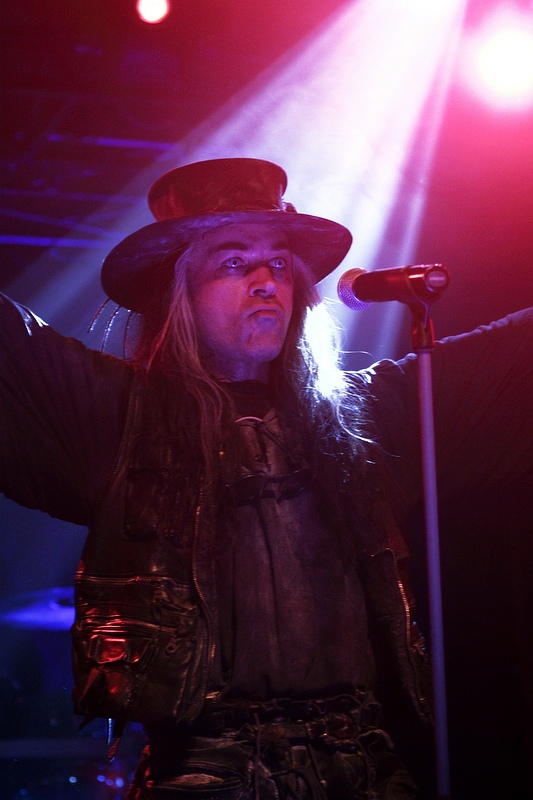
Carl Douglas McCoy (born 15 January 1963) is an English singer, who is best known as the frontman for the gothic rock band Fields of the Nephilim.

Biography

[edit]

McCoy frequently uses mystical and occult references in his lyrics. Samples of Aleister Crowley's voice were featured on Elizium.[4]

McCoy owns a graphics company, Sheerfaith, which has supplied art and design for all of his musical projects. Sheerfaith has also produced artwork for other projects, such as for the Storm Constantine book Hermetech and Andrew Collins' 21st Century Grail. He is a 3D artist, a longtime user of LightWave 3D.[5]

McCoy appeared as the nomad in the film Hardware (1990), directed by Richard Stanley,[6] who had previously directed a number of videos for Fields of the Nephilim.

Personal life

[edit]

McCoy comes from a religious background; he grew up in England with his mother, who was a devout member of the Jehovah's Witness.[4] McCoy would later deal with this, often critically, in many of his songs such as "Chord of Souls".[4] He has talked in interviews about his belief in paganism.[7]

Vocal style

[edit]

McCoy's vocal style has been described as sounding like he 'gargles with gravel.'[8] He attributes this to a childhood laryngeal burn: "I only sang the way I sang because I burnt my throat when I was a kid. I got hot food stuck down there and my throat got singed. I couldn’t talk for four weeks, but the effects lasted forever!"[8]

Discography

[edit]

References

[edit]

Further reading

[edit]
Revisions and contributorsEdit on WikipediaRead on Wikipedia
from Grokipedia
Carl McCoy (born 15 January 1963) is an English musician, singer, and songwriter best known as the lead vocalist and frontman of the band , which he co-founded in 1984 in . Raised as a Jehovah's Witness in after his birth in , , McCoy has shaped the band's distinctive sound through deep vocals and themes drawn from occultism, , and aesthetics. Fields of the Nephilim rose to prominence in the 1980s UK goth scene, blending with psychedelic, , and early metal elements, influencing later acts in goth metal such as and . McCoy's lyrics and the band's imagery often evoke Victorian art, (the philosophy of ), and ritualistic magick, with his personal interest in occult practices informing their work, though he approaches it in a non-traditional, personal manner. The band's visual style, featuring McCoy and members as flour-dusted, Wild West-inspired figures in wide-brimmed hats, contributed to their enigmatic, outsider persona, which has been likened to an "uncle" figure in the evolution of due to later collaborations with artists like and . McCoy's career highlights include key albums with Fields of the Nephilim such as Dawnrazor (1987), The Nephilim (1988), and Elizium (1990), followed by the band's temporary dissolution and his formation of The Nefilim, which released Zoon (1993). He reformed Fields of the Nephilim in the late 1990s and early 2000s, leading to releases like Mourning Sun (2005), while also contributing to film soundtracks and cameos, such as in Hardware (1990), and collaborating with his partner Lynn under the name Sheerfaith for artwork and production on band releases. Despite lineup changes leaving him as the sole original member, McCoy has maintained the band's cult following through sporadic tours and recordings, including a 40th anniversary tour in 2025, emphasizing themes of spirituality and rebellion.

Early Life

Birth and Family

Carl McCoy was born Carl Douglas McCoy on January 15, 1963, in , , . He grew up in the nearby working-class district of , where he experienced a modest, urban environment that contributed to his later sense of being an outsider. McCoy was raised in a strict religious household by his mother, a devout Jehovah's Witness, which profoundly shaped his early years. The family's adherence to Jehovah's Witness beliefs meant a childhood devoid of traditional celebrations, such as and birthdays, fostering a disciplined and insular atmosphere. This religious context provided McCoy with early exposure to biblical narratives, including stories of the Watchers and the , which would later influence his artistic themes. Public information about McCoy's father and siblings remains limited, with little documented beyond the central role of his mother's faith in the family dynamic. His upbringing in this environment instilled a foundational perspective of rebellion against conventional norms, setting the stage for his creative pursuits.

Childhood and Influences

Carl McCoy experienced a significant childhood accident that affected his vocal development. As a young boy, he suffered a laryngeal burn after hot food became lodged in his throat, causing it to singe and resulting in temporary loss of speech for four weeks. This incident, which McCoy has attributed directly to the origins of his distinctive gravelly voice, occurred during his early years in London and marked a pivotal physical challenge in his formative period. McCoy's educational background was rooted in the area of , where he attended local schools during the 1970s. His upbringing in a strict Christian household, influenced by his mother's religious devotion and ties to Jehovah's Witness beliefs, fostered an environment of spiritual intensity that he later rebelled against. This rebellion manifested in his teenage years through a rejection of , channeling instead toward personal exploration of and alternative philosophies. Concurrently, McCoy developed early interests in and , blending visual creativity with auditory experimentation as outlets for his emerging . In 1970s London, McCoy's cultural exposures profoundly shaped his artistic sensibilities, drawing him to horror films such as , whose visceral imagery and sound design left a lasting impression. He was also captivated by Westerns, particularly the atmospheric scores of , which inspired layered soundscapes and thematic aesthetics like the band's later adoption of hats and trench coats. Additionally, McCoy encountered occult literature during this period, developing an initial fascination with figures like , , and , elements that ignited his interest in mysticism and the esoteric long before his musical career.

Musical Career

Formation and Early Years with Fields of the Nephilim

Carl McCoy founded in 1984 in , , , where he served as the band's and primary songwriter. The group drew its name from the biblical reference to the , fallen angel-human hybrids, reflecting McCoy's early interest in and mystical themes that would permeate the band's . The original lineup consisted of McCoy on vocals, Tony Pettitt on bass, brothers Paul Wright on guitar and Nod Wright on drums, along with Gary Wisker on , who departed shortly after formation. This core ensemble developed a distinctive dynamic through local performances in clubs during the mid-1980s, blending energy with emerging gothic elements and fostering tight-knit band chemistry rooted in shared creative visions. The band's debut release, the Burning the Fields EP, arrived in via Situation Two Records, featuring tracks like "Trees Come Down" that showcased raw, atmospheric production and McCoy's gravelly delivery. Follow-up singles such as "Power" (1986) and "Preacher Man" (1987) built momentum, introducing their signature sound—heavy reverb-laden guitars, tribal drumming, and brooding basslines evoking desolate landscapes. This aesthetic was amplified by their visual style, incorporating imagery like talismans, sepia-toned photography, and attire reminiscent of Victorian gunslingers, which became iconic in promotional materials and live shows. In 1987, released their debut full-length album on Situation Two, an imprint of , which solidified their atmospheric identity through extended tracks exploring themes of isolation and the supernatural. The album's production emphasized layered soundscapes and McCoy's incantatory vocals, drawing comparisons to the era's innovators while carving a niche with its cinematic scope. Building on this, the 1988 follow-up The Nephilim expanded their palette with more polished arrangements, highlighted by the single "Moonchild," which peaked at number 28 on the UK Singles Chart and exemplified their fusion of psychedelic undertones and mysticism. Throughout the late 1980s, the band toured extensively across the and , performing at key goth venues and festivals, which helped cultivate a dedicated within the burgeoning goth scene. Fans were drawn to the immersive experience of their live sets, complete with fog-shrouded stages and ritualistic energy, establishing as underground staples alongside acts like . McCoy's mystical lyrical themes, often invoking arcane rituals and existential shadows, further resonated with this audience, though they remained a focused element of the band's early oeuvre.

The Nefilim and Band Reforms

In 1991, disbanded following the release of their album , with frontman Carl McCoy departing due to creative differences and frustrations with the band's direction and contractual obligations. McCoy, who retained the band's name, pursued a new musical path, while the remaining original members—bassist Tony Pettitt, drummer Nod Wright, guitarist Paul Wright, and saxophonist Gary Wisker—briefly reformed as with a new vocalist but disbanded shortly after without significant output. McCoy formed The Nefilim in 1992 as a new project to explore heavier and more experimental sounds, recruiting guitarist Paul Miles, drummer Simon Rippin, and bassist Cian Houchin to create a lineup distinct from his previous work. This incarnation marked a shift toward industrial and metal influences, allowing McCoy greater creative control in isolation. The band's sole album, Zoon, released in 1996 on , delved into darker territories with industrial elements, featuring heavy riffs, eerie soundscapes, and McCoy's growling vocals, representing a stark evolution from the atmospheric of . By the late 1990s, McCoy began reincorporating elements of the original Fields sound, leading to a reunion under the Fields of the Nephilim banner in 2000 with a revised lineup that included returning bassist Tony Pettitt alongside Rippin on drums and new contributors like guitarist John 'Capachino' Carter. This reformation focused on live performances and new material, releasing the single "One More Nightmare (Trees Come Down)" in May 2000 as a bridge to their past. The effort culminated in the 2005 album Mourning Sun, which returned to the band's core themes of love, loss, religion, and mysticism through extended atmospheric tracks blending gothic rock with subtle industrial undertones, signaling a revitalized continuity after over a decade of separation.

Recent Projects and Tours

In the 2010s, Carl McCoy and Fields of the Nephilim released Ceromonies, a live album and DVD set capturing performances from July 2008 at London's Shepherd's Bush Empire, which highlighted the band's enduring stage presence and catalog-spanning setlists. The project, issued in 2012, included audio from 17 tracks drawn from across their discography, emphasizing their gothic rock roots with high-fidelity mixing and mastering. More recently, in December 2024, an expanded edition of Zoon—originally released under McCoy's Nefilim project in 1996—was d on double red vinyl, CD, and digital formats, featuring four bonus tracks and a remaster conducted at . This underscored McCoy's ongoing archival efforts, presenting the album's industrial and death metal-infused sound in enhanced clarity while adding previously unavailable material from the era. Fields of the Nephilim marked their 40th anniversary with a tour in autumn 2025, comprising headline shows in cities including Birmingham on October 25, on October 26, on October 30, on October 31, and on November 1. The tour, described by McCoy as a commemoration of four decades since the band's debut EP Burning the Fields, featured support acts such as Heathen Apostles and , drawing fans to celebrate the group's legacy. Complementing the tour, the band performed at international festivals, including a set at Poland's Soundedit Festival on October 18, 2025, where they delivered staples like "Moonchild" and "Last Exit for the Lost" to a receptive audience. They also headlined the Friday night of Tomorrow's Ghosts Festival in on October 31, 2025, alongside acts like , reinforcing their status as icons in a Halloween-themed gathering.

Artistic Contributions

Vocal Style and Technique

Carl McCoy's vocal style is characterized by a deep, gravelly timbre often described as a guttural growl, evoking a haunting and resonant quality that contributes to the atmospheric intensity of his performances. This rasped delivery, sometimes likened to emerging from an , employs a range of techniques including growls, whispers, and moans to create immersive, dark sonic textures. His voice is typically enhanced with reverb and delay effects to amplify its inherent "dark" tone, though McCoy has expressed comfort with a raw, unprocessed sound. In his early work during the , McCoy's technique featured a raw, brooding intensity, with vocals buried in layered production and choir-like effects to heighten a sense of awe and morbidity, as heard on the band's debut album . Over time, his approach evolved toward greater control and prominence, particularly in later recordings like Mourning Sun (2005), where the vocals are positioned more upfront with reduced effects for a stronger, more confident presence that maintains its rasped depth without straying into excess. This shift reflects a maturation in delivery, balancing raw power with precision to suit evolving musical contexts. McCoy developed his technique primarily through instinctive live performances, where he empties his mind to channel an immersive, ritualistic energy, viewing stage delivery as the band's essential strength over studio polish. He records vocals spontaneously in the control room amid full band playback to capture unfiltered emotion, avoiding prolonged analysis that might inhibit natural expression. This method underscores his shamanic intonations, adapting growls and whispers to build epic, atmospheric tension in settings.

Lyrical Themes and Influences

Carl McCoy's lyrics, primarily written for and his solo projects, recurrently explore themes of , apocalyptic visions, mythology, and shamanic journeys, drawing from a blend of esoteric traditions and personal introspection. The , interpreted as a race of biblical giants and from apocryphal texts, serve as a central motif symbolizing rebellion and otherworldly power, reflecting McCoy's fascination with ancient myths reimagined through a gothic lens. elements often manifest in references to magick and spiritual transcendence, while apocalyptic imagery evokes end-times cataclysms intertwined with redemption, as seen in the conceptual framework of albums like (1990). These themes are heavily influenced by McCoy's Jehovah's Witness upbringing, which instilled a rigid biblical framework that he later rebelled against, incorporating motifs of divine defiance and gnostic enlightenment. , Aleister Crowley's philosophy—emphasizing ""—and horror literature from further shape his narrative style, with Elizium featuring spoken-word samples from Crowley's recordings, such as fragments in "At the Gates of Silent Memory." Western and horror genres, including spaghetti western soundtracks by and John Carpenter's atmospheric scores, contribute to the dusty, desolate imagery that permeates his work, blending frontier mysticism with supernatural dread. McCoy's songwriting process positions him as the primary lyricist, collaborating with band members to align on a unified vision while infusing personal philosophy, dreams, and subconscious explorations. Over time, his themes evolved from the ' dense rooted in gothic-occult aesthetics to a more individualized in the , emphasizing raw emotional and ritualistic expression in projects like Zoon (1996). This progression reflects a shift toward shamanic-like live performances as communal rituals, where channel transformative journeys rather than static .

Personal Life and Beliefs

Family and Relationships

Carl McCoy has been in a long-term relationship with his partner Lynn, a visual with whom he collaborates on projects under the pseudonym . Their partnership, which includes joint work in graphics and design, underscores a personal life centered on stability and creative collaboration rather than public exposure. McCoy is the father of two daughters, Scarlett and Eden, who made a notable appearance providing backing vocals on the title track of Fields of the Nephilim's 2005 album Mourning Sun. This brief involvement represents one of the few instances where his family has intersected with his musical career, highlighting the boundaries he maintains between personal and professional spheres. McCoy maintains a low-profile in , deliberately shielding his family from media attention and the demands of fame to foster a sense of normalcy and privacy.

Spiritual and Religious Evolution

Carl McCoy was raised in a Jehovah's Witness household by his devout , a background that profoundly shaped his early spiritual environment but which he ultimately rejected during his teenage years. This break from stemmed from a desire for personal autonomy, leading him to critique dogmatic structures in his formative artistic expressions. In adulthood, McCoy embraced a non-dogmatic centered on , , and magick, drawing heavily from traditions such as Chaos Magick, , and the works of and . He has described himself as inherently spiritual, emphasizing an individualistic approach that avoids institutional religion and focuses on personal ritual practices informed by esoteric studies. This evolution reflects a shift toward gnostic and elements, where serves as a creative and philosophical framework rather than a prescriptive faith. McCoy has publicly articulated these beliefs in interviews, portraying magick as a lived rather than theatrical performance. In a 2012 discussion, he explained his adherence to Thelemic principles, stating, "I’ve always seen myself as a spiritual person… The person onstage is the real me," and detailed personal ritual magick as a natural, non-Victorian practice. He views music and live performances as integral to this , describing concerts as collaborative rituals that channel energy and foster shamanic connections with audiences.

Other Ventures

Graphics and Design Work

In the mid-1980s, Carl McCoy founded Sheerfaith, a and firm initially established to handle creative materials for his musical endeavors, but which evolved into a broader commercial operation specializing in , , and visual production. Operating alongside his long-term partner Lynn, McCoy utilized Sheerfaith to explore computer-based techniques, including early adoption of and manipulation, often drawing from self-taught skills in software and rendering to produce intricate visuals. The company provided a stable creative outlet and financial support during periods when McCoy's band activities were on hold, allowing him to sustain his artistic pursuits independently. McCoy's design style through Sheerfaith is characterized by mystical and gothic , featuring dreamy landscapes, symbolic still-life compositions, and evocative imagery influenced by and esoteric themes that echo his personal interests in and the . Techniques often involved layering oil paintings on glass, which were photographed and digitally enhanced to create cinematic, otherworldly effects suitable for print and multimedia applications. This approach aligned with broader gothic visual traditions while emphasizing conceptual depth over literal representation. Beyond music-related projects, Sheerfaith extended its reach into publishing, designing book covers for authors exploring similar mystical topics. Notable examples include the covers for Andrew Collins's Twenty-First Century (2004) and Beneath the Pyramids (2009), where McCoy's contributions complemented the books' themes of ancient mysteries and hidden knowledge through atmospheric and symbolic designs. These collaborations underscored Sheerfaith's versatility, bridging McCoy's creative vision with literary works and reinforcing his role as a multifaceted visual . The firm's output not only diversified McCoy's portfolio but also fostered ongoing partnerships with labels and creators outside the music industry, contributing to his enduring creative legacy.

Film Appearances

McCoy's primary foray into acting was a as the Nomad, also known as the Zone Tripper, in the 1990 British Hardware, directed by Richard Stanley. In the role, he portrays a rugged scavenger who unearths the remains of the antagonistic MARK 13 cyborg in a post-apocalyptic wasteland, setting the story's events in motion. The part was offered to McCoy following Stanley's direction of several music videos for his band , which had gained prominence in the genre by the late 1980s, allowing the filmmaker to incorporate the musician's distinctive, enigmatic persona into the production. This brief performance, lasting mere minutes, effectively captured a desolate, gritty atmosphere that resonated with the visual style of , blending elements of industrial decay and otherworldly menace central to the film's aesthetic. McCoy's involvement extended his band's thematic explorations of and into visual media, though he has not sought extensive acting opportunities beyond such limited roles. Beyond Hardware, McCoy's screen presence has been confined to minor contributions in music-oriented videos and one additional voice credit. He appeared in the 1991 concert film , documenting a live performance at , where he performed as the band's frontman. In 2000, he voiced the villainous spirit Dravid in the low-budget , directed by Jonty Miller and Simon Hunter, while also assisting in camera operation and providing effects under the pseudonym Sheerfaith. These sporadic media appearances reflect occasional extensions into film without a shift toward professional acting, as McCoy has prioritized his musical endeavors since the 1990s.

Discography

Studio Albums with Fields of the Nephilim

's debut full-length studio album, Dawnrazor, was released in on Situation Two Records. Recorded at The Lodge in , , the album introduced the band's signature sound, characterized by atmospheric production, occult-inspired lyrics, and Carl McCoy's distinctive vocals. Key tracks include "Preacher Man" and "Slowkill," which helped solidify their place in the scene alongside contemporaries like . The follow-up album, The Nephilim, arrived in September 1988, also via Situation Two. Building on the debut's foundation, it featured darker, more expansive production with echoing reverb and psychedelic elements, amplifying the band's mystical aesthetic. Standout hits like "Moonchild" became anthems in the , showcasing McCoy's commanding presence and the group's evolving blend of and influences. Elizium, released on September 24, 1990, by , marked a conceptual peak for the band, drawing heavily from esoteric themes and incorporating spoken-word samples from Aleister Crowley's writings, particularly in tracks like "At the Gates of Silent Memory." Recorded across multiple studios including Parkgate in , the album received widespread critical acclaim for its ambitious scope and sonic depth, often hailed as a masterpiece with lush, orchestral arrangements. Fallen, released in 2002 on Jungle Records, was a post-reformation studio album by McCoy and bassist Tony Pettitt, featuring a heavier, more aggressive gothic rock sound compared to earlier works. Recorded amid the band's partial reunion, it explored themes of resurrection and decay through tracks like the title song "Fallen" and "Dead to the World," receiving mixed reviews for its raw intensity and departure toward metal influences. After a lengthy hiatus following the band's initial disbandment, Mourning Sun emerged in 2005 (with a 2006 U.S. release) on Jungle Records as a post-reunion effort featuring core members McCoy and Tony Pettitt. The album integrated family vocals from McCoy's relatives, adding a personal layer to its themes of loss and resurrection, while maintaining the Nephilim's brooding intensity through tracks like the title song. It signified a triumphant return, blending classic gothic elements with matured production.

Releases with The Nefilim

Following the 1991 dissolution of due to internal lineup changes, Carl McCoy formed The Nefilim in 1992 as a studio project with collaborator John "Capachino" Carter, adopting the altered spelling to circumvent legal issues surrounding the original band name. This venture marked McCoy's exploration of heavier, more experimental sounds, diverging from the roots of his prior work. The project released two singles and one album before disbanding amid contractual disagreements with their label, , particularly over touring commitments and artistic presentation. The Nefilim's first single, "Xodus," emerged in 1995 as a promotional CD maxi-single on , previewing the industrial-tinged aggression that would define the project's output. This was followed by "Penetration" in March 1996, issued in multiple formats including CD, 12-inch vinyl, and promo video; the track blended guttural vocals with chugging riffs, signaling McCoy's shift toward infused with death and industrial elements. Both singles highlighted McCoy's production role, where he handled vocals, additional instruments, effects, and programming, often working in isolation to craft dense, atmospheric soundscapes. The project's sole studio album, Zoon, was released on April 22, 1996, via , after four years of development by McCoy. Clocking in at 53 minutes, it represented a stark from Fields of the Nephilim's ethereal , embracing a darker, more visceral style with industrial influences—characterized by heavy guitar riffs, eerie synths, and McCoy's raspy, haunting vocals. McCoy produced, mixed, and mastered the record (with assistance from John Dent), creating an "aural assault" born from seclusion, as he pursued a vision of sonic intensity tainted by themes of decay and transformation. Standout tracks included "XIII," a brooding centerpiece evoking apocalyptic with layered percussion and distorted growls, and "End of Time," which closed the with experimental, fading ambience post-Fields split, underscoring McCoy's introspective experimentation. Other notable cuts like "Shine" and "Pazuzu (Black Rain)" further exemplified the album's fusion of cinematic dread and metallic aggression, though it received mixed initial reception for its abrasive departure from expectations. Despite its cult status among gothic metal enthusiasts, Zoon did not lead to extensive promotion; label tensions prevented a full tour, contributing to The Nefilim's swift end as McCoy severed ties with Beggars Banquet to regain creative control. The album remains the project's definitive statement, influencing later heavy gothic acts with its raw, transitional intensity.

Live Albums and Compilations

Earth Inferno, released in 1991 by , is a live album that compiles performances from the band's 1990 tour supporting their album , capturing the intense, atmospheric energy of their stage presence across venues including in , , and Sportshalle. The recording, mixed by the band and engineer Andy Jackson, features extended renditions of key tracks like "Sumerland" and "Psychonaut," emphasizing McCoy's guttural vocals and the group's occult-infused sound in a raw, immersive format. Ceremonies, a double live album and DVD set issued in 2012, documents Fields of the Nephilim's performances on and 13, 2008, at London's , showcasing a setlist spanning their career with brooding renditions of songs such as "Shroud" and "Moonchild." The release highlights the band's enduring live prowess, blending industrial and gothic elements in a ritualistic atmosphere led by McCoy's commanding delivery. In December 2024, Beggars Arkive reissued The Nefilim's 1996 album Zoon as an expanded edition on double LP, , and digital formats, remastered by Sean Magee at and including four bonus tracks alongside rarities to provide deeper insight into McCoy's transitional industrial phase post-Fields of the Nephilim. This version, pressed on red vinyl for the LP, replaces the original's etched artwork with additional material, underscoring the album's dark, death metal-tinged experimentation. In April 2025, Jungle Records released a remastered vinyl edition of the 2002 Fallen for , limited to 900 copies on yellow vinyl, marking the first vinyl pressing in nine years. The double LP includes the original studio tracks plus a bonus disc featuring a previously unreleased live recording from 2000, capturing the band's intense post-reformation performance. Burning the Fields, released in June 2025 by Jungle Records, is a remastered compiling the band's debut EP Burning the Fields (1986) and Returning to (1987), available on CD and limited green vinyl. Marking the first CD in over two decades, it includes a bonus disc with remixes of 1986 tracks, three 1985 demos, and a 1997 interview, providing insight into the early sound with tracks like "Trees Come Down" and "Power." Compilations associated with McCoy's work include the 1992 Italy-only release Laura by Fields of the Nephilim, which gathers early tracks like "Power" and "Secrets" to highlight their formative goth rock sound. Revelations, a 1993 Beggars Banquet compilation, further retrospects the band's hits such as "Moonchild" and "Preacher Man," offering a curated overview of their cryptic, occult-inspired catalog. McCoy has made select guest appearances on occult-themed releases, notably providing vocals on the track "Waters of Ain" for Watain's 2010 black metal album Lawless Darkness, bridging his gothic roots with extreme metal's infernal aesthetics.

References

Add your contribution
Related Hubs
User Avatar
No comments yet.