Hubbry Logo
Carla FracciCarla FracciMain
Open search
Carla Fracci
Community hub
Carla Fracci
logo
8 pages, 0 posts
0 subscribers
Be the first to start a discussion here.
Carla Fracci
Carla Fracci
from Wikipedia

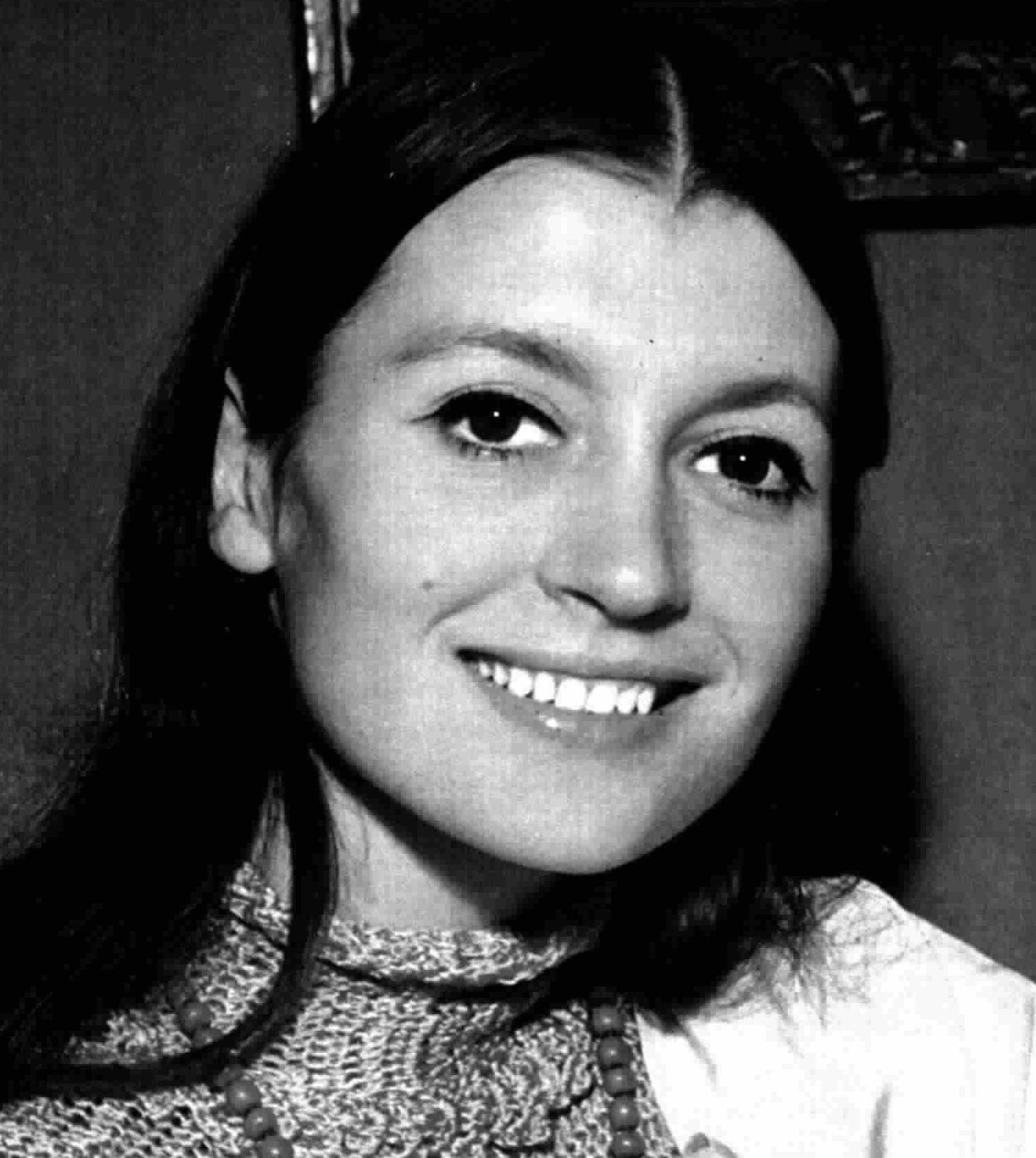
Carolina "Carla" Fracci (Italian: [ˈkarla ˈfrattʃi]; 20 August 1936 – 27 May 2021)[1] was an Italian prima ballerina, actress and ballet director. Considered one of the greatest ballerinas of the 20th century,[2] she was a leading dancer of La Scala Theatre Ballet in Milan, then worked freelance with international companies including the Royal Ballet, London, Stuttgart Ballet, Royal Swedish Ballet and American Ballet Theatre. Fracci is known for her interpretation of leading characters in several Romantic ballets, such as La Sylphide, Giselle, Swan Lake, and Romeo and Juliet. She also performed in ballets such as Nijinsky and Complete Bell Telephone Hour Performances: Erik Bruhn 1961–1967. She danced with partners including Erik Bruhn, Rudolf Nureyev and Mikhail Baryshnikov. Later, she directed several ballet companies in Italy, including the Teatro San Carlo in Naples and the Teatro dell'Opera di Roma in Rome.

Key Information

According to Bruhn, she "gave the world a new idea of the ballerina in 19th-century Romantic ballets".[3] She appeared with many of the leading companies of the world, and received multiple honours for her performances.

Early life

[edit]

Born as Carolina, Fracci was born on 20 August 1936, in Milan, to a tram driver[4] and a mother who worked at a factory. During the Second World War, she lived with relatives in the countryside.[5][6] In 1946, her mother brought her and her sister to a La Scala Theatre Ballet School entrance exam, which ended up being disastrous for Fracci. While her body type was deemed unsuitable for ballet, she was pretty enough to be the last of 35 students accepted.[7] She described the early days at the school as "a crashing bore and a terrible chore." However, after she was cast as the mandolin in The Sleeping Beauty, performing alongside Margot Fonteyn, she changed her mind about ballet training and "started working very hard to catch up for the lost time."[7] Fracci's training completed in 1955. She was one of six students chosen to participate in passo d'addio, a farewell performance of the graduates held after an opera performance.[7]

Career

[edit]
Fracci in 1957

Fracci entered La Scala Theatre Ballet after she graduated, and was promoted to soloist the following year. Her breakthrough came when she filled in for Violette Verdy in Rodrigues' Cinderella in 1958, which led to her promotion to principal dancer,[6][8] and further to her dancing the title role in Giselle with the London Festival Ballet the following year. In 1963, she left the company as she felt underpaid and underemployed. Instead, she pursued a freelance career.[7]

Fracci at her prime in La Sylphide with Erik Bruhn.

Fracci performed with partners including Mikhail Baryshnikov, Roberto Bolle, Erik Bruhn, Alexander Godunov, Henning Kronstam, Gheorghe Iancu, Rudolf Nureyev, Giuseppe Picone and Vladimir Vasiliev.[9][10] She appeared with leading companies of the world,[10] including the Royal Ballet in London, the Stuttgart Ballet, the Royal Swedish Ballet in Stockholm and the American Ballet Theatre.[1]

Starting in the late 1980s, she directed numerous major ballet companies in Italy: first was the ballet company of the Teatro San Carlo in Naples. From 1996 to 1997, she directed the Verona Arena ballet. From November 2000, she directed the Teatro dell'Opera di Roma ballet, where she continued until 2010. There she followed the Opera's traditional repertoire, as well as Diaghilev's works for the Ballets Russes. The repertoire at the Rome Opera's ballet ranged from Millicent Hodson's adaptation of The Rite of Spring[11] to Andris Liepa's versions of Scheherazade,[12] Petrushka and The Firebird.[13] She was instrumental in bringing ballet to the people, such as an open-air performance in Paestum, and appearing in public squares and schools.[10]

From June 2009 to 2014, she was nominated Culture Assessor for the Metropolitan City of Florence.[14]

Fracci still dancing at 70 with Fabio Grossi (dancer).

In 1983, 2000, and 2003, Fracci was awarded three prestigious honors from the Italian Government, acknowledging her achievements.[15] On 16 October 2004, Fracci was named Goodwill Ambassador of the Food and Agriculture Organization (FAO), a specialized agency of the United Nations that leads international efforts to defeat hunger.[16] Fracci's autobiography Steps after Steps was published in 2013.[5] In 2014, she took part in a documentary film, 29200 Puthod, l'altra verità della realtà, directed by Federico Angi, about the life of the painter Dolores Puthod.[17]

On 20 December 2016, she presented the book Ballerina by the author Roberto Baiocchi, published by the Giunti publishing house in Florence, for which she signed the preface.[18]

Personal life

[edit]

In 1964, Fracci married theatre director Beppe Menegatti; the couple had a son,[5][19] Francesco.[1] After she retired, they lived near Florence.[10]

Fracci died from cancer on 27 May 2021 in Milan, at the age of 84.[5] Her remains are entombed in a crypt at the Famedio in the Cimitero Monumentale di Milano, the first woman to be so honored. In accordance with her wishes, cemetery workers were photographed in the act of sealing her tomb, with Menegatti explaining that "without the technicians, there would be no show".[20]

Filmography

[edit]

Source: Carla Fracci at IMDb

Year Title Role Director Notes
1980 Nijinsky Tamara Karsavina Herbert Ross Feature film debut as an actress
1981 The Lady of the Camellias Marguerite Gauthier Mauro Bolognini Nastro d'Argento – Best Breakout Actress
1982 The Life of Verdi Giuseppina Strepponi Renato Castellani Miniseries; co-lead role (9 episodes)
Venezia, carnevale, un amore The Lady Mario Lanfranchi
1988 William Tell Solo dancer Riccardo Muti Filmed stage performance
2021 Carla Herself Emanuele Imbucci Television film about her life (posthumous release)

References

[edit]
[edit]
Revisions and contributorsEdit on WikipediaRead on Wikipedia
from Grokipedia
Carla Fracci (20 August 1936 – 27 May 2021) was an Italian ballerina renowned for her graceful interpretations of Romantic ballets, particularly Giselle, establishing her as one of the 20th century's premier danseuses and a symbol of Italian ballet excellence. Born Carolina Fracci in Milan to a tram driver father and a factory worker mother, she endured the hardships of World War II by living with relatives in the countryside to avoid Allied bombings before returning to enroll at the La Scala Theatre Ballet School in 1946 at age 10. Graduating in 1954 after training under masters like Vera Volkova and Esmée Bulnes, she joined the La Scala Ballet Company, making her professional debut as Cinderella on December 31, 1955, replacing Violette Verdy, and was promoted to soloist that year and to prima ballerina in 1958. Her career flourished internationally, serving as principal guest artist with the American Ballet Theatre from 1967 to 1991 and guesting with prestigious ensembles such as the Royal Ballet (1963), Stuttgart Ballet (1965), and Royal Swedish Ballet (1969), where she performed iconic roles including Juliet in Romeo and Juliet, Swanilda in Coppélia, and the dual parts of Odette and Odile in Swan Lake. Fracci's artistry shone brightest in Romantic repertory, with her 1959 debut as at London's catapulting her to global fame, and she frequently partnered with luminaries like , , and Julio Bocca, revitalizing classics such as through her lyrical style and technical precision. Transitioning to leadership roles in her later years, she directed the ballet corps at ' Teatro San Carlo starting in 1988, the Ballet from 1995 to 1997, and the Rome Opera Ballet from 2000 to 2010, while also serving as a member of the of Fine Arts since 1994 and promoting dance through television, open-air spectacles at sites like , and her 2013 autobiography Passo dopo passo. Throughout her life, Fracci received numerous accolades, including the Order of Merit of the Italian Republic () and the Order of Merit for Culture and Art (OMCA), honors from the Italian government in 1983, 2000, 2003, and 2020, and the Leonardo Career Prize in 2005 for her enduring contributions to . Her legacy endures through the annual Gala Fracci at , initiated in 2022. She passed away in on 27 May 2021 at age 84 after battling cancer, leaving a legacy as a bridge between classical tradition and modern audiences, often hailed as the "Queen of Italian ."

Early Life and Education

Childhood and Family

Carla Fracci was born Carolina Fracci on August 20, 1936, in , , into a working-class family of modest means. Her father, Luigi Fracci, worked as a tram driver, and her mother, Santina Rocca, was a factory worker. Fracci's early childhood unfolded amid the hardships of in , where frequent Allied bombings posed a constant threat. To protect her from the dangers, she was sent at a young age to live with relatives in the countryside outside the city, separating her from her parents during much of the conflict. The wartime deprivations, including food shortages, left her undernourished upon her return to after the war's end in 1945. She grew up alongside her younger sister, Marisa Fracci, who later pursued a career as a dancer specializing in television and stage shows. The sisters shared a familial bond influenced by the , though Marisa focused on and musical theater rather than . Fracci's return to urban life in postwar marked the beginning of her exposure to the cultural world that would shape her future.

Ballet Training

Carla Fracci entered the Ballet School in in 1946 at the age of 10, following an audition arranged by her mother despite the family's modest circumstances—her father was a tram driver and her mother a factory worker. She had returned to after spending part of in the countryside to escape bombings, and her undernourished physique from wartime hardships initially raised concerns among examiners, though her expressive face and potential secured her place as one of the last selected. At , Fracci trained under the rigorous Italian tradition, incorporating the , which emphasized precise technique, épaulement, and musicality. Her primary instructors included the Russian émigré Vera Volkova, a student of known for blending classical Russian precision with expressive freedom, and Esmée Bulnes, the English director of the school who focused on disciplined correction and artistry. Initially, Fracci found the daily regimen of classes a "crashing bore and a terrible chore," but her dedication grew after witnessing perform in The Sleeping Beauty at in 1949, an experience that inspired her to pursue ballet with greater intensity and regard Fonteyn as a spiritual mentor. Fracci's early training culminated in her first stage appearance in 1949 at age 12, portraying a page with a in The Sleeping Beauty alongside Fonteyn during the ballerina's guest performance. She completed her eight-year course in 1954, graduating directly into the of the Teatro alla Scala, where she made her professional debut the following year. This foundation in La Scala's school, renowned for producing dancers of lyrical elegance, shaped Fracci's signature style of emotional depth and technical purity.

Professional Career

La Scala Debut and Rise

Carla Fracci joined the of the Teatro alla Scala upon graduating from its ballet school in 1954, marking the beginning of her professional career with the prestigious Milanese company. Her official debut on the stage occurred in 1955, where she performed minor roles that showcased her emerging talent amid the company's rigorous classical repertoire. A pivotal breakthrough came in 1955 when Fracci substituted for the injured Violette Verdy in the title role of , earning critical acclaim for her expressive lyricism and technical precision in the Prokofiev ballet. This performance highlighted her ability to convey emotional depth, a hallmark that distinguished her from her peers and accelerated her ascent within the company. By 1958, Fracci had been promoted to principal ballerina, solidifying her status as a leading artist at . That same year, choreographer selected her to originate the role of Juliet in his Romeo and Juliet, premiered by the La Scala Ballet; her portrayal brought a fresh romantic intensity to the , further elevating her reputation. She also danced the lead as Belle Rose in Cranko's The Prince of the Pagodas, demonstrating versatility in both narrative and abstract works. Additionally, her appearance in Anton Dolin's Pas de Quatre at the Nervi International Ballet Festival in 1958 introduced her burgeoning international appeal. These achievements in the late 1950s transformed Fracci from a promising corps member into one of La Scala's most celebrated dancers, revitalizing Italian ballet during a period of post-war renewal. Her rise was characterized by a blend of classical purity and dramatic nuance, qualities that would define her enduring legacy at the theater.

Global Performances

Fracci's international career began in the late 1950s, marking her as the first Italian ballerina since the early to achieve widespread global acclaim. Her debut abroad came in 1959 with the London Festival Ballet, where she performed the title role in , captivating audiences with her lyrical style and emotional depth. This performance established her reputation beyond , leading to invitations from prestigious companies worldwide. Throughout the 1960s and 1970s, Fracci became a sought-after guest artist, frequently collaborating with the (ABT). Joining ABT as a regular guest from 1967, she danced in New York and on U.S. tours, notably partnering with in (filmed in 1969) and in the same ballet during the 1970s. Her ABT repertory included dramatic works like Antony Tudor's Lilac Garden, José Limón's The Moor's Pavane, and John Butler's , where she later introduced to Western audiences in 1975. These appearances, spanning cities like New York and , highlighted her versatility in both Romantic and modern ballets. In Europe, Fracci's engagements extended to in , where she performed alongside stars like Vladimir Vasiliev, and the Stuttgart Ballet under , including Secrets at the 1960 Edinburgh Festival. She also guested with the London Festival Ballet again in 1962 and appeared at the Nervi International Ballet Festival in 1958 and 1960, dancing Pas de Quatre and works with Balletto Europeo. Fracci's reach extended to and the , including performances in with the Tokyo Ballet in the 1980s and guest spots at the International Ballet Festival of Havana, where she danced into her later years—most notably Giselle in 2004 at age 68 alongside Cuban prima ballerina . In , she also participated in Pas de Quatre galas, bridging Italian and Latin American ballet traditions. These global tours, often featuring partnerships with icons like Nureyev, Baryshnikov, and Julio Bocca, underscored her role as a cultural for Italian ballet, performing in over 30 countries until her retirement from the stage in 2009.

Leadership Roles

In the later stages of her career, Carla Fracci transitioned from performing to leadership roles, focusing on nurturing Italian and expanding its reach beyond major urban centers. In the early 1970s, she co-founded the Compagnia Italiana di Balletto with her husband, the stage director Beppe Menegatti, to promote classical across . The company toured small towns, opera houses, and appeared on television, staging productions that made more accessible to wider audiences and revitalized interest in the art form domestically. Beginning in the late 1980s, Fracci assumed directorial positions at several prominent Italian ballet ensembles. Her first major appointment was as director of the ballet company at the Teatro San Carlo in Naples from 1988 to 1991, where she emphasized classical repertoire and innovative stagings, including collaborations on reconstructions like Jeux by Claude Debussy with designers Millicent Hodson and Kenneth Archer. She followed this with a tenure as director of the ballet at the Arena di Verona from 1995 to 1997, overseeing outdoor performances that blended opera and dance traditions in the historic amphitheater. Fracci's most extended leadership role came as artistic director of the Ballet of the Teatro dell'Opera in from 2000 to 2010. During this decade, she curated a diverse program that included traditional works like the company's first full-length , as well as revivals of Sergei Diaghilev's pieces such as (reconstructed by Hodson and Archer), , , and under Andris Liepa. Her direction aimed to elevate the ensemble's international profile while fostering young talent and bringing to provincial venues. Additionally, she briefly directed the ballet company at the Teatro Comunale in (1996–1997), further extending her influence on Italy's regional scenes.

Artistic Contributions and Recognition

Signature Roles

Carla Fracci was renowned for her interpretations of leading roles in Romantic ballets, where her expressive style combined technical precision with emotional depth, earning her acclaim as a . Her most iconic role was , which she performed for over 30 years, often into her 50s, portraying the titular character's journey from innocence to madness and ethereal redemption with a natural lightness and directness that captivated audiences. Partners in this role included , , and , with a notable 1969 filmed performance alongside Bruhn highlighting her airborne grace. Fracci continued to teach the role in masterclasses, such as one at in January 2021, emphasizing its psychological nuances. In , Fracci debuted as the in 1962 opposite , bringing a swift, ethereal charm to the role through her exquisite bourrées and poetic port de bras, which exemplified her Romantic aesthetic of gentleness and radiance. She revisited the ballet with Nureyev in a 1972 film, further showcasing her ability to blend lightness with dramatic tension. Similarly, as Juliet in John Cranko's , a role created specifically for her in 1958 at , Fracci infused the character with youthful passion and tragedy, performing it throughout her career, including in filmed versions with Nureyev. Her interpretation highlighted emotional authenticity, making the ballet a cornerstone of her international repertoire. Fracci also excelled in other Romantic works like , where she danced the dual role of Odette/ with her signature blend of vulnerability and strength, and The Sleeping Beauty as Aurora opposite Nureyev in his 1966 La Scala production. In comic roles, such as Swanilda in Coppélia, she displayed buoyant mischief and precise footwork, notably in a 1968 American Ballet Theatre performance with Bruhn. Her breakthrough came earlier as Cinderella in 1955 at , substituting for Violette Verdy and revealing her dramatic range in a narrative-driven role. These performances, spanning over 200 roles in a 65-year career, underscored Fracci's versatility and enduring impact on ballet.

Awards and Honors

Carla Fracci received numerous accolades throughout her career, recognizing her contributions to both in and internationally. In 1969, she was awarded the prestigious Dance Magazine Award, one of the highest honors in the dance world, celebrating her exceptional artistry and interpretations of Romantic ballets. The Italian government bestowed several state honors upon Fracci for her cultural impact. She was appointed Grande Ufficiale dell'Ordine al Merito della Repubblica Italiana in 1983, acknowledging her role in elevating Italian globally. In 2000, she received the Medaglia d'oro ai benemeriti della cultura e dell'arte, highlighting her lifelong dedication to the arts. This was followed in 2003 by her elevation to Dama di Gran Croce dell'Ordine al Merito della Repubblica Italiana, the highest rank of the order, presented by President . In 2020, she was awarded the Lifetime Achievement Award from the Senate of the Italian Republic. Beyond national recognition, Fracci's international stature was affirmed through various institutional honors. In 2004, she was appointed a for the () of the , leveraging her global influence to advocate for cultural initiatives against hunger. She also received the Pyramid of Excellence from the Accademia Italiana, an award saluting her as a pinnacle of artistic achievement. In 2005, the Comitato Leonardo honored her with a special prize for promoting Italian excellence abroad through her performances.

Personal Life

Marriage and Family

Carla Fracci married Italian theatre director Beppe Menegatti in 1964, after they first met in 1954 at , where he served as an assistant to . Their partnership extended beyond , as Menegatti became Fracci's manager and collaborator, directing many of her productions and theatrical works throughout her career. Menegatti died on September 17, 2024, in , at the age of 95. The couple had one son, Francesco Menegatti, born in 1969, who later pursued a career as an architect and associate professor at . Fracci often spoke fondly of balancing her demanding professional life with family, crediting Menegatti's support for enabling her to maintain both her artistry and motherhood.

Death

Carla Fracci died on May 27, 2021, at her home in , , at the age of 84. The cause of death was cancer, as confirmed by her husband, Beppe Menegatti, and her son, Francesco Menegatti. Milan's Teatro alla Scala, where she had been a prima ballerina, announced her passing without initially specifying the cause, though Italian media reported her battle with the illness. Her funeral was held on May 29, 2021, at the in , attended by hundreds, including prominent figures from , reflecting her status as a in .

Media Appearances

Ballet Films

Carla Fracci's ballet films preserved her masterful interpretations of Romantic and classical roles, often partnering with renowned dancers and utilizing innovative filming techniques to enhance the dramatic impact of the performances. These productions highlighted her lyrical technique, emotional nuance, and ability to convey narrative depth through dance. In the 1969 American Ballet Theatre production of Giselle, filmed in a studio setting, Fracci portrayed the titular character opposite Erik Bruhn as Albrecht, with Bruce Marks as Hilarion. Directed by Hugo Niebeling, the film employed creative editing and cinematography to immerse viewers in the ballet's supernatural and tragic elements, allowing Fracci's Act I variation to exemplify her poised, ethereal style. Critics praised the adaptation for its fidelity to the choreography while advancing ballet on film through close-up shots that captured subtle expressions. She also embodied Juliet in the 1982 television film of Romeo and Juliet, Rudolf Nureyev's choreography performed at in . Dancing opposite Nureyev as , Fracci's interpretation infused the role with youthful ardor and sorrow, enhanced by opulent costumes and sets. The filmed version, directed under Nureyev's supervision, incorporated cinematic angles to heighten the ballet's emotional intensity and tragic climax.

Acting Roles

Carla Fracci extended her artistic talents beyond into , particularly in roles that allowed her to draw on her expressive dramatic abilities honed through years of performing romantic and narrative-driven dances. Her screen debut occurred in the 1980 biographical film Nijinsky, directed by , where she portrayed the renowned Russian ballerina , a contemporary and colleague of the titular . Fracci's most acclaimed acting role came in 1981 with the lead in La storia vera della signora delle camelie (The True Story of the Lady of the Camellias), directed by Mauro Bolognini, in which she played the courtesan Marguerite Gautier, inspired by Alexandre Dumas fils' novel. The performance, blending vulnerability and intensity, earned her the Nastro d'Argento award for Best Actress Debut from the Italian National Syndicate of Film Journalists. On television, Fracci took on the part of soprano , Giuseppe Verdi's second wife, in the 1982 RAI miniseries Verdi, directed by Renato Castellani, contributing to a historical portrayal that highlighted her ability to embody complex historical figures. She had earlier ventured into TV acting with a starring role in the 1967 RAI musical special Scarpette Rosa (Pink Shoes), directed by Vito Molinari, a variety program that framed her biography through scripted scenes and performances, co-starring actors like and featuring . In 1987, Fracci appeared in the two-part Italian television program Le Ballerine (The Ballerinas), a dramatic hybrid directed by her husband Beppe Menegatti and featuring , where she enacted vignettes linking history with narrative sketches, partnering with dancers like Vladimir Vasiliev and Charles Jude. Fracci's final acting credit was a cameo in the 2021 RAI biopic Carla, directed by Emanuele Imbucci, which chronicled her early life and career, with in the lead role.

References

Add your contribution
Related Hubs
User Avatar
No comments yet.