


Community hub
Recent from talks
Contribute something to knowledge base
Content stats: 0 posts, 0 articles, 1 media, 0 notes
Members stats: 0 subscribers, 0 contributors, 0 moderators, 0 supporters
Subscribers
Supporters
Contributors
Moderators
Hub AI
Catastrophism AI simulator
(@Catastrophism_simulator)
Hub AI
Catastrophism AI simulator
(@Catastrophism_simulator)
Catastrophism
In geology, catastrophism is the theory that the Earth has largely been shaped by sudden, short-lived, violent events, possibly worldwide in scope. This contrasts with uniformitarianism (sometimes called gradualism), according to which slow incremental changes, such as erosion, brought about all the Earth's geological features. The proponents of uniformitarianism held that the present was "the key to the past", and that all geological processes (such as erosion) throughout the past resembled those that can be observed today. Since the 19th-century disputes between catastrophists and uniformitarians, a more inclusive and integrated view of geologic events has developed, in which the scientific consensus accepts that some catastrophic events occurred in the geologic past, but regards these as extreme examples of explicable natural processes.
Proponents of catastrophism proposed that each geological epoch ended with violent and sudden natural catastrophes such as major floods and the rapid formation of major mountain chains. Plants and animals living in the parts of the world where such events occurred became extinct, to be replaced abruptly by the new forms whose fossils defined the geological strata. Some catastrophists attempted to relate at least one such change to the Biblical account of Noah's flood.
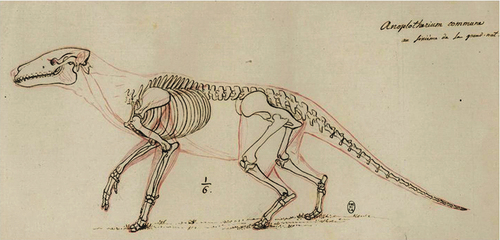
The French scientist Georges Cuvier (1769–1832) popularised the concept of catastrophism in the early 19th century; he proposed that new life-forms had moved in from other areas after local floods, and avoided religious or metaphysical speculation in his scientific writings.
In the early development of geology, efforts were made in a predominantly Christian western society to reconcile biblical narratives of Creation and the universal flood with new concepts about the processes which had formed the Earth. The discovery of other ancient flood myths was taken as explaining why the flood story was "stated in scientific methods with surprising frequency among the Greeks", an example being Plutarch's account of the Ogygian flood.
The leading scientific proponent of catastrophism in the early nineteenth century was the French anatomist and paleontologist Georges Cuvier. His motivation was to explain the patterns of extinction and faunal succession that he and others were observing in the fossil record. While he did speculate that the catastrophe responsible for the most recent extinctions in Eurasia might have been the result of the inundation of low-lying areas by the sea, he did not make any reference to Noah's flood. Nor did he ever make any reference to divine creation as the mechanism by which repopulation occurred following the extinction event. In fact Cuvier, influenced by the ideas of the Enlightenment and the intellectual climate of the French Revolution, avoided religious or metaphysical speculation in his scientific writings. Cuvier also believed that the stratigraphic record indicated that there had been several of these revolutions, which he viewed as recurring natural events, amid long intervals of stability during the history of life on Earth. This led him to believe the Earth was several million years old.
By contrast in Britain, where natural theology was influential during the early nineteenth century, a group of geologists including William Buckland and Robert Jameson interpreted Cuvier's work differently. Cuvier had written an introduction to a collection of his papers on fossil quadrupeds, discussing his ideas on catastrophic extinction. Jameson translated Cuvier's introduction into English, publishing it under the title Theory of the Earth. He added extensive editorial notes to the translation, explicitly linking the latest of Cuvier's revolutions with the biblical flood. The resulting essay was extremely influential in the English-speaking world. Buckland spent much of his early career trying to demonstrate the reality of the biblical flood using geological evidence. He frequently cited Cuvier's work, even though Cuvier had proposed an inundation of limited geographic extent and extended duration, whereas Buckland, to be consistent with the biblical account, was advocating a universal flood of short duration. Eventually, Buckland abandoned flood geology in favor of the glaciation theory advocated by Louis Agassiz, following a visit to the Alps where Agassiz demonstrated the effects of glaciation at first hand. As a result of the influence of Jameson, Buckland, and other advocates of natural theology, the nineteenth century debate over catastrophism took on much stronger religious overtones in Britain than elsewhere in Europe.
Uniformitarian explanations for the formation of sedimentary rock and an understanding of the immense stretch of geological time, or as the concept came to be known deep time, were found in the writing of James Hutton, sometimes known as the father of geology, in the late 18th century. The geologist Charles Lyell built upon Hutton's ideas during the first half of 19th century and amassed observations in support of the uniformitarian idea that the Earth's features had been shaped by same geological processes that could be observed in the present acting gradually over an immense period of time. Lyell presented his ideas in the influential three volume work, Principles of Geology, published in the 1830s, which challenged theories about geological cataclysms proposed by proponents of catastrophism like Cuvier and Buckland. One of the key differences between catastrophism and uniformitarianism is that uniformitarianism requires vast timelines for continued processes, whereas catastrophism accepts that there appeared to have been abrupt changes. Today most geologists combine catastrophist and uniformitarianist standpoints, taking the view that Earth's history is a slow, gradual story punctuated by occasional natural catastrophic events that have affected Earth and its inhabitants.
From around 1850 to 1980, most geologists endorsed uniformitarianism ("The present is the key to the past") and gradualism (geologic change occurs slowly over long periods of time) and rejected the idea that cataclysmic events such as earthquakes, volcanic eruptions, or floods of vastly greater power than those observed at the present time, played any significant role in the formation of the Earth's surface. Instead they believed that the earth had been shaped by the long term action of forces such as volcanism, earthquakes, erosion, and sedimentation, that could still be observed in action today. In part, the geologists' rejection was fostered by their impression that the catastrophists of the early nineteenth century believed that God was directly involved in determining the history of Earth. Some of the theories about Catastrophism in the nineteenth and early twentieth centuries were connected with religion and catastrophic origins were sometimes considered miraculous rather than natural events.
Catastrophism
In geology, catastrophism is the theory that the Earth has largely been shaped by sudden, short-lived, violent events, possibly worldwide in scope. This contrasts with uniformitarianism (sometimes called gradualism), according to which slow incremental changes, such as erosion, brought about all the Earth's geological features. The proponents of uniformitarianism held that the present was "the key to the past", and that all geological processes (such as erosion) throughout the past resembled those that can be observed today. Since the 19th-century disputes between catastrophists and uniformitarians, a more inclusive and integrated view of geologic events has developed, in which the scientific consensus accepts that some catastrophic events occurred in the geologic past, but regards these as extreme examples of explicable natural processes.
Proponents of catastrophism proposed that each geological epoch ended with violent and sudden natural catastrophes such as major floods and the rapid formation of major mountain chains. Plants and animals living in the parts of the world where such events occurred became extinct, to be replaced abruptly by the new forms whose fossils defined the geological strata. Some catastrophists attempted to relate at least one such change to the Biblical account of Noah's flood.
The French scientist Georges Cuvier (1769–1832) popularised the concept of catastrophism in the early 19th century; he proposed that new life-forms had moved in from other areas after local floods, and avoided religious or metaphysical speculation in his scientific writings.
In the early development of geology, efforts were made in a predominantly Christian western society to reconcile biblical narratives of Creation and the universal flood with new concepts about the processes which had formed the Earth. The discovery of other ancient flood myths was taken as explaining why the flood story was "stated in scientific methods with surprising frequency among the Greeks", an example being Plutarch's account of the Ogygian flood.
The leading scientific proponent of catastrophism in the early nineteenth century was the French anatomist and paleontologist Georges Cuvier. His motivation was to explain the patterns of extinction and faunal succession that he and others were observing in the fossil record. While he did speculate that the catastrophe responsible for the most recent extinctions in Eurasia might have been the result of the inundation of low-lying areas by the sea, he did not make any reference to Noah's flood. Nor did he ever make any reference to divine creation as the mechanism by which repopulation occurred following the extinction event. In fact Cuvier, influenced by the ideas of the Enlightenment and the intellectual climate of the French Revolution, avoided religious or metaphysical speculation in his scientific writings. Cuvier also believed that the stratigraphic record indicated that there had been several of these revolutions, which he viewed as recurring natural events, amid long intervals of stability during the history of life on Earth. This led him to believe the Earth was several million years old.
By contrast in Britain, where natural theology was influential during the early nineteenth century, a group of geologists including William Buckland and Robert Jameson interpreted Cuvier's work differently. Cuvier had written an introduction to a collection of his papers on fossil quadrupeds, discussing his ideas on catastrophic extinction. Jameson translated Cuvier's introduction into English, publishing it under the title Theory of the Earth. He added extensive editorial notes to the translation, explicitly linking the latest of Cuvier's revolutions with the biblical flood. The resulting essay was extremely influential in the English-speaking world. Buckland spent much of his early career trying to demonstrate the reality of the biblical flood using geological evidence. He frequently cited Cuvier's work, even though Cuvier had proposed an inundation of limited geographic extent and extended duration, whereas Buckland, to be consistent with the biblical account, was advocating a universal flood of short duration. Eventually, Buckland abandoned flood geology in favor of the glaciation theory advocated by Louis Agassiz, following a visit to the Alps where Agassiz demonstrated the effects of glaciation at first hand. As a result of the influence of Jameson, Buckland, and other advocates of natural theology, the nineteenth century debate over catastrophism took on much stronger religious overtones in Britain than elsewhere in Europe.
Uniformitarian explanations for the formation of sedimentary rock and an understanding of the immense stretch of geological time, or as the concept came to be known deep time, were found in the writing of James Hutton, sometimes known as the father of geology, in the late 18th century. The geologist Charles Lyell built upon Hutton's ideas during the first half of 19th century and amassed observations in support of the uniformitarian idea that the Earth's features had been shaped by same geological processes that could be observed in the present acting gradually over an immense period of time. Lyell presented his ideas in the influential three volume work, Principles of Geology, published in the 1830s, which challenged theories about geological cataclysms proposed by proponents of catastrophism like Cuvier and Buckland. One of the key differences between catastrophism and uniformitarianism is that uniformitarianism requires vast timelines for continued processes, whereas catastrophism accepts that there appeared to have been abrupt changes. Today most geologists combine catastrophist and uniformitarianist standpoints, taking the view that Earth's history is a slow, gradual story punctuated by occasional natural catastrophic events that have affected Earth and its inhabitants.
From around 1850 to 1980, most geologists endorsed uniformitarianism ("The present is the key to the past") and gradualism (geologic change occurs slowly over long periods of time) and rejected the idea that cataclysmic events such as earthquakes, volcanic eruptions, or floods of vastly greater power than those observed at the present time, played any significant role in the formation of the Earth's surface. Instead they believed that the earth had been shaped by the long term action of forces such as volcanism, earthquakes, erosion, and sedimentation, that could still be observed in action today. In part, the geologists' rejection was fostered by their impression that the catastrophists of the early nineteenth century believed that God was directly involved in determining the history of Earth. Some of the theories about Catastrophism in the nineteenth and early twentieth centuries were connected with religion and catastrophic origins were sometimes considered miraculous rather than natural events.
Recent media
Recent media