
Recent from talks
China–Greece relations
Knowledge base stats:
Talk channels stats:
Members stats:
China–Greece relations
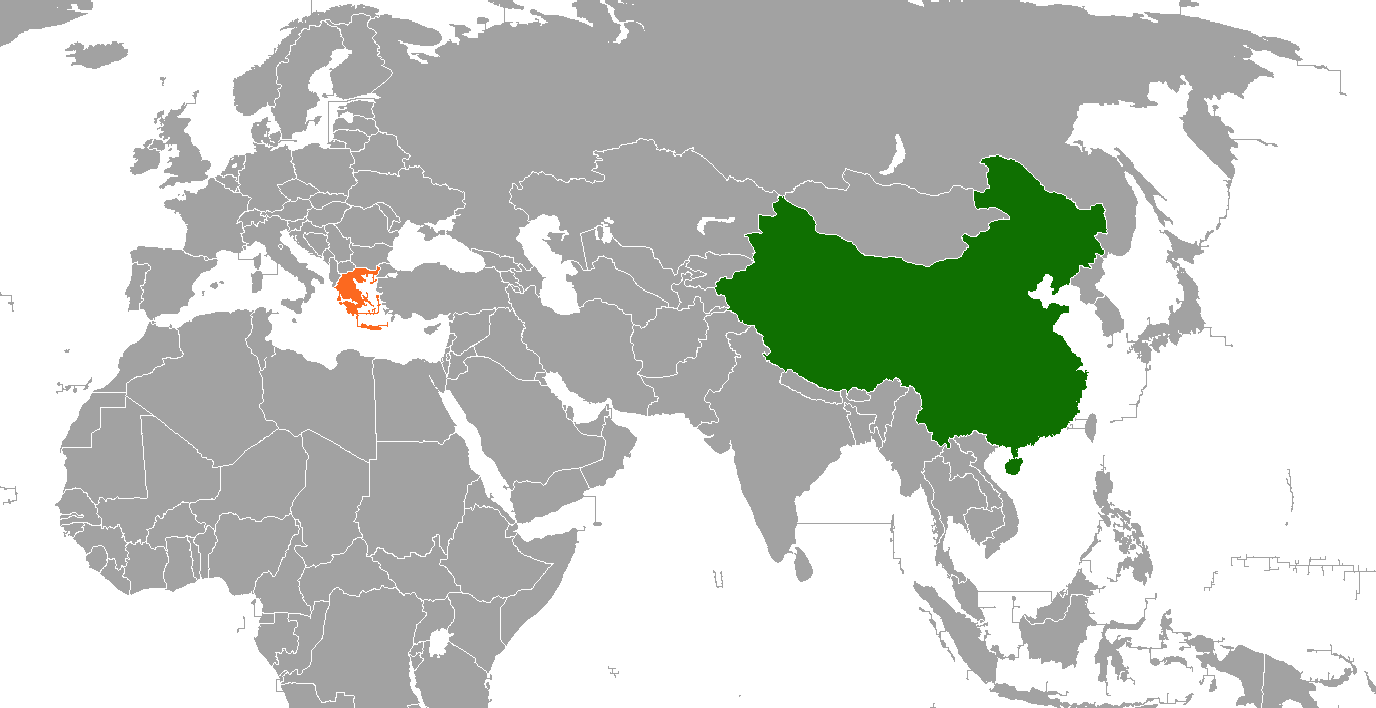
The People's Republic of China (PRC) and Greece established official diplomatic relations in 1972. The PRC has an embassy in Athens. Greece has an embassy in Beijing and three general consulates in Guangzhou, Hong-Kong and since 2005 in Shanghai. The two countries formed a strategic partnership in 2006.
In the early years of the Cold War, Greece, like most other Western European countries, recognized the Chinese Nationalist Government of Chiang Kai-shek as being the legitimate governing authority of China, despite Chiang only controlling a rump state on Taiwan. Greek forces fought against Chinese forces during the Korean War.
In June 1972, in the aftermath of Richard Nixon's visit to Beijing and the People's Republic of China's admission to the United Nations, Greece switched recognition to the People's Republic, cutting off relations with Taiwan. Today, Taiwan maintains a "Taipei Representative Office in Athens", which is active in organizing various events and making statements to the Greek media; however, Greece adheres to a One China policy, and Taiwanese officials in Athens do not enjoy diplomatic or consular status.
In the 1980s, bilateral relations were strengthened when Greek Prime Minister Andreas Papandreou sought allies beyond Europe and the US in his policy of confronting Turkey over the Cyprus and Aegean disputes, and courted China under Deng Xiaoping. Greek shipowners also played an important role, by ordering many of their ships to be built in Chinese shipyards beginning in the 1980s, instead of British, German and Japanese shipyards (as had been the case since the late 19th century).
The Port of Piraeus (under Chinese management since 2009 and majority Chinese ownership since 2016) is important from a geostrategic view for China, as it helps China's transactions with the whole of Europe.
Ancient Chinese people had contact with the Indo-Greeks. Dayuan (meaning "Great Ionians"), was described in the Chinese historical works of Records of the Grand Historian and the Book of Han. It is mentioned in the accounts of the famous Chinese explorer Zhang Qian in 130 BCE and the numerous embassies that followed him into Central Asia. The country of Dayuan is generally accepted as relating to the Ferghana Valley, and its Greek city Alexandria Eschate. These Chinese accounts describe the Dayuan as urbanized dwellers with Caucasian features, living in walled cities and having "customs identical to those of the Greco-Bactrians". Strabo writes that Bactrian Greeks "extended their empire even as far as the Seres (Chinese) and the Phryni". The War of the Heavenly Horses (104–101 BC) was a war between Dayuan and the Han dynasty. The Sampul tapestry found at the Tarim Basin settlement of Sampul in Lop County, Hotan Prefecture, Xinjiang, has many Hellenistic features.
Following the ancient Roman embassies to China recorded in ancient Chinese histories, there appear to have been contacts between the Byzantine Empire and several dynasties of China, beginning with the Tang dynasty (618–907 AD). Theophylact Simocatta wrote a generally accurate depiction of the reunification of China by Emperor Wen (r. 581–604 AD) of the Sui dynasty, with the conquest of the rival Chen dynasty in southern China, correctly placing these events within the reign period of Byzantine ruler Maurice. From Chinese records it is known that Michael VII Doukas (Mie li yi ling kai sa 滅力伊靈改撒) of Fu lin (拂菻; i.e. Byzantium) dispatched a diplomatic mission to China that eventually arrived in 1081, during the reign of Emperor Shenzong of the Song dynasty (960–1279 AD), centuries before Marco Polo's expedition. Kublai Khan, the Mongol-ruler who founded the Yuan dynasty (1271–1368 AD) of China not only maintained correspondence with the Byzantine Greeks but hosted some of them at his court in Khanbaliq (modern Beijing). The History of Yuan (chapter 134) records that a certain Ai-sie (transliteration of either Joshua or Joseph) from the country of Fu lin (i.e. the Byzantine Empire), initially in the service of Güyük Khan, was well-versed in Western languages and had expertise in the fields of Greek medicine and astronomy that convinced Kublai Khan to offer him a position as the director of medical and astronomical boards. Kublai Khan eventually honored Ai-sie with the noble title of Prince of Fu lin (Chinese: 拂菻王; Fú lǐn wáng). In his biography within the History of Yuan his children are mentioned by their Chinese names, which bear similarities to the Christian names Elias (Ye-li-ah), Luke (Lu-ko), and Antony (An-tun), with a daughter named A-na-si-sz.
Τhe Sino-Hellenic contacts since Hellenistic times has recently been reinforced by the interdisciplinary study of prestige gold provided which a new interpretive framework for understanding trans-cultural contact between Han China and the Hellenistic world. The contextual analysis of the gold artefacts with foreign features presented in the current paper shows that the quest for exotica along with the desire for “heavenly horses” among the ruling elites acted as the driving force that led to an unprecedented extent of imperial expansion of the Han court in Central Asia, as well as the establishment of a vast trading network during the first century BCE. Today these ancient relations are unfolded and strengthened with the Sino-Hellenic Academic Project.
Hub AI
China–Greece relations AI simulator
(@China–Greece relations_simulator)
China–Greece relations
The People's Republic of China (PRC) and Greece established official diplomatic relations in 1972. The PRC has an embassy in Athens. Greece has an embassy in Beijing and three general consulates in Guangzhou, Hong-Kong and since 2005 in Shanghai. The two countries formed a strategic partnership in 2006.
In the early years of the Cold War, Greece, like most other Western European countries, recognized the Chinese Nationalist Government of Chiang Kai-shek as being the legitimate governing authority of China, despite Chiang only controlling a rump state on Taiwan. Greek forces fought against Chinese forces during the Korean War.
In June 1972, in the aftermath of Richard Nixon's visit to Beijing and the People's Republic of China's admission to the United Nations, Greece switched recognition to the People's Republic, cutting off relations with Taiwan. Today, Taiwan maintains a "Taipei Representative Office in Athens", which is active in organizing various events and making statements to the Greek media; however, Greece adheres to a One China policy, and Taiwanese officials in Athens do not enjoy diplomatic or consular status.
In the 1980s, bilateral relations were strengthened when Greek Prime Minister Andreas Papandreou sought allies beyond Europe and the US in his policy of confronting Turkey over the Cyprus and Aegean disputes, and courted China under Deng Xiaoping. Greek shipowners also played an important role, by ordering many of their ships to be built in Chinese shipyards beginning in the 1980s, instead of British, German and Japanese shipyards (as had been the case since the late 19th century).
The Port of Piraeus (under Chinese management since 2009 and majority Chinese ownership since 2016) is important from a geostrategic view for China, as it helps China's transactions with the whole of Europe.
Ancient Chinese people had contact with the Indo-Greeks. Dayuan (meaning "Great Ionians"), was described in the Chinese historical works of Records of the Grand Historian and the Book of Han. It is mentioned in the accounts of the famous Chinese explorer Zhang Qian in 130 BCE and the numerous embassies that followed him into Central Asia. The country of Dayuan is generally accepted as relating to the Ferghana Valley, and its Greek city Alexandria Eschate. These Chinese accounts describe the Dayuan as urbanized dwellers with Caucasian features, living in walled cities and having "customs identical to those of the Greco-Bactrians". Strabo writes that Bactrian Greeks "extended their empire even as far as the Seres (Chinese) and the Phryni". The War of the Heavenly Horses (104–101 BC) was a war between Dayuan and the Han dynasty. The Sampul tapestry found at the Tarim Basin settlement of Sampul in Lop County, Hotan Prefecture, Xinjiang, has many Hellenistic features.
Following the ancient Roman embassies to China recorded in ancient Chinese histories, there appear to have been contacts between the Byzantine Empire and several dynasties of China, beginning with the Tang dynasty (618–907 AD). Theophylact Simocatta wrote a generally accurate depiction of the reunification of China by Emperor Wen (r. 581–604 AD) of the Sui dynasty, with the conquest of the rival Chen dynasty in southern China, correctly placing these events within the reign period of Byzantine ruler Maurice. From Chinese records it is known that Michael VII Doukas (Mie li yi ling kai sa 滅力伊靈改撒) of Fu lin (拂菻; i.e. Byzantium) dispatched a diplomatic mission to China that eventually arrived in 1081, during the reign of Emperor Shenzong of the Song dynasty (960–1279 AD), centuries before Marco Polo's expedition. Kublai Khan, the Mongol-ruler who founded the Yuan dynasty (1271–1368 AD) of China not only maintained correspondence with the Byzantine Greeks but hosted some of them at his court in Khanbaliq (modern Beijing). The History of Yuan (chapter 134) records that a certain Ai-sie (transliteration of either Joshua or Joseph) from the country of Fu lin (i.e. the Byzantine Empire), initially in the service of Güyük Khan, was well-versed in Western languages and had expertise in the fields of Greek medicine and astronomy that convinced Kublai Khan to offer him a position as the director of medical and astronomical boards. Kublai Khan eventually honored Ai-sie with the noble title of Prince of Fu lin (Chinese: 拂菻王; Fú lǐn wáng). In his biography within the History of Yuan his children are mentioned by their Chinese names, which bear similarities to the Christian names Elias (Ye-li-ah), Luke (Lu-ko), and Antony (An-tun), with a daughter named A-na-si-sz.
Τhe Sino-Hellenic contacts since Hellenistic times has recently been reinforced by the interdisciplinary study of prestige gold provided which a new interpretive framework for understanding trans-cultural contact between Han China and the Hellenistic world. The contextual analysis of the gold artefacts with foreign features presented in the current paper shows that the quest for exotica along with the desire for “heavenly horses” among the ruling elites acted as the driving force that led to an unprecedented extent of imperial expansion of the Han court in Central Asia, as well as the establishment of a vast trading network during the first century BCE. Today these ancient relations are unfolded and strengthened with the Sino-Hellenic Academic Project.
Recent media