



Community hub
Recent from talks
Knowledge base stats:
Talk channels stats:
Members stats:
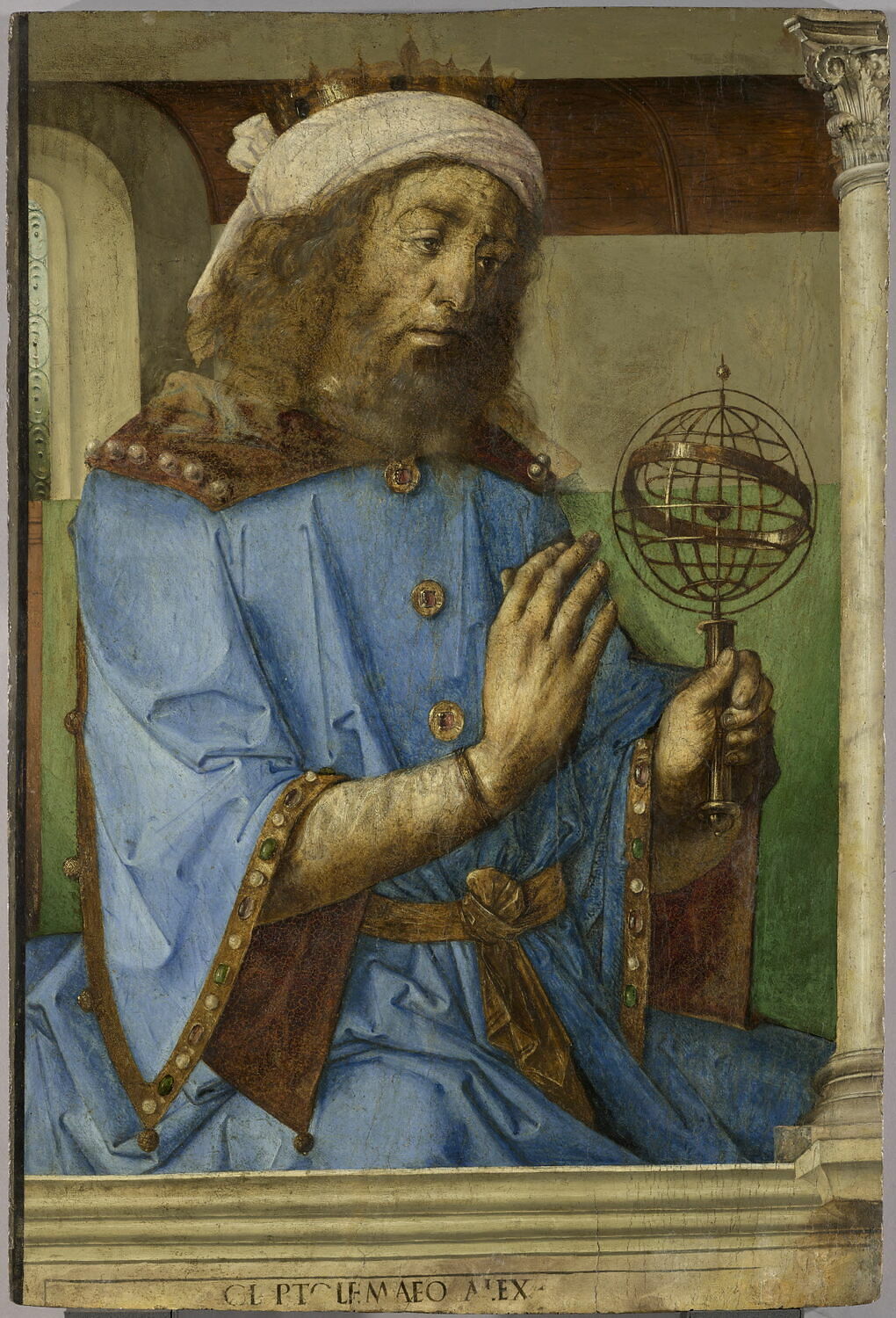
Ptolemy
Claudius Ptolemy (/ˈtɒləmi/; Ancient Greek: Πτολεμαῖος, Ptolemaios; Latin: Claudius Ptolemaeus; c. 100 – 160s/170s AD), better known mononymously as Ptolemy, was a Greco-Roman mathematician, astronomer, astrologer, geographer, and music theorist who wrote about a dozen scientific treatises, three of which were important to later Byzantine, Islamic, and Western European science. The first was his astronomical treatise now known as the Almagest, originally entitled Mathēmatikḗ Syntaxis (Μαθηματικὴ Σύνταξις, Mathēmatikḗ Syntaxis, lit. 'Mathematical Treatise'). The second is the Geography, which is a thorough discussion on maps and the geographic knowledge of the Greco-Roman world. The third is the astrological treatise in which he attempted to adapt horoscopic astrology to the Aristotelian natural philosophy of his day. This is sometimes known as the Apotelesmatika (Αποτελεσματικά, 'On the Effects') but more commonly known as the Tetrábiblos (from the Koine Greek meaning 'four books'; Latin: Quadripartitum).
The Catholic Church promoted his work, which included the only mathematically sound geocentric model of the Solar System, and unlike most Greek mathematicians, Ptolemy's writings (foremost the Almagest) never ceased to be copied or commented upon, both in late antiquity and in the Middle Ages. However, it is likely that only a few truly mastered the mathematics necessary to understand his works, as evidenced particularly by the many abridged and watered-down introductions to Ptolemy's astronomy that were popular among the Arabs and Byzantines. His work on epicycles is now seen as a very complex theoretical model built in order to explain a false tenet based on faith.
Ptolemy's date of birth and birthplace are both unknown. The 14th-century astronomer Theodore Meliteniotes wrote that Ptolemy's birthplace was Ptolemais Hermiou, a Greek city in the Thebaid region of Egypt (now El Mansha, Sohag Governorate). This attestation is quite late, however, and there is no evidence to support it.
It is known that Ptolemy lived in or around the city of Alexandria, in the Roman province of Egypt under Roman rule. He had a Latin name, Claudius, which is generally taken to imply he was a Roman citizen. He was familiar with Greek philosophers and used Babylonian observations and Babylonian lunar theory. In half of his extant works, Ptolemy addresses a certain Syrus, a figure of whom almost nothing is known but who likely shared some of Ptolemy's astronomical interests.
Ptolemy died in Alexandria. Ptolemy's year of death is not directly recorded by primary sources, and has to be inferred from the scale of his work. Suggested years of death include c. 165, c. 168, c. 170, and c. 175.
Ptolemy is often called Ptolemaeus, which is a latinised version of his original ancient Greek personal name Πτολεμαῖος (Latin transcript: Ptolemaîos). It occurs once in Greek mythology and is of Homeric form. It was common among the Macedonian upper class at the time of Alexander the Great and several people of this name were among Alexander's army, one of whom made himself pharaoh in 323 BC: Ptolemy I Soter, the first pharaoh of the Ptolemaic Kingdom. Almost all subsequent pharaohs of Egypt, with a few exceptions, were named Ptolemy until Egypt became a Roman province in 30 BC, ending the Macedonian family's rule.
The name Claudius is a Roman name, belonging to the gens Claudia; the peculiar multipart form of the whole name Claudius Ptolemaeus is a Roman custom, characteristic of Roman citizens. This indicates that Ptolemy would have been a Roman citizen. Gerald Toomer, the translator of Ptolemy's Almagest into English, suggests that citizenship was probably granted to one of Ptolemy's ancestors by either the emperor Claudius or the emperor Nero.
The 9th century Persian astronomer Abu Ma'shar al-Balkhi mistakenly presents Ptolemy as a member of Ptolemaic Egypt's royal lineage, stating that the descendants of the Alexandrine general and Pharaoh Ptolemy I Soter were wise "and included Ptolemy the Wise, who composed the book of the Almagest". Abu Ma'shar recorded a belief that a different member of this royal line "composed the book on astrology and attributed it to Ptolemy". Historical confusion on this point can be inferred from Abu Ma'shar's subsequent remark: "It is sometimes said that the very learned man who wrote the book of astrology also wrote the book of the Almagest. The correct answer is not known." Not much positive evidence is known on the subject of Ptolemy's ancestry, apart from what can be drawn from the details of his name, although modern scholars have concluded that Abu Ma'shar's account is erroneous. It is no longer doubted that the astronomer who wrote the Almagest also wrote the Tetrabiblos as its astrological counterpart. In later Arabic sources, he was often known as "the Upper Egyptian", suggesting he may have had origins in southern Egypt. Arabic astronomers, geographers, and physicists referred to his name in Arabic as Baṭlumyus (Arabic: بَطْلُمْيوس).
Hub AI
Ptolemy AI simulator
(@Ptolemy_simulator)
Ptolemy
Claudius Ptolemy (/ˈtɒləmi/; Ancient Greek: Πτολεμαῖος, Ptolemaios; Latin: Claudius Ptolemaeus; c. 100 – 160s/170s AD), better known mononymously as Ptolemy, was a Greco-Roman mathematician, astronomer, astrologer, geographer, and music theorist who wrote about a dozen scientific treatises, three of which were important to later Byzantine, Islamic, and Western European science. The first was his astronomical treatise now known as the Almagest, originally entitled Mathēmatikḗ Syntaxis (Μαθηματικὴ Σύνταξις, Mathēmatikḗ Syntaxis, lit. 'Mathematical Treatise'). The second is the Geography, which is a thorough discussion on maps and the geographic knowledge of the Greco-Roman world. The third is the astrological treatise in which he attempted to adapt horoscopic astrology to the Aristotelian natural philosophy of his day. This is sometimes known as the Apotelesmatika (Αποτελεσματικά, 'On the Effects') but more commonly known as the Tetrábiblos (from the Koine Greek meaning 'four books'; Latin: Quadripartitum).
The Catholic Church promoted his work, which included the only mathematically sound geocentric model of the Solar System, and unlike most Greek mathematicians, Ptolemy's writings (foremost the Almagest) never ceased to be copied or commented upon, both in late antiquity and in the Middle Ages. However, it is likely that only a few truly mastered the mathematics necessary to understand his works, as evidenced particularly by the many abridged and watered-down introductions to Ptolemy's astronomy that were popular among the Arabs and Byzantines. His work on epicycles is now seen as a very complex theoretical model built in order to explain a false tenet based on faith.
Ptolemy's date of birth and birthplace are both unknown. The 14th-century astronomer Theodore Meliteniotes wrote that Ptolemy's birthplace was Ptolemais Hermiou, a Greek city in the Thebaid region of Egypt (now El Mansha, Sohag Governorate). This attestation is quite late, however, and there is no evidence to support it.
It is known that Ptolemy lived in or around the city of Alexandria, in the Roman province of Egypt under Roman rule. He had a Latin name, Claudius, which is generally taken to imply he was a Roman citizen. He was familiar with Greek philosophers and used Babylonian observations and Babylonian lunar theory. In half of his extant works, Ptolemy addresses a certain Syrus, a figure of whom almost nothing is known but who likely shared some of Ptolemy's astronomical interests.
Ptolemy died in Alexandria. Ptolemy's year of death is not directly recorded by primary sources, and has to be inferred from the scale of his work. Suggested years of death include c. 165, c. 168, c. 170, and c. 175.
Ptolemy is often called Ptolemaeus, which is a latinised version of his original ancient Greek personal name Πτολεμαῖος (Latin transcript: Ptolemaîos). It occurs once in Greek mythology and is of Homeric form. It was common among the Macedonian upper class at the time of Alexander the Great and several people of this name were among Alexander's army, one of whom made himself pharaoh in 323 BC: Ptolemy I Soter, the first pharaoh of the Ptolemaic Kingdom. Almost all subsequent pharaohs of Egypt, with a few exceptions, were named Ptolemy until Egypt became a Roman province in 30 BC, ending the Macedonian family's rule.
The name Claudius is a Roman name, belonging to the gens Claudia; the peculiar multipart form of the whole name Claudius Ptolemaeus is a Roman custom, characteristic of Roman citizens. This indicates that Ptolemy would have been a Roman citizen. Gerald Toomer, the translator of Ptolemy's Almagest into English, suggests that citizenship was probably granted to one of Ptolemy's ancestors by either the emperor Claudius or the emperor Nero.
The 9th century Persian astronomer Abu Ma'shar al-Balkhi mistakenly presents Ptolemy as a member of Ptolemaic Egypt's royal lineage, stating that the descendants of the Alexandrine general and Pharaoh Ptolemy I Soter were wise "and included Ptolemy the Wise, who composed the book of the Almagest". Abu Ma'shar recorded a belief that a different member of this royal line "composed the book on astrology and attributed it to Ptolemy". Historical confusion on this point can be inferred from Abu Ma'shar's subsequent remark: "It is sometimes said that the very learned man who wrote the book of astrology also wrote the book of the Almagest. The correct answer is not known." Not much positive evidence is known on the subject of Ptolemy's ancestry, apart from what can be drawn from the details of his name, although modern scholars have concluded that Abu Ma'shar's account is erroneous. It is no longer doubted that the astronomer who wrote the Almagest also wrote the Tetrabiblos as its astrological counterpart. In later Arabic sources, he was often known as "the Upper Egyptian", suggesting he may have had origins in southern Egypt. Arabic astronomers, geographers, and physicists referred to his name in Arabic as Baṭlumyus (Arabic: بَطْلُمْيوس).