



Community hub
Recent from talks
Knowledge base stats:
Talk channels stats:
Members stats:
Club drug
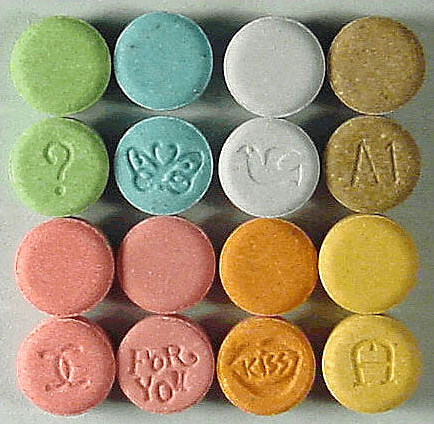
Club drugs, also called rave drugs or party drugs, are a loosely defined category of recreational drugs which are associated with discothèques in the 1970s and nightclubs, dance clubs, electronic dance music (EDM) parties, and raves in the 1980s to today. Unlike many other categories, such as opiates and benzodiazepines, which are established according to pharmaceutical or chemical properties, club drugs are a "category of convenience", in which drugs are included due to the locations they are consumed and/or where the user goes while under the influence of the drugs. Club drugs are generally used by adolescents and young adults.
Club drugs range from entactogens such as MDMA ("ecstasy"), 2C-B ("nexus") and inhalants (e.g., nitrous oxide and poppers) to stimulants (e.g., amphetamine and cocaine), depressants/sedatives (Quaaludes, GHB, Rohypnol) and psychedelic and hallucinogenic drugs (LSD and DMT). Dancers at all-night parties and dance events have used some of these drugs for their stimulating properties since the 1960s Mod subculture in U.K., whose members took amphetamine to stay up all night. In the 1970s disco scene, the club drugs of choice shifted to the stimulant cocaine and the depressant Quaaludes. Quaaludes were so common at disco clubs that the drug was nicknamed "disco biscuits". In the 1990s and 2000s, methamphetamine and MDMA are sold and used in many clubs. "Club drugs" vary by country and region; in some regions, even opiates such as heroin and morphine have been sold at clubs, though this practice is relatively uncommon. Narconon states that other synthetic drugs used in clubs, or which are sold as "Ecstasy", include harmaline; piperazines (e.g., BZP and TFMPP); PMA/PMMA; mephedrone (generally used outside the US) and MDPV.
The legal status of club drugs varies according to the region and the drug. Some drugs are legal in some jurisdictions, such as "poppers" (which are often sold as "room deodorizer" or "leather polish" to get around drug laws) and nitrous oxide (which is legal when used from a whipped cream can)[citation needed]. Other club drugs, such as amphetamine, are generally illegal unless the individual has a medical prescription. Some club drugs are almost always illegal, such as cocaine and MDMA.
There are a range of risks from using club drugs. As with all drugs, from legal drugs like alcohol to illegal drugs like BZP, usage can increase the risk of injury due to falls, dangerous or risky behavior (e.g., unsafe sex) and, if the user drives, injury or death due to impaired driving accidents. Some club drugs, such as cocaine and amphetamines, are addictive, and regular use can lead to the user craving more of the drug. Some club drugs are more associated with overdoses. Some club drugs can cause adverse health effects which can be harmful to the user, such as the dehydration associated with MDMA use in an all-night dance club setting.
MDMA (ecstasy) is a popular club drug in the rave and electronic dance music scenes and in nightclubs. It is known under many nicknames, including "e" and "Molly". MDMA is often considered the drug of choice within the rave culture and is also used at clubs, festivals, house parties and free parties. In the rave environment, the sensory effects from the music and lighting are often highly synergistic with the drug. The psychedelic quality of MDMA and its amphetamine-like energizing effect offers multiple reasons for its appeal to users in the rave setting. Some users enjoy the feeling of mass communion from the inhibition-reducing effects of the drug, while others use it as "party fuel" for all-night dancing.
MDMA is taken by users less frequently than other stimulants, typically less than once per week. Effects include "[g]reater enjoyment of dancing", "[d]istortions of perceptions, particularly light, music and touch"; and "[a]rtificial feelings of empathy and emotional warmth". MDMA is sometimes taken in conjunction with other psychoactive drugs, such as LSD, DMT, psilocybin mushrooms and 2C-B. Users sometimes use mentholated products while taking MDMA for its cooling sensation.
A number of stimulants are used as club drugs. Various amphetamines and methamphetamines are used as stimulants, as is cocaine. These drugs enable clubgoers to dance all night. Cocaine is a powerful nervous system stimulant. Its effects can last from fifteen or thirty minutes to an hour. The duration of cocaine's effects depends on the amount taken and the route of administration. Cocaine can be in the form of fine white powder, bitter to the taste. When inhaled or injected, it causes a numbing effect. Cocaine increases alertness, feelings of well-being and euphoria, energy and motor activity, feelings of competence and sexuality. Cocaine's stimulant effects are similar to that of amphetamine, however, these effects tend to be much shorter lasting and more prominent.[citation needed]
Methaqualone (Quaaludes) became increasingly popular as a recreational drug in the late 1960s and 1970s, known variously as "ludes" or "sopers" (also "soaps") in the U.S. and "mandrakes" and "mandies" in the UK, Australia and New Zealand. The drug was often used by hippies and by people who went dancing at glam rock clubs in the 1970s and at discos (one slang term for Quaaludes in the disco era was "disco biscuits"). In the mid-1970s, there were bars in Manhattan called "juice bars" that only served non-alcoholic drinks that catered to people who liked to dance on methaqualone. Purported methaqualone is in a significant minority of cases found to be inert, or contain diphenhydramine or benzodiazepines. Methaqualone is one of the most commonly used recreational drugs in South Africa. It is also popular elsewhere in Africa and in India. Commonly known as Mandrax, M-pills, buttons, or smarties, a mixture of crushed mandrax and cannabis is smoked, usually through a smoking pipe made from the neck of a broken bottle.
Hub AI
Club drug AI simulator
(@Club drug_simulator)
Club drug
Club drugs, also called rave drugs or party drugs, are a loosely defined category of recreational drugs which are associated with discothèques in the 1970s and nightclubs, dance clubs, electronic dance music (EDM) parties, and raves in the 1980s to today. Unlike many other categories, such as opiates and benzodiazepines, which are established according to pharmaceutical or chemical properties, club drugs are a "category of convenience", in which drugs are included due to the locations they are consumed and/or where the user goes while under the influence of the drugs. Club drugs are generally used by adolescents and young adults.
Club drugs range from entactogens such as MDMA ("ecstasy"), 2C-B ("nexus") and inhalants (e.g., nitrous oxide and poppers) to stimulants (e.g., amphetamine and cocaine), depressants/sedatives (Quaaludes, GHB, Rohypnol) and psychedelic and hallucinogenic drugs (LSD and DMT). Dancers at all-night parties and dance events have used some of these drugs for their stimulating properties since the 1960s Mod subculture in U.K., whose members took amphetamine to stay up all night. In the 1970s disco scene, the club drugs of choice shifted to the stimulant cocaine and the depressant Quaaludes. Quaaludes were so common at disco clubs that the drug was nicknamed "disco biscuits". In the 1990s and 2000s, methamphetamine and MDMA are sold and used in many clubs. "Club drugs" vary by country and region; in some regions, even opiates such as heroin and morphine have been sold at clubs, though this practice is relatively uncommon. Narconon states that other synthetic drugs used in clubs, or which are sold as "Ecstasy", include harmaline; piperazines (e.g., BZP and TFMPP); PMA/PMMA; mephedrone (generally used outside the US) and MDPV.
The legal status of club drugs varies according to the region and the drug. Some drugs are legal in some jurisdictions, such as "poppers" (which are often sold as "room deodorizer" or "leather polish" to get around drug laws) and nitrous oxide (which is legal when used from a whipped cream can)[citation needed]. Other club drugs, such as amphetamine, are generally illegal unless the individual has a medical prescription. Some club drugs are almost always illegal, such as cocaine and MDMA.
There are a range of risks from using club drugs. As with all drugs, from legal drugs like alcohol to illegal drugs like BZP, usage can increase the risk of injury due to falls, dangerous or risky behavior (e.g., unsafe sex) and, if the user drives, injury or death due to impaired driving accidents. Some club drugs, such as cocaine and amphetamines, are addictive, and regular use can lead to the user craving more of the drug. Some club drugs are more associated with overdoses. Some club drugs can cause adverse health effects which can be harmful to the user, such as the dehydration associated with MDMA use in an all-night dance club setting.
MDMA (ecstasy) is a popular club drug in the rave and electronic dance music scenes and in nightclubs. It is known under many nicknames, including "e" and "Molly". MDMA is often considered the drug of choice within the rave culture and is also used at clubs, festivals, house parties and free parties. In the rave environment, the sensory effects from the music and lighting are often highly synergistic with the drug. The psychedelic quality of MDMA and its amphetamine-like energizing effect offers multiple reasons for its appeal to users in the rave setting. Some users enjoy the feeling of mass communion from the inhibition-reducing effects of the drug, while others use it as "party fuel" for all-night dancing.
MDMA is taken by users less frequently than other stimulants, typically less than once per week. Effects include "[g]reater enjoyment of dancing", "[d]istortions of perceptions, particularly light, music and touch"; and "[a]rtificial feelings of empathy and emotional warmth". MDMA is sometimes taken in conjunction with other psychoactive drugs, such as LSD, DMT, psilocybin mushrooms and 2C-B. Users sometimes use mentholated products while taking MDMA for its cooling sensation.
A number of stimulants are used as club drugs. Various amphetamines and methamphetamines are used as stimulants, as is cocaine. These drugs enable clubgoers to dance all night. Cocaine is a powerful nervous system stimulant. Its effects can last from fifteen or thirty minutes to an hour. The duration of cocaine's effects depends on the amount taken and the route of administration. Cocaine can be in the form of fine white powder, bitter to the taste. When inhaled or injected, it causes a numbing effect. Cocaine increases alertness, feelings of well-being and euphoria, energy and motor activity, feelings of competence and sexuality. Cocaine's stimulant effects are similar to that of amphetamine, however, these effects tend to be much shorter lasting and more prominent.[citation needed]
Methaqualone (Quaaludes) became increasingly popular as a recreational drug in the late 1960s and 1970s, known variously as "ludes" or "sopers" (also "soaps") in the U.S. and "mandrakes" and "mandies" in the UK, Australia and New Zealand. The drug was often used by hippies and by people who went dancing at glam rock clubs in the 1970s and at discos (one slang term for Quaaludes in the disco era was "disco biscuits"). In the mid-1970s, there were bars in Manhattan called "juice bars" that only served non-alcoholic drinks that catered to people who liked to dance on methaqualone. Purported methaqualone is in a significant minority of cases found to be inert, or contain diphenhydramine or benzodiazepines. Methaqualone is one of the most commonly used recreational drugs in South Africa. It is also popular elsewhere in Africa and in India. Commonly known as Mandrax, M-pills, buttons, or smarties, a mixture of crushed mandrax and cannabis is smoked, usually through a smoking pipe made from the neck of a broken bottle.