Hubbry Logo
Coleus argentatusColeus argentatusMain
Open search
Coleus argentatus
Community hub
Coleus argentatus
logo
8 pages, 0 posts
0 subscribers
Be the first to start a discussion here.
Coleus argentatus
Coleus argentatus
from Wikipedia

Coleus argentatus
Scientific classification Edit this classification
Kingdom: Plantae
Clade: Tracheophytes
Clade: Angiosperms
Clade: Eudicots
Clade: Asterids
Order: Lamiales
Family: Lamiaceae
Genus: Coleus
Species:
C. argentatus
Binomial name
Coleus argentatus
(S.T.Blake) P.I.Forst. & T.C.Wilson
Synonyms[1]
  • Plectranthus argentatus S.T.Blake

Coleus argentatus, synonym Plectranthus argentatus,[1] common name silver spurflower, is a species of flowering plant in the mint family. It is native to rock outcrops and rainforest in the border region of Queensland and New South Wales, Australia.

Description

[edit]
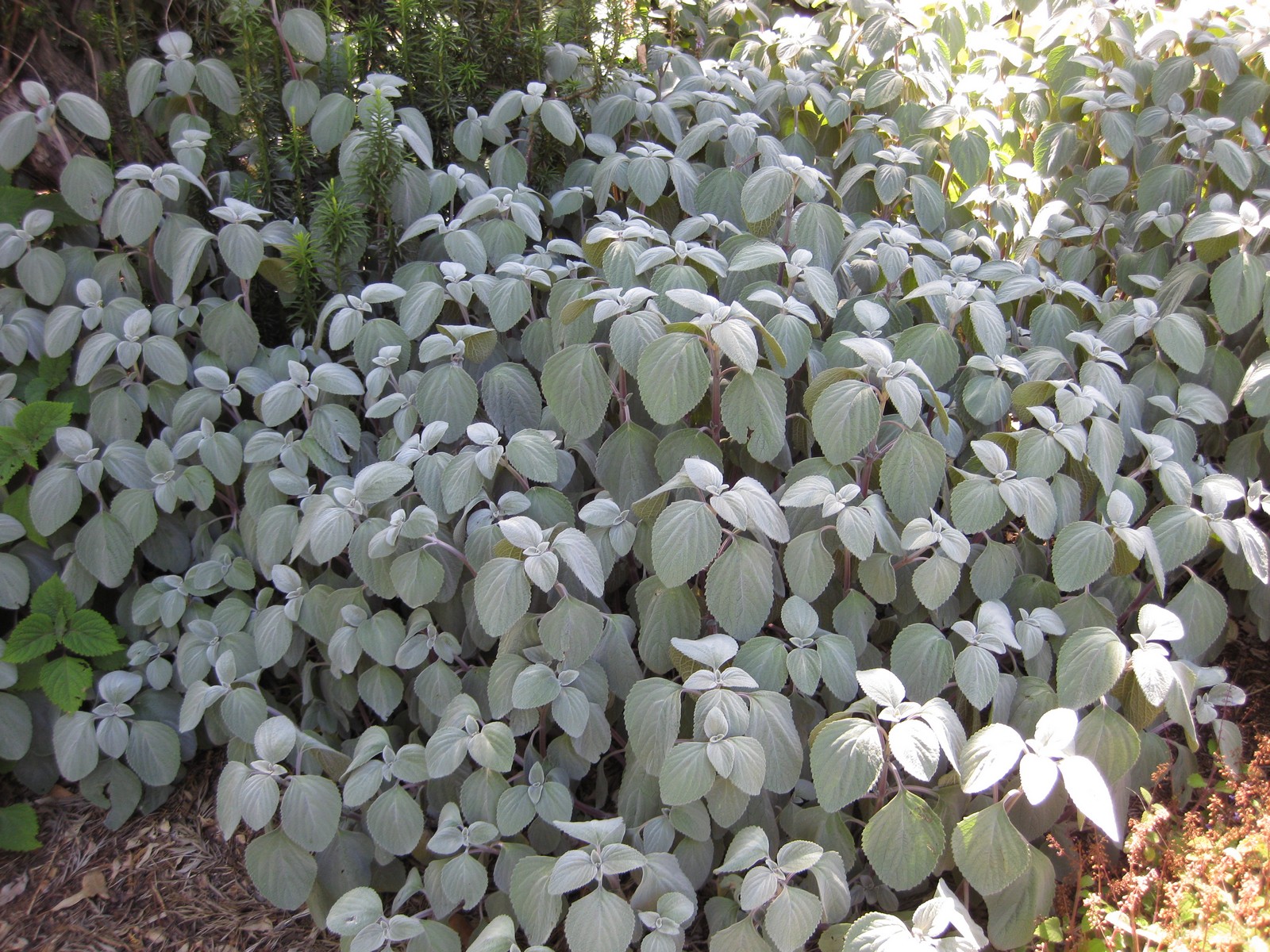
Foliage close-up

Growing to 1 m (3 ft) tall and broad, it is a spreading deciduous shrub. The hairy leaves are ovate to broad-ovate, 5–11.5 cm long, 3–5.5 cm wide with crenate margins. The hairs give the plant an overall sage green to silvery colour.

The flowers are borne on terminal racemes up to 30 cm (12 in) long, and are bluish white.[2] [3]

Originally described by Queensland botanist Stanley Thatcher Blake, its specific epithet argentatus is Latin for "silver",[4] referring to its foliage.

Cultivation

[edit]

Coleus argentatus is cultivated in temperate regions as an ornamental bedding plant for its attractive silvery foliage. It strikes readily from cuttings, or can be grown from seed as a half-hardy annual. It has gained the Royal Horticultural Society's Award of Garden Merit.[5][6]

References

[edit]
Revisions and contributorsEdit on WikipediaRead on Wikipedia
from Grokipedia
Coleus argentatus, commonly known as silver spurflower or silver coleus, is an in the mint family , native to eastern . It features densely hairy, silvery stems and large, velvety, silvery-green leaves up to 4 inches long, with scalloped edges, complemented by upright spikes of small, tubular pale bluish-white flowers blooming in summer. Growing 2-3 feet tall and up to 6 feet wide, it was formerly classified as Plectranthus argentatus until a 2019 taxonomic revision placed it in the genus . Native to summer-rainfall regions along the border of southeastern and northeastern , C. argentatus thrives in a variety of light conditions from full sun to deep shade, though it produces lusher foliage in partial shade. It prefers moist, well-drained, humus-rich soils and is drought-tolerant once established, with occasional summer watering sufficing in Mediterranean climates; it is hardy to about 25°F (USDA zones 9-11) and can resprout from after light frosts. The plant's silvery indumentum, which gives it its specific meaning "silvered," provides reflective protection against intense sunlight in its arid native habitats. In cultivation, C. argentatus is prized for its striking foliage rather than flowers, making it ideal for mass plantings, borders, containers, or as a houseplant in bright indirect light. It requires regular watering to keep soil moist but not waterlogged, benefits from pruning to maintain shape and encourage bushiness, and is propagated easily from stem cuttings or seeds; it shows good resistance to pests and diseases, though monitoring for scale insects is advised. Popular cultivars like 'Silver Shield' enhance its ornamental appeal with even more velvety silver leaves, and it attracts native bees while being deer-resistant.

Taxonomy and Etymology

Taxonomic History

Coleus argentatus was originally described as Plectranthus argentatus by Stanley T. Blake in 1971, based on specimens from eastern , within a revision of the genus in the Labiatae (now ). This classification placed it among approximately 300 species of aromatic herbs and under shrubs in Plectranthus, a genus historically distinguished by its succulent stems and inflorescence structure within the subtribe Plectranthinae of the Lamiaceae family. Phylogenetic analyses in the late 2010s prompted significant taxonomic revisions in the Plectranthinae. A key 2018 study by Paton et al., utilizing plastid DNA markers such as rps16, trnL-F, and trnS-G, demonstrated that Plectranthus, as traditionally circumscribed, was polyphyletic and that many species, including Australian taxa like P. argentatus, formed a monophyletic clade with Coleus species. This molecular evidence supported merging Plectranthus into the broader genus Coleus, emphasizing shared evolutionary history within the Ocimeae tribe. In response to these findings, argentatus was formally recombined as argentatus in 2019 by Paul I. Forster and Timothy C. Wilson, published in PhytoKeys 129 as part of broader nomenclatural changes in and (). This reclassification aligns the species with the genus Lour., which now encompasses around 300 species of mostly tropical aromatic herbs and shrubs in the order , family , and euasterid II . The genus is characterized by its distribution and medicinal uses, with the merger resolving long-standing taxonomic in the group.

Scientific Name and Synonyms

The accepted scientific name for this species is Coleus argentatus (S.T. Blake) P.I. Forster & T.C. Wilson. This combination was published in 2019 as part of a broader nomenclatural revision recognizing Coleus as a distinct genus from Plectranthus. The basionym is Plectranthus argentatus S.T. Blake, originally described in 1971 in Contributions from the Queensland Herbarium. A primary synonym remains Plectranthus argentatus, reflecting its prior classification before the generic transfer. The genus name Coleus derives from the Greek "koleos," meaning sheath, in reference to the fused staminal tube structure. The specific epithet "argentatus" originates from the Latin "argentum," meaning silver, describing the distinctive silvery-white foliage.

Physical Description

Growth Habit

Coleus argentatus is an evergreen perennial subshrub with an upright to spreading growth habit, forming dense clumps. It typically reaches a height of 0.6–1 m (2–3 ft) and spreads 0.6–1 m (2–3 ft) wide, though it can extend further up to 1.8 m via rooting stems in favorable conditions. The stems are square in cross-section, a characteristic feature of the family, often densely covered in silvery hairs that contribute to the plant's ornamental appeal alongside its silvery leaves. In its native range, it exhibits a life cycle with a moderate to rapid growth rate, maintaining its structure year-round in frost-free environments. However, in cooler climates outside USDA zones 9–11, it behaves as an annual, experiencing dieback from frost while potentially regrowing from basal shoots if protected.

Leaves and Stems

The leaves of Coleus argentatus (syn. Plectranthus argentatus) are arranged oppositely on the stems, typical of the Lamiaceae family, and are ovate to elliptic in shape, measuring 5–11.5 cm long and 3–5.5 cm wide. They feature crenate margins with 13–23 pairs of teeth, providing a scalloped appearance, and are fleshy in texture. The foliage is covered in a dense indumentum of non-glandular, silver-colored trichomes, which are 4–8-celled, measuring up to 0.8 mm long, and oriented antrorse on the upper surface or retrorse to divaricate on the lower surface; this tomentum imparts a distinctive silvery-gray sheen to the concolorous leaves. When crushed, the leaves release an aromatic scent due to the presence of essential oils, a characteristic shared among many species in the genus. The stems are quadrangular in cross-section, a hallmark of the mint family, and arise erect to straggling, with lower portions becoming woody and up to 7 mm thick, while upper parts are initially green to pink but develop a silvery pubescence from dense, retrorse, 4–8-celled trichomes up to 0.6 mm long. These stems often root adventitiously at the nodes, promoting vegetative propagation and clonal spread. This pubescence on both leaves and stems serves key adaptive functions in the plant's native dry habitats, where the reflective silvery hairs reduce and heat absorption, thereby minimizing water loss and enhancing survival in low-rainfall conditions. The indumentum's multicellular structure creates a barrier that traps a moist of air around the plant surfaces, further aiding .

Flowers and Fruits

The of Coleus argentatus (syn. Plectranthus argentatus) is composed of terminal racemes or spikes, typically 10–30 cm long, with flowers arranged in whorls characteristic of the family. These upright structures emerge above the foliage, supported by the plant's aromatic stems. The flowers are small and tubular, measuring 9–11 mm in length, with a slender, nearly straight, glabrous corolla that is typically bluish-. The two-lipped corolla features a lower lip that forms a scoop-like structure cradling the stamens, while the upper lip is lobed with a curved blue band across a background, giving pale blue to violet hues with markings. Blooming occurs from late summer to autumn, primarily from July to August in suitable climates. is mainly achieved by , though the plant rarely produces flowers in cultivation, where it is valued more for its foliage. Following fertilization, the flowers develop into fruits consisting of four small, brown nutlets per flower, enclosed within the persistent calyx, which enlarges to 4–4.5 mm long. These nutlets are dispersed by wind or gravity.

Distribution and Ecology

Native Distribution

Coleus argentatus, also known as silver spurflower, is endemic to eastern , with its native range confined to the border region between southeastern and northeastern . This limited distribution spans subtropical areas along the , where the species is restricted to specific locales such as rock outcrops in in and the Border Ranges in . The plant's occurrences are documented primarily through records, with historical collections dating back to the mid-20th century, including the type specimen collected in 1971 from , confirming its narrow and stable but localized presence. The species grows at elevations typically ranging from to around 800 meters, though most populations are found in lowland to mid-elevation habitats near the 200-600 meter contour in its core range. Listed as Least Concern in as of 2023, though it remains uncommon and locally rare in its native range, C. argentatus receives ongoing monitoring due to potential from regional development and environmental pressures. It is not listed as threatened under the federal Environment Protection and Biodiversity Conservation Act 1999. This status underscores the need for continued conservation efforts to protect its fragmented populations in these border ecosystems.

Habitat Preferences

Coleus argentatus, commonly known as silver spurflower, naturally inhabits open eucalypt woodlands, dry rainforests, and rocky outcrops in the border regions of southeastern and northeastern , . It is frequently found on rock ledges, crevices, steep slopes, cliff sides, and areas associated with waterfalls, where it occupies ground cover positions in these environments. The plant prefers well-drained, sandy or gravelly loams, often developing over , , rhyolite, or substrates in its native settings. is typically neutral to slightly acidic, supporting its adaptation to the nutrient-poor, rocky conditions prevalent in these habitats. In terms of , C. argentatus thrives in subtropical to temperate zones with annual rainfall ranging from 600 to 1200 mm, characteristic of dry and open woodland areas along the Queensland-New South Wales border. It exhibits once established, though it favors moist conditions and partial shade to full sun exposure within its habitats. Associated vegetation includes sclerophyllous eucalypts and acacias, alongside other understory plants in open eucalypt woodlands and heathlands on rocky pavements.

Ecological Role

Coleus argentatus, also known as Plectranthus argentatus, plays a notable role in its native Australian ecosystems by supporting pollinator communities. The plant's tubular bluish-white flowers, borne on spikes during summer, attract native bees, providing nectar and pollen resources essential for these insects' foraging and reproduction. Additionally, the blooms draw butterflies, enhancing biodiversity in pollinator networks within subtropical open woodlands and rock outcrops. In terms of habitat stabilization, the spreading, rooting stems of C. argentatus help prevent on rocky slopes and outcrops, where it naturally occurs. This vegetative propagation contributes to maintaining soil integrity in erosion-prone areas, while its low-growing habit adds to diversity in eucalypt woodlands, supporting layered structures that foster microbial and communities. The species faces threats primarily from habitat loss due to and in its native range across southeastern and northeastern , which fragments populations and reduces available rocky and habitats. Despite its ease of , C. argentatus shows no major invasive potential outside its natural distribution, remaining well-contained in native and cultivated settings.

Cultivation and Uses

Growing Conditions

Coleus argentatus, native to subtropical regions, thrives in cultivation when provided with conditions mimicking its warm, humid origins. It performs best in partial shade to full sun, tolerating deep shade but displaying more vibrant silvery foliage in brighter exposures of 2-6 hours of direct daily. The requires well-drained, humus-rich soils with a ranging from acidic to neutral (below 6.0 to 8.0), such as loamy or sandy types, to prevent . Moderate watering is essential, keeping soil consistently moist but allowing the top 1-2 inches to dry between sessions; it becomes drought-tolerant once established and should never experience waterlogging. Suitable for USDA hardiness zones 10-11, Coleus argentatus is frost-sensitive and should be protected from temperatures below 25°F (-4°C), though it can resprout from roots after brief dips to 20°F (-7°C). It excels in coastal gardens due to its tolerance for mild winters and salty air, preferring temperatures of 60–75°F (16–24°C). Fertilize monthly during the with a balanced, water-soluble (such as 10-20-10) at half strength. Regular , including occasional tip-pinching and hard cutbacks every two years in late winter, maintains a compact shape and encourages bushiness.

Propagation Methods

Coleus argentatus, commonly known as silver coleus or , is primarily propagated through stem cuttings, which offer a reliable and rapid method due to the plant's succulent stems and high rooting success rate. To propagate via cuttings, select healthy, non-flowering stem tips measuring 5-10 cm in length during spring or early summer, making the cut just below a node. Remove the lower leaves to expose 2-3 nodes, and optionally dip the cut end in rooting hormone for enhanced results. Plant the cuttings in a well-draining medium such as a peat-lite mix or perlite-vermiculite blend, maintaining high humidity with a system or plastic cover under bright, indirect light at temperatures of 18-24°C. Roots typically develop in 2-4 weeks, after which the new plants can be transplanted; this method achieves near-complete success in controlled conditions. Seed propagation is possible but less commonly employed for Coleus argentatus, as fresh exhibit variable viability and the process is slower than cuttings. Sow on the surface of a sterile, well-draining seed-starting mix in trays during late winter or early spring, pressing them lightly without covering, and maintain consistent moisture at 20-25°C under bright, indirect light. occurs in 7-14 days, with seedlings ready for transplanting after developing true leaves, typically 4-6 weeks post-sowing. For commercial production, pelleted can reduce handling time and improve uniformity, germinating in 5-7 days at similar conditions. Division provides another effective option for established , particularly those forming clumps, allowing for quick multiplication of mature specimens. In autumn or early spring, gently excavate the ball and separate offsets or clumps using a sharp tool, ensuring each division retains viable and shoots. Replant immediately into prepared , watering thoroughly to settle the roots, and provide partial shade during establishment; success rates are high when divisions are handled promptly to minimize stress. Propagation challenges include reduced seed viability in some cultivated varieties, which may be sterile hybrids, necessitating reliance on vegetative methods. Overwatering during rooting poses a significant risk, potentially leading to from fungal pathogens, so well-draining media and controlled moisture are essential to prevent decay.

Horticultural Varieties

Horticultural varieties of Coleus argentatus (syn. Plectranthus argentatus), commonly known as silver spurflower, have been developed primarily since the to enhance foliage intensity and adaptability for ornamental use, with selections focusing on silver-gray leaf color and varied growth habits; no patented hybrids have been widely noted in the . One notable is '', selected at in and introduced in 1991, featuring an upright-spreading habit with larger, soft, fuzzy silver leaves that reach 5 inches long, growing 2-3 feet tall and 4-6 feet wide, making it ideal for borders or containers. 'Silver Shield' is a compact selection with dense, shield-shaped silvery-gray leaves covered in fine hairs, forming a mounded habit 24-30 inches tall and wide, prized for its velvety texture and tolerance of part shade. Another variety, 'Silver Crest', exhibits a bushy form with hairy, silvery leaves, achieving 3 feet in both height and width, selected for its striking contrast in garden plantings. These cultivars propagate easily from cuttings, similar to the .

Ornamental Uses

Coleus argentatus, commonly known as silver spurflower, is valued in for its striking silvery foliage, which provides a luminous contrast against darker . It serves effectively as a groundcover in borders and mass plantings, helping to stabilize soil on slopes and prevent erosion due to its spreading habit and fibrous roots. In cottage gardens, rock gardens, and foundation plantings, its velvety, gray- leaves add texture and brightness, enhancing visual interest without overwhelming other elements. For and indoor settings, C. argentatus excels as a potted on patios or as a in bright, indirect light, where its compact form and trailing tendencies allow it to spill elegantly over edges. It pairs well with tropical companions like ferns or colorful annuals, creating vibrant combinations in planters and window boxes. Cultivars such as 'Silver Shield' amplify these uses with denser, more uniform foliage. Designers often incorporate C. argentatus into xeriscapes for its once established, making it ideal for low-water landscapes in Mediterranean-style gardens. The foliage offers consistent seasonal interest throughout the growing period, with minor contributions from its small, pale flowers in summer. Its deer resistance and adaptability to partial shade further recommend it for sustainable, low-maintenance designs. Widely available in nurseries across , the , and , it has become a staple for foliage-focused ornamentation.

References

Add your contribution
Related Hubs
User Avatar
No comments yet.