
Recent from talks
Collie
Knowledge base stats:
Talk channels stats:
Members stats:
Collie
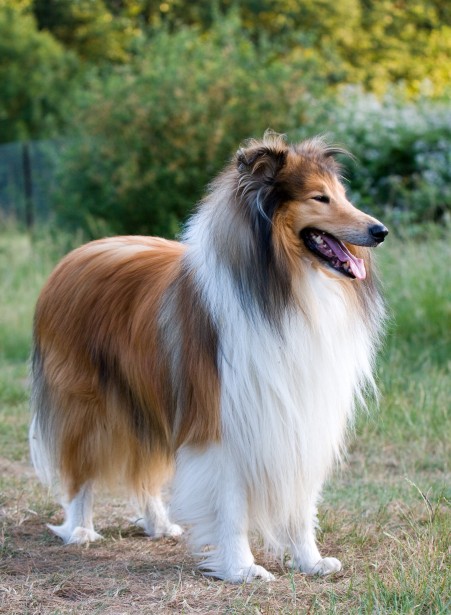
Collies form a distinctive type of herding dogs, including many related landraces and standardized breeds. The type originated in Scotland and Northern England. Collies are medium-sized, fairly lightly-built dogs, with pointed snouts. Many types have a distinctive white color over the shoulders. Collies are very active and agile, and most types of collies have a very strong herding instinct. Collie breeds have spread through many parts of the world (especially North America and Australia), and have diversified into many varieties, sometimes mixed with other dog types.
Some collie breeds have remained as working dogs for herding cattle, sheep, and other livestock, while others are kept as pets, show dogs or for dog sports, in which they display great agility, stamina and trainability. While the American Kennel Club has a breed they call "collie", in fact collie dogs are a distinctive type of herding dog inclusive of many related landraces and formal breeds. There are usually major distinctions between show dogs and those bred for herding trials or dog sports: The latter typically display great agility, stamina, and trainability, and most importantly intelligence.
Common use of the unmodified name "collie" in some areas is limited largely to certain breeds – the name means Rough Collie by default in parts of the United States, and Border Collie by default in many rural parts of Great Britain.[citation needed] Many collie dog types do not actually include "collie" in their name – for example the Welsh Sheepdog.
The exact origin of the name collie is uncertain; it may derive from the Scots word for 'coal'. Alternatively it may come from the related word coolly, referring to the black-faced mountain sheep of Scotland. The collie name usually refers to dogs of Scottish origin which have spread into many other parts of the world, often being called sheepdog or shepherd dog elsewhere. Iris Combe, in her book, “Border Collies,” says that in old Gaelic “collie” was the rural term for anything useful — a “collie dog” was a useful dog.
Collies are generally medium-sized dogs of about 22 to 32 kg (48 to 70 lb) and light to medium-boned. Cattle-herding types are stockier than sheep-herding types. The fur may be short, or long, and the tail may be smooth, feathered, or bushy. In the 1800s, the occasional naturally bob-tailed dog would occur. The tail can be carried low with an upward swirl, or may be carried higher but never over the back. Each breed can vary in coloration, with the usual base colors being black, black-and-tan, red, red-and-tan, white with a colored head with it without other body coloration of sable, black and tan, blue merle, sable merle sable. They often have white along with the main color, usually under the belly and chest, over the shoulders, and on parts of the face and legs, but sometimes leaving only the head colored – or white may be absent (unusual) or limited to the chest and toes (as in the Australian Kelpie). Merle coloration may also be present over any of the other color combinations, even in landrace types. The most widespread patterns include sable, black and white, black and tan and tricolour (black-and-tan and white).
Collies range in trainability from the "average" to very biddable. The Border Collie is the breed most in need of a "job" to stimulate its brain, lest it become anxious and hyper, while many other collie breeds fit well into an active family lifestyle (though all collie types still require some mental stimulation). Collie-type breeds are also known for their sensitivity and awareness of emotions in people; they may require gentler handling than other types of dogs.
A working member of a collie breed, such as the Border Collie, is an energetic and agile dog with great stamina. When in fit, working condition they are able to run all day without tiring, even over very rough or steep ground. Working collies display a keen intelligence for the job at hand and are instinctively highly motivated. They are often intensely loyal. Dogs of collie type or derivation occupy four of the first sixteen ranks in Stanley Coren's The Intelligence of Dogs, with the Border Collie being first. These characteristics generally make working strains suitable for agility; in addition to herding work they are well suited to active sports such as sheepdog trials, flyball, disc dog and dog agility. Working strains have strong herding instincts, and some individuals can be single-minded to the point of obsessiveness. Collies can compete in herding events. Border Collies are used as search dogs in mountain rescue in Britain. They are particularly useful for searching large areas of hillside and avalanche debris. H. MacInnes believed that dark coated dogs are less prone to snow blindness.
Certain types of collie (for example Rough Collies, Smooth Collies, Shetland Sheepdogs and some strains of Border Collie and other breeds) have been bred for many generations as pets and for the sport of conformation showing, not as herding dogs. All collie dog breeds have proved to be highly trainable, gentle, loyal, intelligent, and well suited as pets. Their gentleness and devotion also make them quite compatible with children. They are often more suitable as watchdogs than as guard dogs, though the individual personalities of these dogs vary.
Hub AI
Collie AI simulator
(@Collie_simulator)
Collie
Collies form a distinctive type of herding dogs, including many related landraces and standardized breeds. The type originated in Scotland and Northern England. Collies are medium-sized, fairly lightly-built dogs, with pointed snouts. Many types have a distinctive white color over the shoulders. Collies are very active and agile, and most types of collies have a very strong herding instinct. Collie breeds have spread through many parts of the world (especially North America and Australia), and have diversified into many varieties, sometimes mixed with other dog types.
Some collie breeds have remained as working dogs for herding cattle, sheep, and other livestock, while others are kept as pets, show dogs or for dog sports, in which they display great agility, stamina and trainability. While the American Kennel Club has a breed they call "collie", in fact collie dogs are a distinctive type of herding dog inclusive of many related landraces and formal breeds. There are usually major distinctions between show dogs and those bred for herding trials or dog sports: The latter typically display great agility, stamina, and trainability, and most importantly intelligence.
Common use of the unmodified name "collie" in some areas is limited largely to certain breeds – the name means Rough Collie by default in parts of the United States, and Border Collie by default in many rural parts of Great Britain.[citation needed] Many collie dog types do not actually include "collie" in their name – for example the Welsh Sheepdog.
The exact origin of the name collie is uncertain; it may derive from the Scots word for 'coal'. Alternatively it may come from the related word coolly, referring to the black-faced mountain sheep of Scotland. The collie name usually refers to dogs of Scottish origin which have spread into many other parts of the world, often being called sheepdog or shepherd dog elsewhere. Iris Combe, in her book, “Border Collies,” says that in old Gaelic “collie” was the rural term for anything useful — a “collie dog” was a useful dog.
Collies are generally medium-sized dogs of about 22 to 32 kg (48 to 70 lb) and light to medium-boned. Cattle-herding types are stockier than sheep-herding types. The fur may be short, or long, and the tail may be smooth, feathered, or bushy. In the 1800s, the occasional naturally bob-tailed dog would occur. The tail can be carried low with an upward swirl, or may be carried higher but never over the back. Each breed can vary in coloration, with the usual base colors being black, black-and-tan, red, red-and-tan, white with a colored head with it without other body coloration of sable, black and tan, blue merle, sable merle sable. They often have white along with the main color, usually under the belly and chest, over the shoulders, and on parts of the face and legs, but sometimes leaving only the head colored – or white may be absent (unusual) or limited to the chest and toes (as in the Australian Kelpie). Merle coloration may also be present over any of the other color combinations, even in landrace types. The most widespread patterns include sable, black and white, black and tan and tricolour (black-and-tan and white).
Collies range in trainability from the "average" to very biddable. The Border Collie is the breed most in need of a "job" to stimulate its brain, lest it become anxious and hyper, while many other collie breeds fit well into an active family lifestyle (though all collie types still require some mental stimulation). Collie-type breeds are also known for their sensitivity and awareness of emotions in people; they may require gentler handling than other types of dogs.
A working member of a collie breed, such as the Border Collie, is an energetic and agile dog with great stamina. When in fit, working condition they are able to run all day without tiring, even over very rough or steep ground. Working collies display a keen intelligence for the job at hand and are instinctively highly motivated. They are often intensely loyal. Dogs of collie type or derivation occupy four of the first sixteen ranks in Stanley Coren's The Intelligence of Dogs, with the Border Collie being first. These characteristics generally make working strains suitable for agility; in addition to herding work they are well suited to active sports such as sheepdog trials, flyball, disc dog and dog agility. Working strains have strong herding instincts, and some individuals can be single-minded to the point of obsessiveness. Collies can compete in herding events. Border Collies are used as search dogs in mountain rescue in Britain. They are particularly useful for searching large areas of hillside and avalanche debris. H. MacInnes believed that dark coated dogs are less prone to snow blindness.
Certain types of collie (for example Rough Collies, Smooth Collies, Shetland Sheepdogs and some strains of Border Collie and other breeds) have been bred for many generations as pets and for the sport of conformation showing, not as herding dogs. All collie dog breeds have proved to be highly trainable, gentle, loyal, intelligent, and well suited as pets. Their gentleness and devotion also make them quite compatible with children. They are often more suitable as watchdogs than as guard dogs, though the individual personalities of these dogs vary.
Recent media