Hubbry Logo
CollieCollieMain
Open search
Collie
Community hub
Collie
logo
8 pages, 0 posts
0 subscribers
Be the first to start a discussion here.
Collie
Collie
from Wikipedia
Collie
OriginScotland, Northern England
Traits
Weight 22 to 32 kg (48 to 70 lb)
Dog (domestic dog)

Collies form a distinctive type of herding dogs, including many related landraces and standardized breeds. The type originated in Scotland and Northern England. Collies are medium-sized, fairly lightly-built dogs, with pointed snouts. Many types have a distinctive white color over the shoulders. Collies are very active and agile, and most types of collies have a very strong herding instinct. Collie breeds have spread through many parts of the world (especially North America and Australia), and have diversified into many varieties, sometimes mixed with other dog types.

Some collie breeds have remained as working dogs for herding cattle, sheep, and other livestock, while others are kept as pets, show dogs or for dog sports, in which they display great agility, stamina and trainability. While the American Kennel Club has a breed they call "collie", in fact collie dogs are a distinctive type of herding dog inclusive of many related landraces and formal breeds. There are usually major distinctions between show dogs and those bred for herding trials or dog sports: The latter typically display great agility, stamina, and trainability, and most importantly intelligence.

Common use of the unmodified name "collie" in some areas is limited largely to certain breeds – the name means Rough Collie by default in parts of the United States, and Border Collie by default in many rural parts of Great Britain.[citation needed] Many collie dog types do not actually include "collie" in their name – for example the Welsh Sheepdog.

Name

[edit]

The exact origin of the name collie is uncertain; it may derive from the Scots word for 'coal'.[1] Alternatively it may come from the related word coolly, referring to the black-faced mountain sheep of Scotland.[2] The collie name usually refers to dogs of Scottish origin which have spread into many other parts of the world, often being called sheepdog or shepherd dog elsewhere.[3] Iris Combe, in her book, “Border Collies,” says that in old Gaelic “collie” was the rural term for anything useful — a “collie dog” was a useful dog.

Description

[edit]

Appearance

[edit]

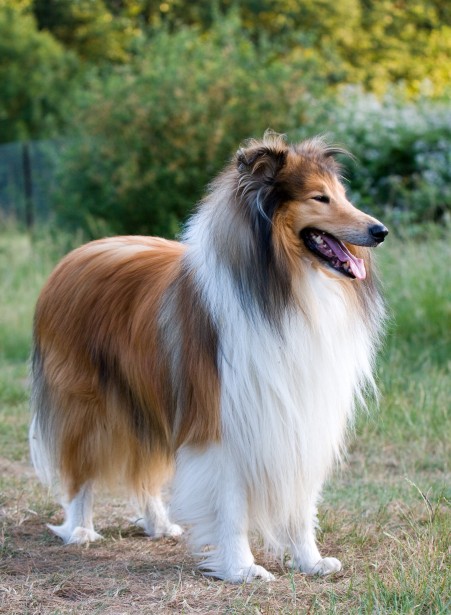
Collies are generally medium-sized dogs of about 22 to 32 kg (48 to 70 lb) and light to medium-boned. Cattle-herding types are stockier than sheep-herding types. The fur may be short, or long, and the tail may be smooth, feathered, or bushy. In the 1800s, the occasional naturally bob-tailed dog would occur. The tail can be carried low with an upward swirl, or may be carried higher but never over the back. Each breed can vary in coloration, with the usual base colors being black, black-and-tan, red, red-and-tan, white with a colored head with it without other body coloration of sable, black and tan, blue merle, sable merle sable. They often have white along with the main color, usually under the belly and chest, over the shoulders, and on parts of the face and legs, but sometimes leaving only the head colored – or white may be absent (unusual) or limited to the chest and toes (as in the Australian Kelpie). Merle coloration may also be present over any of the other color combinations, even in landrace types. The most widespread patterns include sable, black and white, black and tan and tricolour (black-and-tan and white).

Temperament

[edit]

Collies range in trainability from the "average" to very biddable. The Border Collie is the breed most in need of a "job" to stimulate its brain, lest it become anxious and hyper, while many other collie breeds fit well into an active family lifestyle (though all collie types still require some mental stimulation). Collie-type breeds are also known for their sensitivity and awareness of emotions in people;[4] they may require gentler handling than other types of dogs.

Working type temperaments

[edit]

A working member of a collie breed, such as the Border Collie, is an energetic and agile dog with great stamina. When in fit, working condition they are able to run all day without tiring, even over very rough or steep ground. Working collies display a keen intelligence for the job at hand and are instinctively highly motivated. They are often intensely loyal. Dogs of collie type or derivation occupy four of the first sixteen ranks in Stanley Coren's The Intelligence of Dogs, with the Border Collie being first. These characteristics generally make working strains suitable for agility; in addition to herding work they are well suited to active sports such as sheepdog trials, flyball, disc dog and dog agility. Working strains have strong herding instincts, and some individuals can be single-minded to the point of obsessiveness. Collies can compete in herding events.[5] Border Collies are used as search dogs in mountain rescue in Britain. They are particularly useful for searching large areas of hillside and avalanche debris. H. MacInnes believed that dark coated dogs are less prone to snow blindness.[6]

Show and pet type temperaments

[edit]

Certain types of collie (for example Rough Collies, Smooth Collies, Shetland Sheepdogs and some strains of Border Collie and other breeds) have been bred for many generations as pets and for the sport of conformation showing, not as herding dogs. All collie dog breeds have proved to be highly trainable, gentle, loyal, intelligent, and well suited as pets.[7] Their gentleness and devotion also make them quite compatible with children. They are often more suitable as watchdogs than as guard dogs, though the individual personalities of these dogs vary.

The temperament of these breeds has been featured in literature, film, and popular television programs. The novels of Albert Payson Terhune, which were very popular in the United States during the 1920s and 1930s, celebrated the temperament and companionship of his early AKC collies. More famously, the temperament and intelligence of the Rough Collie were exaggerated to mythic proportions in the character Lassie, which has been the subject of many films, books, and television shows from 1938 to the present.

The Lassie character was featured in a book titled Lassie Come Home by Eric P. Knight. Knight's collie "Tootsie" was the inspiration for the book, which was a collection of stories based on her and other collie legends he collected from talking to friends and neighbors. One such story was most likely the documented tale of "Silverton Bobbie", the Oregon collie who crossed the US to get to his owners. While the dogs who played Lassie on-screen were from AKC lines, the actual Tootsie looked nothing like them, although she did come from a collie breeder.

Health

[edit]

Some collie breeds (especially the Rough Collie, Smooth Collie, and the Australian Shepherd) are affected by a genetic defect, a mutation within the MDR1 gene,[8] formerly known as "ivermectin sensitivity", but now known to cause lowered tolerance to a wide variety of different veterinary drugs.[9] Approximately 70% of collies are affected,[9] making them very sensitive to some drugs, such as Ivermectin, as well as to some antibiotics, opioids including loperamide,[9] and steroids – over 100 drugs in total. The MDR1 status of individual dogs can be easily tested for.[9] In addition, the intestinal functional system of this breed is also very fragile, and compared with similar medium and large dogs, they are easy to receive food stimulation, which leads to vomiting and excretion abnormalities or gastrointestinal diseases. Therefore, breeders need to ensure strict hygiene for dogs to eat fresh ingredients, and rich nutrition. The Verband für das Deutsche Hundewesen (The German Kennel Club) encourages breed clubs to test all breeding stock and avoid breeding from affected dogs.

Collies may have a genetic disease, named canine cyclic neutropenia, or grey collie syndrome. This is a stem cell disorder.[10] Puppies with this disorder are quite often mistaken for healthy Blue Merles, even though their colour is a silver grey.[citation needed] Affected puppies rarely live more than 6 months.[citation needed] For a puppy to be affected, both the sire and the dam have to be carriers of the disorder.[11]

Canine familial dermatomyositis is an inherited idiopathic condition affecting the skin and muscle and in rare cases the blood vessels. The condition causes dermatitis throughout the body and proceeds to myositis which in severe cases leads to megaesophagus. Collies alongside the Beauceron and Shetland Sheepdog are known to have a predilection to the condition although it has been described in other breeds.[12]

Collie eye anomaly is an autosomal recessive condition caused by a mutation in the NHEJ1 gene that affects Collies and related breeds.[13]

Collie types and breeds

[edit]

Herding dogs of collie type have long been widespread in Britain, and these can be regarded as a landrace from which a number of other landraces, types, and formal breeds have been derived, both in Britain and elsewhere. Many of them are working herding dogs, but some have been bred for conformation showing and as pets, sometimes losing their working instincts in the course of selection for appearance or for a more subdued temperament.[14]

Herding types tend to vary in appearance more than conformation and pet types, as they are bred primarily for their working ability, and appearance is thus of lower importance.

Dogs of collie type or ancestry include:

Australian Kelpie
Developed in Australia from collies originally brought from Scotland and northern England. Erect ears, short-haired, usually black, black-and-tan or red-and-tan, with white limited to chest and toes.
Australian Shepherd
Derives its name from the sheep imported from Australia in the 19th century, but native to the Western United States. Used as both a drover and guardian of sheep and cattle. Ancestry almost certainly includes British collie types and Basque and Spanish sheepdogs. Shaggy mid length coat in every colour including merle, half prick ears, bobbed tail, and (very important) eyes of different colour, heterochromia very common.
Bearded Collie
Bearded Collie
Now largely a pet and show breed, but still of the collie type, and some are used as working dogs. The Beardie has a flat, harsh, strong and shaggy outer coat and a soft, furry undercoat. The coat falls naturally to either side without need of a part. Long hair on the cheeks, lower lips, and under the chin forms the beard for which it is known.
All Bearded Collies are born black, blue, brown, or fawn, with or without white markings. Some carry a fading gene, and as they mature, the coat lightens, darkening again slightly after one year of age. A puppy born black may become any shade of gray from black to slate to silver. The dogs that are born brown will lighten from chocolate to sandy, and the blues and fawns show shades from dark to light. Dogs without the fading gene stay the color they were when they were born. The white only occurs as a blaze on the face, on the head, on the tip of the tail, on the chest, legs, feet, and around the neck. Tan markings occasionally appear on the eyebrows, inside the ears, on the cheeks, under the root of the tail and on the legs where the white joins the main color.
Blue Lacy
Grey or red all over, short hair, floppy ears. Derived partly from the English Shepherd, with other non-collie breeds.
Male Border Collie
Border Collie
Border Collie
The most well known breed for herding sheep throughout the world. Originally developed in Scotland and Northern England. Not always suitable for herding cattle. Ears semi-erect or floppy, fur silky or fairly long, but short on face and legs; red, black, black-and-tan or merle, all usually with white over shoulders, alternatively mostly white with coloured patches on head. Coat can be either long or short.
Cumberland Sheepdog
An extinct breed similar to the Border Collie and possibly absorbed into that breed. An ancestor of the Australian Shepherd. Erect or semi-erect ears, dense fur, black with white only on face and chest.
English Shepherd
Developed in the U.S. from stock of Farm Collie type originally from Britain. Floppy ears, thick fur, red, black or black-and-tan, with white over shoulders. Not to be confused with the very different Old English Sheepdog.
German Coolie
Also called Koolie, or German Collie. Developed in Australia, probably from British collies, but may have included dogs from Germany and Spain.[15] Erect ears, short fur, black, red, black-and-tan or merle, often with some white on neck or over shoulders. (Note: the name "German Collie" is also applied to a cross between a German Shepherd and a Border Collie.)
Huntaway
Developed in New Zealand from a mixture of breeds, probably including some collie – but it is not of the collie type. Larger and more heavily built than most collies, floppy ears, most commonly black-and-tan with little white.
Lurcher
Not an established breed, but a cross of collie (or other herding dog or terrier) with Greyhound or other sight hound. Traditionally bred for poaching, with the speed of a sight hound but more obedient and less conspicuous. Variable in appearance, but with greyhound build: Floppy ears, tall, slender, with small head, deep chest and "herring gut"; smooth, silky or rough coat, often brindled.
McNab Shepherd
Developed in the U.S. from Scotch Collies and dogs imported by Basque sheepherders. Variable in size, erect or semi-erect ears, short to medium fur, black or red with some white on face, chest and/or feet.
Miniature American Shepherd
Developed in the United States as a miniature version of the Australian Shepherd.
New Zealand Heading Dog
Also called New Zealand Eye Dog. Developed in New Zealand from Border Collie heritage and used to bring sheep towards the shepherd, especially with strong eye contact and no barking.
Old English Sheepdog
Derived from "Shags", hairy herding dogs, themselves derived from "Beards", the ancestors of the Bearded Collie. Modern dogs larger than most collies, no tail, floppy ears, long silky hair (including on face), usually grey and white. Not to be confused with the English Shepherd.
Scotch Collie
Scotch collies are separated into two varieties or breeds: Rough Collie and Smooth Collie. They are rather a different type to other collies with a long narrow face, tall, profuse coat and semi-erect ears. They are still used for herding as well as for showing. They were developed in the highlands of Scotland which is why they needed a profuse coat.[16] There are four recognised colors: Sable, tri-color, blue merle, and color headed white. Non-recognized colors are: Bi-black, sable merle, harlequin, red merle, red tricolor, and black and tan.[17] Both the Rough and Smooth Collies are double-coated with Smooths having a shorter or "smooth" outer coat. There are three different coat types of Rough Collies: Brandwyn (fluffy coats), Parader (flat long coats) and the working type (medium-length coats).[18]
Shetland Sheepdog
A small show and pet breed developed in England partly from herding dogs originating in Shetland. The original Shetland dogs were not collies, but instead working herding dogs of Spitz type, similar to the Icelandic Sheepdog. However, in the development of the modern Shetland breed these Spitz-type dogs were heavily mixed with the Rough Collie and toy breeds, and now are similar in appearance to a miniature Rough Collie. Very small, nearly erect ears, long silky fur on body, most commonly sable or merle, with white over shoulders.
Welsh Sheepdog
Smithfield
Originally a British type, now extinct used for droving cattle in the south-east of England, especially the Smithfield Market in London. They were large, strong collies, with white or black-and-white fur, and floppy-ears.[14] Occasionally the name is used for modern dogs of a somewhat similar type in Australia. The name "Smithfield" is used to describe the shaggy Tasmanian farm dog of Bearded Collie type;[5] and is also applied to the Australian Stumpy Tail Cattle Dog and may have contributed to the Australian Koolie.[19]
Welsh Sheepdog
Landrace herding dog from Wales. Erect or semi-erect ears, short or silky fur, red, black, black-and-tan, or merle, all usually with white over shoulders.

Famous collies

[edit]

Collies in fiction

[edit]

See also

[edit]

References

[edit]
[edit]
Revisions and contributorsEdit on WikipediaRead on Wikipedia
from Grokipedia
The Collie is a lithe, responsive breed originating from , renowned for its intelligence, loyalty, and elegant, symmetrical appearance. It exists in two varieties—Rough and Smooth—differentiated primarily by coat length, with the Rough featuring a long, abundant, harsh-textured double coat and the Smooth having a short, flat coat of similar density. The breed's distinctive head is long and wedge-shaped with a tapered muzzle, almond-shaped eyes, and semi-prick ears, while its coat colors include and white, tricolor (black, white, and tan), blue merle (marbled gray with black), and predominantly white. Males typically measure 24 to 26 inches at the shoulder and weigh 60 to 75 pounds, whereas females stand 22 to 24 inches tall and weigh 50 to 65 pounds. The Collie's history traces to ancient pastoral dogs in the , with ancestors possibly descending from primitive herding companions present as early as the (before 1200 BC), used to manage and protect . By the 18th and 19th centuries, selective breeding in and refined the breed for sheep herding, emphasizing agility, stamina, and trainability. Queen Victoria's admiration in the mid-19th century elevated the Collie's status, leading to its export and popularity among and eventually in America. The first recognized the Collie in 1885, placing it in the Herding Group. Its global fame exploded in the through the fictional , featured in a in 1938 later expanded into a in 1940, radio shows from 1947, films from 1943, and the long-running television series from 1954 to 1973, cementing the breed's image as a heroic, devoted companion. Collies exhibit a gentle, sensitive temperament, marked by deep devotion to family, eagerness to please, and an intuitive understanding of human emotions, making them ideal family pets and adaptable working dogs. Highly intelligent and trainable, they thrive in roles such as herding, obedience, agility, and therapy work, though they require moderate daily exercise and mental challenges to prevent boredom. With a lifespan of 12 to 14 years, the breed is generally robust but susceptible to hereditary conditions including Collie eye anomaly (CEA), progressive retinal atrophy (PRA), and multidrug sensitivity (MDR1 gene mutation), for which responsible breeders perform recommended health screenings.

History and Origins

Etymology

The term "collie" originates from Scottish dialect in the 1650s, likely deriving from "coaly" or "colley," referring to the coal-black color of the black-faced sheep that these herding dogs guarded in the . Alternatively, it may stem from the Gaelic word "cuilean," meaning "whelp" or "puppy," a term used for young dogs in early . These etymological roots reflect the breed's close association with Scotland's traditions, where the dogs were essential for managing . The earliest documented uses of "collie" to describe herding dogs appear in 18th-century , such as in descriptions of Highland shepherds' companions in texts from the period, where the term denoted versatile working dogs employed in rugged terrain. A notable early literary reference appears in ' 1786 poem "The Twa Dogs," describing a "ploughman’s collie" as a working companion. By this time, the name had become synonymous with the agile of the region, distinguishing them from other breeds. Regional naming variations emerged in the 18th and 19th centuries, with "colley dog" commonly used in England to refer to similar herding types, while in Scotland, they were often simply called "shepherd's dogs" to emphasize their practical role. These differences highlight the breed's cross-border development along the Anglo-Scottish frontier. In the 19th century, as dog breeding formalized, the name "collie" was standardized in official breed registries; following early exhibitions in the 1860s, The Kennel Club (UK) began recognizing Rough and Smooth Collies under this name after its founding in 1873, with the first breed standard published in 1881. The American Kennel Club adopted it upon registering the breed in 1885. This evolution solidified "collie" as the universal designation for the breed in modern standards.

Development and Early Use

The modern Collie breed developed in the 18th and 19th centuries in the region, where it served as a vital for in the rugged lowlands and highlands. Scottish shepherds selectively bred these dogs from earlier herding stock to enhance desirable traits such as keen intelligence, agility, and endurance, enabling them to manage flocks across challenging terrains with minimal human intervention. This development was driven by the demands of the expanding wool trade and agricultural practices, making Collies indispensable tools in sustaining rural livelihoods. Key milestones in the breed's recognition occurred during the mid-to-late 19th century. In 1860, Collies appeared at the Birmingham alongside Old English Sheepdogs, highlighting their distinct qualities and sparking interest among breeders and exhibitors. This exposure contributed to the breed's formal acknowledgment, culminating in the establishment of The Collie Club in in 1881, which began codifying standards for appearance and working ability. By the mid-19th century, Collies were exported from to , where they gained popularity among the aristocracy, notably , who imported several in the 1860s and helped elevate their status from working dogs to companions. Exports to America followed soon after, with the first Rough Collie registered by the in 1885, leading to the creation of breed standards that emphasized their herding heritage. These transatlantic movements formalized the Collie's role beyond , integrating it into broader agricultural and exhibition contexts. In rural economies, Collies excelled in pre-1900 herding techniques tailored to Scottish , such as the "eye" method—using an intense gaze to control and direct flocks without physical contact—and systematic to gather and move sheep over vast distances. These skills reduced labor costs and minimized stock losses, directly supporting the profitability of sheep operations in the Borders and influencing agricultural efficiency across Britain.

Physical Characteristics

Appearance and Coat

The Collie is renowned for its elegant and distinctive appearance, characterized by a well-proportioned, athletic build that conveys grace and agility. The breed exhibits a deep chest, level topline, and a harmonious body structure that supports its historical role as a , with standards emphasizing symmetry and refinement. According to the (AKC), the Collie should present an image of strength without coarseness, with a slightly arched leading to well-laid-back shoulders and a tail that is moderately long and carried low when at rest. The Fédération Cynologique Internationale (FCI) similarly describes the ideal Collie as having an alert, intelligent expression and a body that is longer than it is tall, fostering both speed and endurance. Both Rough and Smooth varieties are judged by the same standards for general appearance, head, size, and movement, differing only in coat characteristics. The head is a defining feature, featuring a wedge-shaped that tapers smoothly to a fine muzzle, with almond-shaped eyes that are dark and expressive in solid-colored dogs, though lighter in merles. Ears are semi-erect, carried forward when attentive and folding slightly backward at rest, contributing to the breed's alert demeanor. Heavily penalized faults in show standards include overshot or undershot jaws, which compromise the breed's functional bite, and fully prick (erect) ears, which deviate from the desired semi-erect carriage. The coat varies significantly between the Rough and Smooth varieties, both possessing a dense double coat for weather resistance. The boasts a long, abundant outer coat with a profuse mane around the neck, frill on the chest, and feathering on the legs and , while the undercoat is soft and close-lying. In contrast, the has a short, flat-lying coat that is harsh to the touch, with minimal feathering. The recognized colors are and white (a mix of golden-brown with black-tipped hairs and white markings), tricolor (black with tan markings and white), blue merle (mottled gray-blue with black splashes, tan markings, and white), and predominantly white with colored patches on the head and body. Other colors, such as solid or patterns, are not recognized. These coat types require regular grooming to maintain their luster, particularly in the Rough variety during shedding seasons.

Size, Build, and Variations

The Collie exhibits a lithe yet sturdy build, characterized by a deep, moderately wide chest that conveys strength, sloping shoulders for , and well-bent hocks that support graceful movement. This structure is complemented by a long, slightly arched that provides balance and poise, with the tail carried low and straight during rest but rising slightly when alert. The overall frame is athletic and proportional, avoiding any coarseness or excess bulk, which allows for efficient while maintaining an elegant silhouette. According to the (AKC) breed standard, adult male Collies stand 24-26 inches (61-66 cm) at the shoulder and weigh 60-75 pounds (27-34 kg), while females measure 22-24 inches (56-61 cm) and weigh 50-65 pounds (23-29 kg). In contrast, () standard specifies slightly smaller dimensions: males at 22-24 inches (56-61 cm) and 45-65 pounds (20.5-29.5 kg), with females at 20-22 inches (51-56 cm) and 40-55 pounds (18-25 kg). Males typically display a more robust and masculine conformation, with greater and broader heads, whereas females are proportionally daintier but retain the breed's essential symmetry. Collie undergo rapid growth in their first year, reaching approximately 50% of by 4-6 months and full skeletal maturity by 12-15 months, after which they continue to develop muscle mass. For example, a may weigh 20-28 pounds (9-13 kg) at 3 months and 37-50 pounds (17-23 kg) at 6 months, depending on and , before attaining proportions. This growth pattern emphasizes early development of the sturdy frame, with juveniles appearing slimmer until fills out the chest and hindquarters. Historically, original working Collies on Scottish farms were smaller and more compact, often resembling modern Border Collies in stature at around 20-22 inches (51-56 cm), prioritizing endurance over showy elegance. Following Queen Victoria's patronage in the , for exhibition purposes enlarged the breed, with the AKC standard increasing height requirements to the current 24-26 inches for males by 1950. Modern show lines sometimes exhibit exaggerations in size or proportions, though breed clubs emphasize balance to preserve working heritage. No significant standard updates have occurred in the , maintaining stability since the mid-20th century revisions. The dense coat of the rough variety can visually amplify the build's fullness, though the underlying structure remains consistent across coat types.

Temperament and Behavior

General Traits

Collies are highly intelligent dogs, renowned for their quick learning and obedience, ranking 17th out of 131 breeds in Stanley Coren's assessment of working and obedience intelligence. This places them in the "excellent working dogs" category, where they typically learn new commands after 5 to 15 repetitions and obey the first command at least 85% of the time. Their trainability stems from a strong responsiveness to human cues, making them adept at understanding and following directions in various tasks. Known for their loyalty and gentle nature, Collies form deep bonds with their families, often displaying a protective yet non-aggressive devotion. They are particularly sensitive to their owners' emotions and thrive on companionship, responding best to positive, gentle training methods that align with their affectionate temperament. This sensitivity contributes to their reputation as gentle companions, especially with children, where they exhibit patience and a nurturing demeanor without signs of nervousness or aggression. Derived from their herding heritage, Collies possess moderate to high energy levels and stamina, requiring regular physical exercise such as daily walks, running, or play to maintain their well-being. They also benefit from mental stimulation to channel their active minds effectively. In terms of vocalization, Collies are alert barkers, using their voice to notify owners of potential intruders or unusual activity, but they lack excessive aggression in guarding situations.

Differences by Type and Role

Collies exhibit variations in depending on their breeding lines and intended roles, with working types displaying greater drive and energy compared to show and pet varieties. Working Collies are bred for ability, resulting in higher intensity, focus, and stamina, which can make them more challenging for inexperienced owners without appropriate outlets for their instincts. These dogs excel in tasks requiring and responsiveness, such as herding trials or agility sports. In contrast, show and pet Collies are bred primarily for companionship and conformation, leading to a more reserved, affectionate, and adaptable demeanor with reduced drive. These varieties are friendly toward children and other animals, with a calmer energy level suited to family life, though they still require moderate exercise. Between coat types, Smooth Collies tend to be slightly more energetic and agile than Rough Collies, retaining stronger working instincts while both share the breed's core gentle and loyal traits. Environmental factors influence these traits, with farm-raised working Collies channeling their drive through activities, whereas urban pets benefit from early and to adapt to home environments and curb instinctive behaviors like nipping at heels. In all settings, their loyalty and intelligence make them rewarding companions when provided with appropriate stimulation.

Health and Welfare

Common Health Issues

Collies are predisposed to several genetic and acquired health issues, with Collie eye anomaly (CEA) being one of the most significant. CEA results from a 7.8 kb deletion in intron 4 of the NHEJ1 gene on canine chromosome 9, leading to improper development of the and during embryogenesis. This autosomal recessive condition manifests primarily as choroidal , a thinning of the vascular layer beneath the , which can cause varying degrees of vision impairment, including blindness in severe cases where occurs. Symptoms often include hesitancy when navigating unfamiliar environments, bumping into objects, and dilated pupils, though many affected dogs show no overt clinical signs. Prevalence varies by population and coat color; studies report rates of 40.6% in Dutch Collies and up to 72% in UK Smooth Collies, more readily detectable in merle-coated individuals due to the lighter pigmentation of the ocular fundus. Progressive retinal atrophy (PRA) is another major inherited eye disorder in Collies, specifically the rod-cone type 2 (rcd2) form caused by a in the PDE6B . This autosomal recessive condition leads to progressive degeneration of the , resulting in night blindness followed by total vision loss, typically onsetting in young adulthood. Symptoms include dilated pupils, reluctance to go out at night, and bumping into objects. is available, with carrier rates varying but recommended for breeding dogs to reduce incidence, as PRA affects a notable proportion of the breed. Orthopedic conditions such as and also affect Collies, though at relatively low rates compared to larger breeds. involves abnormal joint formation leading to laxity, pain, lameness, and eventual , with incidence in Collies estimated at 2.8% based on radiographic evaluations. encompasses developmental abnormalities like fragmented coronoid processes or ununited anconeal processes, resulting in lameness, swelling, and joint instability; while overall canine prevalence is around 0.56% in veterinary care populations, Collies show low affected rates similar to hips, under 5% in breed-specific surveys. These conditions are multifactorial, influenced by and environmental factors like rapid growth, with symptoms appearing as early as 4-12 months of age. Idiopathic epilepsy occurs in Collies, with prevalence in the general canine population estimated at 0.6-0.75%, though higher rates are reported in some breeds. Generalized tonic-clonic seizures are common, involving stiffening, paddling, , and loss of consciousness, typically onsetting between 6 months and 6 years of age. Additionally, many Collies carry the MDR1 mutation, a 4-base pair deletion in the ABCB1 that impairs the blood-brain barrier's pump, leading to sensitivity to drugs like . This mutation affects up to 75% of Collies with at least one mutant , causing neurotoxicity symptoms such as , depression, and coma even at low doses. is recommended to avoid adverse reactions. Dermatological issues in Collies frequently stem from their dense double coat, predisposing them to , or "hot spots." These acute, moist lesions arise from self-trauma due to excessive licking or scratching, often triggered by allergies, insect bites, or matted fur trapping moisture, resulting in red, oozing, painful areas commonly on the head, legs, or flanks. Hot spots develop rapidly and can cover large areas if untreated. , an endocrine disorder causing reduced hormone production, also contributes to skin problems in Collies, with symptoms including dry, flaky skin, , and recurrent infections; while overall canine prevalence is 0.23%, Collies rank low-risk at around 5-10% in thyroid screening databases.

Lifespan, Care, and Breeding Considerations

Collies have an average lifespan of 12 to 14 years, though this can vary based on factors such as the dog's , with larger individuals potentially having shorter lifespans, and the implementation of proactive screenings by breeders and owners. Proper care is essential to support a Collie's and , beginning with grooming tailored to coat type. Rough-coated Collies require weekly brushing down to the skin to remove dead undercoat, prevent matting, and maintain skin health, particularly during seasonal shedding periods when intact females may experience more intense . Smooth-coated varieties need less frequent but regular brushing to manage their double coat and undercoat shedding. Daily exercise is crucial for this active breed, with recommendations of 1 to 2 hours of aerobic activity such as running, playing fetch, or supervised yard time to build , prevent , and fulfill their mental needs. Nutrition plays a key role in Collie care, emphasizing a high-quality, meat-based diet rich in protein to sustain their energy levels and support muscle maintenance in active individuals. Portion control is vital, with multiple smaller meals per day recommended to mitigate the risk of gastric dilatation-volvulus (GDV or bloat), a condition to which deep-chested breeds are predisposed; overfeeding or rapid eating can exacerbate this threat. Owners should consult veterinarians to adjust diets based on age, activity level, and any sensitivities, avoiding fillers like excessive grains. Breeding considerations for Collies prioritize ethical practices to reduce hereditary health risks, including mandatory genetic testing for Collie Eye Anomaly (CEA), , and Multidrug Resistance 1 (MDR1), mutations affecting eye health and drug sensitivity prevalent in herding breeds. Responsible breeders adhere to standards set by the Orthopedic Foundation for Animals (OFA) for evaluations of hips, elbows, and eyes, and pursue Canine Health Information Center (CHIC) certification, which requires documentation of these DNA-based screenings to ensure transparency and promote healthier lineages. Such programs, supported by organizations like the Collie Health Foundation, subsidize testing to encourage widespread participation and minimize the propagation of genetic defects.

Rough and Smooth Collies

The and represent the two primary varieties of the Collie breed, sharing identical body structure, , and heritage while differing primarily in length and texture. Both varieties originated as versatile working dogs in and , bred for guarding and over centuries. The features a long, abundant double that is harsh and straight on the outer layer with a soft undercoat, particularly profuse around the (forming a distinctive "mane" or "frill"), chest, and legs, which requires regular grooming to prevent matting. In contrast, the has a short, dense, flat-lying that sheds seasonally but demands less maintenance, making it more practical for active working environments. The Rough Collie's long coat emerged as a refined feature in the , gaining prominence when encountered the breed during visits to Balmoral Castle in the in the 1860s and began breeding them at Windsor, elevating their status from farm dogs to fashionable companions among the British aristocracy. This royal endorsement spurred focused on aesthetic qualities, transforming the Rough Collie into a symbol of elegance. The Smooth Collie, however, remained closer to the original utilitarian shepherds' dogs of northern England, where it served as a drover's dog, efficiently managing large flocks on long drives to market with minimal hindrance from coat. Historical records indicate that Smooth Collies were valued for their endurance in rugged terrains, retaining a sleeker profile suited to practical farm life without the ornamental flourishes developed in the Rough variety. Both varieties are governed by the same established by the (AKC), which emphasizes a lithe yet sturdy build, with males standing 24-26 inches at the shoulder and females 22-24 inches, weighing 50-75 pounds depending on . Key conformational ideals include an expressive, wedge-shaped head with almond-shaped eyes conveying and alertness, a deep chest for stamina, sloping shoulders for graceful movement, and well-arched loins supporting agile . The standard highlights the coat's flowing abundance as a hallmark of breed type, contributing to its poised, statuesque presence in the show ring, while the Smooth variety is evaluated identically but without emphasis on coat quantity or distribution, allowing focus on underlying form. Disqualifications apply equally, such as excessive , eyes in non-merle colors, or aggressive temperament. The AKC first recognized the Collie breed, encompassing both Rough and Smooth varieties, in 1885, shortly after the founding of the Collie Club of America in 1886 as the breed's parent club. Although classified under a single breed umbrella, the varieties have been distinctly noted in registrations and shows since inception, with the dominating popularity due to its striking appearance and historical show circuit appeal. In the late , Rough Collies outnumbered Smooths in exhibitions, a trend persisting today where Roughs comprise the majority of show entries and registrations, often cited as the more visually iconic variety, while Smooths remain less common but valued in working trials. In terms of functional traits, the Smooth Collie's shorter facilitates greater speed and in herding tasks, aligning with its traditional role in driving over distances, whereas the Rough Collie's elaborate enhances its elegance in conformation events, where fluid and majestic outline are prized. Both varieties exhibit strong instincts when properly trained, though Smooths may demonstrate more consistent drive in field work due to reduced coat interference. Like other Collies, they share general considerations such as sensitivity to certain medications, but selection for working lines can mitigate breed-specific risks.

Border Collie and Other Herding Types

The , a medium-sized typically measuring 18 to 22 inches at the shoulder, originated in the border region between and , where it was selectively bred for its exceptional ability to control livestock through intense focus and agility. Unlike show-oriented registrations, working Border Collies are predominantly registered with the International Sheep Dog Society (ISDS), which prioritizes trials over conformation standards, reflecting a preference among shepherds for functional traits over aesthetic ones. Breeds like the Australian Shepherd share partial ancestry with Collie types, particularly working Collies imported to the in the 19th century, but have been adapted for rugged American ranch work with a medium build (18 to 23 inches tall) and a moderate double coat suited to varied climates. Similarly, the , a smaller breed standing 13 to 16 inches, derives significant influence from bloodlines introduced in the early 20th century to refine its herding instincts and long, sable coat, making it a compact version optimized for the harsh Islands environment. The serves as a rough-coated relative, historically known as the Highland or Mountain Collie in , with its shaggy, weather-resistant coat and sturdy frame (20 to 22 inches) tracing back to local herding dogs crossed with continental influences like the , though it maintains close ties to traditional Collie herding lineages. In terms of recognition and population trends, the has seen a notable rise in popularity during the , climbing to the 30th most registered breed with the in 2024, up from 33rd in 2019, driven by increased interest in active companion dogs. A key distinction among these herding types lies in their techniques: the Border Collie employs a specialized "eye" method, characterized by an intense, hypnotic stare combined with low stalking to intimidate and direct sheep without physical contact, differing from the broader, more driving approach of traditional Collies that relies on presence and barking to gather flocks. These breeds often exhibit overlapping temperaments, such as high intelligence and energy, though specifics vary by role.

Roles and Cultural Impact

Working and Herding Roles

Collies, particularly the Rough and Smooth varieties, have traditionally excelled in roles on farms across and , where they manage and protect sheep flocks over challenging terrains. These dogs demonstrate remarkable control by responding to standard herding commands, such as "come by" to circle clockwise and "away to me" to circle counterclockwise, enabling them to handle large groups efficiently and with minimal stress to the animals. In sheepdog trials, Collies showcase their traditional skills through structured competitions that mimic real farm scenarios, including long outruns to gather sheep, driving them to the handler, and penning them under time constraints. These events follow standards akin to those of the Border Collie Handlers Association (USBCHA), which emphasize precision, speed, and obedience, though Rough and Smooth Collies participate less frequently in elite levels compared to specialized trial breeds. Today, Collies adapt their herding heritage to diverse modern applications, including agility competitions where their athleticism and quick learning allow them to excel on obstacle courses requiring jumps, tunnels, and weaves. They also serve in search-and-rescue operations, utilizing their , keen senses, and focus to locate missing persons in varied environments, and continue providing farm assistance by smaller groups or supporting daily agricultural tasks. Effective training for these roles capitalizes on the Collie's through positive techniques, such as using treats and verbal praise to reward compliance with commands and build reliability. Early is crucial to channel their instinctive nipping—used to direct sheep—into appropriate behaviors, preventing issues in non-herding contexts while preserving their working drive. By enhancing livestock handling efficiency and reducing labor needs, Collies contribute significantly to . In , herding dogs like Collies form part of a workforce of approximately 270,000 livestock dogs, generating an estimated $3 billion economic impact through cost savings in labor and improved .

Famous Collies and Media Representations

One of the most iconic real-life Collies is Pal, a male born on June 4, 1940, who became the first dog to portray the fictional character in the 1943 film . Despite being cast as a female dog, Pal's expressive performance and striking sable-and-white coat defined the breed's image in Hollywood, leading to a lineage of his descendants—over 10 generations—continuing the role through films, radio, and television until the 1990s. In modern times, like those from the Kings Valley Collies kennel have earned AKC performance titles, including and championships, showcasing the breed's continued versatility in trials and competitions. The fictional , created by author in his 1940 novel , embodies unwavering loyalty and intelligence, drawing from real Collie and the dog's heritage. This portrayal exploded into media with the 1943 film adaptation, starring Pal alongside and , which sparked a 40% surge in Collie registrations with the (AKC) in the following two years. The character's adventures continued in a series of seven films through , followed by the long-running television series (1954–1973), which won three and propelled Rough Collie registrations to peak in the late , ranking the breed in the AKC's top 10 for three decades. Books, comics, and merchandise further amplified Lassie's reach, with the TV show alone reaching millions weekly and inspiring loyalty-themed narratives that solidified the Collie as a symbol of devotion in American culture. In the , has appeared in reboots like the family film , which revived story for new audiences, and the (2014–2019), updating the character for global streaming platforms with themes of adventure and family bonds. Rough Collies have also featured in advertisements, such as campaigns and recent viral spots, maintaining the breed's visibility despite a decline in registrations from mid-century highs; as of 2023, the breed ranks 40th in AKC popularity.

References

Add your contribution
Related Hubs
User Avatar
No comments yet.