Hubbry Logo
Contact printContact printMain
Open search
Contact print
Community hub
Contact print
logo
8 pages, 0 posts
0 subscribers
Be the first to start a discussion here.
Contact print
Contact print
from Wikipedia
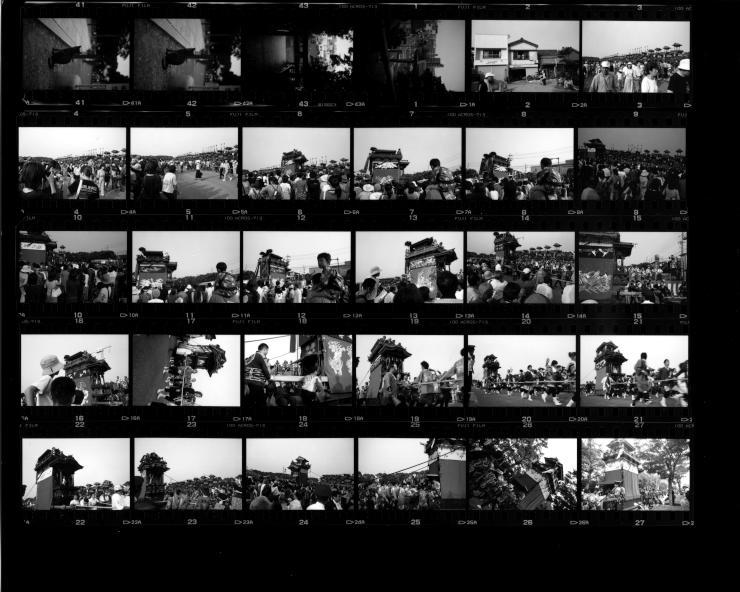
An example of a contact print from small format film strips intended for image review.

A contact print is a photographic image produced from film; sometimes from a film negative, and sometimes from a film positive or paper negative.[1] In a darkroom an exposed and developed piece of film or photographic paper is placed emulsion side down, in contact with a piece of photographic paper, light is briefly shone through the negative or paper and then the paper is developed to reveal the final print.[2]

The defining characteristic of a contact print is that the resulting print is the same size as the original, rather than having been projected through an enlarger.

Basic tools

[edit]
Contact print of a photo film cut in pieces, used for reviewing and selecting images for the final print. Photo by Paolo Monti, 1975.

Contact printing is a simple and inexpensive process. Its simplicity avails itself to those who may want to try darkroom processing without buying an enlarger. One or more negatives are placed on a sheet of photographic paper which is briefly exposed to a light source. The light may come from a low wattage frosted bulb hanging above an easel which holds them together, or contained in an exposure box with a plate of frosted glass on top. Accurate timing of the light comes with experience, but only a little experimenting leads to positive results. The negative and the photographic paper are placed on the glass plate of the exposure box. A hinged top-cover presses the negatives in close contact with the paper and keeps them in place. The paper is then developed and the result is called a contact print. After exposure, the paper is processed using chemicals in the darkroom to produce the final print. The paper must be placed in a developer bath, a stop bath, fixer, and finally the hypo-eliminator bath, in that order. Failure to adhere precisely to this process will result in a poor-quality final image with a variety of issues.[3]

Ansel Adams describes procedures for making contact prints using ordinary lighting in his book, The Print.

Proof sheets

[edit]

Since this process produces neither enlargements nor reductions, the image on the print is exactly the same size as the image on the negative. Contact prints are used to produce proof sheets from entire rolls of 35 mm negative (from 135 film cassettes) and 120 (214 film rolls) in order to aid in the selection of images for further enlargement, and for cataloging and identification purposes. For 120 roll film (once a common negative size for popular cameras) and larger film, contact prints are often used to determine the final print size. In medium and large format photography, contact prints are prized for their extreme fidelity to the negative, with exquisite detail that can be seen with the use of a magnifying glass. A disadvantage to using contact prints in the fine-arts is the laboriousness of modifying exposure selectively, when the use of an enlarger can achieve the same purpose.

Because light does not pass any significant distance through the air or through lenses in going from the negative to the print, the contact process ideally preserves all the detail that is present in the negative. However, the exposure value (EV) range, the variation from darkest to lightest regions, is inherently greater in negatives than in prints.

Finished prints

[edit]

When large format film is contact printed to create finished work, it is possible, but not easy, to use local controls to interpret the image on the negative. "Burning" and "dodging" (either increasing the amount of light that one area of the print receives, or decreasing the amount of light in order to achieve the ideal tonal range in a particular area) require painstaking work with photographic masks, or the use of a production contact printing machine (Arkay, Morse, Burke and James are manufacturers who make contact printing machines).

Some alternative processes or non-silver processes, such as van Dyke and cyanotype printing, must be contact printed. Medium or large format negatives are almost always used for these types of printing. Images from smaller formats may be transferred to a larger format negative for this purpose.

Production tools

[edit]

Contact printing machines are more elaborate devices than the more familiar and widely available contact printing frames. They typically combine in a box the light source, intermediate glass stages, and a final glass stage for the negative and paper to be placed upon, as well as an elastic pressure plate to keep the negative and the paper in tight contact. Dodging can be accomplished by placing fine tissue paper on the intermediate glass stages between the light source and the negative/paper sandwich to modify the exposure locally. The benefit to such time intensive techniques is the ability to then make multiple prints with negligible variation, at full production speed.

Other uses for the technique

[edit]

Contact printing was also once used in photolithography, and in printed circuit manufacturing.

Motion picture prints are often contact printed either from an original, or a duplicate negative.

The contact exposure process usually refers to a film negative used in conjunction with printing paper, but the process may be used with any transparent or translucent original image printed by contact onto a light sensitive material. Negatives or positives on film or even paper may for various purposes be used to make contact exposures onto different films and papers. Intermediary products such as internegatives, interpositives, enlarged negatives, and contrast controlling masks are often made using contact exposures.

Namaka, contact sheet photograph combined with intentional camera movement

Computer screens and other electronic display devices provide an alternative approach to contact printing. A permanent image (negative, positive film or transparency, or translucent original) is not used, instead the light sensitive material is exposed directly to the display device in a dark room for a controllable duration.[4] The resulting image generated by this mixed digital/analogue technique has been coined "laptopogram". While limited by the image display device resolution, which can be much inferior to film negatives, the widespread use of electronic displays provides great potential to this unorthodox contact printing method.

In contact sheet photography, the traditional contact sheet is used as a way to make pictures consisting of partial photos. The resulting image spans the whole sheet, divided into squares by the black borders of the film.[5]

Artistic and practical considerations

[edit]

Photographers praise the beautiful intermediate gray or color gradation that results from making prints this way. Each print is necessarily the same size as the corresponding image on the negative. This makes contact prints from large-format negatives, especially 5×7 inch and larger, most usable for fine-art work. Smaller contact prints, from films and formats such as 135 film cassettes, 35 mm (24×36 mm images), and 120/220 roll film (6 cm), are useful for evaluation of exposure, composition, and subject.

It is cheaper and easier to avoid making conventional prints of all the exposures with an enlarger; the photographer prints only the best negatives. Selection is usually made using a loupe — a special magnifying glass with a transparent base — to examine the tiny prints, still aligned as they are on the negative strips. Negatives themselves can be examined with a loupe, but blacks and whites are the reverse of what is seen through the view finder (hence: a negative), which makes it more difficult to interpret the images. Contact sheets can easily be stored in files in the dark, along with the negatives.

Notable photographers

[edit]

Edward Weston made most of his pictures using contact print technique.[6]

See also

[edit]

References

[edit]
[edit]
Revisions and contributorsEdit on WikipediaRead on Wikipedia
from Grokipedia
A contact print is a photographic image produced by placing a film negative or positive directly in contact with photosensitive paper, exposing the assembly to light to transfer the image, and then developing the paper to create a positive print matching the exact dimensions of the original . This method ensures high resolution and detail retention without the need for enlargement or projection equipment, making it one of the simplest and earliest forms of photographic printing. The technique originated in the mid-19th century alongside the invention of negative-based photography, with English scientist William Henry Fox Talbot playing a pivotal role through his development of the calotype process in 1841, which used paper negatives contact-printed onto salted paper to yield positives. Prior to this, contact printing principles were evident in processes like the cyanotype, invented by Sir John Herschel in 1842, which produced blue-toned images by direct exposure of sensitized paper. Throughout the 19th century, contact prints dominated photographic production, as enlargers were not yet available, and most images—especially portraits, landscapes, and scientific records—were made this way using sunlight as the light source. The process typically involves several steps: first, the negative is positioned emulsion-to-emulsion on the sensitized paper in a printing frame; the setup is then exposed to light, historically , allowing the light to pass through the negative and darken the paper where not blocked; finally, the exposed paper undergoes chemical development in a silver halide bath, stopping, fixing with , and washing to stabilize the image. Variations include printing-out paper (POP) processes popular from 1840 to 1910, where the image forms directly during exposure without a separate development stage, and later adaptations like platinum prints, known for their archival longevity exceeding thousands of years. Contact printing revolutionized by enabling the reproducible creation of multiple prints from a single negative, democratizing image production and facilitating its transition from a scientific novelty to a widespread artistic and documentary medium. In modern contexts, it remains valued by fine art photographers for its tactile quality and fidelity to the original negative, often used in alternative processes or as proof sheets (contact sheets) to evaluate exposures before enlargements.

History

Origins in Early Photography

Contact printing emerged as a foundational technique in the early days of photography, pioneered by William Henry Fox Talbot in 1839 through his photogenic drawing process. Talbot sensitized paper with a solution of salt and silver nitrate to create paper negatives, which were then exposed in a camera or used for photograms of flat objects like botanical specimens. These negatives were contact-printed onto similarly prepared salted paper under sunlight, producing direct positive images at a 1:1 scale without the need for enlarging lenses. Talbot first publicly announced his discoveries in January 1839 to the in , with demonstrations of contact prints following in 1840. A notable example of this salted paper print is from 1844, which captured a simple architectural scene at . This image exemplified the process's reliance on prolonged sunlight exposure—often minutes to hours—to develop the print-out image directly, without chemical development of a . The technique's key characteristics included its simplicity and directness, producing matte, warm-toned positives the exact size of the negative, limited by the paper's size and sunlight's intensity. In parallel, French inventor developed a direct positive contact printing process in 1840, using silver chloride paper treated with to produce unique images without negatives. Bayard's method involved exposing the sensitized paper in a camera and then bleaching highlights with light, creating portraits and still lifes directly on paper through sunlight contact exposure, also at 1:1 scale. This approach offered an alternative to Talbot's negative-positive system, emphasizing immediate positives but yielding only single prints. Independently, in 1842, English astronomer Sir invented the process, a direct contact printing technique that used solutions of ferric ammonium citrate and to produce images on paper without requiring a negative or development stage. Primarily intended for copying documents, it was later employed by for the first photographic book, British Algae: Cyanotype Impressions (1843), highlighting its utility in scientific illustration and proofing. Talbot formalized contact printing further with his process, patented in 1841, which enhanced paper negative sensitivity using gallo-nitrate of silver and allowed multiple positive prints from a single negative via contact exposure on salted paper. The covered the iodizing, sensitizing, development, and fixing stages, enabling broader adoption while maintaining the core reliance on sunlight and absence of optical enlargement. This innovation marked a pivotal step in photography's viability as a reproducible medium.

Evolution Through the 19th and 20th Centuries

In 1850, Louis Désiré Blanquart-Evrard introduced albumen paper, a significant advancement in contact printing that enhanced image detail and archival permanence compared to earlier salted paper processes by utilizing a thin of and silver salts. This innovation allowed for sharper, more stable prints directly from negatives, solidifying contact printing as the dominant method for reproducing photographic images throughout the mid-19th century. The 1880s marked the rise of gelatin silver processes, which replaced albumen by enabling faster exposure times through a more sensitive of silver halides suspended in , though contact printing remained the primary technique until enlarging lenses gained traction around 1890. This shift was accelerated by 's 1888 launch of in the Original Kodak camera, which produced small negatives initially intended for contact printing to create affordable snapshots, democratizing for amateurs. During this era, platinum printing also peaked from 1880 to 1920, relying exclusively on contact methods due to the slow speed of its platinum-based emulsions, which produced prints with exceptional tonal depth favored by pictorialist photographers. Contact printing began to decline in the as enlargers became widespread, allowing projection printing from smaller negatives onto larger papers and supplanting direct contact methods in commercial and workflows. However, 20th-century revivals sustained its use in large-format , such as 8x10-inch sheets where negatives matched print sizes for maximum sharpness, and in alternative processes like cyanotypes, which saw renewed application from the 1880s onward for proofing and artistic contact prints due to their simplicity and UV sensitivity.

Definition and Principles

Core Concept and Characteristics

A contact print is a photographic print created by placing a film negative—or sometimes a positive or paper negative—in direct physical contact with light-sensitive and exposing it to , producing an image at a 1:1 scale identical in size to the original negative. This method relies on the emulsion sides facing each other within a printing frame to ensure precise registration, allowing to transfer the image directly without intermediary . The resulting print captures the full tonal range and detail of the negative in a straightforward manner, making it a foundational technique in . Key characteristics of contact prints include the absence of optical enlargement, which preserves maximal sharpness and fine detail by eliminating any diffusion or light scatter that could occur through lenses or projection systems. This direct exposure approach yields prints with exceptional clarity and , often surpassing the perceived sharpness of enlarged images, as the negative's resolution is reproduced without degradation. Contact prints are commonly employed for proofing purposes, such as contact sheets that provide an initial overview of an entire roll of to assess exposure and composition, and for artistic large-format works where the negative's inherent size supports exhibition-scale outputs without scaling. In contrast to projection printing, which projects the negative image through a lens onto paper to enable enlargement and size flexibility, contact printing avoids all optical elements, thereby preventing distortions, aberrations, or focus issues but constraining the print dimensions to exactly match the negative. This limitation was particularly significant in early , where contact printing predated the widespread adoption of enlargers by decades—emerging as an integral part of negative-positive workflows pioneered in the 1840s—before enlargers became practical around the 1850s and 1860s. Common sizes for contact prints align with standard film formats, such as 35mm strips yielding thumbnail-sized proofs, 4×5-inch sheets for medium-scale evaluations, and 8×10-inch large-format negatives producing full-frame artistic prints.

Underlying Photographic Principles

Contact printing relies on the optical principle of direct emulsion-to-emulsion contact between the negative and the receiving paper, which eliminates light scatter and that occur in projection or enlargement methods due to lenses or air gaps. This proximity ensures that photons from the source travel the shortest possible path, preserving fine details and achieving the highest possible resolution limited primarily by the of the , up to 1000 or more line pairs per millimeter in ideal fine-grain conditions. At the chemical foundation, contact printing employs emulsions—typically (AgBr), (AgCl), or mixtures—suspended in a binder on the . These halides absorb photons during exposure, initiating a photochemical reaction where light energy liberates electrons that reduce a small number of silver ions to metallic silver atoms, forming an invisible of reduced silver specks. Subsequent chemical development amplifies this by selectively reducing the surrounding exposed silver halide grains to visible metallic silver densities, while unexposed areas remain unchanged until fixation removes undeveloped halides. The exposure process in contact printing follows the fundamental photographic E=I×tE = I \times t, where EE is the total exposure, II is the light intensity, and tt is the exposure time; this method uses uniform, non-focused light sources such as lamps or direct sunlight to ensure even illumination across the contact area without the need for optical projection. Quality in contact prints is influenced by factors such as even applied to maintain intimate contact between layers, preventing gaps that could cause unsharpness or uneven exposure. Additionally, reciprocity failure becomes relevant in low-intensity or prolonged exposures common to contact methods; at exposures exceeding one second, the emulsion's efficiency decreases because fewer photons per grain reduce the formation of stable centers, requiring longer times than predicted by the linear E=I×tE = I \times t relationship—often modeled as tc=tmpt_c = t_m^p where p>1p > 1 is a film-specific exponent (e.g., 1.31 for Ilford HP5+), resulting in a curve where effective speed drops and contrast may increase, necessitating compensation and potential development adjustments. Photographic papers for contact printing are typically orthochromatic, sensitive primarily to and wavelengths (up to about 550 nm) but insensitive to , allowing safe handling under safelights that emit beyond 600 nm without causing fogging; in contrast, panchromatic papers extend sensitivity across the full (up to 700 nm), offering more accurate tonal rendering but requiring stricter conditions or amber safelights to avoid unintended exposure. Safelights play a critical role by providing low-level illumination in the during loading and , selected to match the paper's insensitivity—such as for orthochromatic emulsions—to prevent cumulative fogging while enabling visibility for precise handling.

The Contact Printing Process

Step-by-Step Technique

The process of creating a contact print begins with thorough preparation in a controlled environment to ensure light-tight conditions and proper chemical readiness. Select a high-quality black-and-white negative, evaluating it under for density and contrast to determine appropriate exposure parameters. Cut —typically resin-coated (RC) or fiber-based gelatin silver paper—to match the negative's dimensions, such as 8x10 inches, and store it in light-proof packaging until use. Mix fresh solutions according to manufacturer specifications: prepare developer (e.g., Dektol at 1:2 dilution for RC paper), (acetic acid-based), and fixer (e.g., ), allocating about half a per tray for standard sizes, and maintain developer temperature at approximately 70°F (21°C) for consistent results. For exposure, position the negative emulsion-side down directly on the photographic paper's emulsion side within a contact printing frame or under a sheet of 1/4-inch glass to ensure intimate contact and prevent movement. Place the assembly under an even light source, such as an enlarger light set to f/11, a UV lamp, or historically sunlight, with the enlarger head approximately 22 inches above for even illumination across the frame when using artificial light. Begin with a test strip by covering portions of the paper and exposing in incremental steps, such as 2-3 seconds each, totaling 5–60 seconds overall depending on the paper grade, negative density, and light intensity; higher-grade papers (e.g., grade 4) require shorter exposures for contrast control. Full exposure follows the test strip evaluation, achieving uniform lighting across the print surface, which minimizes the need for dodging or burning techniques common in enlargement processes. This step is standard for black-and-white gelatin silver paper to produce a direct 1:1 scale reproduction. Development proceeds immediately after exposure to reveal the . Immerse the exposed emulsion-side up in the developer , agitating gently by rocking the every 15–30 seconds to promote even processing; for Dektol on RC , develop for 1–2 minutes until the stabilizes, or extend to 2.5–3 minutes for fiber-based to achieve full tonal range. Transfer to the for 30 seconds to halt development and prevent over-processing, then move to the fixer for 2–5 minutes (longer for fiber to fully clear unexposed silver halides), agitating continuously. Following fixation, rinse the print briefly in running water, then wash thoroughly in a dedicated tray or under continuous flow for 5 minutes (RC paper) or 20–30 minutes (fiber paper) to remove residual chemicals and prevent staining or image degradation. For enhanced archival stability, optionally apply gold toning after fixing but before final washing; immerse in a gold chloride solution (e.g., 1:200 dilution) for 5–10 minutes, which replaces some silver with gold to improve resistance to fading and environmental pollutants, particularly beneficial for gelatin silver prints intended for long-term preservation. Finally, dry the print by squeegeeing excess and air-drying on screens or racks in a dust-free area, or use a heated dryer for faster results (5–10 minutes at low heat for fiber paper to avoid ). Evaluate the dried print under white for tone and , noting that fiber-based silver contact prints often exhibit a characteristic "dry-down" effect, where highlights appear denser post-drying compared to wet evaluation.

Required Materials and Setup

Contact printing requires a selection of core materials to ensure the light-sensitive on responds accurately to the negative's image. The primary consumables include , either resin-coated (RC) for quicker processing or fiber-based (FB) for enhanced archival quality and tonal depth. Variable contrast papers, such as Multigrade, allow for contrast control across grades 00 (lowest contrast) to 5 (highest), enabling adjustments to match the negative's density range without changing stock. Film negatives, placed emulsion side down on the , serve as the image source and must be clean and free of dust to avoid defects. Essential chemicals comprise a developer like Multigrade to reveal the , a fixer such as Hypam to stabilize the print by removing unexposed silver halides, and a hypo-clearing agent like Washaid to facilitate thorough removal of fixer residues during washing, promoting long-term archival stability. A , such as Ilfostop, is optionally used to halt development promptly. The darkroom setup begins with a light-tight space equipped with a , typically red or amber-filtered, positioned 4 to 6 feet from the work area to illuminate handling without fogging the paper. A contact printing frame, featuring a top and spring-loaded back for uniform pressure, holds the negative and paper in close contact to produce sharp results. Processing trays, usually plastic and sized to the paper (e.g., 8x10 inches), are needed for developer, , fixer, and washing solutions, along with a for precise exposure control. A is crucial for monitoring solution temperatures, with an ideal of 68°F (20°C) for developer and fixer to maintain consistent times and prevent uneven results. Light sources for exposure should be calibrated to the paper's speed; bulbs (25-60 watts) provide even illumination for standard black-and-white enlarging papers, while UV bulbs are suitable for slower or alternative process papers requiring higher energy in the 350-400 nm range. considerations are paramount due to chemical handling: gloves protect skin from irritants, an shields clothing, and adequate ventilation (at least 10 ) disperses fumes from developers and fixers. All materials should be organized accessibly under to minimize white-light exposure during preparation.

Types of Contact Prints

Proof and Contact Sheets

Proof and contact sheets are a type of contact print created by exposing multiple photographic negatives directly onto a single sheet of photographic paper to produce small-scale positive images for evaluation purposes. This method allows photographers to assess exposure, composition, and any defects in the negatives at their actual size without enlargement. To create a proof or contact sheet, developed film negatives are typically cut into strips—such as a full 35mm roll containing 36 frames—and arranged emulsion-side down on an 8x10-inch sheet of . The arrangement is covered with a sheet of to ensure even contact, and the entire setup is exposed to light uniformly, often using an or in a , before being processed as a single print in standard developing chemicals. For medium-format films like 120, sheets commonly feature 12 square frames. These sheets serve primarily to identify the best frames from a roll for subsequent enlargement, enabling quick review of all exposures in one view. In professional workflows, particularly in 20th-century film laboratories, they functioned as client proofs, allowing photographers and editors to mark selections directly on the sheet. Photojournalists and studio photographers, such as , relied on them during sessions that could produce up to 120 frames to refine compositions and decisions. The advantages of proof and contact sheets include their time efficiency, as only one exposure and development process is needed per roll of film, streamlining the selection workflow compared to individual images. Additionally, because the images are produced at the negative's , they clearly reveal physical defects like , scratches, or errors that might otherwise go unnoticed in enlargements. This practice became widespread in professional from the mid-1920s onward, following the introduction of 35mm film with cameras like the Leica, and remained a staple until the decline of analog film.

Enlarged and Finished Prints

Enlarged and finished contact prints are single-image reproductions made directly from large-format sheet film negatives, typically ranging from 4x5 inches to 11x14 inches, which allow for substantial print sizes without optical enlargement. These prints emphasize the inherent detail and tonal gradations of the negative, resulting in exceptional sharpness and texture that convey a lifelike quality, such as the granular feel of surfaces like or sand. Once processed, they are often matted with archival board or framed under glass for gallery display, preserving their archival integrity and presentation as standalone artworks. Finishing these prints involves meticulous post-processing to achieve professional quality, including spotting defects—such as dust spots or scratches—with fine brushes and diluted dye or spot tone to match the surrounding tones seamlessly. Prints are then mounted using dry-mount tissue on acid-free board for stability, and artists commonly them in pencil along the lower margin, including the , edition number, and date, to authenticate the work. This process highlights the print's superior tonal range and detail retention, free from the introduced by enlarging lenses, making it a preferred method for output. Due to their one-to-one scale, these contact prints are particularly suited for applications requiring at larger dimensions, such as murals or book illustrations, where optical enlargement from smaller negatives would compromise sharpness and introduce aberrations. In alternative processes like / printing, the technique excels by embedding metal salts directly into , yielding prints with subtle textures, extended , and warm or neutral tones that enhance the tactile and visual depth. Fiber-based papers used in these prints require extended processing, including washing times of up to one hour in running water or with wash aids to remove fixer residues and ensure longevity. Quality control begins with proof sheets to select negatives, followed by test strips—small sections of paper exposed incrementally to assess and contrast—though the full-sheet exposure commits the entire print without the flexibility of dodging or burning available in enlargements. This direct approach demands precise negative preparation and exposure calibration to avoid waste, underscoring the technique's reliance on the negative's quality for the final result.

Equipment and Variations

Essential Tools

Contact printing requires a minimal set of tools to ensure precise alignment, even exposure, and safe processing of . The of this setup is the contact frame, a hinged device typically constructed from wood with a front that presses the negative and sensitized into flat, intimate contact to prevent movement during exposure. These frames are available in standard sizes such as 8x10 inches, allowing for direct at the negative's scale without enlargement. For illumination, a basic light source suffices, such as the head of an detached from its lens or a simple exposure unit positioned evenly above the frame to deliver uniform light distribution. This setup avoids the need for complex , relying instead on proximity to achieve consistent exposure times, often controlled by a for precision. Affordable historical options, like those produced by Beseler in the mid-20th century, remain popular among hobbyists for their durability and . Processing aids form the next essential layer, including at least three trays for developer, , and fixer to handle the chemical immersion without or . Accompanying these are with rubber tips to transfer prints safely between solutions, minimizing skin contact with chemicals, and graduated cylinders for accurate measurement and mixing of processing solutions. To evaluate and optimize the process, measuring tools like a densitometer are used to assess negative density, ensuring proper tonal range for effective contact printing by quantifying transmission through the film. Similarly, a monitors the acidity of developing solutions, maintaining optimal conditions to prevent uneven processing or degradation of materials. Regular maintenance of these tools, such as cleaning the contact frame's glass with a soft cloth to avoid scratches, is crucial for consistent results and longevity.

Advanced Production Equipment

Vacuum frames represent a cornerstone of advanced contact equipment, employing pneumatic systems to achieve flawless contact between negatives and sensitized paper, particularly in large formats such as 20x24 inches. These devices use a or to evacuate air, pressing materials uniformly against a backing plate to eliminate gaps that could cause uneven exposure. Introduced by 1888, early pneumatic printing frames utilized an inflatable rubber pad to ensure tight between tracings and sensitized surfaces, marking a significant from manual frames. Automated processors streamline post-exposure development and fixing for high-volume production in labs, featuring roller-based systems that continuously move prints through chemical baths. These machines handle the sequential immersion in developer, , fixer, and wash solutions, reducing manual handling and ensuring consistent results across batches. Roller designs, such as those from Colenta, accommodate both and prints in multi-track configurations, enabling efficient processing of contact sheets or enlarged prints without damage. Precision integrators enhance exposure accuracy by combining digital timers with integrated sensors that measure cumulative dosage, compensating for fluctuations in illumination sources to maintain uniformity across multiple prints. Devices like the LC6 integrator support UV-A or visible sensors, allowing users to monitor and adjust exposure in real-time for consistent tonal reproduction in contact printing workflows. These tools are particularly valuable for alternative processes, where precise control over UV output prevents over- or underexposure in batch production. Archival equipment focuses on post-processing permanence, with hypo and toner baths designed to neutralize residual fixer and enhance print longevity. Hypo , such as the Berg Bath solution, remove ions from the after fixing, reducing the risk of image degradation over time when followed by thorough washing. Toner baths, often using or compounds, deposit protective metallic layers on silver particles, further stabilizing contact prints against environmental factors like humidity and pollutants. Modern advancements include LED UV exposure units introduced post-2000, which provide even, targeted illumination at wavelengths like 365nm for efficient contact printing. These systems, such as VerifiedUV LED arrays, deliver rapid exposures—often 60-90 seconds for / processes—while generating minimal heat compared to traditional bulbs, improving safety and consistency in professional setups. Sophisticated vacuum frames with pneumatic enhancements continue to evolve, incorporating digital controls for pressure regulation in oversized formats.

Applications and Uses

Practical and Commercial Applications

Contact printing has long served as a fundamental technique for proofing in laboratories, enabling photographers and technicians to assess image quality directly from negatives. In photography, it allowed rapid evaluation of exposures to select timely shots for , while in and scientific fields, contact sheets provided essential control by revealing tonal range and sharpness without enlargement distortions. This method remained standard through the mid-20th century, particularly until the digital shift in the , when scanners and digital workflows began supplanting analog proofing for efficiency. In archival contexts, contact printing facilitated the reproduction of fragile historical materials, such as documents, maps, and glass plate negatives, preserving details without intermediaries. Museums and institutions like the historically employed contact copying workflows to create duplicates of irreplaceable items, ensuring accessibility for researchers while minimizing handling of originals. This approach was particularly valued for its one-to-one scale fidelity, which maintained the integrity of fine lines and textures in cartographic or textual artifacts. Medical and forensic applications leveraged contact printing for its ability to produce high-resolution duplicates from sensitive originals. In radiology, it was used to copy X-ray films, capturing intricate bone structures and tissue contrasts essential for diagnosis, often directly from the exposed plates to avoid loss of detail. Similarly, in forensic photography, contact prints from evidence negatives, such as those of fingerprints or scene documentation, provided precise, undistorted records admissible in legal proceedings, emphasizing emulsion-to-emulsion transfer for accuracy. Commercially, contact printing underpinned early 20th-century postcard production, where photographers exposed negatives onto specialized stock to create real-photo postcards (RPPCs), a popular format for personal and promotional imagery around 1900. Eastman Kodak's 1902 introduction of postcard-backed photo streamlined this process, enabling mass reproduction of scenic or event images at actual size. In engineering, the blueprint process—a form of contact invented by Sir in 1842—revolutionized reproduction, using light-sensitive to generate copies of plans and schematics for and . By the late , pneumatic frames ensured uniform contact, supporting widespread adoption in and industry. The technique's prominence waned after the with the advent of flatbed and drum scanners, which offered versatile digital alternatives for proofing and duplication, accelerating the transition to computer-based workflows by the .

Artistic and Experimental Uses

In , contact printing with large-format negatives, such as 8x10 inches or larger, allows artists to produce gallery-ready prints that preserve the full detail and tonal range of the original negative, emphasizing the inherent texture and grain of the film emulsion without the distortion introduced by enlargement lenses. This approach is particularly valued for its purity and intimacy, as seen in exhibitions where such prints highlight subtle surface qualities, sometimes combined with techniques to enhance tactile depth and archival stability in limited-edition works. Alternative processes employing contact printing have inspired creative explorations, including for producing ethereal blue-toned abstract images through direct sunlight exposure on sensitized paper, often incorporating organic forms like leaves or botanical specimens to evoke surreal landscapes. Similarly, van Dyke brown printing yields warm, sepia-like abstracts with rich mid-tones, enabling artists to layer subtle textures and experiment with historical iron-silver chemistry for painterly effects in contemporary portfolios. Experimental applications extend contact printing to non-traditional substrates, such as fabric or metal, where artists coat materials like or aluminum sheets with light-sensitive emulsions to produce sculptural installations that integrate with three-dimensional forms, challenging conventional notions of the as a flat plane. In , sun-exposed contact prints using or similar processes capture transient natural elements directly outdoors, forming site-specific works that document ecological motifs through impressions of and . Post-2010 trends reflect a modern revival of contact printing through the integration of digital negatives with processes like gum bichromate, where high-resolution inkjet transparencies serve as intermediates for multi-layer color builds on paper, allowing artists to achieve vibrant, hand-painted aesthetics while maintaining the scale fidelity of analog contact methods. This hybrid technique, detailed in resources like Christina Z. Anderson's Gum Printing: A Step-by-Step Manual, enables precise control over pigment density and has been adopted by contemporary practitioners for expressive landscapes and abstracts. Contact prints also feature prominently in photobooks, where their authentic negative-scale reproduction preserves the unadulterated intimacy of the original exposure, as demonstrated in self-published volumes combining 4x5 and larger formats to narrate personal or documentary narratives without interpretive enlargement.

Considerations

Technical and Safety Aspects

Contact printing involves several technical challenges that can affect print quality if not properly managed. One common issue is uneven contact between the negative, printing paper, and glass in the contact frame, which can produce Newton's rings—interference patterns appearing as concentric light and dark rings due to optical interference from trapped air or inconsistent pressure. To mitigate this, practitioners often use anti-Newton ring glass or ensure even pressure with thicker glass plates. Additionally, environmental humidity plays a critical role; levels outside the ideal range of 30–50% relative humidity (RH) can cause photographic paper to curl or absorb moisture, leading to uneven exposure and distorted prints. Safety concerns in contact printing primarily stem from the chemicals used in the process. , a key component in some developers and sensitizers, poses risks of skin staining and burns upon contact, necessitating immediate rinsing with water if exposure occurs. Acetic acid, commonly used in stop baths, releases irritating fumes that can cause respiratory issues, eye irritation, and chronic with prolonged inhalation, requiring well-ventilated darkrooms with exhaust systems. Proper disposal of spent chemicals follows U.S. Agency (EPA) guidelines, which mandate silver recovery from fixers to prevent environmental contamination, as direct discharge into sewers is prohibited for . Maintenance practices are essential to prevent contamination and ensure consistent results. Contact printing frames should be regularly cleaned with anti-static cloths or soft brushes to remove and residues that could transfer to negatives or , avoiding materials that might scratch surfaces. Negatives must be stored in acid-free sleeves or envelopes within archival boxes to protect against acidity-induced degradation, maintaining cool, dry conditions below 70°F and 50% RH. Troubleshooting common problems helps maintain print integrity. Fogging, which results in overall density loss or hazy areas, often arises from light leaks in the , such as around doors, safelights, or frames; testing involves exposing paper in complete to isolate sources. Overdevelopment during can lead to muddiness, characterized by flat contrast, loss of shadow detail, and a veiled appearance, typically corrected by reducing development time or agitation. Under the Occupational Safety and Health Act of 1970, which established the (OSHA) and its standards in the 1970s, the use of (PPE) such as gloves, goggles, and respirators has been required in darkrooms to minimize chemical exposure risks. The shift to digital alternatives, including scanning negatives for or using digital negatives in alternative processes, has significantly reduced chemical handling and associated health hazards for many practitioners.

Aesthetic and Practical Trade-offs

Contact printing offers unparalleled sharpness and tonal fidelity due to the direct emulsion-to-emulsion contact between negative and paper, eliminating the optical degradation introduced by enlarging lenses. This technique preserves the full resolution of the negative, resulting in images with exceptional detail and clarity, as exemplified in the straight photography ethos of the 1930s , who favored contact prints to achieve maximum and subtle gradations. The intimate scale of these prints—limited to the negative's dimensions—encourages close, detailed viewing, fostering a contemplative engagement that emphasizes texture and nuance over expansive presentation. However, this adherence to the negative's size constrains artistic output, preventing the creation of larger works without resorting to enlargements, which can compromise the purist ideal of unmanipulated fidelity. Compared to digital editing workflows, contact printing is labor-intensive, requiring manual exposure, development, and without the ease of post-capture adjustments, which limits rapid iteration and creative experimentation. Practically, contact printing proves cost-effective for proofing and small runs, as it demands minimal equipment and leverages the negative's scale directly, making it accessible for initial evaluations. Yet, producing large editions escalates expenses due to material consumption and time, particularly for silver-based processes. Environmentally, traditional chemical workflows generate from developers and fixers, contrasting with more eco-friendly digital alternatives that reduce chemical use but introduce energy demands and e-waste. In comparison to inkjet prints, contact prints lack the of color reproduction and but deliver a superior tactile quality, with deeper blacks, enhanced longevity, and a gelatinous surface that imparts a unique physical presence. Modern practitioners often mitigate limitations through hybrid workflows, scanning contact prints for digital refinement and enlargement while retaining analog origins for authenticity.

Notable Figures

Historical Pioneers

William Henry Fox Talbot (1800–1877) was a pivotal figure in the development of contact printing, inventing the calotype process in 1841, which utilized paper negatives to produce multiple positive contact prints through direct exposure. This innovation enabled the creation of multiple contact prints, including his renowned salted paper print "" (1844) and reproductions from the negative of "Latticed Window at " (originally exposed in 1835 but printed in the 1840s). Talbot's work demonstrated the practicality of contact printing for documenting architecture, nature, and everyday scenes, laying the groundwork for reproducible . Anna Atkins (1799–1871), a British , advanced contact printing through her pioneering use of photograms, producing the first book illustrated entirely with photographic images: Photographs of British Algae: Impressions (1843). Atkins created these contact prints by placing algae specimens directly on sensitized paper, exposing them to , and fixing the resulting blue-toned images, predating widespread commercial photography applications. Her self-published work, issued in parts from 1843 to 1853, comprised over 400 plates and showcased contact printing's potential for scientific illustration, influencing botanical documentation. Talbot's contemporaries, including Sir John Herschel (1792–1871), contributed essential chemical advancements that enabled durable contact prints. Herschel discovered sodium thiosulfate ("hypo") as a fixing agent in 1819, which he applied to photography in 1839 to stabilize silver-based images against fading, making long-lasting contact prints possible. He also invented the process in 1842, a contact printing method using iron salts that Atkins later adopted, further expanding the technique's versatility for non-silver emulsions. These pioneers established contact printing as the predominant photographic method through the , when lens-based enlargements began to supplant it for larger formats. Talbot's and photogenic drawings, alongside Atkins' and Herschel's innovations, inspired over a hundred exhibitors at early international showcases like the Universal Exhibition, where contact prints highlighted photography's artistic and scientific value. Talbot even experimented with solar microscope projections to create magnified images, such as of insect wings, underscoring early adaptability toward enlargement techniques before optical enlargers emerged.

Contemporary Practitioners

Contemporary practitioners of contact printing continue to explore its tactile, direct qualities in alternative photographic processes, often integrating historical techniques with modern interpretations to address themes like ephemerality, environment, and identity. Christina Z. Anderson, a Montana-based artist and educator, employs contact printing in processes such as gum bichromate, salted paper, and to create vanitas-inspired works that meditate on mortality and . Her practice emphasizes hand-coating papers and using digital negatives for precise control, as detailed in her instructional books that profile dozens of peers advancing these methods. Anderson's exhibitions, spanning over 120 shows, demonstrate contact printing's versatility in producing richly toned, multi-layered images. Diana Bloomfield, working in , specializes in gum bichromate contact printing, a 19th-century process revived for its luminous, painterly effects on subjects ranging from landscapes to portraits. She applies multiple layers of pigmented emulsion directly onto paper in contact with her large-format negatives, achieving subtle color gradations and textures that evoke timeless serenity. Bloomfield's workshops and publications further propagate the technique, underscoring its role in sustainable, low-tech amid digital dominance. In , Leanne McPhee utilizes salted paper and chrysotype (gold-based) contact printing to produce intimate botanical and architectural studies, favoring the process's archival stability and subtle tonalities. Her large-format film exposures enable one-to-one scale transfers, preserving fine details without enlargement distortion, and she often combines these with toning for metallic hues. McPhee's work, exhibited internationally, highlights contact printing's environmental sensitivity, using eco-friendly chemistry to document natural degradation. New Zealand artist Joyce Campbell employs contact printing with large-format negatives to create monumental-scale works exploring ecology and colonial history, as seen in her contributions to the 2008 "Close Up: Contemporary Contact Prints" exhibition at RAMP Gallery. Her method involves direct emulsion exposure for sharp, unmediated reproductions of remote landscapes, emphasizing the technique's ability to capture imperceptible environmental shifts. Campbell's ongoing projects, including Antarctic expeditions documented via contact prints, affirm the process's relevance in contemporary discourse on climate and place. Marek Matusz, based in , advances salted paper and gum bichromate contact printing through hand-mixed solutions and experimental substrates, producing abstract forms that probe light's materiality. His approach integrates UV exposure for precise control over and contrast, resulting in prints that blend historical fidelity with innovative scale. Matusz's contributions to online resources and workshops democratize access to these labor-intensive methods, fostering a global community of alternative process adherents.

References

Add your contribution
Related Hubs
User Avatar
No comments yet.