


Community hub
Recent from talks
Contribute something
Nothing was collected or created yet.
Copra
View on Wikipedia
 | This article needs additional citations for verification. (November 2012) |

Copra (from Malayalam: കൊപ്ര, Koppara/Kopra; Kannada: ಕೊಬ್ಬರಿ, Kobbari; Telugu: కొబ్బరి, Kobbari; Tamil: கொப்பரை, Kopparai) is the dried, white flesh of the coconut from which coconut oil is extracted.[1] Traditionally, the coconuts are sun-dried, especially for export, before the oil, also known as copra oil, is pressed out. The oil extracted from copra is rich in lauric acid, making it an important commodity in the preparation of lauryl alcohol, soaps, fatty acids, cosmetics, etc. and thus a lucrative product for many coconut-producing countries. The palatable oil cake, known as copra cake, obtained as a residue in the production of copra oil is used in animal feeds. The ground cake is known as coconut or copra meal.[2]
Production
[edit]| Nutritional value per 100 g (3.5 oz) | |||||||||||||||||||||||||||||||||||||
|---|---|---|---|---|---|---|---|---|---|---|---|---|---|---|---|---|---|---|---|---|---|---|---|---|---|---|---|---|---|---|---|---|---|---|---|---|---|
| Energy | 354 kcal (1,480 kJ) | ||||||||||||||||||||||||||||||||||||
24.23 (not the same as source listed) | |||||||||||||||||||||||||||||||||||||
| Sugars | 6.23 | ||||||||||||||||||||||||||||||||||||
| Dietary fiber | 9 | ||||||||||||||||||||||||||||||||||||
33.49 | |||||||||||||||||||||||||||||||||||||
3.33 g | |||||||||||||||||||||||||||||||||||||
| |||||||||||||||||||||||||||||||||||||
| Other constituents | Quantity | ||||||||||||||||||||||||||||||||||||
| Water | 47 | ||||||||||||||||||||||||||||||||||||
| †Percentages estimated using US recommendations for adults,[3] except for potassium, which is estimated based on expert recommendation from the National Academies.[4] | |||||||||||||||||||||||||||||||||||||
Copra has traditionally been grated and ground, then boiled in water to extract coconut oil. It was used by Pacific island cultures and became a valuable commercial product for merchants in the South Seas and South Asia in the 1860s. Nowadays, coconut oil (70%) is extracted by crushing copra; the by-product is known as copra cake or copra meal (30%).
The coconut cake which remains after the oil is extracted is 18–25% protein, but contains so much dietary fiber it cannot be eaten in large quantities by humans. Instead, it is normally fed to ruminants.[5]


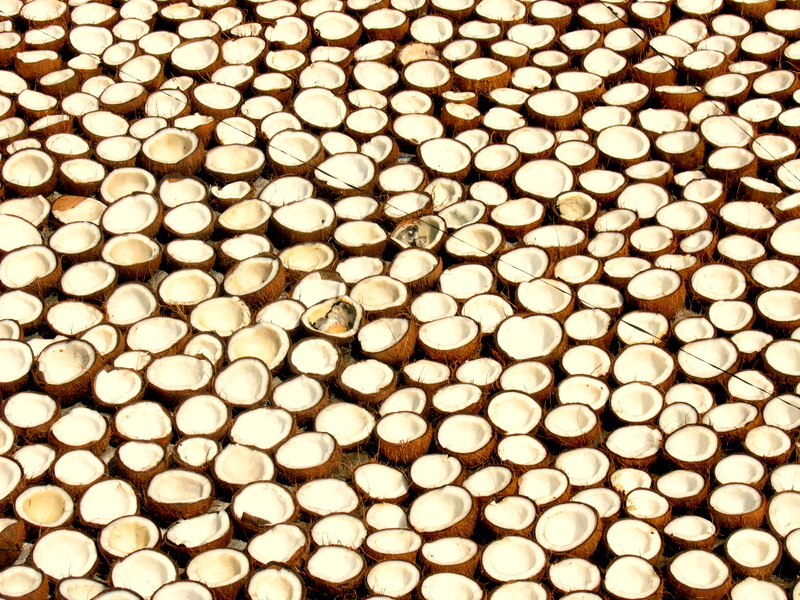
The production of copra – removing the shell, breaking it up, drying – is usually done where the coconut palms grow. Copra can be made by smoke drying, sun drying, or kiln drying. Hybrid solar drying systems can also be used for a continuous drying process. In a hybrid solar drying system, solar energy is utilized during daylight and energy from burning biomass is used when sunlight is not sufficient or during night time.[6] Sun drying requires little more than racks and sufficient sunlight. Halved nuts are drained of water, and left with the meat facing the sky; they can be washed to remove mold-creating contaminants. After two days the meat can be removed from the shell with ease, and the drying process is complete after three to five more days (up to seven in total). Sun drying is often combined with kiln drying, eight hours of exposure to sunlight means the time spent in a kiln can be reduced by a day and the hot air the shells are exposed to in the kiln is more easily able to remove the remaining moisture. This process can also be done in reverse order: partially drying the copra in the kiln, and finishing the process with sunlight. Starting with sun drying requires careful inspection to avoid contamination with mold while starting with kiln-drying can harden the meat and prevent it from drying out completely in the sun.
In India, small but whole coconuts can be dried over the course of eight months to a year, and the meat inside removed and sold as a whole ball. Meat prepared in this fashion is sweet, soft, oily and is cream-coloured instead of being white. Coconut meat can be dried using direct heat and smoke from a fire, using simple racks to suspend the coconut over the fire. The smoke residue can help preserve the half-dried meat but the process overall suffers from unpredictable results and the risk of fires.[7]
While there are some large plantations with integrated operations, copra remains primarily a smallholder crop. In former years copra was collected by traders going from island to island and port to port in the Pacific Ocean but South Pacific production is now much diminished, with the exception of Papua New Guinea, the Solomon Islands and Vanuatu.[8]
Economics
[edit]Copra production begins on coconut plantations. Coconut trees are generally spaced 9 m (30 ft) apart, allowing a density of 100–160 coconut trees per hectare. A standard tree bears around 50–80 nuts a year, and average earnings in Vanuatu (1999) were US$0.20 per kg (one kg equals 8 nuts)—so a farmer could earn approximately US$120 to US$320 yearly for each planted hectare. Copra has since more than doubled in price, and was quoted at US$540 per ton in the Philippines on a CIF Rotterdam basis (US$0.54 per kg) by the Financial Times on 9 November 2012.
In 2017 the value of global exports of copra was $145-146 Million. The largest exporter was Papua New Guinea with 35% of the global total, followed by Indonesia (20%), Solomon Islands (13%) and Vanuatu (12%). The largest importer of copra is the Philippines, which imports $93.4 Million or 64% of the global total.[8] A very large number of small farmers and tree owners produce copra, which is a vital part of their income.
Aflatoxin susceptibility
[edit]Copra is highly susceptible to the growth of molds and their production of aflatoxins if not dried properly. Aflatoxins can be highly toxic, and are among the most potent known natural carcinogens, particularly affecting the liver.[9] Aflatoxins in copra cake, fed to animals, can be passed on to milk or meat from livestock, leading to human illnesses.[10][11]
Animal feed
[edit]Copra meal is used as fodder for horses and cattle. Its high oil and protein levels are fattening for stock.[12][13] The protein in copra meal has been heat treated and provides a source of high-quality protein for cattle, sheep and deer, because it does not break down in the rumen.
Coconut oil can be extracted using either mechanical expellers or solvents (hexane). Mechanically expelled copra meal is of higher feeding value, because it contains typically 8–12% oil, whereas the solvent-extracted copra meal contains only 2–4% oil. Premium quality copra meal can also contain 20–22% crude protein, and < 20ppb aflatoxin.[14]
High-quality copra meal contains < 12% non-structural carbohydrate (NSC),[15] which makes it well suited for feeding to horses that are prone to ulcers, insulin resistance, colic, tying up, and acidosis.[16]
Shipment
[edit]Copra has been classed with dangerous goods due to its spontaneously combustive nature.[17] It is identified as a Division 4.2 substance.
References
[edit]- ^ Ehrilch, Eugene, ed. (1982). Oxford American Dictionary.
- ^ Gove, Philip B., ed. (1961). Webster's Third New International Dictionary, Unabridged. G. & C. Merriam.
- ^ United States Food and Drug Administration (2024). "Daily Value on the Nutrition and Supplement Facts Labels". FDA. Archived from the original on 27 March 2024. Retrieved 28 March 2024.
- ^ "TABLE 4-7 Comparison of Potassium Adequate Intakes Established in This Report to Potassium Adequate Intakes Established in the 2005 DRI Report". p. 120. In: Stallings, Virginia A.; Harrison, Meghan; Oria, Maria, eds. (2019). "Potassium: Dietary Reference Intakes for Adequacy". Dietary Reference Intakes for Sodium and Potassium. pp. 101–124. doi:10.17226/25353. ISBN 978-0-309-48834-1. PMID 30844154. NCBI NBK545428.
- ^ Grimwood, BE; Ashman, F; Dendy, DAV; Jarman, CG; Little, ECS; Timmins, WH (1975). Coconut Palm Products – Their processing in developing countries. Rome: FAO. p. 193. ISBN 978-92-5-100853-9.
- ^ "Hybrid Solar Dryer for Copra". Copra Indonesia.
- ^ Grimwood et al., 1975, p. 49–56.
- ^ a b Simoes, AJG; Hidalgo, CA. "OEC: The Observatory of Economic Complexity". oec.world. The Observatory of Economic Complexity. Retrieved 17 December 2019.
- ^ Liu, Yan; Wu, Felicia (June 2010). "Global Burden of Aflatoxin-Induced Hepatocellular Carcinoma: A Risk Assessment". Environmental Health Perspectives. 118 (6): 818–824. Bibcode:2010EnvHP.118..818L. doi:10.1289/ehp.0901388. PMC 2898859. PMID 20172840.
- ^ Fratamico PM, Bhunia AK, Smith JL (2008). Foodborne Pathogens: Microbiology and Molecular Biology. Norofolk, UK: Horizon Scientific Press. ISBN 978-1-898486-52-7.
- ^ Pradeepkiran JA (December 2018). "Analysis of aflatoxin B1 in contaminated feed, media, and serum samples of Cyprinus carpio L. by high-performance liquid chromatography". Food Quality and Safety. 2 (4): 199–204. doi:10.1093/fqsafe/fyy013.
- ^ "Cocos nucifera". Fao.org. Archived from the original on 14 October 2012. Retrieved 28 November 2012.
- ^ "AFRIS – Animal feed Resources Information System". Fao.org. Archived from the original on 22 November 2012. Retrieved 28 November 2012.
- ^ "Nutrient Specs – Stance Equine". Stanceglobal.com.au. Archived from the original on 6 July 2011. Retrieved 28 November 2012.
- ^ [1] Archived 26 October 2009 at the Wayback Machine
- ^ "CoolStance Benefits – Stance Equine". Stanceglobal.com.au. Archived from the original on 6 July 2011. Retrieved 28 November 2012.
- ^ "Copra". Tis-gdv.de. Retrieved 28 November 2012.
External links
[edit]
- Is Copra potentially a horse killer? – Horsetalk.co.nz Archived 9 June 2007 at the Wayback Machine
- Copra linked to cancer-causing agent Archived 27 October 2007 at the Wayback Machine
- Not all copra created equal Archived 6 June 2007 at the Wayback Machine
- Making Coconut Oil – The Old Chamorro Way
- AFLATOXIN CONTAMINATION IN FOODS AND FEEDS IN THE PHILIPPINES, in Manual on the application of the HACCP System in Mycotoxin prevention and ... , Food and Agriculture Organization of the United Nations.
- AFLATOXIN CONTAMINATION IN FOODS AND FEEDS IN THE PHILIPPINES, Food and Agriculture Organization of the United Nations.
| International | |
|---|---|
| National | |
| Other | |


Copra
View on GrokipediaOverview
Definition and Etymology
Copra is the dried white meat or kernel obtained from the mature fruit of the coconut palm (Cocos nucifera), specifically the solid endosperm, which is processed to reduce its moisture content to approximately 6-7% to facilitate storage and oil extraction.[12] This drying transforms the fresh, high-moisture kernel—typically around 50% water—into a stable product primarily valued for its high oil content.[12] Botanically, the coconut is classified as a drupe, a type of fruit with a fibrous outer husk (exocarp and mesocarp), a hard inner shell (endocarp), and a single seed enclosed within.[13] The copra derives exclusively from the seed's endosperm, the nutritive tissue that surrounds the embryo and accumulates oils and proteins during maturation, distinguishing it from the liquid endosperm (coconut water).[12] This endosperm forms the white, fleshy kernel characteristic of mature coconuts harvested for copra production. The term "copra" entered English in the late 16th century via Portuguese traders, borrowed from the Malayalam word koppara (കൊപ്ര), meaning "coconut kernel," which is cognate with Hindi khopra.[14] This Dravidian root traces back to Sanskrit kapāla or kharparah, denoting "skull" or "shell," an allusion to the kernel's shape and hard encasement within the coconut shell, reflecting its historical adaptation through South Asian and Southeast Asian trade languages.[15]Physical and Chemical Composition
Copra appears as a white to light brown, flaky solid derived from the dried endosperm of the coconut kernel, which typically measures 1-2 cm in thickness.[9] Its bulk density ranges from 0.5 to 0.7 g/cm³, facilitating handling and storage in bulk form.[16] To prevent spoilage and microbial growth, copra's moisture content is ideally maintained at 6-7%, though values as low as 4-5% are common in well-processed samples.[17] Chemically, copra consists primarily of 60-65% oil (varying by variety and processing), with the remainder comprising carbohydrates (20-25%), protein (7-10%), fiber (6-7%), and ash (1.5-2.1%). Minor minerals include potassium (approximately 1.8 g/kg) and magnesium (approximately 3 g/kg).[18][19] The oil fraction is dominated by saturated fatty acids, notably lauric acid (C12:0, 45-52%) and myristic acid (C14:0, 16-21%), which contribute to its stability and characteristic properties.[20] Nutritionally, copra provides an energy value of approximately 650-700 kcal per 100 g, largely due to its high saturated fat content, which accounts for over 90% of the total lipids. For instance, 10 grams of dry coconut kernel contains approximately 66 kcal, 0.7 g protein, 6.4 g fat, 2 g carbohydrates, and 1.6 g dietary fiber.[21][22] This profile varies slightly based on drying methods; sun-dried copra may retain marginally higher moisture and residual carbohydrates compared to kiln-dried variants, potentially affecting overall caloric density.[23]History
Traditional Origins
The traditional origins of copra trace back to the domestication of the coconut palm (Cocos nucifera) by Austronesian peoples in Island Southeast Asia and the Pacific Islands, with genetic evidence supporting independent centers of cultivation in the Old World tropics around 2,500–3,000 years ago.[24] This early domestication facilitated the spread of coconuts through Neolithic seaborne migrations, reaching regions like the Philippines, Indonesia, and Papua New Guinea.[24] Archaeological evidence indicates the use of coconuts in early Pacific settlements, including endocarp remains at sites in the Bismarck Archipelago dating to around 1300 BCE.[25] Indigenous communities in Melanesia and Polynesia developed sun-drying techniques for coconut kernels as a primary method of preservation, transforming fresh meat into copra for extended storage and portability during long-distance voyages across the Pacific.[26] This dried product was essential for survival at sea, providing a nutrient-dense food source that resisted spoilage in tropical climates, and was later integrated into local diets through the extraction of oil for cooking and illumination in lamps.[26] These practices predated commercial production, emphasizing copra's role in sustaining mobile Austronesian societies without reliance on large-scale agriculture.[27] Copra held profound cultural significance among Austronesian peoples, symbolizing fertility, abundance, and communal bonds in rituals, ceremonies, and intertribal trade networks throughout Melanesia and Polynesia.[28] Coconuts, including their dried kernels, featured in sacred offerings and rites of passage, reflecting their multifaceted utility in social and spiritual life.[28] Early non-commercial oil extraction involved manual grating of the kernel to produce milk, followed by boiling to separate the oil, a labor-intensive process used for anointing in rituals and as a trade commodity along ancient maritime routes.[29]Commercialization
The commercialization of copra marked a pivotal shift in the 19th century, transforming it from a local resource into a key global commodity driven by European industrial demands for coconut oil. European traders began actively promoting copra production in colonial territories during the mid-19th century, particularly in the Dutch East Indies, where it emerged as a significant export by the 1860s to supply oil for manufacturing.[30] In the Philippines, under Spanish colonial rule, copra trade gained traction around the same period, with exports directed toward emerging European markets seeking alternatives to animal fats.[31] This boom was largely fueled by the rising need for coconut oil in soap production, exemplified by British firm Lever Brothers, which from the 1880s incorporated coconut oil into its Sunlight soap formula for its superior lathering properties compared to tallow-based alternatives.[32] Additionally, coconut oil found application in the burgeoning margarine industry, where vegetal fats like copra-derived oil supplemented beef tallow shortages starting around 1875, enabling scalable production in Europe.[33] Following the initial trade expansion, the establishment of dedicated copra plantations accelerated after the 1850s, integrating systematic cultivation to meet growing export volumes. In Sri Lanka, European methods were applied to coconut farming from the 1840s, leading to approximately 250,000 acres under cultivation by 1860, primarily for copra export.[31] Similar developments occurred in the Pacific, including German Samoa, where copra plantations supplanted other crops like cotton by the 1880s, supported by colonial incentives to boost commodity output.[34] These plantations not only increased supply but also entrenched copra in colonial economies, with production scaling through labor-intensive harvesting and processing tailored for international shipping. The two world wars profoundly influenced copra's commercialization trajectory, introducing supply disruptions followed by export surges. During World War I, Germany's dominance in the European copra-oil market—controlling 80-90% of imports—faced interruptions from naval blockades and shifting alliances, temporarily redirecting flows to Allied powers like Britain and France.[35] World War II exacerbated these challenges; in the Dutch East Indies, the Dutch colonial government established the Copra Fund in 1940 to stabilize local prices and production amid early wartime shortages, but Japanese occupation from 1942 disrupted traditional export routes.[36][37] Post-war recovery saw significant export surges to Europe and the United States, as pent-up industrial demand for coconut oil in soaps and food products drove a rapid rebound in shipments from Pacific colonies, with global copra trade volumes expanding notably by the late 1940s.[38] Decolonization in the mid-20th century, including independence in Indonesia (1945) and the Philippines (1946), shifted copra production toward national control, influencing trade patterns and local economies in former colonies.[39] Advancements in infrastructure further supported this commercialization by addressing limitations in traditional processing methods. In the 1880s, the introduction of mechanical drying kilns began replacing sun-drying techniques, allowing for more consistent quality and year-round production in humid regions. In Sri Lanka, early kilns—precursors to the standardized Ceylon drier—enabled controlled drying at around 55°C, reducing spoilage and meeting European standards for copra moisture content.[40] Similarly, in Fiji and surrounding Pacific islands, colonial traders adopted kiln systems by the late 19th century to scale output, as seen in operations like those of the Deutsche Handels- und Plantagen-Gesellschaft (DHPG), which installed multiple kilns by 1902 to process copra efficiently for export.[41] These innovations were crucial for transforming copra into a reliable commodity, underpinning its integration into global industrial supply chains.Production
Harvesting and Processing Methods
Copra production begins with the harvesting of mature coconuts, typically at 11 to 12 months after pollination, when the nuts have developed a thick kernel suitable for drying.[4] Farmers select ripe nuts based on external signs such as a brown husk and a hollow sound when tapped, indicating reduced coconut water content and full kernel maturity.[42] Harvesting methods vary by scale and terrain; smallholders often use manual climbing with ropes or ladders to cut bunches using sickles, while larger operations employ pole pickers or mechanical climbers for efficiency and safety.[43] In regions like the Philippines and Indonesia, harvesting occurs every 45 to 60 days to collect 10 to 45 nuts per tree, ensuring a steady supply for copra processing.[44] Following harvest, the nuts undergo dehusking and paring to extract the kernel. Dehusking involves removing the fibrous outer husk, traditionally done by hand with a machete or spike, though mechanical dehusking machines are increasingly used in commercial settings to process up to 1,000 nuts per hour.[45] The dehusked nuts are then split open with an axe or splitter, and the white kernel meat is pared away from the shell using knives or scrapers, yielding approximately 0.15 to 0.3 kg of fresh kernel per nut depending on variety and growing conditions.[9] This step is labor-intensive in traditional methods but essential for preparing uniform pieces that dry evenly, with care taken to avoid damaging the kernel to prevent spoilage.[40] The extracted kernel, with an initial moisture content of about 50%, is then dried to produce copra, reducing moisture to 6-7% for stability and oil extraction suitability. Sun-drying, the most common traditional method, involves spreading the kernel slices on bamboo mats or raised platforms for 5 to 8 days, turning them periodically to ensure even exposure; this weather-dependent process is low-cost but risks contamination from rain or insects.[4] Alternatively, kiln or smoke-drying uses indirect heat from wood fires in enclosed structures, achieving the target moisture in 48 to 72 hours at temperatures of 40-50°C, which is faster and more controllable but can impart a smoky flavor to the copra.[45] Compared to sun-drying, smoke-drying better preserves certain nutrients like vitamins while minimizing aflatoxin risk through quicker moisture reduction, though it requires more fuel and labor for fire management; both methods aim for white or light-colored copra, with kiln-dried product often graded higher for milling.[1]Global Production Statistics
Global copra production reached approximately 6.21 million metric tons in 2023, according to data from the United States Department of Agriculture (USDA).[46] This figure reflects the processed output of dried coconut kernels primarily used for oil extraction, with production closely tied to overall coconut cultivation volumes exceeding 60 million metric tons annually. The industry has shown steady growth, driven by rising demand for coconut oil in biofuels, food, and cosmetics, though recent years have seen fluctuations due to climate variability.[47] For marketing year 2024/25, global production is projected to decline to 5.80 million metric tons due to drought impacts from El Niño.[48] The leading producers are concentrated in Asia, which accounts for over 85% of global output, with Indonesia, the Philippines, and India dominating the sector.[46] In 2023/24, the Philippines produced around 2.94 million metric tons of copra, making it the top contributor despite challenges from El Niño-induced droughts that reduced yields.[49] India followed with approximately 1.3 million metric tons in marketing year 2023/24 (based on 2022/23 official data of 1.294 million metric tons and similar trends), supported by extensive smallholder farming in states like Kerala and Tamil Nadu.[50] Indonesia's production stood at approximately 1.7 million metric tons for the same period, slightly down due to drought impacts in key regions.[51] Smaller but significant contributors include Sri Lanka, with about 70,000 metric tons in 2023/24, and Papua New Guinea, producing roughly 200,000 metric tons amid efforts to boost exports.[52][53] Brazil also plays a minor role, with copra output under 100,000 metric tons annually, focused more on domestic consumption. These nations highlight the geographic concentration in tropical regions, where copra serves as a key cash crop.| Country | Production (million metric tons, 2023/24) | Share of Global (%) |
|---|---|---|
| Philippines | 2.94 | 47 |
| India | 1.3 | 21 |
| Indonesia | 1.7 | 27 |
| Others (e.g., Sri Lanka, PNG) | 0.3 | 5 |
Extraction and Byproducts
Coconut Oil Extraction
Coconut oil extraction from copra primarily involves mechanical pressing or solvent extraction to separate the oil from the dried coconut kernel, which typically contains 60-65% oil by weight.[55] The process begins with cleaning the copra to remove impurities such as dirt, shells, and fibers, followed by grinding or flaking it into small particles to increase surface area for efficient oil release.[56] Mechanical expeller pressing, the most common method for initial oil recovery, uses continuous screw presses operating at temperatures of 50-60°C to apply pressure, yielding approximately 60-65% of the available oil while leaving 6-10% residual oil in the cake.[57] This method relies on the physical force of the screw to rupture oil cells without chemical solvents, producing crude oil that requires further refining.[6] For higher efficiency, solvent extraction is employed either as a standalone process or to recover oil from the press cake residue. In this approach, flaked copra is contacted with hexane, a non-polar solvent that selectively dissolves the oil, achieving total recoveries of 95-98% with residual oil content in the cake reduced to 1-1.2%.[58] The solvent-oil mixture, known as miscella, is then separated from the solid meal through distillation, where hexane is evaporated and recovered for reuse, leaving behind crude oil.[56] Overall, industrial extraction from copra yields about 0.6-0.65 tons of crude oil per ton of copra, depending on the oil content and method efficiency. Following extraction, the crude oil undergoes refining to improve purity, stability, and sensory qualities. Refining steps include neutralization to remove free fatty acids using alkali solutions, bleaching with activated clay to eliminate color impurities, and deodorization through steam distillation under vacuum to reduce odors and volatile compounds.[55] Copra-derived coconut oil is typically refined, bleached, and deodorized (RBD) to meet commercial standards, distinguishing it from virgin coconut oil, which is produced via wet-milling of fresh coconut meat without drying or refining.[59] Quality is governed by international standards such as Codex Alimentarius STAN 210-1999, which specifies limits for moisture (0.2% max), free fatty acids (0.3% max as lauric acid), and peroxide value (10 meq O2/kg max) to ensure purity and safety. Additionally, ISO 22000 certification addresses broader food safety management in production facilities.[60]Copra Cake and Meal Production
Copra cake and meal are generated as residues following the extraction of oil from copra, the dried kernel of the coconut. In the mechanical expeller process, which is the most common method, the pressed residue retains 6-12% residual oil, providing a higher energy content in the byproduct. Solvent extraction, a less prevalent technique, further reduces the oil content to 1-3%, yielding a leaner residue. After extraction, the wet press cake is dried to achieve a moisture level of 10-12% to prevent spoilage and facilitate handling, then processed into cake form as compacted pellets or blocks, or ground into a fine powder referred to as meal.[9][46] The typical composition of copra cake and meal includes 20-25% crude protein, 10-16% crude fiber, and 40-60% carbohydrates on a dry matter basis, making it a fiber-rich byproduct with moderate protein levels suitable for further processing. These components vary slightly depending on the extraction efficiency and copra quality, but the high carbohydrate fraction primarily consists of mannans and other polysaccharides. To improve its nutritional profile, particularly for ruminant feeds, urea treatment or supplementation is applied, which enhances rumen digestibility by supplying non-protein nitrogen that supports microbial protein synthesis and breaks down fibrous components more effectively.[61][62][63] Variants of copra cake and meal differ primarily by residual oil content, influencing their downstream applications. High-oil cake, derived from expeller pressing, contains 8-12% fat and is valued for its energy density in feed formulations. In contrast, low-fat meal from solvent extraction, with 1-3% oil, offers higher relative protein concentration and is often directed toward non-feed uses such as organic fertilizers due to its nutrient-dense, low-lipid profile. Globally, copra cake and meal production reaches approximately 2.4 million metric tons as of 2024/25, serving as a significant byproduct of the coconut oil industry, though recent forecasts indicate a potential decline due to tightening supply in key producing regions.[9][64][48][65]Applications
Industrial and Culinary Uses
Copra serves as the primary source for coconut oil, which is widely utilized in industrial applications due to its unique chemical properties. Coconut oil's high saponification value of 250-260 mg KOH/g makes it particularly suitable for soap production through the reaction with alkali bases like sodium or potassium hydroxide, yielding hard or liquid soaps with excellent foaming and cleansing capabilities.[66][67] This value exceeds that of most vegetable oils, enabling efficient conversion into surfactants for detergents that provide effective cleaning without excessive residue.[66] In cosmetics, refined coconut oil acts as a cleanser, foaming agent, and stabilizer in formulations such as lotions and shampoos, where it is incorporated at concentrations up to 50% for its emollient and moisturizing effects.[68] Additionally, coconut oil-derived biodiesel meets ASTM D6751 standards for fuel properties like viscosity and flash point, positioning it as a renewable alternative to petroleum diesel in transportation and industrial engines.[69] Copra meal, the residual cake after oil extraction, finds emerging use as a natural filler in bioplastics, enhancing biodegradability and mechanical strength in starch-based composites for packaging materials.[70] In culinary contexts, refined coconut oil extracted from copra is a versatile fat for high-heat cooking, frying, and baking due to its stability and neutral flavor profile. It is commonly blended into shortenings for pie crusts and pastries, where it contributes to flakiness and tenderness without imparting a strong taste.[71] In confections, the oil serves as a base for chocolates and candies, providing a smooth texture and melt-in-the-mouth quality while resisting rancidity.[71] Direct use of grated or desiccated copra appears in traditional desserts across South and Southeast Asia, such as Indian kopra pak, a moist burfi made by cooking dried coconut with sugar, milk, and spices for a chewy, aromatic sweet.[72] Milled copra also yields coconut flour, an emerging gluten-free alternative for baking breads, cakes, and cookies, valued for its high fiber content and ability to absorb moisture in low-carb recipes.[73] Beyond these primary applications, copra derivatives support pharmaceutical uses, particularly through medium-chain triglycerides (MCTs) fractionated from coconut oil, which are employed in nutritional supplements and drug delivery systems for their rapid absorption and energy-providing properties.[74] Historically, prior to widespread electricity, coconut oil functioned as an illuminant in lamps, offering a clean-burning fuel derived from copra for lighting in tropical regions.[75]Animal Feed Utilization
Copra cake and meal, the protein-rich byproducts of coconut oil extraction, serve as a key supplement in livestock diets worldwide, providing both protein and residual fats for energy. In ruminant feeds for cattle and sheep, inclusion levels can reach 20-30% of the total dry matter, leveraging the meal's moderate fiber content to support rumen fermentation while delivering high-energy fats (8-10% ether extract) that enhance overall diet palatability and nutrient density. For monogastric animals like poultry and swine, lower inclusion rates of 10-25% are typical to avoid digestive overload, with the meal acting as a cost-effective protein source (18-22% crude protein) in balanced rations.[9][64][46] Nutritionally, copra meal offers distinct advantages in ruminant nutrition, particularly for dairy cows, where it boosts milk fat content and yield through its bypass protein and fermentable fiber, which promote rumen health and microbial protein synthesis; daily allowances of 1.5-2 kg have been shown to increase milk production by up to 70% in supplemented herds.[9][76] The fiber component aids digestion across species by providing bulk that supports gut motility, while the residual oils contribute to energy efficiency in high-producing animals. Animal feed represents the largest share of copra meal applications globally, with the market valued at USD 3.21 billion as of 2023 and projected to reach USD 3.99 billion by 2028.[77] Despite these benefits, limitations arise from copra meal's high fiber profile (10-15% crude fiber), which can reduce digestibility and feed intake in monogastrics, particularly pigs, where excessive inclusion leads to slower growth rates and lower nutrient utilization due to the meal's water-binding capacity and non-starch polysaccharides. In swine diets, levels above 15% for weanlings or 25% for finishers often require supplementation with synthetic amino acids like lysine to compensate for imbalances. To mitigate these issues and enhance rumen bypass protein for ruminants, processing techniques such as extrusion are employed, which improve protein protection from degradation and overall feed efficiency by altering the meal's physical structure.[64][9][78]Quality Control and Challenges
Aflatoxin Contamination Risks
Aflatoxin contamination in copra primarily arises from the growth of the fungi Aspergillus flavus and Aspergillus parasiticus during improper drying or storage conditions. These molds thrive when copra moisture content exceeds 7%, particularly at temperatures between 25°C and 40°C, leading to toxin production within days of harvest if water activity surpasses 0.82. [10] [79] This risk is amplified in humid tropical regions where copra is predominantly produced, as high ambient humidity often delays drying and promotes fungal proliferation on split coconuts. [80] Health implications of aflatoxins in copra are severe, with aflatoxin B1 classified as a Group 1 carcinogen by the International Agency for Research on Cancer due to its potent hepatotoxic and genotoxic effects in humans. [81] In animals fed contaminated copra meal, exposure causes reduced feed intake, growth suppression, and immunosuppression, exacerbating vulnerability to infections. [82] Furthermore, aflatoxin B1 ingested by lactating dairy cows metabolizes to aflatoxin M1, which carries over into milk at rates up to 6% in high-yielding animals, posing secondary risks to human consumers via dairy products. [83] Regulatory frameworks address these risks through strict limits and monitoring protocols. In the European Union, aflatoxin B1 levels in feed materials like copra are capped at 20 ppb, while aflatoxin M1 in milk must not exceed 0.05 ppb to safeguard public health. [84] Detection relies on methods such as high-performance liquid chromatography (HPLC) for precise quantification and enzyme-linked immunosorbent assay (ELISA) for rapid screening of contaminated batches. [85] Prevention strategies include visual sorting to remove moldy copra and biological controls using atoxigenic strains of A. flavus to competitively inhibit toxin-producing fungi, though the latter is more established in field crops than post-harvest copra management. [86]Storage and Spoilage Management
Proper storage of copra is essential to maintain its quality and prevent economic losses, as it is highly susceptible to degradation due to its high oil content and organic composition. Ideal conditions include maintaining a moisture content below 7% to ensure safe storage, with relative humidity not exceeding 70% and temperatures kept under 25°C in well-ventilated facilities such as silos or jute bags elevated off the floor.[1][10] Under these parameters, copra can achieve a shelf life of 6 to 12 months without significant quality loss.[10] Storage in netted polythene or gunny bags is recommended to allow air circulation while protecting against contaminants, and heaps should be avoided to minimize heat buildup.[42] Spoilage in copra primarily arises from self-heating triggered by microbial activity or residual moisture, which can lead to mold growth and fat oxidation resulting in rancidity.[87] The high oil content (typically 55-72%) promotes peroxidation, causing off-flavors and reduced nutritional value, particularly if moisture exceeds 12%.[1][9] Insect infestations, such as by the copra beetle (Necrobia rufipes), further accelerate deterioration by consuming the product and facilitating microbial entry, often thriving in slightly moist conditions.[1] One potential outcome of such spoilage is aflatoxin contamination, though this is addressed separately in quality control measures.[9] Effective management involves regular monitoring of environmental conditions, including temperature and CO2 levels, to detect early signs of heating or respiration activity that could indicate spoilage risks.[87] Fumigation with phosphine gas is a standard practice to control insect populations in stored copra, applied in sealed silos or bags to ensure penetration without residue issues.[1] Additional best practices include periodic turning of piles to promote aeration and cooling, as well as ensuring rapid drying post-harvest to below 7% moisture before storage begins.[42] These measures collectively minimize oxidation and microbial proliferation, preserving copra for industrial and feed applications.[9]Trade and Economics
Market Dynamics
The copra market exhibits significant price volatility, driven by global supply constraints, competition from alternative vegetable oils like palm oil, and escalating freight costs. In 2023-2024, global average prices ranged from $400 to $600 per metric ton, with U.S. import prices stabilizing around 500 per metric ton amid steady demand for coconut oil production.[88] However, as of November 2025, prices have surged to approximately $1,380 per metric ton in major producing regions like the Philippines, reflecting tight supplies from lingering El Niño effects and strong demand.[89] Organic copra commands a premium, often exceeding $700 per metric ton in 2023-2024 but now higher in line with market trends, reflecting growing consumer preference for certified sustainable products in health and cosmetics sectors.[90] These fluctuations are exacerbated by weather events, such as the 2023-2024 El Niño phenomenon, which reduced yields in major producing regions by disrupting pollination and nut development, with impacts persisting into 2025 and contributing to a projected 15% decline in copra crushing in the Philippines for market year 2024/25.[49][91] The supply chain for copra operates predominantly on a smallholder farmer model, where individual producers in tropical regions harvest and dry coconuts before selling to local collectors or cooperatives. These intermediaries aggregate volumes for processing and export, with Indonesia, the Philippines, and India accounting for over 70% of global output and dominating trade flows.[92] India focuses on domestic consumption for oil and meal production, while Indonesia and the Philippines export primarily to the European Union, United States, and China, where copra serves as a raw material for industrial applications.[93] This structure, rooted in colonial-era commercialization from the late 19th century, remains vulnerable to climate variability and logistical bottlenecks but benefits from government interventions like price stabilization programs. Economically, copra production sustains livelihoods in key exporter nations, supporting employment for millions of smallholders in the Philippines through export revenues.[94] Subsidies, such as those implemented in Pacific island economies to support farmer incomes, help mitigate price downturns, while sustainability certifications like Rainforest Alliance enhance market access by ensuring environmental and social standards, potentially increasing premiums by 10-20%.[95][96] These mechanisms foster resilience in a market historically shaped by boom-and-bust cycles tied to global oilseed demand.Shipment and Logistics
Copra is typically packaged for shipment either in bulk form directly into cargo holds or in bags weighing 50 to 100 kg, commonly made from jute or woven plastic materials to allow breathability and prevent excessive moisture accumulation.[87] Jute bags are preferred for their natural ventilation properties, which help mitigate the risk of mold growth during transit, while plastic-lined options may be used in humid environments to incorporate moisture-proof barriers against condensation.[1] For bulk shipments, the cargo must be loaded dry and free of contaminants to maintain integrity, with bagged copra often stowed in two layers to facilitate air circulation.[87] The majority of global copra trade, approximately 80 percent, occurs via maritime transport using bulk carriers equipped with ventilated holds to control temperature and humidity.[1] These vessels employ natural or mechanical ventilation systems to prevent the cargo temperature from exceeding 55°C, as higher temperatures can accelerate self-heating processes inherent to copra's high oil content.[87] Inland movement relies on rail or road transport, where covered vehicles or containers are used to shield the cargo from rain and direct sunlight. Due to its propensity for spontaneous combustion, copra is classified under IMO Class 4.2 as a self-heating substance, requiring adherence to the International Maritime Solid Bulk Cargoes (IMSBC) Code for safe handling and stowage.[97] Typical sea voyages, such as from Asia to Europe, last 25 to 40 days, during which continuous monitoring of hold conditions is essential.[98] Key challenges in copra logistics include cargo sweating, particularly in humid tropical ports where temperature fluctuations cause condensation on the cargo surface, potentially leading to spoilage if not managed through controlled ventilation.[99] The IMSBC Code mandates specific stowage practices, such as avoiding contact with iron surfaces to prevent rancidity and ensuring hatches remain closed during periods of high humidity to minimize moisture ingress.[97] These measures address the cargo's Group B classification under IMSBC, which highlights its liability to heat and gas evolution, thereby reducing risks of self-heating or fire during extended transits. Spoilage risks during movement can exacerbate if ventilation introduces cold, moist air, underscoring the need for dew point monitoring.[1]References
- https://en.wiktionary.org/wiki/copra