



Community hub
Recent from talks
Knowledge base stats:
Talk channels stats:
Members stats:
Dahlia
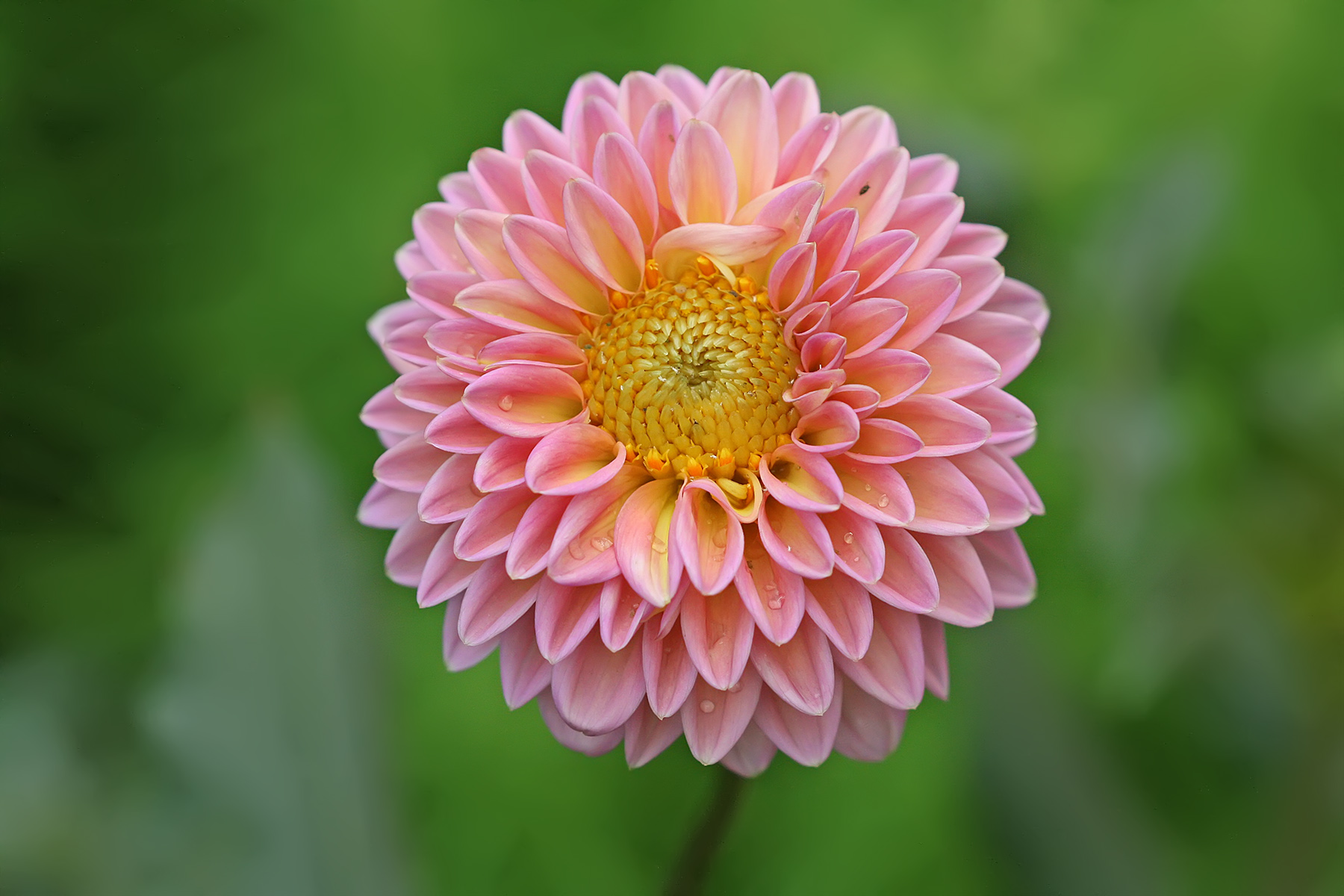
Dahlia (UK: /ˈdeɪliə/ DAY-lee-ə, US: /ˈdæljə, ˈdɑːljə, ˈdeɪljə/ DA(H)L-yə, DAYL-yə) is a genus of bushy, tuberous, herbaceous perennial plants native to Mexico and Central America. Dahlias are members of the Asteraceae (synonym name: Compositae) family of dicotyledonous plants, its relatives include the sunflower, daisy, chrysanthemum, and zinnia. There are 49 species of dahlia, with flowers in almost every hue (except blue), with hybrids commonly grown as garden plants.
Dahlias were known only to the Aztecs and other southern North American peoples until the Spanish conquest, after which the plants were brought to Europe. The tubers of some varieties are of medicinal and dietary value to humans because, in common with species of Inula and many other flowering plants, they use inulin, a polymer of the fruit sugar fructose, instead of starch as a storage polysaccharide.
Dahlias are perennial plants with tuberous roots. They are not frost hardy, and require protection from frost if grown in regions with cold winters. While some have herbaceous stems, others have stems which lignify in the absence of secondary tissue and resprout following winter dormancy, allowing further seasons of growth. As members of the family Asteraceae, dahlias have composite flower heads called capitula that are composed of multiple florets arranged in a central disc with surrounding petal-like rays. Each floret is a flower in its own right. The modern name Asteraceae comes from the type genus Aster and the Ancient Greek word for "star", referring to the appearance of a star with surrounding rays.
The stems are leafy, ranging in height from as low as 30 centimetres (12 inches) to more than 1.8–2.4 metres (6–8 feet). Flower forms are variable, with one head per stem; these can be as small as 5 cm (2 in) in diameter or up to 30 cm (1 ft) ("dinner plate"). The majority of species do not produce scented flowers. Like most plants that do not attract pollinating insects through scent, they are brightly colored, displaying most hues, with the exception of blue.
The great variety in species results from garden dahlias being octoploids, having eight sets of homologous chromosomes. In addition, dahlias also contain many transposons—genetic pieces that move from place to place upon an allele—which contributes to their manifesting such great diversity.
Spaniards reported finding the plants growing in Mexico in 1525, but the earliest known description is by Francisco Hernández, physician to Philip II, who was ordered to visit Mexico in 1570 to study the "natural products of that country". They were used as a source of food by the indigenous peoples, who both gathered wild specimens and cultivated crops. The indigenous peoples variously identified the plants as "Chichipatl" (Toltecs) and "Acocotle" or "Cocoxochitl" (Aztecs). From Hernández's perception of Nahuatl to Spanish (through various other translations) the word is "water cane", "water pipe", "water pipe flower", "hollow stem flower", or "cane flower", all referring to the hollow plant stems.
Hernandez described two varieties of dahlias (the pinwheel-like Dahlia pinnata and the huge Dahlia imperialis) as well as other medicinal plants of New Spain. Francisco Domínguez, an Hidalgo gentleman who accompanied Hernandez on part of his seven-year study, made a series of drawings to supplement the four volume report. Three of his drawings showed plants with flowers: two resembled the modern bedding dahlia, and one resembled the species Dahlia merckii; all displayed a high degree of doubleness. In 1578, a manuscript titled Nova Plantarum, Animalium et Mineralium Mexicanorum Historia, was sent back to the Escorial in Madrid. It was translated into Latin by Francisco Ximenes in 1615. In 1640, Francisco Cesi, President of the Academia dei Lincei of Rome, bought the Ximenes translation and, after annotating it, published it in 1649–1651 as two volumes, Rerum Medicarum Novae Hispaniae Thesaurus Seu Nova Plantarium, Animalium et Mineralium Mexicanorum Historia. The original manuscripts were destroyed in a fire in the mid-1600s.
In 1787, the French botanist Nicolas-Joseph Thiéry de Menonville, sent to Mexico to steal the cochineal insect valued for its scarlet dye, reported the strangely beautiful flowers he had seen growing in a garden in Oaxaca. In 1789, Vicente Cervantes, director of the Botanical Garden at Mexico City, sent "plant parts" to Abbe Antonio José Cavanilles, director of the Royal Gardens of Madrid. Cavanilles flowered one plant that same year, then the second one a year later. In 1791 he called the new growths "Dahlia" for Anders Dahl. The first plant was called Dahlia pinnata after its pinnate foliage; the second, Dahlia rosea for its rose-purple color. In 1796, from the parts sent by Cervantes, Cavanilles flowered a third plant, which he named Dahlia coccinea for its scarlet color.
Hub AI
Dahlia AI simulator
(@Dahlia_simulator)
Dahlia
Dahlia (UK: /ˈdeɪliə/ DAY-lee-ə, US: /ˈdæljə, ˈdɑːljə, ˈdeɪljə/ DA(H)L-yə, DAYL-yə) is a genus of bushy, tuberous, herbaceous perennial plants native to Mexico and Central America. Dahlias are members of the Asteraceae (synonym name: Compositae) family of dicotyledonous plants, its relatives include the sunflower, daisy, chrysanthemum, and zinnia. There are 49 species of dahlia, with flowers in almost every hue (except blue), with hybrids commonly grown as garden plants.
Dahlias were known only to the Aztecs and other southern North American peoples until the Spanish conquest, after which the plants were brought to Europe. The tubers of some varieties are of medicinal and dietary value to humans because, in common with species of Inula and many other flowering plants, they use inulin, a polymer of the fruit sugar fructose, instead of starch as a storage polysaccharide.
Dahlias are perennial plants with tuberous roots. They are not frost hardy, and require protection from frost if grown in regions with cold winters. While some have herbaceous stems, others have stems which lignify in the absence of secondary tissue and resprout following winter dormancy, allowing further seasons of growth. As members of the family Asteraceae, dahlias have composite flower heads called capitula that are composed of multiple florets arranged in a central disc with surrounding petal-like rays. Each floret is a flower in its own right. The modern name Asteraceae comes from the type genus Aster and the Ancient Greek word for "star", referring to the appearance of a star with surrounding rays.
The stems are leafy, ranging in height from as low as 30 centimetres (12 inches) to more than 1.8–2.4 metres (6–8 feet). Flower forms are variable, with one head per stem; these can be as small as 5 cm (2 in) in diameter or up to 30 cm (1 ft) ("dinner plate"). The majority of species do not produce scented flowers. Like most plants that do not attract pollinating insects through scent, they are brightly colored, displaying most hues, with the exception of blue.
The great variety in species results from garden dahlias being octoploids, having eight sets of homologous chromosomes. In addition, dahlias also contain many transposons—genetic pieces that move from place to place upon an allele—which contributes to their manifesting such great diversity.
Spaniards reported finding the plants growing in Mexico in 1525, but the earliest known description is by Francisco Hernández, physician to Philip II, who was ordered to visit Mexico in 1570 to study the "natural products of that country". They were used as a source of food by the indigenous peoples, who both gathered wild specimens and cultivated crops. The indigenous peoples variously identified the plants as "Chichipatl" (Toltecs) and "Acocotle" or "Cocoxochitl" (Aztecs). From Hernández's perception of Nahuatl to Spanish (through various other translations) the word is "water cane", "water pipe", "water pipe flower", "hollow stem flower", or "cane flower", all referring to the hollow plant stems.
Hernandez described two varieties of dahlias (the pinwheel-like Dahlia pinnata and the huge Dahlia imperialis) as well as other medicinal plants of New Spain. Francisco Domínguez, an Hidalgo gentleman who accompanied Hernandez on part of his seven-year study, made a series of drawings to supplement the four volume report. Three of his drawings showed plants with flowers: two resembled the modern bedding dahlia, and one resembled the species Dahlia merckii; all displayed a high degree of doubleness. In 1578, a manuscript titled Nova Plantarum, Animalium et Mineralium Mexicanorum Historia, was sent back to the Escorial in Madrid. It was translated into Latin by Francisco Ximenes in 1615. In 1640, Francisco Cesi, President of the Academia dei Lincei of Rome, bought the Ximenes translation and, after annotating it, published it in 1649–1651 as two volumes, Rerum Medicarum Novae Hispaniae Thesaurus Seu Nova Plantarium, Animalium et Mineralium Mexicanorum Historia. The original manuscripts were destroyed in a fire in the mid-1600s.
In 1787, the French botanist Nicolas-Joseph Thiéry de Menonville, sent to Mexico to steal the cochineal insect valued for its scarlet dye, reported the strangely beautiful flowers he had seen growing in a garden in Oaxaca. In 1789, Vicente Cervantes, director of the Botanical Garden at Mexico City, sent "plant parts" to Abbe Antonio José Cavanilles, director of the Royal Gardens of Madrid. Cavanilles flowered one plant that same year, then the second one a year later. In 1791 he called the new growths "Dahlia" for Anders Dahl. The first plant was called Dahlia pinnata after its pinnate foliage; the second, Dahlia rosea for its rose-purple color. In 1796, from the parts sent by Cervantes, Cavanilles flowered a third plant, which he named Dahlia coccinea for its scarlet color.