Recent from talks
Nothing was collected or created yet.
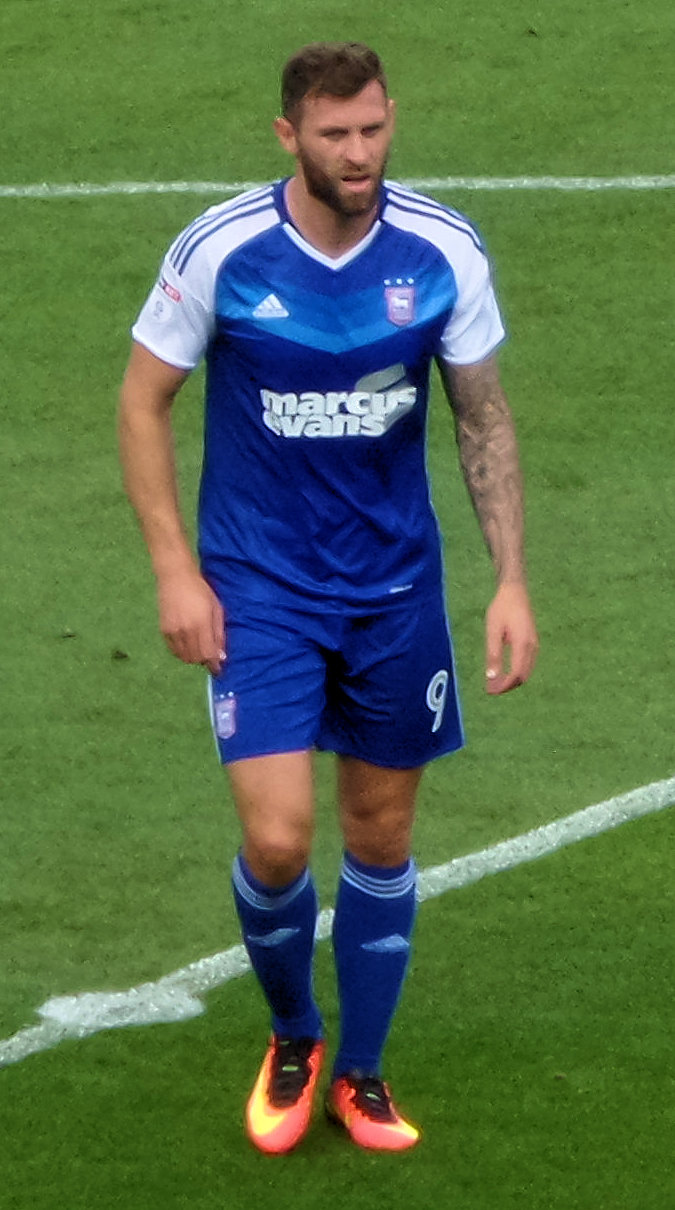
Daryl Murphy
View on Wikipedia
Daryl Michael Murphy (born 15 March 1983) is an Irish former professional footballer who played as a striker.
Key Information
Murphy began his career at Waterford United, having previously played youth football for Waterford-based side Southend United and English side Luton Town, whilst also spending a brief spell on loan at Harrow Borough in 2002. After a three year spell at Waterford he signed for Sunderland in 2005. Murphy went on to make over 100 appearances for Sunderland, whilst also spending time out on loan with Sheffield Wednesday and Ipswich Town, before joining Scottish side Celtic in 2010. He spent much of his time at Celtic on loan at former loan club Ipswich Town, where he spent two consecutive season on loan before making the move permanent in June 2013. He spent the following three seasons at Portman Road, making over 200 appearances and scoring over 60 goals before moving to Newcastle United in 2016. He spent one season at Newcastle before leaving to join Nottingham Forest. He made 60 appearances over two seasons at Forest before joining Bolton Wanderers in 2019.[4] He returned to Waterford in August 2020.
Murphy made his debut for the Republic of Ireland in 2007, and went on to make over 30 appearances for his country, including representing Ireland at the UEFA Euro 2016.[5] He announced his retirement from international football in January 2018.[6]
Club career
[edit]Early career
[edit]Murphy was born in Waterford, County Waterford.[7] He played youth football for local side Southend United before joining English club Luton Town on 14 November 2000.[8] He spent a brief spell on loan at Harrow Borough in 2002.[9] He was released on 18 April 2002 before signing for hometown club Waterford United.[8][10] He scored his first League of Ireland goal in a 3–1 away win over rivals Kilkenny City on 19 September. He scored eight league goals in that last "winter" season as the Blues won the League of Ireland First Division title.[11] In the 2004 season, he notched 14 league goals in the Premier Division which earned him the PFAI Young Player of the Year award.[12]
Sunderland
[edit]In May 2005, Murphy signed a two-year contract with Premier League side Sunderland.[13] He made his premier league debut in a 1–1 home draw with West Ham United at the Stadium of Light on 1 October 2005.[14] Murphy had a one-month loan spell at Sheffield Wednesday during the 2005–06 season, making 4 appearances before being recalled by Sunderland.[15] On 12 February 2006, he scored his first Premier League goal after coming off the bench at home to Tottenham Hotspur, equalising with minutes to go.[16]
In the 2006–07 season, Murphy scored 10 goals in the Championship despite being used sparingly for the early weeks.[15] He netted one goal each on the opening day of the season against Coventry City and on 12 August against Plymouth Argyle though both matches were lost. Murphy scored his third goal of the season in the Black Cats' 2–1 away win over Queens Park Rangers on 28 November,[17] and then notched in successive games against Norwich City and Luton Town.[18][19] On the final day of the season, he scored two goals against Luton Town in a 5–0 away win, while also setting up Anthony Stokes for his goal.[20]
Murphy scored in a pre-season friendly against Juventus in August 2007.[21] He made his first appearance of the 2007–08 season in Sunderland's opening day victory over Tottenham Hotspur. He scored his first goal of the season on 29 December in a 3–1 win over Bolton Wanderers. His third goal of the 2007–08 season came against Wigan Athletic on 9 February 2008 at The Stadium of Light,[22] with the goal later being chosen by Match of the Day pundits as the Goal of the Month for February.[13] On 26 April 2008, Murphy came on as a substitute and scored the winning goal in a 3–2 victory over local rivals Middlesbrough, securing Sunderland's status in the Premier League for the following season.[23] He made 28 appearances during the 2007–08 season, scoring 3 goals.[24]
Ipswich Town (loan)
[edit]On 1 February 2010, Murphy signed for Ipswich Town on loan for the remainder of the 2009–10 season, once again joining up with Roy Keane, his former manager at Sunderland.[25] He marked his first appearance against Middlesbrough with a goal after 23 seconds.[26] He then scored the crucial second goal at Queens Park Rangers on 9 February,[27] and another in his third appearance against Peterborough, making his record 3 in 3 for Ipswich.[28] Murphy continued his scoring form for Ipswich by scoring a brace against Cardiff City on 9 March 2010, handing the Tractor Boys three points.[29] Murphy made 18 appearances during his loan spell at Portman Road, scoring 6 goals.[30]
Celtic
[edit]
On 16 July 2010, Celtic signed Murphy on a three-year contract for £1 million.[31] He made his debut the following week in a friendly against Lincoln City, scoring his first goal for the club in a 4–1 win.[32] He scored his second pre-season goal against Arsenal in the Emirates Cup on 1 August.[33] Murphy made his competitive debut for the club on 28 July 2010, coming on as a second half substitute in a 3–0 away defeat to Braga in a third-round UEFA Champions League qualifying match.[34] He came off the bench to make his Scottish Premier League debut in a 4–0 victory over St Mirren on 22 August 2010.[35] The following week, Murphy scored his first goal for Celtic, netting the match-winner from the penalty spot in a 1–0 victory over Motherwell on 29 August.[36] He scored his second goal for the club again from the penalty spot away to Kilmarnock on 19 September, helping the team to a 2–1 away win.[37] On 1 May 2011, Murphy scored his first goal at Celtic Park in a 4–1 victory against Dundee United.[38] He made 21 appearances during his first season at Celtic, scoring 3 goals.[39]
Return to Ipswich Town
[edit]Murphy returned to Ipswich on a season-long loan on 25 August 2011.[40] He made his first appearance of the season on 27 August, starting in a 2–1 home win over Leeds United at Portman Road. He scored his first goal of the season in a 2–3 loss to Reading on 26 November. He made 34 appearances during his second loan spell with the club, scoring 4 goals.[41]
On 30 August 2012, Murphy signed for Ipswich Town on a season-long loan. He made his first appearance following his return to the club on 1 September, in a 2–2 draw with Huddersfield Town. He scored his first goal of the season on 2 October, netting in a 1–1 draw with Brighton & Hove Albion. He went on to make 40 appearances in all competitions over the course of the 2012–13 season, scoring 7 goals, before returning to Celtic at the end of the season.[42]
On 7 June 2013, Murphy agreed a two-year deal with Ipswich, finally making his move permanent after several loan spells with the club.[43] He made his first appearance for the club following his permanent move to Suffolk on 3 August, in a 2–1 away loss to Reading. His first goal of the season came on 17 September 2013, netting in a 2–1 win over Yeovil Town. Murphy formed a strong partnership with fellow new signing David McGoldrick, the duo netting 29 goals between them during the season, with Murphy scoring 13 of those.[44]
Murphy went into the 2014–15 season continuing his good form, scoring on the opening day of the season in a 2–1 home win against Fulham. On 17 September 2014, Murphy netted a wonder goal against Brighton & Hove Albion; Tyrone Mings played a long ball to Murphy which he struck on the volley from the left edge of the 18-yard box.[45] He scored 6 goals during December, including braces in victories over Leeds United and Brentford, with his impressive form earning him the Football League Championship Player of the Month award for December.[46] On 14 February 2015, he scored a brace in a 2–1 away win over Fulham at Craven Cottage, bringing his goal tally to 21 in the league.[47] Thus, Murphy became the first Ipswich player since Darren Bent in the 2004–05 season to score 20 league goals in a season. He finished the 2014–15 season as the top scorer in the Championship with 27 league goals as Ipswich finished 6th and qualified for the Championship play-offs,[48] while also earning a place in the 2014–15 Championship PFA Team of the Year[49] and being named Ipswich's Player of the Year and Players' Player of the Year.[50]
On 15 July 2015, it was announced that Murphy had signed a two-year contract extension with the club.[51] After a comparatively slow start to the 2015–16 season in which he failed to score in his first 13 appearances of the league campaign, Murphy ended his drought by netting his first hat-trick in English football in a 2–5 away victory over Rotherham United on 7 November 2015.[52] He went on to score 6 goals during November, earning him another Championship Player of the Month award.[53] He made 35 appearances during the season, scoring 10 goals.[54]
Newcastle United
[edit]On 28 August 2016, Murphy signed for Championship club Newcastle United on a two-year contract for an undisclosed fee.[55] A calf injury prevented Murphy from making his debut for the club until 1 January 2017. He scored his first goal for Newcastle in an FA Cup tie with Birmingham City on 7 January.[56] He then scored in the next two matches for Newcastle, in wins against Brentford and Rotherham United.[57][58] In March, he also scored in matches against Huddersfield Town and Fulham.[59][60] On 17 April, he scored an equalising goal in a 3–1 loss against his former club, Ipswich Town.[61] He scored 6 goals in 18 appearances as Newcastle won the Championship title and promotion to the Premier League.[62]
In an interview with the Shields Gazette, Murphy said that although it was expected he would leave the club, he knew he was brought in to do a specific job, and praised Rafael Benítez for his man-management skills.[63]
Nottingham Forest
[edit]On 21 July 2017, Murphy joined Nottingham Forest on a three-year deal for an undisclosed fee.[64][65] He made his debut on the opening day of the 2017–18 season in a 1–0 home win over Millwall at the City Ground.[66] He scored his first goal for Forest in a 4–3 win at Brentford on 12 August 2017.[67] He netted 7 goals in 28 appearances during his first season at the City Ground.[68]
Murphy scored on the opening day of the 2018–19 season, scoring the equalising goal in a 1–1 draw with Bristol City at Ashton Gate.[69] He scored 4 goals in his first 6 appearances of the season, including scoring the opening goal after 2 minutes in a 3–1 EFL Cup victory over former club Newcastle United.[70] He made 32 appearances in all competitions during the 2018–19 season, scoring 6 goals.[71]
In late 2018, Murphy was banned for six weeks for failing a drugs test, testing positive for cocaine.[72]
On 2 September 2019, Nottingham Forest and Murphy mutually agreed to terminate his contract, allowing him to become a free agent.[73]
Bolton Wanderers
[edit]On 2 September 2019, Murphy joined Bolton Wanderers on a contract until the end of the season, following his release from Nottingham Forest[74] and made his debut in a 1–0 defeat at Portsmouth on 28 September.[75] He scored his first goal for the club on in a 2–0 away win over Bristol Rovers, helping Bolton to their first win of the season.[76] He then scored in Bolton's next four league games, a 2–1 win against Fleetwood Town,[77] a 1–0 win against MK Dons,[78] a 7–1 defeat against Accrington Stanley,[79] and a 2–2 draw against AFC Wimbledon.[80] On 26 June it was announced Murphy would be one of 14 senior players released at the end of his contract on 30 June.[81]
Return to Waterford
[edit]On 4 September 2020, Murphy rejoined home town team Waterford.[82]
International career
[edit]Having previously represented the Republic of Ireland at under-23 level, Murphy won his first call-up to the senior Republic of Ireland national team in 2006 due to the absence of Robbie Keane through injury, but only featured as an unused substitute. He made his senior debut against Ecuador at the Giants Stadium on 24 May 2007. He made his first competitive appearance as a second-half substitute in a Euro 2008 qualifier away to Slovakia in September 2008.[24]
He did not receive another call up until 2014, when Ireland manager Martin O'Neill called him up for a friendly against Serbia on 5 March 2014.[83] He was included in the Republic of Ireland squad for the UEFA Euro 2016 tournament, featuring in the 1–0 group stage victory over Italy, while also starting in the 2–1 knockout stage defeat to France on 26 June 2016.[84]
He scored his first goal for the Republic of Ireland in his 23rd appearance, netting in a 2–2 draw away to Serbia in a 2018 World Cup Qualifier on 5 September 2016.[85][86] On 6 October 2017, Murphy scored a brace in a 2–0 victory over Moldova in a 2018 FIFA World Cup qualification match at the Aviva Stadium in Dublin.[68]
In January 2018, Murphy announced his retirement from international football.[6]
Career statistics
[edit]Club
[edit]- As of match played 16 April 2021
| Club | Season | League | National cup | League cup | Other | Total | ||||||
|---|---|---|---|---|---|---|---|---|---|---|---|---|
| Division | Apps | Goals | Apps | Goals | Apps | Goals | Apps | Goals | Apps | Goals | ||
| Luton Town | 2001–02[87] | Third Division | 0 | 0 | 0 | 0 | 0 | 0 | 0 | 0 | 0 | 0 |
| Harrow Borough (loan) | 2001–02[9] | Isthmian League Premier Division | 3 | 0 | 0 | 0 | — | 0 | 0 | 3 | 0 | |
| Waterford | 2002–03[88][89] | League of Ireland First Division | 8 | 2 | 10 | |||||||
| 2003[88] | League of Ireland Premier Division | 34 | 7 | 2 | 0 | 1 | 0 | — | 37 | 9 | ||
| 2004[88][90] | 35 | 13 | 6 | 8 | — | 41 | 21 | |||||
| 2005[88] | 6 | 1 | 1 | 0 | — | 7 | 1 | |||||
| Total | 75+ | 29 | 9 | 8+ | 1 | 0 | 2+ | 85+ | 39+ | |||
| Sunderland | 2005–06[91] | Premier League | 18 | 1 | 1 | 0 | 1 | 0 | — | 20 | 1 | |
| 2006–07[92] | Championship | 38 | 10 | 1 | 0 | 1 | 0 | — | 40 | 10 | ||
| 2007–08[24] | Premier League | 28 | 3 | 1 | 0 | 1 | 0 | — | 30 | 3 | ||
| 2008–09[93] | 23 | 0 | 1 | 0 | 3 | 0 | — | 27 | 0 | |||
| 2009–10[30] | 3 | 0 | 1 | 0 | 3 | 0 | — | 7 | 0 | |||
| Total | 110 | 14 | 5 | 0 | 9 | 0 | 0 | 0 | 124 | 14 | ||
| Sheffield Wednesday (loan) | 2005–06[91] | Championship | 4 | 0 | 0 | 0 | 0 | 0 | — | 4 | 0 | |
| Ipswich Town (loan) | 2009–10[30] | Championship | 18 | 6 | 0 | 0 | 0 | 0 | — | 18 | 6 | |
| Celtic | 2010–11[39] | Scottish Premier League | 18 | 3 | 0 | 0 | 1 | 0 | 2[a] | 0 | 21 | 3 |
| 2011–12[41] | 0 | 0 | 0 | 0 | 0 | 0 | 0 | 0 | 0 | 0 | ||
| 2012–13[42] | 1 | 0 | 0 | 0 | 0 | 0 | 1[a] | 0 | 2 | 0 | ||
| Total | 19 | 3 | 0 | 0 | 1 | 0 | 3 | 0 | 23 | 3 | ||
| Ipswich Town (loan) | 2011–12[41] | Championship | 33 | 4 | 1 | 0 | 0 | 0 | — | 34 | 4 | |
| 2012–13[42] | 39 | 7 | 1 | 0 | 0 | 0 | — | 40 | 7 | |||
| Total | 72 | 11 | 2 | 0 | 0 | 0 | 0 | 0 | 74 | 11 | ||
| Ipswich Town | 2013–14[44] | Championship | 45 | 13 | 0 | 0 | 1 | 0 | — | 46 | 13 | |
| 2014–15[48] | 44 | 27 | 2 | 0 | 0 | 0 | 2[b] | 0 | 48 | 27 | ||
| 2015–16[54] | 34 | 10 | 0 | 0 | 1 | 0 | — | 35 | 10 | |||
| 2016–17[62] | 4 | 0 | 0 | 0 | 0 | 0 | — | 4 | 0 | |||
| Total | 127 | 50 | 2 | 0 | 2 | 0 | 2 | 0 | 133 | 50 | ||
| Newcastle United | 2016–17[62] | Championship | 15 | 5 | 1 | 1 | 2 | 0 | — | 18 | 6 | |
| Nottingham Forest | 2017–18[68] | Championship | 27 | 7 | 0 | 0 | 1 | 0 | — | 28 | 7 | |
| 2018–19[94] | 28 | 4 | 1 | 0 | 3 | 2 | — | 32 | 6 | |||
| Total | 55 | 11 | 1 | 0 | 4 | 2 | 0 | 0 | 60 | 13 | ||
| Bolton Wanderers | 2019–20[71] | League One | 24 | 8 | 1 | 0 | 0 | 0 | 1[c] | 0 | 26 | 8 |
| Waterford | 2020[95] | League of Ireland Premier Division | 4 | 0 | 0 | 0 | — | — | 4 | 0 | ||
| 2021[95] | 5 | 0 | 0 | 0 | — | 0 | 0 | 5 | 0 | |||
| Total | 9 | 0 | 0 | 0 | — | 0 | 0 | 9 | 0 | |||
| Career total | 456 | 137 | 21 | 9 | 19 | 2 | 6 | 2 | 502 | 152 | ||
- ^ a b Appearance(s) in UEFA Champions League
- ^ Appearances in Championship play-offs
- ^ Appearance in EFL Trophy
International
[edit]- As of match played 14 November 2017[5]
| National team | Year | Apps | Goals |
|---|---|---|---|
| Republic of Ireland | 2007 | 5 | 0 |
| 2008 | 3 | 0 | |
| 2014 | 5 | 0 | |
| 2015 | 5 | 0 | |
| 2016 | 5 | 1 | |
| 2017 | 9 | 2 | |
| Total | 32 | 3 | |
- As of match played 6 October 2017
Republic of Ireland score listed first, score column indicates score after each Murphy goal.[5]
| No. | Date | Venue | Cap | Opponent | Score | Result | Competition | Ref |
|---|---|---|---|---|---|---|---|---|
| 1 | 5 September 2016 | Red Star Stadium, Belgrade, Serbia | 23 | 2–2 | 2–2 | 2018 FIFA World Cup qualification | [86] | |
| 2 | 6 October 2017 | Aviva Stadium, Dublin, Ireland | 27 | 1–0 | 2–0 | 2018 FIFA World Cup qualification | [68] | |
| 3 | 2–0 |
Honours
[edit]Waterford United
Sunderland
Newcastle United
Individual
- PFAI Young Player of the Year: 2004[12]
- Football League Championship Player of the Month: December 2014, November 2015[46][53]
- Football League Championship Golden Boot: 2014–15[98]
- PFA Team of the Year: 2014–15 Championship[49]
- Ipswich Town Player of the Year: 2014–15[50]
- Ipswich Town Players' Player of the Year: 2014–15[99]
References
[edit]- ^ "Notification of shirt numbers: Bolton Wanderers" (PDF). English Football League. p. 9. Retrieved 17 June 2020.
- ^ "Daryl Murphy: Overview". ESPN. Retrieved 17 June 2020.
- ^ "Daryl Murphy". Bolton Wanderers F.C. Archived from the original on 18 June 2020. Retrieved 17 June 2020.
- ^ "Daryl Murphy at Soccerbase". Soccerbase.com. Retrieved 17 November 2019.
- ^ a b c "Murphy, Daryl". National Football Teams. Benjamin Strack-Zimmermann. Retrieved 1 March 2017.
- ^ a b "Daryl Murphy announces his retirement from international football". The 42. 27 January 2018. Retrieved 21 March 2018.
- ^ "Daryl Murphy: Profile". Worldfootball.net. HEIM:SPIEL. Retrieved 17 June 2020.
- ^ a b Hugman, Barry J., ed. (2010). The PFA Footballers' Who's Who 2010–11. Mainstream Publishing. pp. 300–301. ISBN 978-1-84596-601-0.
- ^ a b "Player details: Season 2001–2002: Darryl Murphy". SoccerFactsUK. Retrieved 21 October 2013.
- ^ "Daryl Murphy". Football Association of Ireland. Retrieved 15 November 2010.
- ^ a b "(Republic of) Ireland League Tables - Second Level". Rec.Sport.Soccer Statistics Foundation. Archived from the original on 3 June 2009. Retrieved 10 July 2016.
- ^ a b "Ireland – Player of the Year and Other Awards". Rec.Sport.Soccer Statistics Foundation. Retrieved 6 February 2010.
- ^ a b "Daryl Murphy". Sunderland A.F.C. Retrieved 6 February 2010.
- ^ "Sunderland 1-1 West Ham". BBC Sport. October 2005. Retrieved 16 November 2019.
- ^ a b "Daryl Murphy Profile". Soccernet. ESPN. Archived from the original on 4 February 2010. Retrieved 6 February 2010.
- ^ "Sunderland 1–1 Tottenham". BBC Sport. 12 February 2006. Retrieved 15 November 2010.
- ^ "QPR 1–2 Sunderland". BBC Sport. 28 November 2006. Retrieved 15 November 2010.
- ^ "Sunderland 1–0 Norwich". BBC Sport. 2 December 2006. Retrieved 9 January 2011.
- ^ Jason Mellor (11 December 2006). "Sunderland 2 Luton Town 1: Connolly keeps Keane on course for top half of the table – The Football League, Football – The Independent". The Independent. London. Retrieved 9 January 2011.
- ^ "Luton 0–5 Sunderland". BBC Sport. 6 May 2007. Retrieved 6 February 2010.
- ^ "Sunderland v Juventus". BBC Tyne & Wear. August 2007. Retrieved 6 February 2010.
- ^ Ornstein, David (9 February 2008). "Sunderland 2–0 Wigan". BBC Sport. Retrieved 15 November 2010.
- ^ "Sunderland 3–2 Middlesbrough". BBC Sport. 26 April 2008. Retrieved 6 February 2010.
- ^ a b c "Games played by Daryl Murphy in 2007/2008". Soccerbase. Centurycomm. Retrieved 1 March 2017.
- ^ "Sunderland's David Healy and Daryl Murphy join Ipswich". BBC Sport. 1 February 2010. Retrieved 1 February 2010.
- ^ "Ipswich 1–1 Middlesbrough". BBC Sport. 6 February 2010. Retrieved 6 February 2010.
- ^ "QPR 1–2 Ipswich". BBC Sport. 9 February 2010. Retrieved 9 January 2011.
- ^ "Peterborough 3–1 Ipswich". BBC Sport. 16 February 2010. Retrieved 9 January 2011.
- ^ "Ipswich 2–0 Cardiff". BBC Sport. 9 March 2010.
- ^ a b c "Games played by Daryl Murphy in 2009/2010". Soccerbase. Centurycomm. Retrieved 1 March 2017.
- ^ Irish striker Daryl Murphy signs for Celtic Archived 20 July 2010 at the Wayback Machine. Celtic F.C. 16 July 2010.
- ^ Ronnie, Cully (24 July 2010). "Lincoln City 1 Celtic 4; New signing Daryl Murphy's luck could be in". The Herald. Glasgow: Herald & Times Group. Retrieved 15 November 2010.
- ^ Alex Young (1 August 2010). "Arsenal 3–2 Celtic: Outstanding Manuel Almunia saves Gunners blushes as Arsene Wenger's side win Emirates Cup". Goal (website). Retrieved 9 January 2011.
- ^ "Braga 3 Celtic 0: match report". The Daily Telegraph. 28 July 2010. Retrieved 16 November 2019.
- ^ "Celtic 4–0 St Mirren". RTÉ Sport. 22 August 2010. Archived from the original on 24 October 2010. Retrieved 15 November 2010.
- ^ "Motherwell 0–1 Celtic". BBC Sport. 29 August 2010. Retrieved 15 November 2010.
- ^ "Kilmarnock 1–2 Celtic". BBC Sport. 19 September 2010. Retrieved 15 November 2010.
- ^ "Celtic 4–1 Dundee United". BBC Sport. 1 May 2011. Retrieved 1 May 2011.
- ^ a b "Games played by Daryl Murphy in 2010/2011". Soccerbase. Centurycomm. Retrieved 1 March 2017.
- ^ "Murphy rejoins Town". BBC Sport. 25 August 2011. Retrieved 16 November 2019.
- ^ a b c "Games played by Daryl Murphy in 2011/2012". Soccerbase. Centurycomm. Retrieved 1 March 2017.
- ^ a b c "Games played by Daryl Murphy in 2012/2013". Soccerbase. Centurycomm. Retrieved 1 March 2017.
- ^ Ogle, Jonathon (7 June 2013). "Murphy rejoins Town". Ipswich Town F.C. Retrieved 1 March 2017.
- ^ a b "Games played by Daryl Murphy in 2013/2014". Soccerbase. Centurycomm. Retrieved 1 March 2017.
- ^ "Ipswich Town 2 - 0 Brighton & Hove Albion". BBC Sport. 16 September 2014. Retrieved 4 July 2019.
- ^ a b "Bournemouth's Eddie Howe and Daryl Murphy secure December awards in Championship". skysports.com. 9 January 2015. Retrieved 7 February 2015.
- ^ "Fulham 1 - 2 Ipswich Town". BBC Sport. 14 February 2014. Retrieved 4 July 2019.
- ^ a b "Games played by Daryl Murphy in 2014/2015". Soccerbase. Centurycomm. Retrieved 1 March 2017.
- ^ a b "PFA Championship Team of the Year: Deeney only Watford player". BBC Sport. 26 April 2015. Retrieved 7 May 2018.
- ^ a b "Murphy Wins Player of the Year". TWTD. Retrieved 12 June 2019.
- ^ "Murphy extends Ipswich stay". BBC Sport. 15 July 2015. Retrieved 1 March 2017.
- ^ "Rotherham United 2 - 5 Ipswich Town". BBC Sport. 7 November 2015. Retrieved 4 July 2019.
- ^ a b "Ipswich Town striker Daryl Murphy has been named the Sky Bet Championship Player of the Month for November". The Football League. 11 December 2015. Retrieved 26 March 2016.
- ^ a b "Games played by Daryl Murphy in 2015/2016". Soccerbase. Centurycomm. Retrieved 1 March 2017.
- ^ Marshall, Anthony (28 August 2016). "United complete Murphy signing". Newcastle United F.C. Retrieved 10 September 2016.
- ^ Scott, Ged (7 January 2017). "Birmingham City 1–1 Newcastle United". BBC Sport. Retrieved 1 March 2017.
- ^ "Brentford 1–2 Newcastle United". BBC Sport. 14 January 2017. Retrieved 14 July 2017.
- ^ "Newcastle United 4–0 Rotherham United". BBC Sport. 21 January 2017. Retrieved 14 July 2017.
- ^ "Huddersfield Town 1–3 Newcastle United". BBC Sport. 4 March 2017. Retrieved 14 July 2017.
- ^ "Newcastle United 1–3 Fulham". BBC Sport. 11 March 2017. Retrieved 14 July 2017.
- ^ "Ipswich Town 3–1 Newcastle United". BBC Sport. 17 April 2017. Retrieved 14 July 2017.
- ^ a b c "Games played by Daryl Murphy in 2016/2017". Soccerbase. Centurycomm. Retrieved 1 March 2017.
- ^ "Daryl Murphy's not bitter as Rafa Benitez reveals Newcastle will sell him this summer". Shields Gazette. 11 June 2017. Retrieved 14 July 2017.
- ^ "Murphy joins the Reds". Nottingham Forest F.C. 21 July 2017. Retrieved 21 July 2017.
- ^ "Daryl Murphy joins Forest". Newcastle United Football Club. Retrieved 2 July 2020.
- ^ "Nottingham Forest 1–0 Millwall". BBC Sport. 4 August 2017. Retrieved 16 November 2019.
- ^ "Brentford 3–4 Nottingham Forest". BBC Sport. 12 August 2017. Retrieved 14 August 2017.
- ^ a b c d "Games played by Daryl Murphy in 2017/2018". Soccerbase. Centurycomm. Retrieved 1 March 2017.
- ^ "Bristol City 1–1 Nottingham Forest". BBC Sport. 4 August 2018. Retrieved 16 November 2019.
- ^ "Nottingham Forest 3–1 Newcastle United". BBC Sport. 29 August 2018. Retrieved 16 November 2019.
- ^ a b "Games played by Daryl Murphy in 2019/2020". Soccerbase.com. Retrieved 2 September 2019.
- ^ "Daryl Murphy admits to cocaine use which led to six-week FA ban". Sky Sports. 9 December 2019. Retrieved 10 December 2019.
- ^ "Murphy departs". Nottingham Forest F.C.
- ^ "Hill moves for Irish striker". Bolton Wanderers F.C. 2 September 2019. Retrieved 2 September 2019.
- ^ "Bolton boss Keith Hill changed plans to rest Daryl Murphy". Bolton News. 29 September 2019. Retrieved 30 September 2019.
- ^ "Bristol Rovers 0-2 Bolton Wanderers". BBC Sport. 22 October 2019. Retrieved 16 November 2019.
- ^ "Bolton Wanderers 2 1 Fleetwood Town". BBC. Retrieved 31 October 2021.
- ^ "Bolton Wanderers 1 Milton Keynes Dons 0". BBC. Retrieved 31 October 2021.
- ^ "Accrington Stanley 7 1 Bolton Wanderers". BBC. Retrieved 31 October 2021.
- ^ "Bolton Wanderers 2 2 AFC Wimbledon". BBC. Retrieved 31 October 2021.
- ^ "Wanderers announce retained list - with 14 players out of contract this summer". The Bolton News. Retrieved 31 October 2021.
- ^ "Waterford FC". Waterford FC. 31 August 2020. Retrieved 31 October 2021.
- ^ "Daryl Murphy Profile at the Football Association of Ireland". Football Association of Ireland. Retrieved 16 November 2019.
- ^ "UEFA EURO 2016 – History - France-Republic of Ireland". UEFA. 26 June 2016. Retrieved 16 November 2019.
- ^ "Daryl Murphy – Career summary". Football Association of Ireland. 28 April 2009. Retrieved 10 March 2010.
- ^ a b "Serbia 2–2 Republic of Ireland". BBC Sport. 5 September 2016. Retrieved 1 March 2017.
- ^ Daryl Murphy at the English National Football Archive (subscription required)
- ^ a b c d "Daryl Murphy - Soccer player profile & career statistics - Global Sports Archive". Globalsportsarchive.com. Retrieved 31 October 2021.
- ^ "Ireland 2002/03". Rec.Sport.Soccer Statistics Foundation. Retrieved 31 October 2021.
- ^ "Ireland 2004". Rec.Sport.Soccer Statistics Foundation. Retrieved 31 October 2021.
- ^ a b "Games played by Daryl Murphy in 2005/2006". Soccerbase. Centurycomm. Retrieved 1 March 2017.
- ^ "Games played by Daryl Murphy in 2006/2007". Soccerbase. Centurycomm. Retrieved 1 March 2017.
- ^ "Games played by Daryl Murphy in 2008/2009". Soccerbase. Centurycomm. Retrieved 1 March 2017.
- ^ "Games played by Daryl Murphy in 2018/2019". Soccerbase. Centurycomm. Retrieved 1 April 2019.
- ^ a b "Republic of Ireland - D. Murphy - Profile with news, career statistics and history". Soccerway. Retrieved 31 October 2021.
- ^ Rollin, Glenda; Rollin, Jack, eds. (2007). Sky Sports Football Yearbook 2007–2008. London: Headline Publishing Group. pp. 46, 370–371. ISBN 978-0-7553-1664-9.
- ^ Anderson, John, ed. (2017). Sky Sports Football Yearbook 2017–2018. London: Headline Publishing Group. pp. 254–255. ISBN 978-1-4722-3397-4.
- ^ "Championship Top Scorers". 19 September 2014. Retrieved 19 September 2014.
- ^ "Murphy Players' Player of the Year". TWTD. Retrieved 12 June 2019.
External links
[edit]- Daryl Murphy profile at the Football Association of Ireland website
- Ireland profile at Soccerscene
- Daryl Murphy at Soccerbase
Daryl Murphy
View on GrokipediaEarly life
Background and youth career
Daryl Murphy was born on 15 March 1983 in Waterford, County Waterford, Ireland.[6] His early interest in football was shaped by the strong local club culture in Waterford, leading him to join the youth team of Southend United, a Waterford-based side, during his early teenage years.[7] There, he emerged as a prolific talent, scoring over 300 goals across four years and playing a key role in Waterford's triumph in the 1998 under-14 Kennedy Cup, where he netted twice in the final and twice in the semi-final.[7] In November 2000, at age 17, Murphy moved to England for a youth stint with Luton Town following trials at several clubs, including Aston Villa, Manchester City, and Leeds United.[8] He signed an 18-month professional contract upon joining but struggled to adapt, experiencing isolation away from home, and was released in April 2002 without a first-team appearance.[8] Returning to Ireland, Murphy continued his development through amateur and semi-professional youth football in Waterford, honing his skills before transitioning to a professional contract with Waterford United.[7]Education and early influences
Growing up in Waterford as the first boy in a family with seven sisters, Murphy developed an early passion for football amid a supportive household environment.[9][10] A key influence on Murphy's early development was his late grandfather, Michael Farrell, a junior-level footballer in Waterford who sparked his interest in the sport by buying him his first pair of football boots; Farrell continued playing competitively until the age of 55 and lived to witness Murphy's international debut for Ireland.[9] Local mentors like his grandfather encouraged Murphy to pursue football professionally, despite the prevalence of Gaelic sports in Ireland, steering him toward soccer instead. His father, Peter Murphy, also played a crucial role by providing ongoing guidance and perspective on balancing personal and professional challenges.[9] The family's encouragement proved vital when Murphy, at age 17, moved to English club Luton Town in November 2000, marking a significant step away from his cultural roots in the Irish league.[9] These non-football influences helped shape his resilience and dedication off the pitch.[7]Club career
Waterford United
Murphy signed his first professional contract with Waterford United in 2002 at the age of 19, following his release from the youth setup at English club Luton Town.[11] He made his senior debut during the 2002 League of Ireland First Division season, appearing in five matches as Waterford secured promotion to the Premier Division at the end of the campaign.[1] Over the next three seasons, Murphy established himself as a key forward for the club, accumulating over 80 appearances across the First and Premier Divisions.[1] In 2003, his debut Premier Division year, he played 34 league matches and scored seven goals, contributing to Waterford's consolidation in the top flight.[1] His form peaked in the 2004 season, where he netted 13 league goals in 35 appearances and added eight more in cup and playoff competitions, including a standout performance in the FAI Cup third round where he scored four goals—including a hat-trick within four minutes—in a 7–2 victory over Kilkenny City.[1][12] These efforts, totaling 21 goals across all competitions that year, were instrumental in Waterford reaching the FAI Cup final.[13] Murphy's prolific scoring continued into early 2005, with one league goal in six appearances, bringing his combined tally to 22 goals across all competitions over the 2004–2005 seasons and aiding the club's push for European qualification.[1][13] His time at Waterford ended on 3 June 2005 when he transferred to Premier League side Sunderland for an undisclosed fee, reported as £100,000, signing a two-year contract at age 22.[13][14]Sunderland
Daryl Murphy joined Sunderland from Waterford United on 3 June 2005 for a transfer fee of £100,000, signing a two-year contract ahead of the club's first Premier League season following promotion.[13][15] He made his Premier League debut as a late substitute in a 1–1 home draw against West Ham United on 5 November 2005.[8] During the 2005–06 campaign, amid Sunderland's ultimately unsuccessful battle against relegation under managers Mick McCarthy and subsequent interim coaches, Murphy featured in 18 league appearances, primarily from the bench, and scored once—his first top-flight goal in a 1–1 draw at Charlton Athletic on 12 February 2006.[16] In January 2006, he joined Sheffield Wednesday on loan, making four appearances without scoring.[2] Upon returning, he became a more regular fixture in the 2006–07 Championship season, contributing to Sunderland's promotion as champions with 38 league appearances (11 as substitute) and 10 goals, including key strikes in victories over teams like Wolverhampton Wanderers and Stoke City.[17][18] Despite his improved form, Murphy struggled for consistent starts earlier in the campaign under McCarthy.[19] Over his full tenure at Sunderland from 2005 to 2010, Murphy made 125 appearances across all competitions, scoring 20 goals, before transferring to Celtic in July 2010.[3]Ipswich Town (loan)
In February 2010, amid limited first-team opportunities at Sunderland following their relegation battle in the Premier League, Daryl Murphy joined Ipswich Town on a loan deal until the end of the 2009–10 Championship season.[20] The move reunited him with manager Roy Keane, who had previously worked with him at Sunderland.[21] Murphy made an immediate breakthrough, scoring on his debut against Middlesbrough on 6 February 2010, netting the opener after just 23 seconds to end a two-year goal drought at club level.[22] He followed this with goals in his next two matches, including one in a 2–1 victory over Queens Park Rangers alongside midfielder David Norris, forming an effective partnership in Ipswich's forward line during their push to avoid relegation.[23][24] Over the course of the loan, Murphy contributed six goals in 18 league appearances, with standout performances such as a brace in a 2–0 win against Cardiff City that boosted Ipswich's survival hopes.[25][21] His physical presence and clinical finishing provided vital support to the attack, helping the team secure a 15th-place finish.[26] The loan concluded in May 2010, but Murphy's impactful displays demonstrated his suitability for Championship football and sparked Ipswich's interest in a longer-term arrangement.[21]Ipswich Town (first spell)
Following his loan from Celtic, Murphy returned to Ipswich Town on loan for the 2011–12 season under manager Paul Jewell, where he made 33 league appearances and scored 4 goals, solidifying his role as a reliable attacker in a mid-table side. The subsequent 2012–13 season saw another loan from Celtic, with Murphy featuring in 39 league appearances and netting 7 goals, contributing to Ipswich's survival in the Championship despite a 16th-place finish.[27][26] Over these spells from 2011 to 2013, Murphy amassed over 70 league appearances and 11 goals for Ipswich, emerging as a physical and consistent presence under multiple managers including Keane and Jewell, though the team fell short of promotion in pushes for higher positions. His time during this period highlighted his adaptation to the Championship's demands, paving the way for a permanent move later.[26]Celtic
Daryl Murphy signed for Celtic from Sunderland on 16 July 2010 for a reported transfer fee of £1.5 million, agreeing to a three-year contract.[27] The move represented an opportunity for the Republic of Ireland international to step up to a prominent role in Scottish football, following over 100 appearances for Sunderland in the English Premier League and Championship.[28] During his stint at Celtic, Murphy made 23 appearances across all competitions, scoring three goals, all in the Scottish Premier League.[29] His contributions included a penalty in a 2-1 win over Motherwell in August 2010, another spot-kick in a 2-1 victory against Kilmarnock in September 2010, and a memorable injury-time solo goal in a 4-1 home win over Dundee United in May 2011.[28] However, his playing time was restricted by intense competition for forward positions from established players such as Gary Hooper, Anthony Stokes, and Georgios Samaras, leading to Murphy often featuring as a substitute or fourth-choice option.[29] Despite the challenges in securing regular starts, he adapted to the physical and fast-paced nature of Scottish football. Murphy's time at Celtic was largely defined by two season-long loans to Ipswich Town in 2011–12 and 2012–13, where he excelled in the English Championship.[30] Upon the conclusion of his contract, Celtic opted not to renew, allowing him to depart on a free transfer to Ipswich Town in June 2013 on a two-year deal.[30] This move reflected his preference for consistent playing time in England over remaining in Scotland.[30]Ipswich Town (second spell)
Murphy signed permanently for Ipswich Town on 7 June 2013, joining as a free agent from Celtic on a two-year contract.[30] His previous loan spell at the club during the 2012–13 season had already shown promise, but this return marked the beginning of his most consistent and goal-filled period in English football. The physical robustness he developed during his time at Celtic proved invaluable in the demanding Championship environment.[4] Over the 2013–14 and 2014–15 seasons, Murphy made 89 appearances across all competitions, scoring 40 goals and providing 12 assists.[1] His standout campaign came in 2014–15, where he netted a career-high 27 goals in the Championship—earning him the league's Golden Boot as the top scorer—and helped Ipswich finish sixth to qualify for the playoffs.[4] That season, he also received the club's Player of the Year award for his pivotal role leading the attack.[31] Ipswich's promotion bid ended in the playoff semi-finals with a 2–0 aggregate loss to Middlesbrough, despite Murphy's consistent threat upfront. In recognition of his form, Murphy extended his contract in July 2015 for another two years.[32] Murphy departed Ipswich in August 2016, transferring to Newcastle United for an undisclosed fee reported to be around £3.5 million.[33]Newcastle United
On 28 August 2016, Daryl Murphy joined Newcastle United from Ipswich Town on a two-year contract for a reported fee of £3 million, potentially rising to £4 million if the club achieved promotion.[34] His prolific form at Ipswich, where he scored 20 goals in the 2015–16 Championship season, had drawn interest from manager Rafa Benítez seeking experienced striking options following relegation from the Premier League.[35] During the 2016–17 season, Murphy made 18 appearances across all competitions, scoring 6 goals, including 5 in the Championship and 1 in the FA Cup.[1] He played a supporting role in Newcastle's promotion-winning campaign, providing depth to the forward line amid injuries and rotation; notable contributions included a goal in the 3–1 victory over former club Ipswich Town on 17 April 2017, which helped secure the title with four games remaining.[36] In the FA Cup, he scored the opener in a 3–1 third-round replay win against Birmingham City, though Newcastle exited in the fourth round with a 3–0 defeat to Oxford United.[1] Following Newcastle's Championship title triumph and return to the Premier League, Murphy departed the club in July 2017, having offered reliable squad depth as a veteran forward during the successful promotion push.[37]Nottingham Forest
On 21 July 2017, Daryl Murphy joined Nottingham Forest from Newcastle United on a three-year contract for an undisclosed fee, widely reported as £2 million.[37][38] Following his contribution to Newcastle's promotion to the Premier League the previous season, where he scored six goals in 18 appearances, Murphy aimed to provide experience and goal-scoring prowess in the Championship.[39] He made an immediate impact, debuting in the opening 1–0 victory over Millwall on 5 August 2017 and scoring his first goal for the club in a thrilling 4–3 win at Brentford later that month.[40] During his time at Forest, spanning the 2017–18 and 2018–19 seasons, Murphy made 60 appearances across all competitions and scored 13 goals.[41] In his debut 2017–18 campaign, he featured in 28 matches, netting seven goals in the Championship while adapting to Mark Warburton's system before the manager's dismissal in December 2017.[40] The following season brought further challenges, including a rib injury in January 2018 that sidelined him briefly and a six-week suspension in late 2018 after testing positive for cocaine in a random drugs test.[42][43] These setbacks limited his consistency, as he managed six goals in 32 appearances amid ongoing managerial turnover— with Aitor Karanka replaced by Sabri Lamouchi in January 2019—and increased competition from younger forwards like Lewis Grabban and Joe Lolley.[41][44] Murphy's contract with Forest was mutually terminated on 2 September 2019, allowing him to pursue opportunities elsewhere after two years at the City Ground.[45]Bolton Wanderers
In September 2019, Daryl Murphy signed a one-year contract with Bolton Wanderers on a free transfer after mutually terminating his deal with Nottingham Forest.[45] The 36-year-old Republic of Ireland international arrived at a club in crisis, having been relegated from the EFL Championship and hit with a 12-point deduction by the English Football League upon entering administration in May.[46] These financial woes, including unpaid taxes and wages, led to postponed fixtures, a transfer embargo, and ongoing uncertainty that hampered squad building and performance throughout the 2019–20 League One campaign.[47] Murphy quickly established himself as Bolton's leading attacker, scoring all 8 of his goals in 24 league appearances while providing 2 assists over 2,069 minutes played.[1] He added a further 2 appearances without scoring in the EFL Trophy and FA Cup, bringing his total to 26 games for the club.[1] Notable strikes included a stoppage-time winner in a 2–1 victory over Milton Keynes Dons in October and the opener in a 3–1 win against Wycombe Wanderers in December, contributions that offered vital stability to a forward line disrupted by the club's turmoil. Despite his efforts, Bolton struggled, finishing 23rd and suffering relegation to League Two after accumulating just 44 points from 34 matches before the season was curtailed by the COVID-19 pandemic.[48] At an advanced age for a striker, Murphy's involvement was somewhat restricted by Bolton's administrative chaos, which saw multiple managerial changes and a skeleton squad for much of the term. His experience from higher divisions, including stints at Newcastle United and Celtic, proved an asset in mentoring younger players amid the instability. Murphy departed when his contract expired, becoming one of 14 senior players released on 26 June 2020 as Bolton sought to cut costs and restructure under new ownership following administration.[48]Waterford (return)
In August 2020, at the age of 37, Daryl Murphy returned to his boyhood club Waterford FC, signing a short-term contract until the end of the season following his release from Bolton Wanderers.[49] He featured in four League of Ireland Premier Division matches during the 2020 campaign, providing experience to a side that finished seventh and secured their top-flight status.[50] Murphy extended his deal in December 2020, committing to Waterford for the 2021 season under manager Kevin Sheedy.[51] His involvement was limited that year, with five substitute appearances in the Premier Division as the team struggled, ultimately finishing ninth and suffering relegation after losing 3–2 on aggregate to UCD in the promotion/relegation play-off.[50][52] Following the conclusion of the 2021 season, Murphy retired from professional football on 1 January 2022, bringing an end to a career that spanned nearly two decades and over 600 appearances across multiple leagues.[6] In 2024, he transitioned into coaching, joining Waterford FC's academy staff to work with the under-20 and under-17 teams as part of the club's youth development program.[53] As of November 2025, Murphy continued his role, focusing on individual player development for academy forwards.[53]International career
Youth international career
Murphy represented the Republic of Ireland at under-19 level between 2002 and 2003 during UEFA European Under-19 Championship qualifiers. He progressed to the under-21 team, making his debut in 2003 and accumulating 9 caps with two goals overall, including appearances in the 2004 UEFA European Under-21 Championship qualifiers. His goals came in competitive fixtures, such as against Israel in a 2005 European qualifier where he scored to reduce the deficit in a 2-2 draw, and against France in another qualifier that year.[54][55] His final under-21 appearance occurred in 2005, shortly before transferring to Sunderland.[56]Senior international career
Murphy made his debut for the senior Republic of Ireland national team on 24 May 2007, appearing as a second-half substitute in a 1–1 friendly draw with Ecuador at the Giants Stadium in East Rutherford, New Jersey.[18] Over the next decade, he became a reliable squad option under managers including Steve Staunton, Giovanni Trapattoni, and Martin O'Neill, accumulating 33 caps by the end of his international tenure.[57] Although he often featured as a substitute or in a supporting role behind established forwards like Robbie Keane and Kevin Doyle, Murphy's physical presence and aerial ability contributed to Ireland's defensive solidity and counter-attacking threat in qualifiers and friendlies.[58] Murphy waited until his 23rd cap to score his first international goal, heading in a dramatic 81st-minute equaliser in a 2–2 away draw against Serbia during a 2018 FIFA World Cup qualifier on 5 September 2016.[59] He added to his tally with a first-half brace—scoring with a low shot after 90 seconds and a header midway through the half—in a 2–0 home win over Moldova on 6 October 2017, keeping Ireland in contention for a World Cup play-off spot.[60] These three goals across his career highlighted his opportunistic finishing in key qualification matches. Murphy played a supporting role in Ireland's successful UEFA Euro 2016 qualifying campaign, making substitute appearances and contributing to their qualification via the play-offs against Bosnia and Herzegovina. At the tournament in France, he featured in the group stage, starting in the 1–0 victory over Italy on 22 June 2016—where Ireland advanced as one of the best third-placed teams—and coming off the bench in the round of 16 defeat to hosts France (2–1) on 26 June.[61] His international career concluded with the 2018 World Cup play-offs against Denmark in November 2017, where he appeared in both legs of the 5–1 aggregate loss (0–0 away, 1–5 home).[18] On 27 January 2018, at the age of 34, Murphy announced his retirement from international football, describing it as a "hard decision" following Ireland's failure to qualify for the World Cup.[57] Republic of Ireland manager Martin O'Neill paid tribute to his contributions, noting Murphy's professionalism and impact during a period that included major tournament qualification.[58]Career statistics
Club statistics
Daryl Murphy amassed over 600 club appearances and more than 140 goals across his professional career, spanning leagues in Ireland, Scotland, and England.[3] The following table summarizes his appearances and goals by club, including breakdowns for major competitions where applicable. Data primarily covers domestic leagues and cups; minor discrepancies may exist for early career lower-division matches in Ireland due to varying record-keeping. Loans are noted in footnotes.| Club | Years | League (Apps/Goals) | Domestic Cups (Apps/Goals) | Other Competitions (Apps/Goals) | Total Apps | Total Goals |
|---|---|---|---|---|---|---|
| Waterford United (initial) | 2001–2005 | League of Ireland (84/21) | - | - | 84 | 21 |
| Sunderland | 2005–2010 | Premier League (72/4) Championship (38/10) | FA Cup (5/0) League Cup (7/0) | - | 122 | 14 |
| Sheffield Wednesday (loan from Sunderland) | 2005–2006 | Championship (4/0) | - | - | 4 | 0 |
| Ipswich Town (loan from Sunderland) | 2009–2010 | Championship (18/6) | FA Cup (1/0) League Cup (2/0) | - | 21 | 6 |
| Celtic | 2010–2013 | Scottish Premiership (19/3) | Scottish Cup (1/0) League Cup (1/0) | UEFA Champions League Qualifying (3/0) | 24 | 3 |
| Portsmouth (loan from Celtic) | 2010–2011 | Championship (31/6) | FA Cup (2/0) | - | 33 | 6 |
| Ipswich Town | 2011–2017 | Championship (207/61) | FA Cup (6/0) League Cup (7/0) | - | 225 | 67 |
| Newcastle United | 2016–2017 | Championship (15/5) | FA Cup (1/1) EFL Cup (2/0) | - | 18 | 6 |
| Nottingham Forest | 2017–2019 | Championship (55/11) | FA Cup (1/0) EFL Cup (4/1) | - | 60 | 12 |
| Barnsley | 2019 | Championship (12/2) | - | - | 12 | 2 |
| Macclesfield Town (loan from Barnsley) | 2019 | League Two (9/1) | - | - | 9 | 1 |
| Bolton Wanderers | 2019–2020 | League One (24/8) | EFL Cup (1/0) FA Cup (2/0) EFL Trophy (1/0) | - | 28 | 8 |
| Waterford United (return) | 2020–2022 | League of Ireland Premier Division (9/0) | FAI Cup (9/8) | - | 18 | 8 |
International statistics
Daryl Murphy represented the Republic of Ireland at senior international level, accumulating 33 caps and scoring 3 goals between his debut in 2007 and his retirement from international duty in 2018.[63][64] His appearances were distributed across friendlies, qualification campaigns for major tournaments, and the UEFA Euro 2016 finals, with the bulk occurring under manager Martin O'Neill following a recall in 2014.[65] Earlier caps included stints under Steve Staunton and Giovanni Trapattoni.[63] The following table summarizes his senior international appearances by competition:| Competition | Appearances | Goals |
|---|---|---|
| International Friendlies | 16 | 0 |
| FIFA World Cup Qualification (Europe) | 9 | 3 |
| UEFA European Championship Qualification | 6 | 0 |
| UEFA European Championship | 2 | 0 |
| Total | 33 | 3 |
Honours
Club honours
During his club career, Daryl Murphy won four league titles with four different clubs.[69] Waterford United (2002–2005)League of Ireland First Division: 2002–03 Celtic (2010–2013)
Scottish Premier League: 2012–13
Murphy made two appearances during Celtic's unbeaten title-winning campaign, known as the "Invincibles" season, where the team finished 17 points ahead of second-placed Hibernian. Sunderland (2005–2010)
Football League Championship: 2006–07
Murphy helped Sunderland secure promotion to the Premier League by winning the second-tier title with 88 points, including his 38 league appearances that season. Newcastle United (2016–2017)
Football League Championship: 2016–17
Murphy, who joined permanently from Ipswich Town, scored five goals in 15 appearances as Newcastle clinched the Championship title and promotion, finishing 13 points clear of third place.
