Hubbry Logo
Dental curing lightDental curing lightMain
Open search
Dental curing light
Community hub
Dental curing light
logo
8 pages, 0 posts
0 subscribers
Be the first to start a discussion here.
Dental curing light
Dental curing light
from Wikipedia
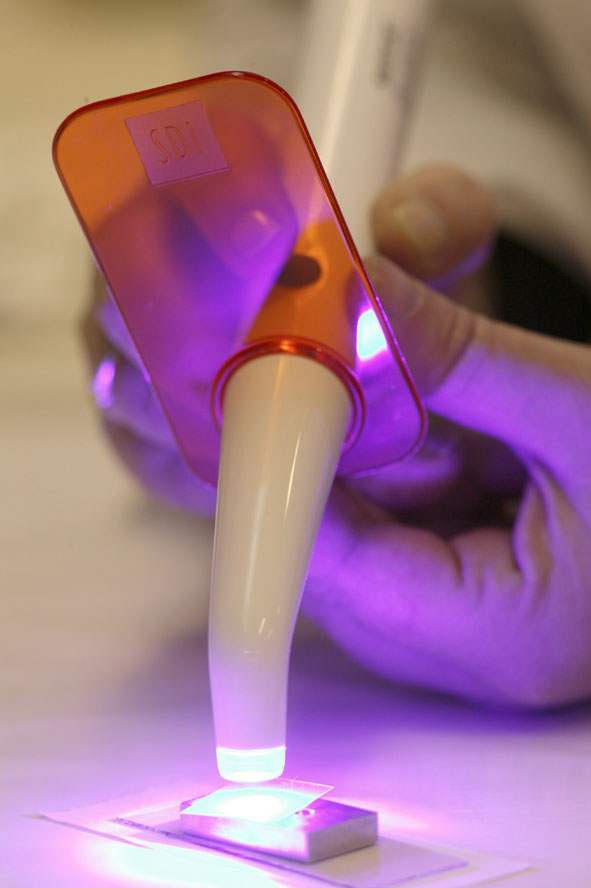
Light curing of a dental filling material

A dental curing light is a piece of dental equipment that is used for polymerization of light-cure resin-based composites.[1] It can be used on several different dental materials that are curable by light. The light used falls under the visible blue light spectrum. This light is delivered over a range of wavelengths and varies for each type of device. There are four basic types of dental curing light sources: tungsten halogen, light-emitting diodes (LED), plasma arcs, and lasers. The two most common are halogen and LEDs.

History

[edit]

In the early 1960s, the first light curing resin composites were developed.[2] This led to the development of the first curing light, called Nuva Light, by Dentsply/Caulk in the 1970s. Nuva Light used ultraviolet light to cure resin composites. It was discontinued due to this requirement, as well as the fact that the shorter wavelengths of UV light did not penetrate deeply enough into the resin to adequately cure it.[3]

During the early 1980s, advances in the area of visible-light curing led to the creation of a curing device using blue light. The next type of curing light developed was the quartz-halogen bulb;[4] this device had longer wavelengths of the visible light spectrum and allowed for greater penetration of the curing light and light energy for resin composites.[3] The halogen curing light replaced the UV curing light.

The 1990s presented great improvements in light curing devices. As dental restorative materials advanced, so too did the technology used to cure these materials; the focus was to improve the intensity in order to be able to cure faster and deeper. In 1998 the plasma arc curing light was introduced.[5] It uses a high intensity light source, a fluorescent bulb containing plasma, in order to cure the resin-based composite, and claimed to cure resin composite material within 3 seconds. In practice, however, while the plasma arc curing light proved to be popular, negative aspects (including, but not limited to, an expensive initial price, curing times longer than the claimed 3 seconds, and expensive maintenance) of these lights resulted in the development of other curing light technologies.

The latest advancement in technology is the LED curing light. While LED curing lights have been available since the 1990s, they were not widely used until the frustrations presented through ownership of plasma arc lights became unbearable. While the LED curing light is a huge step forward from the initial curing light offerings, refinements and new technologies are continually being developed with the goal of quicker and more thorough curing of resin composites.

Tungsten halogen

[edit]
Halogen lamp based curing light.
In the halogen curing light the power supply feeds a cooling fan and a small halogen lamp attached to a reflector. The blue light is produced by a dichroic filter and directed by a waveguide. The light is temporarily switched on by pressing the trigger.

The tungsten halogen curing light, also known as simply "halogen curing light" is the most frequent polymerization source used in dental offices.[6] In order for the light to be produced, an electric current flows through a thin tungsten filament, which functions as a resistor.[6] This resistor is then “heated to temperatures of about 3,000 Kelvin, it becomes incandescent and emits infrared and electromagnetic radiation in the form of visible light”.[6] It provides a blue light between 400 and 500 nm, with an intensity of 400–600 mW cm−2.[7] This type of curing light however has certain drawbacks, the first of which is the large amounts of heat that the filament generates. This requires that the curing light have a ventilating fan installed which results in a larger curing light.[6] The fan generates a sound that may disturb some patients, and the wattage of the bulb is such (e.g. 80 W) these curing lights must be plugged into a power source; that is, they are not cordless. Furthermore, this light requires frequent monitoring and replacement of the actual curing light bulb because of the high temperatures that are reached. (For example, one model uses a bulb with an estimated life of 50 hours which would require annual replacement, assuming 12 minutes' use per day, 250 days per year.) Also, the time needed to fully cure the material is much more than the LED curing light.

Light emitting diode

[edit]
LED curing light.

These curing lights use one or more light-emitting diodes [LEDs] and produce blue light that cures the dental material. LEDs as light-curing sources were first suggested in the literature in 1995.[8] A short history of LED curing in dentistry was published in 2013.[9] This light uses a gallium nitride-based semiconductor for blue light emission.[6]

A 2004 article in the American Dental Association's journal explained, "In LED’s, a voltage is applied across the junctions of two doped semi- conductors (n-doped and p-doped), resulting in the generation and emission of light in a specific wavelength range. By controlling the chemical composition of the semiconductor combination, one can control the wavelength range. The dental LED curing lights use LED’s that produce a narrow spectrum of blue light in the 400–500 nm range (with a peak wavelength of about 460 nm), which is the useful energy range for activating the CPQ molecule most commonly used to initiate the photo-polymerization of dental monomers."[6]

These curing lights are very different from halogen curing lights. They are more lightweight, portable and effective. The heat generated from LED curing lights is much less which means it does not require a fan to cool it. Since the fan was no longer needed, a more lightweight and smaller light could be designed. The portability of it comes from the low consumption of power. The LED can now use rechargeable batteries, making it much more comfortable and easier to use.

The latest[when?] LED curing light cures material much faster than halogen lamps and previous LED curing lights. It uses a single high-intensity blue LED with a larger semiconductor crystal.[6] Light intensity and the illumination area has been increased with an output of 1,000 mW/cm2.[6] In order to emit such a high intensity light, it uses a highly reflective mirror film consisting of "multilayer polymer film technology".[6]

Operation

[edit]

The halogen and LED curing lights work in the same way. Both of these lights require the operator to press a button or a trigger in order to turn on the blue light. A trigger is pressed to activate the halogen curing lights. Older models require the operator to hold down the trigger in order for the light to emit, whereas newer models only require the trigger to be pressed once. The light will remain on in both the newer models of halogen and LED lights until the timer expires after the trigger or button is pressed. When the light is turned on, it is placed directly over the tooth with the material until it is cured.

Significance

[edit]

The development of the curing light greatly changed dentistry. Prior to the development of the dental curing light, different materials had to be used in order to have a resin based composite material placed in a tooth. The material used prior to this development was a self-curing resin material. These materials, an A material and a B material, were mixed separately before application. The A material was the base and the B material was the catalyst. This resin material was mixed first and then placed in the tooth. It is then hardened fully after 30–60 seconds. This presented several issues to the dentist. One issue was that the dentist did not have control over how quickly the material cured—once mixed the curing process started. This resulted in the dentist having to quickly and properly place the material in the tooth. If the material was not properly placed, then the material had to be excavated and the process started over again.

The development of this new technology gave way to new light activated resin materials. These new materials are very different from the previous ones. These materials do not need to be mixed and can be dispensed directly into the site. This new malleable resin material can only be fully cured with a dental curing light. This presents new advantages for dentists: the time constraint is now lifted and the dentist can now assure that the material is properly placed.

References

[edit]
Revisions and contributorsEdit on WikipediaRead on Wikipedia
from Grokipedia
A dental curing light, also known as a light-curing unit (LCU), is a handheld used in to polymerize photoactivated resin-based restorative materials, such as composites, sealants, and adhesives, by emitting visible light that initiates the chemical hardening process. This technology enables rapid and effective curing, typically within seconds, ensuring the structural integrity and longevity of dental restorations. The function of a dental curing light relies on delivering light in the blue-violet , primarily between 400-500 nm, to activate photoinitiators like camphorquinone, which absorbs at around 470 nm and triggers free of the resin monomers. Key performance metrics include (measured in mW/cm², often exceeding 1000 mW/cm² in modern units), (J/cm², with recommendations of about 16 J/cm² per 2-mm resin increment), and beam uniformity to avoid uneven curing or "hot spots." Proper usage involves positioning the light tip perpendicular to the restoration surface at a close distance (ideally 0-2 mm) and accounting for factors like exposure time and tip diameter (typically 6-11 mm) to achieve adequate without compromising pulp vitality. Historically, dental curing lights emerged in the 1970s with ultraviolet (UV) units, such as the Nuva Light, which emitted around 365 nm but posed risks like tissue damage and eye injury, leading to their phase-out. By the 1980s, quartz-tungsten-halogen (QTH) lights shifted to visible blue light (400-500 nm), offering broader spectra but with inefficiencies like high heat generation and bulb replacement needs. The late 1990s introduced light-emitting diode (LED) technology, patented in 1993, which provided cooler operation, longer lifespan, and portability; subsequent generations evolved to multi-peak and polywave LEDs (incorporating violet light at 380-410 nm) for compatibility with diverse photoinitiators. Other types, such as plasma arc (PAC) and argon laser units, emerged for high-intensity curing but remain less common due to cost and limited spectra. Despite their benefits, dental curing lights present safety considerations, including potential blue-light damage (380-550 nm range) and intrapulpal temperature rises of 9.8-12.9°C during 20-second exposures, necessitating orange-tinted protective and cooling techniques like air syringes. Regulatory bodies like the FDA require premarket notification (510(k)) clearance, and routine output testing with devices like radiometers is recommended to maintain efficacy, as can degrade over time or with barrier use (up to 40% loss). Overall, advancements in LED-based LCUs have revolutionized by enhancing procedure speed, precision, and material performance while minimizing risks.

Introduction

Definition and Purpose

A dental curing light is a handheld device that emits specific wavelengths of visible light to initiate and accelerate the of light-sensitive resin-based materials in , such as composites, sealants, and adhesives. These devices are essential tools in restorative procedures, allowing clinicians to harden restorative materials on demand for precise placement and bonding. The primary purpose of a dental curing light is to provide blue light, typically in the range of 400-500 nm, which activates photoinitiators like camphorquinone within photopolymerizable , triggering a rapid that converts the liquid into a solid, durable structure. This process ensures the material achieves optimal mechanical properties, , and in the oral environment. By enabling controlled curing, these lights facilitate incremental layering techniques that reduce shrinkage stress and improve restoration outcomes. Light-cured dental composites have largely replaced earlier self-cured materials, offering superior control over the timing, greater precision in application, and reduced overall chair time for patients. This shift has enhanced the aesthetic quality of tooth-colored restorations, aligning with modern dentistry's emphasis on minimally invasive and visually appealing treatments.

Basic Principles of Photopolymerization

Photopolymerization in dental composites is a light-induced that transforms liquid monomers into a solid network, enabling the hardening of restorative materials. The process is initiated when photoinitiators, such as camphorquinone (CQ), absorb photons from blue light at a peak of approximately 468 nm, undergoing homolytic cleavage to generate free radicals. These radicals react with the carbon-carbon double bonds of monomers, like bisphenol A-glycidyl methacrylate (Bis-GMA) and triethylene glycol dimethacrylate (TEGDMA), triggering a involving initiation, propagation, and termination steps that form cross-linked polymers. Inorganic fillers, such as silica particles, are incorporated into the matrix to improve mechanical strength and wear resistance, though they can scatter light and affect curing uniformity. The curing process unfolds in three primary stages: the pre-gel phase, where the material transitions from a to an elastic gel through the formation of short chains, allowing flow and ; the gel point, a critical transition where the material achieves a viscoelastic state with significant molecular entanglement; and the post-gel phase, characterized by extensive cross-linking and into a rigid solid, during which most shrinkage stress develops. The depth of cure, typically limited to 2-4 mm depending on the material, is governed by light penetration, which decreases exponentially with depth due to absorption and within the composite. Efficiency of photopolymerization is influenced by several key factors, including light intensity, which directly impacts the rate of free radical generation and degree of conversion (often measured as 50-70% for optimal mechanical properties); exposure time, which must provide adequate (e.g., 10-40 J/cm²) to complete the reaction; distance from the light source to the material surface, as intensity follows the and can drop significantly beyond 1-2 mm; and material opacity, exacerbated by high filler loading (up to 80 wt%) or darker shades, which attenuate light transmission and reduce bottom-layer curing.

History

Early Developments

Prior to the 1970s, dental restorations primarily relied on self-curing resin composites, which polymerized through chemical initiation and required several minutes to set, limiting efficiency in clinical procedures. Experimental use of ultraviolet (UV) light for curing dental materials emerged in the early 1970s, with the first commercial UV curing unit, the Nuva Light, employing photoinitiators like benzoin methyl ether to activate polymerization in sealants and composites. However, UV systems were soon abandoned due to their shallow penetration depth—typically limited to about 1 mm—resulting in inadequate curing of deeper restorations, as well as significant safety concerns, including potential eye damage to patients and clinicians from UV exposure. The breakthrough in visible-light curing occurred in the early 1970s when chemists Edward Dart and Joseph Nemcek at (ICI) developed a camphorquinone-amine system activated by blue visible light around 470 nm, patented in 1975. This innovation addressed UV's limitations by enabling deeper penetration and safer operation, as visible light posed fewer risks to ocular health. Dr. Joseph Jaworzyn at ICI proposed its application to following a personal experience with a restoration, leading to further refinements in biocompatible urethane dimethacrylate resins by Dr. Mike Knight and prototype development under Dr. John Yearn. The first commercial visible-light-cured composite, Fotofil, launched in 1978 by ICI in collaboration with , paired with early halogen-based curing units that emitted broad-spectrum light filtered to the blue range. This shift was driven by the growing demand for faster and more reliable in the post-1960s era of aesthetic , where composite resins gained popularity over amalgam for their natural appearance and bondability to structure, but self-curing methods often led to inconsistent results and . Visible-light systems reduced curing time to seconds, improving procedural and material properties like strength and esthetics. Early visible-light curing units, however, faced practical challenges, including bulky designs that hindered intraoral access, short bulb lifespans of around 50 hours (typically 40-100 hours) for tungsten-halogen lamps, and significant generation that risked pulp irritation or patient discomfort during use.

Transition to Modern Technologies

During the and , quartz-tungsten-halogen (QTH) curing lights underwent significant refinements to enhance portability and usability in clinical settings, transitioning from bulky designs to more compact, handheld units that facilitated easier integration into dental workflows. These improvements addressed earlier limitations in mobility while maintaining the blue light spectrum necessary for activating camphorquinone photoinitiators in composite resins. Concurrently, alternative technologies emerged to accelerate curing times: argon-ion lasers were introduced in the late and early , emitting at 488 nm to polymerize filled resins in as little as 10 seconds and unfilled resins in 5 seconds, offering a high-intensity option despite their high cost and heat generation. Plasma arc curing lights followed in 1998, utilizing a high-voltage arc in a xenon-filled to produce filtered around 470 nm, enabling similarly rapid curing but facing challenges with expense and thermal output that limited widespread use. The advent of light-emitting diode (LED) technology marked a pivotal shift starting in the mid-1990s, enabled by the development of high-brightness blue (GaN) LEDs by Corporation in 1994, which provided a narrow-spectrum emission ideally suited for dental photopolymerization. By the early , the first commercial LED curing lights, such as Akeda's initial model featuring 7 to 19 low-energy diodes, entered the market as cordless, battery-powered devices with extended lifespans exceeding 10,000 hours, drastically reducing the need for frequent bulb replacements common in QTH systems. This transition was driven by demands for greater energy efficiency, as LEDs consumed significantly less power than halogen bulbs—often one-tenth the —while generating minimal heat to minimize patient discomfort and pulpal irritation during procedures. Additionally, clinical requirements for reliable, broad-spectrum coverage to activate diverse photoinitiators in modern composites favored LEDs' customizable wavelengths and consistent output over time, without the degradation seen in halogen filaments. Adoption accelerated rapidly, with LED lights becoming the dominant technology by the 2010s due to their cost-effectiveness and integration with emerging tools, such as CAD/CAM systems for seamless restorative workflows.

Types of Curing Lights

Tungsten Halogen Lights

lights, also known as quartz-- (QTH) curing lights, represent the first widely adopted technology for photopolymerizing dental following the shift from sources in the . These devices utilize a quartz bulb enclosing a filament immersed in gas, which enables filament to prolong operational life and maintain brightness. The filament is powered by a 75-100 W , typically operating at 12 V, generating intense visible light across a broad spectrum that is then filtered to the range of approximately 400-500 nm using optical filters and directed via silverized mirrors and fiber-optic light guides. This design allows for effective delivery of light to resin composites, though it inherently produces significant radiation as a . In terms of performance, QTH lights deliver an irradiance typically ranging from 400 to 800 mW/cm² at the light guide tip, enabling cure times of 20-40 seconds for standard increments of resin material. The effective curing depth is generally limited to 2-3 mm, necessitating incremental layering techniques to ensure complete polymerization in deeper restorations. While capable of meeting the ANSI/ADA minimum specification of 300 mW/cm², current recommendations suggest at least 500-550 mW/cm² for optimal performance with modern resins (as of 2025); output can degrade over time due to bulb aging, with many units in clinical use falling below optimal levels for deep curing. The primary advantages of tungsten halogen lights include their broad spectral output, which covers wavelengths suitable for activating various photoinitiators beyond just camphorquinone, such as those in alternative resin formulations. Additionally, their relatively low initial cost made them accessible for widespread adoption in dental practices during their peak usage. However, these lights suffer from notable limitations, including high heat generation that requires integrated cooling fans, resulting in bulky, corded units that are noisy and less ergonomic. lifespan is short, averaging 30-100 hours before replacement, and overall inefficiency—due to over 99% of emitted energy being non-useful wavelengths—led to their gradual phase-out in favor of more efficient technologies by the 2010s.

Light Emitting Diode (LED) Lights

Light emitting diode (LED) curing lights represent the predominant technology in modern , having evolved from earlier tungsten halogen systems to offer improved reliability and user comfort. These devices employ arrays of semiconductor-based LEDs, typically emitting light in the 450-470 nm wavelength range to effectively activate camphorquinone photoinitiators in composites. Some advanced models feature multi-peak configurations, incorporating additional violet LEDs (380-410 nm) alongside emitters to support with alternative initiators such as camphorquinone-free or TPO-based materials. This design allows for versatile compatibility across a broader of restorative materials. In terms of performance, LED curing lights deliver irradiances ranging from 800 to 3000 mW/cm², facilitating rapid cure times of 1-20 seconds and achieving depths up to 4 mm in standard increments. Battery-powered and cordless models are prevalent, providing portability without compromising output consistency. Key advantages of LED lights include an extended lifespan often exceeding 10,000 hours, significantly outlasting traditional bulbs, along with low heat generation that minimizes patient discomfort and tissue irritation. They are also energy-efficient, avoiding the use of mercury or filters, and boast compact, ergonomic forms that enhance clinical handling. Variations in LED curing lights include standard modes for routine use and high-intensity "turbo" options that boost for faster curing of thicker layers. Certain models integrate with intraoral sensors via closed-loop feedback systems, enabling automated adjustments to exposure based on distance and positioning for optimal energy delivery.

Plasma Arc Lights

Plasma arc curing lights utilize a bulb to generate a plasma arc, producing high-intensity primarily in the 400-500 nm range suitable for activating photoinitiators in dental composites. These devices achieve irradiances typically between 1000 and 2000 mW/cm², enabling rapid . Cure times are notably short, often 3-5 seconds for standard increments, making them advantageous for bulk-fill composites where efficiency reduces chair time. They are particularly applied in restorative procedures involving esthetic composites, such as Class III and IV restorations, and in-office bleaching to accelerate gel activation.

Argon Ion Lasers

Argon ion lasers function as gas-based systems emitting coherent at 488 nm, aligning closely with the absorption peak of common photoinitiators like camphorquinone. With intensities around 900-1500 mW/cm² and a narrow bandwidth of approximately 40 nm, they deliver collimated beams for consistent energy delivery. Cure times are reduced to about 10 seconds per increment, roughly one-fourth that of conventional quartz-tungsten-halogen units, supporting applications in polymerizing polyacid-modified composites (compomers) such as Compoglass F or Dyract AP. Despite these benefits, ion lasers have become largely obsolete in modern practice due to their high operational costs, large equipment size, and lack of superior mechanical outcomes in cured materials compared to standard .

Other Emerging and Alternative Types

Quartz-tungsten- hybrids combine traditional bulbs with filters to enhance blue light output in the 400-500 nm , offering improved efficiency over pure systems for specialized uses. Fiber-optic delivery systems, often integrated with various light sources, transmit light via flexible cables to access hard-to-reach areas, finding niche applications in for bracket bonding and in for quick, non-invasive restorations. Emerging diode curing lights, such as blue diode systems (e.g., Monet by Lasers), emit coherent light around 450-500 nm with irradiances exceeding 2000 mW/cm², enabling ultra-rapid cure times of 1-3 seconds for 2 mm increments. These technologies provide precise, deep with minimal heat, accelerating adoption in advanced clinics as of 2025, though high costs limit broader use. These alternatives prioritize targeted delivery in constrained clinical scenarios but remain less common than standard LEDs due to added complexity.

Limitations and Considerations

Advanced types like plasma arc lights and argon ion lasers share drawbacks including elevated costs—often several times that of LED units—and reduced portability stemming from bulky designs requiring external power or cooling. They pose risks of over-curing, which can lead to excessive heat generation (up to 21°C on surfaces) and potential pulpal irritation if not managed with or timed exposures. While effective for rapid procedures, their high intensity may compromise material hardness in some cases compared to conventional methods, limiting widespread adoption.

Operation

Mechanism of Light Emission

Dental curing lights convert electrical energy into light through distinct physical mechanisms depending on the technology employed. In quartz-tungsten-halogen (QTH) lights, incandescence occurs when an electric current heats a tungsten filament within a quartz bulb filled with halogen gas, causing it to emit a broad-spectrum light that includes the blue wavelengths necessary for polymerization. Light-emitting diode (LED) lights utilize electroluminescence, where an electric current passes through semiconductor materials, exciting electrons to release energy as narrow-band blue light typically in the 440-500 nm range. Plasma arc lights generate light via plasma excitation, in which a high-voltage electric arc ionizes a gas (such as xenon) within a bulb, producing an intense, broad-spectrum emission dominated by blue light for rapid curing. The generated light is delivered to the treatment site through specialized designed for intraoral access. QTH and some plasma arc units often employ fiber-optic waveguides—bundles of optical fibers that transmit and focus the from the bulb to a tip, minimizing loss and . In contrast, LED units typically use direct arrays of chips positioned near the tip, allowing for a compact design with integrated focusing lenses to produce a . Tips are commonly shaped as tapered or straight rods with diameters of 8-11 mm to fit posterior regions while providing uniform illumination over a 7-10 mm spot size. Power for these devices is supplied via AC/DC transformers in corded QTH and plasma arc models, ensuring stable voltage for consistent filament or arc operation. LED lights predominantly rely on rechargeable lithium-ion or nickel-metal hydride batteries, offering portability and run times of 26-164 minutes per charge depending on usage intensity. Many modern units support modulation between continuous and pulsed emission modes; continuous mode delivers steady irradiance for standard curing, while pulsed mode intermittently activates the light to reduce heat buildup without compromising total energy delivery. Efficiency in light emission degrades over time due to factors such as bulb filament wear in QTH units, degradation in LEDs, or erosion in plasma arcs, leading to a gradual decline in output intensity. To maintain performance, regular with a dental is essential, targeting a minimum of 300 mW/cm² as specified by ANSI/ADA Specification No. 48, below which curing efficacy diminishes significantly. Studies indicate a negative between device age and light output, with many units retaining adequate intensity for 1-3 years of clinical use before requiring maintenance or replacement.

Technical Specifications

Dental curing lights primarily emit light in the blue-violet ranging from 400 to 520 nm to activate common in composites. This range aligns with the absorption of camphorquinone (CQ), the most widely used , which exhibits a peak absorption at approximately 468 nm. For alternative initiators like trimethylbenzoyl-diphenylphosphine oxide (TPO), which is gaining popularity for its reduced yellowing effects, curing lights may incorporate multi-wavelength capabilities extending to 385-405 nm to match TPO's narrower absorption peak around 400 nm. Irradiance, or radiant exitance, quantifies the light intensity delivered by curing lights and is measured in milliwatts per square centimeter (mW/cm²). According to ANSI/ADA Specification No. 48, dental curing lights should achieve a minimum irradiance of at least 300 mW/cm², measured at the light tip, though modern recommendations from dental organizations suggest 500-550 mW/cm² or higher for efficient curing within shorter exposure times. Factors such as light guide degradation, fiber optic tip wear, or inconsistent beam uniformity can significantly reduce output over time, potentially dropping irradiance below therapeutic levels and compromising restoration quality. Exposure parameters in dental curing lights include curing modes and total to optimize without excessive stress on the . Step curing delivers constant high-intensity light throughout the exposure, while ramp curing gradually increases intensity to allow in the ; both modes typically last 10-40 seconds depending on the restoration depth and . The total energy delivered, calculated as in joules per square centimeter (J/cm²) by multiplying (mW/cm²) by exposure time (seconds) and dividing by 1000, typically 12-24 J/cm² (e.g., ~16 J/cm² for a 2 mm increment) for effective depth of cure in most composites. Testing dental curing lights involves specialized equipment to verify performance and ensure compliance with clinical standards. Handheld radiometers measure by integrating light output over the tip's emitting area, providing quick assessments but varying in accuracy by up to 20% across devices due to differences. For comprehensive evaluation, distribution analysis using spectrophotometers or spectrometer systems generates graphs of radiant power across wavelengths, confirming uniformity and peak emission alignment with needs; such testing is recommended annually or after suspected damage to maintain optimal output.

Usage in Dental Procedures

In clinical dental procedures, preparation for using a curing light begins with selecting an appropriate device based on the restorative material, such as (LED) units for most resin-based composites due to their compatibility with camphorquinone photoinitiators absorbing at 455-481 nm. should be verified using a dental to ensure output exceeds 1000 mW/cm² for effective , and the patient is positioned to provide optimal access to the restoration site while minimizing light scatter. The curing tip must be inspected for and , with control barriers applied if needed, though these can reduce by 5-8% and require compensatory adjustments. During the procedure, composite resin is applied in increments typically 2 mm thick for conventional materials to achieve adequate depth of , or up to 4-5 mm for bulk-fill composites to streamline placement. The light tip is positioned as close as possible—ideally 0-2 mm from the surface—and held perpendicular to ensure even distribution, with exposure times ranging from 10-40 seconds per increment depending on the unit's intensity and material requirements. For posterior restorations, the light is rotated around the to all surfaces uniformly, and pauses or air streams may be used to manage heat buildup during extended exposures. Bulk-fill materials often require a minimum of 20 seconds at high intensity to ensure full . Post-curing involves verifying restoration hardness, such as through a bottom-to-top surface hardness ratio exceeding 95% to confirm adequate depth. If barriers or positioning reduced light delivery, additional exposure may be applied. Common errors include maintaining excessive distance from the restoration surface, which can reduce by up to 35% and lead to under-curing with soft layers prone to failure, or prolonged exposures causing overheating and potential pulpal irritation. Angling the tip or using a contaminated barrier exacerbates uneven curing and microleakage risks.

Clinical Significance

Role in Restorative Dentistry

Dental curing lights are indispensable in restorative dentistry, primarily for polymerizing photoinitiated resin-based composites during direct and indirect procedures. They enable the curing of Class I through V cavity restorations by activating camphorquinone photoinitiators, ensuring rapid hardening and adhesion to tooth structure. Beyond fillings, these lights facilitate the application of fissure sealants to prevent caries in pits and fissures, the bonding of orthodontic brackets for alignment treatments, and the luting of veneers for aesthetic enhancements. This versatility supports minimally invasive techniques, such as selective caries removal and adhesive dentistry, by allowing conservative preparations that preserve enamel and dentin while achieving durable outcomes. In clinical workflows, curing lights streamline procedures by providing immediate control over , significantly reducing chair time compared to chemical-curing systems that require mixing and extended setting periods. For instance, light activation permits incremental layering of composites—curing 2 mm increments sequentially—which enhances marginal , minimizes polymerization shrinkage stress, and allows for customized shade blending to mimic natural . This integration not only boosts efficiency but also improves comfort through shorter appointments and reduced sensitivity during placement. Clinical evidence underscores the benefits of light-cured restorations, with studies demonstrating superior bond strengths averaging 20-30 MPa when optimal is applied, compared to inconsistent results from chemical cures. data from longitudinal trials indicate 5-10 year survival rates of 80-90% for posterior composites, attributed to enhanced mechanical and reduced microleakage from effective . The reliability of modern curing lights has propelled the shift from amalgam-dominated posterior restorations to widespread composite use, enabling esthetic, mercury-free alternatives across all surfaces.

Impact on Material Performance

The degree of conversion (DC) in dental composites, a key indicator of polymerization completeness, is primarily assessed using Fourier Transform Infrared (FTIR) spectroscopy by monitoring the reduction in aliphatic C=C bonds at approximately 1637 cm⁻¹. Optimal DC values typically range from 55% to 75%, which are essential for achieving adequate mechanical strength and long-term restoration integrity. Inadequate curing, often due to suboptimal light intensity or duration, results in lower DC levels, leading to increased material porosity, marginal leakage, and elevated risk of secondary caries as demonstrated in in vitro studies. Curing lights directly influence the mechanical properties of cured composites, with higher generally enhancing —often reaching 100-150 MPa in premium formulations—and improving wear resistance through more uniform . However, excessive can induce over-curing, potentially increasing material brittleness and reducing overall . These effects are particularly pronounced in dimethacrylate-based resins, where balanced energy delivery optimizes performance without compromising elasticity. Key factors such as curing light distance and exposure time significantly modulate shrinkage, which typically measures 2-5% by in conventional dimethacrylate resins, contributing to internal stresses that may cause debonding or cracks. Maintaining the light tip close to the surface (ideally 0-2 mm) and adhering to recommended exposure durations minimizes these volumetric changes. Furthermore, compatibility between the curing light and inorganic fillers ensures effective light transmission, preserving the composite's radiopacity for radiographic detection without inhibition. In vitro research consistently links suboptimal curing to heightened susceptibility to secondary caries, with under-polymerized layers exhibiting greater elution and bacterial . Examples of low-shrinkage resins optimized for LED curing lights include silorane-based Filtek P90 (introduced in 2008), which achieves comparable DC to traditional hybrids while reducing shrinkage stress and enhancing . More recent options, such as bulk-fill composites like Filtek One (introduced in 2018), further improve these properties.

Safety and Considerations

Potential Health Risks

Dental curing lights, particularly those emitting blue light in the 400-500 nm range, pose significant risks to ocular , primarily through photochemical damage to the . Prolonged or direct exposure to this blue light can induce in retinal cells, leading to pathological changes such as condensation and photoreceptor damage, with degeneration observed after 3-6 hours of exposure in experimental models. Cumulative viewing of high-intensity light from sources like plasma arc units, for approximately 6 seconds at 30 cm over an 8-hour workday, may contribute to . The blue light hazard is exacerbated by the high of modern light-curing units (LCUs), which can exceed safe exposure thresholds if not managed properly. Heat generation from halogen-based curing lights presents additional risks, including potential burns to soft tissues. Quartz-tungsten-halogen (QTH) lights produce substantial output, requiring fan cooling, and high-output curing s, such as certain QTH or LED units, can cause gingival or mucosal burns if the light tip contacts tissue or if exposure is prolonged, such as 30 seconds in high-output modes. This heat can also lead to in adjacent oral tissues, potentially causing discomfort or minor injury when the tip inadvertently touches mucosa. Incomplete of dental composites due to inadequate curing exposure can result in the release of uncured monomers, such as hydroxyethyl methacrylate (HEMA) and triethylene glycol dimethacrylate (TEGDMA), triggering in both operators and patients. These monomers are cytotoxic and can cause inflammatory responses upon from under-polymerized restorations. Additionally, repetitive use of curing lights may contribute to operator fatigue, particularly with heavier units that strain posture during prolonged procedures. Certain populations are more vulnerable to these risks, necessitating heightened caution. Young individuals, including pediatric patients, exhibit higher ocular transmittance of blue light (up to 90% at 450 nm), increasing susceptibility to damage and requiring shorter exposure times to minimize cumulative effects. Patients with or prior , who lack natural blue-light filtering from the lens, face elevated risks of photoretinitis from even brief exposures.

Regulatory Standards and Best Practices

Dental curing lights are classified as Class II medical devices by the U.S. (FDA), requiring premarket notification through the 510(k) pathway to ensure safety and effectiveness in polymerizing light-cured dental materials. As of July 2024, the FDA issued draft guidance updating recommendations for 510(k) submissions, including device description, performance testing, and labeling. Internationally, the ISO 10650:2018 standard governs powered polymerization activators, mandating a minimum of 300 mW/cm² in the 380–515 nm range to achieve adequate , along with requirements for beam uniformity and spectral output testing. Compliance with these standards involves manufacturer testing and , helping to mitigate risks of undercuring that could compromise restoration . Best practices emphasize regular maintenance and verification to sustain performance. Annual calibration or irradiance testing using a dental radiometer is recommended for lights in daily clinical use, allowing practitioners to confirm output levels and detect degradation early. Protective eyewear meeting ANSI/ISEA Z87.1-2020 standards must be worn by dental personnel and patients during activation to shield against blue light exposure, with orange-tinted lenses preferred for optimal filtration. Additionally, maintaining a tip-to-surface distance of 1–2 mm ensures maximal irradiance delivery, while logging exposure times per procedure supports and regulatory audits. Training in dental education programs includes hands-on instruction for output verification, such as using radiometers to measure and troubleshooting issues like low output from contaminated or damaged tips, which can be resolved by routine cleaning with non-abrasive disinfectants. In the 2020s, regulatory focus has shifted toward eco-friendly LED technologies, which reduce energy consumption and bulb replacement needs compared to older quartz-tungsten-halogen systems. Emerging standards are addressing multi-initiator compatibility, with lights designed to emit broader spectra (e.g., 380–515 nm) to activate diverse photoinitiators in modern composites, as outlined in updates to ISO 10650 and related ANSI/ADA specifications.

References

Add your contribution
Related Hubs
User Avatar
No comments yet.