


Community hub
Recent from talks
Contribute something
Nothing was collected or created yet.
Dread Zeppelin
View on Wikipedia
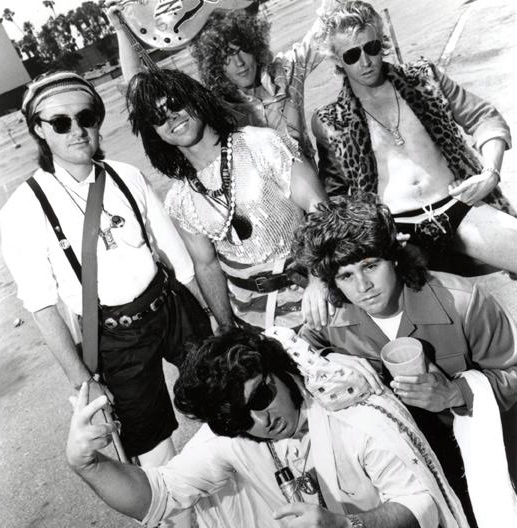
Dread Zeppelin was an American reggae rock band. Formed in 1989 in Sierra Madre, California, the band combined hard rock and reggae styles with humor. They are best known for performing the songs of Led Zeppelin in a reggae style as sung by a Las Vegas Elvis impersonator. They also performed songs originally by Elvis Presley, Bob Marley and The Yardbirds. The group toured extensively around the world during their tenure with I.R.S. Records.[2]
Key Information


Career
[edit]1986–1989: The Prime Movers
[edit]The nucleus of Dread Zeppelin, bassist Put-Mon (Gary Putman), drummer Cheese (Curt Lichter) and guitarist Jah Paul Jo (Joseph "Severs" Ramsey), were from a Pasadena, California group called The Prime Movers.[3] Signed to Island Records in 1986, The Prime Movers had some success in the UK with singles "On The Trail" and "Dark Western Night".[4] The late Stuart Adamson of Big Country contributed his trademark E-Bow guitar to "Dark Western Night" and another Prime Mover song, "Strong As I Am", was featured in Michael Mann's motion picture thriller, Manhunter.[5]
When The Prime Movers ended in 1989, Jah Paul Jo hatched the idea for a new group that would call itself "Dread Zeppelin".[6] Aside from the three original members, the band recruited guitarist Carl Jah (Carl Haasis) and 300-pound Vegas-era Elvis impersonator Tortelvis (Greg Tortell).[7] The band supposedly met Tortelvis when he rammed his milk float into the back of the band's car.[8] Longtime graphic artist for The Prime Movers, Bryant Fernandez, was brought in as conga-man Ed Zeppelin.[6]
The concept for Dread Zeppelin may be less bizarre than it seems. Notably, Led Zeppelin did make a recording which reflected a prominent reggae influence, the 1973 song "D'yer Mak'er". Also, the band frequently performed Elvis Presley songs in concert, often presented as a medley which occasionally flirted with self-parody. (Led Zeppelin met Elvis briefly in 1974 after attending one of his concerts in Los Angeles.)[9][10]
1989: Birdcage Records
[edit]The first Dread Zeppelin recording was meant to be a goof on Led Zeppelin's 45 single "Immigrant Song" and its sought-after non-LP B-Side "Hey Hey What Can I Do". Produced by Jah Paul Jo and Rasta Li-Mon (Lee Manning) and released on their indie Birdcage Records label, the single sold amazingly well and represses featured the seven inch 45 RPM in a rasta rainbow of colors: red (original), green, yellow, blue, white and clear vinyl. All early Dread Zeppelin recordings and most of the band's first album Un-Led-Ed were recorded at the home studio of Dave Stewart of Eurythmics, where Rasta Li-Mon was a house engineer.

After the success of "Immigrant Song", a second single, "Whole Lotta Love/Tour-telvis: A Bad Trip", was released on Birdcage Records.[11] A third, "Your Time is Gonna Come/Woodstock (live)", was released not as a single but as part of a singles compilation entitled Komm Gib Mir Deine Zeppelin (a play on the title of the German version of The Beatles' song "I Want to Hold Your Hand"). There was also a live cassette issued by Birdcage, but only to members of The Dread Zeppelin fan club, called Live On Blueberry Cheesecake.
1990: I.R.S. years
[edit]In 1990, Dread Zeppelin were signed to Miles Copeland III's IRS label. Their first album, Un-Led-Ed, consisted of more covers taken from Led Zeppelin and Led Zeppelin II, plus "Black Dog" from Led Zeppelin's untitled fourth album. Original drummer Cheese (Curt Lichter) left the band just after recording Un-Led-Ed. He was replaced by Fresh Cheese (Paul Maselli). Shortly before Un-Led-Ed was released, the original Ed Zeppelin (percussion and Reggae Dub) was replaced by his identical twin brother who was the former lead singer of local LA bands: Rampage, Blue Frontier and Public Eye.
Un-Led-Ed was successful. In autumn 1990, Dread Zeppelin took a three-week break from touring and recorded their second album, 5,000,000* *Tortelvis Fans Can't Be Wrong. In addition to the usual "Zeppelin in a reggae style", this album also featured a cover of Bob Marley's "Stir It Up" as well as three original songs.
For the next album, the band had planned a rock opera, Albert, about a rock critic who wanted to be a star (based loosely on the real rock critic Albert Goldman), but this never materialized. The plan changed to an album of disco covers, It's Not Unusual. Both Ed Zeppelin and Fresh Cheese had left the band after 5,000,000* *Tortelvis Fans Can't Be Wrong, and during rehearsals for the new album, Tortelvis also quit. Bassist Put-Mon (Gary Putman) took over the vocals, assuming the name Gary B.I.B.B. It's Not Unusual featured guest spots by both Screamin' Jay Hawkins and Randy Bachman.
Whether it was the public's resistance to disco, or the lack of Dread's popular frontman, Tortelvis, sales of It's Not Unusual were disappointing. The band was dropped by IRS and for all intents and purposes, had dissolved.
1993: Hot & Spicy Beanburger
[edit]
Unknown to the band, Dread Zeppelin were being sought by Australian rock band INXS to be the support band on their US tour. INXS were fans of Dread Zeppelin. Tortelvis was persuaded to return to the band; however, without a recording contract, he could only perform at the May 8, 1993, show at The Barker Hangar in Santa Monica. Dread Zeppelin returned to the studio. With Jah Paul Jo and Rasta Li-Mon again producing, they recorded Hot & Spicy Beanburger, a 1993 release on Birdcage Records.
In the spring of 1994, Dread Zeppelin appeared in the feature film National Lampoon's Last Resort and provided a song for the closing credits.[12] Carl Jah (Carl Haasis) and Ed Zeppelin left the band shortly thereafter.
With Put-Mon moving from bass to lead guitar and the addition of David Raven (drums), bassist Derf Nosna Haj (Freddie Johnson) and Fernandez (Pete Burke) on conga and toast, Dread Zeppelin recorded No Quarter Pounder. Released by Birdcage Records in 1995, No Quarter Pounder would be the band's final Birdcage CD as Jah Paul Jo left the group shortly after its release.[citation needed]
1996: Imago
[edit]The remaining members of Dread Zeppelin signed onto Imago Records and released The Fun Sessions, a collection of classic rock covers. It was the first all non-Led Zeppelin cover recording with the exception of "BBWAGS (Butt-Boy's Wearin' a Girls' Shirt)" written by Gary Putman. This would be Derf Nosna Haj (Freddie Johnson) and Fernandez (Pete Burke) last recording with the band. After the Imago release, Carl Jah and Ed Zeppelin returned to the band.
1999: Cleopatra
[edit]The band then signed to Cleopatra Records and recorded De-jah Voodoo in 1999. The recording was produced by bassist Bob Knarley (Howard Ulyate) and includes 11 Led Zeppelin covers and two tracks written by the band (Putman, Ulyate, Fernandez, Tortell, and Boerin).[13]
De-jah Voodoo was later re-released with a new cover and title (Re-Led-Ed); some versions include an acoustic version of "Hey Hey What Can I Do" as a bonus track.[14]
2000–2011: Cash Cow
[edit]In 1995 Dread Zeppelin had a new production company, Cash Cow, run by original members Gary Putman (Butt-Boy) and Greg Tortell (Tortelvis), which had produced the Fun Sessions. They released the live album Front Yard Bar*B*Que in December 1996 and the all-original album Spam Bake (a take-off of the Elvis movie sound recordings of the 1960s) in November 1997.
Also released on Cash Cow Records were the band's first full length Christmas recording Presents in 2002, followed by Chicken and Ribs 2004; both were produced by Bob Knarley. In February 2008 the band released Bar Coda, produced by Spice (Cris Boerin). Other Cash Cow releases included the DVDs Jah-La-Palooza 2004 and Live in Minne-Jah-Polis 2002. The album SoSo (the title referencing Led Zeppelin's fourth album), followed in 2011, produced by Spice.[15]
Lead singer Tortelvis sang "The Star-Spangled Banner" at Bank One Ballpark, now known as Chase Field, in Phoenix, Arizona on May 27, 2005.[16] He had been scheduled to sing the song at a Minnesota Twins game in 1990, but Roseanne Barr's notorious version quashed that opportunity.
2012-2016
[edit]Carl Jah released a solo album in 2012;[17] in 2014, founding guitarist Jah Paul Jo died following years of poor health.[18] Dread Zeppelin toured regularly through 2014; Putman is the only member of Dread Zeppelin to have performed on every record and played every live show to date.
They last performed live on April 2, 2016.
Members
[edit]- Tortelvis (Greg Tortell) - vocals
- Butt-Boy a.k.a. Put-Mon a.k.a. Gary B.I.B.B. (Gary Putman) - bass (1986-1993), vocals (1992-1993), guitars (1993-present)
- Spice (Cris Boerin) - keyboards, percussion
- Bob Knarley (Howard Ulyate) - bass
- Ziggy Knarley (Chip Moreland) - drums
- Charlie Haj (Earle Rothwell) - manservant
Former members
[edit]- Carl Jah (Carl Haasis) - guitars
- Jah Paul Jo (Joseph "Severs" Ramsey) - guitars
- Cheese (Curt Lichter) - drums
- Ed Zeppelin (Bryant Fernandez, later Bruce Fernandez) - percussion
- Fresh Cheese (Paul Maselli) - drums
- Rasta Li-Mon (Lee Manning) - engineer, producer
- Tuna Melt a.k.a. Jah Jah Gabor - bass
- Fernandez (Peter Burke) - percussion
- Fuzzy Buzzman/Derf Nosna Haj (Freddie Johnson) - bass
Discography
[edit]Studio albums
[edit]- Un-Led-Ed (1990), IRS Records
- 5,000,000* *Tortelvis Fans Can't Be Wrong (1991), IRS Records
- Rock'n Roll (1991), JVC Records (Japan only)
- It's Not Unusual (1992), IRS Records
- Hot & Spicy Beanburger (1993),[19] Birdcage Records
- The First No-Elvis (1994),[20] Birdcage Records
- No Quarter Pounder (1995),[19] Birdcage Records
- The Fun Sessions (1996), Imago
- Ruins (1996),[21] Birdcage Records
- Spam Bake (1998)
- De-jah Voodoo (2000) (reissued in 2004 as Re-Led-Ed)
- Presents (2002)
- Chicken and Ribs (2004)[22]
- Bar Coda (2007)
- Best of the IRS years (2009)
- Soso (2011)
Live albums
[edit]- Front Yard Bar*B*Que (1996)
- The Song Remains Insane (1998), TWA Records (two-CD Australia-only set)
- Haunted Houses O' the Holy (1999)
- Live - Live at Larry's (2002)
- Live - Hots On for Fresno (2003)
Singles
[edit]- "Immigrant Song" / "Hey Hey What Can I Do" (1989), Birdcage Records (7" clear, blue, green, red, white and yellow vinyl)
- "Whole Lotta Love" / "Tour-Telvis: A Bad Trip" (1989), Birdcage Records (7" black and pink vinyl)
- "Heartbreaker (At the End of Lonely Street)" (1990), IRS Records (UK CD single) (Australia #138[23])
- "Your Time Is Gonna Come" (edit) (1990), IRS Records (UK CD single)
- "Stairway to Heaven" (1991), IRS Records (UK CD single) (Australia #175[23])
Extended plays
[edit]- Komm Gib Mir Deine Zeppelin (1989), Birdcage Records (six-track EP)
- Live on Blueberry Cheesecake (1992), Birdcage Records (seven-track fan club EP)
DVD
[edit]- Live at the Cabooze in Minne-jah-polis (2003)
- Jah-La-Palooza (2004)[22]
- Pure Inner-Tainment (2009)[24]
Documentaries
[edit]References
[edit]- ^ O'Connor, Rob (November 21, 2014). "20 Crazy Covers Albums". Yahoo! Music. Retrieved April 22, 2015.
- ^ Archived at Ghostarchive and the Wayback Machine: "Robert Plant Talks about Dread Zeppelin!". YouTube. February 10, 2007. Retrieved July 15, 2011.
- ^ "Prime Movers Biography". primemoversmusic.com. August 6, 1988. Archived from the original on May 12, 2008. Retrieved July 15, 2011.
- ^ "Stuart Adamson". bigcountryinfo.com. Archived from the original on January 5, 2009. Retrieved July 15, 2011.
- ^ Raine, Kyrby. "The Prime Movers". Ink 19. Archived from the original on May 26, 2011. Retrieved July 15, 2011.
- ^ a b Wall, Mick (July 21, 1990). "Dread Zeppelin". Kerrang!. republished online by L Hoskins. Archived from the original on December 8, 2011. Retrieved July 15, 2011 – via earthlink.net.
- ^ "Dread Zeppelin Biography". Artistdirect.com. ARTISTdirect Music. January 8, 1989. Archived from the original on June 5, 2011. Retrieved July 15, 2011.
- ^ "Dread Zeppelin Biography". OLDIES.com. Retrieved May 10, 2012.
- ^ "Led Zeppelin and Elvis - Robert Plant Talks About Meeting Elvis in This Interview". elvis.com.au. Archived from the original on February 14, 2008. Retrieved June 20, 2018.
- ^ Archived at Ghostarchive and the Wayback Machine: Plant, Robert. "When Zeppelin met Elvis: May 1974" (Interview). Retrieved June 20, 2018 – via YouTube.com.
- ^ "Cover Art: Dread Zeppelin - Whole Lotta Love". Tralfaz-archives.com. Retrieved July 15, 2011.
- ^ "Last Resort (1994) Soundtrack". Mooviees.com. January 22, 2007. Archived from the original on February 19, 2012. Retrieved July 15, 2011.
- ^ Dread Zeppelin (2004). Re-Led-Ed. Retrieved March 21, 2024.
- ^ Dread Zeppelin (2000). De-jah Voodoo. Retrieved March 21, 2024.
- ^ Dread Zeppelin (2011). SoSo. Retrieved March 28, 2024.
- ^ "Dread Zeppelin at Bank One Ballpark - National Anthem". Dreadzeppelin.com. May 27, 2005. Archived from the original on October 16, 2012. Retrieved July 15, 2011.
- ^ Blackett, Matt (June 4, 2013). "Carl Jah Lets Nothing Go to Waste on 'Re-Purpose'". Guitar Player. Archived from the original on September 7, 2016. Retrieved August 30, 2013.
- ^ Coburn, Bill (January 10, 2015). "Long-time Sierra Madrean Joe Ramsey Passes Away". Sierra Madre News Net. Retrieved March 28, 2024.
- ^ a b Also released as part of a 1997 Hot & Spicy Beanburger/No Quarter Pounder 2 CD set (Australia only, TWA Records)
- ^ in: 1994 The First No Elvis,CDs (December 1, 2008). "CD: The First No Elvis – Birdcage Records 1994". Dreadzeppelin.tv. Retrieved July 15, 2011.
{{cite web}}: CS1 maint: numeric names: authors list (link) - ^ "Dread Zeppelin Ruins". Dreadzeppelin.tv. June 24, 2009. Retrieved July 15, 2011.
- ^ a b Also released as part of the Chicken and Ribs / JahlaPalooza DVD combo package in 2005
- ^ a b "Dread Zeppelin ARIA Chart history to December 2025". ARIA. Retrieved December 19, 2025 – via Imgur.com. N.B. The High Point number in the NAT column represents the release's peak on the national chart.
- ^ "Pure Inner-Tainment". Dreadzeppelin.tv. February 22, 2009. Retrieved July 15, 2011.
External links
[edit]- Official website
- Official site of the original band
- Official Carl Jah site Archived July 12, 2009, at the Wayback Machine
- The Prime Movers

| International | |
|---|---|
| National | |
| Artists | |

Dread Zeppelin
View on GrokipediaMusical style and concept
Band concept and origins
Dread Zeppelin is a reggae rock band known for its unique premise of reinterpreting Led Zeppelin songs through reggae arrangements, delivered with humorous, exaggerated performances fronted by Tortelvis, an Elvis Presley impersonator whose stage persona combines the King's charisma with over-the-top theatricality.[1][6][7] The band's core concept emerged as a playful fusion of hard rock classics and island rhythms, emphasizing comedic mashups such as transforming Led Zeppelin's "Black Dog" into an Elvis-inspired "Hound Dog" rendition, complete with Tortelvis's gravelly baritone and signature jumpsuit attire.[6][8] This approach not only parodies the originals but also incorporates visual gags like leis and towels draped over amplifiers, amplifying the absurdity of blending pomp rock with Rastafarian vibes.[6][7] The name "Dread Zeppelin" originated as a direct nod to this hybrid style, with "Dread" referencing the dreadlocks and cultural essence of reggae, paired with "Zeppelin" to evoke the iconic British rock band whose catalog they reinterpret.[6][7] This moniker was coined during the band's early brainstorming, capturing the humorous contrast between the genres and performers involved.[9] Dread Zeppelin formed in 1989 in Sierra Madre, California, evolving from the experimental phase of the local rock outfit The Prime Movers, whose core members—guitarist Gary Putman, bassist/vocalist Severs Ramsey, and drummer Curt Lichter—had disbanded the previous year after minor successes in the 1980s alternative scene.[1][9][7] Frustrated by contractual disputes with Island Records, Putman and Ramsey reconvened under pseudonyms like Put-Mon and Jah Paul Jo, initially experimenting with reggae-style covers of Led Zeppelin tracks as a lighthearted side project at private parties before expanding it into a full band with Tortelvis (Greg Tortell) on vocals.[9][7] Tortelvis, a former milkman, joined after a one-off gig with a reggae group called the Reggae Blades, solidifying the Elvis element that became central to their identity.[6] This genesis as a conceptual art piece quickly gained traction, blending satire with musical innovation in the late-1980s Los Angeles underground.[7]Influences and performance elements
Dread Zeppelin's musical style draws heavily from Led Zeppelin's hard rock riffs, which are reimagined with reggae beats and Jamaican dub influences inspired by Bob Marley. The band's core concept involves adapting Zeppelin's intense guitar-driven songs into laid-back, rhythmic reggae arrangements, creating a fusion that contrasts the original's bombast with reggae's groove. This approach is exemplified in their reggae rendition of Led Zeppelin's "Immigrant Song," where the driving riff is transformed into a skanking rhythm. Additionally, the incorporation of Elvis Presley's showmanship is central through the frontman Tortelvis, a Las Vegas-era Elvis impersonator whose vocal style and stage presence infuse the performances with charismatic flair.[1][7][10] Performance elements emphasize humor and theatricality, with band members donning Rastafarian-inspired attire such as dreadlocks, caftans, and minimal bathing suits, while Tortelvis appears in elaborate polyester jumpsuits adorned with rhinestones and wide white belts. Props like giant joints, hot dogs, and a surly valet who interrupts to comb the singer's hair add to the comedic staging, often set against backdrops evoking "Gilligan’s Island" meets "Blue Hawaii." Interactive elements, including the fan ritual of "The Claw" hand salute, engage audiences in the parody, blending visual absurdity with musical delivery to heighten the entertainment. These features create a live show that prioritizes fun and spectacle over straightforward replication.[1][11][7] Over time, the band's sound evolved to incorporate doo-wop harmonies, blues undertones, and novelty covers beyond Led Zeppelin, such as reggae versions of songs by The Beatles and The Rolling Stones, expanding the reggae-rock fusion into a broader satirical palette. This progression allowed for originals and covers like Bob Marley's "Stir It Up," maintaining the reggae base while experimenting with diverse genres for humorous effect. The overall approach serves as cultural commentary, satirizing rock's excess and grandeur through reggae's relaxed vibes, blurring the line between parody and genuine musical artistry to critique the pomposity of classic rock icons.[1][7][12]History
Formation and early career (1986–1989)
Dread Zeppelin's origins trace back to the experimental rock band The Prime Movers, formed in Sierra Madre, California, in 1983 and active through the late 1980s. The group, known for its post-punk and new wave influences with brooding, ethereal sounds and lyrics evoking the American West, featured key members who would later form the core of Dread Zeppelin, including guitarist and vocalist Joseph "Severs" Ramsey (later Jah Paul Jo), bassist Gary Putman (later Put-Mon), and drummer Curt Lichter (later Cheese).[13][14] During this period, The Prime Movers achieved minor success, opening for acts like Thomas Dolby on his 1983 European tour and releasing two albums on PVC Records, followed by their 1984 debut LP Museum on their independent label Birdcage Records.[7] By 1989, The Prime Movers disbanded amid frustrations with lack of major label support after a deal with Island Records fell through. In the aftermath, Ramsey, Putman, and Lichter convened a spontaneous jam session that pivoted to reggae-infused renditions of Led Zeppelin songs, sparking the concept for a new band. To enhance the humorous twist, they recruited Greg "Tortelvis" Tortell, an Elvis Presley impersonator known for lounge performances, as lead vocalist, officially forming Dread Zeppelin in Sierra Madre that year.[7] The band's debut recording captured this novel approach: a self-released 7-inch single featuring reggae versions of Led Zeppelin's "Immigrant Song" backed with "Hey, Hey, What Can I Do," issued on Birdcage Records in 1989 in various colored vinyl editions. This release solidified their reggae-rock fusion and Elvis-fronted parody style, distributed independently to test audience reception.[15] Dread Zeppelin's early performances centered on the Los Angeles area, beginning with intimate house parties using minimal amplification before progressing to club venues. Notable 1989 gigs included shows at Club Lingerie, where they drew packed crowds for late-night sets, and a residency at the Palomino Club in North Hollywood, starting around June and continuing through the year. Word-of-mouth spread rapidly due to the outfit's novelty—complete with Tortelvis in full Elvis regalia and props like a towel boy—generating buzz among local music scenes and attracting interest from independent labels despite initial skepticism from majors.[16][17]Breakthrough and major label period (1989–1992)
Following the buzz generated by their independent recordings on Birdcage Records, Dread Zeppelin signed with I.R.S. Records in 1990, marking their entry into the major-label arena. The band's debut album for the label, Un-Led-Ed, was released on July 24, 1990, and featured reggae-infused covers of Led Zeppelin classics such as "Whole Lotta Love," "[Immigrant Song](/page/Immigrant Song)," and "Your Time Is Gonna Come." Produced by Lee Manning, the album showcased frontman Greg Tortell's portrayal of Tortelvis—an overweight Elvis Presley impersonator—delivering vocals over dub-heavy rhythms and horn sections, blending humor with musical reinterpretation. The release capitalized on the band's growing live reputation, with I.R.S. completing final overdubs at Club 56 Studio in Burbank after much of the recording had been done independently.[8] Un-Led-Ed quickly gained traction through MTV video rotations for tracks like "Black Dog" and "Heartbreaker," helping the band secure a cult following and media endorsements, including praise from Led Zeppelin's Robert Plant, who stated that their version of "Your Time Is Gonna Come" surpassed the original. The album's novelty appeal led to features in outlets like the Los Angeles Times, which highlighted their satirical take on rock icons during a December 1990 club scene profile. Dread Zeppelin supported the release with extensive U.S. and international touring, performing at venues from small clubs to larger theaters, which solidified their live draw despite their unconventional concept. Plant's public approval further boosted credibility, dispelling some skepticism about their parody approach.[8][18][19] The band followed with 5,000,000 (Tortelvis Fans Can't Be Wrong) in 1991, a rapid successor that maintained the reggae-Zeppelin formula while incorporating more Elvis Presley nods in its title and artwork, parodying Presley's 50,000,000 Elvis Fans Can't Be Wrong. Recorded during a brief touring hiatus in late 1990, the album included covers like "Misty Mountain Hop" and expanded their repertoire with additional humor-laced arrangements, contributing to sustained radio play and video airtime. By 1992, I.R.S. released It's Not Unusual, signaling a shift under label encouragement to broaden beyond Led Zeppelin material; the record featured reggae-dub takes on songs by artists like the Bee Gees ("You Should Be Dancing"), Tom Jones (the title track), and Kool & the Gang ("Jungle Boogie"), reflecting pressures to develop original elements amid their novelty status. TV appearances, including on The Joan Rivers Show, amplified their visibility during this period, though the band maintained lineup stability with core members like Tortelvis and Jah Paul Jo (guitar), alongside Paul "Fresh Cheese" Maselli on drums. Despite commercial success in niche markets, the era underscored tensions between their conceptual roots and expectations for mainstream evolution.[20][21][22]Independent releases and lineup changes (1993–1999)
Following their departure from I.R.S. Records after the release of It's Not Unusual in 1992, which failed to resonate with fans due to its disco-oriented covers, Dread Zeppelin returned to the independent Birdcage Records label they had used for early singles.[10] Their first album under this renewed association, Hot & Spicy Beanburger (1993), featured reggae-infused renditions of classic rock tracks alongside original material, maintaining the band's signature humorous twist on hard rock staples.[23] The band continued with Birdcage for No Quarter Pounder in 1995, an album that leaned into their parody style with extended jams and covers of Led Zeppelin songs like the title track, produced by guitarist Jah Paul Jo and percussionist Rasta Li-Mon.[24] This release emphasized live-performance energy, capturing the group's evolving sound amid ongoing personnel shifts. By this time, original drummer Cheese (Curt Lichter) had already departed shortly after the debut album, with Fresh Cheese (Paul Maselli) taking over in 1990 before leaving following the 1991 album 5,000,000; these changes stemmed from the rigors of constant touring and creative evolution.[25] In 1996, Dread Zeppelin signed with Imago Records for The Fun Sessions (Tortelvis Sings the Classics), their only release on the label, which showcased vocalist Tortelvis (Greg Tortell) delivering reggae versions of non-Led Zeppelin hits such as The Who's "Baba O'Riley" and Cream's "Sunshine of Your Love."[26] This period marked further lineup adjustments, such as the introduction of new members including drummer Spice (Cris Boerin), to sustain momentum while core members like Jah Paul Jo continued contributing. Spice joined around this time, bolstering the rhythm section with a reggae-rooted precision often compared to Sly & Robbie.[27] Shifting to Cleopatra Records, the band issued De-jah Voodoo: Greatest & Latest Hits in 1999 (released commercially in 2000), a compilation blending re-recorded Led Zeppelin covers like "Stairway to Heaven" and "Whole Lotta Love" with originals, highlighting their enduring live-wire appeal and ability to blend parody with genuine musicality.[28] Throughout the late 1990s, Dread Zeppelin expanded their international touring footprint, performing in Europe and Japan to nurture a dedicated fanbase without major-label backing, relying on word-of-mouth and festival appearances to maintain visibility.[27]Self-released era and touring (2000–2011)
Dread Zeppelin began self-releasing under their independent imprint Cash Cow Records in the late 1990s, starting with Spam Bake in 1998, followed by the holiday-themed Presents: The Golden Chimes of Christmas in 2002, which featured reggae-infused Christmas standards alongside original material. Subsequent releases included Chicken and Ribs in 2004, a live-oriented collection blending covers and improvisations; Bar Coda in 2008, emphasizing studio recordings with humorous twists on classics; and SoSo in 2011, named as a nod to Led Zeppelin's untitled fourth album while incorporating more band-written tracks.[4][29][30] The period emphasized capturing the band's energetic live performances through recordings and visual media, reflecting their improvisational style rooted in reggae-rock fusion. Notable outputs included the live album Live at Larry's (2001) and DVDs such as Live in Minne-Jah-Polis (2002), documenting a Minneapolis show, and Jah-La-Palooza (2004), a concert film from a festival-like event that highlighted their thematic humor and stage antics. Holiday specials tied into releases like Presents, while festival appearances were preserved in bootleg-style captures, showcasing extended jams and audience interactions that defined their smaller-scale operations.[22][31] Touring became central to the band's identity during this time, with extensive U.S. circuits headlining intimate venues and participating in festivals like the Warped Tour, alongside international dates across 49 countries. This global reach, built on a stable core lineup including Tortelvis on vocals, allowed them to cultivate a dedicated fanbase through high-energy shows that mixed spectacle with musicianship. Creatively, the era evolved toward greater integration of original compositions—such as tracks on Bar Coda and SoSo—with their signature covers, preserving the Elvis-infused humor amid the challenges of independent status.[4]Later activities and documentary (2012–present)
Following the self-released era, Dread Zeppelin's activities tapered off significantly after 2011, with touring winding down amid personal challenges for key members. The band's final major tour concluded on April 2, 2016, at the Blueberry Hill Duck Room in St. Louis, Missouri.[32] This marked the end of their regular live performances, as no subsequent concerts are documented in major archives.[33] Compounding the slowdown was the death of founding guitarist Jah Paul Jo (real name Joseph Jack "Severs" Ramsey) on December 29, 2014, after years of struggling with health issues.[34] From 2017 to 2023, Dread Zeppelin entered a hiatus from touring, with no full-scale shows or new studio albums released during this period.[35] The band shifted focus to preserving its legacy through archival material, while maintaining fan engagement via its official website, which features updates, merchandise, and historical content.[4] In 2024, the band's story received renewed attention with the release of the feature-length documentary Dread Zeppelin: A Song of Hope. Produced by Jason USA for Chibson USA, the film chronicles the group's rise, challenges, and cultural impact using hours of unreleased archival footage, personal recordings, interviews, and unpublished photos.[36] It premiered on December 21, 2024, and is available for free streaming on YouTube.[5] As of November 2025, Dread Zeppelin remains inactive in terms of scheduled tours or new recordings, having not performed live since 2016.[37] However, its legacy endures through streaming availability of past albums, ongoing merchandise sales, and the recent documentary, sustaining interest in its 36-year influence on reggae-rock parody music.[4]Band members
Current members
The lineup of Dread Zeppelin, as of the band's last performances around 2016 (with ongoing activity via media such as the 2024 documentary), consists of core members who have shaped the band's signature reggae-infused rock sound through their instrumental roles and stage presence.[5][22]- Tortelvis (Greg Tortell): Lead vocals and Elvis impersonation since 1989; serves as the charismatic frontman, delivering the band's humorous covers with a distinctive, bird-like vocal style that blends Elvis Presley flair with reggae rhythms.[3][2]
- Put-Mon (Gary Putman): Guitars and backing vocals; founding member who switched from bass (1986–1993) to guitar (1993–present), providing essential grooves and having contributed to every album and live performance.[22][3][38]
- Spice (Cris Boerin): Drums, percussion, keyboards, and vocals; longtime member who joined in the early 1990s and plays a key role in the reggae adaptations, also handling production on recent releases like Bar Coda.[2][3][39]
- Bob Knarley (Howard Ulyate): Bass, keyboards, and horns; enhances the sound with dub effects and layered textures, drawing from his background in video game music and prior bands like Altered State.[40][41]
- Ziggy Knarley (Chip Moreland): Drums; delivers the steady reggae beat that underpins the band's live energy and mashup performances.[2]
- Charlie Haj (Earle Rothwell): Manservant and percussion; enhances the live dynamics with congas and theatrical elements, contributing to the high-energy shows as a former cast member.[42]
Former members
Dread Zeppelin's former members played pivotal roles in establishing the band's unique reggae-infused Led Zeppelin covers during its formative years and subsequent lineup shifts. Carl Jah (Carl Haasis) was the original guitarist, serving from the band's formation in 1989 until approximately 1994, where he contributed to early reggae adaptations of rock classics.[22][7] Jah Paul Jo (Joseph "Severs" Ramsey), a founding member and guitarist, performed from 1989 to 1995 and was key to developing the band's initial sound; he passed away on December 29, 2014, after years of health issues.[22][34] Cheese (Curt Lichter) provided drums from 1989 until shortly before the release of the debut album Un-Led-Ed in 1990, laying the foundational rhythm section.[22][25] Ed Zeppelin initially embodied by Bryant Fernandez handled bass and percussion in the early years starting in 1989, before transitioning out; he was later briefly replaced by Bruce Fernandez on percussion until 1994.[22][7] Fresh Cheese (Paul Maselli) replaced Lichter on drums in the early 1990s and remained until 1992.[22] Rasta Li-Mon (Lee Manning) contributed as engineer and producer from the 1990s through the 2000s, supporting recordings and performances during periods of transition.[22][43][9] Jah Jah Gabor (also known as Tuna Melt) had brief stints on percussion, horns, and bass during 2000s tours, adding to the band's evolving live ensemble.[22]Discography
Studio albums
Dread Zeppelin's studio discography spans over two decades, beginning with their major-label debut and evolving through independent releases that maintained the band's signature blend of reggae-infused Led Zeppelin covers, humorous themes, and occasional originals or non-Zeppelin material. The albums often incorporate playful titles drawing from food, holidays, and pop culture, reflecting the band's novelty approach. Un-Led-Ed (1990, I.R.S. Records) served as the band's debut studio album, featuring 10 covers of Led Zeppelin songs reinterpreted in a reggae style with Tortelvis (Greg Tortell) on lead vocals.[44] Recorded primarily at Dave Stewart's home studio, it marked the introduction of the band's core concept and received endorsement from Led Zeppelin singer Robert Plant.[8] The album peaked at No. 116 on the Billboard 200 chart.[45] 5,000,000 (Tortelvis Fans Can't Be Wrong) (1991, I.R.S. Records) followed as the band's second release, expanding on the debut with a mix of Led Zeppelin covers, Bob Marley tracks like "Stir It Up," and three originals, including holiday-infused twists such as a reggae rendition of "White Christmas."[46][47] The title parodied Elvis Presley's 50,000,000 Elvis Fans Can't Be Wrong.[7] It's Not Unusual (1992, I.R.S. Records) represented a stylistic shift, incorporating non-Led Zeppelin covers such as Tom Jones' title track and other disco-era songs, while retaining some reggae elements but leading to lineup changes due to creative differences.[48] Hot & Spicy Beanburger (1993, Birdcage Records) marked a return to the band's roots after touring with INXS, featuring guest appearances and a focus on energetic Led Zeppelin covers with food-themed humor.[49][50] No Quarter Pounder (1995, Birdcage Records) continued the burger-themed humor in its title, drawing from Led Zeppelin's "No Quarter," and served as the label's final release with the band, coinciding with the departure of key member Joseph "Jah Paul Jo" Ramsey. The Fun Sessions (also known as Tortelvis Sings the Classics) (1996, Imago Records) explored experimental territory with primarily non-Led Zeppelin covers of classic songs, including just one original track.[51] De-Jah Voodoo (1999, Cleopatra Records) fused voodoo and reggae influences into Led Zeppelin reinterpretations, showcasing a more thematic and eclectic production style.[52] Spam Bake (1998, Cash Cow Records) combined reissued material with new tracks, maintaining the band's humorous cover approach during their independent phase.[53] Presents (2002, Cash Cow Records) was a dedicated holiday album, featuring festive twists on classics alongside band staples in reggae form.[54] Chicken and Ribs (2004, Cash Cow Records) adopted a barbecue-themed motif, with covers emphasizing soulful and rhythmic reinterpretations of rock standards. Bar Coda (2008, Cash Cow Records) played on food puns like "bar" and Led Zeppelin's Coda, delivering a collection of bar-food inspired covers and lighthearted originals. Best of the IRS Years (2009, I.R.S./Caroline) compiled tracks from the band's early major-label releases. SoSo (2011, Cash Cow Records) stood as the band's final studio effort to date, incorporating more original compositions alongside their traditional cover style.Live albums and videos
Dread Zeppelin's live recordings capture the band's high-energy performances, blending reggae rhythms with Led Zeppelin covers and featuring Tortelvis's charismatic stage presence. Their first live album, Live: Front Yard BarBQue, released in 1995 on Cash Cow Records, documents an informal backyard barbecue party performance, showcasing raw, spontaneous renditions of classics like "Immigrant Song" and "Heartbreaker" amid crowd interactions.[55][56] The album highlights the band's early DIY spirit and intimate vibe, with 15 tracks running over 70 minutes, including an intro blending "American Trilogy."[57] In 1996, the double-CD set The Song Remains Insane was issued as an Australia-only release on TWA Records, compiling live recordings from international tour stops in Paris, Tokyo, and Sydney, emphasizing festival-style energy with extended jams on "Black Dog," "Whole Lotta Love," and "Heartbreaker."[58] The 20-track collection, spanning 77 minutes, underscores the band's growing international appeal and improvisational flair during their mid-1990s tours. The 1999 live album Haunted Houses O' the Holy on Cleopatra Records delivers a Halloween-themed set, infusing spooky atmospheres into reggae-fied Zeppelin staples to reflect the band's playful thematic live shows. Later, Live at Larry's (2001, Cash Cow Recording Co.) presents an intimate club performance from Larry's in California, featuring 15 tracks like "Immigrant Song" and "The Ocean" that capture the band's tight musicianship in a small-venue setting.[59] Similarly, Hots On for Fresno (2003, Cash Cow Recording Co.), a bootleg-style release recovered from an unauthorized recording, documents a regional West Coast tour stop with energetic takes on "The Song Remains the Same" and "Going to California," emphasizing the band's enduring road vitality.[60] On the video front, the DVD Live at the Cabooze in Minne-jah-polis (2003, Birdcage Records) records a full concert from the Cabooze venue in Minneapolis, highlighting Tortelvis's engaging antics and the horn section's reggae grooves during a Midwest tour date. Jah-La-Palooza (2004, Cobraside Distro) follows as a live concert film from a festival appearance, packed with high-spirited performances of "Black Dog" and drum solos that showcase the band's communal, party-like stage dynamic.[61] The 2008 DVD Pure Inner-Tainment (Birdcage Records) combines live footage from various shows with behind-the-scenes interviews, including an MTV News segment with Robert Plant, offering insights into the band's creative process and humor alongside tracks like "Good Times Bad Times."[62][63] In 2024, the documentary Dread Zeppelin: A Song of Hope, produced by Chibson USA, serves as a comprehensive video retrospective, drawing on archival footage from decades of performances to chronicle the band's evolution and cultural impact.[5]Singles and EPs
Dread Zeppelin's singles and EPs primarily served as promotional vehicles during their early career, often featuring reggae-infused covers of Led Zeppelin classics paired with novelty B-sides to capture radio airplay and introduce the band's unique fusion of reggae, rock, and Elvis Presley impersonation to new audiences.[22] These releases, issued through independent and major labels, highlighted the band's experimental approach, blending high-energy covers with humorous, thematic tracks that emphasized their "Tortelvis" persona.[22] The band's debut single, "Immigrant Song"/"Hey Hey What Can I Do," released in 1989 by Birdcage Records, marked their entry into the music scene with a double A-side format that showcased their reggae reinterpretations of Led Zeppelin's catalog.[64] Similarly, "Whole Lotta Love"/"Tour-Telvis: A Bad Trip," also from 1989 on Birdcage, incorporated a novelty B-side track that playfully documented the band's touring experiences, aiding in fan engagement through its whimsical storytelling.[22] Transitioning to I.R.S. Records, Dread Zeppelin issued several singles in the early 1990s to promote their major label albums. "Heartbreaker (At the End of Lonely Street)," released in 1990, merged a Led Zeppelin cover with Elvis Presley influences in its title, exemplifying the band's signature mashup style.[22] This was followed by "Your Time Is Gonna Come" in the same year, another reggae adaptation designed for broader accessibility.[22] The 1991 single "Stairway to Heaven" continued this promotional momentum, focusing on one of Led Zeppelin's most iconic tracks to draw in classic rock enthusiasts.[22] In addition to singles, Dread Zeppelin released two notable EPs. Komm Gib Mir Deine Zeppelin, a 1989 Birdcage Records EP targeted at the German market, featured six tracks including multilingual adaptations to appeal to international listeners.[22] Later, Live on Blueberry Cheesecake, an independent 1992 cassette EP, captured early live performances as a fan club exclusive, providing a raw glimpse into their stage energy before wider distribution.[65]| Release | Year | Label | Format | Notes |
|---|---|---|---|---|
| "Immigrant Song"/"Hey Hey What Can I Do" | 1989 | Birdcage Records | Single | Debut double A-side; reissued as 7".[64] |
| "Whole Lotta Love"/"Tour-Telvis: A Bad Trip" | 1989 | Birdcage Records | Single | Novelty B-side on touring theme.[22] |
| "Heartbreaker (At the End of Lonely Street)" | 1990 | I.R.S. Records | Single | Elvis-infused title variation.[22] |
| "Your Time Is Gonna Come" | 1990 | I.R.S. Records | Single | Reggae cover for promotion.[22] |
| "Stairway to Heaven" | 1991 | I.R.S. Records | Single | Iconic track adaptation.[22] |
| Komm Gib Mir Deine Zeppelin | 1989 | Birdcage Records | EP (Cassette, Maxi-Single) | Six tracks for German market.[22] |
| Live on Blueberry Cheesecake | 1992 | Independent | EP (Cassette) | Seven-track early live fan club release.[65] |