Hubbry Logo
E9 tuningE9 tuningMain
Open search
E9 tuning
Community hub
E9 tuning
logo
8 pages, 0 posts
0 subscribers
Be the first to start a discussion here.
E9 tuning
E9 tuning
from Wikipedia
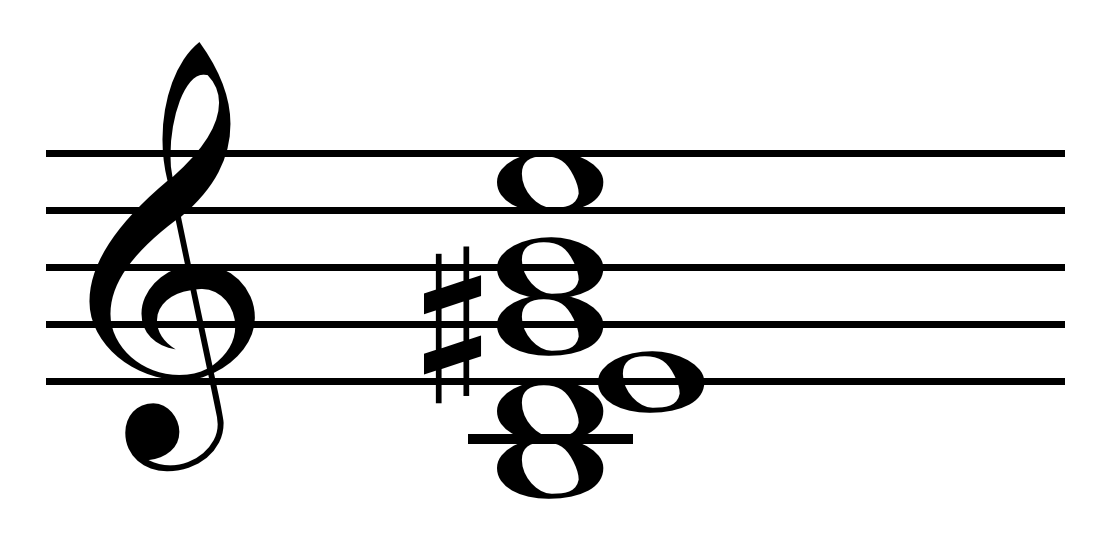
Nashville tuning: E7, seventh chord subset of ninth chord.

E9 tuning is a common tuning for steel guitar necks of more than six strings. It is the most common tuning for the neck located furthest from the player on a two-neck console steel guitar or pedal steel guitar while a C6 neck is the one closer to the player. The E9 is a popular tuning for single neck instruments of eight or more strings. This tuning has evolved in the last half of the twentieth century with input from prominent performers including Jimmy Day, Ralph Mooney and Buddy Emmons to support optimal chord and scale patterns across a single fret on the 10-string pedal steel guitar.

Corresponding tunings for a six string lap steel guitar are the E6 tuning E–G–B–C–E–G, or E7 tuning B–D–E–G–B–E.

A popular E9 tuning for eight string console steel guitar is the Western swing tuning E–G–B–D–F–G–B–E, low to high and near to far.

The standard Nashville E9 tuning also called the E9 chromatic tuning[1]: 7  for ten string pedal steel guitar is B–D–E–F–G–B–E–G–D–F.[2]

History and evolution

[edit]

The Nashville standard E9 tuning was developed primarily from 1950 to 1970 during experimentation by elite steel guitarists. Educator Mark Van Allen called the modern E9 tuning "logical" and the "perfect vehicle for most modern music".[3] In 1958, Jimmy Day added an E string (duplicate of the root note) to the middle of the 1940s-style eight-string E9 tuning (E-G-B-D-F-G-B-E) to make nine strings.[4] The change was adopted by other players to become a permanent fixture in the E9 tuning. In 1959, Ralph Mooney added a G (a third interval) at the top end, making ten strings, also an enduring advancement.[4] Buddy Emmons, in 1962 created a reentrant tuning by adding a D (a major seventh) and F (a ninth) at the top.[4] He also eliminated the lowest two strings, still making ten.[4]

E9 tuning-Nashville standard ten string pedal steel

Emmons said, "The thought behind the F and D notes was to fill the gap between the G and C pedal note of the E9 tuning"[5] The Nashville standard E9 for decades has remained B–D–E–F–G–B–E–G–D–F. It allows the performer to play a major scale without moving the bar.[2]

See also

[edit]

References

[edit]
Revisions and contributorsEdit on WikipediaRead on Wikipedia
from Grokipedia
E9 tuning is a chromatic open tuning standard for the ten-string , particularly the neck positioned farthest from the player on double-neck instruments, with open string notes from lowest to highest reading B–D–E–F♯–G♯–B–E–G♯–D♯–F♯, which collectively form the notes of an E9 chord (E, G♯, B, D, F♯) across the lower eight strings. This configuration allows players to access nearly two full octaves of the and scales directly at the nut without fretting, while foot pedals and knee levers alter string pitches to produce major, minor, seventh, and ninth chords essential to , western, and related genres. Developed in the mid-20th century as pedal steel guitars evolved from lap steels, E9 tuning emerged as the dominant setup for the instrument's outer neck by the 1950s, with key contributions from innovators like Buddy Emmons and Jimmy Day, who refined the ten-string layout and pedal mechanisms to enhance chord voicings and melodic flexibility. The tuning's "copedent"—a term for the specific combination of string pitches and pedal/lever actions—typically includes three foot pedals labeled A, B, and C, which raise selected strings by whole or half steps (for example, pedal A raises certain B strings to C♯), and two to four knee levers that further bend pitches up or down to enable transitions like E major to C♯ minor or B seventh. In practice, E9 tuning supports the pedal steel's signature and bending techniques, making it ideal for fills, solos, and harmonic accompaniments in styles like and , though variations exist for extended-range or universal setups combining E9 with C6 tuning on the inner . Its range spans from B below middle C to approximately F♯ two octaves above, providing a versatile foundation that has remained the most widely adopted configuration since its standardization in Nashville during the post-World War II era.

Fundamentals

Tuning Configuration

The standard Nashville E9 tuning for a 10-string consists of the following notes, listed from the lowest pitch (bass string) to the highest pitch (treble string): B (string 10), D (string 9), E (string 8), F♯ (string 7), G♯ (string 6), B (string 5), E (string 4), G♯ (string 3), D♯ (string 2), and F♯ (string 1). In pedal steel guitar convention, strings are numbered from 1 to 10, with string 1 being the highest-pitched (thinnest) string positioned farthest from the player and string 10 the lowest-pitched (thickest) string closest to the player. The open string positions collectively form an E9 chord, comprising the notes E (string 8), G♯ (string 6), B (string 5), D (string 9), and F♯ (string 7) across the lower strings, providing a foundational voicing for the tuning. To tune an E9 pedal steel, begin by adjusting from a standard six-string guitar tuning (EADGBE) toward an open E configuration (EBEG♯BE) for the relevant strings, then extend to the full 10-string layout by adding the lower bass strings (D and B) and upper chromatic notes (D♯ and additional F♯). Use an set to standard (A=440 Hz) for precision; pluck each string individually starting from the lowest (string 10, B) and proceed sequentially to the highest (string 1, F♯), verifying each note against the tuner's display while fine-tuning with the instrument's hex screws or tuning machines. Pedals and levers further alter these open notes to access additional chord tones, as detailed in the pedal and functions section.

Chord Basis

The E9 tuning derives its name from the dominant ninth chord it forms when all strings are played open, comprising the root E, major third G♯, perfect fifth B, D, and major ninth F♯. This composition, drawn from the scale with the addition of the flattened seventh and the ninth, establishes a tense, unresolved harmonic foundation typical of dominant chords in , , and . The open strings replicate this E9 voicing across multiple octaves, distributing the chord tones to create a balanced, full-bodied without requiring any or pedal engagement. For instance, the arrangement includes duplicated instances of B (the fifth) and F♯ (the ninth), which provide reinforcement and harmonic density, while the root E, third G♯, and seventh D appear in strategic positions to emphasize the chord's core . This setup highlights the dominant ninth's inherent tension, particularly through the interplay of the D and the major ninth F♯, facilitating smooth resolutions to tonic chords like in common progressions. The interval structure of the chord features perfect fifths, major thirds, and minor sevenths among its tones, with octave displacements ensuring the voicing spans nearly two s for depth and . Octaves among the B and F♯ strings further enhance tonal consistency, allowing the open position to function as a versatile starting point for harmonic exploration. These properties offer significant advantages, enabling players to achieve complete voicings—such as triads or extended harmonies—with little to no finger placement under the bar, which is ideally suited to the continuous sliding and pitch bending that define pedal steel expression.

Historical Development

Origins in Lap Steel

The E9 tuning traces its roots to the traditions of the 1930s and 1940s, where it emerged as an adaptation of open E tuning (E-B-E-G♯-B-E) within the burgeoning and early scenes. Hawaiian styles, popularized in the United States during the 1920s and 1930s, provided the foundational techniques and chordal approaches that western swing musicians incorporated into amplified lap steels, shifting from acoustic Hawaiian slack-key influences toward more robust, slide-based harmonies suited to ensemble playing. This adaptation occurred amid the electrification of guitars, with players experimenting on six- and eight-string models to achieve open voicings that facilitated smooth glissandi over major chords, particularly in the key of E, which aligned with the dominant of fiddle-driven western swing arrangements. Pioneering Hawaiian steel guitarist Sol Hoʻopiʻi exerted significant influence on these developments, as his innovative use of open tunings and chord-melody techniques inspired adopters to blend melodic solos with harmonic fills. Hoʻopiʻi, active from the mid-1920s, often employed variations like (E-B-E-G♯-C♯-E), derived from , to access richer ninth and seventh extensions, which resonated with the jazz-inflected harmonies of bands such as and His Texas Playboys. Early steel players, including Bob Dunn and Leon McAuliffe, credited Hoʻopiʻi and similar Hawaiian figures for introducing bar slants, , and dyadic harmonization, adapting these to lap steel setups in recordings from the late 1930s, such as Dunn's work with Milton Brown and the Musical Brownies. Initial implementations of the tuning on lap steels were typically six-string configurations in the basic open layout (E-B-E-G♯-B-E from low to high), emphasizing the root, third, and fifth for straightforward major and dominant voicings without mechanical aids. Eight-string versions, emerging by the early 1940s on brands like and National, added parallel octaves or auxiliary notes (e.g., low B and high E) to enhance and chord density on electric models, allowing for fuller in live band settings. These setups prioritized acoustic and early electric lap steels, where the open tuning enabled intuitive slide techniques for chordal slides and fills, as heard in McAuliffe's 1936-1942 recordings with , which featured C♯ minor variations for added color. The motivation for adopting and refining this tuning stemmed from the need for more versatile dominant chords in and , where lap steel provided harmonic support for lead vocals and fiddles, offering richer extensions like the (F♯) through partial bar positions compared to standard . This chordal flexibility addressed the genre's demand for seamless key changes and jazz-like progressions in fast-paced dances, setting the stage for later expansions into pedal mechanisms in the .

Evolution to Pedal Steel Standard

The evolution of E9 tuning in the marked a pivotal shift toward its standardization on electric pedal steel guitars, driven by innovations that enhanced chromatic flexibility and tonal range for . Bud Isaacs pioneered the addition of pedals to the during this decade, transforming the instrument from a lap steel variant into a console model capable of dynamic pitch changes while sustaining chords. His debut of this technique occurred on Webb Pierce's 1954 recording of "Slowly," the first major country hit to feature pedal steel, where Isaacs' use of a single pedal to raise specific strings in an E9 configuration produced a signature "crying" effect that popularized the tuning's expressive capabilities. Building on ' foundation, Jimmy Day and further refined E9 tuning in the mid-to-late 1950s, expanding the instrument from eight strings to ten to incorporate a fuller bass register. Day, collaborating with Emmons and luthier Shot Jackson, introduced the lower B, D, and E strings around 1957 through their Sho-Bud manufacturing venture, allowing E9 setups to access deeper pitches essential for accompanying ensemble arrangements. Emmons complemented this by splitting Isaacs' single pedal function into two separate pedals and adding chromatic strings (typically F♯ and D♯), which filled harmonic gaps in the E9 layout and became foundational to the modern setup. By the late 1950s, E9 tuning had solidified as the standard for pedal steel in Nashville session work, aligning with the emerging that emphasized smooth, orchestrated country recordings over raw styles. Session musicians adopted the 10-string E9 configuration for its versatility in major-key voicings and chromatic runs, evolving from earlier lap steel tunings like C6 to support the genre's commercial polish. This standardization, refined by Emmons' contributions to the , ensured E9's dominance in studio productions throughout the era.

Instrumentation and Setup

Pedal and Lever Functions

In E9 tuning, the standard 3-pedal setup mechanically alters specific strings to enable rapid chord formation on the pedal steel guitar. Using numbering from lowest to highest pitch (string 1 bass B to string 10 treble F♯), pedal 1 (A) raises strings 1 and 6—for instance, shifting both from B to C♯ (half step)—which collectively contributes to C♯ minor voicings like C♯ with open strings. Pedal 2 (B) raises the 5th and 8th strings, adjusting both from G♯ to A (half step), supporting transitions to A major and dominant 7th structures. Pedal 3 (C) raises the 7th string from E to F♯ (whole step) and the 6th from B to C♯ (half step), allowing access to B major or suspended chord tones, consistent with common setups. Knee levers supplement the pedals with 2 to 4 additional mechanisms, typically positioned for left- or right-knee operation to provide subtle pitch adjustments without foot involvement. Common configurations include a raising the 3rd and 7th strings from E to F (half step) for tensions, or another lowering the 9th string from D♯ to D to resolve dissonances in bluesy progressions. These levers often couple multiple strings for efficiency, such as simultaneously affecting inner strings to maintain voicing balance. Combinations of pedals and levers yield a range of chord types, including major (e.g., via Pedal 2), minor (via a knee with open strings), and 7th chords (e.g., B7 using Pedal 3 and a knee ). The resulting setup facilitates smooth key changes and fills in country and western music. While the Nashville configuration represents the most widespread standard—with Pedal 1, 2, and 3 as described, plus four knee levers for versatile alterations—custom variations adjust lever placements or add functions tailored to genres like or rock, such as extra lowers for chromatic runs.

String Number Variations

E9 tuning on pedal steel guitars has been adapted to different string counts to suit various instruments, playing contexts, and historical developments, with configurations typically retaining E9 chord (E, G♯, B, D, F♯) while adjusting for range and practicality. The 8-string version, prevalent in early electric pedal steels such as the Fender 400 from the and , uses the tuning E–G♯–B–D–F♯–G♯–B–E from low to high, omitting the lowest two bass strings (B and D) found in later 10-string setups to enhance portability and reduce weight for live performances. This configuration focuses on the mid-range voicings essential for lead and chord work, allowing players to approximate standard E9 pedal and lever functions with fewer strings. The 10-string configuration represents the modern standard for E9 tuning, incorporating added bass strings (low B and D) to the original 8-string layout, resulting in the open tuning B–D–E–F♯–G♯–B–E–G♯–D♯–F♯ from low to high, which provides a fuller sonic range particularly beneficial in studio recordings and settings where deeper low-end support is needed. Twelve-string extensions of E9 tuning are less common and typically involve adding lower strings such as an extra low E and G♯ to the standard 10-string setup (e.g., E–G♯–B–D–E–F♯–G♯–B–E–G♯–D♯–F♯ low to high), extending the instrument's range downward to better integrate with standard parts and increase overall volume and depth during live performances. Pedal adjustments in these setups scale to the additional strings, maintaining compatibility with core E9 voicings. Adaptations of E9 tuning for non-pedal steel instruments, such as lap steels or Dobros, often employ 6- to 8-string truncations that preserve essential E9 elements for practice or simplified playing; for example, a 6-string lap steel might use D–E–F♯–G♯–B–E low to high, while an 8-string version aligns closely with the pedal steel's mid-range strings (E–G♯–B–D–F♯–G♯–B–E). These variations enable core E9 chord voicings and scales without the full pedal mechanism, commonly used by players transitioning between instruments.

Musical Applications

Techniques and Voicings

String numbers in this section follow the standard pedal steel convention, where string 1 is the highest pitch (F♯, farthest from the player) and string 10 is the lowest pitch (B, nearest the player). In E9 tuning on the , bar techniques form the foundation of chord articulation and melodic expression. A full bar across all strings, typically held with the left hand using a solid or bar, produces the open E9 voicing when no pedals or levers are engaged, allowing the player to slide smoothly up the for position changes. Partial bars, achieved by angling or lifting the bar's edge to contact only selected strings, enable inversions and upper-structure voicings by isolating notes like the third or fifth in a chord. Blocking techniques complement this by using the left-hand thumb or —or the right-hand palm—to mute unwanted strings, ensuring selective note sustain and preventing unwanted ringing, which is essential for clean inversions in complex passages. Pedal transitions in E9 tuning facilitate dynamic harmonic shifts, particularly for bass line movements. For instance, transitioning from to involves engaging Pedal A (which raises strings 5 and 10 by a whole step from B to C♯) followed by Pedal B (raising strings 3 and 6 by a half step from G♯ to A), creating a smooth walking bass effect as the lowest strings shift pitches sequentially without bar movement. This technique, often combined with knee levers for fine adjustments, allows for fluid changes in root position chords, mimicking upright bass lines in ensemble playing. Common voicings in E9 tuning leverage the open string layout and pedal combinations for major chords and dominant sevenths, typically played with three-finger grips on the right hand for picking. The triad is formed openly on strings 3, 4, 5, 6, 8, and 10 (notes: G♯-E-B-G♯-E-B from high to low), using no pedals and barring across the nut for a full voicing; adding Pedal A enhances it to include the more prominently across the neck. is achieved with Pedals A and B engaged, voicing the triad on the same string groups (A-E-C♯-A-E-C♯ from high to low), with fingerings typically involving the on string 6, middle on 5, and ring on 4 for efficient rolls. For B7, Pedal B combined with Knee Lever E (lowering strings 4 and 8 by a half step) produces the dominant seventh (B-D♯-F♯-A-B-D♯-F♯-A) on strings 1 through 8 and 10, fingered with thumb on string 1, index on 3, and pinky on 5 to accommodate the altered tensions. The scale implications of E9 tuning arise from its diatonic structure, where knee levers enable micro-adjustments for chromatic passing tones. Lever movements, such as Knee Lever D raising string 1 by a half step, allow insertion of half-step fills between degrees, facilitating expressive country-style runs without retuning. This setup supports the and scales across nearly two octaves at the nut, with pedal-activated harmonies adding tension and resolution for idiomatic fills.

Genre-Specific Usage

E9 tuning has been a cornerstone of country and western music, particularly within the Nashville sound that flourished from the 1950s through the 1970s, where it provided the signature weepy slides and harmonic fills essential to intros, solos, and backing textures in recordings. This tuning's chromatic capabilities enabled pedal steel players to emulate horn sections and add emotional depth to ballads and uptempo tracks, as heard in classics like "Steel Guitar Rag," a staple that showcased the instrument's versatility in live and studio settings. Pioneering musicians such as Buddy Emmons exemplified precise voicings and innovative pedaling in this era, contributing to landmark sessions with artists like Ray Price and Little Jimmy Dickens, which helped define the polished country aesthetic. In the Bakersfield sound, a rawer counterpart to Nashville's polish, elevated E9 tuning through his work with , delivering iconic solos on tracks from Haggard's early albums like Stranger in My Own Home Town (1969), where the pedal steel's twang intertwined with Telecaster riffs to capture working-class narratives. , a prolific Nashville session veteran, further entrenched E9's role by appearing on thousands of recordings across seven decades, including hits by and , where his clean articulations and chordal support underscored the genre's melodic storytelling. The roots of E9's country applications trace to western swing in the 1930s, where Bob Dunn's amplified lap steel innovations laid groundwork for the genre's big band-style fills, later adapted to pedal steel E9 configurations for swinging ensembles like and His Texas Playboys. This evolution allowed E9 to bridge jazz-inflected improvisation with structures, influencing pedal steel's expansion into fuller orchestral roles by the mid-20th century. In contemporary extensions, E9 tuning persists in alt-country and Americana, where artists blend its traditional slides with indie and folk elements, often hybridizing with C6 voicings for atmospheric layers in songs evoking rural introspection, as seen in the pedal steel's prominent role in Wilco's early albums like Being There (1996). This modern usage draws on classic techniques like bar glissandos for subtle emotional swells, adapting E9's harmonic palette to broader genre fusions while maintaining its evocative country essence.

Variations and Comparisons

Extended Configurations

Extended configurations of E9 tuning often involve increasing the number of strings beyond the standard 10 to accommodate broader tonal ranges and hybrid voicings, particularly on single- or double-neck pedal steel guitars. In 12-string setups, known as Extended E9, two additional low strings—a G# and an E—are added below the conventional low B, extending the instrument's bass response to mimic the lower register of a standard electric lead guitar while maintaining the core E9 structure. This configuration is popular on single-neck (S-12) instruments, allowing players to access deeper voicings without sacrificing the high-end clarity essential for lead lines. For C6 overlap, some 12-string Extended E9 setups incorporate elements of the B6 tuning (a transpositional variant of C6) through dedicated knee levers that lower specific strings, such as strings 2, 4, and 8, to produce sixth-chord voicings compatible with C6-style fills on the same neck. Although less common, 14-string configurations appear on certain single-neck models, blending elements of E9 and C6 tunings. Pioneering player experimented with 12-string necks tuned to an E13th extension of E9, adding upper-register strings for richer dominant chord voicings and greater harmonic complexity. Modifications like half-stops on knee levers, such as lowering the second string, facilitate bluesy shuffle rhythms by enabling precise half-step bends that enhance the swinging, triplet-based feel common in country-blues hybrids. In Nashville-style customizations, innovators like Emmons incorporated micro-adjustments via partial lever engagements—often called half-stops—for precise half-step bends, enabling subtle chromatic inflections suited to jazz-infused country fusion without altering the full tuning. Hybrid tunings extend the standard 10-string E9 by incorporating lower bass strings tuned to A or Bb, broadening key access for live settings where rapid modulation between E-major and relative minors or dominants is required; this is achieved through additional floor pedals or extended knee levers that drop the lowest string from B to A (or Bb via intermediate stops) while preserving the upper E9 framework. These modifications, while non-standard, allow for versatile performance without switching necks, though they demand careful intonation adjustments to maintain playability across the expanded range.

Relation to Other Open Tunings

E9 tuning, which forms a dominant ninth chord (E-G♯-B-D-F♯) across its primary strings, contrasts with C6 tuning's sixth chord structure (C-E-G-A), enabling E9 to emphasize tension and resolution suitable for lead lines in country music, while C6 supports sweeter, more harmonic fills often used in western swing or Hawaiian styles on the same pedal steel instrument. This distinction arises because E9's flat seventh (D) creates a bluesy pull toward the tonic, whereas C6's added sixth (A) yields a smoother, major-sixth voicing that complements rather than leads, frequently paired on double-neck pedal steels where C6 occupies the rear neck. In comparison to open E tuning on standard guitars (E-B-E-G♯-B-E), which provides a basic major triad for straightforward slide playing, E9 introduces the added flat seventh and for greater tension and color, though it relies on pedals for full chromatic access absent in non-pedal open E setups. Open E thus offers simplicity for acoustic or applications but lacks E9's extended voicing potential without modifications. E9 also relates to other Western swing tunings like A6 (A-C♯-E-F♯) and E13 (E-G♯-B-D-F♯-A-C♯), sharing sixth and thirteenth extensions for jazz-inflected harmonies, yet E9's standardization in Nashville during the mid-20th century positions it as more versatile for dominant seventh progressions central to pedal steel. While A6 and E13 appear in niche or experimental configurations, E9's prevalence stems from its balance of open chord accessibility and pedal-altered diatonic shifts. Across instruments, E9 finds dominance on pedal steel guitars, where levers and pedals unlock its full potential for , but remains rare on lap steels that favor simpler open tunings like C6 or open E to avoid the need for mechanical aids. This preference highlights E9's evolution as a pedal-specific system rather than a universal open tuning.

References

Add your contribution
Related Hubs
User Avatar
No comments yet.