Hubbry Logo
Open E tuningOpen E tuningMain
Open search
Open E tuning
Community hub
Open E tuning
logo
8 pages, 0 posts
0 subscribers
Be the first to start a discussion here.
Open E tuning
Open E tuning
from Wikipedia
Open E tuning

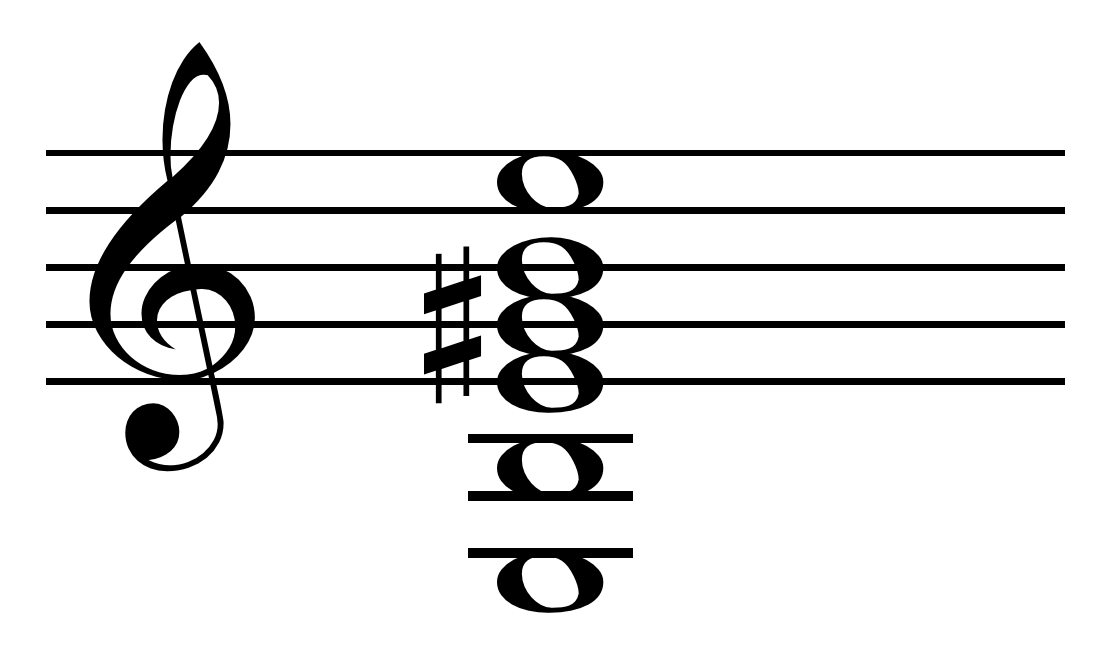
Open E tuning is a tuning for guitar: low to high, E-B-E-G-B-E.[1]

Compared to standard tuning, two strings are two semitones higher and one string is one semitone higher. The intervals are identical to those found in open D tuning. In fact, it is common for players to keep their guitar tuned to open d and place a capo over the second fret. This use of a capo allows for quickly changing between open d and open e without having to manipulate the guitar's tuning pegs.[2]

Familiar examples of open E tuning include the distinctive song "Bo Diddley" by Bo Diddley, the beginning guitar part on the song "Jumpin' Jack Flash" and the rhythm guitar on "Gimme Shelter" by The Rolling Stones, as well as their distinctly earthy blues song "Prodigal Son" from the Beggars Banquet album, originally by Robert Wilkins. The whole of Bob Dylan's Blood on the Tracks album was recorded in open E tuning, although some of the songs were re-recorded in standard tuning prior to the album's release.[3][4] The tuning is also used in The Black Crowes' "She Talks to Angels", Glen Hansard's "Say It To Me Now", Joe Walsh's "Rocky Mountain Way", Rush's "Headlong Flight", Dave Mason's "We Just Disagree", The Faces' "Stay With Me", Billy F. Gibbons in "Just Got Paid", The Smiths' "The Headmaster Ritual",[5] and Hoobastank's "Crawling In The Dark". It is also Derek Trucks' usual open tuning for "Midnight in Harlem" and is used for the guitar on Blink-182's "Feeling This". Open E tuning also lends itself to easy barre-chording as heard in some of these songs. Chris Martin of Coldplay also uses this tuning live in the song "Hurts Like Heaven", but puts a capo on at the sixth fret.

Open E tuning is often used for slide guitar, as it constitutes an open chord, which can be raised by moving the slide further up the neck. Most notably Duane Allman used open E for the majority of his slide work, such as in "Statesboro Blues".

See also

[edit]

References

[edit]
Revisions and contributorsEdit on WikipediaRead on Wikipedia
from Grokipedia
Open E tuning is an alternate guitar tuning in which the six strings, from lowest to highest, are tuned to the notes E, B, E, G♯, B, and E, producing an chord when strummed without any strings. This configuration raises three strings from (E-A-D-G-B-E): the fifth string (A) up a whole step to B, the fourth string (D) up a whole step to E, and the third string (G) up a half step to G♯, requiring light-gauge strings to manage the increased tension and avoid string breakage. Also known as Vestapol tuning—a name derived from the 1854 folk song "The Siege of Sebastopol" by composer Henry Worrall, which popularized the open D variant in 19th-century guitar manuals—Open E emerged as a staple in blues, folk, and rock music by the early 20th century. It facilitates slide or bottleneck guitar techniques, as the open chord structure allows easy formation of major chords by barring a single fret with a slide or finger, while the ringing open strings add harmonic resonance. The tuning's versatility supports both rhythmic strumming and melodic solos, making it ideal for genres emphasizing raw, emotive expression. Prominent artists have leveraged Open E for iconic recordings, including blues pioneer in his self-titled 1955 track, of in "" (1971), and of in songs like "" (1968) and "" (1969). Other notable users include of Led Zeppelin, on his 1975 album (e.g., ""), and in "" (1990), highlighting its enduring influence across , rock, and folk traditions.

Definition and Basics

Tuning Configuration

Open E tuning on a standard six-string guitar adjusts the pitches of three strings to produce an open chord when all strings are strummed without . The specific , from the lowest (6th string) to the highest (1st string), are E2, B2, E3, G♯3, B3, and E4. To tune from standard EADGBE configuration, retain the 6th string at E2, the 2nd string at B3, and the 1st string at E4; raise the 5th string from A2 to B2 (one whole step); raise the 4th string from D3 to E3 (one whole step); and raise the 3rd string from G3 to G♯3 (one half step). These adjustments increase overall string tension, particularly on the 3rd, 4th, and 5th strings, which may require a truss rod adjustment to counteract added neck bow. Heavier string gauges are recommended to balance the elevated tension and ensure comfortable playability; a common set ranges from .013 (high E) to .056 (low E), providing adequate strength for the bass strings without excessive stiffness on the trebles. The following table illustrates the fretboard notes in Open E tuning for the open position and the first four frets, with strings labeled from 6 (lowest) to 1 (highest):
FretString 6String 5String 4String 3String 2String 1
0E2B2E3G♯3B3E4
1F2C3F3A3C4F4
2F♯2C♯3F♯3A♯3C♯4F♯4
3G2D3G3B3D4G4
4G♯2D♯3G♯3C4D♯4G♯4
This layout highlights the repeating E and B notes across octaves, facilitating easy chord formation.

Chord Characteristics

In Open E tuning, the open strings are tuned to E-B-E-G♯-B-E from lowest to highest, forming an chord when strummed without any notes; this configuration consists of the root (E) on the sixth, fourth, and first strings, the fifth (B) on the fifth and second strings, and the (G♯) on the third string. This inherent major triad structure provides a resonant foundation that emphasizes the root and fifth intervals across multiple octaves. Basic major chords in this tuning are achieved through simple barre techniques, where a single finger bars across the strings at a given to shift the note up the scale. For instance, barring all six strings at the second produces an chord, while barring at the fifth yields an A major chord; these shapes maintain the open E intervals but transpose them diatonically. Partial barres across the top four strings can also be used for denser voicings if desired, though full barres enhance the tuning's symmetric resonance. The tuning's unique harmonic properties arise from its repeated root and fifth notes, which act as drone strings to sustain and produce rich ringing even in simple voicings. This creates a fuller, more ambient sound compared to , with natural harmonics at frets like the fifth, seventh, and twelfth reinforcing qualities. For minor and seventh chords, modifications involve lifting or specific strings; for example, lifting the G♯ on the third string while playing the open others approximates an chord by omitting the , and adding a fret on the fourth string at the third fret introduces a minor third for a more complete Em voicing. Similarly, an E7 can be formed by the fifth string at the third fret to add the dominant seventh (D3) or the second string at the third fret (D4), while keeping the other strings open.

History

Origins in Folk and Blues

Open E tuning emerged as a foundational element in the early 20th-century Delta blues tradition, particularly among self-taught African American musicians in the rural region who favored open tunings to facilitate techniques. This tuning, which produces an open chord when strummed without fretting, allowed players to generate rich, resonant chord voicings and fluid glissandos using a slide or bottleneck, bypassing the need for complex fingerstyle barring. Pioneers like , active in the 1920s and 1930s, exemplified the raw intensity of Delta slide playing, though House predominantly employed ; his aggressive, percussive style nonetheless influenced the adoption of similar open configurations, including Open E, for evoking emotional depth in blues expression. The technique's roots trace back to folk traditions, with significant influence from Hawaiian slack-key guitar and bottleneck slide methods introduced to the United States following the 1910s popularity of Hawaiian music tours and vaudeville acts. Native Hawaiian guitarists, using metal bars or knives to glide over open-tuned strings for sweeping glissando effects, performed extensively in the American South, inspiring local musicians to adapt these approaches to acoustic guitars. This cross-cultural exchange, documented in early 20th-century travels by Hawaiian ensembles, blended with existing African American string traditions like the diddley bow to shape the bottleneck style central to Delta blues. By the 1920s and 1930s, Open E became a preferred variant for its brighter tone and ease in achieving major chord slides. One of the earliest prominent showcases of Open E tuning in recorded blues came from , who, drawing from Delta influences during his formative years in the 1930s, electrified the style in his 1951 single "." James' aggressive slide work on this track created iconic swooping riffs that defined slide and popularized the tuning beyond acoustic folk roots. Earlier acoustic precedents existed in the Vestapol tradition—an open D or tuning named after a 19th-century parlor guitar piece—but James' recording marked a pivotal documentation of Open E's slide applications in the blues canon. In the cultural of Southern U.S. during the early , Open E tuning democratized music-making for untutored players in impoverished rural communities, enabling full, drone-like chord sounds with minimal technical barriers. This accessibility resonated in juke joints and work settings of the , where the tuning's harmonic openness amplified the genre's themes of hardship and resilience, fostering a communal, improvisational ethos among musicians without formal training.

Evolution in Modern Music

In the 1960s, Open E tuning gained prominence in rock music through the British Invasion, as guitarists drew from American blues traditions to craft raw, resonant sounds. Keith Richards of the Rolling Stones, influenced by Ry Cooder, adopted open tunings—including Open E—for tracks like "Gimme Shelter" (1969), where the slide guitar elements highlighted the tuning's droning harmonics and slide-friendly structure. This approach, rooted in earlier blues practices, allowed bands to blend folk-blues roots with electric rock energy, spreading the tuning's use beyond acoustic folk contexts. By the 1970s, further popularized Open E in , leveraging it for extended jams and improvisational slide work that defined the genre's expansive sound. , the band's pioneering guitarist, favored Open E for nearly all his slide performances, as heard in songs like "Statesboro Blues" (1971), which showcased the tuning's ability to produce rich, overdriven tones in live settings. This adoption influenced jam-oriented bands, embedding Open E in the fabric of and encouraging its exploration in group improvisation. The 1990s and 2000s saw a revival of Open E in and indie scenes, where artists experimented with its gritty, unpolished textures to evoke raw emotion and sonic experimentation. Bands like used it for brooding tracks such as "" (1990), while indie acts including My Morning Jacket ("Golden," 2003) further adapted the tuning for atmospheric layers, blending it with modern production to create ethereal yet aggressive soundscapes. By the 2000s, Open E tuning's global accessibility surged through expanded and online platforms, democratizing its use far beyond traditional and rock circles. Resources like Fender's instructional guides and tab sites such as (launched 1998) provided free tutorials and chord charts, enabling learners worldwide to experiment without formal instruction. This digital proliferation, alongside university-level guitar programs incorporating alternate tunings, fostered adoption among diverse musicians, from hobbyists to professionals in non-Western contexts.

Musical Applications

Use in Blues and Slide Guitar

Open E tuning's open chord structure, with strings tuned to E-B-E-G#-B-E forming an E major chord when strummed openly, makes it particularly suited for in traditions, allowing seamless glissandos across the fretboard without complex fingering. This configuration is prevalent in , where the tuning facilitates raw, expressive slides that mimic vocal inflections, and in , where electric amplification enhances its resonant tone for urban ensemble playing. In 12-bar blues progressions, Open E enables straightforward chord voicings by barring the slide at s corresponding to the I (E), IV (A at 5), and V (B at 7) chords, supporting riff-based playing that emphasizes repeating motifs on the low E string for a hypnotic, driving pulse. These riffs often incorporate pentatonic phrases slid from open positions to the 12th , creating tension and release within the form's repeating structure. The tuning integrates effectively with bottleneck or bar slides, typically worn on the ring or pinky finger, to produce a vocal-like sustain; bottlenecks yield a smoother, warmer tone, while metal bars offer brighter attack. For clarity, players dampen unused strings with the picking hand palm or fretting-hand fingers behind the slide, preventing unwanted ringing and ensuring precise note articulation during glissandos. Higher string action and medium-gauge strings (e.g., .013–.056) further aid tone production by allowing the slide to hover lightly over frets without buzzing. In subgenres like Piedmont blues, Open E contributes rhythmic drive through alternating bass patterns on the lower strings, where the thumb alternates between root and fifth notes while the fingers articulate syncopated melodies on the upper strings, blending fingerstyle precision with the tuning's harmonic openness.

Applications in Rock and Folk

In rock music, Open E tuning facilitates the creation of robust power chords and driving riffs that leverage the tuning's inherent resonance, particularly when paired with distortion to amplify natural harmonics and sustain. This setup allows guitarists to execute barre shapes across the fretboard for seamless chord transitions, adding a gritty edge suited to high-energy genres. For instance, Keith Richards of the Rolling Stones employed Open E for the iconic riff in "Jumpin' Jack Flash" (1968), where the open strings' harmonic overtones enhance the song's raw, electrified punch during ensemble performances. Similarly, Joe Walsh utilized the tuning in "Rocky Mountain Way" (1973) to craft layered riffs that provide textural depth within the Eagles' lineup, blending rhythmic drive with melodic hooks. In folk traditions, Open E excels as an accompaniment tool, enabling simple barre chords that ring out with drone-like resonance to underpin vocals and narrative storytelling. The tuning's open major chord foundation supports modal progressions and partial chording, fostering an intimate, earthy sound ideal for solo or small-group settings. extensively applied this in the original New York sessions for his 1975 album , recording tracks like "" and "" in Open E to achieve warm, resonant voicings that evoke emotional introspection and folk authenticity. The Allman Brothers Band's instrumental "" (1971) demonstrates its ensemble utility, with dual acoustic guitars in Open E creating interlocking textures that add subtle harmonic layers without overpowering the melody. Singer-songwriters often adopt Open E for hybrid approaches, exploiting its open voicings to convey profound emotional depth through sparse, drone-infused arrangements that blend fingerstyle elements with strumming. This allows for fluid shifts between major and suspended chords, mirroring lyrical vulnerability in genres bridging folk and rock. Dylan's use in Blood on the Tracks exemplifies this, where the tuning's sympathetic resonances—such as those from unfretted strings—heighten the album's themes of loss and reflection, influencing subsequent artists in introspective formats. In band contexts, it contributes textural undercurrents, as seen in the Black Crowes' "She Talks to Angels" (1990), where Open E guitars weave harmonic support beneath vocals and percussion for a cohesive, atmospheric rock-folk blend.

Notable Musicians

Early Blues Innovators

(1902–1988), a pivotal figure in , was born Eddie James House Jr. in Riverton, Mississippi, and developed his raw, impassioned style through early influences like the sacred and secular traditions. His recordings, particularly the 1965 track "Death Letter Blues" from the album Father of Folk Blues, showcased intense work that emphasized emotional depth and rhythmic drive, helping to preserve and popularize acoustic slide techniques central to the evolution of open tunings in . House's approach to slide expression influenced subsequent generations of blues guitarists. Bo Diddley (1928–2008), born Ellas McDaniel in , was an influential and rock pioneer who frequently used Open E tuning for its resonant slide and rhythmic possibilities. His self-titled 1955 debut single "Bo Diddley," recorded for , featured the signature "" rhythm driven by Open E-tuned guitar, blending blues with proto-rock elements and popularizing the tuning in early . Elmore James (1918–1963), born Elmore Brooks in Richland, , emerged as a transformative artist, blending Delta roots with amplified intensity after learning from figures like and . His signature sound on tracks like "" (1951), featured prominent in Open E tuning, which allowed for resonant major chords and fluid bends that defined his aggressive, wailing style. This innovation amplified the emotional power of slide, impacting amplification and inspiring rock crossovers through reissues like The Best of Elmore James: The Fire/Fuel Years. Bukka White (1906–1977), born Booker T. Washington White in , was a versatile pioneer who integrated gospel, field hollers, and work songs into his repertoire, often performing on National resonator guitars. His acoustic slide roots are evident in early recordings like "Fixin' to Die Blues" (1937), evoking the droning, hypnotic quality of labor chants and rural narratives. White's 1930s sessions for Vocalion and Victor, including hits like "Fixin' to Die Blues," established slide techniques that bridged folk traditions to modern , with his rediscovery in the 1960s amplifying authentic acoustic expression in .

Contemporary Artists

Duane Allman, a pivotal figure in the transition from to rock during the late and early , prominently employed Open E tuning in his work with the Allman Brothers Band, most notably on their live rendition of "" from the 1971 album . This performance showcased Allman's dual guitar interplay with , where his Open E-tuned delivered resonant, -inflected slides that bridged traditional with the improvisational energy of . Jack White, born in 1975 and known for his work with The White Stripes, incorporated Open E tuning into early tracks like "I Fought Piranhas" from the 2000 album De Stijl, utilizing it to achieve a raw, slide-driven sound on his Japanese-made Airline guitar. This approach contributed to the band's minimalist rock aesthetic, emphasizing distorted, resonant chords and riffs that evoked garage rock roots while experimenting with alternate tunings for textural depth. White maintained the guitar in Open E specifically for slide applications, highlighting his affinity for tunings that facilitate both rhythm and lead elements in a stripped-down setup. Derek Trucks, born in 1979 and a core member of the Tedeschi Trucks Band, has made Open E tuning a cornerstone of his slide guitar style, drawing from influences like Allman while evolving it into fluid, improvisational expressions in contemporary blues and jam contexts. Trucks, who began using Open E as a child prodigy, employs it across much of the band's repertoire, such as extended solos in songs like "Midnight in Harlem" from the 2011 album Revelator, where the tuning allows for seamless modal explorations and dynamic phrasing without a slide on some passages. His technique, often on a or custom Reso-Phonic, underscores Open E's versatility in modern fusion, blending Indian classical elements with American roots music. Keith Richards, born in 1943 and a longtime guitarist for , adapted for select acoustic and rhythm parts in tracks like "" from the 1969 album , where it enhanced the song's brooding atmosphere through open voicings and slide accents on his . This usage, distinct from his more famous Open G setups, allowed Richards to craft interlocking textures with rhythm sections, influencing the band's evolution toward psychedelic and edges in the late 1960s. He has revisited Open E sporadically in live settings and recordings, valuing its resonance for songs requiring a fuller, major-key openness in ensemble arrangements.

Techniques and Styles

Slide Guitar Techniques

Slide guitar in Open E tuning requires specific setup considerations to ensure clean intonation and resonance across the open strings, which form an chord. The slide, typically made of glass for a smoother tone or metal for brighter sustain, is placed directly over the fret wire rather than between frets to achieve precise pitch alignment, particularly when barring across all strings for open chord voicings. Common practice involves wearing the slide on to allow with the index and middle fingers if needed, though placement can vary based on the player's hand size and style. Basic techniques emphasize fluid motion and expression, starting with applied by gently rocking the slide side-to-side or forward-backward to add emotional depth to sustained notes. Hammer-ons and pull-offs are integrated with slides to create seamless bends characteristic of phrasing, where the slide glides into position while the fretting hand hammers or pulls for rapid note transitions. These methods exploit the tuning's open structure, allowing open strings to ring sympathetically during slides for a fuller sound often heard in applications. Advanced techniques build on this foundation with double-stop slides, where the slide covers two adjacent strings—such as those at the 10th and 12th s—to produce harmonized intervals that enhance melodic lines. Harmonic feedback is another key method, achieved by positioning the slide at the 12th and using controlled amp volume to excite the open E strings' natural , creating sustained without picking. Equipment adjustments are crucial for optimal slide performance in Open E, including the use of heavier gauge strings (typically .011-.052 sets or thicker on the strings) for better sustain and to prevent unwanted string bending under slide pressure, although lighter gauges are generally recommended for open E tuning overall. Additionally, raising the string action to around 3-4 mm at the 12th minimizes buzz during slides, ensuring the slide glides smoothly without the of the open strings.

Fingerstyle and Hybrid Approaches

Fingerstyle playing in Open E tuning often draws on adapted patterns such as variations of Travis picking, where the thumb alternates bass notes on the low E string (6th string) and the E on the 4th string to create a steady drone foundation, while the index and middle fingers articulate melodies on the higher B and E strings. This approach leverages the tuning's resonant open (E-B-E-G#-B-E) for a rich, layered texture without relying on complex fretting, allowing for intricate polyphonic arrangements similar to those influenced by Elizabeth Cotten's alternating bass style. Strumming techniques in Open E emphasize partial chord voicings to avoid excessive from all six strings, focusing downstrokes on the mid-range to highlight the (G# on the 3rd string) for enhanced rhythmic drive and harmonic clarity. This method produces a punchy, driving rhythm suitable for folk and accompaniment, where selective strumming maintains momentum while preserving the tuning's inherent openness. combines a flatpick for bass lines with finger-plucked on the upper strings, enabling dynamic folk-rock textures through arpeggiated patterns that roll across the open strings for added sustain and complexity. For instance, picking the low E drone while fingering arpeggios on the G#-B-E strings creates cascading, piano-like effects ideal for melodic interludes. Adaptation with a capo allows transposition to higher keys while retaining the open chord voicings and fingerstyle feel; placing a capo on the 2nd , for example, effectively raises the tuning to to explore varied tonal palettes without altering hand positions.

Advantages and Challenges

Key Benefits

Open E tuning simplifies the formation of major chords by allowing the open strings to produce an chord without any , which reduces the need for complex finger stretches and makes it particularly accessible for beginners and rhythm guitarists focused on strumming patterns. This approach enables players to barre across all strings at any to form other major chords—such as at the third or at the fifth—facilitating smoother progressions and encouraging creative exploration without the barre chord challenges common in . For , Open E tuning enhances expressive capabilities by aligning the strings in a way that supports seamless chord transitions and emphasizes rich overtones, as the slide can glide across frets to produce clear, full-voiced majors and minors with minimal adjustment. This configuration is especially effective for evoking the emotive bends and sustains characteristic of and rock slide playing, where the tuning's structure allows for immediate richness upon sliding. The tuning produces a fuller, more resonant through multiple strings sharing the same pitches—such as the low E on the sixth and fourth strings, and B on the fifth and second—creating unisons and octaves that amplify vibrations and sustain when strummed open or partially fretted. This inherent resonance is particularly well-suited for acoustic amplification, where the overlapping notes contribute to a lush, drone-like quality that fills space without additional effects. Open E tuning offers versatility for songwriting by centering on the key while allowing quick experimentation with related keys through simple capos or barre positions, enabling writers to prototype ideas efficiently across harmonic centers. This flexibility supports rapid iteration in composition, as the tuning's chord voicings lend themselves to both sparse fingerpicking and full strums, adapting readily to various musical contexts.

Potential Drawbacks

One significant limitation of Open E tuning is the increased string tension compared to , as the third, fourth, and fifth strings are raised in pitch, resulting in a tighter feel that exerts greater pull on the guitar neck. This can cause the neck to bow forward more than in standard or lower-tension open tunings like Open D, potentially necessitating adjustments to maintain proper neck relief on guitars not specifically designed for higher tension. The elevated tension also heightens the risk of string breakage, particularly on acoustic guitars, and may require the instrument to settle over 10-15 minutes after tuning before stabilizing. Additionally, this tension can indirectly affect intonation, especially beyond the 12th , where the altered string lengths and pressures—particularly on the lower strings—may lead to notes sounding sharp or flat without saddle adjustments to compensate for the setup changes. Open E tuning, being a major chord configuration, offers reduced flexibility for forming complex minor or altered chords, as shapes for these are less intuitive and require more fretting effort than major voicings or progressions, limiting its versatility for non-slide or non- applications compared to . Frequent slide use in Open E tuning accelerates wear, as the slide rests directly on the s, potentially causing scratches or indentation over time if technique is not precise. This often demands a specialized guitar setup, such as higher action (e.g., 2-2.5mm at the 12th ) and heavier gauge s to prevent buzzing while accommodating the slide, though such modifications can make standard fretted playing more challenging and physically demanding.

Comparisons to Other Tunings

Versus Standard Tuning

Open E tuning raises the fifth (A to B), fourth (D to E), and third (G to G♯) strings from standard EADGBE to form an open E major chord (E-B-E-G#-B-E), fundamentally altering playability compared to standard tuning by prioritizing resonance over versatility. In terms of chord complexity, Open E simplifies the formation of major chords, allowing players to achieve full voicings by simply barring a single finger across all strings at any fret, such as the third fret for a G major chord, whereas standard tuning demands more intricate fingerings involving multiple fingers for even basic open chords. This simplification extends to progressions in keys like E major but can complicate standard repertoire, often requiring retuning or adapted shapes for minor or seventh chords that do not align with the open major structure. The sound profile of Open E emphasizes a drone-like quality with rich harmonics, as the open strings ring together in and octaves to create a fuller, more sustained tonal ideal for rhythmic strumming and layered textures, in contrast to 's balanced intervals that support clearer melodic lines and polyphonic independence across strings. This harmonic density arises from the duplicated notes (two E's and two B's), producing overtones that enhance the guitar's natural sustain but can muddy intricate single-note passages compared to the even spacing in . Regarding the learning curve, Open E offers an easier entry point for techniques, where a slide or barre can cleanly articulate chords without partial issues common in , though it poses challenges for players accustomed to standard's barre chord system, necessitating a relearning of the fretboard and new voicings for familiar songs. Transitioning from thus involves a steeper initial adjustment for chord transitions and scales, but it rewards with intuitive access that can accelerate progress in resonant styles. Practically, Open E demands dedicated guitars due to its increased string tension—particularly on the raised strings (to B, E, and G♯)—which can strain necks, risk string breakage, and require lighter gauge strings or setup adjustments like a larger nut, unlike the versatile that accommodates most playing without specialized modifications. This setup specificity limits Open E's use in mixed ensembles or quick genre shifts, where standard tuning's adaptability allows seamless play across diverse material without retuning.

Versus Other Open Tunings

Open E tuning, which produces an E major chord when strummed open (E-B-E-G♯-B-E), differs from other open major tunings in its string intervals, overall tension, and tonal characteristics, making it particularly suited to certain styles within the blues tradition. In contrast, Open G tuning (D-G-D-G-B-D) features a voicing with the fifth below the root on the lower strings, creating a more relaxed, inverted structure compared to Open E's root-fifth-root foundation. This interval difference in Open G contributes to a warmer, less aggressive tone, often described as providing a standard tuning-like feel when the lowest string is muted or omitted, as favored by artists like Keith Richards of the Rolling Stones for rock and blues riffs. Tension in Open E is notably higher due to raising the third (G to G♯), fourth (D to E), and fifth (A to B) strings from standard tuning, which can increase neck stress and string breakage risk, whereas Open G achieves its tuning by lowering strings, resulting in looser feel ideal for extended play. Compared to Open D (D-A-D-F♯-A-D), which mirrors Open E's intervals but a whole step lower, Open E offers greater bass emphasis with its standard low E string, enhancing the resonant low-end drive essential for electric slide blues. Open D, with its detuned bass, provides a mellower, more versatile sound that excels in folk and acoustic fingerstyle applications, as seen in works by artists like Joni Mitchell, allowing for broader dynamic range without the heightened tension of Open E. This makes Open E preferable for aggressive, amplified blues contexts, where the tighter strings facilitate precise slide articulation. Open A tuning (E-A-E-A-C♯-E), while sharing the open major chord property with Open E, has a different interval structure (5th-root-5th-root-3rd-5th) that shifts the root to A, producing brighter highs through its elevated third and fifth on the upper strings, which can emphasize treble sparkle over Open E's balanced midrange focus. While both employ similar barre methods for chord mobility—where fretting across all strings yields s in sequence—Open A's structure uniquely stacks root and fifth more prominently in the mid-register, suiting with a lighter, airier quality compared to Open E's fuller root-fifth emphasis. Historically, Open E and these tunings share roots in early , originating from Delta traditions, but Open E has become more closely associated with guitar, as exemplified by in the Allman Brothers Band's amplified performances, while Open G often aligns with acoustic and rock, as in Son House's work or Richards' riff-based electric adaptations. This electric-acoustic divide stems from Open E's higher tension accommodating heavier gauges on electrics for sustain, versus the detuned ease of Open G on acoustics. Despite these distinctions, all facilitate intuitive barre chord progressions, enabling seamless key changes across the fretboard in blues progressions.

References

Add your contribution
Related Hubs
User Avatar
No comments yet.