Hubbry Logo
ETOPSETOPSMain
Open search
ETOPS
Community hub
ETOPS
logo
8 pages, 0 posts
0 subscribers
Be the first to start a discussion here.
ETOPS
ETOPS
from Wikipedia
The difference between an ETOPS-enabled shorter flight path (the solid green line) and a flight path for non-ETOPS aeroplane (the dashed blue line), the latter being curved due to the required distance to alternates

The Extended-range Twin-engine Operations Performance Standards (ETOPS) (/ˈtɒps/) are safety standards set by the International Civil Aviation Organization (ICAO) for twin-engine commercial passenger aircraft operations. They are a safety measure intended to ensure that in the event of a single engine failure, an aircraft will still be able to reach a diversion airport using the remaining operational engine. This may be at a reduced speed and/or height, and usually applies to flights over water or remote lands, typically routes previously restricted to three- and four-engine aircraft.[1]: page9 

History

[edit]
Pictured Lufthansa Boeing 747-8I registration D-ABYT; airliners with more than two engines were preferred on long-haul operations due to restrictions limiting two-engined aircraft to fly through remote areas.

In 1936, the predecessor to the U.S. Federal Aviation Administration (FAA), the U.S. Bureau of Air Commerce, restricted commercial operations within United States airspace to within 100 miles (160 km) of an adequate airport. For many aircraft of that era this meant about 60 minutes with one engine inoperative.[1]: p.10 

In 1953, with piston engine reliability and aircraft performance improved, U.S. authorities introduced a "60-minute rule", restricting twin-engine aircraft to a 60-minute diversion area (at single-engine cruise speed). There was some additional flexibility beyond this limit with special approval. Meanwhile, the International Civil Aviation Organization (ICAO) recommended a 90-minute diversion time for all aircraft, which was adopted by many regulatory authorities and airlines outside the US.[1]: p.10 

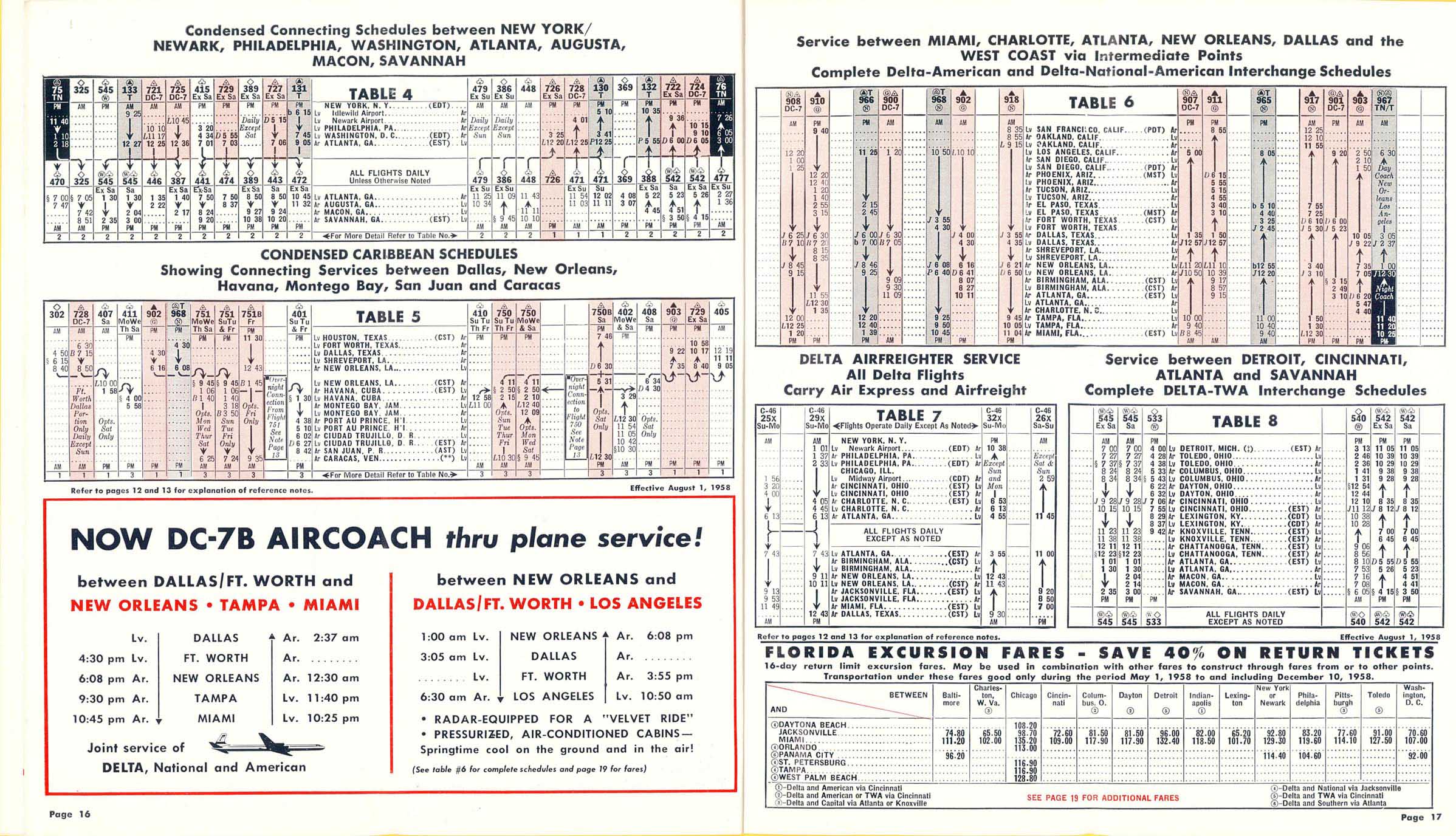
During the 1950s, Pan Am twin-engine Convair 240s flew across the Caribbean from Barranquilla, Colombia to Kingston, Jamaica, Avensa Convair 340s flew from Maracaibo, Venezuela to Montego Bay, Jamaica, KLM Douglas DC-3s flew Curacao to Ciudad Trujillo while KLM Convairs flew Aruba to Kingston with Delta Air Lines operating Convair 340 flights nonstop between New Orleans and Havana as well as nonstop between Havana and Montego Bay and also on a routing of Havana – Port au Prince – Ciudad Trujillo – San Juan, Puerto Rico.[further explanation needed][2] In 1948–52 New Zealand National Airways Corporation scheduled a DC-3 to fly from Apia (Western Samoa) to Aitutaki, a 5+12-hour flight covering 685 airportless nautical miles between Tafuna (Pago Pago) and Aitutaki. In 1963 Polynesian Airlines started flying a Percival Prince Apia to Aitutaki; in 1964 the flight was a DC-3 from Faleolo (Upolu) to Aitutaki, a distance of 768 nautical miles (1,422 km; 884 mi). More recently, the January 1979 OAG showed a weekly Polynesian Airlines HS748 from Niue to Rarotonga, 585 nmi (1,083 km; 673 mi) with no airport.

In 2017 ICAO issued Standards and Recommended Practices (SARPS) for ETOPS, and ETOPS were extended to four-engine aircraft like the Boeing 747-8 and the terminology updated to EDTO (Extended Diversion Time Operations).[3]

Early jet airliners

[edit]

While the earliest jet engines were sometimes unreliable, widespread use of later engines such as the Pratt & Whitney JT8D (e.g. McDonnell Douglas DC-9 and Boeing 737) led to major advances in reliability and safety. As jet engines started to deliver more power than piston engines while increasing reliability, aircraft whose size previously required four piston engines could now be built using only two jet engines.[1]: p.11 

By the late 1960s, most large civil airliners were jet-powered, relegating the piston engine to roles such as cargo flights. With the JT8D reliably powering the three-engine Boeing 727, the 60-minute rule was waived in 1964 for three-engine aircraft, which in turn opened the way for the development of wide-body, intercontinental trijets such as the Lockheed L-1011 TriStar and McDonnell Douglas DC-10. By then, only twin-engine jets were restricted by the 60-minute rule. Trijets and quadjets dominated international long-haul flights until the late 1980s.

Early ETOPS

[edit]
The Airbus A300B4 became the first ETOPS-compliant aircraft, in 1977[4]

Airbus A300 twinjets, the first twin-engine wide-body aircraft, had been flying across the North Atlantic, the Bay of Bengal, and the Indian Ocean under a 90-minute ICAO rule since 1976.[1]: p.14 

When the FAA director J. Lynn Helms in 1980 was approached about the possibility of an exemption, his response was "It'll be a cold day in hell before I let twins fly long haul, overwater routes."[5][6] The Boeing 767-200ER entered service in 1984.

In 1985, the FAA increased the ETOPS to 120 minutes at the single-engine cruise speed.[1]: p.12  Trans World Airlines operated the first 120-minute ETOPS (ETOPS-120) service on February 1, 1985, with a Boeing 767-200 from Boston to Paris. The 767 burned 7,000 lb (3.2 t) less fuel per hour than a Lockheed L-1011 TriStar on the same route, prompting TWA to spend $2.6 million on each 767 they owned to retrofit them to ETOPS-120 specs.[7] It was followed by Singapore Airlines in June with an Airbus A310. In April 1986, Pan Am inaugurated transatlantic revenue service using A310s, and within five years Airbus ETOPS operators numbered more than 20.[1]: p.14 

ETOPS 180

[edit]
Twin-engine Boeing 767-300ER over Alaska beginning an ETOPS 180 trans-Pacific crossing

In 1988, the FAA amended the ETOPS regulation to allow the extension to a 180-minute diversion period, subject to stringent technical and operational qualifications. ETOPS-180 and ETOPS-207 cover about 95% of the Earth.[8] The first such flight was conducted in 1989. This set of regulations was subsequently adopted by the JAA, ICAO, and other regulatory bodies.

ETOPS 180 at introduction

[edit]
The Boeing 777 was the first ETOPS 180 airliner at its introduction

The original 1985 regulations allowed an airliner to have ETOPS-120 rating on entry into service. ETOPS-180 was only possible after one year of trouble-free 120-minute ETOPS experience. In 1990 Boeing convinced the FAA that it could deliver an airliner with ETOPS-180 on its entry into service. This process was called Early ETOPS. The Boeing 777 was the first aircraft to be introduced with an ETOPS rating of 180 minutes.

In the 1990s, the Joint Aviation Authorities (JAA) demurred, and the Boeing 777 was rated ETOPS-120 on its entry into service in Europe. European airlines operating the 777 had to demonstrate one year of trouble-free 120-minute ETOPS experience before obtaining 180-minute ETOPS for the 777.

Beyond ETOPS-180

[edit]

Effective February 15, 2007, the FAA ruled that US-registered twin-engine airplane operators can fly more than 180-minute ETOPS to the design limit of the aircraft. In November 2009, the Airbus A330 became the first aircraft to receive ETOPS-240 approval, which has since been offered by Airbus as an option.[9]

ETOPS-240 and beyond are now permitted[10] on a case-by-case basis, with regulatory bodies in the United States, Australia, and New Zealand adopting said regulatory extension. Authority is only granted to operators of two-engine airplanes between specific city pairs. The certificate holder must have been operating at 180-minute or greater ETOPS authority for at least 24 consecutive months, of which at least 12 consecutive months must be at 240-minute ETOPS authority with the airplane-engine combination in the application.

Certified with ETOPS-330, the Boeing 787 Dreamliner has become a popular utility on transocean routes.

On December 12, 2011, Boeing received type-design approval from the FAA for up to 330-minute extended operations for its Boeing 777 series, all equipped with GE engines, and with Rolls-Royce and Pratt & Whitney engines expected to follow.[11] The first ETOPS-330 flight took place on December 1, 2015, with Air New Zealand connecting Auckland to Buenos Aires on a 777-200ER.[12] On May 28, 2014, the Boeing 787 received its ETOPS-330 certificate from the FAA, enabling LAN Airlines (now known as LATAM Airlines) to switch to the 787 from the A340 on their Santiago–Auckland–Sydney service a year later.[13]

Until the rule change in North America and Oceania, several commercial airline routes were still economically off-limits to twinjets because of ETOPS regulations, unless the route was specifically conducted as indivertible. There were routes traversing the Southern hemisphere, e.g., South Pacific (e.g., SydneySantiago, one of the longest over-the-sea distances flown by a commercial airline), South Atlantic (e.g., JohannesburgSão Paulo), Southern Indian Ocean (e.g., PerthJohannesburg), and Antarctica.

The Airbus A350 is approved with ETOPS-370, which means that it can make a theoretically-safe 6-hour diversion with a single engine operable.

Before the introduction of the Airbus A350 XWB in 2014, regulations in North America and Europe permitted up to 180-minute ETOPS at entry. The A350 XWB was first to receive an ETOPS-370 prior to entry into service by European authorities.[14] The A350 XWB's current ETOPS certification covers 99.7% of the Earth's entire surface, allowing point-to-point travel anywhere in the world except directly over the South Pole.[citation needed]

Meanwhile, the first time that ETOPS-330 approval was given to a four-engine aircraft was in February 2015, to the Boeing 747-8 Intercontinental.[15] It is the only ETOPS-compliant aircraft allowed to run non-stop overflights over Antarctica with proper alternates, alongside the Airbus A340 and A380.[citation needed]

Usage

[edit]

The North Atlantic Tracks are the most heavily used oceanic routes in the world, and are largely covered by ETOPS 120-minute rules, thereby removing the necessity of using 180-minute rules. However, North Atlantic diversion airports are subject to adverse weather conditions that affect their availability for use. As a result, the JAA and FAA have given 15% extension to the 120-minute rules to deal with such contingencies, resulting to ETOPS-138 (i.e. 138 minutes) to allow ETOPS flights with such airports closed. By the mid-2010s, virtually all North Atlantic plane routes were dominated by twin-engine aircraft.

A Thai AirAsia Airbus A320 with the designation indicating the aircraft to have ETOPS capabilities.

During the Cold War, routes between Europe and East Asia were prohibited from flying over Soviet Union or China since both airspaces were previously heavily military-controlled. Virtually all flights between Europe and East Asia flew over the United States, often with a tank stop in Anchorage, Alaska. They flew near the North Pole with a very large distance to usable airports, for which only three- and four-engine wide-body aircraft were permitted for safety reasons by international aviation authorities. Some flights between Europe and Oceania still largely pass through stopovers in Asia (either in the Middle East or Southeast Asia) or North America (either in Canada or the U.S.) given the current aircraft range restrictions and, in the case of the early and mid-2020s, the reinstatement of selected routes by airlines between the Western Hemisphere and Eastern Hemisphere bypassing Russia due to its ongoing war with Ukraine.

For decades, narrow-body aircraft like the Airbus A320 series, and the Boeing 737 series and 757 have continuously operated flights as approved for ETOPS operation, alongside earlier wide-body aircraft such as the A300 and A310, and Boeing 767. The success of ETOPS aircraft like A300 and Boeing 767 made the intercontinental trijets obsolete for passenger use, production of which was largely ended by the late 2000s with Boeing cancelling the McDonnell Douglas MD-11 program in the same period.

The rules have also allowed American legacy carriers (United Airlines and Delta Air Lines in particular) to use the Boeing 757 on "long and thin" transatlantic routes between their major hubs and secondary European cities[16] that cannot generate the passenger demand to justify the use of a widebody airliner. The practice has been controversial, because although the 757 has adequate range to cross the Atlantic Ocean comfortably, strong headwinds caused by the jetstream over the winter months can result in westbound flights being declared "minimum fuel", forcing a refuelling stop at Gander, Newfoundland, in order to safely complete their journey.[17]

Aloha Airlines operated 180-minute ETOPS–approved Boeing 737-700 aircraft on nonstop routes between the Hawaiian Islands and the western U.S. and also Vancouver, Canada. The use of the smaller 737-700 enabled Aloha to serve routes that could not support larger jet aircraft with an example being the HonoluluBurbank nonstop route. Prior to the 737-700 operation, Aloha Airlines had operated 737-200 aircraft to various Pacific islands utilizing 120 minute ETOPS.

Other new-generation ETOPS aircraft include the Airbus A220 series, the Embraer E-Jets series and the ATR 72. By the mid-2010s, the widespread successes of ETOPS-reliant narrow-body aircraft have diminished the global market share of double-deck wide-body jets. At the onset of the COVID-19 pandemic in the early 2020s, Boeing and Airbus have since ended all production of the 747 and A380, respectively (and both being the two largest commercial aircraft in the world). At the same time, the increasing prominence of new-generation ultra-long-range wide-body twinjets like the Boeing 777 and 787, and Airbus A330 and A350 over the last decade has shifted the favor from quadjets to twinjets for international long-haul travel.

Approval process

[edit]

The cornerstone of the ETOPS approach is the statistics showing that the turbine assembly of a modern jet engine is an inherently reliable component. Engine ancillaries, by contrast, have a lower reliability rating. Therefore, an ETOPS-certified engine may be built with duplicate sets of certain ancillaries in order to receive the required reliability rating.

ETOPS approval is a two-step process. First, the airframe and engine combination must satisfy the basic ETOPS requirements during its type certification. This is called "ETOPS type approval". Such tests may include shutting down an engine and flying the remaining engine during the complete diversion time. Often such tests are performed in the middle of the ocean. It must be demonstrated that, during the diversion flight, the flight crew is not unduly burdened by extra workload due to the lost engine and that the probability of the remaining engine failing is extremely remote. For example, if an aircraft is rated for ETOPS-180, it means that it is able to fly with full load and just one engine for three hours.

Second, an operator who conducts ETOPS flights must satisfy their own country's aviation regulators about their ability to conduct ETOPS flights. This is called "ETOPS operational certification" and involves compliance with additional special engineering and flight crew procedures in addition to the normal engineering and flight procedures. Pilots and engineering staff must be qualified and trained for ETOPS. An airline with extensive experience operating long-distance flights may be awarded ETOPS operational approval immediately, while others may need to demonstrate ability through a series of ETOPS proving flights.

Regulators closely watch the ETOPS performance of both type certificate holders and their affiliated airlines. Any technical incidents during an ETOPS flight must be recorded. From the data collected, the reliability of the particular airframe-engine combination is measured and statistics published. The figures must be within limits of type certifications. Of course, the figures required for ETOPS-180 will always be more stringent than ETOPS-120. Unsatisfactory figures would lead to a downgrade or, worse, suspension of ETOPS capabilities either for the type certificate holder or the airline.

Engines must have an in-flight shutdown (IFSD) rate better than 1 per 20,000 hours for ETOPS-120, 1 per 50,000 hours for ETOPS-180, and 1 per 100,000 hours for beyond ETOPS-180.[18]

Private jets are exempted from ETOPS by the FAA, but are subject to the ETOPS 120-minute rule in EASA's jurisdiction.[19]

Government-owned aircraft (including military) do not have to adhere to ETOPS regulations.[citation needed]

Ratings

[edit]

There are different levels of ETOPS certification, each allowing aircraft to fly on routes that are a certain amount of single-engine flying time away from the nearest suitable airport. For example, if an aircraft is certified for 180 minutes, it is permitted to fly any route not more than 180 minutes' single-engine flying time to the nearest suitable airport.

The following ratings are awarded under current regulations according to the capability of the airliner:

  • ETOPS-75
  • ETOPS-90
  • ETOPS-120/138
  • ETOPS-180/207
  • ETOPS-240
  • ETOPS-270
  • ETOPS-330
  • ETOPS-370

However, ratings for ETOPS type approval are fewer. They are:

  • ETOPS-90
  • ETOPS-120/138
  • ETOPS-180/207, which covers 95% of the Earth's surface.
  • ETOPS->180 to design limit

Designation

[edit]
A Boeing 737 with ETOPS indication.

Until the mid-1980s, the term EROPS (extended range operations) was used before being superseded by ETOPS usage. In 1997, when Boeing proposed to extend ETOPS authority for twins to beyond 180 minutes, Airbus proposed to replace ETOPS by a newer system, referred to as Long Range Operational Performance Standards (LROPS), which would affect all civil airliners, not just those with a twin-engine configuration with more than 180 minutes ETOPS.

US FAA

[edit]

The FAA stated in the Federal Register in 2007:

This final rule applies to air carrier (part 121), commuter, and on-demand (part 135) turbine powered multi-engine airplanes used in extended-range operations. However, all-cargo operations in airplanes with more than two engines of both part 121 and part 135 are exempted from the majority of this rule. Today's rule [January 16, 2007] establishes regulations governing the design, operation and maintenance of certain airplanes operated on flights that fly long distances from an adequate airport. This final rule codifies current FAA policy, industry best practices and recommendations, as well as international standards designed to ensure long-range flights will continue to operate safely."[20]

and

Several commenters … recommended use of the acronym "LROPS"—meaning 'Long Range Operations'—for three- and four-engine ETOPS, to avoid confusion, particularly for those operations beyond 180 minutes' diversion time. The FAA has decided to use the single term, 'extended operations,' or ETOPS, for all affected operations regardless of the number of engines on the airplane."[21]

Prior to 2007, the FAA used the term for Extended Range Operation with Two-Engine Airplanes but the meaning was changed when regulations were broadened to include aircraft with more than two engines.[22]

An AirAsia A320neo with the newer EDTO designation.

EDTO – Extended Diversion Time Operations

[edit]

In 2017 ICAO amendment 36 to Part I of Annex 6 of the Chicago Convention replaced the term ETOPS with the new term EDTO (Extended Diversion Time Operations). The main reason of this change in the terminology was to better reflect the scope and applicability of these new standards.[3]

Backronym

[edit]

A colloquial aviation backronym is "Engines Turn Or Passengers Swim", referring to the inevitable emergency water landing of a twin engine aircraft after a double engine failure over water outside gliding range of land.[6]

See also

[edit]

References

[edit]
[edit]
Revisions and contributorsEdit on WikipediaRead on Wikipedia
from Grokipedia
ETOPS, originally an for Extended-range Twin-engine Operational Performance Standards, is a certification and regulatory framework in that enables twin-engine to conduct long-haul flights over routes where the diversion time to the nearest suitable exceeds with one engine inoperative. Developed in response to the advent of reliable twin-engine in the and , ETOPS imposes stringent reliability standards on , engines, and procedures to ensure safe operations far from diversion , thereby revolutionizing global by allowing efficient transoceanic and remote routes previously reserved for three- or four-engine jets. The framework originated from a long-standing "60-minute rule" in U.S. Federal Aviation Regulations dating back to the 1930s, which limited twin-engine operations to areas within one hour's flying time from an adequate airport to mitigate risks of engine failure over uninhabited regions. In 1985, the FAA granted the first ETOPS approval for 120 minutes to Trans World Airlines operating the Boeing 767 on transatlantic routes, marking a pivotal shift that demonstrated the safety and economic viability of twin-engine long-haul flights. This was followed by incremental extensions, with 180-minute approvals achieved by 1989 for routes like Dallas to Honolulu, based on demonstrated in-flight shutdown rates below 0.05 per 1,000 engine hours. In 2007, the FAA expanded the ETOPS concept beyond twins to encompass all multi-engine aircraft under the unified term "Extended Operations," reflecting advancements in engine reliability and systems redundancy that made similar rules applicable to three- and four-engine planes. Internationally, ICAO harmonized this through Extended Diversion Time Operations (EDTO), which applies the same principles globally and now includes provisions for polar operations and beyond-240-minute diversions (up to 370 minutes for select as of 2025), requiring operators to achieve specific ETOPS ratings (e.g., 180, 285 minutes) via rigorous pre-certification testing, continued airworthiness programs, and route-specific approvals. Today, ETOPS/EDTO enables like the and to dominate efficient, fuel-saving long-range operations while maintaining safety levels comparable to or exceeding those of traditional multi-engine configurations.

Fundamentals

Definition and Scope

ETOPS, originally standing for Extended-range Twin-engine Operational Performance Standards, refers to a set of certification and operational standards developed by the (ICAO) and the (FAA) in the to govern the extended-range flights of twin-engine jet aircraft. These standards were specifically tailored for twin-engine airplanes, allowing them to operate on routes where the aircraft might be more than flying time from the nearest suitable diversion airport at the single-engine cruise speed. Over time, the scope of ETOPS has evolved to encompass a broader range of multi-engine . In 2012, ICAO introduced the term Extended Diversion Time Operations (EDTO) through Amendment 36 to Annex 6, Part I, extending the regulatory framework to include three- and four-engine conducting operations beyond 180 minutes from a suitable . This evolution maintains the core principles of ETOPS while applying them to longer diversion times and additional engine configurations, ensuring consistent safety oversight for all relevant operations. The primary constraints of ETOPS and EDTO involve limiting the maximum allowable diversion time—such as 60, 120, or 180 minutes or more—based on scenarios involving the of one and other critical systems, requiring the to remain within the certified time threshold of an adequate alternate at all times. This ensures that flights, including those over remote areas like oceans, can safely divert in the event of an in-flight shutdown or . Accompanying this broadening, the ETOPS has undergone a shift from its original "Twin-engine" focus to the more general "Extended Operations," reflecting its applicability to multi-engine without changing the underlying standards.

Purpose and Safety Rationale

The primary goal of ETOPS is to mitigate the risks associated with or other emergencies that could necessitate a diversion during long-haul flights over remote areas, such as and polar regions, by requiring that operate within a specified maximum diversion time to adequate alternate airports. This framework ensures that, in the event of a critical , the aircraft can reach a suitable with sufficient fuel reserves, thereby minimizing the potential for catastrophic outcomes in areas lacking immediate landing options. The safety rationale for ETOPS is grounded in rigorous statistical of engine and systems reliability, mandating that twin-engine demonstrate exceptionally low rates of in-flight shutdown (IFSD) to qualify for extended diversion times. For instance, approval for 180-minute ETOPS requires an IFSD rate of no more than 0.02 per 1,000 engine hours, reflecting a target reliability where shutdowns occur no more frequently than once every 50,000 hours. This threshold, derived from historical fleet data and risk modeling, ensures that the probability of dual-engine remains acceptably low during the extended exposure time away from . ETOPS also incorporates risk models centered on one-engine-inoperative (OEI) cruise performance, which evaluates the aircraft's ability to maintain safe flight and reach a on a single engine under standard conditions. planning under ETOPS further addresses these risks by requiring reserves for OEI diversions, factoring in variables like adverse weather, wind conditions, and the adequacy of alternate , including their length, fire-fighting capabilities, and medical facilities. By establishing these stringent safety standards, ETOPS has enabled the economic viability of twin-engine widebody aircraft, such as the Boeing 777 and Airbus A350, to operate on transoceanic and remote routes that were previously restricted to four-engine designs like the DC-8, thereby promoting fuel efficiency and reducing operational costs without compromising safety.

Historical Development

Pre-ETOPS Jet Operations

The introduction of commercial jet airliners in the 1950s revolutionized aviation speed and range, yet twin-engine variants faced stringent operational limits inherited from earlier piston-engine regulations. In 1953, U.S. civil aviation authorities established the "60-minute rule" via what became 14 CFR § 121.161, requiring two- and three-engine aircraft to remain within 60 minutes of flying time from an adequate diversion airport when operating with one engine inoperative. This conservative measure stemmed from historical concerns over engine-out scenarios and limited single-engine performance, effectively confining twin-engine jets to short- or medium-haul routes close to landmasses. In 1964, the rule was amended to exempt three-engine aircraft, solidifying its application solely to twins and reinforcing a preference for multi-engine designs on extended overwater flights. Pioneering twin-engine jet airliners, such as the that entered service in 1958, were thus restricted to intra-continental operations in and , avoiding oceanic crossings that exceeded the diversion threshold. Subsequent models like the Douglas DC-9 (certificated in 1965) and (1967) followed suit, excelling in domestic shuttle services but barred from transatlantic or transpacific routes without intermediate stops or coastal hugging paths to stay within the 60-minute envelope. Meanwhile, four-engine contemporaries, including the Boeing 707 introduced in 1958, filled the void for long-haul international travel, operating direct great-circle routes over oceans without similar constraints and capturing the bulk of global jet traffic in the 1960s and early 1970s. Early jet operations were further shaped by safety incidents that amplified regulatory caution toward innovative designs, even when unrelated to propulsion. The , the world's first commercial jet airliner with four engines debuting in 1952, suffered catastrophic mid-air breakups in two accidents in 1954—one on (G-ALYP, near after departing ) and another on (G-ALYY, near )—both traced to structural failure from metal fatigue in the pressurized rather than engine malfunction. These events, investigated by the UK Air Registration Board and later corroborated by water-tank pressure tests, prompted worldwide scrutiny of jet airframes and indirectly bolstered the rationale for multi-engine redundancy on high-risk routes, as regulators emphasized overall system reliability over isolated component advances. The , triggered by the embargo, quadrupled prices and exposed the inefficiencies of larger multi-engine jets, prompting airlines to advocate for twin-engine alternatives that promised 20-30% better fuel economy per seat-mile. A second crisis in 1979 compounded this pressure, as surging costs eroded profits on long-haul operations and highlighted the untapped potential of efficient twins for direct —yet the 60-minute rule forced detours or reliance on costlier four-engine aircraft like the 707, which consumed significantly more despite their range advantages. Although the FAA granted limited waivers for twin operations up to 75 minutes over the during the 1970s based on regional data, these exceptions underscored the broader regulatory barrier to global adoption. By the late , accumulating in-service reliability statistics from twin-engine short-haul fleets—showing in-flight shutdown rates below one per —fueled preliminary FAA and ICAO deliberations on relaxing the 60-minute constraint for qualified aircraft, driven by economic imperatives and evidence of modern durability. This groundwork highlighted the growing disconnect between advancing technology and outdated rules, paving the way for standardized extensions beyond the traditional limits.

Introduction of ETOPS-180

The introduction of ETOPS marked a pivotal regulatory advancement in and efficiency, originating from studies in the that examined the reliability of twin-engine aircraft for long overwater flights. These studies, conducted by organizations including the FAA and ICAO, aimed to address the limitations of earlier rules that restricted twin-engine operations to from the nearest suitable . In , ICAO adopted provisions for extended-range twin-engine operations in Annex 6 of the Chicago Convention, providing an international framework for such flights. The FAA formalized these concepts in 1985 through 120-42, establishing the initial ETOPS standard of , which laid the groundwork for subsequent extensions to 180 minutes based on demonstrated reliability. A key milestone was the FAA's of the for 120-minute ETOPS that year, enabling nonstop transatlantic routes such as those from Newark to without relying on four-engine . This required the -engine combination to demonstrate high reliability, including an in-flight shutdown (IFSD) rate of less than 0.05 per 1,000 engine hours, along with enhanced systems for rapid engine changes and route-specific contingency planning to ensure diversion capability. The first revenue ETOPS flight under these rules occurred on February 1, 1985, when Flight 810, a -200, operated from to , demonstrating the practical application of the new standards over the North Atlantic. This event signified a major shift away from the dominance of four-engine jets for oceanic routes, as twin-engine aircraft proved capable of safe, efficient operations with rigorous oversight. By enabling direct paths previously avoided due to diversion limits, ETOPS facilitated expanded route networks, such as potential New York to services on twins, while reducing operating costs by an estimated 20-30% per seat through lower fuel consumption and maintenance compared to quad-engine alternatives. Extensions to 180 minutes followed, with the FAA granting the first 180-minute ETOPS approval for the to in 1991 for transpacific routes, based on accumulated reliability data.

Expansion to Extended Ratings

The expansion of ETOPS ratings beyond the initial 180-minute limit began in the mid-1990s, driven by accumulating operational data and technological advancements that demonstrated the viability of longer diversion times for twin-engine aircraft. In 1995, the became the first commercial jet to receive ETOPS-180 certification upon entering service, marking a significant milestone as it was designed from the outset with ETOPS compliance in mind, including redundant systems for fuel, , and . This certification was supported by rigorous testing, including simulated engine failures, and reflected growing confidence in twin-engine reliability following years of 120-minute operations on aircraft like the Boeing 767. Key enablers for this progression included substantial improvements in engine technology and performance data from extensive flight hours. Engines such as the General Electric GE90 and , powering the 777, achieved dispatch reliability rates exceeding 99.98% and 99.96%, respectively, far surpassing the stringent in-flight shutdown thresholds required for extended operations (e.g., less than 1 per 100,000 hours for higher ratings). Analysis of millions of ETOPS flight hours by the late 1990s and early 2000s revealed that modern twin-engine aircraft not only met but often exceeded the safety records of earlier four-engine designs, with lower overall failure rates due to fewer components and enhanced maintenance protocols. These factors prompted regulatory bodies like the FAA to issue guidance in 2000 for 207-minute ETOPS approvals, allowing routes covering about 95% of the Earth's surface. By the 2000s, higher ratings of 240 and 330 minutes were introduced, further expanding operational flexibility. The Airbus A330 received the first 240-minute certification in 2009, enabling nonstop flights over even more remote areas, while the Boeing 777 demonstrated capability for 330 minutes through a landmark 2003 test flight involving over five hours on a single engine. Although full type-design approval for 330 minutes on the 777 came in 2011, these developments facilitated routes like Singapore to Los Angeles, initially under progressive ETOPS extensions. Globally, by 2010, major aviation authorities including EASA had aligned standards, resulting in dozens of twin-engine aircraft types—such as variants of the 777, A330, and 767—certified for extended ratings, with operators logging over 2 million ETOPS flights on the 777 alone.

Certification and Regulations

Approval Process

The ETOPS approval process involves a structured sequence of stages designed to ensure the reliability and safety of aircraft and operations for extended diversion times. It begins with a pre-application phase focused on design assessment, where manufacturers evaluate the aircraft's systems, units, and integrated systems such as and electrics to confirm compliance with reliability standards beyond just engine performance. This phase includes preliminary reviews of engineering data, failure mode analyses, and proposed maintenance programs to identify potential issues early. Regulatory guidance, such as the FAA's (AC) 120-42B, emphasizes that this assessment must demonstrate a low probability of in-flight shutdowns or other failures that could necessitate diversions. Similarly, ICAO's Airworthiness Manual (Doc 9760) provides international standards for certifying the airworthiness aspects of these systems, requiring evidence of and fault-tolerant designs. Following pre-application, the type certification stage validates the aircraft-engine combination through rigorous testing and demonstrations. Manufacturers must conduct proving flights to simulate diversion scenarios, including engine failures and system malfunctions, often accumulating thousands of flight hours under controlled conditions to verify performance. Simulator tests replicate emergency procedures, such as single-engine diversions to alternate , ensuring and systems can handle extended operations reliably. This stage culminates in the issuance of a supplement by authorities like the FAA, confirming the aircraft meets ETOPS-specific criteria, including integrated systems reliability for non-engine components like electrical and hydraulic backups. ICAO Doc 9760 outlines comparable airworthiness validation requirements, stressing quantitative reliability targets, such as failure rates below specified thresholds for all critical systems. The final stage is operational approval, which is airline-specific and granted by the relevant regulatory authority after reviewing the operator's programs. Airlines must submit detailed on curricula for flight crews and personnel, contingency procedures for diversions, and fuel management plans tailored to ETOPS routes. This includes validation of programs that address ETOPS-unique tasks, such as enhanced pre-flight inspections and reliability tracking. Approval under FAA regulations, per AC 120-42B, requires operators to demonstrate operational readiness through audits and may involve initial proving flights with . ICAO standards in Doc 9760 support this by mandating operator-specific surveillance to ensure ongoing compliance with global norms. Upgrading to higher ETOPS ratings, such as from 120 to 180 minutes, necessitates demonstrated in-service experience, typically requiring at least 12 consecutive months of reliable operation at the lower rating without exceeding failure thresholds. This experience phase allows regulators to assess real-world performance before authorizing extended diversions. Post-approval, ongoing monitoring through regular audits ensures sustained compliance, with authorities like the FAA conducting periodic reviews of maintenance records, incident reports, and reliability data. Revocation or downgrading of approval is possible if IFSD rates exceed approved limits, such as more than 0.05 in-flight shutdowns per 1,000 engine hours for 120-minute ETOPS, prompting investigation and potential corrective actions or suspension of ETOPS privileges. ICAO Doc 9760 reinforces this surveillance framework, advocating for continuous data collection to maintain safety margins across all ETOPS-rated operations. These processes collectively result in specific ETOPS ratings that define allowable diversion times.

ETOPS Ratings

ETOPS ratings specify the maximum allowable diversion time for twin-engine aircraft in the event of a single engine failure or other critical event, measured in minutes at the aircraft's one-engine-inoperative (OEI) cruise speed under standard conditions. These ratings enable operations farther from suitable diversion s than traditional non-ETOPS rules, which limit flights to from an . The tiers range from basic extended operations at , suitable for initial approvals, to standard long-haul at 180 minutes, and advanced ratings such as 207, 240, or 330+ minutes, which support routes over remote areas like polar regions. The ratings are determined based on the worst-case diversion distance required for a single failure scenario, calculated using the aircraft's certified OEI speed, typically around 400-460 knots, to reach the nearest adequate . Key criteria include stringent reliability, measured by the in-flight shutdown (IFSD) rate, which must be maintained at or below specific thresholds on a world-fleet basis: 0.05 per 1,000 hours for up to ; 0.03 per 1,000 hours for beyond up to 180 minutes; and 0.02 per 1,000 hours for beyond 180 minutes (with adjustments for regions like the North Pacific Operational Area). Additionally, —such as reserves, units, and environmental controls—must demonstrate capability to sustain diversions of 8-9 hours or more, including reserves for holding, approach, and , ensuring passenger and crew safety during extended OEI flight. For example, the holds a 330-minute ETOPS rating, allowing it to operate routes where diversion airports may be up to approximately 3,000 nautical miles away under optimal conditions. Calculations for applying these ratings involve great-circle distances to alternate airports, adjusted for factors like headwinds, , and temperature, to ensure the entire route remains within the approved diversion threshold. ETOPS ratings are inherently route- and operator-specific, requiring validation for each , and cannot be universally applied across all global operations. For instance, a 180-minute rating permits route planning within circles of approximately 2,000 nautical miles radius around suitable , but actual approval depends on demonstrated compliance with reliability and systems criteria for that operator's fleet.

Transition to EDTO

In the early , regulatory authorities began expanding the scope of extended operations beyond the traditional focus on twin-engine , leading to the adoption of Extended Diversion Time Operations (EDTO). The (ICAO) played a pivotal role by adopting Amendment 36 to Annex 6 in March 2012, which extended ETOPS principles to all turbine-powered —regardless of count—operating more than 180 minutes from an adequate alternate at one-engine-inoperative cruise speed. This shift renamed and broadened the framework to EDTO, applying to flights exceeding a defined threshold time (typically for twins and 120 minutes for multi-engine types) from suitable diversion . The change aimed to standardize safety requirements globally while enabling greater operational flexibility for long-haul routes over remote areas. The rationale for this expansion stemmed from operational data indicating that three- and four-engine aircraft, such as the Airbus A340 and , demonstrated in-flight shutdown rates and system reliability comparable to certified twin-engine models, justifying the relaxation of previous 180-minute limits for these types. Historically restricted to shorter diversion times due to assumptions about engine redundancy, multi-engine aircraft could now benefit from EDTO approvals, reducing fuel consumption and flight times on transoceanic routes without increased risk. The U.S. (FAA)'s 2007 amendments to 14 CFR Parts 121 and 135, which extended the framework to all multi-engine aircraft, predated and influenced ICAO's adoption of EDTO. The FAA continues to use "ETOPS" for twin-engine and "Extended Operations" for multi-engine aircraft. Implementation required rigorous assessments, including propulsion system reliability and fuel planning, to ensure safe diversions; for instance, the achieved FAA EDTO certification for 330 minutes in March 2015, allowing operators to plan more efficient polar and Pacific crossings. While the FAA and ICAO adopted a unified EDTO applicable to all turbine , the (EASA) retained "ETOPS" exclusively for twin-engine operations but introduced Long Range Operations (LROPS) for three- and four-engine to address equivalent extended diversion needs. This approach maintained consistency with legacy rules for twins while extending similar validation processes—such as en-route alternate selection and communication redundancies—to multi-engine types. As of 2025, the FAA continued refining EDTO through updated guidance in 91-70D, issued on April 3, 2025, which enhances for oceanic and remote continental by improving integration, diversion modeling, and alternate criteria. These revisions, building on post-2012 operational experience, emphasize advanced risk assessments to support safer and more precise routing for EDTO-certified flights.

Operational Applications

Usage in Commercial Flights

ETOPS enables twin-engine aircraft to operate on extended overwater and remote routes in , allowing airlines to plan direct paths that minimize flight time and fuel consumption. For instance, deploys the Airbus A350-900 on the transpacific route from (LAX) to (SYD), a journey exceeding 7,500 nautical miles that requires an ETOPS rating beyond 180 minutes due to the vast expanse with limited diversion options. Similarly, operates the Boeing 777-300ER on the from New York (JFK) to (HKG), covering approximately 8,000 nautical miles in about 16 hours, supported by the 777's 330-minute ETOPS certification that permits flights far from suitable alternates like those in or . Operational planning for ETOPS flights involves rigorous pre-flight analysis to identify and verify suitable alternate airports, such as for transpacific legs or for polar crossings, ensuring all points along the route remain within the aircraft's approved diversion time at single-engine speed. Fuel planning is critical, requiring reserves sufficient to cover the most limiting diversion scenario, including contingency allowances for wind forecast errors—typically 5% of the diversion —plus final reserves for approach and holding. Real-time monitoring enhances safety through systems like (Aircraft Communications Addressing and Reporting System), which transmits engine performance, fuel status, and position data to ground operations centers, allowing dispatchers to detect issues early and coordinate adjustments. The adoption of ETOPS has delivered significant economic advantages to airlines, with twin-engine aircraft now dominating long-haul passenger traffic by enabling efficient operations on routes previously reserved for four-engine jets. This shift reduces fleet costs through lower maintenance and fuel expenses; for example, operates more than 78 ETOPS-certified 787 Dreamliners as of late 2025, supporting its extensive transpacific and transatlantic network without needing larger quadjets. Despite these benefits, ETOPS operations face challenges such as weather disruptions that can necessitate rerouting to avoid or icing over remote areas, potentially increasing burn and delaying arrivals.

Global Designations and Variations

The U.S. (FAA) shifted from the ETOPS framework to Extended Diversion Time Operations (EDTO) in , broadening the to apply to all multi-engine turbine-powered airplanes conducting operations more than 180 minutes from an adequate for three- and four-engine , while retaining ETOPS terminology for twins. This change codified international standards and industry practices into 14 CFR Parts 121 and 135, with EDTO approvals integrated directly into an operator's Operations Specifications (OpSpecs). Designations such as "ETOPS-240" continue to specify the maximum diversion time in minutes at single-engine cruise speed for twin-engine under this regime, ensuring consistent risk mitigation for extended operations. In contrast, the (EASA) and the (ICAO) maintain the original ETOPS designation exclusively for twin-engine flying beyond 60 minutes from an adequate alternate airport, as outlined in EASA's AMC 20-6 and ICAO 6. For with more than two engines, EASA employs the term Long Range Operations (LROPS) to cover similar extended-range scenarios, reflecting a distinction based on engine count rather than a unified EDTO-like approach. Harmonization across these bodies occurs through bilateral agreements, such as the FAA-EASA Procedures for Airworthiness and Environmental , which promote mutual acceptance of ETOPS/EDTO validations to facilitate global operations. The ETOPS has evolved into a , most commonly interpreted today as "Extended-range Twin-engine Operational Performance Standards" to encapsulate the -based criteria for long-range twin operations, though regulators like ICAO often use it without expansion to sidestep historical connotations of its provisional origins in the . This flexible usage helps maintain clarity amid varying international interpretations. Regional variations persist in implementation details, such as alternate criteria. For instance, China's Civil Aviation Administration (CAAC) aligns its ETOPS approvals with FAA standards for advanced aircraft like the , which remains pending full certification and entry-into-service as of late 2025 amid ongoing delays. In the , EASA imposes stricter requirements for higher ratings like ETOPS-370, mandating enhanced runway lengths, fire-fighting capabilities, and weather minima at alternates compared to FAA guidelines, which emphasize operational flexibility while ensuring equivalent levels.

References

Add your contribution
Related Hubs
User Avatar
No comments yet.