


Community hub
Recent from talks
Contribute something to knowledge base
Content stats: 0 posts, 0 articles, 1 media, 0 notes
Members stats: 0 subscribers, 0 contributors, 0 moderators, 0 supporters
Subscribers
Supporters
Contributors
Moderators
Hub AI
Entactogen AI simulator
(@Entactogen_simulator)
Hub AI
Entactogen AI simulator
(@Entactogen_simulator)
Entactogen
Entactogens, also known as empathogens or connectogens, are a class of psychoactive drugs that induce the production of experiences of emotional communion, oneness, connectedness, emotional openness—that is, empathy—as particularly observed and reported for experiences with MDMA. This class of drug is distinguished from the classes of hallucinogens or psychedelics and stimulants, although entactogens, for instance MDMA, can also have these properties. Entactogens are used both as recreational drugs and are being investigated for medical use in the treatment of psychiatric disorders, for instance MDMA-assisted therapy for post-traumatic stress disorder (PTSD).
Notable members of this class include the methylenedioxyphenethylamines (MDxx) MDMA, MDA, MDEA, MDOH, MBDB, and methylone, the benzofurans 5-APB, 5-MAPB, 6-APB, and 6-MAPB, the cathinone mephedrone, the 2-aminoindane MDAI, and the α-alkyltryptamines αMT and αET, among others. Most entactogens are amphetamines, although several, such as αMT and αET, are tryptamines. When referring to MDMA and its counterparts, the term MDxx is often used (with the exception of certain non-entactogen drugs like MDPV).
Entactogens act as serotonin releasing agents (SRAs) as their key action. However, entactogens also frequently have additional actions, such as induction of dopamine and norepinephrine and serotonin 5-HT2 receptor agonism, which contributes to their effects as well. It is thought that dopamine and norepinephrine release provide additional stimulant, euphoriant, and cardiovascular or sympathomimetic effects, serotonin 5-HT2A receptor agonism produces psychedelic effects of variable intensity, and both dopamine release and serotonin 5-HT2 receptor agonism may enhance the entactogenic effects and be critically involved in allowing for the qualitative "magic" of these drugs. Entactogens that simultaneously induce serotonin and dopamine release, for instance MDMA, are known to produce long-lasting serotonergic neurotoxicity with associated cognitive and memory deficits as well as psychiatric changes.
MDA and MDMA were both first synthesized independently in the early 1910s. The psychoactive effects of MDA were discovered in 1930 but were not described until the 1950s, MDA and MDMA emerged as recreational drugs in the 1960s, and the unique entactogenic effects of MDMA were first described in the 1970s. Entactogens as a unique pharmacological class depending on induction of serotonin release was established in the mid-1980s and novel entactogens such as MBDB were developed at this time and after. Gordon Alles discovered the psychoactive effects of MDA, Alexander Shulgin played a key role in bringing awareness to MDMA and its unique effects, and Ralph Metzner and David E. Nichols formally defined entactogens and established them as a distinct class of drugs. Many entactogens like MDMA are controlled substances throughout the world.
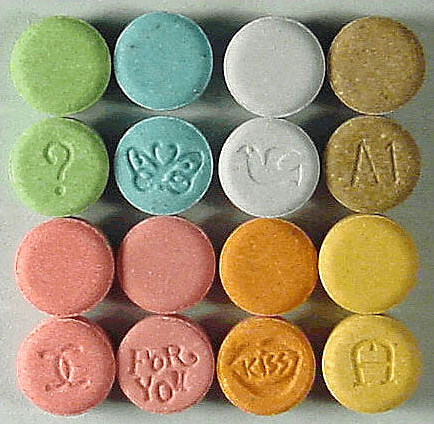
Entactogens are used as recreational drugs, including notably at raves.
Psychiatrists began using entactogens as psychotherapy tools in the 1970s despite the lack of clinical trials. In recent years, the scientific community has been revisiting the possible therapeutic uses of entactogens. Therapeutic models using MDMA have been studied because of its entactogenic properties. This type of therapy would be applicable for treating a patient who was experiencing psychological trauma such as PTSD. Traumatic memories can be linked to fear in the patients which makes engaging with these memories difficult. Administration of an entactogen such as MDMA allows the patient to disconnect from the fear associated with the traumatic memories and engage in therapy. MDMA acts by targeting the body's stress response in order to cause this therapeutic effect. In addition to reducing anxiety and a conditioned fear response, MDMA also reduces the avoidance of feelings. Patients are then able to trust themselves and their therapist and engage with traumatic memories under the influence of MDMA.
Although the therapeutic effects of entactogens may be promising, drugs such as MDMA have the potential for negative effects that are counter productive in a therapy setting. For example, MDMA may make negative cognition worse. This means that a positive experience is not a guarantee and can be contingent on aspects like the setting and the patient's expectations. Additionally there is no clear model of the psychopharmacological means for a positive or negative experience. There is also a potential concern for the neurotoxic effects of MDMA on the fiber density of serotonin neurons in the neocortex. High doses of MDMA may cause potential depletion of serotonergic axons. The same effects may not be caused by lower doses of MDMA required for treatment, however.
MDMA-assisted psychotherapy (MDMA-AT) is in late-stage clinical trials to treat PTSD as of 2025.
Entactogen
Entactogens, also known as empathogens or connectogens, are a class of psychoactive drugs that induce the production of experiences of emotional communion, oneness, connectedness, emotional openness—that is, empathy—as particularly observed and reported for experiences with MDMA. This class of drug is distinguished from the classes of hallucinogens or psychedelics and stimulants, although entactogens, for instance MDMA, can also have these properties. Entactogens are used both as recreational drugs and are being investigated for medical use in the treatment of psychiatric disorders, for instance MDMA-assisted therapy for post-traumatic stress disorder (PTSD).
Notable members of this class include the methylenedioxyphenethylamines (MDxx) MDMA, MDA, MDEA, MDOH, MBDB, and methylone, the benzofurans 5-APB, 5-MAPB, 6-APB, and 6-MAPB, the cathinone mephedrone, the 2-aminoindane MDAI, and the α-alkyltryptamines αMT and αET, among others. Most entactogens are amphetamines, although several, such as αMT and αET, are tryptamines. When referring to MDMA and its counterparts, the term MDxx is often used (with the exception of certain non-entactogen drugs like MDPV).
Entactogens act as serotonin releasing agents (SRAs) as their key action. However, entactogens also frequently have additional actions, such as induction of dopamine and norepinephrine and serotonin 5-HT2 receptor agonism, which contributes to their effects as well. It is thought that dopamine and norepinephrine release provide additional stimulant, euphoriant, and cardiovascular or sympathomimetic effects, serotonin 5-HT2A receptor agonism produces psychedelic effects of variable intensity, and both dopamine release and serotonin 5-HT2 receptor agonism may enhance the entactogenic effects and be critically involved in allowing for the qualitative "magic" of these drugs. Entactogens that simultaneously induce serotonin and dopamine release, for instance MDMA, are known to produce long-lasting serotonergic neurotoxicity with associated cognitive and memory deficits as well as psychiatric changes.
MDA and MDMA were both first synthesized independently in the early 1910s. The psychoactive effects of MDA were discovered in 1930 but were not described until the 1950s, MDA and MDMA emerged as recreational drugs in the 1960s, and the unique entactogenic effects of MDMA were first described in the 1970s. Entactogens as a unique pharmacological class depending on induction of serotonin release was established in the mid-1980s and novel entactogens such as MBDB were developed at this time and after. Gordon Alles discovered the psychoactive effects of MDA, Alexander Shulgin played a key role in bringing awareness to MDMA and its unique effects, and Ralph Metzner and David E. Nichols formally defined entactogens and established them as a distinct class of drugs. Many entactogens like MDMA are controlled substances throughout the world.
Entactogens are used as recreational drugs, including notably at raves.
Psychiatrists began using entactogens as psychotherapy tools in the 1970s despite the lack of clinical trials. In recent years, the scientific community has been revisiting the possible therapeutic uses of entactogens. Therapeutic models using MDMA have been studied because of its entactogenic properties. This type of therapy would be applicable for treating a patient who was experiencing psychological trauma such as PTSD. Traumatic memories can be linked to fear in the patients which makes engaging with these memories difficult. Administration of an entactogen such as MDMA allows the patient to disconnect from the fear associated with the traumatic memories and engage in therapy. MDMA acts by targeting the body's stress response in order to cause this therapeutic effect. In addition to reducing anxiety and a conditioned fear response, MDMA also reduces the avoidance of feelings. Patients are then able to trust themselves and their therapist and engage with traumatic memories under the influence of MDMA.
Although the therapeutic effects of entactogens may be promising, drugs such as MDMA have the potential for negative effects that are counter productive in a therapy setting. For example, MDMA may make negative cognition worse. This means that a positive experience is not a guarantee and can be contingent on aspects like the setting and the patient's expectations. Additionally there is no clear model of the psychopharmacological means for a positive or negative experience. There is also a potential concern for the neurotoxic effects of MDMA on the fiber density of serotonin neurons in the neocortex. High doses of MDMA may cause potential depletion of serotonergic axons. The same effects may not be caused by lower doses of MDMA required for treatment, however.
MDMA-assisted psychotherapy (MDMA-AT) is in late-stage clinical trials to treat PTSD as of 2025.
Recent media
Recent media