Hubbry Logo
EshoweEshoweMain
Open search
Eshowe
Community hub
Eshowe
logo
8 pages, 0 posts
0 subscribers
Be the first to start a discussion here.
Eshowe
Eshowe
from Wikipedia

Eshowe is the oldest town of European settlement in Zululand,[citation needed] historically also known as Eziqwaqweni, Ekowe or kwaMondi. Eshowe's name is said to be inspired by the sound of wind blowing through the more than 4 km2 of the indigenous Dlinza Forest, the most important and striking feature of the town. Although the name is most likely to be derived from the Zulu word for the Xysmalobium shrubs, showe or shongwe.

Key Information

Today Eshowe is a market town, with a 100 km radius catchment area, two shopping centres, a main bus station serving the hinterland, a major hospital, and several schools.

History

[edit]

In 1860 Cetshwayo, then only a Zulu prince, built a kraal here and named the place Eziqwaqweni (the abode of robbers). A mission station was established at Eshowe in 1861 once permission had been obtained from the Zulu King Cetshwayo by Norwegian missionary, the Reverend Ommund Oftebro. Later the station was called the KwaMondi Mission Station (place of Mondi) after the Zulu name which was given to Oftebro.

Siege of Eshowe

[edit]

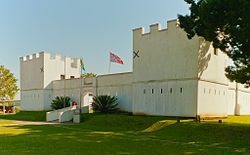
During the Anglo-Zulu War of 1879, Colonel Charles Pearson led the coastal column to Eshowe. This column encountered part of the Zulu army at the Nyezane River, but after a short battle pushed on to the KwaMondi Mission which was fortified and called Fort Ekowe.[3] The forces under Colonel Pearson were besieged for 10 weeks until relieved on April 3 by Lord Chelmsford after the Battle of Gingindlovu.

After the British evacuated the area, Fort Ekowe was burned down by the Zulus.

Capital of Zululand

[edit]

After the war Eshowe was established as the capital of Zululand and the home of the British resident in Zululand, Melmoth Osborne. The nearby town of Melmoth is named after him.

In 1887 Eshowe became the capital of Zululand and was officially declared a township in 1891.

In 1947 the British Royal Family (King George VI, Queen Elizabeth, Princess Elizabeth and Princess Margaret) visited and were welcomed in Eshowe by King Cyprian. The family toured the Dlinza Forest and spent a night in 'The Residency' in Eshowe.

Eshowe served as the seat of the first Black Diocesan Bishops in South Africa, of the Anglican and Roman Catholic Church. Eshowe is still the seat of the Bishop of the Anglican Diocese of Zululand.

Nearby nature conservation areas

[edit]

Notable people

[edit]

References

[edit]
[edit]
Revisions and contributorsEdit on WikipediaRead on Wikipedia
from Grokipedia
Eshowe is a historic town in the uMlalazi Local Municipality of , , established as the oldest European settlement in Zululand with a Norwegian mission station in 1861 and later designated the British administrative capital of the region after the of 1879. It served as a headquarters during the conflict, including the site of Fort Eshowe, which withstood a prolonged , and remains associated with Zulu royal history as the birthplace of King , who ruled during the war. The town's elevated position amid the indigenous Dlinza Forest, spanning 250 hectares with an aerial boardwalk for viewing birdlife and flora, underscores its natural appeal alongside sites like the Fort Nongqayi complex, constructed in to train Zulu Native Policemen and now housing museums on Zulu-British interactions. Eshowe's economy centers on , including , timber, and , supplemented by drawn to its historical forts, forests, and Zulu cultural artifacts, while government services contribute significantly to local output. As the administrative hub, it supports a municipal exceeding 200,000, with the town itself recording about 14,700 residents in recent censuses.

Geography and Environment

Location and Topography


Eshowe is situated in the uMlalazi Local Municipality within the King Cetshwayo District Municipality, KwaZulu-Natal province, South Africa, at coordinates 28°53′S 31°27′E. The town lies at an elevation of 539 meters above sea level, contributing to its elevated position relative to coastal areas. This placement positions Eshowe approximately 140 kilometers north of Durban along the N2 highway corridor.
The topography of Eshowe features a hilltop settlement amid rolling hills characteristic of the inland escarpment zone. The town is enveloped by the Dlinza , a 250-hectare indigenous coastal scarp that forms a prominent natural feature, fostering a localized cooler than surrounding lowlands due to its canopy cover and altitude. This reserve, with its multi-layered structure reaching 15-25 meters in height, enhances the area's ecological distinctiveness and visual prominence from elevated vantage points. The surrounding terrain includes undulating grasslands and river valleys that drain southward, providing natural contours that historically favored elevated sites for oversight of approaches.

Climate and Ecology

Eshowe experiences a (Köppen Cfa) with rainfall distributed throughout the year but peaking during the wet summer season from October to April, averaging 933 mm annually. The wettest month is , with 124 mm of over about 15 rainy days, while the driest is June, receiving only 27 mm over 4 days. Temperatures vary seasonally, with average highs reaching 28°C in February during the warm season (December to March) and lows around 19°C; in the cooler winter months (June to August), highs average 22°C in with lows near 10°C. This pattern supports but exposes the region to variability, including occasional droughts and floods influenced by El Niño-Southern Oscillation cycles affecting southern Africa. The surrounding ecology features mistbelt and coastal scarp forests, notably the adjacent Dlinza Forest Nature Reserve, which harbors high typical of KwaZulu-Natal's eastern seaboard. This habitat supports over 300 bird species, including forest specialists such as the (Apaloderma narina), Eastern bronze-naped pigeon (Columba delegorguei), and spotted ground-thrush (Zoothera guttata), the latter of which breeds in the understory. Larger frugivores like the (Bycanistes bucinator) utilize the urban-forest mosaic around Eshowe, relying on fruiting trees amid fragmented woodlands. Vegetation includes Afromontane elements like yellowwood (Podocarpus spp.) and ironwood trees, contributing to but facing pressures from historical logging and emerging invasives such as , which smothers native canopy in disturbed areas. These ecological resources historically shaped settlement patterns, with indigenous forests supplying timber for Zulu construction—using pole-and-daga (mud) techniques—and materials, enabling dense homestead clustering on defensible ridges near Eshowe. European fortifications during the similarly exploited local wood for structures like Fort Nongqayi, while the reliable water from forested catchments supported early agricultural viability in the otherwise rolling, erosion-prone terrain. Climate stability facilitated , though periodic variability, such as extended dry spells, constrained expansion until colonial adaptations.

Historical Development

Pre-Colonial and Early Zulu Period

The area encompassing modern Eshowe was known to indigenous Nguni-speaking peoples as Eziqwaqweni or Ekowe prior to the consolidation of Zulu authority, with the name likely deriving from isiZulu terms evoking phenomena such as the rustling wind through the adjacent Dlinza Forest or the abundance of mushrooms (amakhowe) resembling temporary shelters. Alternative derivations include "isikhwebezi," referencing a fragrant local bean tree, reflecting the site's integration with its ecological resources for and settlement. These onomatopoeic or descriptive names suggest early human presence tied to the region's hilly and forested valleys, which provided defenses and water sources, though direct archaeological evidence of pre-Nguni San hunter-gatherer occupation remains limited and inferred from broader regional patterns of and stone tools in . Settlement intensified under the during King Mpande's reign from 1840 to 1872, following the turbulent expansions under his half-brother (1816–1828) and nephew (1828–1840), as Mpande prioritized internal consolidation and establishments across Zululand to stabilize clan loyalties after civil strife. Mpande's forces leveraged Eshowe's elevated position—approximately 500 meters above sea level amid ravines and the Nonqayi River—for strategic , where circular cattle enclosures () formed the settlement core, emblematic of Nguni pastoralism's emphasis on livestock as wealth and social currency. Oral traditions, corroborated by regional excavations revealing iron furnaces and assemblages indicating bovine dominance, underscore how such sites facilitated Zulu administrative control and resource management, with herds numbering in the thousands supporting regimental (amabutho) sustenance and systems. By the 1860s, Prince kaMpande, Mpande's heir, constructed a prominent village at Eziqwaqweni, dubbing it "the abode of robbers" in reference to its appeal for assembling warriors and followers amid Mpande's efforts to counter internal rivals and Voortrekker encroachments without full-scale conflict. This development positioned Eshowe as a nodal point in Zulu expansionist logistics, where kraal clusters enabled mobilization of up to 20,000–30,000 cattle-dependent fighters, though Mpande's pacifist leanings—evident in his 1840 alliance with Boer settlers—curbed aggressive territorial gains compared to Shaka's -era conquests, focusing instead on defensive consolidation against refugee influxes exceeding 3,000 displaced groups into adjacent areas. Empirical traces include durable iron points and enclosure postholes from analogous Zulu sites, attesting to metallurgical self-sufficiency and pastoral enclosures designed for predator deterrence and ritual centrality.

Zulu Kingdom Capital and Key Events

King Mpande established Eshowe as a key royal residence and administrative center for the in 1847, utilizing the site's strategic location for centralizing authority after his ascension in 1840 amid the turmoil following Dingane's overthrow. This elevation facilitated the collection of tribute from subordinate chiefs and the mustering of impis for military campaigns, reflecting Mpande's policy of consolidating power through fixed hubs rather than nomadic royal progressions common under . The choice underscored causal dynamics of political stabilization, as Mpande navigated internal threats by leveraging geographically defensible areas to enforce loyalty and resource flows. Eshowe's prominence intensified under Mpande's successor, kaMpande, born circa 1826 at his father's Mlambongwenya adjacent to the site. 's own at Eshowe functioned as a diplomatic nexus, hosting interactions with European missionaries permitted entry into Zululand during Mpande's reign to foster selective alliances amid succession disputes, such as the 1856 where defeated his half-brother Mbuyazi. These invitations, initiated in the , represented pragmatic Zulu initiatives to access external knowledge and mediation, countering factional instability without ceding sovereignty. Cetshwayo returned to Eshowe in 1883 after British exile, dying there on February 8, 1884, marking the site's enduring role in Zulu royal continuity despite encroaching colonial pressures. Throughout Mpande and Cetshwayo's tenures, Eshowe exemplified causal realism in Zulu governance: a locus for balancing internal cohesion via enforcement and military readiness against external overtures, driven by kings' agency in power preservation rather than passive subjugation.

Anglo-Zulu War: The Siege of Eshowe

The Siege of Eshowe formed a key defensive stand during the 's initial invasion phase, isolating Colonel Charles Pearson's No. 1 (coastal) Column after the Zulu triumph at . Pearson's force, numbering approximately 1,300 combatants including elements of the 99th Regiment, a naval brigade with artillery, and auxiliaries, advanced from Fort Pearson across the Lower Tugela Drift on 12 January 1879 to secure Eshowe as a forward depot en route to the Zulu capital . On 22 January, the column clashed with roughly 6,000 Zulu warriors at Inyezane (Nyezane), repelling them in a defensive action that cost the British 11 killed and about 50 wounded, while Zulu losses exceeded 350 based on body counts and pursuit estimates. The British pressed on, reaching the Eshowe mission station the next day and fortifying it with a wagon laager, breastworks, two 7-pounder guns, a rocket trough, and a manned by sailors. News of Isandlwana's disaster—where over 1,300 British troops perished—arrived via on 23 January, stranding Pearson's command amid Zulu territory with severed supply lines. Zulu forces, totaling several thousand under regional commanders and reinforced by veterans from the main army, encircled the position but refrained from assault, wary of concentrated , , and machine-gun fire from the entrenched camp. This tactical restraint reflected Zulu doctrine favoring mobility and close-quarters charges against dispersed foes, ill-suited to storming prepared defenses. The ensuing 71-day , from 23 January to 3 April 1879, imposed severe hardships: scarcity killed hundreds of draft oxen, halting mobility and rations, while and claimed a handful of lives—fewer than 10 combat deaths overall, underscoring the siege's attritional rather than kinetic nature. Zulu probes elicited desultory fire but no major engagements, preserving their strength for broader operations. Lord Chelmsford, reconstituting forces at , mounted a 5,600-strong relief column in mid-March, coordinating with Colonel Evelyn Wood's northern detachment to draw off Zulu reserves via raids culminating in repulses at Hlobane (28 March) and victory at Khambula (29 March). On 2 April, Chelmsford's command routed 11,000 Zulus at Gingindlovu, inflicting 1,000 casualties while losing 2 killed and 52 wounded, then linked with Pearson's garrison at Eshowe the next day for orderly withdrawal. This episode exposed British overextension—dependent on vulnerable wagon trains in uncharted terrain—and validated Zulu as a counter to invasion, though their aversion to frontal assaults on fortified points limited offensive gains. Primary accounts from participants, such as officers' journals, emphasize the garrison's morale under duress but critique pre-war intelligence failures in underestimating Zulu cohesion.

Colonial Administration and Settlement

Following the of 1879 and subsequent British annexation of Zululand in 1887, Eshowe was established as the administrative capital to centralize governance and impose order on the fragmented territory. This designation facilitated the implementation of through the promulgation of the Code of Native Law in 1886, which regulated Zulu customary practices under British oversight, including the appointment of magistrates in key districts. To enforce colonial authority, Fort Nongqayi was constructed between 1883 and 1884 near Eshowe, serving as barracks for the Nongqayi, a native police force recruited from Zulu elements to maintain security and suppress unrest without relying solely on European troops. European settlement patterns emerged alongside missionary endeavors, notably the Norwegian Missionary Society's station founded at Eshowe in 1861, which attracted and promoted agricultural and educational initiatives amid the shift from Zulu homesteads to formalized land allocations. By 1897, Zululand was annexed to the Natal Colony, streamlining administration and replacing ad hoc tribute collections with systematic taxation, such as hut and poll taxes, to fund and while integrating Eshowe into broader colonial networks via improved roads and telegraph links to . These measures enhanced logistical efficiencies, enabling faster communication and resource extraction in the post-war stabilization phase.

20th Century to Present

During the apartheid period, Eshowe functioned as an administrative hub in the Zululand region adjacent to the , which was granted nominal self-government status on December 1, 1977, as part of South Africa's homeland policy aimed at segregating ethnic groups and limiting . This proximity constrained cross-border investment and industrial expansion in surrounding areas like Eshowe, where development policies favored homeland-centric over broader , resulting in persistent underutilization of urban potential despite the town's established from earlier colonial phases. Local governance emphasized tribal authorities, which, while providing some administrative continuity, perpetuated dependency on state subsidies rather than fostering growth. Following South Africa's in 1994, Eshowe integrated into province, with local administration restructured through municipal demarcations that merged Eshowe with surrounding rural councils to form uMlalazi Local Municipality in 2000, enhancing service delivery coordination but highlighting ongoing infrastructural gaps in rural integration. emerged as a modest growth sector, capitalizing on the town's historical Zulu heritage and proximity to preserved indigenous forests, though overall economic activity remained anchored in and government employment, with limited diversification due to insufficient incentives for industrial relocation amid national policy shifts toward redistribution. Health interventions marked a key area of progress amid broader rural challenges; from 2011 to 2023, Médecins Sans Frontières (MSF) implemented a decentralized HIV/TB program in Eshowe and nearby Mbongolwane, achieving UNAIDS 90-90-90 targets by 2019—one year ahead of the global deadline—with 90% of HIV-positive residents aware of their status, 90% on treatment, and 90% virally suppressed, through community-driven strategies like door-to-door testing and adherence support. The project's closure in December 2023 reflected successful transition to provincial health systems, underscoring effective causal interventions in high-burden areas despite persistent underinvestment in local industry, which has left the economy vulnerable to national downturns like those exacerbated by the 2020 COVID-19 disruptions. Efforts to preserve Dlinza Forest have supported eco-tourism resilience, maintaining biodiversity amid climate pressures without significant expansion into manufacturing sectors.

Governance and Administration

Role as Zululand Capital

Prior to the Anglo-Zulu War of 1879, Eshowe functioned as a significant Zulu royal kraal under King Cetshwayo kaMpande, who established it as a military and administrative outpost around the 1860s. It hosted elements of the amabutho age-grade regiments for defense and mobilization, while serving as a venue for the royal court to adjudicate disputes through customary law, emphasizing restitution and communal consensus rather than codified penalties. This structure centralized authority over local chieftains and homestead heads, ensuring loyalty to the monarch amid internal rivalries and external pressures from Natal colonists. Following the British victory and the lifting of the Siege of Eshowe on April 3, 1879, the site was repurposed as the administrative headquarters for British oversight in Zululand during the . Sir Melmoth Osborn, appointed resident commissioner in 1883, based operations at Eshowe to mediate between Zulu factions and implement policies, fragmenting the kingdom into thirteen chiefdoms to prevent reunification under a single king. By , Eshowe was formally designated the capital of Zululand, with Osborn's administration focusing on revenue collection via hut taxes and rudimentary infrastructure to support settler interests without immediate full annexation. The residency model transitioned into a magistracy system by the early , with Eshowe as the seat of the chief magistrate responsible for civil and criminal jurisdiction over Zulu subjects. Colonial ordinances, such as those expanding magisterial powers in 1895, subordinated traditional chieftaincies to European oversight, gradually eroding communal by designating reserves and introducing systems that favored individual tenure for tax purposes, though full implementation awaited Zululand's to Natal in 1897. Magistrates at Eshowe enforced these through location surveys and chief appointments, prioritizing stability and resource extraction over indigenous . This administrative legacy persists in the naming of the , established in 2016 with Eshowe as its administrative center, honoring Cetshwayo while integrating pre-colonial chieftaincies into a hybrid governance framework where traditional leaders advise on customary matters under statutory law. Empirical continuity is evident in the retention of inkosi yemikhosi roles, though diluted by democratic elections and acts that allocate communal areas via trusts rather than royal fiat.

Modern Municipal Integration

uMlalazi Local Municipality was established in 2000 as part of South Africa's post-apartheid local government restructuring under the Municipal Structures Act, integrating Eshowe as its primary administrative seat within the King Cetshwayo District in province. This demarcation aimed to consolidate fragmented apartheid-era administrations into viable entities capable of coordinated service delivery, with Eshowe serving as the hub for municipal operations spanning over 2,300 square kilometers. However, integration has revealed structural inefficiencies, including insufficient human resource capacity and skills gaps that hinder effective implementation of provincial and national mandates. Municipal budgets, outlined in annual Integrated Development Plans (IDPs), allocate funds for like services and road maintenance, yet persistent backlogs underscore delivery shortfalls; for instance, the 2023/2024 IDP includes a roads maintenance plan amid ongoing challenges affecting Eshowe residents. Service delivery protests, reminiscent of pre-democracy unrest but driven by post-apartheid failures such as political interference in administration, have intensified scrutiny on uMlalazi's capacity to translate allocations into tangible outcomes. stands at 35.2%, with rates at 45.1%, exacerbating fiscal pressures on local integrated into KwaZulu-Natal's broader economic framework, where district-level dependencies limit autonomous revenue generation. In the , initiatives like strategic service delivery sessions and IDP roadshows have sought to build resilience against national economic constraints, including slow local economic development progress, though environmental pressures such as continue to strain municipal integration with provincial structures. These efforts highlight causal between centralized policy dependencies and localized inefficiencies, as evidenced by unaddressed backlogs in formalized trading areas and amid . Despite such measures, high crime rates and uneven service access in wards like Ward 12 reflect ongoing challenges in achieving sustainable autonomy.

Economy and Infrastructure

Primary Economic Sectors

The economy of uMlalazi Municipality, with Eshowe as its administrative center, is predominantly driven by , which contributes approximately 33% to the local gross geographic product (GGP). cultivation forms the backbone of commercial farming, serving as a key , while timber production from plantations and farming in the Nkwaleni Valley provide additional outputs. , including livestock rearing and small-scale vegetable production, remains prevalent in rural and tribal authority areas, though it is often undermined by inefficient land management and limited access to markets. A 2018 local strategy review indicates that accounted for 16.1% of the municipality's (GVA) and supported 24.9% of , highlighting its outsized role despite varying metrics across reports. , tied to timber estates, complements agricultural activities, with emerging but marginal ventures in , grains, and . Small-scale agro-processing and informal industries, such as brick manufacturing and basic food handling, exist but contribute minimally to diversification, relying heavily on agricultural inputs. Post-1994 economic shifts have constrained growth in these sectors, with challenges including rising labor costs, restrictive sugar mill agreements, and disruptions from policies that have led to farm underutilization and job losses. Local markets and small, medium, and micro enterprises (SMMEs) offer some for farmers, yet the overall exhibits limited broadening beyond , exacerbated by inadequate and underinvestment, fostering dependency on government grants and employment, which comprises about 20.5% of GVA.

Transportation and Development

Eshowe's primary road access is via the R66, which connects the town to the N2 national highway, facilitating links to the Richards Bay port roughly 80 km northeast and enabling freight movement for regional agriculture and industry. Local transportation relies heavily on buses and trucks due to limited alternatives, with the N2 serving as the main artery for heavier goods despite occasional congestion and safety upgrades like pedestrian facilities in nearby sections. The town operates Eshowe Airport (FAES), a small at coordinates 28°52′49″S 31°27′18″E, primarily accommodating and microlights with a single , but it lacks commercial services, underscoring dependence on ground for most . Historically, a narrow-gauge supported timber exports from the Eshowe district starting in the 1920s, developed by the Eshowe Co-operative Sugar & Timber Company to meet local farmers' needs amid growing demand for wood products. Today, rail infrastructure remains underutilized, with no active passenger or significant freight operations, shifting reliance to road networks that have not seen proportional upgrades. uMlalazi Municipality, encompassing Eshowe, has pursued road maintenance and construction in the , including 1.2 km of paving in Ward 8 (2025) and gravel upgrades like the Shoprite to D1551 road in Ward 20 (2025, spanning 6 months). These efforts align with the municipality's Integrated , which prioritizes urban road rehabilitation, yet persistent underfunding—evident in the absence of a comprehensive Local Integrated Transport Plan—has led to gaps, including pothole-prone surfaces and heightened flood risks on unpaved rural links.

Culture and Heritage

Zulu Traditions and Sites

Eshowe served as the site of a royal established by Zulu King in 1860, which functioned as his headquarters prior to the and marked a key center of Zulu royal authority in the region. Remnants of this , along with 's nearby under Shezi community custodianship, preserve physical links to Zulu monarchical traditions, though access often requires local guidance due to limited signage. These sites embody the Zulu emphasis on homestead () structures as hubs for , kinship, and ritual, with oral histories recounting 's birth around 1826 in the vicinity and his death there in 1884 after restoration. Zulu traditions in Eshowe include demonstrations of (umqolo), a practice rooted in training and male rites of passage, often showcased at cultural venues like Shakaland near the town, where participants use knobkerries and shields in simulated combat to honor historical prowess. Oral histories, transmitted through community elders, sustain narratives of Zulu resilience, such as the of "Eshowe" tied to Khondlo's homestead, countering colonial disruptions while emphasizing causal continuity in and territorial claims. Norwegian missionaries from the Norwegian Mission Society, active in Zululand from the mid-19th century, introduced in the via mission schools and publications, enabling converts to document traditions without supplanting the warrior ethos embedded in practices like . This fostered hybrid expressions, where biblical texts in isiZulu coexisted with unyielding oral epistemologies, as evidenced by persistent adherence to ancestral rituals amid efforts. Tourism-driven sites risk diluting authenticity through staged performances, as critiques note that venues like Shakaland prioritize spectacle over ethnographic depth, potentially fostering voyeuristic distortions of Zulu warrior culture for economic gain. Yet, community-led practices in Eshowe demonstrate resilience, with ethnographic data indicating that core elements—such as gendered roles in oral transmission and disciplines—endure independently of commercial influences, grounded in daily homestead dynamics rather than performative .

Preservation Efforts and Challenges

Preservation efforts in Eshowe center on the Fort Nongqayi Museum Village, established around the 1883 fort to safeguard Zulu-British historical artifacts and cultural items. The site includes the Zululand Historical Museum, which documents and Zulu traditions, and the Vukani Museum, housing the world's largest collection of Zulu crafts, encompassing traditional and maintained through dedicated curation. These initiatives rely on local historical societies and municipal oversight under uMlalazi Local Municipality, which recognizes Eshowe's role as a former Zululand capital in its integrated development plans. Challenges persist due to chronic budget shortfalls in South African heritage management, where government allocations fail to cover maintenance needs, leading to understaffing and deferred repairs at sites like Fort Nongqayi. Post-2020, visitor declines exacerbated operational strains, resulting in closures such as the on-site restaurant amid low footfall even during peak seasons. Urban expansion and informal settlement pressures in uMlalazi Municipality encroach on historical buffers, while adjacent like Dlinza faces degradation from unauthorized grazing and , linked to reduced provincial . Private and community-driven actions have mitigated some state shortcomings, with the Fort Nongqayi complex sustained through volunteer curation and occasional events, such as 2025 cultural delegations, contrasting broader national trends of heritage neglect under policies criticized for symbolic priorities over structural upkeep. South Africa's heritage framework, established post-1994, has drawn expert rebuke for systemic failures in practical conservation, prompting greater involvement in preservation amid fiscal constraints. Empirical outcomes show sustained artifact integrity at Eshowe's museums despite these pressures, underscoring the efficacy of localized efforts over centralized directives.

Natural and Recreational Areas

Dlinza Forest Reserve

The Dlinza Forest Nature Reserve comprises approximately 250 hectares of indigenous Eastern Coastal Scarp Forest, characterized by tall trees, streams, and a canopy reaching elevations around 500 meters above . Managed by Ezemvelo KZN Wildlife, the provincial authority responsible for protected areas, the reserve includes multiple walking trails that traverse its diverse and . A key feature is the 150-meter-long aerial boardwalk elevated 10 meters above the forest floor, enabling visitors to observe treetop ecosystems without ground disturbance. Biodiversity surveys highlight the reserve's role as a for rare species, including the globally threatened spotted ground-thrush (Zoothera guttata) and eastern bronze-naped pigeon (Columba delegorguei), alongside mammals such as bushbuck (Tragelaphus scriptus), , bushpig, bushbabies, porcupines, and . The forest's mistbelt composition supports high , with over 80 species and various amphibians, reptiles, and contributing to its ecological complexity. Annual rainfall of 800–1,160 mm sustains streams that feed into regional water systems, underscoring the reserve's function in catchment protection and hydrological stability. Conservation efforts emphasize patrolling to curb illegal activities, directly causal in averting pressures from adjacent urban expansion and resource extraction. This management has sustained habitat integrity, fostering eco-tourism focused on and canopy access, which generates revenue for ongoing protection. Yet, documented incidents and threats like encroachment persist, compounded by Ezemvelo KZN Wildlife's budget reductions that limit staffing and enforcement capacity. Proximity to Eshowe amplifies risks from dumping and , necessitating vigilant monitoring to maintain the reserve's value.

Surrounding Conservation Zones

The oNgoye Forest Reserve, located approximately 30 kilometers southwest of Eshowe between the towns of Mtunzini and , spans about 3,900 hectares of ancient coastal scarp forest and serves as a critical in the surrounding region. This protected area harbors rare endemics such as the Ngoye red squirrel and over 200 bird species, including the endangered green barbet, contributing to regional ecological connectivity through its role in maintaining forest ecosystems adjacent to agricultural lands. Conservation management includes joint ventures for sustainable eco-tourism, though challenges persist from illegal and that degrade habitats and increase fire risks. Further north, the Hluhluwe-iMfolozi Park, established in 1895 and situated roughly 100 kilometers from Eshowe, exemplifies regional big-game conservation efforts that indirectly bolster the Zululand area's wildlife populations and frameworks. Intensive patrols and a 2024 mass dehorning initiative in the park reduced rhino poaching by 80%, demonstrating effective causal interventions against syndicate-driven losses that could otherwise spill over into adjacent zones via displaced poachers or habitat pressures. These measures support broader ecological stability, as the park's white rhino translocation history—originating from operations saving the species from near-extinction—enhances and revenue interdependent with Eshowe's proximity-based visitation. Encroachments from expanding farmland around these zones exacerbate human-wildlife tensions, with undocumented regional patterns indicating crop damage and predation by species like and migrating from reserves, though specific Eshowe-adjacent data remains limited. Ongoing patrols and aim to mitigate such conflicts, preserving migratory pathways that link peripheral forests to core reserves, thereby sustaining Eshowe's ecological buffer against .

Demographics and Society

Population and Composition

According to the , Eshowe had a of 14,743 residents, with a of approximately 809 per square kilometer across its 18.23 km² area. This figure reflects the town's role as the administrative seat of uMlalazi Local Municipality, which encompasses surrounding rural areas and recorded 213,601 inhabitants in the same , dominated by isiZulu speakers at 92%. The urban core of Eshowe features a mix of formal housing and informal settlements, influenced by its historical development as Zululand's capital since 1895, though detailed 2022 breakdowns for the town itself remain limited, with municipal-level data indicating stabilized growth amid broader provincial trends. Ethnically, the population is predominantly Black African (82.7%, or 12,189 individuals), comprising primarily the Zulu ethnic group, consistent with KwaZulu-Natal's demographics where form the majority. Whites accounted for 7.4% (1,092), 5.0%, and Indians/Asians 4.6% (673), reflecting colonial-era settlements and post-apartheid integrations, while isiZulu remains the primary language at 75.8% (11,173 speakers), underscoring cultural continuity despite multilingual urban influences like English (17.5%). This composition has roots in 19th-century dynamics and 1890s British administrative influxes, which introduced non-Zulu minorities, but migration patterns have preserved Zulu dominance through family ties and rural affiliations. Population growth in Eshowe averaged 2.3% annually from 2001 to 2011, driven initially by colonial expansions and apartheid-era , peaking with administrative consolidations, but has since stabilized due to net out-migration, particularly of youth seeking employment in urban centers like . Rural experiences high rates, with economic factors such as limited local opportunities causing household splits and remittances as key sustainers, contributing to municipal shifts from negative to modest positive growth rates by the late . Birth rates remain elevated in line with provincial averages, partially offsetting outflows, though dependency ratios highlight challenges from aging in-place residents and youth exodus. Socio-economic indicators reveal literacy rates aligning with national adult figures around 89.5% as of 2021, though rural peripheries in uMlalazi suggest lower functional due to educational access gaps, with poverty affecting over half of municipal households per broader metrics, emphasizing dependencies on and grants over diversified self-reliance. These patterns stem causally from and skill mismatches, exacerbated by migration drains, rather than isolated policy failures.

Notable Residents

King kaMpande (c. 1826–1884), the Zulu monarch who led resistance against British expansion during the of 1879, died in Eshowe on February 8, 1884, shortly after his reinstatement as king following exile to . His death marked the end of unified Zulu sovereignty under a single ruler recognized by colonial authorities. John Robert (1830–1895), a Natal-born frontiersman of Irish descent who became a key advisor to Zulu kings Mpande and , established his primary homestead, Mangete, near Eshowe and played a pragmatic role in cross-cultural alliances, including providing intelligence to British forces during the 1879 war relief of Eshowe. Dunn, who amassed over 100 wives and significant land grants through Zulu custom, died at his Moyeni residence near Eshowe on August 5, 1895, and is buried there, reflecting his entrenched position in Zululand's borderland politics. Malusi Nkanyezi Gigaba (born August 30, 1971), a South African politician born in Eshowe to an Anglican priest father, rose through the to hold cabinet positions including Minister of Home Affairs (2017–2018), where he oversaw immigration and border policies amid controversies over allegations.

References

Add your contribution
Related Hubs
User Avatar
No comments yet.