


Community hub
Recent from talks
Contribute something to knowledge base
Content stats: 0 posts, 0 articles, 1 media, 0 notes
Members stats: 0 subscribers, 0 contributors, 0 moderators, 0 supporters
Subscribers
Supporters
Contributors
Moderators
Hub AI
European Portuguese AI simulator
(@European Portuguese_simulator)
Hub AI
European Portuguese AI simulator
(@European Portuguese_simulator)
European Portuguese
European Portuguese (Portuguese: português europeu, pronounced [puɾtuˈɣez ewɾuˈpew]), also known as Lusitanian Portuguese (Portuguese: português lusitano) or as Portugal Portuguese (Portuguese: português de Portugal), is a dialect of the Portuguese language spoken in Portugal. The word "European" was chosen to avoid the clash of "Portuguese Portuguese" ("português português") as opposed to Brazilian Portuguese. "Peninsular Portuguese" (Portuguese: português peninsular) and "Iberian Portuguese" (Portuguese: português ibérico) are sometimes used, but they implicitly exclude the varieties of Portuguese spoken in Madeira and the Azores.
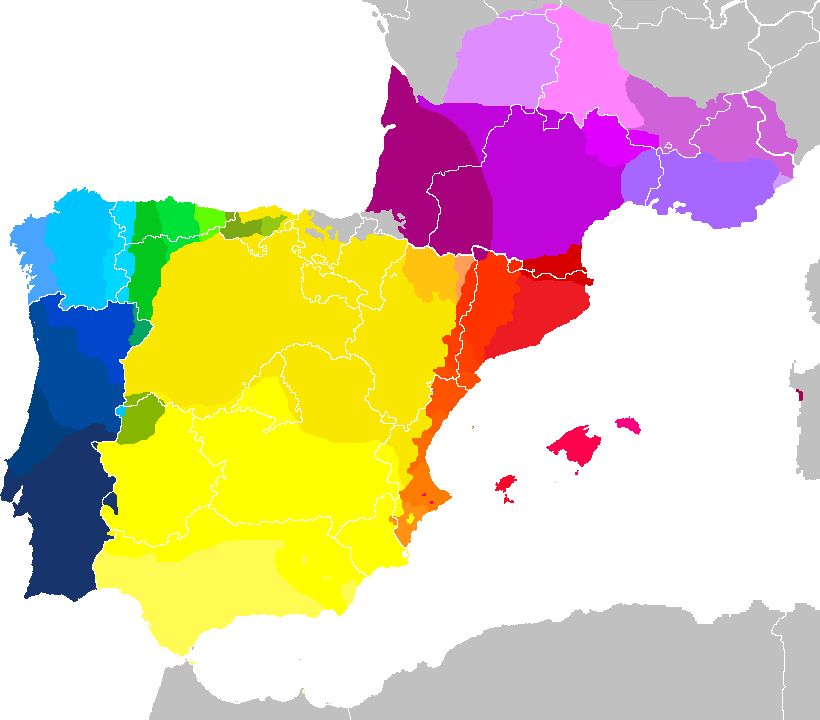
Portuguese is a pluricentric language; it is the same language with several interacting codified standard forms in many countries. Portuguese is a Romance language with Celtic, Germanic, Greek, and Arabic influence. It was spoken in the Iberian Peninsula before as Galician-Portuguese. With the formation of Portugal as a country in the 12th century, the language evolved into Portuguese. In the Spanish province of Galicia to the north of Portugal, the native language is Galician. Both Portuguese and Galician are very similar and natives can understand each other as they share the same recent common ancestor. Portuguese and Spanish are different languages, although they share 89% of their lexicon, the same percentage found in other neighboring languages in Europe, such as French and Italian.
Portuguese uses vowel height to contrast stressed syllables with unstressed syllables; the vowels /a ɛ e ɔ o/ tend to be raised to [ɐ ɛ ɨ ɔ u] when they are unstressed (see below for details). The dialects of Portugal are characterized by reducing vowels to a greater extent than others. Falling diphthongs are composed of a vowel followed by one of the high vowels /i/ or /u/; although rising diphthongs occur in the language as well, they can be interpreted as hiatuses.
European Portuguese possesses quite a wide range of vowel allophones:
The realization of /ɐ/ in this contrast occurs in a limited morphological context, namely in verbal conjugation between the first person plural present and past perfect indicative forms of verbs such as pensamos ('we think') and pensámos ('we thought'). proposes that it is a kind of crasis rather than phonemic distinction of /a/ and /ɐ/. It means that in falamos 'we speak' there is the expected prenasal /a/-raising: [fɐˈlɐmuʃ], while in falámos 'we spoke' there are phonologically two /a/ in crasis: /faˈlaamos/ > [fɐˈlamuʃ]. Close-mid vowels and open-mid vowels (/e ~ ɛ/ and /o ~ ɔ/) contrast only when they are stressed. In unstressed syllables, they occur in complementary distribution.
According to Mateus and d'Andrade (2000:19), in European Portuguese, the stressed [ɐ] only occurs in the following three contexts:
In Greater Lisbon (according to NUTS III, which does not include Setúbal) /e/ can be centralized [ɐ] before palatal sounds (/j, ɲ, ʃ, ʒ, ʎ/); e.g. roupeiro [ʁoˈpɐjɾu], brenha [ˈbɾɐ(ʲ)ɲɐ], texto [ˈtɐ(ʲ)ʃtu], vejo [ˈvɐ(ʲ)ʒu], coelho [kuˈɐ(ʲ)ʎu].
European Portuguese possesses a near-close near-back unrounded vowel. It occurs in unstressed syllables such as in pegar [pɯ̽ˈɣaɾ] ('to grip'). There is no standard symbol in the International Phonetic Alphabet for this sound. The IPA Handbook transcribes it as /ɯ/, but in Portuguese studies /ɨ/ is traditionally used.
European Portuguese
European Portuguese (Portuguese: português europeu, pronounced [puɾtuˈɣez ewɾuˈpew]), also known as Lusitanian Portuguese (Portuguese: português lusitano) or as Portugal Portuguese (Portuguese: português de Portugal), is a dialect of the Portuguese language spoken in Portugal. The word "European" was chosen to avoid the clash of "Portuguese Portuguese" ("português português") as opposed to Brazilian Portuguese. "Peninsular Portuguese" (Portuguese: português peninsular) and "Iberian Portuguese" (Portuguese: português ibérico) are sometimes used, but they implicitly exclude the varieties of Portuguese spoken in Madeira and the Azores.
Portuguese is a pluricentric language; it is the same language with several interacting codified standard forms in many countries. Portuguese is a Romance language with Celtic, Germanic, Greek, and Arabic influence. It was spoken in the Iberian Peninsula before as Galician-Portuguese. With the formation of Portugal as a country in the 12th century, the language evolved into Portuguese. In the Spanish province of Galicia to the north of Portugal, the native language is Galician. Both Portuguese and Galician are very similar and natives can understand each other as they share the same recent common ancestor. Portuguese and Spanish are different languages, although they share 89% of their lexicon, the same percentage found in other neighboring languages in Europe, such as French and Italian.
Portuguese uses vowel height to contrast stressed syllables with unstressed syllables; the vowels /a ɛ e ɔ o/ tend to be raised to [ɐ ɛ ɨ ɔ u] when they are unstressed (see below for details). The dialects of Portugal are characterized by reducing vowels to a greater extent than others. Falling diphthongs are composed of a vowel followed by one of the high vowels /i/ or /u/; although rising diphthongs occur in the language as well, they can be interpreted as hiatuses.
European Portuguese possesses quite a wide range of vowel allophones:
The realization of /ɐ/ in this contrast occurs in a limited morphological context, namely in verbal conjugation between the first person plural present and past perfect indicative forms of verbs such as pensamos ('we think') and pensámos ('we thought'). proposes that it is a kind of crasis rather than phonemic distinction of /a/ and /ɐ/. It means that in falamos 'we speak' there is the expected prenasal /a/-raising: [fɐˈlɐmuʃ], while in falámos 'we spoke' there are phonologically two /a/ in crasis: /faˈlaamos/ > [fɐˈlamuʃ]. Close-mid vowels and open-mid vowels (/e ~ ɛ/ and /o ~ ɔ/) contrast only when they are stressed. In unstressed syllables, they occur in complementary distribution.
According to Mateus and d'Andrade (2000:19), in European Portuguese, the stressed [ɐ] only occurs in the following three contexts:
In Greater Lisbon (according to NUTS III, which does not include Setúbal) /e/ can be centralized [ɐ] before palatal sounds (/j, ɲ, ʃ, ʒ, ʎ/); e.g. roupeiro [ʁoˈpɐjɾu], brenha [ˈbɾɐ(ʲ)ɲɐ], texto [ˈtɐ(ʲ)ʃtu], vejo [ˈvɐ(ʲ)ʒu], coelho [kuˈɐ(ʲ)ʎu].
European Portuguese possesses a near-close near-back unrounded vowel. It occurs in unstressed syllables such as in pegar [pɯ̽ˈɣaɾ] ('to grip'). There is no standard symbol in the International Phonetic Alphabet for this sound. The IPA Handbook transcribes it as /ɯ/, but in Portuguese studies /ɨ/ is traditionally used.
Recent media
Recent media