Hubbry Logo
Eyes of SibiuEyes of SibiuMain
Open search
Eyes of Sibiu
Community hub
Eyes of Sibiu
logo
8 pages, 0 posts
0 subscribers
Be the first to start a discussion here.
Eyes of Sibiu
Eyes of Sibiu
from Wikipedia
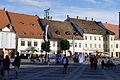
Haller House, Piața Mare, Sibiu
Sibiu eyes on the Făgăraș Citadel, an example outside of Sibiu County

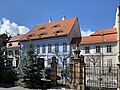
The Eyes of Sibiu (German: Augen von Hermannstadt, Romanian: Ochii din Sibiu) are the iconic eyebrow dormers on the roofs of Sibiu's houses. Sibiu lies in Transylvania, a historical region of Romania. The eyes, which are a symbol and a tourist attraction of the city, have given Sibiu the nicknames of The City with Eyes,[1] The City Where Houses Don't Sleep[2] and the portmanteau Seebiu.[3] They vary in shape – most of them are trapezoid-shaped, others having rounded or elongated forms.

In Romanian, they are called Ochii Sibiului, while in German they are known as die Augen von Hermannstadt, Hermannstadt being the German name of Sibiu.

History

[edit]

Although the eyes originate from as early as the 15th century,[4] most of them were built in the 19th century. They were most likely invented by a local of Sibiu, because they are widespread in the city and its surroundings. They are an element of Baroque architecture.[5] Some of them were even built as late as the 20th century, after Sibiu became part of the Kingdom of Romania.

Purpose

[edit]

There are legends, according to which the eyes were built to frighten the people, making them believe they are being watched.[6] Their real purpose was to act as a ventilation system for the houses' attics.[7] Nowadays, the eyes have become one of Sibiu's most famous symbols, making them a tourist attraction.

In 2017, the eyes became a symbol of Romania's anti-corruption fight, being used by the organisation Vă vedem din Sibiu ("We see you from Sibiu").[8]

Spread

[edit]

Apart from Sibiu itself, the eyes have also been built in the city's surroundings. Most of them are found in the Sibiu County. Some of them can also be found in other nearby places, like the cities of Brașov and Făgăraș, both located in the Brașov County.

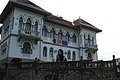
Additionally, some examples which are probably unrelated can also be found in the city of Timișoara in western Romania. Similar eyebrow dormers can also be found on traditional rural Romanian houses or on cule in the historical region of Oltenia.

[edit]

See also

[edit]

References

[edit]
Revisions and contributorsEdit on WikipediaRead on Wikipedia
from Grokipedia
The Eyes of Sibiu are the distinctive eyebrow-shaped dormer windows on the rooftops of historic buildings in the Romanian city of Sibiu, creating an anthropomorphic illusion of houses vigilantly observing passersby below. These architectural features, primarily constructed between the 15th and 19th centuries, served as ventilation systems for attics used to store goods requiring a dry environment, while also enabling discreet surveillance of the streets from above. Predominantly found in the Upper Town's medieval core, particularly around the Grand Square (Piața Mare), they number in the thousands and contribute to Sibiu's nickname as the "City with Eyes," enhancing its UNESCO-listed historic center's unique charm. In modern times, the eyes have symbolized transparency and oversight, notably adopted in 2017 by the anti-corruption initiative "Vă vedem din Sibiu" ("We see you from Sibiu") to evoke public scrutiny of officials.

Architectural Description

Design and Features

The Eyes of Sibiu feature windows with distinctly curved roofs that arch over narrow, rectangular attic openings, evoking the form of eyebrows above pupils to produce an anthropomorphic illusion of eyes gazing downward. This design element integrates seamlessly into the steep, mansard-style roofs prevalent in Sibiu's historic , where the pronounced differentiates them from conventional rectangular skylights by emphasizing a watchful, expressive profile. These dormers exhibit variation in form, with many adopting a trapezoidal base tapering upward, while others incorporate rounded or elongated arches to convey subtle differences in "gaze," such as narrowed or widened appearances. Placement is frequently asymmetrical along rooflines, positioned to align with street views below, thereby amplifying the perceptual effect of observation from multiple angles without compromising structural uniformity. Structurally, the eye-shaped dormers protrude minimally from the main roof plane, typically framed in wood or integrated with the surrounding tile covering, ensuring aesthetic harmony with the and medieval facades of Sibiu's Upper Town buildings. The small size—often no wider than 0.5 to 1 meter—prioritizes the symbolic over expansive light admission, underscoring their role as stylized architectural motifs rather than purely functional apertures.

Materials and Construction Techniques

The roofs of Sibiu's historic houses, including those featuring the eye-shaped dormers, are predominantly covered with red clay tiles, a material well-suited to the region's cold winters and heavy snowfall due to its durability, low thermal conductivity, and ability to withstand freeze-thaw cycles. These tiles, fired from local clay sources, provide effective weather resistance when laid on steep pitches typical of Transylvanian Saxon architecture, minimizing damming and facilitating shedding. The windows themselves employ timber construction, with wooden frames and curved rafters forming the shape, often using laminated or bent wood for the arch to integrate seamlessly with the roofline. Stone or sills may underpin the base in some structures for added stability against seismic activity and settling, while frames are typically oak or similar hardwoods treated with or pitch for rot resistance in humid conditions. Construction techniques emphasize weatherproofing through precise flashing—often lead or strips—at the dormer-roof junction to prevent water ingress, with tiles butted closely to the curved edge and battens aligned to maintain a continuous . The dormers protrude minimally, relying on the roof's pitch for drainage rather than extensions, which reduces vulnerability to wind uplift. Craftsmanship variations reflect the standards of Saxon guilds active in Sibiu from the 15th to 19th centuries, with early examples showing simpler, near-rectangular openings evolving into more refined Baroque curves by the 18th century, achieved through steam-bending or laminating techniques under guild oversight to ensure uniformity and load-bearing integrity. These methods prioritized empirical durability, as evidenced by the survival of many original structures despite exposure to Transylvania's variable climate.

Historical Origins and Development

Saxon Influences and Early Adoption

The , invited by Hungarian kings to settle and defend the borders of , began establishing fortified communities in the region during the , with Hermannstadt (present-day ) emerging as a key settlement around 1150. These German-speaking settlers, originating from regions like the and , introduced structured characterized by steep-roofed timber-framed houses clustered within defensive walls, adapting to the area's harsh climate including heavy snowfall that necessitated pronounced roof pitches to shed snow loads. The eye-shaped eyebrow dormers, integral to these early Saxon rooftops, first appeared in documented form during the 15th century within the upper town or Citadel—the fortified core of Hermannstadt housing communal and defensive structures like guilds and council buildings. Architectural records indicate these narrow, arched openings were incorporated into attic spaces of burgher houses, drawing from broader Central European dormer traditions seen in medieval German towns, where such features provided light and access while maintaining structural integrity. In Sibiu's context, they aligned with the Saxons' emphasis on communal fortification, appearing on buildings integrated into the town's perimeter defenses erected between the 13th and 15th centuries against Ottoman incursions. This early adoption reflected practical Saxon engineering, with the dormers' rounded design suited to the steep gables that prevented snow accumulation, a necessity in Transylvania's ; historical building surveys note their prevalence in the Citadel's guild-related properties by the late medieval period, predating widespread elaborations. While exact inaugural instances remain unattributed due to sparse pre-16th-century records, their integration into the upper town's fabric underscores the ' role in pioneering resilient, climate-adapted housing that prioritized attic ventilation and storage amid fortified urban density.

Expansion During Baroque and Later Periods

During the Baroque period spanning the 17th and 18th centuries, Sibiu—known then as Hermannstadt—saw increased adoption of eyebrow dormers in residential and civic architecture, aligning with broader European trends in ornate roof detailing for ventilation and aesthetics. This expansion coincided with the city's economic stabilization following Habsburg control after 1699, fueled by Transylvanian Saxon guilds in crafts and trade that supported urban rebuilding and embellishment. Structures from this era, including guild halls and merchant homes, incorporated these curved, eye-like openings to enhance airflow while contributing to the steep, multi-gabled roofs characteristic of the style. The tradition persisted and intensified into the under sustained Habsburg administration, where most surviving examples were constructed or retrofitted amid a wave in neoclassical and eclectic styles. prosperity and , with serving as a key administrative center in , led to widespread application on bourgeois houses in the Upper and Lower Towns, often numbering multiple dormers per roofline for practical utility in storing goods. By the late , these features had become a hallmark of the city's skyline, appearing on dozens of preserved buildings despite stylistic shifts toward flat or simplified roofs in newer developments. Following and Romania's unification, the practice waned as interwar modernization prioritized functionalist designs over traditional dormers, reducing new installations in expanding suburbs. Under communist rule from 1947 to 1989, Sibiu's historic core escaped the systematic demolitions seen in cities like , allowing incidental retention of and later eye dormers through minimal intervention and focus on industrial zones elsewhere. This preservation stemmed from the regime's uneven urban policies, which valued Sibiu's Saxon heritage for tourism potential even amid ethnic German emigration.

Functional Aspects

Ventilation and Practical Utility

The eye-shaped dormers, known as the Eyes of Sibiu, functioned primarily as ventilation openings for attics, allowing to circulate through otherwise enclosed spaces used for storage. These narrow apertures, typically constructed between the 15th and 19th centuries, enabled merchants to maintain dry conditions for perishable goods such as , , and cheese by promoting air exchange without excessive exposure to rain or direct precipitation. In Transylvania's , characterized by humid summers and cold winters, this design helped mitigate moisture buildup that could lead to spoilage or structural issues in timber-framed roofs. The compact, curved form of the dormers optimized by drawing in cooler air at the and expelling warmer, moist air from the peak, aligning with pre-industrial building practices that prioritized through minimal thermal bridging. Their small size—often no wider than 30-50 centimeters—permitted sufficient light for basic access while limiting heat gain in summer and loss in winter, a practical evident in surviving Saxon-era structures where attics doubled as storage lofts. Architectural analyses of Transylvanian houses confirm that these features integrated with steep roof pitches to enhance ventilation, relying on natural convection rather than mechanical aids unavailable until the . Preserved examples, such as those on 19th-century burgher homes in Sibiu's Upper , demonstrate the dormers' efficacy through consistent attic dryness reported in historical maintenance records, underscoring their role in supporting the region's mercantile economy by preserving trade commodities against . This utilitarian purpose, rooted in Saxon building traditions imported from medieval , prioritized functionality over aesthetics, with the eye-like appearance emerging as a byproduct of the mansard-style roof integration rather than intentional design.

Surveillance Interpretations and Myths

A popular attributes the eye-shaped dormers of to a deliberate mechanism intended to deter and enforce moral conduct among residents. According to this , the anthropomorphic "eyes" symbolized the watchful gaze of authorities or overseers, discouraging illicit behavior by implying constant observation from rooftops. This narrative, often traced to anecdotal accounts from the , posits that Saxon burghers or masons crafted the openings to mimic vigilant eyes, fostering a sense of communal oversight in the tightly knit medieval community. However, no contemporary historical records, such as guild charters or municipal documents from the 15th to 19th centuries when most dormers were constructed, substantiate this interpretive role. The absence of references in primary sources like building specifications or legal ordinances suggests the surveillance motif emerged retrospectively, lacking empirical support from the period's architectural or social documentation. Similar eyebrow dormers appear in other European vernacular architectures, including Romanian rural houses and structures beyond , without analogous attributions to monitoring or deterrence, indicating the eye-like form arises incidentally from functional shaping rather than intentional symbolism. From a causal standpoint, the dormers' curved, arched optimizes for ventilation—a practical necessity in Sibiu's dense urban layout—yielding an anthropomorphic resemblance as a byproduct, not a primary intent. Architectural analyses emphasize this utilitarian origin, with treatises on and neoclassical roof elements prioritizing aerodynamic efficiency over symbolic messaging. The legend's persistence owes more to modern promotion than verifiable , as promotional materials amplify the "watching eyes" trope to enhance Sibiu's mystique, despite contradicting evidence that in these structures.

Cultural and Symbolic Role

Local Folklore and Perceptions

In local Saxon-influenced folklore, the eye-shaped dormers are often depicted as symbolic watchers intended to safeguard the city against Ottoman incursions during the medieval era, with narratives claiming that their anthropomorphic design conveyed an impression of unceasing vigilance to potential invaders. These stories, rooted in Transylvania's history of defensive fortifications against eastern threats from the 15th to 18th centuries, portray the eyes as deterrents that psychologically fortified Sibiu by suggesting ghostly or eternal guardianship over the rooftops. Alternative legends circulating in oral traditions attribute a more internal surveillance role to the features, positing that Saxon builders crafted them to monitor and intimidate the Romanian populace amid ethnic hierarchies in the region, thereby enforcing order through perceived . Such tales, while evocative of historical power dynamics between and other groups, lack corroboration in primary architectural records and appear amplified in later retellings rather than reflecting contemporaneous beliefs. Among residents, perceptions have historically emphasized the dormers' role as idiosyncratic elements of heritage rather than vessels of active symbolism or spiritual , as evidenced in early 20th-century observer accounts describing them as quaint rooftop peculiarities without ascribed mystical potency. Oral histories from the reinforce this view, framing the eyes as charming vestiges of craftsmanship that contributed to Sibiu's unique , though without substantiation for claims of practical deterrence or efficacy—narratives that, while culturally enriching, remain ancillary to verified functional designs.

Modern Symbolism and Usage

In 2017, amid widespread Romanian protests against proposed judicial reforms perceived as weakening efforts, the "Eyes of Sibiu" emerged as a potent of vigilance for the activist group "Vă vedem din " ("We See You from Sibiu"). The organization repurposed the architectural motif to symbolize public oversight and transparency, linking the historical windows' connotations to demands for in . Protesters in Sibiu's public squares arranged themselves into large human formations mimicking eye shapes, declaring "corruption-free zones" under the watchful gaze of the city's rooftops. This symbolic adoption persisted into , with demonstrations invoking the eyes to underscore ongoing scrutiny of political figures, though without evidence of supernatural elements—remaining tethered to the features' practical origins in attic ventilation and potential spying utility. The protests highlighted a causal connection between the eyes' elevated vantage and modern calls for institutional watchfulness, as articulated statements emphasizing "seeing" from above. Post-2007, following Sibiu's designation as a alongside , municipal promotions integrated the eyes into the city's visual identity, portraying them as enduring sentinels that reinforce communal transparency without necessitating physical alterations to heritage structures. This branding leverages the motif's anthropomorphic appeal to foster civic pride and distinguish in cultural narratives.

Distribution and Preservation

Concentration in Sibiu's Historic Districts

![A rounded version of the eyes, Grand Square of Sibiu](./assets/Sibiu_Piata_Mare_nr.15_11 The Eyes of Sibiu exhibit their highest density within the Upper Town's core historic districts, centered around Piața Mare (Great Square) and Piața Mică (Small Square), where dozens of houses display multiple eyebrow dormers per roof, creating a pervasive anthropomorphic effect across the rooftops. These features are visible on over 200 individual windows in the immediate vicinity of these squares and adjacent streets, underscoring the uniformity of Saxon architectural practices in the medieval urban layout. Extending to the Lower Town (Orașul de Jos), clusters appear along interconnecting bridges, staircases, and passageways linking to the Upper Town, though with sparser distribution compared to the central hubs. The dormers are closely tied to houses and burgher homes constructed primarily by Transylvanian Saxon settlers from the 15th to 19th centuries, with concentrations reflecting the socioeconomic zoning: properties dominate Piața Mare, while craftsmen's residences feature in peripheral areas. Preservation of these concentrations benefits from the inclusion of Sibiu's Historic Centre and its Ensemble of Squares on UNESCO's World Heritage Tentative List since July 6, 2004, which encompasses the fortified old town area of approximately 80 hectares and mandates maintenance of original roofing elements to retain the ensemble's integrity. In merchant districts like Piața Mare, the eyes often align with more decorative rooflines on neoclassical and facades, contrasting with plainer iterations in residential extensions of the historic zones.

Presence Elsewhere and Conservation Efforts

Instances of eye-shaped dormers akin to those in Sibiu appear sporadically in other Transylvanian localities, such as and in , as well as villages within like Săliște and Cisnădie. However, these occurrences lack the density and cultural prominence seen in Sibiu, remaining subordinate to local architectural traditions without achieving iconic status. No evidence indicates adoption beyond or integration into non-Transylvanian Saxon settlements like , underscoring the feature's localized Saxon influence confined primarily to central . Conservation initiatives for Sibiu's historic structures, including eye dormers, gained momentum post-1990 amid Romania's transition from communist-era neglect, with experts like architect Hans-Christian Habermann contributing to revival efforts focused on authentic materials. By the early , preparations for Sibiu's 2007 status drove systematic restorations of roofs and facades, combating decay from industrial pollution through tile replacements and structural reinforcements using period-appropriate techniques. Subsequent EU-funded projects, such as those under EEA Grants and Horizon programs, have sustained these works, prioritizing original and ventilation functions while addressing urban encroachment and material degradation. Challenges persist in reconciling preservation with modernization pressures, including resistance to synthetic substitutes that undermine authenticity, yet heritage assessments report enhanced structural longevity in restored examples.

Contemporary Impact

Tourism and Economic Contributions

The designation of Sibiu as a in markedly increased the prominence of the Eyes of Sibiu as a tourist draw, spotlighting the city's distinctive rooftop features amid broader heritage promotions. This event spurred a significant uptick in visitors, with tourism arrivals rising notably in the first half of relative to prior periods, alongside a 10.7% increase in hotel industry activity and 13.7% growth for tourist operators compared to 2006. The Eyes, peering from historic rooftops in areas like Piața Mare, have since solidified as an iconic element in visitor itineraries, contributing to sustained interest in Sibiu's architectural heritage. Guided tours emphasizing the Eyes generate direct revenue, as operators integrate them into walks through the Upper Town's medieval squares and streets, appealing to cultural tourists seeking unique Transylvanian sights. Souvenir markets in Sibiu feature eye-themed items, amplifying economic multipliers from heritage-focused spending. Post-2007 analyses indicate ongoing expansion in tourism's economic footprint, with the Eyes enhancing Sibiu's competitive edge in Romania's cultural tourism sector. The surge tied to the Eyes has driven job growth in , guiding, and preservation efforts, bolstering local employment amid broader sectoral gains from the 2007 designation, which lifted key economic areas by 9.5%. While high visitor volumes pose limited strain on historic fabrics, targeted regulations safeguard structures, balancing economic gains with site integrity.

Recent Cultural References

In September 2024, featured the in an article describing them as a mysterious architectural element on rooftops, enhancing the city's historic and watchful ambiance within Transylvania's . Similarly, a December 2024 piece on Journee-Mondiale.com portrayed the eyes as symbols of vigilance and craftsmanship, positioning among Europe's idyllic destinations and linking them to the region's gothic heritage without endorsing unsubstantiated myths. The eyes gained symbolic traction in Romanian civic around 2018, when protesters in invoked them during anti-corruption demonstrations to denote a "corruption-free area," representing ongoing public of authorities; this usage has echoed sporadically in discussions of , though without formalized institutional adoption. Local artistic interpretations occasionally appear in cultural events, such as rooftop-themed installations at 's annual festivals, but remain limited to informal tributes rather than central motifs. As of 2025, promotional materials from Romanian tourism bodies continue to spotlight the eyes in heritage campaigns, emphasizing their role in Sibiu's preserved urban identity amid broader efforts to market Transylvania's architectural distinctiveness, with no reported alterations to the structures themselves.

References

Add your contribution
Related Hubs
User Avatar
No comments yet.