
Recent from talks
Felix Dzerzhinsky
Knowledge base stats:
Talk channels stats:
Members stats:
Felix Dzerzhinsky
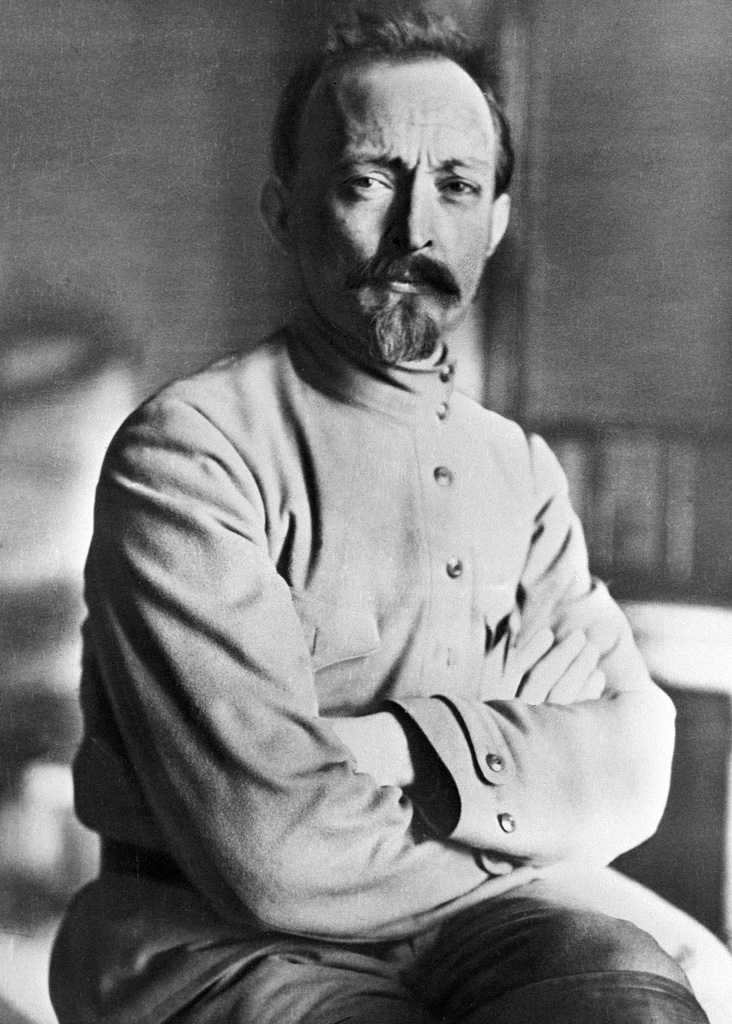
Felix Edmundovich Dzerzhinsky (Russian: Феликс Эдмундович Дзержинский; Polish: Feliks Edmundowicz Dzierżyński [ˈfɛliks ɛdmundɔvʲiʈ͡ʂ d͡ʑɛrʐɨj̃skʲi]; 11 September [O.S. 30 August] 1877 – 20 July 1926), nicknamed Iron Felix (Russian: Железный Феликс), was a Soviet revolutionary and politician of Polish origin. From 1917 until his death in 1926, he led the first three Soviet secret police organizations, the Cheka, the GPU and the OGPU, establishing state security organs for the Bolshevik government. He was a key architect of the Red Terror and de-Cossackization.
Born to a Polish family of noble descent in their Ozhyemblovo Estate (in 1881 named Dzerzhinovo), in Russian Poland, Dzerzhinsky embraced revolutionary politics from a young age, and was active in the Social Democracy of the Kingdom of Poland and Lithuania party. Active in Kaunas and Warsaw, he was frequently arrested and underwent several exiles to Siberia, from which he escaped every time. He evaded the tsarist secret police, the Okhrana, whose work he took interest in. Dzerzhinsky participated in the failed 1905 Revolution, and after a final arrest in 1912, was imprisoned until the February Revolution of 1917. He then joined Vladimir Lenin's Bolshevik party, and played an active role in the October Revolution which brought them to power.
In December 1917, Lenin named Dzerzhinsky head of the newly established All-Russian Extraordinary Commission (Cheka), tasking him with the suppression of counter-revolutionary activities in Soviet Russia. The Russian Civil War saw a vast expansion of the Cheka's authority, inaugurating a campaign of mass arrests, detentions (including in newly founded Gulag forced labour camps), and executions known as the Red Terror. An estimated 50,000 to 200,000 people were executed by the Cheka during the years of the civil war. The agency was reorganized as the State Political Directorate (GPU) in 1922, and then as the Joint State Political Directorate (OGPU) a year later, with Dzerzhinsky remaining as head of the powerful organization. He served as director of the Supreme Soviet of the National Economy (VSNKh) from 1924.
Dzerzhinsky died of a heart attack in 1926, and was buried in the Kremlin Wall Necropolis. He was remembered by secret police agents (known as "Chekists" throughout the Soviet era) as a hero of the revolution. A large statue of him stood in front of the security service headquarters at Moscow's Lubyanka Building until 1991. He also became a prominent symbol of repression and brutality to critics of the Soviet Union.
Felix Dzerzhinsky was born on 11 September 1877 to ethnically Polish parents of noble descent at the Ozhyemblovo family estate, about 15 km (9.3 mi), from the small town of Ivyanets in the Minsk Governorate of Russian Poland (Polish territory after partition by Russian Empire; now Belarus) In the Russian Empire, his family was of a type known as "column-listed nobility" (Russian: столбовое дворянство, stolbovoe dvorianstvo), whose nobility was formally acknowledged, but so old that they did not enjoy the privileges of the new nobility. His sister Wanda died at the age of 12, when she was accidentally shot with a hunting rifle on the family estate by one of her brothers. At the time of the incident, there were conflicting claims as to whether Felix or his brother Stanisław was responsible for the accident.
His father, Edmund-Rufin Dzierżyński graduated from the Saint Petersburg Imperial University in 1863 and moved to Vilnius, where he worked as a home teacher for a professor of Saint Petersburg University named Januszewski and eventually married Januszewski's daughter Helena Ignatievna, who also was of Polish origin. In 1868, after a short period in Kherson gymnasium, he worked as a gymnasium teacher of physics and mathematics at the schools of Taganrog in the Don Host Province, Russia, particularly the Chekhov Gymnasium. In 1875, Edmund Dzierżyński retired due to health conditions and moved with his family to his estate near Ivyanets and Rakaŭ. In 1882, Felix's father died from tuberculosis.
As a youngster Dzerzhinsky became a polyglot, speaking Polish, Russian, German and Latin. He attended the Vilnius Gymnasium from 1887 to 1895. One of the older students at this gymnasium was his future arch-enemy, Józef Piłsudski. Years later, as Marshal of Poland, Piłsudski recalled that Dzerzhinsky "distinguished himself as a student with delicacy and modesty. He was rather tall, thin and demure, making the impression of an ascetic with the face of an icon... Tormented or not, this is an issue history will clarify; in any case this person did not know how to lie." School documents show that Dzerzhinsky attended his first year in school twice, while he was not able to finish his eighth year. Dzerzhinsky received a school diploma which stated: "Dzerzhinsky Feliks, who is 18 years of age, of Catholic faith, along with a satisfactory attention and satisfactory diligence showed the following successes in sciences, namely: Divine law—"good"; Logic, Latin, Algebra, Geometry, Mathematical geography, Physics, History (of Russia), French—"satisfactory"; Russian and Greek—"unsatisfactory".
Two months before he expected to graduate, the gymnasium expelled Dzerzhinsky for "revolutionary activity" and for posting signs with socialist slogans at the school. He had joined a Marxist group, the Union of Workers (Socjaldemokracja Królestwa Polskiego "SDKP"), in 1895. In late April 1896, he was one of 15 delegates at the first congress of the Lithuanian Social Democratic Party (LSDP). In 1897, he attended the second congress of the LSDP, where it rejected independence[which?] in favor of national autonomy. On 18 March 1897, he was sent to Kaunas to take advantage of the arrest of the Polish Socialist Party (PPS) branch. He worked in a book-binding factory and set up an illegal press. As an organizer of a shoemakers' strike, Dzerzhinsky was arrested for "criminal agitation among the Kaunas workers"; the police files from this time state: "Felix Dzerzhinsky, considering his views, convictions and personal character, will be very dangerous in the future, capable of any crime." Dzerzhinsky envisioned merging the LSDP with the Russian Social Democratic Labour Party (RSDLP) and took the same position as influential Social Democrat Rosa Luxemburg on what was referred to in contemporary writings as "The National Question," i.e., the right of nations to self determination.
Hub AI
Felix Dzerzhinsky AI simulator
(@Felix Dzerzhinsky_simulator)
Felix Dzerzhinsky
Felix Edmundovich Dzerzhinsky (Russian: Феликс Эдмундович Дзержинский; Polish: Feliks Edmundowicz Dzierżyński [ˈfɛliks ɛdmundɔvʲiʈ͡ʂ d͡ʑɛrʐɨj̃skʲi]; 11 September [O.S. 30 August] 1877 – 20 July 1926), nicknamed Iron Felix (Russian: Железный Феликс), was a Soviet revolutionary and politician of Polish origin. From 1917 until his death in 1926, he led the first three Soviet secret police organizations, the Cheka, the GPU and the OGPU, establishing state security organs for the Bolshevik government. He was a key architect of the Red Terror and de-Cossackization.
Born to a Polish family of noble descent in their Ozhyemblovo Estate (in 1881 named Dzerzhinovo), in Russian Poland, Dzerzhinsky embraced revolutionary politics from a young age, and was active in the Social Democracy of the Kingdom of Poland and Lithuania party. Active in Kaunas and Warsaw, he was frequently arrested and underwent several exiles to Siberia, from which he escaped every time. He evaded the tsarist secret police, the Okhrana, whose work he took interest in. Dzerzhinsky participated in the failed 1905 Revolution, and after a final arrest in 1912, was imprisoned until the February Revolution of 1917. He then joined Vladimir Lenin's Bolshevik party, and played an active role in the October Revolution which brought them to power.
In December 1917, Lenin named Dzerzhinsky head of the newly established All-Russian Extraordinary Commission (Cheka), tasking him with the suppression of counter-revolutionary activities in Soviet Russia. The Russian Civil War saw a vast expansion of the Cheka's authority, inaugurating a campaign of mass arrests, detentions (including in newly founded Gulag forced labour camps), and executions known as the Red Terror. An estimated 50,000 to 200,000 people were executed by the Cheka during the years of the civil war. The agency was reorganized as the State Political Directorate (GPU) in 1922, and then as the Joint State Political Directorate (OGPU) a year later, with Dzerzhinsky remaining as head of the powerful organization. He served as director of the Supreme Soviet of the National Economy (VSNKh) from 1924.
Dzerzhinsky died of a heart attack in 1926, and was buried in the Kremlin Wall Necropolis. He was remembered by secret police agents (known as "Chekists" throughout the Soviet era) as a hero of the revolution. A large statue of him stood in front of the security service headquarters at Moscow's Lubyanka Building until 1991. He also became a prominent symbol of repression and brutality to critics of the Soviet Union.
Felix Dzerzhinsky was born on 11 September 1877 to ethnically Polish parents of noble descent at the Ozhyemblovo family estate, about 15 km (9.3 mi), from the small town of Ivyanets in the Minsk Governorate of Russian Poland (Polish territory after partition by Russian Empire; now Belarus) In the Russian Empire, his family was of a type known as "column-listed nobility" (Russian: столбовое дворянство, stolbovoe dvorianstvo), whose nobility was formally acknowledged, but so old that they did not enjoy the privileges of the new nobility. His sister Wanda died at the age of 12, when she was accidentally shot with a hunting rifle on the family estate by one of her brothers. At the time of the incident, there were conflicting claims as to whether Felix or his brother Stanisław was responsible for the accident.
His father, Edmund-Rufin Dzierżyński graduated from the Saint Petersburg Imperial University in 1863 and moved to Vilnius, where he worked as a home teacher for a professor of Saint Petersburg University named Januszewski and eventually married Januszewski's daughter Helena Ignatievna, who also was of Polish origin. In 1868, after a short period in Kherson gymnasium, he worked as a gymnasium teacher of physics and mathematics at the schools of Taganrog in the Don Host Province, Russia, particularly the Chekhov Gymnasium. In 1875, Edmund Dzierżyński retired due to health conditions and moved with his family to his estate near Ivyanets and Rakaŭ. In 1882, Felix's father died from tuberculosis.
As a youngster Dzerzhinsky became a polyglot, speaking Polish, Russian, German and Latin. He attended the Vilnius Gymnasium from 1887 to 1895. One of the older students at this gymnasium was his future arch-enemy, Józef Piłsudski. Years later, as Marshal of Poland, Piłsudski recalled that Dzerzhinsky "distinguished himself as a student with delicacy and modesty. He was rather tall, thin and demure, making the impression of an ascetic with the face of an icon... Tormented or not, this is an issue history will clarify; in any case this person did not know how to lie." School documents show that Dzerzhinsky attended his first year in school twice, while he was not able to finish his eighth year. Dzerzhinsky received a school diploma which stated: "Dzerzhinsky Feliks, who is 18 years of age, of Catholic faith, along with a satisfactory attention and satisfactory diligence showed the following successes in sciences, namely: Divine law—"good"; Logic, Latin, Algebra, Geometry, Mathematical geography, Physics, History (of Russia), French—"satisfactory"; Russian and Greek—"unsatisfactory".
Two months before he expected to graduate, the gymnasium expelled Dzerzhinsky for "revolutionary activity" and for posting signs with socialist slogans at the school. He had joined a Marxist group, the Union of Workers (Socjaldemokracja Królestwa Polskiego "SDKP"), in 1895. In late April 1896, he was one of 15 delegates at the first congress of the Lithuanian Social Democratic Party (LSDP). In 1897, he attended the second congress of the LSDP, where it rejected independence[which?] in favor of national autonomy. On 18 March 1897, he was sent to Kaunas to take advantage of the arrest of the Polish Socialist Party (PPS) branch. He worked in a book-binding factory and set up an illegal press. As an organizer of a shoemakers' strike, Dzerzhinsky was arrested for "criminal agitation among the Kaunas workers"; the police files from this time state: "Felix Dzerzhinsky, considering his views, convictions and personal character, will be very dangerous in the future, capable of any crime." Dzerzhinsky envisioned merging the LSDP with the Russian Social Democratic Labour Party (RSDLP) and took the same position as influential Social Democrat Rosa Luxemburg on what was referred to in contemporary writings as "The National Question," i.e., the right of nations to self determination.
Recent media