
Recent from talks
Russian Partition
Knowledge base stats:
Talk channels stats:
Members stats:
Russian Partition
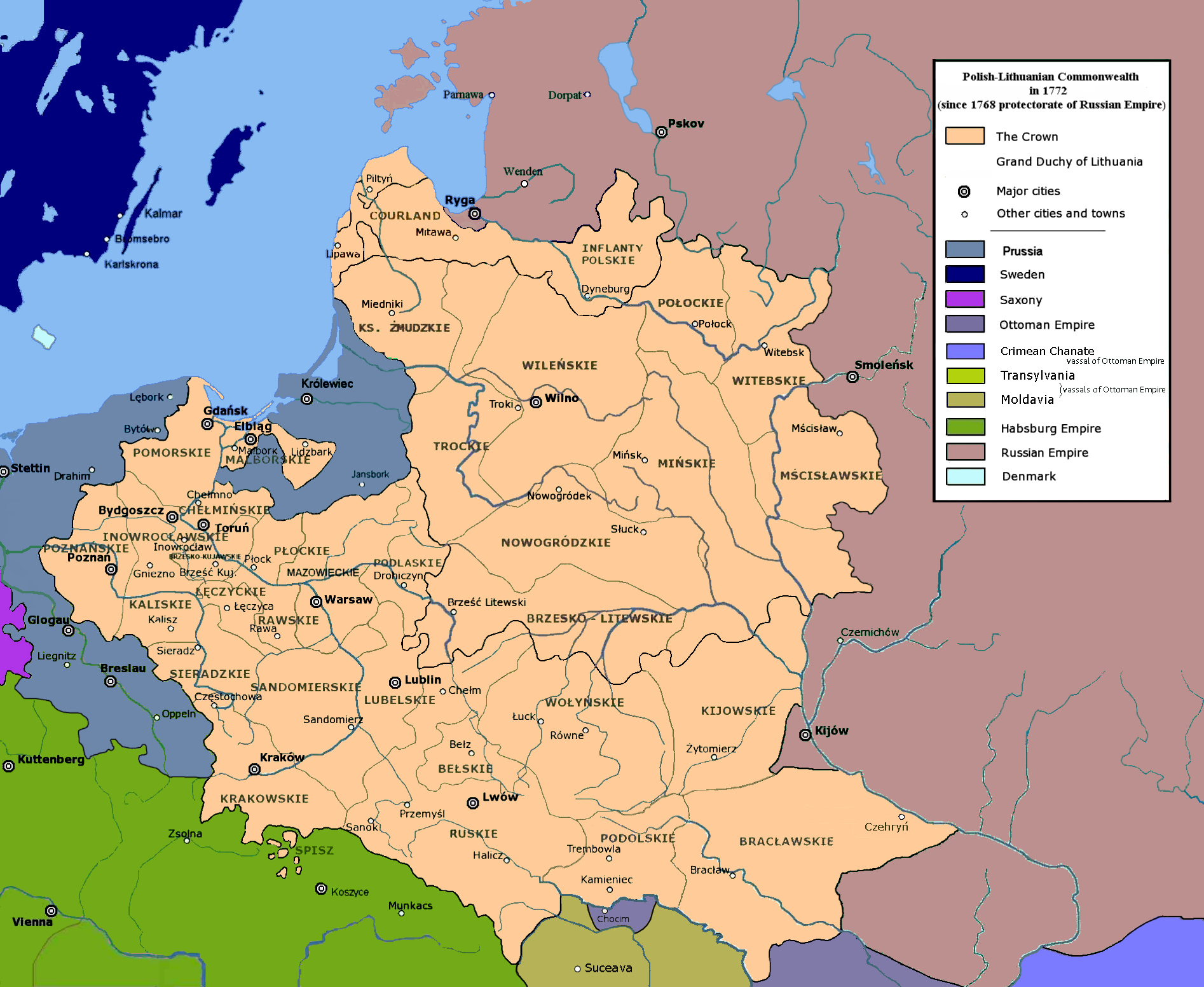
The Russian Partition (Polish: zabór rosyjski) constituted the former territories of the Polish–Lithuanian Commonwealth that were annexed by the Russian Empire in the course of late-18th-century Partitions of Poland. The Russian acquisition encompassed the largest share of the Polish–Lithuanian Commonwealth's population, living on 463,200 km2 (178,800 sq mi) of land constituting the eastern and central territory of the former Commonwealth. The three partitions, which took place in 1772, 1793 and 1795, resulted in the complete loss of Poland's and Lithuania's sovereignty, with their territories split between Russia, Prussia and Austria. The majority of Lithuania's former territory was annexed by the Russian Empire, except for Užnemunė (a geographical area on the left bank of the River Neman) which was annexed by Prussia.
The Napoleonic Wars saw significant parts of Prussia's and Austria's partitions reconstituted as the Duchy of Warsaw (a French client state in a personal union under Saxony), most of which was then reconstituted as the Kingdom of Poland within the Russian Empire in 1815.
To both Russians and Poles, the term Russian Poland was not acceptable. To the Russians after partition, Poland ceased to exist, and their newly acquired territories were considered the long lost parts of Mother Russia. To Poles, Poland was simply Polish, never Russian. While the Russians used varying administrative names for their new territories (see below), another popular term, used in Poland and adopted by most other historiographies, was the Russian Partition.
Even before the partitions from the late 18th century, the Russian Empire had already acquired some territories of the Polish–Lithuanian Commonwealth (a real union of Kingdom of Poland with the Grand Duchy of Lithuania). The first Russian partition took place in the late 17th century when the forced Treaty of Andrusovo signed in 1667 granted Russia the Commonwealth's territory in the Eastern Ukraine. Under the Third Partition of Poland Russia acquired Courland, all Lithuanian territory east of the Nieman River, and the remaining parts of Volhynian Ukraine.
Major historical events of the Russian Partition included the Warsaw Uprising (1794) soon after Kościuszko's victory at Racławice. It ended up in the massacre of Praga district of Warsaw, in which the Russian imperial army killed up to 20,000 civilians in reprisal or revenge, regardless of gender and age. "The whole of Praga was strewn with dead bodies, blood was flowing in streams" wrote Suvorov himself.
In 1807, the victorious Napoleon formed the Duchy of Warsaw after his War of the Fourth Coalition against Prussia and Russia. The new Duchy was held in personal union by King Frederick Augustus I of Saxony. However, the Duchy was dissolved after just a few years following the 1815 Congress of Vienna, and all its territory returned to its previous rulers. The Tsarist Kingdom of Poland was established in the territory returned to Russia with the Tsar taking the title of King of Poland. The protectorate was gradually integrated into Russia over the course of the 19th century. Notwithstanding, the relentless Russian exploitation activities led to the 1830–1831 November Uprising which took place in the heartland of partitioned Poland, forming a government. Its subsequent defeat resulted in a new wave of Tsarist mass repressions and punitive actions. In 1863–1864 another insurrection, the January Uprising, broke out. This time, the Carmelite friars who helped the insurgents were sent on death marches to Siberia chained by their necks together. The January Uprising lead to the Kingdom's autonomy being drastically reduced, and its renaming as Vistula Land. There is debate as to whether the Kingdom of Poland, as a state, was formally replaced by the Vistula Land. Towns were stripped of their charters in reprisal and turned into villages. The Russian Partition of Poland was made an official province of the Russian Empire in 1867.
In the early 20th century, a major part of the Russian Revolution of 1905 was the Revolution in the Kingdom of Poland (1905–1907). The return to Poland's independence was a result of the First World War on the Polish lands (1914–1918), the overthrow of the Tsarist regime, and the defeat of the Central Powers in 1918.
The Russification policies were harsh, and there were many repressions, particularly in the aftermath of the November Uprising (1830–1831) and later, the January Uprising of 1863–1864. Many Poles were exiled to Siberia, some 80,000 of them in 1864 in the single largest deportation action commenced by the empire. Polish language was discriminated against, and it lost its official status. "Books were burned; churches destroyed; priests murdered;" wrote Norman Davies. There was no education in the Polish language, and publications in Polish were few. The only elementary schools were constantly underfinanced. The city of Warsaw under the Tsarist rule resembled a military base with exclusively Russian stores and clubs as well as 12 Russian garrisons in the city, equipped with newly built horse stables, and amenities like laundry shacks, and cabbage pickleries.
Hub AI
Russian Partition AI simulator
(@Russian Partition_simulator)
Russian Partition
The Russian Partition (Polish: zabór rosyjski) constituted the former territories of the Polish–Lithuanian Commonwealth that were annexed by the Russian Empire in the course of late-18th-century Partitions of Poland. The Russian acquisition encompassed the largest share of the Polish–Lithuanian Commonwealth's population, living on 463,200 km2 (178,800 sq mi) of land constituting the eastern and central territory of the former Commonwealth. The three partitions, which took place in 1772, 1793 and 1795, resulted in the complete loss of Poland's and Lithuania's sovereignty, with their territories split between Russia, Prussia and Austria. The majority of Lithuania's former territory was annexed by the Russian Empire, except for Užnemunė (a geographical area on the left bank of the River Neman) which was annexed by Prussia.
The Napoleonic Wars saw significant parts of Prussia's and Austria's partitions reconstituted as the Duchy of Warsaw (a French client state in a personal union under Saxony), most of which was then reconstituted as the Kingdom of Poland within the Russian Empire in 1815.
To both Russians and Poles, the term Russian Poland was not acceptable. To the Russians after partition, Poland ceased to exist, and their newly acquired territories were considered the long lost parts of Mother Russia. To Poles, Poland was simply Polish, never Russian. While the Russians used varying administrative names for their new territories (see below), another popular term, used in Poland and adopted by most other historiographies, was the Russian Partition.
Even before the partitions from the late 18th century, the Russian Empire had already acquired some territories of the Polish–Lithuanian Commonwealth (a real union of Kingdom of Poland with the Grand Duchy of Lithuania). The first Russian partition took place in the late 17th century when the forced Treaty of Andrusovo signed in 1667 granted Russia the Commonwealth's territory in the Eastern Ukraine. Under the Third Partition of Poland Russia acquired Courland, all Lithuanian territory east of the Nieman River, and the remaining parts of Volhynian Ukraine.
Major historical events of the Russian Partition included the Warsaw Uprising (1794) soon after Kościuszko's victory at Racławice. It ended up in the massacre of Praga district of Warsaw, in which the Russian imperial army killed up to 20,000 civilians in reprisal or revenge, regardless of gender and age. "The whole of Praga was strewn with dead bodies, blood was flowing in streams" wrote Suvorov himself.
In 1807, the victorious Napoleon formed the Duchy of Warsaw after his War of the Fourth Coalition against Prussia and Russia. The new Duchy was held in personal union by King Frederick Augustus I of Saxony. However, the Duchy was dissolved after just a few years following the 1815 Congress of Vienna, and all its territory returned to its previous rulers. The Tsarist Kingdom of Poland was established in the territory returned to Russia with the Tsar taking the title of King of Poland. The protectorate was gradually integrated into Russia over the course of the 19th century. Notwithstanding, the relentless Russian exploitation activities led to the 1830–1831 November Uprising which took place in the heartland of partitioned Poland, forming a government. Its subsequent defeat resulted in a new wave of Tsarist mass repressions and punitive actions. In 1863–1864 another insurrection, the January Uprising, broke out. This time, the Carmelite friars who helped the insurgents were sent on death marches to Siberia chained by their necks together. The January Uprising lead to the Kingdom's autonomy being drastically reduced, and its renaming as Vistula Land. There is debate as to whether the Kingdom of Poland, as a state, was formally replaced by the Vistula Land. Towns were stripped of their charters in reprisal and turned into villages. The Russian Partition of Poland was made an official province of the Russian Empire in 1867.
In the early 20th century, a major part of the Russian Revolution of 1905 was the Revolution in the Kingdom of Poland (1905–1907). The return to Poland's independence was a result of the First World War on the Polish lands (1914–1918), the overthrow of the Tsarist regime, and the defeat of the Central Powers in 1918.
The Russification policies were harsh, and there were many repressions, particularly in the aftermath of the November Uprising (1830–1831) and later, the January Uprising of 1863–1864. Many Poles were exiled to Siberia, some 80,000 of them in 1864 in the single largest deportation action commenced by the empire. Polish language was discriminated against, and it lost its official status. "Books were burned; churches destroyed; priests murdered;" wrote Norman Davies. There was no education in the Polish language, and publications in Polish were few. The only elementary schools were constantly underfinanced. The city of Warsaw under the Tsarist rule resembled a military base with exclusively Russian stores and clubs as well as 12 Russian garrisons in the city, equipped with newly built horse stables, and amenities like laundry shacks, and cabbage pickleries.
Recent media