


Community hub
Recent from talks
Contribute something
Nothing was collected or created yet.
Fernando Di Leo
View on Wikipedia
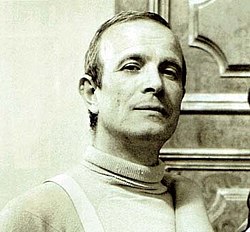
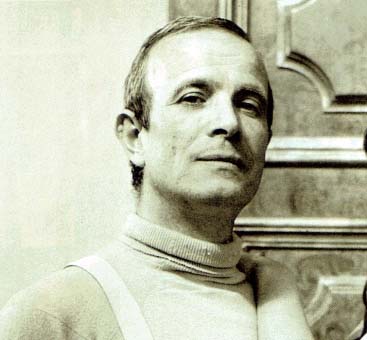
Fernando Di Leo (11 January 1932 – 1 December 2003)[1] was an Italian film director and script writer. He made 17 films as a director and about 50 scripts from 1964 to 1985.[2]
Key Information


Biography
[edit]Fernando Di Leo was born on 11 January 1932 in San Ferdinando di Puglia.[2] After briefly working in a Rome film school Centro Sperimentale di Cinematografia, Di Leo made his debut as a director as part of the omnibus comedy Gli eroi di ieri, oggi, domani with his episode titled Un posto in paradiso (transl. A Place in Heaven).[3] Following this Di Leo wrote several scripts for Westerns, often uncredited.[3] This included work on A Fistful of Dollars and For a Few Dollars More.[3] Some of his Westerns had uncredited literary sources, such as Days of Vengeance which as loosely based on Alexandre Dumas' The Count of Monte Cristo.[3]
Di Leo was a fan of film noir and wanted to make an Italian version of these films.[3] Among his first efforts was the script for Mino Guerrini's Date for a Murder based on Franco Enna's novel Tempo di massacro written in 1955.[3] In Di Leo's version, the setting is moved to a contemporary Rome and has elements of contemporary spy films.[3] Di Leo worked with Guerrini again on the film Gangsters '70 which did not do well in the box office.[3] Di Leo began directing more of his own films at the time including the war film Red Roses for the Fuhrer and a few erotic films: A Woman on Fire, A Wrong Way to Love and Seduction.[3] From 1969 to 1976, di Leo was able to produce many of his own works with his production company Duania cineproduzioni 70.[2] He followed this with a return to noir with Naked Violence, a film adapting a novel by Giorgio Scerbanenco, a writer who Di Leo would adapt for several future film productions.[3]
Di Leo would make a giallo film with Slaughter Hotel starring Klaus Kinski and Margaret Lee.[3] Following this, Di Leo worked on Caliber 9 and The Italian Connection which were both inspired by the writing of Scerbanenco.[3] He followed up this film Il Boss, a film which got Di Leo in trouble with politicians and authorities due to the films display connections between the mafia and the Italy's major party Democrazia Cristiana.[3] Di Leo followed this up with Shoot First, Die Later in 1974.[3] Di Leo worked through the latter half of the 1970's directing Mister Scarface, Kidnap Syndicate, and Nick the Sting.[4] He also wrote scripts for other directors such as Romolo Guerrieri's Young, Violent, Dangerous and Ruggero Deodato's Live Like a Cop, Die Like a Man.[4] Di Leo's last film produced by his company Duania cineproduzioni 70 was Rulers of the City in 1976.[4] He continued with a few more films after with the film noir Blood and Diamonds, the erotic drama To Be Twenty - both in 1978, and Madness in 1980.[4]
Di Leo worked in television in the 1980's, starting with the television series L'assassino ha le ore contate, which involved six one-hour long made-for-TV films produced by RAI Uno which as of 2013 are unreleased.[4] Di Leo also made The Violent Breed and his last film Killer vs. Killers towards the mid-1980's.[4] Killer vs. Killers wasn't released theatrically in Italy and only surfaced 20 years later on DVD.[5]
Di Leo died in December 2003.[5]
Select filmography
[edit]References
[edit]- ^ "Fernando Di Leo - filmportal.de". filmportal.de (in German). Retrieved 29 March 2024.
- ^ a b c Curti 2013, p. 292.
- ^ a b c d e f g h i j k l m n o Curti 2013, p. 293.
- ^ a b c d e f Curti 2013, p. 294.
- ^ a b Curti 2013, p. 295.
- ^ Curti 2016, p. 293.
- ^ "Gli eroi di ieri, oggi, domani (1963)" (in Italian). Archviodelcinemaitaliano.com. Retrieved 22 August 2018.
- ^ Curti 2016, p. 192.
- ^ "Cast and Crew". A Pistol for Ringo / The Return of Ringo (Booklet). Arrow Video. 2018. p. 5. AV137 / FCD1710.
- ^ Hughes 2006, p. 29.
- ^ Hughes 2006, p. 36.
- ^ Curti 2016, p. 193.
- ^ "Kiss kiss... bang bang" (in Italian). Archvio del cinema italiano. Retrieved 14 April 2018.
- ^ Erickson, Hal. "Kiss Kiss...Bang Bang". AllMovie. Archived from the original on 4 October 2013. Retrieved 14 April 2018.
- ^ Howarth 2015, p. 106.
- ^ Firsching, Robert. "Massacre Time". AllMovie. Archived from the original on 30 August 2013. Retrieved 14 August 2017.
- ^ "7 Pistole Per I Macgregor (7 Guns for the MacGregors), Italy/Spain, 1965". Monthly Film Bulletin. Vol. 34, no. 405. British Film Institute. October 1967. p. 158.
- ^ Grant 2011, p. 443.
- ^ Grant 2011, p. 442.
- ^ "Johnny Yuma (1966)" (in Italian). Archiviodelcinemaitaliano.it. Retrieved 22 September 2019.
- ^ Hughes 2006, p. 81.
- ^ Hughes 2006, p. 92.
- ^ "7 donne per i Mac Gregor (1967)" (in Italian). Archiviodelcinemaitaliano.it. Retrieved 19 November 2018.
- ^ "Up the MacGregors". American Film Institute. Archived from the original on 3 April 2014. Retrieved 19 November 2018.
- ^ "Lunghi giorni della vendetta (1967)" (in Italian). Archiviodelcinemaitaliano.it. Retrieved 22 September 2019.
- ^ Grant 2011, p. 446.
- ^ "Das Gold von Sam Cooper". Filmportal.de. Retrieved 22 August 2018.
- ^ "Ognuno per sé" (in French). Bifi.fr. Retrieved 22 August 2018.
- ^ "Ognuno per sé (1968)" (in Italian). Archvio del Cinema Italiano. Retrieved 22 August 2018.
- ^ "Die letzte Rechnung zahlst du selbst". Filmportal.de. Retrieved 22 August 2018.
- ^ Curti 2013, p. 23.
- ^ Curti 2013, p. 31.
- ^ Curti 2013, p. 52.
- ^ Curti 2013, p. 51.
- ^ "Blutiger Freitag" (in German). Filmportal.de. Retrieved 22 August 2018.
- ^ Curti 2013, p. 61.
- ^ Curti 2013, p. 77.
- ^ Curti 2013, p. 118.
- ^ Curti 2013, p. 137.
- ^ Curti 2013, p. 141.
- ^ a b Curti 2013, p. 181.
- ^ Curti 2013, p. 190.
- ^ Curti 2013, p. 191.
- ^ Curti 2013, p. 202.
- ^ a b Curti 2013, p. 237.
- ^ Curti 2013, p. 274.
Bibliography
[edit]- Allen, Jane (2015). Pier Angeli: A Fragile Life. McFarland. ISBN 9781476603575.
- Curti, Roberto (2013). Italian Crime Filmography, 1968-1980. McFarland. ISBN 978-0786469765.
- Curti, Roberto (2016). Tonino Valerii: The Films. McFarland. ISBN 978-1476664682.
- Grant, Kevin (2011). Any Gun Can Play. Fab Press. ISBN 9781903254615.
- Howarth, Troy (2015). Splintered Visions: Lucio Fulci and His Films. Midnight Marquee Press, Inc. ISBN 978-1936168538.
- Hughes, Howard (2006). Once Upon a Time in the Italian West. I B Tauris. ISBN 0857730452.
External links
[edit]

Fernando Di Leo
View on GrokipediaFernando Di Leo (11 January 1932 – 1 December 2003) was an Italian film director and screenwriter renowned for his contributions to the poliziotteschi genre of crime films, particularly through his "Milieu" trilogy of the early 1970s.[1][2]
Born in San Ferdinando di Puglia to a family of lawyers, Di Leo discovered noir fiction in his youth and abandoned legal studies to pursue cinema, starting with scriptwriting for spaghetti westerns and directing a short segment in 1964.[1]
His breakthrough came with Caliber 9 (1972), followed by The Italian Connection (1972) and The Boss (1973), which depicted the brutal underworld of organized crime with ultraviolent action, moral complexity, and implicit sociopolitical commentary drawn from Italian realities and American influences like Dashiell Hammett.[1][2]
These works featured distinctive 1970s aesthetics, strong ensemble casts including international actors such as Henry Silva, and scores by composers like Ennio Morricone, elevating the exploitation genre while critiquing power structures and corruption.[1][2]
Di Leo's films have endured as benchmarks of Euro crime cinema, inspiring later filmmakers including Quentin Tarantino, who structured Pulp Fiction after the trilogy's narrative approach.[1]
Early Life
Family Background and Childhood
Fernando Di Leo was born on January 11, 1932, in San Ferdinando di Puglia, a small town in the Puglia region of southern Italy.[3][4] He came from a professional family, with his father and grandfather both working as lawyers, which placed him in a middle-class environment amid the economic and social challenges of rural Apulia during the interwar period and early Fascist era.[1] Details on Di Leo's immediate family, such as siblings or parental names, remain sparsely documented in available biographical accounts, reflecting the limited public records from his early years in a provincial setting. His childhood unfolded in this agrarian locale, characterized by traditional Italian southern life, before any relocation or exposure to urban influences in Rome.[1] No specific events or formative experiences from his youth beyond familial professional lineage are widely recorded, though his later affinity for noir literature suggests early intellectual curiosities developed in this context.[1]Education and Early Influences
Di Leo was born on January 11, 1932, in San Ferdinando di Puglia, into a family of professionals emphasizing art, literature, and poetry, which fostered his early creative inclinations. From a young age, he composed poems and theatrical works, collaborated on literary magazines, and penned texts for cabaret performances, reflecting an initial orientation toward writing and the performing arts rather than formal academic pursuits.[5][6] He dutifully completed studies in law at university, earning a degree, though his interests diverged from legal practice toward cultural and narrative endeavors.[1][7] This educational background provided a structured foundation but did not align with his emerging passion for storytelling, as evidenced by his subsequent pivot to cinema. After law school, Di Leo briefly engaged with the Centro Sperimentale di Cinematografia in Rome, Italy's national film school, where he gained initial exposure to filmmaking techniques and industry practices.[8] These early experiences, combined with his familial literary milieu and personal writings, influenced his development as a screenwriter and eventual director, prioritizing narrative depth over conventional academic film training.Career Beginnings
Journalism and Comics Work
Di Leo exhibited an early passion for writing and theater, securing the Coppa Murano award in 1951 at age 19 for his original play Lume del tuo corpo e l'occhio.[9] Following his studies in law, which he abandoned in favor of creative pursuits, he contributed scripts alongside notable Italian intellectuals such as Umberto Eco, Giuseppe Pattti, and Luigi Malerba for the avant-garde cabaret ensemble Can Can degli Italiani during the late 1950s.[9] These formative collaborations honed his narrative skills in dialogue-driven, performative formats, bridging literary experimentation with public entertainment, though specific engagements in formal journalism or comic book scripting remain sparsely documented in available biographical accounts.[9]Transition to Film Screenwriting
Di Leo's experience in journalism and comics, where he honed skills in concise storytelling, dialogue, and visual narrative through serialized black-and-white fumetti (Italian pulp comics) featuring crime and adventure themes, facilitated his shift to cinema.[1] By the early 1960s, as the Italian film industry boomed with peplum epics and emerging spaghetti westerns, Di Leo leveraged these abilities to enter screenwriting, initially contributing uncredited to scripts that demanded fast-paced plots and archetypal characters.[10] His breakthrough came with contributions to spaghetti westerns, a genre he later described as "infantile" but which provided essential training in cinematic structure.[1] Di Leo worked on the screenplay for Sergio Leone's A Fistful of Dollars (1964), refining its taut revenge narrative and moral ambiguity, though his involvement remained uncredited due to the era's collaborative and often opaque writing processes. This was followed by credited work on Lucio Fulci's Massacre Time (1966), where he co-wrote the story of familial betrayal and frontier violence, emphasizing psychological tension over action spectacle. By 1967, Di Leo expanded into crime thrillers with the screenplay for Mino Guerrini's Date for a Murder (original title: Omicidio per appuntamento), adapting Franco Enna's 1955 novel Tempo di massacro to a modern Roman setting involving espionage and betrayal among American expatriates. This script showcased his growing command of noir elements—double-crosses, urban grit, and fatalism—drawing directly from his comics background in crafting twisty, character-driven tales. Over the next few years, he penned dozens of scripts, often for low-budget productions, accumulating credits on approximately 43 films before his directing debut, establishing him as a prolific genre craftsman attuned to Italy's post-war cinematic demand for escapist yet cynical narratives.[10]Directorial Career
1960s Debut and Experimental Films
Di Leo's directorial debut occurred in 1964 with a 20-minute segment in the low-budget portmanteau comedy Gli eroi di ieri... oggi... domani (Heroes of Yesterday, Today and Tomorrow), an anthology film co-directed with Enzo Dell'Aquila and Sergio Tau.[1] [11] This project, involving students from Rome's Centro Sperimentale di Cinematografia where Di Leo had briefly worked without pursuing formal training, was characterized by him as a "glorified student movie," reflecting amateurish production values and comedic sketches parodying heroic archetypes across eras.[1] The film's episodic structure and modest scope marked an entry into directing for Di Leo, who also contributed to the screenplay, transitioning from his prior roles in screenwriting and comics.[11] In 1968, Di Leo directed Codice nome: Rose rosse (Code Name: Red Roses), a war film drawing inspiration from The Dirty Dozen, focusing on a group of criminals recruited for a high-risk mission.[1] Released amid competition from the Italian debut of its American model, the picture struggled commercially but showcased Di Leo's emerging interest in ensemble dynamics and moral ambiguity in confined, high-stakes narratives.[1] This work represented a shift toward genre experimentation within commercial constraints, blending action with character-driven tension, though it received limited critical attention at the time. Di Leo's 1969 film I ragazzi del massacro (Naked Violence or Naked Massacre), adapted from Giorgio Scerbanenco's novel, delved into themes of juvenile delinquency and societal alienation through the story of teenage students who rape and murder their teacher.[1] The narrative's unflinching portrayal of youth violence and institutional failure drew from real Italian concerns over alienated post-war generations, employing stark realism over stylistic flourishes, though critics noted issues with plausibility and its musical score.[1] While not overtly avant-garde, the film's raw confrontation of taboo subjects positioned it as an exploratory effort in Di Leo's oeuvre, bridging his early comedic roots with the harder-edged crime stories that would define his later career. No evidence indicates purely experimental or non-narrative works in this period; his 1960s output remained anchored in genre frameworks with subtle social critique.[1]1970s Peak: Poliziotteschi and Milieu Trilogy
The early 1970s marked Fernando Di Leo's directorial zenith, exemplified by the Milieu Trilogy—Caliber 9 (1972), The Italian Connection (1972), and The Boss (1973)—which dissected the Milanese criminal milieu against the backdrop of Italy's Years of Lead, a period of political extremism, mafia infiltration, and institutional corruption.[12] These films, rooted in the poliziotteschi genre, portrayed gritty underworld power dynamics with operatic brutality, graphic violence, and themes of betrayal and systemic rot, distinguishing Di Leo's work through its fusion of American noir influences and unflinching realism.[13] [14] Poliziotteschi films typically featured high-stakes chases, shootouts, and critiques of corrupt authority, reflecting real-world anxieties over organized crime and state failure; Di Leo elevated the form by prioritizing criminal psychology over heroic cops, emphasizing inevitable moral decay.[15] Caliber 9, released on February 15, 1972, follows ex-convict Ugo Piazza (Gastone Moschin), released after three years, who faces suspicion from his former mob associates—including the sadistic Rocco (Mario Adorf)—over a missing $300,000 heist sum, drawing him into escalating betrayals and executions amid Milan's seedy underbelly.[16] The narrative unfolds through terse, dialogue-heavy confrontations and sudden bursts of violence, underscoring paranoia and loyalty's fragility in the syndicate. Critics later hailed it as a genre cornerstone for its raw authenticity and influence on subsequent Italian crime cinema.[17] [18] The Italian Connection, premiering October 25, 1972, shifts to Luca Carnali (Mario Adorf), a low-level pimp and courier who skims profits from a transatlantic heroin shipment, prompting New York bosses to dispatch hitmen Frank (Henry Silva) and Dave (Woody Strode) for a Milan manhunt involving brutal interrogations, car pursuits, and urban gunfights. Di Leo amplifies tension via the assassins' cold efficiency and Carnali's desperate evasion, channeling 1970s Italy's social instability into visceral action sequences that critique global crime networks.[19] The film grossed significantly at the Italian box office, contributing to the genre's commercial surge.[2] Culminating the trilogy, The Boss (1973) depicts a cunning lawyer-turned-mobster (Henry Silva) methodically dismantling rival factions through bribery, bombings, and a kidnapping plot targeting a patriarch's daughter, exposing mafia ascent via political complicity and ruthless pragmatism. Released amid heightened public scrutiny of organized crime, it delivers Di Leo's most pitiless portrait of power consolidation, with sequences of graphic retribution highlighting institutional vulnerability.[20] Though polarizing for its intensity, the trilogy collectively solidified Di Leo's reputation for genre innovation, blending pulp kinetics with socio-political bite during a prolific decade that saw him helm additional poliziotteschi like Shoot First, Die Later (1974).[21]1980s Decline and Final Works
Following the prolific output of the 1970s, Fernando Di Leo's directorial activity diminished in the 1980s, with only three feature films amid broader challenges in Italian genre production, including competition from American blockbusters and the rise of home video distribution. His work shifted from gritty crime narratives to erotic thrillers and low-budget action, reflecting attempts to adapt to evolving market demands.[22] Di Leo's initial 1980s project was Madness (original Italian title: Vacanze per un massacro), released in 1980. The film depicts an escaped convict (played by Joe Dallesandro) who invades a remote vacation home, terrorizing and manipulating the occupants in a tense, sleazy home-invasion thriller laced with erotic elements. Produced on a constrained budget, the 89-minute feature was completed rapidly, emphasizing Di Leo's efficiency under limited resources.[23][24] After a four-year hiatus, Di Leo directed The Violent Breed (Razza violenta) in 1984, a 91-minute action-adventure starring Henry Silva, Harrison Muller, and Woody Strode. The plot follows a paramilitary team on a high-stakes mission in the Middle East to secure sensitive information, incorporating espionage and combat sequences influenced by contemporaneous Vietnam and commando exploitation trends. Critics noted its formulaic scripting and behavioral inconsistencies, hallmarks of its modest production scale.[25][26] Di Leo's final feature, Killer vs. Killers (Killer contro killers), arrived in 1985, marking his 23rd directorial credit and concluding his cinematic output. In this 85-minute crime-action hybrid, a morally dubious entrepreneur (Edmund Purdom) assembles a team of thieves, led by Henry Silva, to pilfer a valuable chemical formula, sparking betrayals and shootouts. Though echoing earlier poliziotteschi motifs of criminal intrigue, the film drew criticism for underdeveloped plotting and stylistic unevenness, signaling the era's diminished opportunities for Italian B-movies.[27][28]Cinematic Style and Themes
Core Motifs of Corruption and Violence
In Fernando Di Leo's poliziotteschi films, particularly the Milieu Trilogy comprising Milano calibro 9 (1972), La mala ordina (also known as The Italian Connection, 1972), and Il boss (also known as The Boss, 1973), corruption manifests as a systemic infiltration of mafia networks into state institutions, economic structures, and political spheres, depicted not as isolated scandals but as an entrenched, ritualistic norm reflective of Italy's post-war modernization.[29] This portrayal underscores the fusion of rapid economic progress—symbolized by Milanese modernist landmarks like the Torre Velasca—with organized crime's exploitation of industrial wealth and transatlantic mafia routes, where American-influenced efficiency supplants traditional Sicilian codes of honor.[29] Di Leo illustrates how corruption erodes working-class integrity, enabling pimps, petty gangsters, and mob bosses to thrive amid societal degradation, as seen in Il boss where a rising mafioso manipulates economic levers and corrupt officials to consolidate power, drawing from real events like Palermo turf wars.[30][29] Violence in these works is rendered with graphic brutality, serving as both a narrative driver and a critique of moral decay during the 1970s anni di piombo (Years of Lead), characterized by street crime, bombings, and institutional failures.[17] In Milano calibro 9, betrayal fractures rigid mafia hierarchies, culminating in ultra-noir sequences of shootings and interrogations that expose the fragility of criminal loyalty amid pervasive distrust.[17] La mala ordina escalates this through high-stakes heists and chases linking Milanese syndicates to New York bosses, portraying violence as an outsourced extension of global crime economies.[29] The trilogy's capstone, Il boss, amplifies the motif with relentless cycles of revenge—such as a cinema bombed to ignite exploding cartridges, killing rivals en masse—and political complicity, where corrupt police lament informant policies while mafiosi collude with influential lawyers tied to ecclesiastical figures, perpetuating a power vacuum of endless bloodshed.[30] These elements collectively reject romanticized gangsterism, emphasizing violence's ties to corruption's enabling structures rather than individual pathology.[29]Narrative and Visual Techniques
Di Leo's narratives frequently utilized multi-perspective structures to depict intricate criminal webs, as in Milano Calibro 9 (1972), where protagonist Ugo Piazza faces layered betrayals from mob factions, underscoring themes of distrust and moral compromise without resolution.[1] Drawing from Giorgio Scerbanenco's novels, his plots integrated real-world Italian issues like mafia infiltration and systemic corruption, employing tight revenge arcs and sudden twists—such as a traitor's abrupt shift in allegiance—to heighten cynicism and expose the futility of individual agency in violent milieus.[17][31] This approach, evident across the Milieu Trilogy (Milano Calibro 9, La Mala Ordina , and Il Boss ), prioritized consequential moral choices over heroic redemption, reflecting a moralist's lens on societal decay.[1] Visually, Di Leo adopted a raw, documentary-inflected realism through stark Milanese urban backdrops and minimalistic framing influenced by Jean-Pierre Melville's cool detachment, amplifying the genre's gritty authenticity in poliziotteschi films.[17] His action sequences featured kinetic camera movements and rhythmic editing to build tension, as in the visceral shootouts and demolition-derby car pursuits of Shoot First, Die Later (1974), where violence carried emotional repercussions rather than mere spectacle.[1] Balancing stylized flair—reminiscent of Sergio Leone's operatic builds—with over-the-top brutality, such as the explosive pre-credits massacres in La Mala Ordina and Il Boss, Di Leo's technique deployed explosive openings and sparse sound design to underscore paranoia and inevitability, eschewing baroque excess for pointed, ultraviolent clarity.[31][17]Reception and Influence
Initial Critical and Commercial Response
Di Leo's films from the early 1970s, particularly the Milieu Trilogy—Milano calibro 9 (1972), La mala ordina (1972), and Il boss (1973)—achieved notable commercial success in Italy, capitalizing on the rising popularity of the poliziotteschi genre amid public demand for gritty urban crime stories. Milano calibro 9 grossed approximately 754 million Italian lire upon its February 1972 release, reflecting strong audience appeal for its raw depiction of Milanese underworld dynamics. Similarly, La mala ordina earned around 852 million lire, while Il boss accumulated 774 million lire by early 1973, figures that positioned these low-budget productions as profitable ventures in a market favoring fast-paced action over auteur prestige.[32] Critically, however, Di Leo's work faced dismissal from establishment reviewers in Italy and abroad, who viewed it as formulaic exploitation cinema prioritizing visceral thrills over intellectual depth. Contemporary Italian critics, often aligned with bourgeois or ideologically rigid outlets, largely neglected or derided the films as mere commercial pulp, overlooking their pointed critiques of corruption and institutional failure in favor of more "elevated" arthouse fare. In the United States, limited grindhouse distribution resulted in scant mainstream attention, with serious film discourse bypassing these titles as emblematic of "kiss-kiss, bang-bang" sensationalism rather than substantive genre innovation. This initial marginalization stemmed from the trilogy's unapologetic embrace of violence and moral ambiguity, which clashed with prevailing tastes for socially sanitized narratives.[33][34][1]Cult Revival and Modern Restorations
In the years following Fernando Di Leo's death in 2003, his poliziotteschi films, particularly the Milieu Trilogy—Caliber 9 (1972), The Italian Connection (1972), and The Boss (1973)—gained a dedicated cult following among enthusiasts of European exploitation and crime cinema. This revival was propelled by endorsements from prominent filmmakers, including Quentin Tarantino, who has cited Di Leo as a favorite influencing his own stylistic approach to violence and genre tropes. Similarly, director Eli Roth highlighted Di Leo's works in discussions of underappreciated Italian genre masters. Home video releases in the late 2000s and 2010s, such as Raro Video's Fernando Di Leo Crime Collection box set in 2011, introduced restored versions to international audiences, fostering appreciation for Di Leo's raw depictions of urban corruption and moral ambiguity over mainstream Italian cinema of the era.[35][36][37] Modern restorations have elevated Di Leo's reputation through high-definition transfers sourced from original 35mm negatives, often in collaboration with institutions like the Venice Film Festival. Raro Video's 2023 Blu-ray of Caliber 9 featured a new 4K restoration to mark the film's 50th anniversary, including an alternate English audio track and a making-of documentary. The Boss received a 4K restoration in 2020, released on Blu-ray by Radiance Films with both the original Italian cut and a shorter English export version. The Italian Connection followed with a vibrant, defect-free Blu-ray transfer in 2024 from Raro Video, praised for its color fidelity and lack of artifacts. These efforts, alongside Criterion Collection's 2023 teaser for Di Leo's crime thrillers, have made his films accessible in superior quality, underscoring their technical craftsmanship amid the era's budgetary constraints.[38][39][40][41] The cult resurgence has also manifested in retrospective screenings and scholarly analyses, with outlets like MUBI examining The Italian Connection's action sequences as reflections of 1970s Italian sociopolitical turmoil. A planned remake of Di Leo's Madness (1980) was announced in 2016, signaling commercial interest in his lesser-known works. Recent rankings and discussions, such as a 2025 evaluation of the Milieu Trilogy, continue to position Di Leo as a pivotal figure in poliziotteschi, distinct from more stylized contemporaries like Sergio Leone, due to his unflinching focus on systemic criminality.[19][35][42]Impact on Global Cinema
Fernando Di Leo's poliziotteschi films, particularly the Milieu Trilogy comprising Caliber 9 (1972), The Italian Connection (1972), and The Boss (1973), garnered international cult status in the 2000s through endorsements by filmmakers like Quentin Tarantino, who cited them as key influences on his pulp-infused crime narratives.[35] Tarantino's advocacy, including public screenings and references during events such as a 2000 New Beverly Cinema series on 1970s Italian crime films, elevated Di Leo from obscurity to a staple in grindhouse retrospectives, amplifying appreciation among global cinephiles for his unsparing depictions of organized crime and institutional corruption.[43] Restorations and home video releases further disseminated Di Leo's work worldwide, with Raro Video's Fernando Di Leo Crime Collection (2011 onward) providing high-definition editions that introduced his oeuvre to North American and European audiences via platforms like DVD and streaming.[37] These efforts highlighted stylistic hallmarks—such as kinetic action sequences, moral ambiguity, and socio-political grit—that paralleled American New Hollywood crime thrillers while predating many exploitation revivals, influencing niche genres like Eurocrime homages in independent filmmaking.[1] In 2016, the announcement of an American remake of Di Leo's Madness (1980) by producer Dino De Laurentiis's estate underscored his expanding footprint, as the project aimed to adapt his themes of urban psychosis and vigilantism for contemporary viewers, marking the first official redo of his catalog.[35] This development, coupled with festival screenings at venues like Venice and San Sebastián, reflects Di Leo's role in bridging Italian genre cinema with global pulp traditions, though his direct influence remains concentrated in cult circuits rather than mainstream blockbusters.[1]Personal Life and Death
Marriages and Private Interests
Di Leo was married to actress Maria Pia Conte, born on March 10, 1944, in Lavagna, Genoa.[44] [3] No specific dates for their marriage or divorce are publicly documented, though Conte later married actor Giuseppe Rinaldi.[45] There is no record of children from Di Leo's marriage. Public information on Di Leo's private interests is limited, with biographical sources focusing predominantly on his professional output in film and writing.[46] He originated from a middle-class family in San Ferdinando di Puglia with generational ties to law, where exposure to art, literature, and poetry shaped early influences, potentially informing his later narrative style.[47] [48] However, no verifiable accounts detail personal hobbies, leisure pursuits, or non-professional engagements beyond these formative elements.[49]Final Years and Passing
Following the completion of his final directorial project, Killer contro killers (1985), which saw no theatrical release in Italy, Fernando Di Leo withdrew from film production.[4] He shifted focus to literary endeavors, primarily authoring erotic novels that echoed themes from his cinematic work in genre storytelling.[50] Di Leo resided in Rome with his wife, Maria Pia Conte, during this period, maintaining a low public profile after decades in the industry.[3] He died on 1 December 2003 in Rome, Lazio, Italy, at the age of 71; the cause of death remains undisclosed.[22]Filmography
Directed Films
Fernando Di Leo directed feature films primarily within Italian genre cinema, focusing on crime, poliziotteschi, horror, and erotic thrillers from 1969 to 1985. His output emphasized gritty urban violence, moral ambiguity, and critiques of organized crime and institutional corruption, often drawing from his screenwriting background in spaghetti westerns and noir.[10][51] The Milieu trilogy—Milano calibro 9 (Caliber 9, 1972), La mala ordina (The Italian Connection, 1972), and Il boss (The Boss, 1973)—stands as his most acclaimed work, portraying the Mafia's infiltration of Milanese society with raw realism and ensemble casts led by actors like Gastone Moschin and Mario Adorf. These films, produced on modest budgets, grossed significantly at the Italian box office amid the early 1970s crime wave, reflecting real events like the 1970s organized crime surges in Lombardy.[51][52]| Year | English Title | Original Italian Title |
|---|---|---|
| 1969 | Brucia, ragazzo, brucia | Brucia, ragazzo, brucia |
| 1969 | Code Name: Red Roses | (Unspecified in source; spy thriller) |
| 1969 | Naked Violence | I stupri |
| 1971 | Slaughter Hotel | La bestia uccide a sangue freddo |
| 1972 | Caliber 9 | Milano calibro 9 |
| 1972 | Black Kingpin | (Likely alternate title for crime film) |
| 1973 | The Italian Connection | La mala ordina |
| 1973 | Wipeout! | Il boss |
| 1974 | Italian Sex | (Erotic drama; exact original varies) |
| 1975 | Loaded Guns | Colpo in canna |
| 1976 | Kidnap Syndicate | Squadra antiscippo |
| 1976 | Nick the Sting | Gli amici di Nick Hezard |
| 1977 | Blood and Diamonds | Blood and Diamonds (Ritratti di un uomo comune) |
| 1977 | Mister Scarface | I padroni della città |
| 1978 | To Be Twenty | Avere vent'anni |
| 1980 | Madness | Follia omicida |
| 1985 | Killer vs Killers | Killer contro killers |
| 1985 | The Violent Breed | I guerrieri del Bronx |
Key Screenwriting Credits
Di Leo began his career as a screenwriter in the early 1960s, contributing to over 40 scripts, many for spaghetti westerns produced by Italian studios, often working uncredited or in collaboration.[10] His writing emphasized gritty narratives, moral ambiguity, and violent confrontations, influencing the genre's shift toward more cynical anti-heroes.[1] These credits laid the groundwork for his later directorial work in crime cinema, where he frequently handled both writing and directing.[22] Key non-directorial screenwriting credits include:| Film Title | Year | Director | Contribution |
|---|---|---|---|
| A Fistful of Dollars | 1964 | Sergio Leone | Uncredited script work |
| Navajo Joe | 1966 | Sergio Corbucci | Screenplay[10] |
| Johnny Yuma | 1966 | Romolo Guerrieri | Story[10] |
| Naked Violence (I ragazzi del massacro) | 1969 | Fernando Di Leo (directed a segment, primary writing for feature) | Screenplay[53] |
| Massacre in Rome (Rappresaglia) | 1973 | George Pan Cosmatos | Screenplay (co-written) |
| Young, Violent, Dangerous (Giovani, violenti, pericolosi) | 1980 | Romolo Guerrieri | Screenplay[54] |
| Live Like a Cop, Die Like a Man (Uomini si nasce poliziotti si muore) | 1976 | Ruggero Deodato | Screenplay[55] |