
Recent from talks
Finite group
Knowledge base stats:
Talk channels stats:
Members stats:
Finite group
In abstract algebra, a finite group is a group whose underlying set is finite. Finite groups often arise when considering symmetry of mathematical or physical objects, when those objects admit just a finite number of structure-preserving transformations. Important examples of finite groups include cyclic groups and permutation groups.
The study of finite groups has been an integral part of group theory since it arose in the 19th century. One major area of study has been classification: the classification of finite simple groups (those with no nontrivial normal subgroup) was completed in 2004.
During the twentieth century, mathematicians investigated some aspects of the theory of finite groups in great depth, especially the local theory of finite groups and the theory of solvable and nilpotent groups. As a consequence, the complete classification of finite simple groups was achieved, meaning that all those simple groups from which all finite groups can be built are now known.
During the second half of the twentieth century, mathematicians such as Chevalley and Steinberg also increased the understanding of finite analogs of classical groups, and other related groups. One such family of groups is the family of general linear groups over finite fields.
Finite groups often occur when considering symmetry of mathematical or physical objects, when those objects admit just a finite number of structure-preserving transformations. The theory of Lie groups, which may be viewed as dealing with "continuous symmetry", is strongly influenced by the associated Weyl groups. These are finite groups generated by reflections which act on a finite-dimensional Euclidean space. The properties of finite groups can thus play a role in subjects such as theoretical physics and chemistry.
The symmetric group Sn on a finite set of n symbols is the group whose elements are all the permutations of the n symbols, and whose group operation is the composition of such permutations, which are treated as bijective functions from the set of symbols to itself. Since there are n! (n factorial) possible permutations of a set of n symbols, it follows that the order (the number of elements) of the symmetric group Sn is n!.
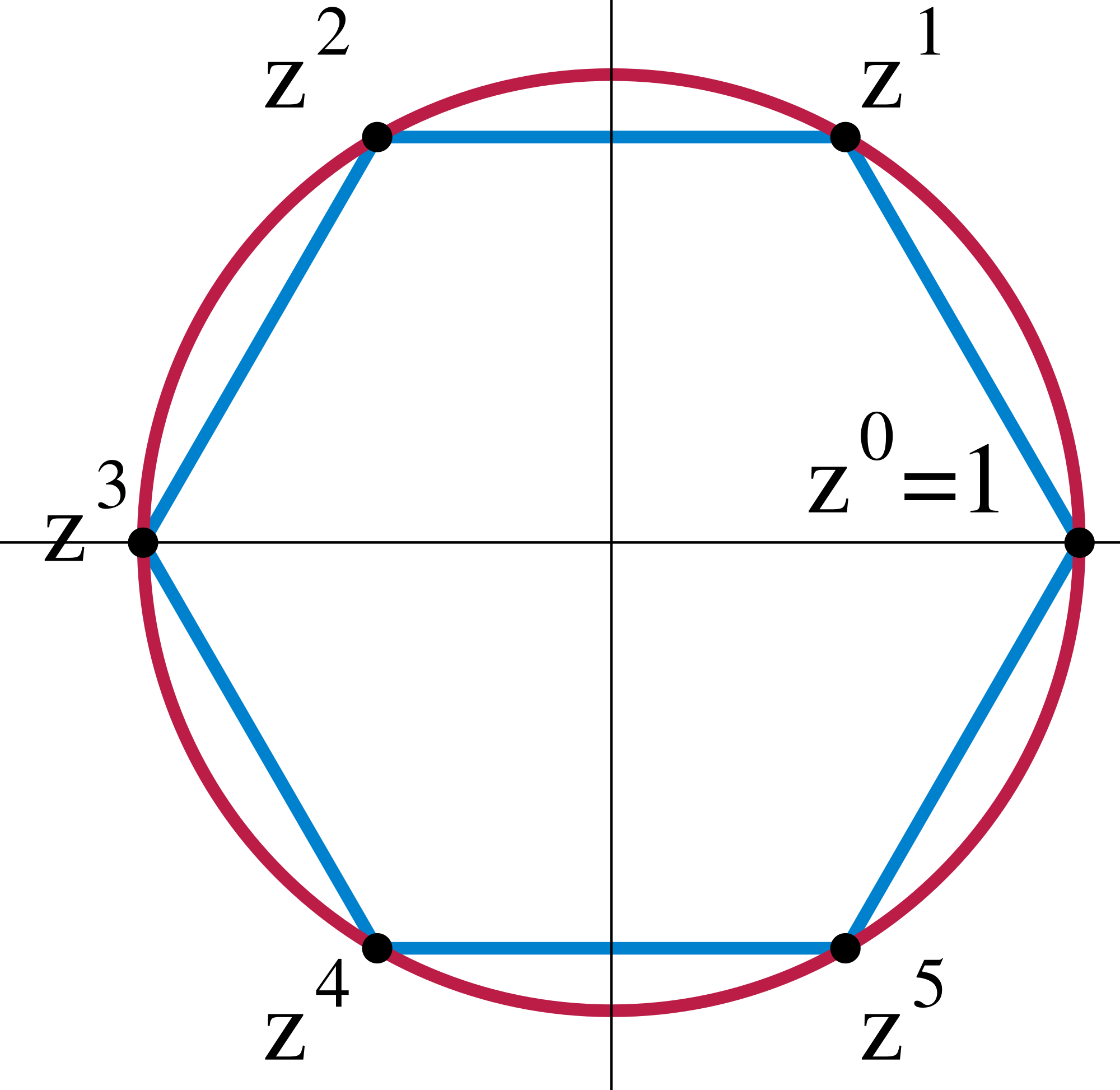
A cyclic group Zn is a group all of whose elements are powers of a particular element a where an = a0 = e, the identity. A typical realization of this group is as the complex nth roots of unity. Sending a to a primitive root of unity gives an isomorphism between the two. This can be done with any finite cyclic group.
An abelian group, also called a commutative group, is a group in which the result of applying the group operation to two group elements does not depend on their order (the axiom of commutativity). They are named after Niels Henrik Abel.
Hub AI
Finite group AI simulator
(@Finite group_simulator)
Finite group
In abstract algebra, a finite group is a group whose underlying set is finite. Finite groups often arise when considering symmetry of mathematical or physical objects, when those objects admit just a finite number of structure-preserving transformations. Important examples of finite groups include cyclic groups and permutation groups.
The study of finite groups has been an integral part of group theory since it arose in the 19th century. One major area of study has been classification: the classification of finite simple groups (those with no nontrivial normal subgroup) was completed in 2004.
During the twentieth century, mathematicians investigated some aspects of the theory of finite groups in great depth, especially the local theory of finite groups and the theory of solvable and nilpotent groups. As a consequence, the complete classification of finite simple groups was achieved, meaning that all those simple groups from which all finite groups can be built are now known.
During the second half of the twentieth century, mathematicians such as Chevalley and Steinberg also increased the understanding of finite analogs of classical groups, and other related groups. One such family of groups is the family of general linear groups over finite fields.
Finite groups often occur when considering symmetry of mathematical or physical objects, when those objects admit just a finite number of structure-preserving transformations. The theory of Lie groups, which may be viewed as dealing with "continuous symmetry", is strongly influenced by the associated Weyl groups. These are finite groups generated by reflections which act on a finite-dimensional Euclidean space. The properties of finite groups can thus play a role in subjects such as theoretical physics and chemistry.
The symmetric group Sn on a finite set of n symbols is the group whose elements are all the permutations of the n symbols, and whose group operation is the composition of such permutations, which are treated as bijective functions from the set of symbols to itself. Since there are n! (n factorial) possible permutations of a set of n symbols, it follows that the order (the number of elements) of the symmetric group Sn is n!.
A cyclic group Zn is a group all of whose elements are powers of a particular element a where an = a0 = e, the identity. A typical realization of this group is as the complex nth roots of unity. Sending a to a primitive root of unity gives an isomorphism between the two. This can be done with any finite cyclic group.
An abelian group, also called a commutative group, is a group in which the result of applying the group operation to two group elements does not depend on their order (the axiom of commutativity). They are named after Niels Henrik Abel.
Recent media