Hubbry Logo
Frances DeeFrances DeeMain
Open search
Frances Dee
Community hub
Frances Dee
logo
8 pages, 0 posts
0 subscribers
Be the first to start a discussion here.
Frances Dee
Frances Dee
from Wikipedia

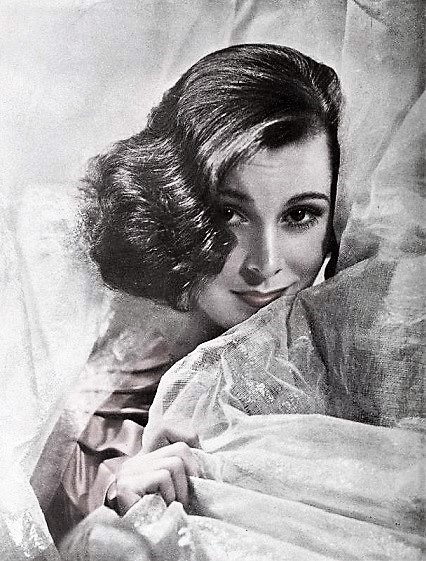
Frances Marion Dee (November 26, 1909 – March 6, 2004) was an American actress. Her first film was the musical Playboy of Paris (1930). She starred in films An American Tragedy (1931), Little Women (1933) and Becky Sharp (1935). She is also known for starring in the 1943 Val Lewton psychological horror film I Walked With a Zombie.

Key Information

Early life

[edit]

The younger daughter of Francis "Frank" Marion Dee and his wife, the former Henriette Putnam, Frances Marion Dee was born in Los Angeles, California, where her father worked as a civil service examiner.[1][2]

When Dee was seven years old, her family moved to Chicago, Illinois.[3][4] She attended Shakespeare Grammar School and Hyde Park High School, where she went by the nickname of Frankie Dee.[citation needed]

After graduating from Hyde Park High in 1927, of which she was vice president of her senior class, as well as voted Belle of the Year, she spent two years at the University of Chicago, where she participated in dramatic activities,[4] then returned to California.

Career

[edit]
Dee in Becky Sharp (1935)

Following her sophomore year in 1929, she went on summer vacation with her mother and older sister to visit family in the Los Angeles area. She began working as a movie extra as a lark. Her big break came when she was still an extra; she was offered the lead opposite Maurice Chevalier in Playboy of Paris.

The audience appeal established in two films opposite Paramount stars Charles "Buddy" Rogers and Richard Arlen led to the co-starring role of Sondra Finchley, opposite Phillips Holmes and Sylvia Sidney, in Paramount Pictures's prestigious and controversial production of An American Tragedy, directed by Josef von Sternberg.

Dee's additional screen credits included June Moon, Little Women, Of Human Bondage, Becky Sharp, and Payment on Demand. She co-starred with her husband Joel McCrea in the Western Four Faces West (1948). She retired after production of Gypsy Colt in 1953.

Personal life

[edit]

Dee met actor Joel McCrea on the set of the 1933 film The Silver Cord.[4] The couple married on October 20, 1933, after a whirlwind courtship, and remained married until McCrea's death in 1990. During their lifetime together, the McCreas lived, raised their children, and rode their horses on their ranch in what was then an unincorporated area of eastern Ventura County, California.[5] They ultimately donated several hundred acres of their personal property to the newly formed Conejo Valley YMCA for the city of Thousand Oaks, California. Dee, like McCrea, was a Republican.[6] Joel McCrea died on their 57th wedding anniversary.

Dee was honored at the 1998 Memphis Film Festival in Tennessee.[7] In 2004, Frances Dee McCrea died in Norwalk, Connecticut due to complications from a stroke at the age of 94.[8]

Filmography

[edit]
Year Title Role Notes
1929 Words and Music Co-Ed Uncredited
1930 True to the Navy Girl at Table Uncredited
A Man from Wyoming Nurse Uncredited
Manslaughter Party Guest Uncredited
Monte Carlo Receptionist Uncredited
Follow Thru Woman in Ladies' Locker Room Uncredited
Playboy of Paris Yvonne Phillbert
Along Came Youth Elinor Farrington
1931 June Moon Edna Baker
An American Tragedy Sondra Flinchley
Caught Kate Winslow
Rich Man's Folly Ann Trumbull
Nice Women Jerry Girard
Working Girls Louise Adams
1932 This Reckless Age Lois Ingals
Sky Bride Ruth's Friend Uncredited
The Strange Case of Clara Deane Nancy Deane
Love Is a Racket Mary Wodehouse
The Night of June 13 Ginger Blake
If I Had a Million Mary Wallace Uncredited
1933 The Crime of the Century Doris Brandt
King of the Jungle Ann Rogers
The Silver Cord Hester
Headline Shooter Jane Mallory
One Man's Journey Joan Stockton
Little Women Margaret "Meg" March
Blood Money Elaine Talbart
1934 Keep 'Em Rolling Marjorie Deane
Coming Out Party Joyce 'Joy' Stanhope
Finishing School Virginia Radcliff
Of Human Bondage Sally Altheny
1935 Becky Sharp Amelia Sedley
The Gay Deception Mirabel Miller
1936 Half Angel Allison Lang
Come and Get It Restaurant Patron Uncredited
1937 Souls at Sea Margaret Tarryton
Wells Fargo Justine Pryor MacKay
1938 If I Were King Katherine de Vaucelles
1939 Coast Guard Nancy Bliss
1941 So Ends Our Night Marie Steiner
A Man Betrayed Sabra Cameron
1942 Meet the Stewarts Candace Goodwin
1943 I Walked With a Zombie Betsy Conell
Happy Land Agnes March
1945 Patrick the Great Lynn Andrews
1947 The Private Affairs of Bel Ami Marie de Verenne
1948 Four Faces West Fay Hollister
1951 Payment on Demand Eileen Banson
Reunion in Reno Mrs. Doris Linaker
1952 Because of You Susan Arnold
1953 Mister Scoutmaster Helen
1954 Gypsy Colt Em MacWade
2006 Far as the Eye Can See Grandma Short

References

[edit]
[edit]
Revisions and contributorsEdit on WikipediaRead on Wikipedia
from Grokipedia
Frances Marion Dee (November 26, 1909 – March 6, 2004) was an American actress best known for her leading roles in Hollywood films of and , appearing in over 50 motion pictures during a career that spanned from 1929 to the mid-1950s. Born in , and raised in after her father's military transfer, Dee attended the for two years before returning to and entering the film industry as an extra. Dee gained prominence with her breakthrough role in the 1930 musical The Playboy of Paris opposite Maurice Chevalier, which launched her as a Paramount Pictures contract player. She earned acclaim for her portrayal of Meg March in the 1933 adaptation of Little Women, directed by George Cukor, and for supporting roles in films such as Of Human Bondage (1934) alongside Bette Davis and Leslie Howard, and Souls at Sea (1937) with Gary Cooper. Later highlights included her performance as a nurse in the horror classic I Walked with a Zombie (1943), directed by Jacques Tourneur, and romantic leads in comedies like The Gay Deception (1935), which she later described as her favorite role. In 1933, Dee married fellow actor in a union that lasted 57 years until his death in 1990; the couple co-starred in several Westerns, including Wells Fargo (1937) and (1948), and raised three sons on their 300-acre ranch in . She retired from films after Gypsy Colt (1954) to focus on family life and ranching following the birth of her third son in 1955, though she occasionally appeared in television and donated the family ranch to a public park district in 1995. Dee received a star on the in 1960 for her contributions to motion pictures.

Early life

Family background and childhood

Frances Marion Dee was born on November 26, 1909, in , , where her father was stationed. Although some references cite 1907 as her birth year, primary records including her memorial and biographical databases confirm 1909. She was the younger daughter of Francis "Frank" Marion Dee, a U.S. Army officer who later became a , and his wife, Henriette Putnam. Dee had one older sister, Margaret, born in 1908. As the child of a military officer, Dee led an "army brat" lifestyle marked by frequent relocations tied to her father's postings, which instilled a sense of adaptability and transience in her early years. Shortly after her birth, the family moved from to , , then to , before relocating to , , around age 7 due to another transfer. This pattern of moves exposed her to diverse environments, though the family eventually settled in , where her Midwestern upbringing took root amid the stability of her father's post- career.

Education and early interests

Frances Dee attended Shakespeare Grammar School and later Hyde Park High School in Chicago, where she was known by the nickname Frankie Dee. She graduated from Hyde Park High School in 1927, serving as vice president of her senior class and being voted Belle of the Year. During high school, Dee developed an initial interest in acting through participation in school plays, including a lead role in a senior production that highlighted her talent. As she later reflected, "practically the only acting I had done was in high school plays." Following high school, Dee enrolled at the , where she studied for one to two years, focusing on liberal arts. Her involvement in dramatic activities continued at the university, where she performed in college plays and gained confidence in her abilities. These experiences were pivotal, as her success on stage encouraged her to consider professionally amid the film industry's shift to , which created demand for performers skilled in . Dee ultimately decided to leave the and pursue acting in Hollywood, a choice supported by her father's one-year ultimatum to secure reliable work in the industry or return home. Influenced by Chicago's vibrant cultural scene and her exposure to theater, she viewed the transition to talkies as an opportunity to apply her stage-honed skills, later noting, "All the little girls want to be actresses, don’t they? I just didn’t get over it." This marked the end of her formal education and the beginning of her professional aspirations.

Acting career

Entry into film and early roles

Frances Dee arrived in Hollywood in the summer of 1929 at the age of 19, shortly after attending the , where her studies had sparked an interest in acting. Initially, she took on uncredited extra work to gain experience in the burgeoning talkie era, appearing in films such as Words and Music (1929) at Studios and several Paramount productions including Follow Thru (1930), (1930), and possibly (1930), though the latter appearance remains disputed due to production timelines. These bit parts immersed her in the competitive , where newcomers vied for visibility amid the transition from silent films to synchronized sound, often facing irregular employment and the pressure to stand out in crowd scenes. Her breakthrough came through a serendipitous discovery at the Paramount commissary, where she was spotted by director Ludwig and star during lunch; originally, singer had been cast opposite Chevalier, but Roth's withdrawal opened the role, leading to Dee's and subsequent signing to a Paramount contract in late 1929 or early . This propelled her to her credited film debut as the female lead in the musical comedy Playboy of Paris (1930), where she portrayed a vivacious love interest to Chevalier's character, marking one of the earliest Hollywood musicals and earning her immediate notice for her fresh beauty and poise. The film's success transitioned Dee from anonymous extra to contract player, though she navigated early dry spells of months without assignments, a common hurdle for young actresses in the rigid hierarchy of the major studios. In 1931, Dee secured supporting roles that showcased her versatility within the archetype, often portraying refined, sympathetic young women amid dramatic narratives. In Rich Man's Folly, a modern adaptation of ' Dombey and Son directed by John Cromwell, she played Ann Trumbull, the daughter of a domineering industrialist (), highlighting her ability to convey emotional depth in family conflicts. Later that year, she appeared in Josef von Sternberg's adaptation of Theodore Dreiser's as Sondra Finchley, the affluent who tempts the protagonist (), a role that underscored the era's fascination with class tensions and moral ambiguity. These performances solidified her position at Paramount but also confined her to typecasting as the demure , a prevalent challenge in the early 1930s where female leads were frequently pigeonholed based on youth and appearance, limiting opportunities for more complex characterizations amid fierce competition from established stars.

Peak years and notable films

During the 1930s, Frances Dee reached the height of her stardom, securing prominent starring roles in several acclaimed literary adaptations that showcased her poise and emotional depth. In George Cukor's Little Women (1933), she portrayed the eldest March sister, Meg, in a film adaptation of Louisa May Alcott's novel that became a major box-office success, grossing $100,000 in its first week at Radio City Music Hall and outpacing most contemporary releases. Dee followed this with the role of Sally Athelny in John Cromwell's Of Human Bondage (1934), a screen version of W. Somerset Maugham's novel opposite Leslie Howard and Bette Davis, where her portrayal of the kind-hearted artist model provided a contrast to the central drama. The following year, she played Amelia Sedley in Rouben Mamoulian's Becky Sharp (1935), the first feature-length film shot entirely in three-strip Technicolor, earning praise for its vibrant visuals and Dee's depiction of the naive socialite ensnared in Vanity Fair's intrigues. Dee frequently collaborated with , whom she met on the set of The Silver Cord (1933), in romantic and adventure films that highlighted their on-screen chemistry. Their pairing in Frank Lloyd's historical Western Wells Fargo (1937), where Dee played McCrea's steadfast wife amid the expansion of the , contributed to the film's strong commercial performance as one of the year's top-grossing pictures. These roles, blending sentiment and action, solidified Dee's appeal in mid-decade Hollywood productions before their real-life marriage further intertwined their careers. In the early 1940s, Dee ventured into horror with her lead role as Betsy Connell, a Canadian nurse confronting voodoo mysteries on a island, in Jacques Tourneur's (1943), produced by for RKO. Critics lauded her subtle, luminous performance, which infused the atmospheric thriller with an ethereal quality, emphasizing themes of beauty and psychological tension amid the film's poetic shadows. Throughout this period, Dee's striking looks and range—from to dramatic leads—earned her acclaim as "one of the most beautiful women ever to grace Hollywood," a moniker bestowed by Paramount producer , while her versatility in diverse genres underscored her status as a reliable leading lady.

Later roles and retirement

In the late 1940s, Frances Dee continued her film work with occasional appearances, including the Western Four Faces West (1948), in which she co-starred opposite her husband as his steadfast love interest in a story of redemption and pursuit across the desert. This marked one of her last collaborations with McCrea on screen and highlighted her transition toward more mature dramatic parts. By the early 1950s, Dee's roles shifted to supporting and character positions amid her decreasing output. She returned to the screen after a three-year absence in Payment on Demand (1951), portraying the glamorous mistress who disrupts a in a tense drama led by . This film represented one of her final substantial leading turns, followed by a supporting role as a compassionate friend in Because of You (1952), a prison-break romance starring , and then as Helen in Mister Scoutmaster (1953), a family comedy with . Her last feature was Gypsy Colt (1954), where she played the devoted mother of a boy and his beloved horse in a heartfelt family adventure. Dee made no further verified film appearances after 1954, effectively retiring from acting around age 45 following the birth of her third son in 1955. Her decision stemmed primarily from a desire to prioritize family life and devote herself fully to raising her children alongside McCrea, amid the evolving postwar Hollywood landscape where television's rise and shifting studio systems reduced opportunities for established leading ladies of her generation. Claims of later credits, such as a role in the 2006 film Far as the Eye Can See, are erroneous, as Dee had passed away two years prior.

Personal life

Marriage and family

Frances Dee met in January 1933 during a Paramount publicity photo shoot at the , where McCrea, who had previously seen her in a and expressed interest, was playing nearby and was asked by the photographer to pose with her. Their courtship blossomed quickly after they co-starred in the 1933 The Silver Cord, leading to an engagement during Dee's work on later that year. The couple eloped and married on October 20, 1933, in , while Dee was on location for another production; they honeymooned briefly before returning to their Hollywood commitments. The McCreas had three sons: Joel Dee "Jody" McCrea, born September 6, 1934, in , who later pursued acting and ranching; David Thomas McCrea, born November 15, 1935, in Beverly Hills, who became a rancher; and Peter McCrea, born April 10, 1955, in Los Angeles County, who worked as a consultant and writer. In their sons' early years, Dee balanced her acting career with motherhood by continuing to work through and , often incorporating family into her routine, such as taking the children on set when possible. The couple faced challenges in managing dual Hollywood careers alongside parenting during this period, including the demands of frequent travel and long shooting schedules, but they prioritized family stability by making joint decisions about work commitments. Their marriage lasted 57 years, one of Hollywood's longest-lasting unions, until McCrea's death on October 20, 1990—the exact date of their anniversary—from complications of . Throughout their partnership, the McCreas supported each other's careers, with Dee occasionally co-starring with her husband in films like (1937), where their genuine rapport added authenticity to their portrayals.

Ranch life and later years

In the 1930s, shortly after their marriage, purchased approximately 1,000 acres of land in eastern , near what is now Thousand Oaks, establishing the McCrea Ranch as a working operation and private family retreat. The property, originally spanning about 851 acres at the time of acquisition from the and Trust Company, was developed with a , barns, a shop, and a milk house constructed between 1933 and 1939 under the design of architect John Byers. Frances Dee and McCrea raised their three sons—Jody, David, and Peter—on , where Dee largely retired from acting by age 44 to focus on and ranching duties. The couple managed daily operations, including farming oats, , and wheat, while raising 200 to 250 head of with the help of hired hands and horses until introducing a in the 1950s; they prioritized a low-key existence, entertaining only close friends like and while avoiding Hollywood's social scene and declining to film on the property. Over the decades, portions of were sold or donated, reducing it to about 220 acres by the , with Dee contributing the remaining land to the Conejo Recreation and Park District in 1995 to preserve it as public open space. Following McCrea's death on October 20, 1990—their 57th wedding anniversary—Dee resided for a time in the ranch's before relocating in her later years to be near her sons, including spending winters with Peter in . She died on March 6, 2004, at age 94 in Norwalk Hospital, Norwalk, , from complications of a , including and a broken leg sustained prior to her passing. Dee was cremated, and her ashes were scattered at sea.

Legacy and honors

Awards and recognition

In 1938, Frances Dee received the Photoplay Award for Best Performance of the Month () for her role as Justine Pryor in the Wells Fargo, recognizing her portrayal of a resilient pioneer woman alongside . Dee was honored with a star on the in the Motion Pictures category, located at 7080 , with the ceremony held on February 1, 1994. In 1983, she and her husband shared a Lifetime Achievement Award from the American Cinema Awards, celebrating their enduring contributions to as both individual performers and an iconic on-screen couple. Earlier in her career, Dee earned industry recognition as one of the in 1931, a prestigious annual selection by the Western Association of Motion Picture Advertisers that highlighted promising young actresses noted for their talent and appeal. Following her death in 2004, Dee received a posthumous Lifetime Achievement Award from the Mystic Film Festival in 2019, jointly with McCrea, presented through a tribute video and event that acknowledged their lasting legacy in classic cinema.

Cultural impact and remembrance

Frances Dee is remembered as an iconic figure of Hollywood's Golden Age, particularly for her versatile performances in pre-Code dramas like Working Girls (1931) and Blood Money (1933), atmospheric horror films such as I Walked with a Zombie (1943), and Westerns including Wells Fargo (1937) and Four Faces West (1948). Her portrayals of elegant, resilient heroines—often marked by serene beauty and emotional depth—contributed to the archetype of the poised leading lady in classic cinema, influencing subsequent actresses in similar roles within period dramas and genre films. Critics like James Agee praised her as a "touching" and "wholesome" presence, underscoring her ability to bring authenticity to complex characters amid the studio system's demands. Her further cemented Dee's cultural legacy, as her 57-year marriage to actor from 1933 until his death in 1990 exemplified enduring stability in an of Hollywood's tumultuous romances. This union, which produced three sons and balanced stardom with family priorities on their , symbolized traditional values amid the glamour and scandals of the studio , earning her media portrayals as a "survivor" of old Hollywood's challenges. Dee's longevity—she lived to 96—and her rare public appearances at film conventions in later years reinforced this image of graceful endurance. In contemporary remembrance, Dee's contributions have seen renewed interest through scholarly works and cultural initiatives, addressing gaps in recognition of her later television appearances and ranch-based community efforts. Ed Hulse's 2016 book Frances Dee: A Film History serves as a key reference, highlighting her as an "unjustly forgotten" star and cataloging her filmography to revive appreciation for her range. Her role in Val Lewton's remains a staple in horror retrospectives, featured in screenings and books on 1940s cinema for its innovative psychological tension. The Joel and Frances McCrea Ranch Foundation perpetuates her legacy by preserving their historic property, hosting educational tours and summer movie nights showcasing classic films, while supporting local such as land donations for community facilities like a in Thousand Oaks. These efforts, alongside online archives of her underrepresented TV roles in series like (1953–1954), ensure her influence endures in discussions of Golden Age versatility and off-screen benevolence.

Works

Feature films

Frances Dee's feature film career spanned from 1930 to 1954, during which she appeared in over 50 productions, often in supporting or leading roles that showcased her versatility in , romance, and occasional horror genres. Her roles ranged from glamorous socialites to resilient everyday women, contributing to the studio system's output. The following chronological table lists her feature films, including title, role (where specified in contemporary sources), director, and studio. Uncredited appearances are noted; disputed extras, such as a potential role in Manslaughter (1930), are excluded due to lack of verification.
YearTitleRoleDirectorStudio
1930True to the NavySupporting sailor girlFrank TuttleParamount Publix Corp.
1930A Man from WyomingPatricia HunterRowland V. LeeParamount Publix Corp.
1930Monte CarloReceptionist (uncredited)Ernst LubitschParamount Publix Corp.
1930Follow ThruLora (uncredited)Laurence Schwab, Lloyd CorriganParamount Publix Corp.
1930Playboy of ParisJacquelineLudwig BergerParamount Publix Corp.
1930Along Came YouthPollyLloyd Corrigan, Norman Z. McLeodParamount Publix Corp.
1931June MoonMaxineA. Edward SutherlandParamount Publix Corp.
1931CaughtPeggyEdward SlomanParamount Publix Corp.
1931An American TragedySondra FinchleyJosef von SternbergParamount Publix Corp.
1931Rich Man's FollyAnn TrumbullJohn CromwellParamount Publix Corp.
1931Nice WomenJerry GirardEdwin H. KnopfUniversal Pictures Corp.
1931Working GirlsLouise AdamsDorothy ArznerParamount Publix Corp.
1932This Reckless AgeLois IngalsFrank TuttleParamount Publix Corp.
1932Love Is a RacketJerry BaconWilliam A. WellmanFirst National Pictures, Inc.
1932The Strange Case of Clara DeaneClaireLouis J. Gasnier, Max MarcinParamount Publix Corp.
1932The Night of June 13Ginger BlakeStephen RobertsParamount Publix Corp.
1932If I Had a MillionEdith (segment "The Clerk and the Burglar")James Cruze (segment)Paramount Publix Corp.
1933King of the JungleJoan TreslerH. Bruce HumberstoneParamount Productions, Inc.
1933The Silver CordHesterJohn CromwellRKO Radio Pictures, Inc.
1933The Crime of the CenturyCrime witnessWilliam BeaudineParamount Productions, Inc.
1933Headline ShooterHal's girlfriendOtto BrowerRKO Radio Pictures, Inc.
1933One Man's JourneyLetty McGinnisJohn S. RobertsonRKO Radio Pictures, Inc.
1933Little WomenMeg MarchGeorge CukorRKO Radio Pictures, Inc.
1933Blood MoneyElaine TalbertRowland Brown20th Century Pictures, Inc.
1934Keep 'Em RollingMolly CarlyleGeorge ArchainbaudRKO Radio Pictures, Inc.
1934Coming Out PartyJoy StanhopeJohn G. BlystoneFox Film Corp.
1934Finishing SchoolVirginia RadcliffeWanda Tuchock, George Nicholls Jr.RKO Radio Pictures, Inc.
1934Of Human BondageSally AthelnyJohn CromwellRKO Radio Pictures, Inc.
1935Becky SharpAmelia SedleyRouben MamoulianPioneer Pictures, Inc.
1935The Gay DeceptionMirabel AcunaWilliam WylerFox Film Corp.
1936Half AngelJane Carroll / Flo ClarkSidney LanfieldTwentieth Century-Fox Film Corp.
1937Souls at SeaMargaret "Maggie" TarrytonHenry HathawayParamount Pictures, Inc.
1937Wells FargoMary MackFrank LloydParamount Pictures, Inc.
1938If I Were KingLady IsobelFrank LloydParamount Pictures, Inc.
1939Coast GuardNancy BlissEdward LudwigColumbia Pictures Corp.
1941So Ends Our NightJulie KirchbergJohn CromwellDavid L. Loew-Albert Lewin, Inc.
1941A Man BetrayedTonia SewardJohn H. AuerRepublic Pictures Corp.
1942Meet the StewartsCandace "Candy" GoodwinAlfred E. GreenColumbia Pictures Corp.
1943I Walked with a ZombieBetsy ConnellJacques TourneurRKO Radio Pictures, Inc.
1943Happy LandLena StoddardIrving PichelTwentieth Century-Fox Film Corp.
1945Patrick the GreatJean MatthewsFrank RyanUniversal Pictures Company, Inc.
1947The Private Affairs of Bel AmiMarie LouvetAlbert LewinLoew-Lewin, Inc.
1948Four Faces WestFay HollisterAlfred E. GreenHarry Sherman Pictures, Inc.
1951Payment on DemandEileen BensonCurtis BernhardtGwenaud Productions, RKO Radio Pictures, Inc.
1951Reunion in RenoVivian KirkKurt NeumannUniversal-International Pictures Co., Inc.
1952Because of YouSusan ArnoldJoseph PevneyUniversal-International Pictures Co., Inc.
1953Mister ScoutmasterHelen JordanHenry LevinTwentieth Century-Fox Film Corp.
1954Gypsy ColtEm MacWadeAndrew MartonMetro-Goldwyn-Mayer Corp.
This filmography emphasizes her transition from bit parts and uncredited work in the early to more prominent supporting roles in major productions by the late and , before tapering off in the early .

Television appearances

Frances Dee's television career was brief, spanning the early , as she transitioned from a prolific schedule to the burgeoning medium of live dramas amid a slowdown in her cinematic output. These guest appearances showcased her versatility in dramatic roles, often portraying complex emotional figures in one-off stories, before she largely withdrew from acting to focus on family life. She made no documented television appearances after 1955. Her earliest TV role came in the anthology series . In the episode "The Green Convertible," aired December 5, 1950, Dee played Ellen Woodhart, a woman grappling with guilt over an extramarital affair and its consequences, in a tale of marital tension and moral reckoning directed by Frank Wisbar. Later that season, on January 30, 1951, she appeared in "Child in the House" as a mother entangled in a custody dispute, highlighting themes of family separation and redemption. Dee continued with anthology work in 1953. On , in the June 18 episode "Shadowed," she portrayed Rhoda Stroude, a shadowed by suspicion in a mystery involving hidden motives and interpersonal deceit, opposite . That October 15, she guest-starred on in "Guilty Knowledge," playing Louise, a character burdened by secrets in an adaptation exploring psychological tension and confession. Her final television outing was on (also known as Ford Television Theatre) in the December 30, 1954, episode "The Unbroken Promise," where Dee embodied Ellen Thornton, a fiancée navigating expectations and loyalty in a domestic drama directed by Lewis Seiler, co-starring . These roles, typical of the era's prestige TV anthologies, allowed Dee to adapt her refined screen presence to the intimate, live-broadcast format, though her total output remained limited to about five episodes across four series.

References

Add your contribution
Related Hubs
User Avatar
No comments yet.