


Community hub
Recent from talks
Contribute something to knowledge base
Content stats: 0 posts, 0 articles, 1 media, 0 notes
Members stats: 0 subscribers, 0 contributors, 0 moderators, 0 supporters
Subscribers
Supporters
Contributors
Moderators
Hub AI
Frank Crowninshield AI simulator
(@Frank Crowninshield_simulator)
Hub AI
Frank Crowninshield AI simulator
(@Frank Crowninshield_simulator)
Frank Crowninshield
Francis Welch Crowninshield (June 24, 1872 – December 28, 1947) was an American journalist and art and theater critic best known for developing and editing the magazine Vanity Fair for 21 years, making it a pre-eminent literary journal.
Crowninshield was born June 24, 1872, in Paris, France, to the Americans Frederic Crowninshield (1845–1918) and his wife, the former Helen Suzette Fairbanks, whom he later called "poor but good" members of the well-heeled Boston Brahmin Crowninshield family. His father, a man of "independent means", was a poet and a respected painter of landscape and murals. He served for two years as director of the American Academy in Rome.
As an adult, Crowninshield lived in New York City, where he was active in the "high-class" social life, as well as an associate of rising artists and writers. He was a member of the exclusive Knickerbocker Club and Union Club. He was also a member of the Dutch Treat Club from 1937 to 1947 and served as one of its vice presidents. An award given by the club in his name was given to Arthur Rubinstein in 1954.
Crowninshield never married.
In 1914, Crowninshield – who Vanity Fair later said was considered "the most cultivated, elegant, and endearing man in publishing, if not Manhattan" – was hired by his friend Condé Nast to become editor of the new Vanity Fair. Crowninshield immediately dropped the magazine's fashion elements and helped turn the periodical into a preeminent literary voice of sophisticated American society, a position it held until 1935.
During his tenure as editor, Crowninshield attracted the best writers of the era. Aldous Huxley, T. S. Eliot, Ferenc Molnár, Gertrude Stein, and Djuna Barnes, all appeared in the issue of July 1923, while some of F. Scott Fitzgerald's earliest works were published in the magazine. Crowninshield bought Dorothy Parker's first published poem for the magazine, and it was also the first periodical in the United States to print reproductions of works by artists such as Picasso and Matisse.
Crowninshield revised the magazine's policies on advertising. In 1915, Vanity Fair published more pages of ads than any other magazine in the country, but the number dwindled under Crowninshield's editorship. The magazine lost valuable revenue, especially during and following the Great Depression, when businesses purchased fewer ads in any case.
Crowninshield remained active in the arts and high society. He often advised the affluent on art investments and helped develop younger artists of the period, including Clara Tice. He built his own art collection as well, including a large assortment of African and modern French art.
Frank Crowninshield
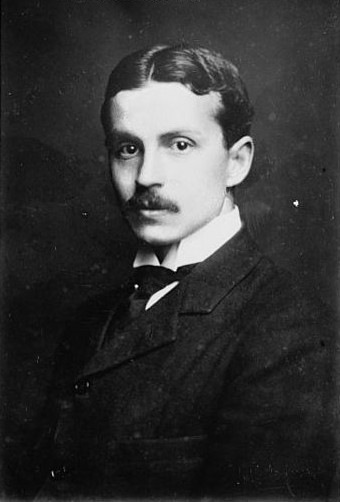
Francis Welch Crowninshield (June 24, 1872 – December 28, 1947) was an American journalist and art and theater critic best known for developing and editing the magazine Vanity Fair for 21 years, making it a pre-eminent literary journal.
Crowninshield was born June 24, 1872, in Paris, France, to the Americans Frederic Crowninshield (1845–1918) and his wife, the former Helen Suzette Fairbanks, whom he later called "poor but good" members of the well-heeled Boston Brahmin Crowninshield family. His father, a man of "independent means", was a poet and a respected painter of landscape and murals. He served for two years as director of the American Academy in Rome.
As an adult, Crowninshield lived in New York City, where he was active in the "high-class" social life, as well as an associate of rising artists and writers. He was a member of the exclusive Knickerbocker Club and Union Club. He was also a member of the Dutch Treat Club from 1937 to 1947 and served as one of its vice presidents. An award given by the club in his name was given to Arthur Rubinstein in 1954.
Crowninshield never married.
In 1914, Crowninshield – who Vanity Fair later said was considered "the most cultivated, elegant, and endearing man in publishing, if not Manhattan" – was hired by his friend Condé Nast to become editor of the new Vanity Fair. Crowninshield immediately dropped the magazine's fashion elements and helped turn the periodical into a preeminent literary voice of sophisticated American society, a position it held until 1935.
During his tenure as editor, Crowninshield attracted the best writers of the era. Aldous Huxley, T. S. Eliot, Ferenc Molnár, Gertrude Stein, and Djuna Barnes, all appeared in the issue of July 1923, while some of F. Scott Fitzgerald's earliest works were published in the magazine. Crowninshield bought Dorothy Parker's first published poem for the magazine, and it was also the first periodical in the United States to print reproductions of works by artists such as Picasso and Matisse.
Crowninshield revised the magazine's policies on advertising. In 1915, Vanity Fair published more pages of ads than any other magazine in the country, but the number dwindled under Crowninshield's editorship. The magazine lost valuable revenue, especially during and following the Great Depression, when businesses purchased fewer ads in any case.
Crowninshield remained active in the arts and high society. He often advised the affluent on art investments and helped develop younger artists of the period, including Clara Tice. He built his own art collection as well, including a large assortment of African and modern French art.
Recent media
Recent media