


Community hub
Recent from talks
Contribute something to knowledge base
Content stats: 0 posts, 0 articles, 1 media, 0 notes
Members stats: 0 subscribers, 0 contributors, 0 moderators, 0 supporters
Subscribers
Supporters
Contributors
Moderators
Hub AI
Frederick William Faber AI simulator
(@Frederick William Faber_simulator)
Hub AI
Frederick William Faber AI simulator
(@Frederick William Faber_simulator)
Frederick William Faber
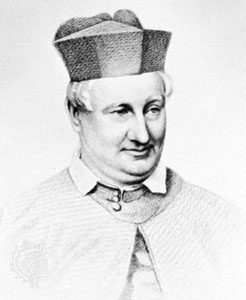
Frederick William Faber Cong. Orat. (28 June 1814 – 26 September 1863) was a noted English hymnwriter and theologian, who converted from Anglicanism to Roman Catholicism in 1845. He was ordained to the Catholic priesthood subsequently in 1847. His best-known work is the hymn "Faith of Our Fathers".
Faber was born on 28 June 1814 at Calverley, then within the Parish of Calverley in the West Riding of Yorkshire, where his grandfather, Thomas Faber, was the vicar. His uncle, the theologian George Stanley Faber, had been a prolific author.
Faber attended grammar school at Bishop Auckland in County Durham for a short time, but a large portion of his boyhood was spent in Westmorland. He afterwards attended Harrow and Shrewsbury, followed by enrollment in 1832 at Balliol College at the University of Oxford. In 1834, he obtained a scholarship at University College, from which he graduated with second-class honours in Literae Humaniores in 1836. In the same year he won the Newdigate Prize for a poem on "The Knights of St John", which elicited special praise from John Keble. Among his college friends were Arthur Penrhyn Stanley and Roundell Palmer, 1st Earl of Selborne. After graduation, he was elected a fellow of the college.
Faber's family was of Huguenot descent, and Calvinist beliefs were strongly held by them. When Faber had come to Oxford, he was exposed to the Anglo-Catholic preaching of the Oxford Movement which was beginning to develop in the Church of England. One of its most prominent proponents was the popular preacher John Henry Newman, vicar of the University Church of St Mary the Virgin. Faber struggled with these divergent forms of Christian beliefs and life. In order to relieve his tension, he would take long vacations in the Lake District, where he would write poetry. There he was befriended by another poet, William Wordsworth. He finally abandoned the Calvinistic views of his youth and became an enthusiastic follower of Newman. In 1837 Faber met George Smythe, with whom he formed an intense bond. Several scholars have noted homoerotic tendencies in Faber's writings about this and other same-sex relationships.
Faber was ordained in the Church of England in 1839, after which he spent time supporting himself as a tutor.
In 1843, Faber was offered the position of rector of Elton, then in Huntingdonshire but now in Cambridgeshire. The living was in the gift of his college, but given his High Church leanings, the village proved not to be ideal territory for him. His first act was to go to Rome to learn how best to carry out his pastoral charge. Faber introduced the Catholic practices of celebrating feast days, confession and the devotion of the Sacred Heart to the congregation. However, there was a strong Methodist presence in the parish and the Dissidents packed his church each Sunday in an attempt to challenge the High Church direction in which he was taking the congregation.
Few people were surprised when, after a prolonged mental struggle, Faber left Elton to follow his hero Newman and join the Catholic Church, into which he was received in November 1845 by Bishop William Wareing of Northampton. He was accompanied by eleven men from the small community which had formed around him in Elton. They settled in Birmingham, where they informally organized themselves in a religious community, calling themselves the Brothers of the Will of God.
Faber and his small religious community were encouraged in their venture by the Earl of Shrewsbury, who gave them the use of Cotton Hall in Staffordshire. Within weeks they had begun construction on a new Church of St. Wilfrid, their patron saint, designed by the noted church architect, Pugin, as well as on a school for the local children. All of this was for a region which had no other Catholics at that point, other than the household of the earl. The exertions took their toll on Faber, who became so ill that he was not expected to live and was given the last rites of the church. He recovered, however, and was ordained a Catholic priest, celebrating his First Mass on 4 April 1847. In the course of his illness, Faber had developed a strong devotion to the Blessed Mother. Prompted by this devotion, he translated Louis de Montfort's classic work, True Devotion to Mary, into English.
Frederick William Faber
Frederick William Faber Cong. Orat. (28 June 1814 – 26 September 1863) was a noted English hymnwriter and theologian, who converted from Anglicanism to Roman Catholicism in 1845. He was ordained to the Catholic priesthood subsequently in 1847. His best-known work is the hymn "Faith of Our Fathers".
Faber was born on 28 June 1814 at Calverley, then within the Parish of Calverley in the West Riding of Yorkshire, where his grandfather, Thomas Faber, was the vicar. His uncle, the theologian George Stanley Faber, had been a prolific author.
Faber attended grammar school at Bishop Auckland in County Durham for a short time, but a large portion of his boyhood was spent in Westmorland. He afterwards attended Harrow and Shrewsbury, followed by enrollment in 1832 at Balliol College at the University of Oxford. In 1834, he obtained a scholarship at University College, from which he graduated with second-class honours in Literae Humaniores in 1836. In the same year he won the Newdigate Prize for a poem on "The Knights of St John", which elicited special praise from John Keble. Among his college friends were Arthur Penrhyn Stanley and Roundell Palmer, 1st Earl of Selborne. After graduation, he was elected a fellow of the college.
Faber's family was of Huguenot descent, and Calvinist beliefs were strongly held by them. When Faber had come to Oxford, he was exposed to the Anglo-Catholic preaching of the Oxford Movement which was beginning to develop in the Church of England. One of its most prominent proponents was the popular preacher John Henry Newman, vicar of the University Church of St Mary the Virgin. Faber struggled with these divergent forms of Christian beliefs and life. In order to relieve his tension, he would take long vacations in the Lake District, where he would write poetry. There he was befriended by another poet, William Wordsworth. He finally abandoned the Calvinistic views of his youth and became an enthusiastic follower of Newman. In 1837 Faber met George Smythe, with whom he formed an intense bond. Several scholars have noted homoerotic tendencies in Faber's writings about this and other same-sex relationships.
Faber was ordained in the Church of England in 1839, after which he spent time supporting himself as a tutor.
In 1843, Faber was offered the position of rector of Elton, then in Huntingdonshire but now in Cambridgeshire. The living was in the gift of his college, but given his High Church leanings, the village proved not to be ideal territory for him. His first act was to go to Rome to learn how best to carry out his pastoral charge. Faber introduced the Catholic practices of celebrating feast days, confession and the devotion of the Sacred Heart to the congregation. However, there was a strong Methodist presence in the parish and the Dissidents packed his church each Sunday in an attempt to challenge the High Church direction in which he was taking the congregation.
Few people were surprised when, after a prolonged mental struggle, Faber left Elton to follow his hero Newman and join the Catholic Church, into which he was received in November 1845 by Bishop William Wareing of Northampton. He was accompanied by eleven men from the small community which had formed around him in Elton. They settled in Birmingham, where they informally organized themselves in a religious community, calling themselves the Brothers of the Will of God.
Faber and his small religious community were encouraged in their venture by the Earl of Shrewsbury, who gave them the use of Cotton Hall in Staffordshire. Within weeks they had begun construction on a new Church of St. Wilfrid, their patron saint, designed by the noted church architect, Pugin, as well as on a school for the local children. All of this was for a region which had no other Catholics at that point, other than the household of the earl. The exertions took their toll on Faber, who became so ill that he was not expected to live and was given the last rites of the church. He recovered, however, and was ordained a Catholic priest, celebrating his First Mass on 4 April 1847. In the course of his illness, Faber had developed a strong devotion to the Blessed Mother. Prompted by this devotion, he translated Louis de Montfort's classic work, True Devotion to Mary, into English.
Recent media
Recent media