



Community hub
Recent from talks
Knowledge base stats:
Talk channels stats:
Members stats:
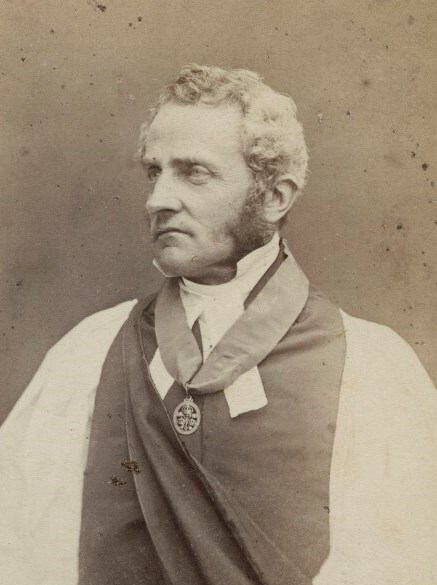
Arthur Penrhyn Stanley
Arthur Penrhyn Stanley, FRS (13 December 1815 – 18 July 1881) known as Dean Stanley, was an English Anglican priest and ecclesiastical historian. He was Dean of Westminster from 1864 to 1881. His position was that of a Broad Churchman and he was the author of a number of works on Church History. He was a co-founder of the Palestine Exploration Fund.
Stanley was born in Alderley Edge, in Cheshire, where his father, Edward Stanley, later Bishop of Norwich, was then rector. A brother was Owen Stanley, and his sister was Mary Stanley. The middle-name 'Penrhyn' suggests Welsh lineage.
He was educated at Rugby School under Thomas Arnold and in 1834 went up to Balliol College, Oxford. He is generally considered to be the source for the character of George Arthur in Thomas Hughes's well-known book Tom Brown's Schooldays, which is based on Rugby. After winning the Ireland scholarship and the Newdigate Prize for an English poem (The Gypsies), he was in 1839 elected a Fellow of University College and the same year took holy orders. In 1840 he travelled in Greece and Italy and on his return settled at Oxford, where for ten years, he was tutor of his college and an influential element in university life. His relationship with his pupils was close and affectionate, and the charm of his character won him friends on all sides. His literary reputation was early established by his Life of Arnold, published in 1844. In 1845 he was appointed select preacher, and published in 1847 a volume of Sermons and Essays on the Apostolic Age, which not only laid the foundation of his fame as a preacher but also marked his future position as a theologian. In university politics, which at the time wore mainly the form of theological controversy, he was a strong advocate of comprehension and toleration.
As an undergraduate, he had sympathised with Arnold in resenting the agitation led by the High Church Party in 1836 against the appointment of R. D. Hampden to the Regius professorship of divinity. During the long controversy that followed the publication in 1841 of Tract 90 and ended in the withdrawal of John Henry Newman from the Church of England, he used all his influence to protect from formal condemnation the leaders and tenets of the "Tractarian" party.
In 1847, he resisted the movement set on foot at Oxford against Hampden's appointment to the bishopric of Hereford. Finally, in 1850, in an article published in the Edinburgh Review in defence of the Gorham judgment, he asserted two principles that he maintained to the end of his life: first, "that the so-called supremacy of the Crown in religious matters was in reality nothing else than the supremacy of law, and, secondly, that the Church of England, by the very condition of its being, was not High or Low, but Broad, and had always included and been meant to include, opposite and contradictory opinions on points even more important than those at present under discussion".
It was not only in theoretical but also in academic matters that his sympathies were on the liberal side. He was greatly interested in university reform and acted as secretary to the royal commission appointed in 1850. Of the important changes in administration and education which were ultimately carried out, Stanley, who took the principal share in drafting the report printed in 1852, was a strenuous advocate. The changes included the transference of the initiative in university legislation from the sole authority of the heads of houses to an elected and representative body, the opening of college fellowships and scholarships to competition by the removal of local and other restrictions, the non-enforcement at matriculation of subscription to the Thirty-nine Articles and various steps for increasing the usefulness and influence of the professorship. Before the report was issued, Stanley was appointed to a canonry in Canterbury Cathedral. During his residence there, he published his Memoir of his father (1851), and completed his Commentary on the Epistles to the Corinthians (1855). In the winter and the spring of 1852–1853, he made a tour in Egypt and the Holy Land, the result of which was his well-known volume on Sinai and Palestine (1856). In 1857, he travelled in Russia and collected much of the materials for his Lectures on the Eastern Orthodox Church (1861). The book of the lectures, "History of the Eastern Church", contained an argument for the apostolic claims of the Church of Abyssinia. His Memorials of Canterbury (1855), displayed the full maturity of his power of dealing with historical events and characters. He was also examining chaplain to Bishop A. C. Tait, his former tutor.
At the close of 1856 Stanley was appointed Regius Professor of Ecclesiastical History at Oxford, a post that, with the attached canonry at Christ Church, he held until 1863. He began his treatment of the subject with "the first dawn of the history of the church", the call of Abraham, and published the first two volumes of his History of the Jewish Church in 1863 and 1865. From 1860 to 1864 academic and clerical circles were agitated by the storm which followed the publication of Essays and Reviews, a volume to which two of his most valued friends, Benjamin Jowett and Frederick Temple, had been contributors. Stanley's part in this controversy may be studied in the second and third of his Essays on Church and State (1870). The result of his action was to alienate the leaders of the High Church party, who had endeavoured to procure the formal condemnation of the views advanced in Essays and Reviews. In 1863, he published a Letter to the Bishop of London, advocating a relaxation of the terms of clerical subscription to the Thirty-nine Articles and the Book of Common Prayer. An act amending the Act of Uniformity and carrying out in some degree Stanley's proposals was passed in the year 1865. In 1862, Stanley, at Queen Victoria's wish, accompanied the Prince of Wales (later Edward VII) on a tour in Egypt and Palestine. The following year, the Queen appointed him Deputy Clerk of the Closet.
In June 1863, he was elected a Fellow of the Royal Society as The Author of – Life of Doctor Arnold – Historical Memorials of Canterbury – Syria and Palestine in connexion with their History – Lectures on the Eastern Churches – and Lectures on the Jewish Churches The collected Works of Dean Stanley take up 32 bound volumes.
Hub AI
Arthur Penrhyn Stanley AI simulator
(@Arthur Penrhyn Stanley_simulator)
Arthur Penrhyn Stanley
Arthur Penrhyn Stanley, FRS (13 December 1815 – 18 July 1881) known as Dean Stanley, was an English Anglican priest and ecclesiastical historian. He was Dean of Westminster from 1864 to 1881. His position was that of a Broad Churchman and he was the author of a number of works on Church History. He was a co-founder of the Palestine Exploration Fund.
Stanley was born in Alderley Edge, in Cheshire, where his father, Edward Stanley, later Bishop of Norwich, was then rector. A brother was Owen Stanley, and his sister was Mary Stanley. The middle-name 'Penrhyn' suggests Welsh lineage.
He was educated at Rugby School under Thomas Arnold and in 1834 went up to Balliol College, Oxford. He is generally considered to be the source for the character of George Arthur in Thomas Hughes's well-known book Tom Brown's Schooldays, which is based on Rugby. After winning the Ireland scholarship and the Newdigate Prize for an English poem (The Gypsies), he was in 1839 elected a Fellow of University College and the same year took holy orders. In 1840 he travelled in Greece and Italy and on his return settled at Oxford, where for ten years, he was tutor of his college and an influential element in university life. His relationship with his pupils was close and affectionate, and the charm of his character won him friends on all sides. His literary reputation was early established by his Life of Arnold, published in 1844. In 1845 he was appointed select preacher, and published in 1847 a volume of Sermons and Essays on the Apostolic Age, which not only laid the foundation of his fame as a preacher but also marked his future position as a theologian. In university politics, which at the time wore mainly the form of theological controversy, he was a strong advocate of comprehension and toleration.
As an undergraduate, he had sympathised with Arnold in resenting the agitation led by the High Church Party in 1836 against the appointment of R. D. Hampden to the Regius professorship of divinity. During the long controversy that followed the publication in 1841 of Tract 90 and ended in the withdrawal of John Henry Newman from the Church of England, he used all his influence to protect from formal condemnation the leaders and tenets of the "Tractarian" party.
In 1847, he resisted the movement set on foot at Oxford against Hampden's appointment to the bishopric of Hereford. Finally, in 1850, in an article published in the Edinburgh Review in defence of the Gorham judgment, he asserted two principles that he maintained to the end of his life: first, "that the so-called supremacy of the Crown in religious matters was in reality nothing else than the supremacy of law, and, secondly, that the Church of England, by the very condition of its being, was not High or Low, but Broad, and had always included and been meant to include, opposite and contradictory opinions on points even more important than those at present under discussion".
It was not only in theoretical but also in academic matters that his sympathies were on the liberal side. He was greatly interested in university reform and acted as secretary to the royal commission appointed in 1850. Of the important changes in administration and education which were ultimately carried out, Stanley, who took the principal share in drafting the report printed in 1852, was a strenuous advocate. The changes included the transference of the initiative in university legislation from the sole authority of the heads of houses to an elected and representative body, the opening of college fellowships and scholarships to competition by the removal of local and other restrictions, the non-enforcement at matriculation of subscription to the Thirty-nine Articles and various steps for increasing the usefulness and influence of the professorship. Before the report was issued, Stanley was appointed to a canonry in Canterbury Cathedral. During his residence there, he published his Memoir of his father (1851), and completed his Commentary on the Epistles to the Corinthians (1855). In the winter and the spring of 1852–1853, he made a tour in Egypt and the Holy Land, the result of which was his well-known volume on Sinai and Palestine (1856). In 1857, he travelled in Russia and collected much of the materials for his Lectures on the Eastern Orthodox Church (1861). The book of the lectures, "History of the Eastern Church", contained an argument for the apostolic claims of the Church of Abyssinia. His Memorials of Canterbury (1855), displayed the full maturity of his power of dealing with historical events and characters. He was also examining chaplain to Bishop A. C. Tait, his former tutor.
At the close of 1856 Stanley was appointed Regius Professor of Ecclesiastical History at Oxford, a post that, with the attached canonry at Christ Church, he held until 1863. He began his treatment of the subject with "the first dawn of the history of the church", the call of Abraham, and published the first two volumes of his History of the Jewish Church in 1863 and 1865. From 1860 to 1864 academic and clerical circles were agitated by the storm which followed the publication of Essays and Reviews, a volume to which two of his most valued friends, Benjamin Jowett and Frederick Temple, had been contributors. Stanley's part in this controversy may be studied in the second and third of his Essays on Church and State (1870). The result of his action was to alienate the leaders of the High Church party, who had endeavoured to procure the formal condemnation of the views advanced in Essays and Reviews. In 1863, he published a Letter to the Bishop of London, advocating a relaxation of the terms of clerical subscription to the Thirty-nine Articles and the Book of Common Prayer. An act amending the Act of Uniformity and carrying out in some degree Stanley's proposals was passed in the year 1865. In 1862, Stanley, at Queen Victoria's wish, accompanied the Prince of Wales (later Edward VII) on a tour in Egypt and Palestine. The following year, the Queen appointed him Deputy Clerk of the Closet.
In June 1863, he was elected a Fellow of the Royal Society as The Author of – Life of Doctor Arnold – Historical Memorials of Canterbury – Syria and Palestine in connexion with their History – Lectures on the Eastern Churches – and Lectures on the Jewish Churches The collected Works of Dean Stanley take up 32 bound volumes.